

 Download PDF
 Download PDF
Market Overview
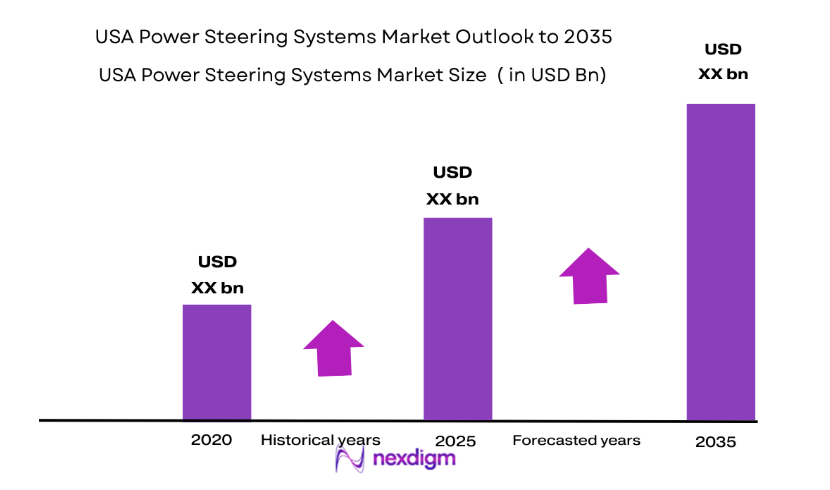
The USA Power Steering Systems market has seen significant growth, with the market size based on recent historical assessments valued at over USD ~ billion in recent evaluations. The growing demand for power steering systems can be attributed to the increasing production of automobiles, the shift toward electric vehicles (EVs), and the technological advancements in automotive safety features. Consumer preferences for enhanced driving comfort and control are driving manufacturers to innovate and develop advanced power steering systems, contributing to a robust market growth trajectory.
In terms of dominant regions, the United States remains the largest market for power steering systems due to the high concentration of automotive manufacturers and the presence of major players in the industry. Cities like Detroit, Michigan, and others in the automotive hubs benefit from substantial investments in automotive R&D, infrastructure, and production facilities. The demand for advanced steering systems is also bolstered by the rapid adoption of electric and autonomous vehicles in these regions, where regulatory support further fuels growth.
By System Type:
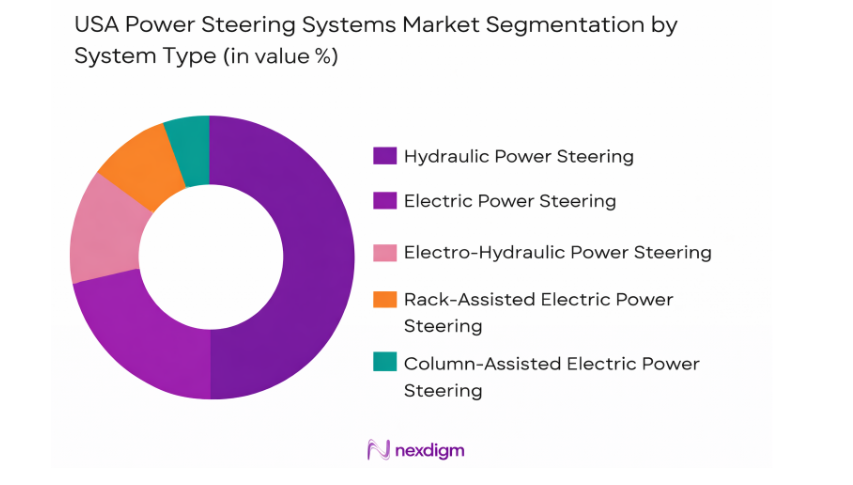
The USA Power Steering Systems market is segmented by system type into hydraulic power steering, electric power steering, electro-hydraulic power steering, rack-assisted electric power steering, and column-assisted electric power steering. Recently, the electric power steering (EPS) system has dominated the market share due to its efficiency, fuel-saving capabilities, and increasing adoption in electric and hybrid vehicles. As manufacturers are shifting towards electrification, the demand for EPS has increased, driven by consumer preference for energy-efficient and low-emission vehicles. Additionally, EPS offers advanced features such as steering precision and weight reduction, making it a preferred choice in passenger cars and electric vehicles. Infrastructure advancements and the automotive industry’s push towards eco-friendly technologies also bolster EPS’s dominance.
By Platform Type:
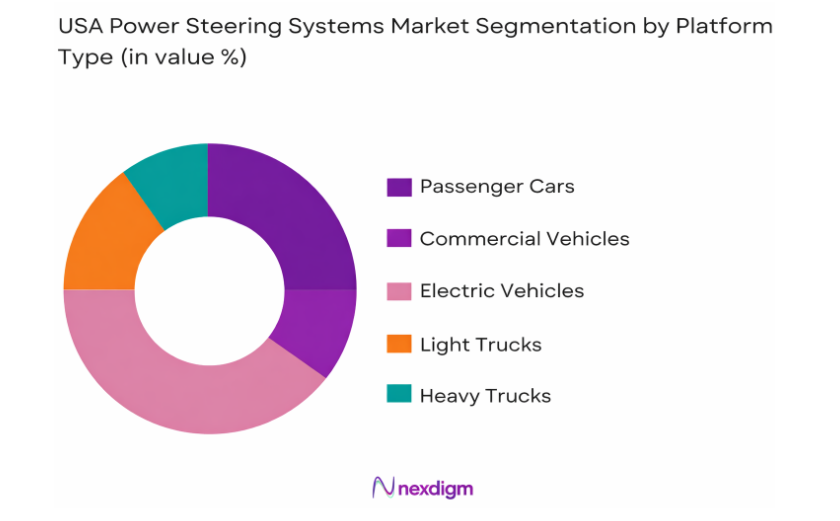
The USA Power Steering Systems market is segmented by platform type into passenger cars, commercial vehicles, electric vehicles, light trucks, and heavy trucks. Recently, electric vehicles (EVs) have emerged as the dominant platform type, capturing a significant share of the market. This is attributed to the global shift towards sustainability and government regulations promoting green energy and reducing emissions. As EV adoption increases, the need for advanced steering systems that offer superior performance, weight reduction, and power efficiency has propelled electric power steering systems in this sector. Additionally, the growing infrastructure for electric vehicle charging and consumer demand for low-emission vehicles continue to contribute to the EV platform’s dominance.
Competitive Landscape
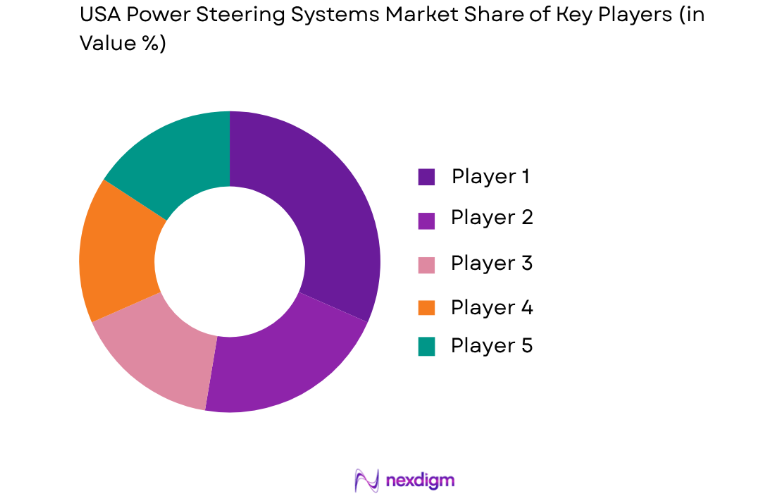
The competitive landscape of the USA Power Steering Systems market is characterized by a significant presence of major players in both traditional automotive and electric vehicle segments. The market has witnessed increasing consolidation as companies invest in research and development for advanced steering technologies, including electric power steering and autonomous vehicle steering systems. Technological innovation, strategic partnerships, and mergers have been critical in maintaining competitiveness in a rapidly evolving market. Players are focusing on enhancing steering precision, reducing energy consumption, and meeting regulatory demands, which are key factors in staying ahead in the market.
| Company Name | Establishment Year | Headquarters | Technology Focus | Market Reach | Key Products | Revenue |
| Nexteer Automotive | 1906 | Saginaw, Michigan | ~ | ~ | ~ | ~ |
| JTEKT Corporation | 2006 | Kariya, Japan | ~ | ~ | ~ | ~ |
| Bosch Automotive | 1886 | Stuttgart, Germany | ~ | ~ | ~ | ~ |
| ZF Friedrichshafen | 1915 | Friedrichshafen, Germany | ~ | ~ | ~ | ~ |
| Mando Corporation | 1962 | Seoul, South Korea | ~ | ~ | ~ | ~ |
USA Power Steering Systems Market Analysis
Growth Drivers
Increased Adoption of Electric Vehicles:
The increased adoption of electric vehicles (EVs) is one of the primary growth drivers for the USA Power Steering Systems market. As global demand for EVs grows, steering systems are evolving to meet the specific needs of electric vehicles, such as energy efficiency, precision, and lighter components. Electric power steering systems are well-suited for EVs due to their ability to provide improved fuel efficiency, reduce the overall weight of the vehicle, and enhance driving performance. With governments worldwide pushing for stricter environmental regulations and the shift to renewable energy, EVs are becoming the preferred choice among consumers and manufacturers alike. This demand is further amplified by automakers’ commitments to sustainability, driving the need for innovative power steering systems that can support the future of electric mobility. Furthermore, EV adoption is expected to continue rising due to advancements in battery technologies and increased availability of charging infrastructure, both of which positively impact the demand for electric power steering systems. The growing number of EV models, along with favorable incentives and subsidies, provides a solid foundation for this growth.
Technological Advancements in Autonomous Vehicles:
The growing focus on autonomous vehicles increases the demand for advanced power steering systems, particularly those that can operate autonomously. Electric power steering (EPS) systems integrated with AI, sensors, and cameras are essential for autonomous driving. These advanced EPS systems are designed to provide precise and responsive control, ensuring smoother navigation and enhanced safety features. The integration of AI enables real-time decision-making, adapting to changing road conditions. Additionally, the use of sensors and cameras allows for better detection of obstacles, pedestrians, and other vehicles. As autonomous driving technology continues to evolve, the demand for EPS systems that support this innovation is expected to grow significantly.
Market Challenges
High Production Costs and Supply Chain Disruptions:
One of the significant challenges faced by the USA Power Steering Systems market is the high production cost of advanced steering systems, particularly electric power steering (EPS) components. Although EPS offers substantial benefits in terms of fuel efficiency and performance, its integration into vehicles involves a high initial cost, including the expenses associated with manufacturing, materials, and technology development. Furthermore, the automotive industry’s reliance on global supply chains for key components, such as semiconductors, can result in disruptions that affect production schedules and increase costs. Recent global supply chain disruptions, such as shortages in semiconductor chips, have impacted the production of automotive systems, including power steering units. The ongoing challenges in raw material procurement, logistical constraints, and regulatory pressures around environmental standards further complicate manufacturers’ ability to maintain consistent production levels while controlling costs. These factors collectively hinder the scalability of EPS technology and the overall growth of the power steering systems market.
High Production Costs:
Advanced steering systems, particularly electric power steering, have high initial production costs due to expensive components, materials, and technology development. Advanced steering systems, especially electric power steering (EPS), face high initial production costs due to the expensive components and materials required for manufacturing. The integration of advanced technologies, such as AI and sensor systems, further drives up the cost. Additionally, significant investments are needed for research and development to ensure the system’s reliability and performance. As a result, these high upfront costs can be a barrier for some manufacturers in the adoption of EPS systems.
Opportunities
Technological Advancements in Autonomous Vehicles:
The increasing focus on autonomous vehicles presents a significant opportunity for the USA Power Steering Systems market. As the automotive industry moves towards self-driving technology, the demand for advanced steering systems, particularly those capable of handling the requirements of autonomous vehicles, is rising. Autonomous vehicles require highly responsive, reliable, and intelligent steering systems that can operate without human intervention. The integration of electric power steering systems with advanced sensors, cameras, and AI technology is essential to achieving the precise control required for autonomous driving. Furthermore, as autonomous vehicle technology advances, steering systems will play a crucial role in the safety, efficiency, and adaptability of these vehicles. Manufacturers in the power steering sector have an opportunity to innovate and develop steering systems tailored for the future of autonomous driving, tapping into a lucrative market segment with significant growth potential.
Integration with Autonomous Vehicle Technology:
As autonomous driving technologies advance, there is a growing opportunity for power steering systems to integrate with self-driving features, enhancing safety and efficiency. As autonomous driving technologies progress, there is an increasing opportunity for power steering systems to incorporate self-driving features, improving both safety and efficiency. The integration of these systems allows for more precise control and responsive adjustments in real-time. Additionally, power steering systems can work seamlessly with other autonomous vehicle technologies, such as AI and sensor networks, to enhance overall driving performance. This synergy between power steering and self-driving capabilities will play a key role in the future of autonomous vehicles.
Future Outlook
The USA Power Steering Systems market is poised for significant growth over the next five years. As the shift toward electric vehicles (EVs) and autonomous vehicles gains momentum, the demand for advanced steering systems, particularly electric power steering (EPS), is expected to increase. Technological developments such as the integration of autonomous driving features and enhanced steering precision will shape the market’s trajectory. Additionally, regulatory support for cleaner vehicles and green technologies will further boost the adoption of electric power steering systems. The market will likely see continued consolidation, with established players and new entrants investing heavily in R&D and partnerships to capture market share.
Major Players
- Nexteer Automotive
- JTEKT Corporation
- Bosch Automotive
- ZF Friedrichshafen
- Mando Corporation
- Thyssenkrupp Automotive
- Delphi Technologies
- TRW Automotive
- Hitachi Automotive Systems
- Denso Corporation
- Continental AG
- Magna International
- Toyota Industries
- Hyundai Mobis
- Valeo SA
Key Target Audience
- Investments and venture capitalist firms
- Government and regulatory bodies
- Automotive OEMs
- Electric vehicle manufacturers
- Automotive suppliers and Tier 1 suppliers
- Fleet operators
- Aftermarket service providers
- Automotive component manufacturers
Research Methodology
Step 1: Identification of Key Variables
The initial step involves identifying key market variables such as system types, platform types, and customer segments. We examine industry reports, consult experts, and review existing data to understand what drives the power steering systems market.
Step 2: Market Analysis and Construction
In this phase, we analyze market trends, competition, and customer behavior using both qualitative and quantitative methods. This step involves constructing models to understand the growth potential and trends in the market.
Step 3: Hypothesis Validation and Expert Consultation
Here, we validate the assumptions made during the analysis phase through consultations with industry experts. This step helps ensure that the insights are reliable and actionable.
Step 4: Research Synthesis and Final Output
The final stage synthesizes all collected data, market insights, and expert opinions into a comprehensive market report that outlines trends, growth drivers, challenges, and opportunities for the USA Power Steering Systems market.

- Executive Summary
- Research Methodology (Definitions, Scope, Industry Assumptions, Market Sizing Approach, Primary & Secondary Research Framework, Data Collection & Verification Protocol, Analytic Models & Forecast Methodology, Limitations & Research Validity Checks)

- Market Definition and Scope
- Value Chain & Stakeholder Ecosystem
- Regulatory / Certification Landscape
- Sector Dynamics Affecting Demand

- Growth Drivers
Increase in Automotive Production
Rise in Electric Vehicle Adoption
Technological Advancements in Power Steering Systems - Market Challenges
High Production Costs for Advanced Steering Systems
Dependence on Raw Material Prices
Integration of New Technologies into Traditional Vehicles - Market Opportunities
Growth in Autonomous Vehicle Steering Systems
Adoption of Energy-efficient Power Steering Technologies
Expansion of Electric Vehicle Infrastructure - Trends
Shift towards Electrification in Steering Systems
Integration of Advanced Driver Assistance Systems (ADAS)
Growing Use of Artificial Intelligence in Steering Technologies - Government Regulations
- SWOT Analysis of Key Competitors

- By Market Value, 2020-2025
- By Installed Units, 2020-2025
- By Average System Price, 2020-2025
- By System Complexity Tier, 2020-2025

- By System Type (In Value%)
Electric Power Steering (EPS)
Hydraulic Power Steering (HPS)
Electro-Hydraulic Power Steering (EHPS)
Steer-by-wire Systems
Column Mounted Power Steering Systems - By Platform Type (In Value%)
Passenger Vehicles
Commercial Vehicles
Electric Vehicles
Luxury Vehicles
Sport Utility Vehicles (SUVs) - By Fitment Type (In Value%)
OEM Fitment
Aftermarket Fitment
Direct Replacement Parts
Upgraded Steering Systems
Custom Fitment - By EndUser Segment (In Value%)
Automobile Manufacturers
Aftermarket Service Providers
Fleet Operators
Vehicle Importers

- Market Share Analysis
- CrossComparison Parameters (System Type, Platform Type, Procurement Channel, EndUser Segment, Fitment Type)
- SWOT Analysis of Key Competitors
- Pricing & Procurement Analysis
- Porter’s Five Forces
- Key Players
Bosch
ZF Friedrichshafen
JTEKT
Thyssenkrupp
Mando
Delphi Automotive
TRW Automotive
Nexteer Automotive
Visteon Corporation
Schaeffler Group
Honda Lock Manufacturing
United Automotive Electronic Systems
Calsonic Kansei
Harman International
Magneti Marelli

- Automobile Manufacturers’ Demand for Precision Steering
- Aftermarket Demand for Affordable and Efficient Parts
- Growth in Electric Vehicle Fleets
- Fleet Operators’ Interest in Advanced Steering Features

- Forecast Market Value, 2026-2035
- Forecast Installed Units, 2026-2035
- Price Forecast by System Tier, 2026-2035
- Future Demand by Platform, 2026-2035


 Request a Sample
 Ask for Customization
 Get a Quote
 Enquire Now