

 Download PDF
Market Overview
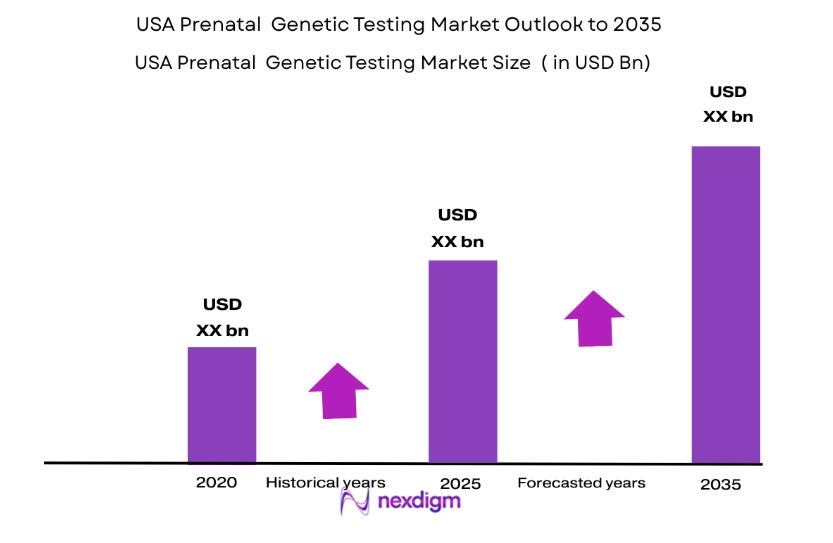
The USA Prenatal Genetic Testing Market is projected to experience significant growth driven by advancements in genetic testing technologies, which are making prenatal testing more accessible and accurate. The market size, based on a recent historical assessment, is expected to reach USD ~ billion in 2024. Increased consumer awareness, along with the rise in demand for non-invasive prenatal testing (NIPT), is boosting market adoption. Healthcare providers, particularly hospitals and diagnostic labs, are driving the expansion by offering genetic testing services to expectant mothers as part of routine prenatal care.
The market is dominated by the United States due to its advanced healthcare infrastructure, high levels of healthcare spending, and widespread access to medical technologies. The demand for prenatal genetic testing is particularly strong in major cities such as New York, Los Angeles, and Chicago, where healthcare systems are well-established and the population is more inclined to adopt advanced medical technologies. Additionally, the presence of numerous leading healthcare providers and genetics companies in the country further supports the market’s growth.
Market Segmentation
By Product Type:
The USA Prenatal Genetic Testing Market is segmented by product type into non-invasive prenatal testing (NIPT), carrier screening tests, chromosomal abnormality detection, gene panel testing, and fetal DNA testing. Non-invasive prenatal testing has the dominant market share due to its accuracy, non-invasive nature, and growing consumer preference for safe and early detection of genetic conditions. The demand for NIPT has surged as it provides a safer alternative to invasive tests, such as amniocentesis, with greater accuracy and fewer risks to the fetus. As more expectant mothers are opting for NIPT to detect genetic abnormalities early, the sub-segment is expected to continue driving market growth.

By Platform Type:
The USA Prenatal Genetic Testing Market is segmented by platform type into laboratory-based testing, point-of-care testing, mobile health solutions, genetic counseling platforms, and cloud-based data analysis platforms. Laboratory-based testing holds the dominant market share due to the reliability and extensive availability of these services across hospitals, diagnostic labs, and medical centers. Laboratory-based prenatal genetic testing is preferred because it offers comprehensive, validated results and is supported by strong infrastructure in the U.S. healthcare system. The reliability and accuracy of results make this platform the primary choice for both healthcare providers and patients.

Competitive Landscape
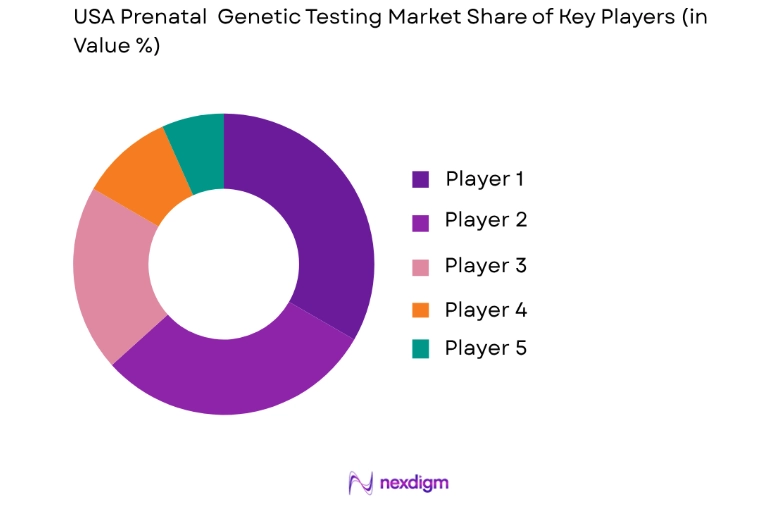
The USA Prenatal Genetic Testing Market is highly competitive, with major players focusing on technological advancements and strategic partnerships to consolidate their market position. Leading companies are investing in research and development to improve testing accuracy and reduce testing time. Strategic alliances and acquisitions are also prevalent, as companies aim to expand their reach and enhance their product offerings.
| Company Name | Establishment Year | Headquarters | Technology Focus | Market Reach | Key Products | Revenue | Additional Market-Specific Parameter |
| Illumina | 1998 | San Diego, USA | ~ | ~ | ~ | ~ | ~ |
| Thermo Fisher | 1956 | Waltham, USA | ~ | ~ | ~ | ~ | ~ |
| Myriad Genetics | 1991 | Salt Lake City, USA | ~ | ~ | ~ | ~ | ~ |
| LabCorp | 1978 | Burlington, USA | ~ | ~ | ~ | ~ | ~ |
| Quest Diagnostics | 1961 | Secaucus, USA | ~ | ~ | ~ | ~ | ~ |
USA Prenatal Genetic Testing Market Outlook 2035 Market Analysis
Growth Drivers
Advancements in Genetic Testing Technologies:
The USA Prenatal Genetic Testing Market is primarily driven by rapid advancements in genetic testing technologies, which have improved the accuracy and reliability of tests. Recent innovations, including non-invasive prenatal testing (NIPT), allow expectant mothers to screen for genetic conditions without risking harm to the fetus. This has greatly increased the adoption of prenatal genetic testing, as women are increasingly aware of the benefits of early detection of genetic disorders. The technological improvements have also made these tests more affordable and accessible, expanding the market’s reach to a larger population of expectant mothers. The continued development of more sophisticated testing methods, such as cell-free DNA analysis, is expected to drive further market growth as it enhances the accuracy of early prenatal screening. These advancements make genetic testing an integral part of prenatal care, contributing to the market’s expansion.
Increased Awareness of Prenatal Genetic Testing:
Another key growth driver is the growing awareness among the general public about prenatal genetic testing. With the rise of educational campaigns and information available through healthcare providers, expectant mothers are becoming more informed about the benefits of early prenatal genetic screening. Increased awareness has led to more women opting for prenatal genetic testing, even if they are not considered at high risk for genetic disorders. This trend is particularly evident among urban populations where access to healthcare services is more widespread. Social media platforms, healthcare blogs, and influencers also play a crucial role in spreading awareness and educating women on the importance of prenatal genetic testing. As more women become aware of the advantages of early genetic screening, the demand for prenatal genetic tests is expected to grow, further driving market growth.
Market Challenges
High Cost of Prenatal Genetic Testing:
One of the significant challenges facing the USA Prenatal Genetic Testing Market is the high cost of prenatal genetic tests. Despite the technological advancements and the growing demand for these tests, the high price of testing can be prohibitive for some expectant mothers. This is especially true for tests that are not covered by insurance, which may result in women having to pay out-of-pocket. While the cost of genetic testing has decreased over the years, it remains a barrier for many women, particularly those in lower-income brackets or those without adequate healthcare coverage. The high cost of genetic counseling and follow-up consultations adds to the overall expense, making it difficult for a broader population to access these services. This challenge is compounded by varying levels of insurance coverage for genetic testing across different states, which leads to inconsistencies in access and affordability.
Regulatory Barriers and Approval Processes:
Another challenge that impacts the market is the lengthy regulatory approval process for new prenatal genetic tests. In the USA, all genetic tests must be approved by the FDA, and the approval process can take several years. This regulatory hurdle often delays the introduction of new, more advanced testing technologies that could improve accuracy and reduce costs. Additionally, some tests face stricter regulations depending on the state in which they are offered, creating a complex legal environment for providers of prenatal genetic testing services. Regulatory hurdles also affect the ability of smaller companies to enter the market, as the costs associated with obtaining FDA approval can be prohibitively expensive. The uncertainty surrounding the approval process makes it challenging for companies to predict their market timelines and plan for product launches, creating a barrier to market entry for new players.
Opportunities
Integration of Artificial Intelligence (AI) in Prenatal Genetic Testing:
One of the key opportunities in the USA Prenatal Genetic Testing Market is the integration of artificial intelligence (AI) to enhance the accuracy and speed of genetic testing. AI has the potential to significantly improve the efficiency of genetic analysis, enabling quicker results with reduced error rates. AI-powered algorithms can analyze complex genetic data more accurately than traditional methods, offering improved detection of genetic disorders such as Down syndrome, Edwards syndrome, and Patau syndrome. As AI continues to evolve, it will further refine the testing process, making prenatal genetic testing more accessible and affordable. The combination of AI with machine learning can also allow for the development of more personalized tests, leading to better healthcare outcomes for both mothers and babies. This integration could lead to a wave of innovation in the market, making prenatal genetic testing a standard practice for expectant mothers.
Expansion of Non-Invasive Testing Solutions:
There is also significant opportunity in the expansion of non-invasive testing solutions within the USA Prenatal Genetic Testing Market. Non-invasive prenatal testing (NIPT) has gained traction due to its accuracy and minimal risk to the fetus. As more healthcare providers adopt NIPT and other non-invasive tests, the market for these solutions is expected to expand. NIPT is already replacing invasive tests like amniocentesis due to its lower risk profile, and as its accuracy improves, it is likely to become the preferred method of prenatal testing. The growing preference for non-invasive methods presents an opportunity for companies to expand their product offerings and capture a larger share of the market. Furthermore, with advancements in technology, the cost of non-invasive testing is expected to decrease, making it more accessible to a wider population. This expansion is expected to drive the overall market for prenatal genetic testing in the coming years.
Future Outlook
The USA Prenatal Genetic Testing Market is expected to experience significant growth over the next five years, driven by technological advancements, increased consumer awareness, and greater demand for non-invasive testing solutions. As genetic testing technology improves, the market will benefit from increased adoption of prenatal testing methods, with a focus on enhancing accuracy and accessibility. The integration of artificial intelligence and machine learning into prenatal genetic testing will further improve results and reduce turnaround time. Additionally, regulatory support for genetic testing services is likely to increase, further supporting market growth. The overall demand for prenatal genetic testing will continue to rise, fueled by the growing focus on maternal and fetal health.
Major Players
- Illumina
- ThermoFisher
- Myriad Genetics
- LabCorp
- Quest Diagnostics
- Natera
- Fulgent Genetics
- Arup Laboratories
- Genomic Health
- Sema4
- PerkinElmer
- Invitae
- Becton Dickinson
- Eurofins Scientific
- Mayo Clinic Laboratories
Key Target Audience
- Investments and venture capitalist firms
- Government and regulatory bodies
- Hospitals and diagnostic labs
- Healthcare providers
- Maternal health advocates
- Genetic testing technology developers
- Health insurance companies
- Technology integrators in healthcare
Research Methodology
Step 1: Identification of Key Variables
In this step, key market variables, such as product types, technologies, and consumer preferences, are identified to define the scope and target areas for research.
Step 2: Market Analysis and Construction
The next step involves gathering data from various primary and secondary sources to build a comprehensive market model, factoring in market size, growth drivers, and challenges.
Step 3: Hypothesis Validation and Expert Consultation
The hypotheses developed in Step 2 are validated by consulting industry experts, practitioners, and stakeholders to ensure the accuracy of the market analysis.
Step 4: Research Synthesis and Final Output
Finally, the data and insights gathered are synthesized into a report that offers actionable insights, future forecasts, and a deep analysis of market trends.

- Executive Summary
- Research Methodology (Definitions, Scope, Industry Assumptions, Market Sizing Approach, Primary & Secondary Research Framework, Data Collection & Verification Protocol, Analytic Models & Forecast Methodology, Limitations & Research Validity Checks)

- Market Definition and Scope
- Value Chain & Stakeholder Ecosystem
- Regulatory / Certification Landscape
- Sector Dynamics Affecting Demand

- Growth Drivers
Advancements in Genetic Testing Technologies
Increased Awareness Among Expectant Mothers
Rise in Early Pregnancy Genetic Screening - Market Challenges
High Testing Costs
Regulatory Barriers in Certain Regions
Limited Access to Genetic Counseling Services - Market Opportunities
Expansion of Non-invasive Testing Solutions
Integration of AI in Genetic Analysis
Government Support for Maternal Health - Trends
Increasing Adoption of NIPT
Growing Demand for Personalized Healthcare
Integration of Telemedicine in Prenatal Care - Government Regulations
- SWOT Analysis of Key Competitors

- By Market Value, 2020-2025
- By Installed Units, 2020-2025
- By Average System Price, 2020-2025
- By System Complexity Tier, 2020-2025

- By System Type (In Value%)
Non-invasive Prenatal Testing (NIPT)
Carrier Screening Tests
Chromosomal Abnormality Detection
Gene Panel Testing
Fetal DNA Testing - By Platform Type (In Value%)
Laboratory-based Testing
Point-of-Care Testing
Mobile Health Solutions
Genetic Counseling Platforms
Cloud-based Data Analysis Platforms - By Fitment Type (In Value%)
In-clinic Testing
At-home Testing Kits
Hospital-based Testing
Private Laboratory Services
Online Health Services - By EndUser Segment (In Value%)
Expectant Mothers
Healthcare Providers
Genetic Counselors
Obstetricians

- Market Share Analysis
- CrossComparison Parameters (System Type, Platform Type, Procurement Channel, EndUser Segment, Fitment Type)
- SWOT Analysis of Key Competitors
- Pricing & Procurement Analysis
- Porter’s Five Forces
- Key Players
Illumina
Thermo Fisher Scientific
Myriad Genetics
LabCorp
Quest Diagnostics
Natera
Fulgent Genetics
Arup Laboratories
Genomic Health
Sema4
PerkinElmer
Invitae
Becton Dickinson
Eurofins Scientific
Mayo Clinic Laboratories

- Increasing Utilization of Prenatal Genetic Testing by Pregnant Women
- Healthcare Providers’ Shift Toward Early Screening
- Expansion of Genetic Counseling Roles
- Hospitals Increasing Access to Genetic Testing Services

- Forecast Market Value 2026-2035
- Forecast Installed Units 2026-2035
- Price Forecast by System Tier 2026-2035
- Future Demand by Platform 2026-2035


 Request a Sample
 Ask for Customization
 Get a Quote
 Enquire Now