
 Download PDF
 Download PDF
Market Overview
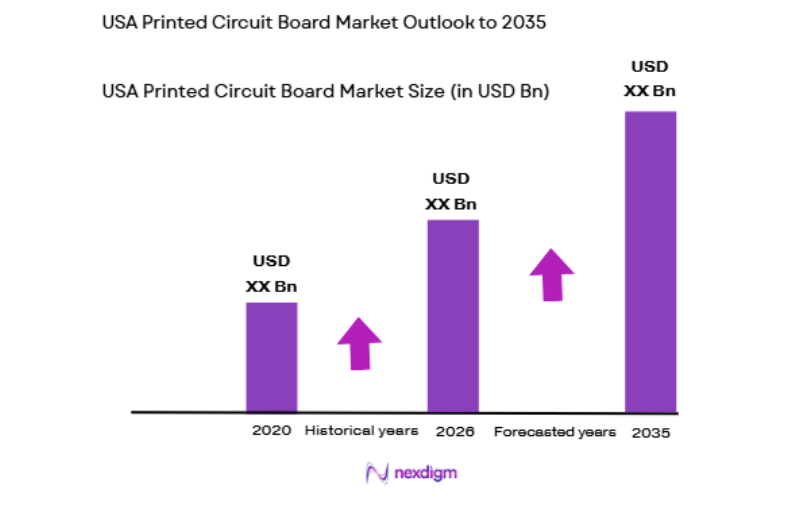
The United States printed circuit board (PCB) market is projected to reach USD ~ billion, driven by the increasing demand for PCBs in electronics manufacturing, particularly in sectors like automotive, telecommunications, and consumer electronics. As the use of electronic devices continues to grow, so does the need for advanced PCB technologies that provide efficient, reliable, and cost-effective solutions for high-performance applications. This demand is also fueled by advancements in IoT devices, electric vehicles, and renewable energy systems.
Key cities such as Silicon Valley, Detroit, and Austin dominate the market due to their strong technology ecosystems, manufacturing capabilities, and research institutions. Silicon Valley leads as a global technology hub, with numerous electronics companies, startups, and R&D facilities driving innovation in PCB design and applications. Detroit, traditionally known for its automotive industry, is also expanding its adoption of advanced PCBs for electric vehicles and autonomous driving technologies. Austin is becoming a significant player in semiconductor and PCB production, supporting the growing demand for electronic devices and high-tech applications.
Market Segmentation
By Product Type
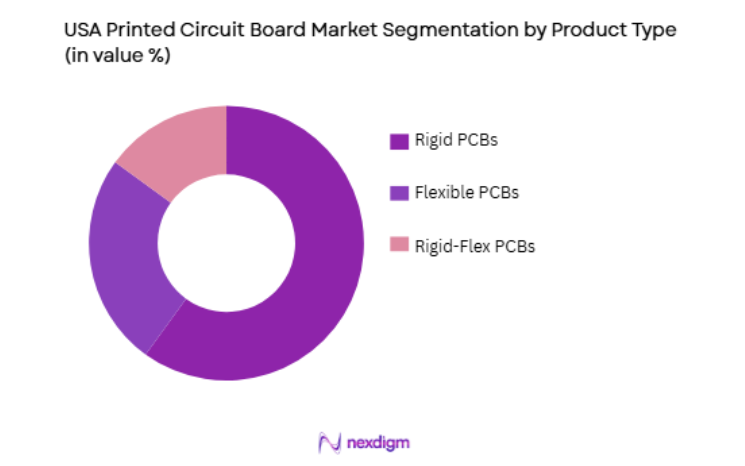
The United States printed circuit board market is segmented by product type into rigid PCBs, flexible PCBs, and rigid-flex PCBs. Rigid PCBs dominate the market share due to their widespread application in consumer electronics, automotive systems, and telecommunications. Their durability, cost-effectiveness, and ease of mass production make them the most commonly used type of PCB across various industries. Rigid PCBs provide a stable platform for electronic components, which is crucial for products like smartphones, laptops, and industrial machinery. As the demand for reliable, high-performance electronic devices continues to rise, the market for rigid PCBs remains the dominant segment in the United States.
By End-user Industry
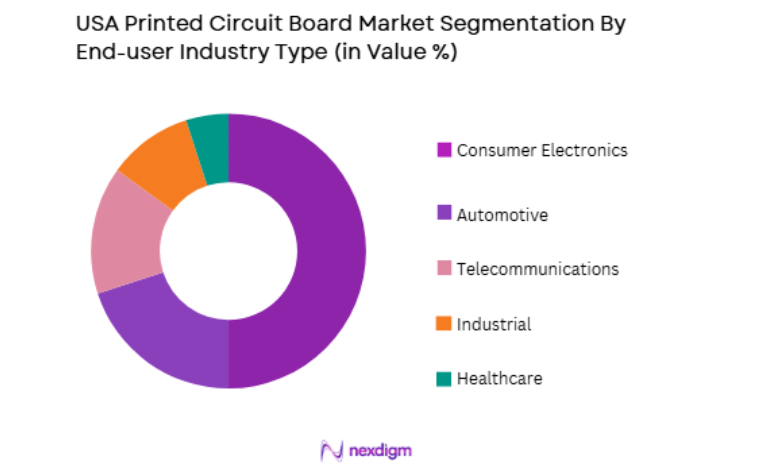
The United States printed circuit board market is segmented by end-user industry into consumer electronics, automotive, telecommunications, industrial, and healthcare. The consumer electronics sector leads the market due to the high demand for electronic devices such as smartphones, tablets, laptops, and wearables. These products require advanced PCB designs for efficient signal processing, high-speed performance, and compact form factors. The continuous innovation in consumer electronics and the growing need for miniaturization in devices contribute to the dominant role of the consumer electronics industry in driving PCB demand. With consumer electronics being at the forefront of technological advancements, it remains the largest end-user industry for PCBs in the United States.
Competitive Landscape
The competitive landscape in the United States PCB market is characterized by both established global players and regional manufacturers. Companies such as TTM Technologies, PCB Technologies, and Jabil dominate the market, offering a wide range of PCB solutions for diverse applications. These players invest heavily in R&D and production capacity to meet the growing demand for advanced PCBs, particularly in high-growth sectors like automotive electronics and IoT devices. Regional players also play a crucial role in catering to specific industry needs, often offering specialized services and customizable PCB solutions for industries like healthcare and telecommunications.
| Company Name | Establishment Year | Headquarters | Technology Focus | Market Reach | Key Products | Revenue | Additional Parameter |
| TTM Technologies | 1978 | USA | ~ | ~ | ~ | ~ | ~ |
| PCB Technologies | 1985 | USA | ~ | ~ | ~ | ~ | ~ |
| Jabil | 1966 | USA | ~ | ~ | ~ | ~ | ~ |
| Advanced Circuits | 1989 | USA | ~ | ~ | ~ | ~ | ~ |
| Unimicron Technology | 1990 | Taiwan | ~ | ~ | ~ | ~ | ~ |
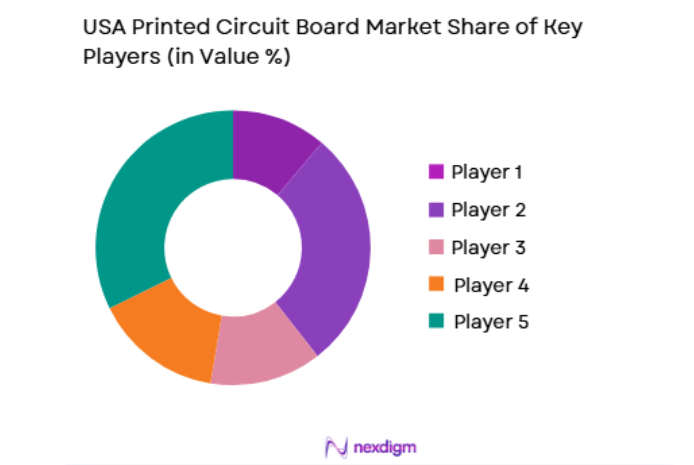
USA Printed Circuit Board Market Analysis
Growth Drivers
Advancements in Electronics Manufacturing
The rapid advancements in electronics manufacturing are a key growth driver for the United States PCB market. As industries such as automotive, telecommunications, and consumer electronics continue to innovate, the demand for high-performance, miniaturized PCBs that can support advanced functions and smaller devices is increasing. Consumer electronics, particularly smartphones, laptops, and wearables, are driving the need for advanced, compact PCB designs that offer high-speed performance, greater power efficiency, and the ability to withstand harsh environments. Additionally, the automotive industry’s shift towards electric and autonomous vehicles is creating demand for specialized PCBs that can handle high-voltage systems, sensors, and communications. As new technologies such as AI, 5G, and IoT further proliferate, the need for cutting-edge PCBs will continue to grow, providing strong momentum for market expansion.
Growth of Automotive and Electric Vehicles
The increasing adoption of electric vehicles (EVs) and autonomous driving technologies is another major driver for the PCB market in the United States. Electric vehicles require sophisticated electronics and PCB solutions to manage battery systems, power management, and driver-assistance technologies. As the global automotive industry transitions towards electric and autonomous vehicles, the demand for advanced PCBs capable of handling complex electronic systems will surge. This includes PCBs used in battery management systems, sensors, displays, and power electronics. With the United States being home to leading automotive manufacturers, including Tesla and General Motors, the automotive sector is expected to play a major role in driving the demand for PCBs. As EV adoption continues to grow, so too will the need for high-performance PCBs designed specifically for automotive applications.
Market Challenges
Rising Material Costs and Supply Chain Disruptions
The rising costs of raw materials used in PCB manufacturing and global supply chain disruptions pose significant challenges for the market. Key materials like copper, glass, and laminates are essential components in PCB production, and any fluctuations in their prices directly affect the overall cost of PCBs. Additionally, supply chain disruptions, particularly those stemming from geopolitical issues, trade restrictions, or natural disasters, can delay the procurement of essential materials, affecting the timely delivery of PCB products. These disruptions can lead to higher production costs, delayed project timelines, and increased prices for end-users, making it a major challenge for manufacturers to maintain competitive pricing. To mitigate these challenges, companies must diversify their supply sources and improve supply chain resilience, which could further increase operational costs.
Environmental Regulations and Sustainability Pressures
Environmental regulations surrounding the manufacturing processes of PCBs present another challenge. The disposal of PCB waste, the use of hazardous chemicals, and energy consumption during manufacturing are all factors that require compliance with stringent environmental standards. In the United States, regulations like the Toxic Substances Control Act (TSCA) and California Proposition 65 impose restrictions on the use of certain chemicals in electronic products. As the demand for sustainable products grows, PCB manufacturers must invest in eco-friendly materials, low-energy production processes, and recycling initiatives. Meeting these regulatory requirements often comes with additional costs and operational complexities, adding to the financial burden for PCB manufacturers. This regulatory landscape presents both a challenge and an opportunity for companies to innovate and adopt greener technologies in their production processes.
Opportunities
The Growth of 5G and IoT Devices
The rapid growth of 5G technology and the increasing proliferation of IoT devices offer significant opportunities for the PCB market. 5G networks require advanced, high-speed PCBs that can support greater bandwidth and lower latency, making them an essential component for telecom infrastructure. In addition, the explosion of IoT devices in industries such as healthcare, agriculture, and smart homes is driving demand for smaller, more efficient PCBs that can handle a variety of sensors and wireless communication functions. As 5G technology expands and IoT continues to evolve, the need for innovative PCB solutions will grow, creating a significant opportunity for PCB manufacturers to develop specialized products that meet the unique requirements of these technologies.
Automotive Electronics and Autonomous Vehicles
The rise of autonomous vehicles and the increasing electrification of transportation systems present significant opportunities for the PCB market in the United States. As vehicles become more electronically complex, with advanced driver-assistance systems (ADAS), infotainment systems, and battery management systems, the demand for sophisticated PCBs is rising. EVs, in particular, require high-performance PCBs for battery management, power electronics, and charging systems. PCB manufacturers have an opportunity to capitalize on this growing demand by developing specialized products tailored to the automotive sector, especially as the transition to electric and autonomous vehicles accelerates. The increasing focus on vehicle safety and performance also creates a need for highly reliable and durable PCB solutions.
Future Outlook
The future outlook for the United States PCB market is positive, with steady growth expected over the next five years. As industries like automotive, healthcare, and telecommunications increasingly adopt advanced electronic systems, the demand for high-performance PCBs will rise. The continued growth of 5G, IoT, and electric vehicles presents new opportunities for innovation in PCB design and manufacturing. Moreover, the increasing focus on sustainability and eco-friendly manufacturing processes will drive the development of environmentally friendly PCB solutions. The United States is well-positioned to remain a global leader in PCB innovation, and the market is expected to benefit from ongoing technological advancements and regulatory support.
Major Players
- TTM Technologies
- Jabil
- PCB Technologies
- Advanced Circuits
- Unimicron Technology
- Flex Ltd.
- Samsung Electro-Mechanics
- LG Innotek
- Zhen Ding Technology
- Sumitomo Electric Industries
- AT&S
- CMK Corporation
- China National Chemical Corporation
- Meiko Electronics
- Shenzhen Kinwong Electronic
Key Target Audience
- Investments and venture capitalist firms
- Government and regulatory bodies
- Electronic manufacturing companies
- Automotive and electric vehicle manufacturers
- Telecom providers
- Healthcare technology firms
- Industrial automation companies
- Technology consulting firms
Research Methodology
Step 1: Identification of Key Variables
In this step, we identify the key drivers and challenges influencing the PCB market in the United States, such as technological advancements, regulatory factors, and industry-specific demands.
Step 2: Market Analysis and Construction
We analyze data from industry reports, government publications, and surveys to develop a comprehensive market model based on current trends and projections.
Step 3: Hypothesis Validation and Expert Consultation
We consult with industry experts, manufacturers, and technology leaders to validate assumptions and refine the market model.
Step 4: Research Synthesis and Final Output
The final research output synthesizes data from various sources to provide a comprehensive analysis of the PCB market in the United States.

- Executive Summary
- Research Methodology (Definitions, Scope, Industry Assumptions, Market Sizing Approach, Primary & Secondary Research Framework, Data Collection & Verification Protocol, Analytic Models & Forecast Methodology, Limitations & Research Validity Checks)

- Market Definition and Scope
- Value Chain & Stakeholder Ecosystem
- Regulatory / Certification Landscape
- Sector Dynamics Affecting Demand

- Growth Drivers
Increasing demand for consumer electronics
Growth in automotive and electric vehicle applications
Technological advancements in PCB manufacturing processes - Market Challenges
Supply chain disruptions in PCB materials
High manufacturing costs of advanced PCBs
Environmental and sustainability regulations - Market Opportunities
Expansion in 5G and IoT technologies
Rising demand for electric vehicles
Adoption of PCBs in renewable energy sectors - Trends
Miniaturization of PCBs for compact electronics
Advancements in flexible and wearable electronics
Increased use of AI and automation in PCB design and manufacturing - Government regulations
Regulations on electronic waste disposal
Environmental compliance standards for PCB materials
Electromagnetic compatibility (EMC) regulations for PCBs - SWOT analysis
- Porters 5 forces

- By Market Value, 2020-2025
- By Installed Units, 2020-2025
- By Average System Price, 2020-2025
- By System Complexity Tier, 2020-2025

- By System Type (In Value%)
Rigid PCBs
Flexible PCBs
Rigid-Flexible PCBs
High-Frequency PCBs
Multilayer PCBs - By Platform Type (In Value%)
Consumer Electronics
Automotive
Industrial
Telecommunications
Medical Devices - By Fitment Type (In Value%)
Surface Mount Technology (SMT)
Through-Hole Technology (THT)
Hybrid Technology
Embedded Components
Flex-Rigid Integration - By EndUser Segment (In Value%)
Automotive Industry
Consumer Electronics Manufacturers
Telecommunications Companies
Medical Device Manufacturers
Industrial Equipment Manufacturers - By Procurement Channel (In Value%)
Direct Procurement
Third-party Suppliers
Online Marketplaces

- Market Share Analysis
- Cross Comparison Parameters (System Type, Platform Type, Procurement Channel, EndUser Segment, Fitment Type, Production Scale, Material Type, Technology Complexity, Environmental Impact, Supply Chain Reliability, Geographic Reach, Customization Capability, Lead Time, Cost Structure, Compliance Standards)
- SWOT Analysis of Key Competitors
- Pricing & Procurement Analysis
- Key Players
Advanced Circuits
Unimicron Technology
TTM Technologies
Nippon Mektron
Zhen Ding Technology
AT&S
Shenzhen Kinwong Electronics
CMK Corporation
Multek
Shenzhen Fastprint
Suntak Technology
Viasystems Group
Eltek Ltd
PCBWay
Young Poong Electronics

- High demand from the automotive and electric vehicle sectors
- Increased adoption of PCBs in medical devices
- Consumer electronics driving innovation in PCB design
- Telecommunications growth driving the need for high-frequency PCBs

- Forecast Market Value, 2026-2035
- Forecast Installed Units, 2026-2035
- Price Forecast by System Tier, 2026-2035
- Future Demand by Platform, 2026-2035


 Request a Sample
 Ask for Customization
 Get a Quote
 Enquire Now