
 Download PDF
Market Overview
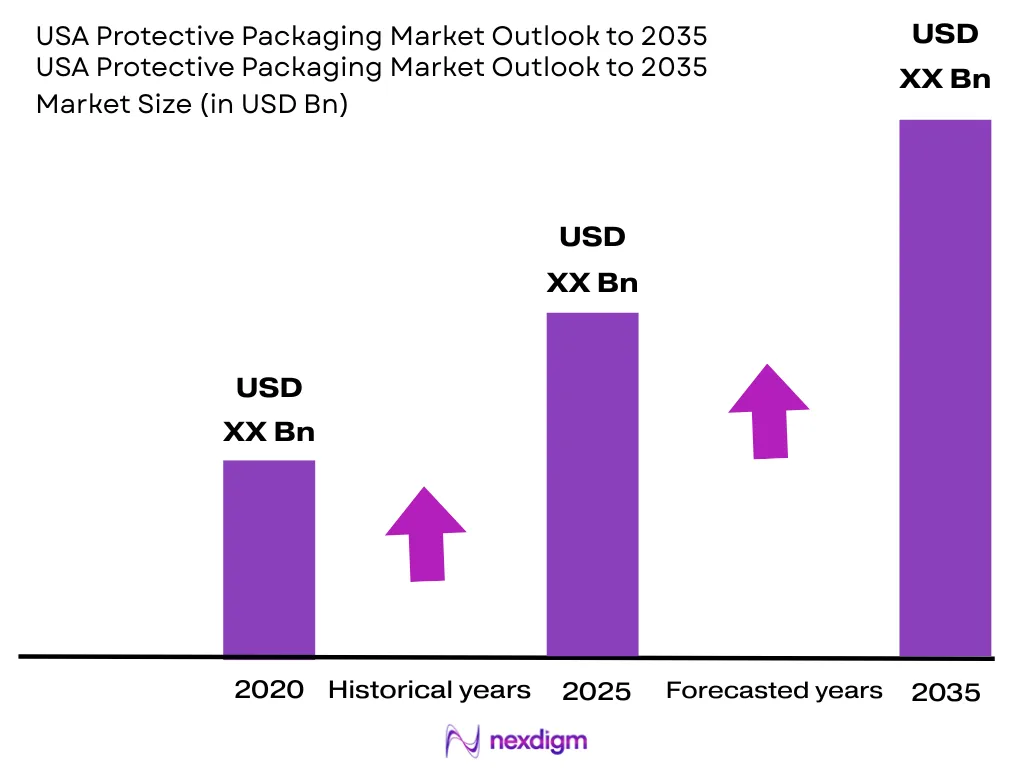
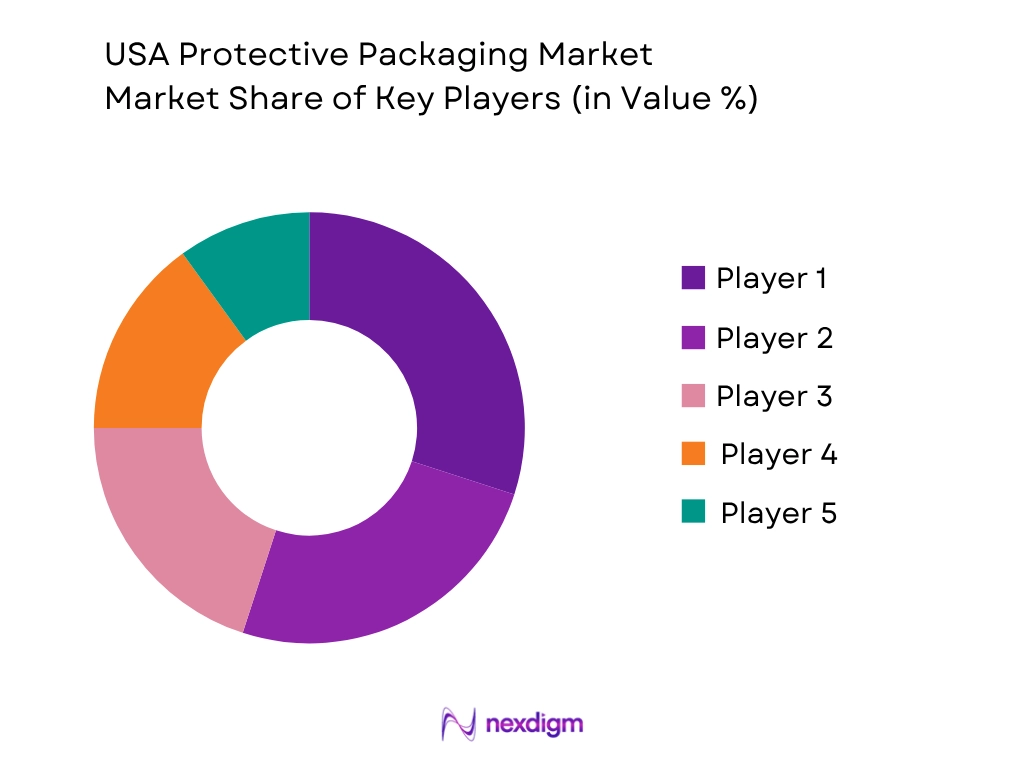
The USA Protective Packaging Market was valued at USD ~ Billion in 2024 and is anticipated to expand at a CAGR of ~% during 2026-2035, tracking growth in the global protective packaging market, valued at approximately USD 38.37 billion in 2024 and projected to reach approximately USD 64.83 billion by 2033. Within the North American market specifically, insulation and thermal packaging represents the second-largest application segment, commanding approximately 20.0% revenue share in 2025, reflecting the sector’s growing importance for cold chain logistics, pharmaceutical distribution, and temperature-sensitive e-commerce shipments. The market’s top five players, Sealed Air Corporation, Pregis LLC, Sonoco Products Company, Smurfit Westrock, and DS Smith, collectively held approximately 28.4% market share in 2025, reflecting a moderately consolidated competitive structure in which continued parcel volume growth, product integrity requirements, and evolving sustainability regulations continue to reshape material selection and automation investment across the industry.
Market Segmentation
By Material Type
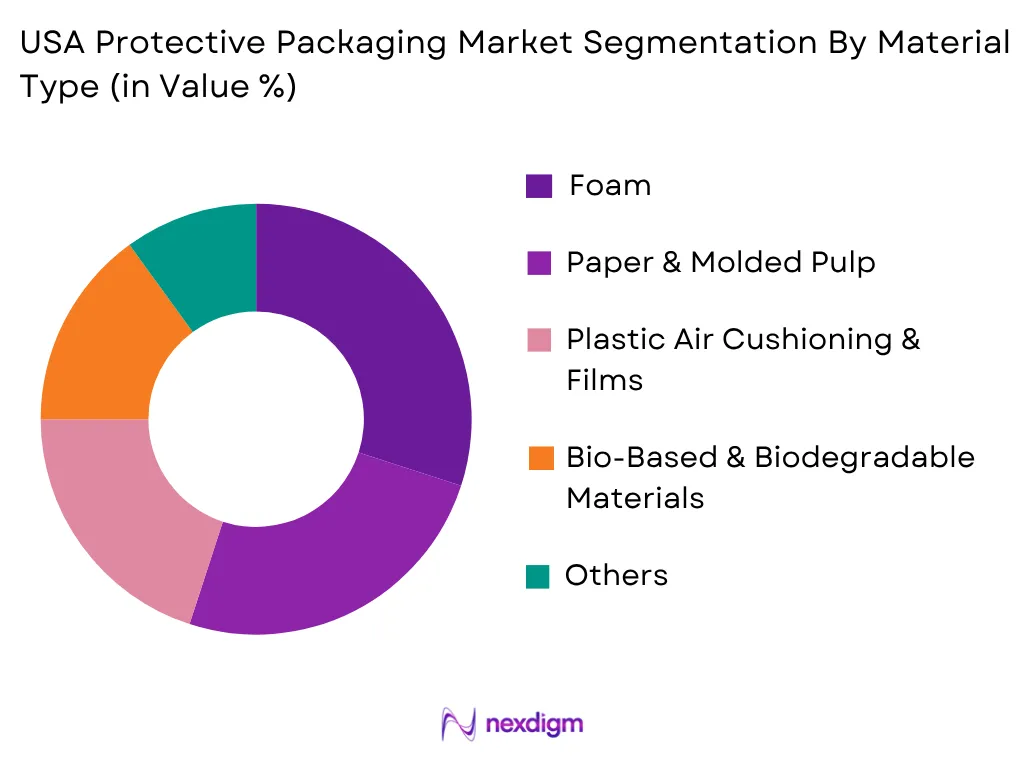
Foam materials, encompassing expanded polystyrene, expanded polyethylene, and polyurethane formats, continue to dominate the USA Protective Packaging Market, with the foam packaging segment commanding approximately 41.5% share of the broader protective packaging systems category given its reliability, cost-effectiveness, and wide applicability across electronics, industrial, and appliance protection. Paper & Molded Pulp represents the fastest-growing material category, directly reflecting both regulatory pressure from state-level expanded polystyrene foam bans and e-commerce brand owners’ accelerating shift toward curbside-recyclable protective formats. Plastic Air Cushioning & Films retain a substantial share, particularly for lightweight e-commerce applications where inflatable cushioning offers superior void-fill efficiency relative to bulkier foam or paper alternatives. Bio-Based & Biodegradable Materials represent an emerging but rapidly scaling category, illustrated by Pregis’s February 2026 launch of a sustainable air cushion packaging film specifically engineered for automated fulfillment operations, designed to reduce plastic usage while maintaining high-performance protective characteristics.
By Product Type
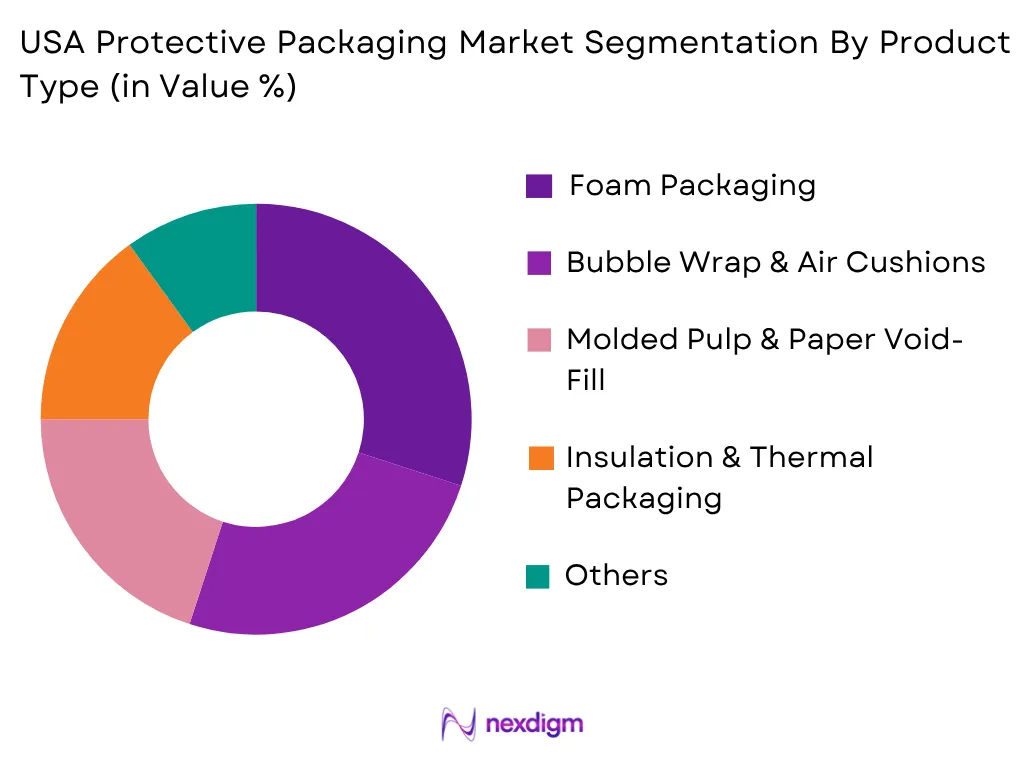
Foam Packaging maintains the largest product-type share within the protective packaging systems category, supported by its continued reliability across electronics, automotive, and appliance protection applications where high-performance cushioning remains essential despite growing sustainability pressure. Bubble Wrap & Air Cushions represent a substantial and rapidly automating segment, exemplified by Sealed Air’s January 2026 expansion of automated air pillow packaging systems for high-volume fulfillment centers serving e-commerce and electronics shipments, integrating smart packaging equipment with digital monitoring tools for optimized packing operations. Molded Pulp & Paper Void-Fill represents the fastest-growing product category, illustrated by Pregis’s January 2026 launch of EasyPack Strata, an on-demand paper packaging system designed for void-fill and cushioning applications in high-volume fulfillment environments. Insulation & Thermal Packaging continues to expand steadily alongside growth in cold chain logistics, pharmaceutical distribution, and temperature-sensitive food and beverage e-commerce shipments requiring validated thermal performance across variable transit conditions.
Competitive Landscape
The USA Protective Packaging Market exhibits a moderately consolidated tiered structure, with Tier 1 companies, including Sealed Air, DS Smith, and Pregis, collectively holding approximately 39% market share as top performers offering high-performance protective solutions backed by substantial global presence and sustainability-oriented innovation pipelines. Tier 2 firms, including Storopack, Pro-Pac Packaging, and Ranpak, have secured approximately 31% of the market through affordable, flexible, paper-based protective packaging solutions serving e-commerce, retail, and industrial customers. Tier 3 encompasses regional and niche players specializing in molded pulp, air cushioning, and biodegradable material formats, collectively holding approximately 30% market share through localized production and specialized protection formats. Sealed Air continues to lead through technology-driven protective packaging innovation, exemplified by its January 2026 expansion of automated air pillow systems integrating digital monitoring tools, while Pregis has pursued aggressive capacity expansion, announcing new North American manufacturing investment in December 2025 alongside successive product launches spanning sustainable air cushion films and on-demand paper packaging systems in early 2026.
| Company | Established | Headquarters | Recyclable/Sustainable Portfolio | Automation & Right-Sizing Portfolio | Manufacturing Presence | Major End-Use Industries | Key Strategic Focus | USA market position |
| Sealed Air Corporation | 1960 | ~
|
~ | ~ | ~ | ~ | ~ | ~ |
| Pregis LLC | 2011 | ~
|
~ | ~ | ~ | ~ | ~ | ~ |
| Sonoco Products Company | 1899 | ~
|
~ | ~ | ~ | ~ | ~ | ~ |
| Smurfit Westrock plc | 2024 | ~ | ~ | ~ | ~ | ~ | ~ | ~ |
| Ranpak Holdings Corp. | 1972 | ~
|
~ | ~ | ~ | ~ | ~ | ~ |
USA Protective Packaging Market Analysis
Growth Drivers
E-Commerce Parcel Volume Growth and Automation Investment
The USA protective packaging market is experiencing sustained growth due to continued expansion of e-commerce parcel volumes, which continue to drive demand for damage-reducing, freight-optimized protective packaging across fulfillment centers nationwide. Sealed Air’s January 2026 expansion of automated air pillow packaging systems for high-volume fulfillment centers serving e-commerce and electronics shipments, integrating smart packaging equipment with digital monitoring tools, illustrates the scale of automation investment major suppliers are directing toward this segment. Rightsizing technology, which helps minimize waste and reduce freight costs by eliminating unnecessary void space, continues to gain adoption as e-commerce fulfillment operators seek to optimize both protective performance and shipping economics simultaneously. As parcel volumes continue climbing and fulfillment operators increasingly prioritize pack station throughput and labor efficiency, sustained investment in automated protective packaging systems capable of integrating seamlessly with paper, inflatable cushioning, and foam solutions is expected to continue driving market growth across the forecast period.
State-Level EPS Foam Bans Driving Fiber-Based Substitution
An expanding patchwork of state-level bans on expanded polystyrene foam packaging continues to accelerate the USA protective packaging market’s structural shift toward paper-based and fiber alternatives. Pregis’s January 2026 launch of EasyPack Strata, an on-demand paper packaging system designed for void-fill and cushioning applications in high-volume fulfillment environments, directly reflects this regulatory-driven material transition, as does the company’s broader expansion of biodegradable and foam-free protective formats for e-commerce customers. Increasing parcel shipments, rising consumer expectations for product integrity, and growing adoption of lightweight paper- and air-based cushioning solutions have collectively strengthened demand for compliant alternatives to conventional foam packaging. As additional states continue evaluating or implementing similar foam restrictions, protective packaging suppliers that have already invested in scalable, high-performance paper-based cushioning and void-fill systems are increasingly well positioned to capture share from brand owners and fulfillment operators seeking to proactively align with tightening state-level packaging regulations.
Market Challenges
Consolidated Top-Tier Competition and Margin Pressure
The USA Protective Packaging Market’s moderately consolidated competitive structure, in which the top five players collectively hold approximately 28.4% market share and Tier 1 companies alone command approximately 39% share, creates significant competitive pressure for mid-tier and smaller suppliers seeking to differentiate against well-capitalized global players with substantial research and development budgets. Established leaders including Sealed Air, Pregis, and Sonoco continue to invest heavily in automation, digital monitoring integration, and sustainable material innovation, raising the competitive bar for smaller regional converters lacking comparable capital resources. This competitive intensity is further compounded by the scale advantages large fulfillment center customers can negotiate when sourcing from major suppliers capable of providing integrated equipment, materials, and technical support across multiple facility locations simultaneously, making it increasingly difficult for smaller, regionally focused protective packaging suppliers to compete for large national e-commerce and electronics accounts without comparable automation and sustainability credentials.
Balancing Protective Performance with Sustainability Mandates
The USA Protective Packaging Market continues to navigate an inherent tension between maintaining high-performance protective packaging capable of preventing product damage and satisfying accelerating sustainability mandates and consumer expectations. Foam packaging continues to command approximately 41.5% share of the protective packaging systems category specifically because of its reliability, cost-effectiveness, and wide applicability across electronics, automotive, and appliance protection, even as state-level regulatory pressure and brand owner sustainability commitments continue pushing the industry toward paper-based and fiber alternatives. Paper and molded pulp alternatives, while increasingly capable, do not always match the cushioning performance, moisture resistance, or cost profile of established foam formats across every application category, creating genuine technical trade-offs that packaging suppliers and brand owners must navigate on a category-by-category basis. This tension between performance requirements and sustainability expectations continues to shape material selection decisions and R&D investment priorities across the industry, particularly for high-value electronics and fragile goods where protective failure carries substantial cost and customer experience consequences.
Market Opportunities
Growth in On-Demand and Automated Packaging Systems
Continued investment in on-demand and automated protective packaging systems creates substantial opportunity for suppliers capable of integrating advanced equipment with sustainable materials at fulfillment center scale. Pregis’s successive early-2026 product launches, spanning EasyPack Strata’s on-demand paper packaging system in January and a sustainable air cushion packaging film engineered for automated fulfillment operations in February, illustrate the pace of innovation suppliers are directing toward this segment, following the company’s December 2025 announcement of expanded North American manufacturing capacity. Sealed Air’s parallel investment in automated air pillow systems integrating digital monitoring tools for high-volume fulfillment centers further signals that automation and smart packaging integration are becoming central competitive battlegrounds rather than secondary considerations. As e-commerce and electronics fulfillment operators continue prioritizing pack station throughput, labor cost reduction, and consistent protective performance across shifts, suppliers offering integrated automated systems combining scalable equipment with recyclable or fiber-based materials are well positioned to capture premium contract positioning from large-scale fulfillment customers.
Cold Chain and Thermal Insulation Packaging Expansion
Growing demand for temperature-controlled logistics across pharmaceutical, food and beverage, and specialty e-commerce categories creates substantial opportunity for protective packaging suppliers specializing in insulation and thermal formats. Insulation and thermal packaging already represents the second-largest application segment in the North American protective packaging market, commanding approximately 20.0% revenue share in 2025, reflecting sustained structural demand for validated temperature-controlled shipping solutions. As cold chain logistics investment continues expanding to support growing e-grocery delivery, biologics distribution, and temperature-sensitive specialty food shipments, suppliers capable of providing validated thermal insulation systems alongside conventional protective packaging are well positioned to diversify revenue beyond commoditized cushioning and void-fill categories. Companies such as Sonoco, which maintains dedicated temperature-controlled packaging solutions alongside its broader molded foam and paper-based insert portfolio, illustrate the type of diversified capability increasingly valued by customers seeking a single supplier capable of addressing both conventional protective packaging and specialized thermal performance requirements.
Future Outlook
The USA Protective Packaging Market is expected to witness steady expansion over the forecast period, supported by continued e-commerce parcel volume growth, accelerating automation investment from leading suppliers, and sustained regulatory pressure driving the industry’s transition toward paper-based and fiber alternatives to conventional foam packaging. Continued investment in on-demand packaging systems, digital monitoring integration, and cold chain thermal insulation capability will further shape competitive positioning across the industry’s tiered structure. The market is also likely to benefit from growing brand owner and fulfillment operator emphasis on rightsizing technology and freight optimization, as suppliers increasingly compete on the ability to simultaneously deliver protective performance, sustainability credentials, and shipping cost efficiency.
Major Players
- Sealed Air Corporation
- Pregis LLC
- Sonoco Products Company
- Smurfit Westrock plc
- Ranpak Holdings Corp.
- Storopack Hans Reichenecker GmbH
- International Paper Company
- DS Smith plc
- Huhtamaki Oyj
- ProAmpac Holdings, Inc.
- Intertape Polymer Group Inc.
- Automated Packaging Systems, Inc.
- UFP Technologies, Inc.
- Cascades Inc.
- EcoEnclose
Key Target Audience
- Protective Packaging Manufacturers
- E-Commerce Marketplaces & Fulfillment Operators
- Electronics & Industrial Manufacturers
- Food, Beverage & Pharmaceutical Cold Chain Operators
- Furniture & Appliance Manufacturers
- Investment and Venture Capitalist Firms
- Government and Regulatory Bodies (U.S. Environmental Protection Agency (EPA), State Departments of Environmental Conservation, Federal Trade Commission (FTC))
- Raw Material Suppliers and Resin Producers
Research Methodology
Step 1: Identification of Key Variables
The research process begins with identifying the complete ecosystem of the USA Protective Packaging Market, including raw material suppliers, packaging converters, automation technology providers, e-commerce and industrial end users, and regulatory authorities. Extensive secondary research is conducted using company annual reports, government publications, trade associations, customs statistics, industry journals, and proprietary databases to determine the variables influencing market demand, pricing, production, consumption, and technological developments.
Step 2: Market Analysis and Construction
Historical market information is collected and analyzed to estimate market size, production volumes, import-export activity, application-wise demand, and pricing trends. A combination of top-down and bottom-up approaches is used to estimate market revenues and validate segment-level performance. Consumption patterns across e-commerce, electronics, industrial, and cold chain applications are evaluated to establish an accurate representation of the industry.
Step 3: Hypothesis Validation and Expert Consultation
The preliminary findings are validated through Computer-Assisted Telephone Interviews (CATIs) and structured discussions with protective packaging manufacturers, procurement managers, distributors, packaging engineers, fulfillment operations executives, and senior executives operating within the US packaging industry. These interviews help verify market assumptions, competitive developments, technology adoption trends, pricing dynamics, and future investment opportunities while refining the overall market estimates.
Step 4: Research Synthesis and Final Output
The final stage integrates insights obtained from primary interviews with quantitative information collected through secondary sources. Data triangulation techniques are applied to reconcile differences between supply-side and demand-side estimates, ensuring robust market forecasting. The report is then reviewed through multiple quality assurance checkpoints to deliver a comprehensive analysis covering market size, segmentation, competitive landscape, future outlook, and strategic recommendations for industry stakeholders.

- Executive Summary
- Research Methodology (Market Definitions and Assumptions, Abbreviations, Market Sizing Approach, Top-Down Analysis, Bottom-Up Analysis, Demand-Side Assessment, Supply-Side Assessment, Primary Industry Interviews, Secondary Research Validation, Data Triangulation, Forecasting Framework, Limitations and Future Conclusions)

- Definition and Scope
- Market Evolution and Industry Genesis
- Timeline of Major Industry Developments
- Protective Packaging Industry Value Chain Analysis
- Supply Chain Analysis

- Growth Drivers (E-Commerce Parcel Volume Growth & Automation Investment, State-Level EPS Foam Bans Driving Fiber-Based Substitution, Rightsizing Technology Adoption, Growth in Cold Chain & Pharmaceutical Logistics, Electronics & High-Value Goods Shipment Growth, Rising Damage Reduction & Freight Cost Optimization Focus)
- Market Challenges (Consolidated Top-Tier Competition & Margin Pressure, Balancing Protective Performance with Sustainability Mandates, Raw Material Price Volatility, State-by-State Regulatory Patchwork, Continued Foam Dependency in High-Performance Applications, Labor and Automation Capital Investment Costs)
- Market Opportunities (Growth in On-Demand & Automated Packaging Systems, Cold Chain & Thermal Insulation Packaging Expansion, Recyclable & Curbside-Compatible Material Innovation, Smart Packaging with Digital Monitoring Integration, Molded Fiber & Paper-Based Cushioning Growth, Electronics & Medtech Export-Compliant Packaging Demand)
- Market Trends (Growth in Paper-Based Void-Fill Adoption, Automated Air Pillow & Cushioning Systems, Rightsizing & Freight Optimization Technology, Smart Packaging & Digital Monitoring Tools, Recyclable Mono-Material Format Development, Molded Fiber Innovation for Electronics Protection)
- Government Regulations (State-Level Expanded Polystyrene (EPS) Foam Bans, California SB 54 Extended Producer Responsibility, Fair Packaging and Labeling Act (FPLA) Requirements, State Recycled-Content Mandates, Federal Motor Carrier Safety Administration (FMCSA) Packaging Standards, Hazardous Materials Packaging Compliance)
- Import and Export Analysis (Trade Volume, Major Import Sources, Export Destinations, HS Code Analysis, Trade Balance)
- Raw Material Availability Analysis (Virgin & Recycled Polyethylene Resin, Kraft Paper & Molded Pulp Feedstock, Expanded Polystyrene Beads, Recovered Corrugated Fiber, Bio-Based Foam Alternatives)
- Technology Landscape (Automated Air Cushion & Pillow Systems, On-Demand Paper Packaging Systems, Rightsizing & Box-Sizing Software, Molded Fiber Forming Technologies, Digital Monitoring & Smart Packaging Platforms)
- Sustainability Assessment (Recyclable & Curbside-Compatible Material Adoption, Recycled Content Utilization, Foam-to-Fiber Material Substitution, Void-Space Reduction & Freight Emission Impact, Circular Economy Partnerships)
- PESTLE Analysis
- SWOT Analysis
- Porter’s Five Forces Analysis
- Stakeholder Ecosystem
- Competition Ecosystem

- By Market Value (2020-2025)
- By Volume Consumption (2020-2025)
- By Average Selling Price (2020-2025)

- By Material Type (In Value %)
Foam (EPS, EPE & Polyurethane)
Paper & Molded Pulp
Plastic Air Cushioning & Films
Corrugated & Paperboard Inserts
Bio-Based & Biodegradable Materials - By Product Type (In Value %)
Bubble Wrap & Air Cushions
Foam Packaging (Sheets, Rolls & Loose-Fill)
Molded Pulp & Paper Void-Fill
Corrugated Inserts & Dividers
Insulation & Thermal Packaging
Protective Mailers - By Application (In Value %)
E-Commerce & Retail
Electronics
Industrial & Automotive
Food & Beverage (Cold Chain)
Pharmaceuticals & Healthcare
Furniture & Appliances - By End User (In Value %)
E-Commerce Fulfillment Centers
Electronics Manufacturers
Industrial & Automotive Manufacturers
Food & Pharmaceutical Cold Chain Operators
Furniture & Appliance Manufacturers - By Region (In Value %)
Northeast
Midwest
South
West
Pacific

- Market Share of Major Players (By Value, Volume, Material Type, Application, Product Category)
- Cross Comparison Parameters (Product Portfolio Breadth, Automation & On-Demand System Capability, Sustainability Certification Coverage, Application Technical Support, Manufacturing Capacity, Regulatory Compliance & Certifications, E-Commerce & Electronics Customer Base, Innovation & New Product Launch Frequency)
- SWOT Analysis of Major Players
- Pricing Analysis by Product Category and Format
- Production Capacity Analysis
- Manufacturing Footprint Analysis
- Distribution Network Analysis
- Innovation Benchmarking
- Detailed Profiles of Major Companies
Sealed Air Corporation
Pregis LLC
Sonoco Products Company
Smurfit Westrock plc
Ranpak Holdings Corp.
Storopack Hans Reichenecker GmbH
International Paper Company
DS Smith plc
Huhtamaki Oyj
ProAmpac Holdings, Inc.
Intertape Polymer Group Inc.
Automated Packaging Systems, Inc.
UFP Technologies, Inc.
Cascades Inc.
EcoEnclose

- Consumption Pattern Analysis (Order Volume, Batch Size, Product Category Penetration, Peak Season Demand, Fulfillment Automation Adoption)
- Purchasing Criteria (Damage Protection Performance, Sustainability Credentials, Cost per Shipment, Automation Compatibility, Regulatory Compliance, Freight Optimization)
- Procurement and Supplier Selection Analysis
- Recycled-Content Adoption Assessment
- Automated vs Manual Packing Station Demand
- Product Attribute Preference Analysis (Cushioning Performance, Recyclability, Void-Fill Efficiency, Thermal Insulation Capability, Automation Line Compatibility, Cost Efficiency)
- Sustainability & Regulatory Compliance Influence on Packaging Investment
- Pain Point Analysis
- Decision-Making Process

- By Market Value (2026-2035)
- By Volume Consumption (2026-2035)
- By Average Selling Price (2026-2035)


 Request a Sample
 Ask for Customization
 Get a Quote
 Enquire Now