
 Download PDF
Market Overview
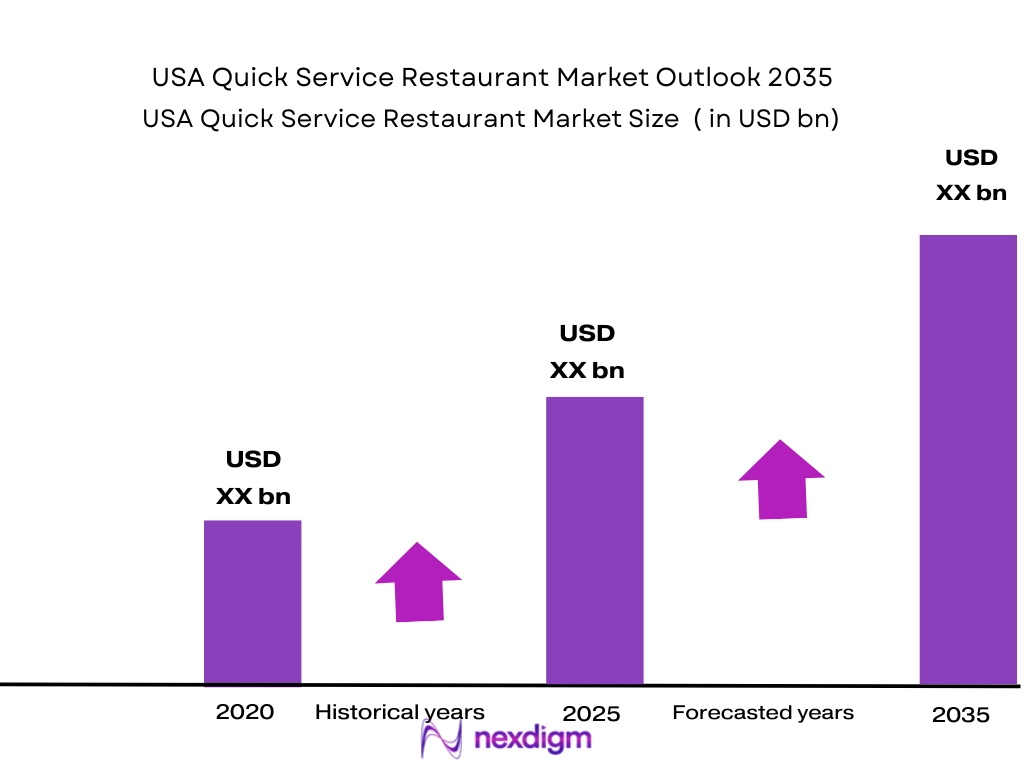
The USA Quick Service Restaurant market is valued at USD ~ billion in 2024, with a forecasted CAGR of around 3.4% during 2024–2030. Growth is driven by high consumer dependence on fast, affordable meals, sustained demand for burgers, sandwiches, pizza, and Mexican food, and increased use of mobile ordering, restaurant automation, drive-thru technology, and business intelligence tools. Limited-service restaurant spending reached USD 550.7 billion in 2024, showing the broader strength of convenience-led foodservice demand.
California, Texas, Florida, New York, Nevada, Hawaii, and Washington, DC dominate QSR demand due to dense populations, tourism, commuter flows, and high food-away-from-home spending. California had 39,431,263 residents, Texas 31,290,831, Florida 23,372,215, and New York 19,867,248 in recent population estimates. Washington, DC recorded USD 11,364 per capita food-away-from-home purchases, followed by Hawaii at USD 7,131, Nevada at USD 7,007, and California at USD 5,504, supporting strong QSR transaction density.
Market Segmentation
By Product Type
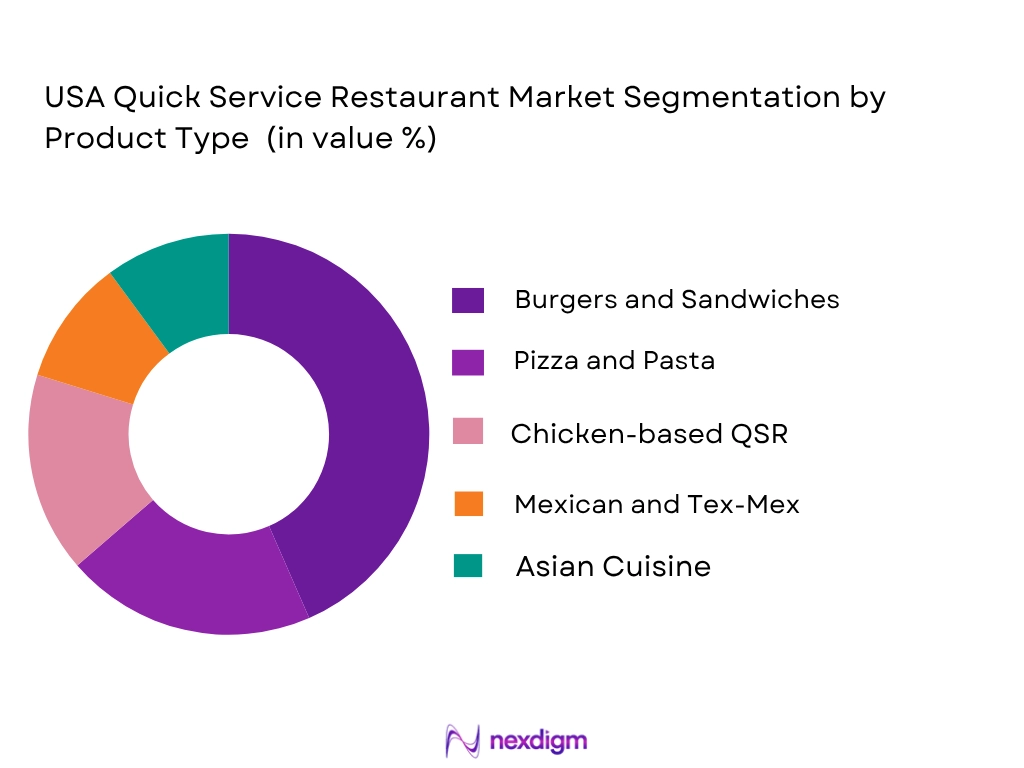
The USA Quick Service Restaurant market is segmented by product type into hamburgers, sandwiches and subs, pizza, Mexican and Tex-Mex, and others. Hamburgers hold the dominant market share in the product type segment, supported by long-standing consumer preference, wide availability, high order frequency, and the national footprint of brands such as McDonald’s, Burger King, Wendy’s, Sonic, and Five Guys. The segment benefits from standardized preparation, efficient drive-thru suitability, broad price coverage from value meals to premium burgers, and constant innovation through plant-based patties, limited-time toppings, breakfast burgers, and bundled meals. Burgers also perform well across dine-in, takeaway, delivery, and drive-thru formats, making them highly adaptable for QSR operators. Their cultural association with American fast food further strengthens repeat consumption and brand loyalty.
By Service Type
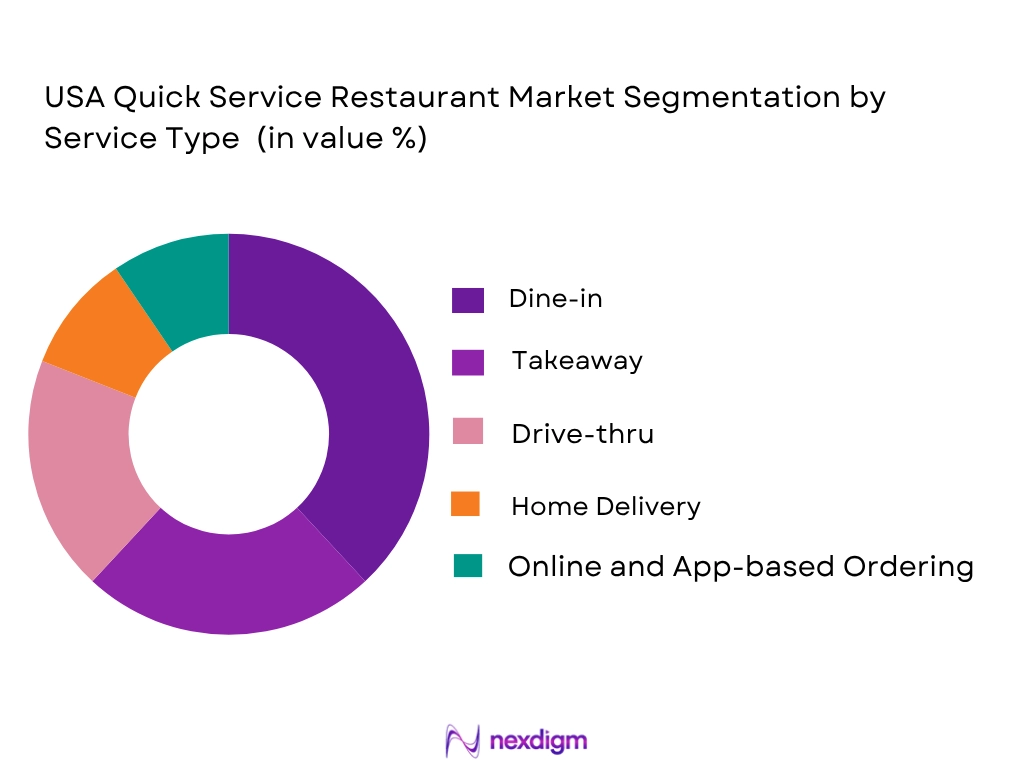
The USA Quick Service Restaurant market is segmented by service type into takeaway, drive-thru, delivery, and dine-in. Takeaway dominates the service type segment because it aligns directly with the core QSR value proposition of speed, affordability, convenience, and minimal waiting time. Consumers use takeaway for workday meals, school routines, highway stops, urban lunch breaks, and family meal occasions where speed matters more than table service. Operators also favor takeaway because it supports high throughput, lower space requirements, and simplified labor deployment compared with full dine-in formats. The segment is further supported by digital ordering, mobile pickup shelves, loyalty-app ordering, and curbside pickup. While delivery is expanding rapidly, takeaway remains stronger because it avoids third-party delivery fees, protects margins, and allows customers to control order timing and freshness.
Competitive Landscape
The USA Quick Service Restaurant market is highly competitive and led by large national and global chains with established franchise systems, standardized menus, strong purchasing power, and technology-enabled ordering platforms. Major players compete through value menus, loyalty programs, breakfast expansion, delivery partnerships, drive-thru optimization, product innovation, and store-format redesign. The competitive structure is led by brands with nationwide store networks, while regional and independent QSRs compete through local menus, ethnic cuisines, and neighborhood loyalty.
| Company | Establishment Year | Headquarters | Core Cuisine | Business Model | Digital Ordering Strength | Drive-thru Presence | Loyalty Program | Key Competitive Advantage |
| McDonald’s Corporation | 1940 | Chicago, Illinois | ~ | ~ | ~ | ~ | ~ | ~ |
| Starbucks Corporation | 1971 | Seattle, Washington | ~ | ~ | ~ | ~ | ~ | ~ |
| Chick-fil-A, Inc. | 1946 | Atlanta, Georgia | ~ | ~ | ~ | ~ | ~ | ~ |
| Yum! Brands, Inc. | 1997 | Louisville, Kentucky | ~ | ~ | ~ | ~ | ~ | ~ |
| Chipotle Mexican Grill, Inc. | 1993 | Newport Beach, California | ~ | ~ | ~ | ~ | ~ | ~ |
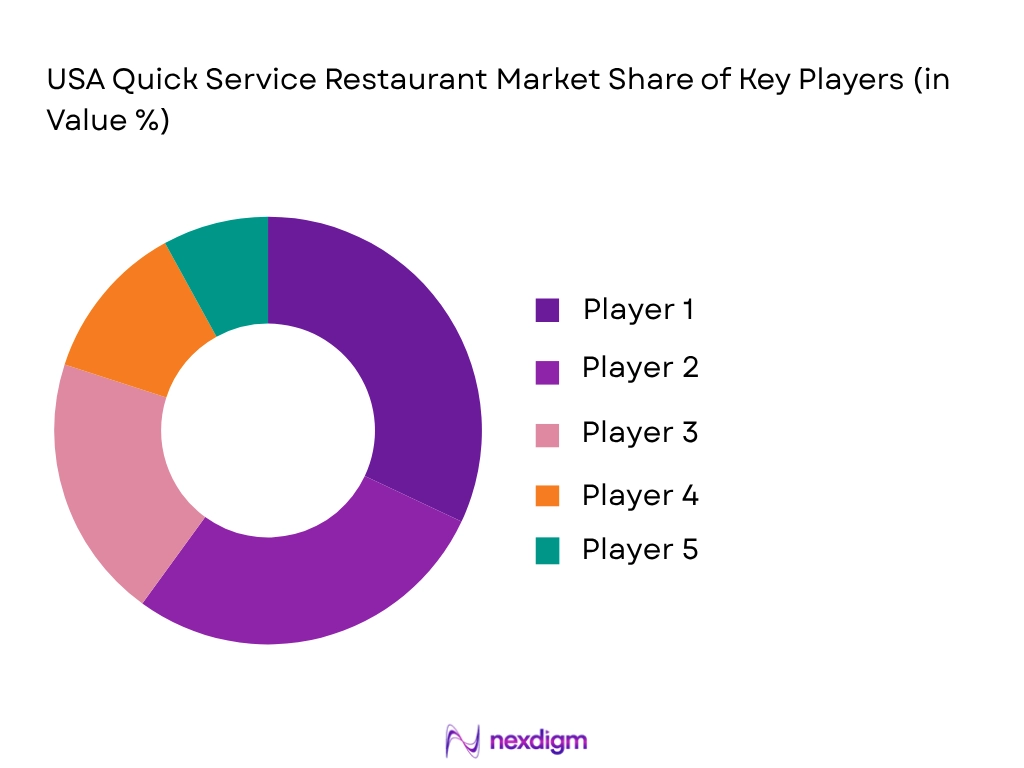
USA Quick Service Restaurant Market Analysis
Growth Drivers
Rising Demand for Convenient and Affordable Food Options
The USA quick service restaurant market is strongly driven by consumers’ need for convenient, fast, and affordable meal solutions. Busy work schedules, dual-income households, student lifestyles, and limited time for cooking have increased dependence on QSR formats. Consumers prefer restaurants that provide quick service, standardized taste, predictable pricing, and easy access across locations. Affordability also remains important, especially as inflation affects household spending. QSR brands attract price-sensitive customers through value meals, bundled offers, limited-time discounts, and combo menus. The ability to serve breakfast, lunch, dinner, and snacks at competitive prices makes QSRs relevant across multiple consumption occasions. As consumers continue prioritizing speed, accessibility, and cost efficiency, demand for quick service restaurants is expected to remain steady.
Expansion of Drive-thru and Delivery Services
Drive-thru and delivery services have become major growth drivers for the USA QSR market. Consumers increasingly prefer contactless, convenient, and time-saving food access, especially during work breaks, travel, and family routines. Drive-thru formats allow QSR brands to serve high customer volumes quickly while reducing dependence on dine-in seating. At the same time, delivery partnerships and in-house delivery systems have expanded the reach of restaurants beyond physical locations. Mobile ordering, curbside pickup, and third-party delivery platforms have made QSR meals easier to access from homes, offices, and campuses. These services improve customer convenience and increase order frequency. Brands investing in faster drive-thru lanes, delivery-optimized packaging, and digital order management are better positioned to capture demand.
Market Challenges
Rising Labor Costs and Workforce Shortages
Rising labor costs and workforce shortages remain significant challenges for the USA quick service restaurant market. QSR operations depend heavily on frontline employees for food preparation, order taking, cleaning, and customer service. However, many restaurants face difficulty hiring and retaining workers due to wage pressure, high employee turnover, and competition from other service industries. Minimum wage increases in several states have further raised operating expenses. Since QSRs typically operate on thin margins, higher labor costs can directly affect profitability. To manage this challenge, brands are investing in automation, self-ordering kiosks, simplified menus, and workforce scheduling tools. However, technology adoption requires capital investment. Balancing employee costs, service quality, and operational efficiency remains a key concern.
Increasing Food Ingredient and Supply Chain Costs
Increasing food ingredient and supply chain costs create pressure on profitability across the USA QSR market. QSR brands require consistent supplies of meat, poultry, dairy, vegetables, packaging materials, oils, and beverages. Price volatility in these inputs can significantly affect operating costs, especially for brands with fixed-price value menus. Supply chain disruptions, transportation expenses, labor shortages in logistics, and climate-related agricultural impacts can increase procurement costs. Restaurants may respond by raising menu prices, reducing portion sizes, changing suppliers, or simplifying menus. However, excessive price increases can reduce customer traffic, particularly among value-conscious consumers. Maintaining affordability while protecting margins is difficult. Strong supplier relationships, inventory planning, menu engineering, and long-term procurement contracts are becoming increasingly important.
Opportunities
Expansion of Health-focused and Plant-based Menu Offerings
Health-focused and plant-based menu offerings present a strong opportunity for QSR brands in the USA. Consumers are becoming more conscious of nutrition, calorie intake, protein quality, sustainability, and dietary restrictions. This has created demand for salads, grilled items, low-calorie beverages, vegetarian options, plant-based proteins, and customizable meals. QSR brands that traditionally focused on burgers, fried foods, and sugary drinks can attract new customer segments by broadening healthier menu choices. Plant-based offerings also appeal to flexitarian consumers who want meat alternatives without fully adopting vegetarian diets. However, taste, pricing, and product quality are critical for success. Brands that combine convenience with healthier positioning can improve customer retention, strengthen brand image, and compete with fast-casual restaurant chains.
Growth of AI, Automation, and Self-ordering Kiosks
AI, automation, and self-ordering kiosks offer major growth opportunities for the USA quick service restaurant market. These technologies help QSR brands improve speed, reduce order errors, control labor costs, and enhance customer experience. Self-ordering kiosks allow customers to browse menus, customize meals, and place orders without waiting in line. AI-powered drive-thru systems can support voice ordering, personalized recommendations, and faster service during peak hours. Automation in kitchens can improve consistency in food preparation and reduce dependence on manual labor. Data analytics also helps brands understand customer preferences, optimize pricing, and manage inventory more effectively. Although technology implementation requires investment, it can improve long-term efficiency, scalability, and profitability for QSR operators.
Future Outlook
The USA Quick Service Restaurant market is expected to record steady growth over the next five years, supported by convenience-led dining habits, franchise expansion, and digital ordering adoption. Operators are expected to focus on faster service, stronger customer retention, automation, and delivery efficiency. Drive-thru and pickup-first store formats will continue to gain relevance, especially in suburban and highway locations. Healthier meals, premium ingredients, and ethnic cuisine innovation will also shape the market through 2035.
Major Players
- McDonald’s Corporation
- Starbucks Corporation
- Chick-fil-A, Inc.
- Yum! Brands, Inc.
- Chipotle Mexican Grill, Inc.
- Restaurant Brands International Inc.
- Subway IP LLC
- Domino’s Pizza, Inc.
- The Wendy’s Company
- Dunkin’ Brands
- Papa John’s International, Inc.
- Inspire Brands, Inc.
- Little Caesars Enterprises Inc.
- Jack in the Box Inc.
- Panda Restaurant Group
Key Target Audience
- Quick Service Restaurant Chains
- Fast Casual Restaurant Operators
- Franchise Owners and Multi-unit Operators
- Food Delivery and Aggregator Platforms
- Commercial Real Estate Developers
- Food and Beverage Manufacturers
- Investments and Venture Capitalist Firms
- Government and Regulatory Bodies
Research Methodology
Step 1: Identification of Key Variables
The initial phase involves constructing an ecosystem map covering major stakeholders in the USA Quick Service Restaurant market. This includes QSR chains, franchise operators, delivery platforms, food suppliers, packaging providers, technology vendors, and regulators. The objective is to identify the variables that influence market size, revenue growth, pricing, channel mix, and consumer demand.
Step 2: Market Analysis and Construction
In this phase, historical market data is compiled and analyzed across product type, service type, outlet model, region, and consumer behavior. Revenue generation is assessed through order frequency, average transaction value, store density, digital order penetration, and delivery contribution. The analysis also evaluates limited-service foodservice spending and chain-level performance to build a validated market view.
Step 3: Hypothesis Validation and Expert Consultation
Market hypotheses are validated through structured interviews with restaurant operators, franchise managers, foodservice suppliers, delivery partners, and technology vendors. These discussions help verify assumptions related to pricing, menu performance, consumer preferences, labor pressure, digital adoption, and margin trends. Expert inputs are then used to refine the segmentation and competitive analysis.
Step 4: Research Synthesis and Final Output
The final phase involves synthesizing desk research, company-level information, public foodservice data, and expert insights into a structured market report. The output includes market size, segmentation, competitive landscape, growth drivers, future outlook, key target audience, and FAQs. This step ensures consistency between top-down foodservice indicators and bottom-up company and channel-level findings.

- Executive Summary
- Research Methodology (Market Definitions and Assumptions, Abbreviations, Market Sizing Approach, Consolidated Research Approach, Understanding Market Potential Through In-Depth Industry Interviews, Primary Research Approach, Limitations and Future Conclusions)

- Definition and Scope
- Market Dynamics Overview
- Market Genesis
- Major Players and Market Timeline
- Business Cycle and Trends
- Supply Chain and Value Chain Analysis

- Growth Drivers
Rising Demand for Convenient and Affordable Food Options
Expansion of Drive-thru and Delivery Services
Increasing Adoption of Digital Ordering Platforms
Growth in Urbanization and Busy Consumer Lifestyles
Product Innovation and Menu Customization
Expansion of Franchise-based Business Models
Rising Popularity of Value Meals and Combo Offers - Market Challenges
Rising Labor Costs and Workforce Shortages
Increasing Food Ingredient and Supply Chain Costs
High Competition Among Major QSR Brands
Changing Consumer Preferences Toward Healthier Food Options
Regulatory and Food Safety Compliance Challenges
Pressure on Margins Due to Delivery Platform Commissions - Opportunities
Expansion of Health-focused and Plant-based Menu Offerings
Growth of AI, Automation, and Self-ordering Kiosks
Increasing Penetration of Loyalty Programs and Mobile Apps
Expansion in Suburban and Non-metro Locations
Cloud Kitchen and Delivery-only QSR Models
Partnerships with Food Delivery Aggregators
Development of Sustainable Packaging Solutions - Key Trends
Shift Toward Digital-first Restaurant Operations
Growth of Drive-thru-only and Pickup-focused Formats
Increasing Use of Automation and Kitchen Robotics
Growing Demand for Healthier and Customizable Meals
Rise of Loyalty Programs and Personalized Promotions
Sustainability in Packaging and Restaurant Operations
Premiumization of Fast-food Menu Items - Government Regulations
- SWOT Analysis
- Porter’s Five Forces

- By Value, 2020–2025
- By Number of Outlets, 2020–2025
- By Average Transaction Value, 2020–2025

- By Product Type (In Value %)
Burgers and Sandwiches
Pizza and Pasta
Chicken-based QSR
Mexican and Tex-Mex
Asian Cuisine - By Service Model (In Value %)
Dine-in
Takeaway
Drive-thru
Home Delivery
Online and App-based Ordering - By End-User (In Value %)
Individuals
Families
Students
Working Professionals
Travelers and Commuters
Others - By Ownership Model (In Value %)
Company-Owned Outlets
Franchise-Owned Outlets - By Distribution Channel (In Value %)
Offline Ordering
Brand-owned Websites and Mobile Apps
Third-party Delivery Platforms
Kiosks and Self-service Terminals
Drive-thru Channels - By Region (In Value %)
Northeast
Midwest
South
West
Rest of USA

- Market Share of Major Players by Value/Revenue
- Market Share of Major Players by Number of Outlets
- Market Share of Major Players by Cuisine Type
- Cross Comparison Parameters (Company Overview, Business Strategies, Recent Developments, Strengths, Weaknesses, Organizational Structure, Revenues, Revenues by Cuisine Type Number of Outlets, Franchise Network, Distribution Channels, Average Order Value, Digital Presence, Delivery Partnerships, Margins, Unique Value Offering, Others)
- SWOT Analysis of Major Players
- Pricing Analysis Based on Menu Categories for Major Players
- Detailed Profiles of Major Companies
McDonald’s
Starbucks
Chick-fil-A
Taco Bell
Wendy’s
Burger King
Subway
Domino’s Pizza
Pizza Hut
KFC
Dunkin’
Chipotle Mexican Grill
Popeyes Louisiana Kitchen
Sonic Drive-In
Arby’s
Panera Bread
Jack in the Box
Dairy Queen
Little Caesars
Panda Express

- Market Demand and Consumption Patterns
- Purchasing Power and Spending Behavior
- Consumer Preferences and Dining Habits
- Needs, Desires, and Pain Point Analysis
- Decision-Making Process
- Brand Loyalty and Switching Behavior

- By Value, 2026–2035
- By Number of Outlets, 2026–2035
- By Average Transaction Value, 2026–2035


 Request a Sample
 Ask for Customization
 Get a Quote
 Enquire Now