
 Download PDF
 Download PDF
Market Overview
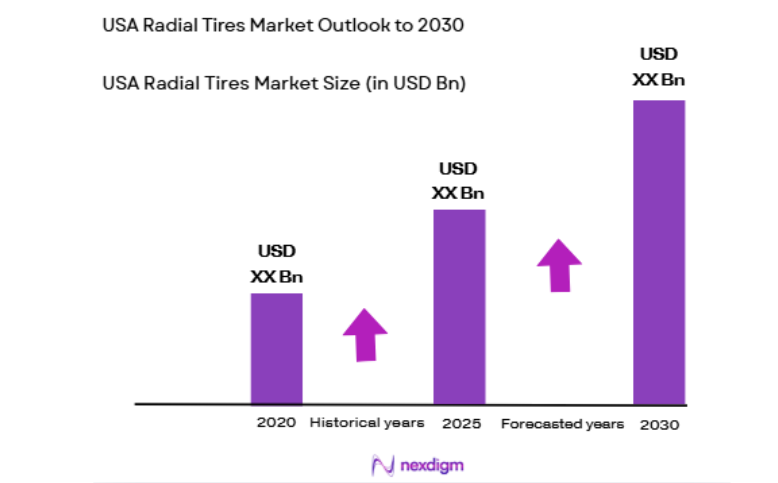
The USA Radial Tires Market is valued at approximately USD ~ billion based on recent assessments. The market has witnessed consistent growth, driven by the rising demand for automotive vehicles, both passenger and commercial, in the country. Additionally, technological advancements in tire manufacturing, including enhanced durability and fuel efficiency, have played a significant role in the growth of the market. The expansion of electric vehicles (EVs) has also contributed to market development by pushing the demand for specialized tires that support the unique requirements of EVs.
Dominant regions in the market include major automotive manufacturing hubs like Michigan, Ohio, and California. These regions have a high concentration of automobile manufacturers and associated industries, driving demand for radial tires. Additionally, California stands out due to its progressive stance on environmental regulations, encouraging the adoption of fuel-efficient tires. The presence of numerous tire manufacturing plants and distribution networks also adds to the dominance of these areas.
Market Segmentation
By Product Type
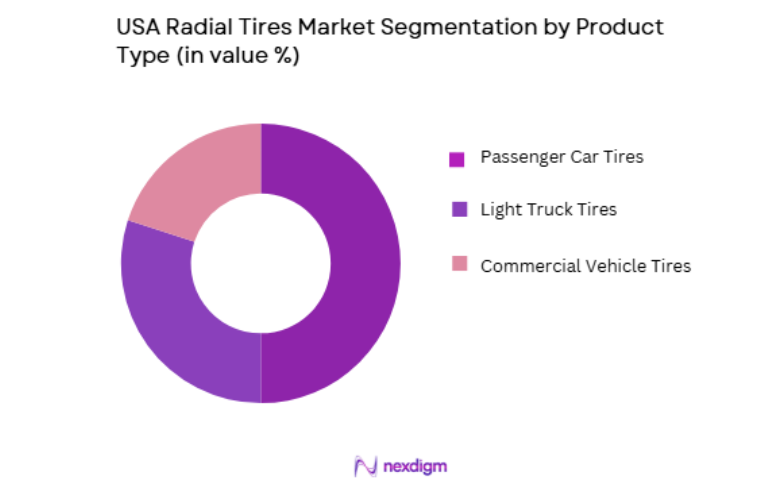
USA Radial Tires market is segmented by product type into passenger car tires, light truck tires, and commercial vehicle tires. Recently, passenger car tires have a dominant market share due to factors such as the increasing number of vehicles on the road and consumer preferences for high-performance, durable tires. Moreover, advancements in tire technology, such as low rolling resistance and noise reduction features, have fueled the demand for passenger car tires. The wide availability of these tires across retail networks and online platforms further strengthens their position in the market.
By Vehicle Type
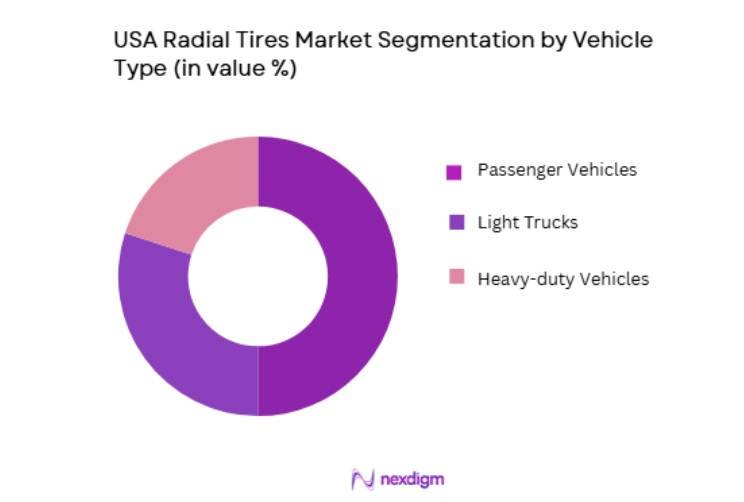
USA Radial Tires market is segmented by vehicle type into passenger vehicles, light trucks, and heavy-duty vehicles. Passenger vehicles dominate the market due to the steady rise in demand for personal automobiles and their higher replacement cycle. The robust demand for tires in urban areas and the popularity of SUVs and crossovers are major contributors. As consumer preference shifts towards fuel-efficient tires for passenger vehicles, manufacturers have focused on innovations that cater specifically to this segment.
Competitive Landscape
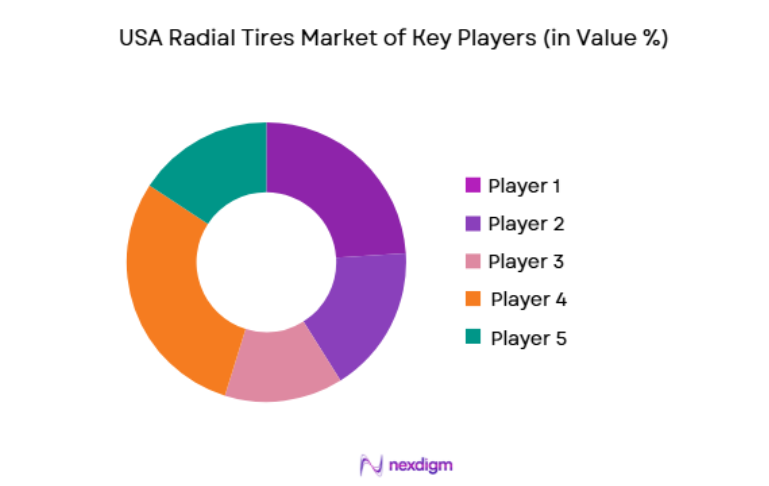
The competitive landscape of the USA Radial Tires market is marked by a strong presence of established tire manufacturers, such as Michelin, Bridgestone, and Goodyear. The industry has witnessed significant consolidation, with large players acquiring smaller companies to expand their market reach and technological capabilities. These companies are heavily investing in R&D to improve tire performance and sustainability, aiming to capitalize on the growing demand for high-performance and eco-friendly products.
| Company Name | Establishment Year | Headquarters | Technology Focus | Market Reach | Key Products | Revenue | Additional Parameter |
| Michelin | 1889 | Clermont-Ferrand, FR | ~ | ~ | ~ | ~ | ~ |
| Bridgestone | 1931 | Tokyo, JP | ~ | ~ | ~ | ~ | ~ |
| Goodyear | 1898 | Akron, USA | ~ | ~ | ~ | ~ | ~ |
| Continental | 1871 | Hanover, DE | ~ | ~ | ~ | ~ | ~ |
| Pirelli | 1872 | Milan, IT | ~ | ~ | ~ | ~ | ~ |
USA Radial Tires Market Analysis
Growth Drivers
Rising Demand for Automotive Vehicles
The USA Radial Tires market is driven by the growing demand for automobiles, particularly in urban and suburban areas. As the number of vehicles on the road continues to increase, the need for tire replacements rises, fueling market growth. Consumer preferences are also shifting towards vehicles that require high-performance tires. This shift is supported by technological advancements in tire designs, including increased durability, improved fuel efficiency, and better handling. As more consumers choose premium vehicles and electric cars, there is an upsurge in demand for specialized tires, further boosting the market.
Advances in Tire Technology
Technological innovation in tire design is a significant driver of market growth. Manufacturers are increasingly investing in R&D to develop tires that provide improved performance, durability, and efficiency. Features such as reduced rolling resistance, longer tread life, and better fuel efficiency have made radial tires more attractive to consumers. Moreover, the trend towards electric vehicles has led to the development of tires that cater to the specific needs of these cars, such as quieter operation and lower weight. These innovations ensure that consumers have access to more durable and cost-effective tires, driving the market forward.
Market Challenges
Volatile Raw Material Prices
One of the primary challenges facing the USA Radial Tires market is the fluctuation in the prices of raw materials like natural rubber and synthetic polymers. The cost of these materials can vary significantly due to global supply chain disruptions and trade policies. Such volatility can lead to unpredictability in production costs, which in turn impacts the pricing of radial tires. Manufacturers are often forced to pass these increased costs onto consumers, potentially reducing demand for high-priced tires. Furthermore, the high reliance on raw material imports exposes the industry to geopolitical risks, making it a challenging environment for tire producers.
Increasing Regulatory Pressure on Environmental Impact
Regulatory frameworks around tire disposal and environmental impact are becoming more stringent, particularly regarding waste management and carbon emissions. In response, tire manufacturers are investing in sustainable materials and production processes to reduce their environmental footprint. However, complying with these regulations can increase production costs and limit the development of certain tire technologies. The rising pressure from environmental organizations and government regulations is creating an additional challenge for manufacturers, as they need to balance sustainability efforts with profitability.
Opportunities
Growth in Electric Vehicle Adoption
With the increasing adoption of electric vehicles (EVs) in the USA, there is a significant opportunity for tire manufacturers to create specialized products tailored to EVs. These vehicles have different requirements compared to traditional vehicles, including the need for tires that support higher torque, lower rolling resistance, and quieter operation. As more governments implement policies that support EV adoption, tire manufacturers can capitalize on this growth by producing high-quality, eco-friendly tires designed specifically for electric vehicles, ensuring they capture a new and expanding customer base.
Expansion of Aftermarket Tire Services
Another significant opportunity lies in the expansion of the aftermarket services sector, particularly in tire replacement and maintenance. As consumers keep their vehicles longer, the demand for tire replacements and related services increases. With the rise of e-commerce and online tire sales, there is a growing trend of consumers purchasing tires online and having them installed at nearby service centers. This shift in consumer behavior presents an opportunity for tire companies to expand their reach by investing in direct-to-consumer services, online platforms, and strategic partnerships with service providers.
Future Outlook
The USA Radial Tires market is expected to experience steady growth over the next five years, driven by advancements in tire technology and a shift toward more sustainable and fuel-efficient solutions. The rise of electric vehicles is anticipated to boost demand for specialized tires, while continued growth in the automotive sector will contribute to steady demand for replacement tires. Increased investment in R&D by tire manufacturers will likely lead to further innovations, ensuring that the market remains competitive and responsive to consumer needs.
Major Players
- Michelin
- Bridgestone
- Goodyear
- Continental
- Pirelli
- Hankook
- Yokohama
- Cooper Tires
- Toyo Tires
- Falken Tire
- Nexen Tire
- Kumho Tires
- General Tire
- BFGoodrich
- Uniroyal
Key Target Audience
- Investments and venture capitalist firms
- Government and regulatory bodies
- Automotive OEMs
- Tire distributors
- Retailers and wholesalers
- Automotive aftermarket service providers
- E-commerce platforms
- Fleet operators
Research Methodology
Step 1: Identification of Key Variables
This step involves identifying the key factors influencing the USA Radial Tires market, including market drivers, challenges, and technological advancements. Primary and secondary data sources are used to identify trends and market dynamics.
Step 2: Market Analysis and Construction
The market is analyzed by evaluating historical data and current market conditions. Detailed segmentation and analysis are conducted to understand different market segments, focusing on consumer preferences and geographical trends.
Step 3: Hypothesis Validation and Expert Consultation
In this step, hypotheses regarding market trends and growth potential are validated through expert consultations and feedback. Industry professionals and key stakeholders are engaged to refine assumptions and forecasts.
Step 4: Research Synthesis and Final Output
The final output synthesizes all findings into a comprehensive report. This includes a detailed market analysis, growth drivers, challenges, opportunities, and a competitive landscape overview, providing stakeholders with actionable insights.

- Executive Summary
- Research Methodology (Definitions, Scope, Industry Assumptions, Market Sizing Approach, Primary & Secondary Research Framework, Data Collection & Verification Protocol, Analytic Models & Forecast Methodology, Limitations & Research Validity Checks)

- Market Definition and Scope
- Value Chain & Stakeholder Ecosystem
- Regulatory / Certification Landscape
- Sector Dynamics Affecting Demand
- Strategic Initiatives & Infrastructure Growth

- Growth Drivers
Increased vehicle production and sales
Growth in the automotive aftermarket
Advancements in tire technology - Market Challenges
Fluctuating raw material prices
Environmental impact concerns
Regulatory compliance hurdles - Market Opportunities
Expansion in electric vehicle tire demand
Adoption of smart tire technologies
Growth in emerging markets - Trends
Growing demand for fuel-efficient tires
Shift towards high-performance tires
Rise of tire recycling technologies - Government regulations
- SWOT analysis
- Porters 5 forces

- By Market Value, 2019-2025
- By Installed Units, 2019-2025
- By Average System Price, 2019-2025
- By System Complexity Tier, 2019-2025

- By System Type (In Value%)
Passenger Car Tires
Light Truck Tires
Heavy Truck Tires
Motorcycle Tires
Bus Tires - By Platform Type (In Value%)
Land Vehicles
Off-road Vehicles
Racing Vehicles
Heavy Equipment
Agricultural Vehicles - By Fitment Type (In Value%)
OEM Fitment
Replacement Fitment
Custom Fitment
Retrofit Fitment
Performance Fitment - By EndUser Segment (In Value%)
Automotive Manufacturers
Tire Dealers & Retailers
Automobile Service Centers
Fleet Operators
End Consumers - By Procurement Channel (In Value%)
Direct Procurement
Retail Distribution
Wholesale Distribution
Online Sales

- Market Share Analysis
- Cross Comparison Parameters (Price, Performance, Durability, Brand Recognition, Distribution Network, Technological Innovation, Environmental Impact, Market Reach, Consumer Preferences, Warranty Services)
- SWOT Analysis of Key Competitors
- Pricing & Procurement Analysis
- Key Players
Bridgestone Americas
Goodyear Tire & Rubber Company
Michelin North America
Continental Tire the Americas
Pirelli North America
Cooper Tire & Rubber Company
Hankook Tire America Corp.
Toyo Tire U.S.A. Corp.
BFGoodrich Tires
Yokohama Tire Corporation
Sumitomo Rubber Industries
Apollo Tyres Ltd.
Kumho Tire
Nokian Tyres
Tire Rack

- Growing adoption of electric vehicles and their tire needs
- Increased demand for tires in the commercial sector
- The role of tire maintenance in fleet operations
- Consumer shift towards online tire procurement

- Forecast Market Value, 2026-2030
- Forecast Installed Units, 2026-2030
- Price Forecast by System Tier, 2026-2030
- Future Demand by Platform, 2026-2030


 Request a Sample
 Ask for Customization
 Get a Quote
 Enquire Now