
 Download PDF
Market Overview
The USA renewable energy market is driven by a combination of federal and state-level policies aimed at reducing carbon emissions and transitioning towards clean energy sources. The market size, based on a recent historical assessment, is valued in the billions ~ USD, supported by strong investments in solar, wind, and hydropower energy generation. Technological advancements, declining costs, and growing consumer demand for sustainable solutions have further bolstered market growth. Government incentives, such as tax credits and green energy mandates, also play a pivotal role in accelerating market adoption.
The USA is dominated by states such as California, Texas, and Florida due to their favorable climatic conditions and large-scale renewable energy projects. California leads with its robust solar energy infrastructure, while Texas stands out for wind energy generation. The dominance of these states can be attributed to their proactive renewable energy policies, abundant natural resources, and significant investments in green technologies. Furthermore, the private sector’s commitment to sustainability has been a driving force behind the widespread adoption of renewable energy solutions across these regions.

Market Segmentation
By Product Type
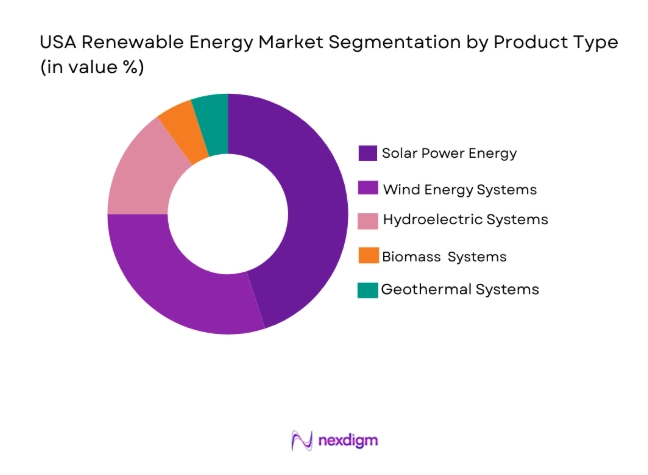
The USA renewable energy market is segmented by product type into solar power systems, wind energy systems, hydroelectric systems, biomass systems, and geothermal systems. Recently, solar power systems have a dominant market share due to their scalability, declining costs, and high demand for both residential and commercial applications. The increasing adoption of solar energy can be attributed to the falling cost of solar panels, incentives such as the federal Investment Tax Credit (ITC), and a growing focus on reducing carbon emissions.
By Platform Type
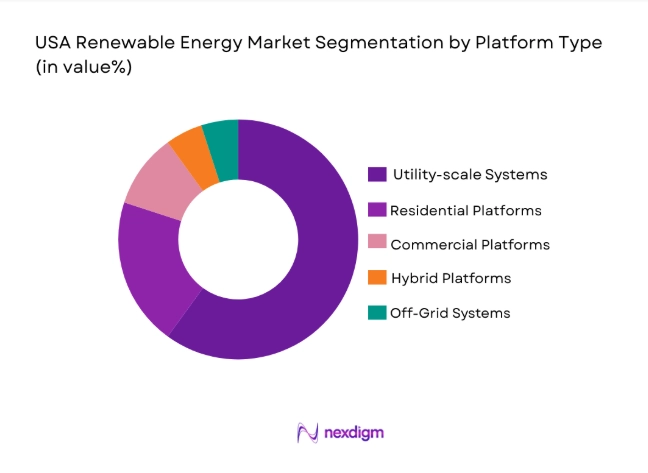
The market is further segmented by platform type into utility-scale platforms, residential platforms, commercial platforms, hybrid platforms, and off-grid platforms. Utility-scale platforms dominate the market due to their ability to generate large amounts of renewable energy for the national grid. These platforms benefit from significant federal support, large infrastructure projects, and economies of scale. As renewable energy demand grows, utility-scale platforms remain the primary source of clean energy for utilities and large enterprises.
Competitive Landscape
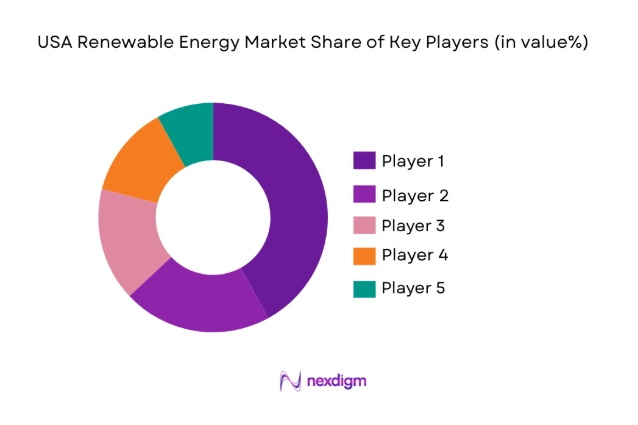
The competitive landscape of the USA renewable energy market is characterized by consolidation, with major players driving technological innovation and market share growth. These players are heavily focused on scaling up renewable energy production, enhancing infrastructure, and increasing access to clean energy solutions. Partnerships, mergers, and acquisitions are common as companies aim to strengthen their market position and meet the increasing energy demands. Major players in the market leverage their technological expertise and financial resources to maintain leadership in the rapidly evolving renewable energy space.
| Company Name | Establishment Year | Headquarters | Technology Focus | Market Reach | Key Products | Revenue (USD) | R&D Investment |
| NextEra Energy | 1925 | Juno Beach, FL | ~ | ~ | ~ | ~ | ~ |
| Ørsted | 1972 | Fredericia, Denmark | ~ | ~ | ~ | ~ | ~ |
| First Solar | 1999 | Tempe, AZ | ~ | ~ | ~ | ~ | ~ |
| Vestas Wind Systems | 1945 | Aarhus, Denmark | ~ | ~ | ~ | ~ | ~ |
| Siemens Gamesa | 1976 | Zamudio, Spain | ~ | ~ | ~ | ~ |
|
USA Renewable Energy Market Analysis
Growth Drivers
Government Incentives & Policies
Government incentives and policies play a crucial role in the growth of the renewable energy market. The USA federal government has implemented numerous incentives, including tax credits, subsidies, and renewable energy mandates, which encourage businesses and homeowners to invest in renewable energy solutions. These incentives significantly reduce the upfront costs of installing renewable energy systems, making them more accessible and financially attractive to a wide range of consumers. Additionally, state-level policies, such as renewable portfolio standards (RPS), further support the adoption of clean energy. As governments continue to prioritize climate action, the support for renewable energy systems is expected to grow, leading to further market expansion.
Technological Advancements
Technological advancements in renewable energy technologies have been a major driver for the market’s growth. Innovations in solar photovoltaic (PV) systems, wind turbines, and energy storage solutions have made renewable energy more efficient and cost-effective. The declining costs of solar panels and wind turbines, coupled with advancements in energy storage, have made it easier to integrate renewable energy into the existing grid infrastructure. These technological breakthroughs are making renewable energy more reliable, reducing dependence on fossil fuels and enabling a transition to a sustainable energy future. As new technologies continue to emerge, the market is expected to see increased growth.
Market Challenges
High Initial Capital Investment
One of the significant challenges facing the USA renewable energy market is the high initial capital investment required for renewable energy projects. While the long-term operational costs of renewable energy systems are lower than conventional energy sources, the upfront capital for installing solar panels, wind turbines, and energy storage systems can be prohibitively expensive for many businesses and consumers. This challenge is particularly prominent in residential and small-scale commercial markets, where financing options may be limited. As a result, the high initial investment remains a barrier to widespread adoption, especially in economically disadvantaged regions.
Regulatory and Permitting Delays
Regulatory hurdles and permitting delays are also significant challenges for the renewable energy market in the USA. The approval process for renewable energy projects can be time-consuming, requiring extensive paperwork, environmental reviews, and coordination with local governments. These delays often result in extended project timelines and increased costs, particularly in states with complex regulatory environments. Although the federal government has made efforts to streamline the permitting process, state-level regulations and local opposition can still slow down the development of new renewable energy projects. These delays can deter potential investors and hinder the overall growth of the market.
Opportunities
Expansion of Solar & Wind Farms
The expansion of solar and wind farms presents a major opportunity for the renewable energy market in the USA. As the country continues to shift towards clean energy, the demand for large-scale renewable energy projects has increased. Solar and wind farms can generate significant amounts of energy, contributing to the grid and reducing reliance on fossil fuels. Furthermore, federal and state policies, such as the Solar Investment Tax Credit (ITC) and the Production Tax Credit (PTC), continue to provide financial incentives for the development of new solar and wind farms. This presents an opportunity for companies to invest in large-scale projects, leading to increased market share and revenue generation.
Increase in Corporate Renewable Energy Procurement
Another opportunity in the USA renewable energy market is the rise in corporate renewable energy procurement. Many corporations are setting ambitious sustainability goals and committing to sourcing a significant portion of their energy needs from renewable sources. This growing trend of corporate sustainability has led to an increased demand for renewable energy contracts, particularly in solar and wind energy. As companies seek to meet their environmental targets and reduce their carbon footprints, they are turning to renewable energy providers for long-term power purchase agreements (PPAs). This trend creates new business opportunities for renewable energy companies, as they can cater to the needs of corporate buyers and expand their market reach.
Future Outlook
The future outlook for the USA renewable energy market is highly optimistic, with continued growth expected in both solar and wind energy sectors. Technological advancements and declining costs will drive further adoption of renewable energy systems across residential, commercial, and industrial segments. The Biden administration’s focus on clean energy and emissions reduction targets will also provide regulatory support, accelerating the transition to renewable energy. As consumer demand for sustainable solutions increases, the market is poised for substantial growth over the next five years, with new opportunities emerging in energy storage and hybrid systems.
Major Players
- NextEra Energy
- Ørsted
- First Solar
- Vestas Wind Systems
- Siemens Gamesa
- Invenergy
- Brookfield Renewable Partners
- Enel Green Power
- Iberdrola
- FirstEnergy
- SunPower Corporation
- EDF Renewables
- Dominion Energy
- NRG Energy
- Tesla
Key Target Audience
- Investments and venture capitalist firms
- Government and regulatory bodies
- Energy sector corporations
- Renewable energy project developers
- Renewable energy equipment manufacturers
- Utility companies
- Environmental organizations
Research Methodology
Step 1: Identification of Key Variables
Identify and define key market variables such as product types, platform types, and geographic regions that will influence market size and growth.
Step 2: Market Analysis and Construction
Analyze historical market trends, competitive dynamics, and growth drivers to construct a detailed market model for forecasting purposes.
Step 3: Hypothesis Validation and Expert Consultation
Validate hypotheses with industry experts, stakeholders, and market players to ensure the model’s assumptions and findings are accurate and aligned with real-world trends.
Step 4: Research Synthesis and Final Output
Synthesize the research findings, validate results through cross-referencing, and prepare the final output, including insights and recommendations for stakeholders.

- Executive Summary
- Research Methodology (Definitions, Scope, Industry Assumptions, Market Sizing Approach, Primary & Secondary Research Framework, Data Collection & Verification Protocol, Analytic Models & Forecast Methodology, Limitations & Research Validity Checks)

- Market Definition and Scope
- Value Chain & Stakeholder Ecosystem
- Regulatory / Certification Landscape
- Sector Dynamics Affecting Demand
- Strategic Initiatives & Infrastructure Growth

- Growth Drivers
Government Incentives & Policies
Technological Advancements in Clean Energy
Increase in Energy Demand and Sustainability Goals - Market Challenges
High Initial Capital Investment
Regulatory and Permitting Delays
Energy Storage Limitations - Market Opportunities
Expansion of Solar & Wind Farms
Rise in Corporate Renewable Energy Procurement
Increasing Demand for Clean Energy Storage - Trends
Integration of Smart Grid Technology
Focus on Offshore Wind Energy - Government Regulations
- SWOT Analysis
- Porter’s Five Forces

- By Market Value, 2020-2025
- By Installed Units, 2020-2025
- By Average System Price, 2020-2025
- By System Complexity Tier, 2020-2025

- By System Type (In Value%)
Solar Power Systems
Wind Energy Systems
Geothermal Systems
Hydropower Systems
Biomass Systems - By Platform Type (In Value%)
Utility-Scale Platforms
Residential Platforms
Commercial Platforms
Hybrid Platforms
Off-Grid Platforms - By Fitment Type (In Value%)
On-site Solutions
Off-site Solutions
Distributed Solutions
Grid-Connected Solutions - By End User Segment (In Value%)
Government & Public Sector
Industrial Sector
Residential Sector

- Market Share Analysis
- Cross Comparison Parameters (System Type, Platform Type, End User Segment, Fitment Type, Technology, Pricing Strategy, Supply Chain Integration)
- SWOT Analysis of Key Competitors
- Pricing & Procurement Analysis
- Key Players
NextEra Energy
Ørsted
First Solar
SunPower Corporation
Brookfield Renewable Partners
Iberdrola
Vestas Wind Systems
GE Renewable Energy
Siemens Gamesa Renewable Energy
Enel Green Power
Invenergy
EDF Renewables
Orsted
Pattern Energy
Brookfield Renewable Partners

- Growing Residential Adoption of Solar Energy
- Government Sector Push for Renewable Energy Integration
- Industrial Sector’s Shift to Clean Energy Solutions
- Increased Demand for Clean Energy in Commercial Real Estate

- Forecast Market Value, 2026-2035
- Forecast Installed Units, 2026-2035
- Price Forecast by System Tier, 2026-2035
- Future Demand by Platform, 2026-2035


 Request a Sample
 Ask for Customization
 Get a Quote
 Enquire Now