

 Download PDF
 Download PDF
Market Overview
The USA Retreaded Tires market is valued at approximately USD ~ billion based on a recent historical assessment, reflecting industry data that quantifies retread tire activity within commercial and automotive sectors. Retreaded tires provide a cost‑effective alternative to new tires by refurbishing worn tire casings with new treads, extending usable life and reducing replacement costs for fleet operators and commercial transport businesses. Cost savings, combined with increasing sustainability focus, have helped sustain this segment’s relevance in tire replacement strategies.
The United States dominates the North American retreaded tire landscape due to its extensive commercial transportation and logistics sectors, where retreads are extensively deployed on trucks, buses, and service fleets. Regions such as the Midwest, including Ohio and Michigan, benefit from established manufacturing infrastructure, transportation networks, and services that support retreading operations. These hubs, along with large fleet bases in states like Texas and California, drive demand for retreaded products as operators seek durable, economical solutions for high mileage applications.

Market Segmentation
By Product Type
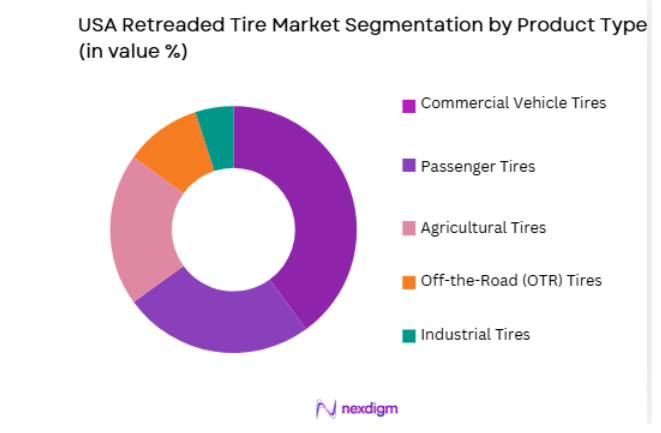
USA Retreaded Tire market is segmented by product type into passenger tires, commercial vehicle tires, agricultural tires, off-the-road (OTR) tires, and industrial tires. Commercial vehicle tires dominate the market share due to factors such as the growing demand for cost-effective solutions in fleet management, longer tire lifespans, and regulatory pressure for sustainability in the transportation industry. Retreaded tires for commercial vehicles are increasingly seen as an efficient and economical choice, especially for businesses looking to cut operational costs. The commercial vehicle sector’s heavy reliance on retreaded tires further strengthens this product category’s market dominance.
By Platform Type
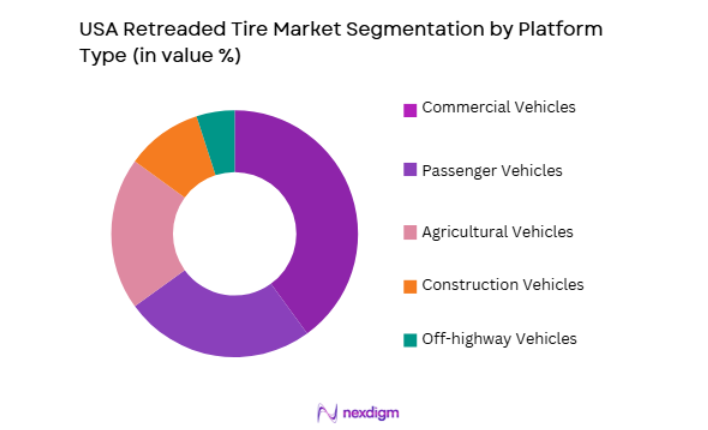
USA Retreaded Tire market is segmented by platform type into passenger vehicles, commercial vehicles, agricultural vehicles, construction and mining vehicles, and off-highway vehicles. The commercial vehicle sector is the largest platform, as fleet operators increasingly turn to retreaded tires to reduce maintenance costs and improve tire efficiency. Commercial vehicles, particularly those in logistics, transportation, and freight, see substantial savings by using retreaded tires while maintaining performance. This has led to the dominance of commercial vehicles in the retreaded tire market, especially as demand for transportation services grows across the country.
Competitive Landscape
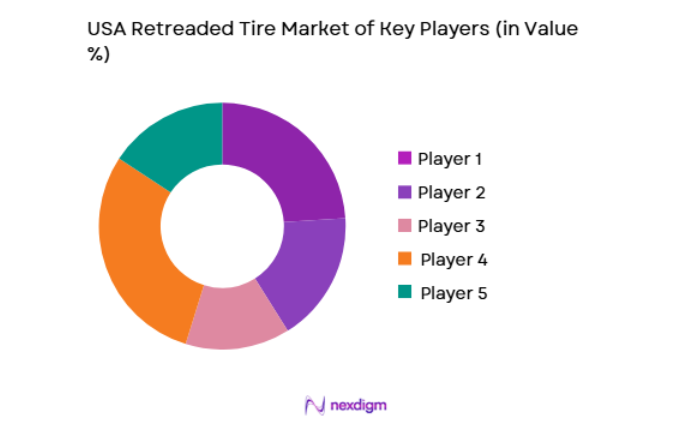
The USA Retreaded Tire market is competitive, with several well-established tire manufacturers and retreading service providers actively participating in the market. The competition is largely based on pricing, quality, and the ability to meet the diverse needs of both consumer and commercial sectors. The market is also influenced by environmental regulations, with companies focusing on developing sustainable retreading technologies. Major players in the market continue to consolidate their positions through strategic partnerships, technological advancements, and expanded service offerings in both the OEM and aftermarket segments.
| Company Name | Establishment Year | Headquarters | Technology Focus | Market Reach | Key Products | Revenue | Additional Market Parameter |
| Bridgestone Corporation | 1931 | Tokyo, Japan | ~ | ~ | ~ | ~ | ~ |
| Goodyear Tire & Rubber | 1898 | Akron, OH, USA | ~ | ~ | ~ | ~ | ~ |
| Michelin | 1889 | Clermont-Ferrand, France | ~ | ~ | ~ | ~ | ~ |
| Bandag | 1957 | Muscatine, IA, USA | ~ | ~ | ~ | ~ | ~ |
| Pirelli | 1872 | Milan, Italy | ~ | ~ | ~ | ~ | ~ |
USA Retreaded Tire Market Analysis
Growth Drivers
Sustainability Initiatives
The increasing emphasis on sustainability and environmental preservation is a major growth driver for the USA Retreaded Tire market. Retreading tires reduces the number of tires disposed of in landfills and helps lower the overall environmental impact of tire production. With growing regulations around waste management and the push for greener practices, businesses and consumers are becoming more inclined to opt for retreaded tires as an eco-friendly alternative. Additionally, various government initiatives that encourage recycling and the reuse of materials are directly contributing to the increasing adoption of retreaded tires in the automotive and commercial sectors. The push towards circular economy models has further increased demand, particularly among fleet operators looking to reduce waste and improve cost efficiency.
Fleet Operators’ Focus on Cost Efficiency
Another key growth driver for the USA Retreaded Tire market is the growing focus of fleet operators on reducing operational costs. Retreaded tires offer a cost-effective alternative to new tires, providing the same level of performance and safety while extending the lifespan of the tires. For fleet operators managing large vehicle fleets, the ability to reuse tires significantly reduces maintenance costs, making retreaded tires a preferred choice. In addition, the high demand for logistics and transportation services, combined with the rising cost of new tires, has prompted fleet owners to look for more affordable and sustainable tire solutions. Retreaded tires have become an essential component of many fleet maintenance strategies, further driving market growth.
Market Challenges
Consumer Perception of Retreaded Tires
A major challenge facing the USA Retreaded Tire market is consumer perception. Despite their cost-effectiveness and environmental benefits, retreaded tires often face skepticism from consumers who perceive them as inferior to new tires. This perception is rooted in concerns about safety, performance, and reliability, particularly in consumer segments such as passenger vehicles. Some consumers still associate retreaded tires with lower quality, which can hinder broader acceptance. Overcoming these perceptions and educating consumers about the safety and advantages of retreaded tires remains a significant challenge for industry players.
Regulatory Hurdles in Retreading Processes
Another challenge is the regulatory framework surrounding tire retreading. In the USA, strict regulations are in place to ensure the safety and quality of retreaded tires. While these regulations are critical for consumer safety, they can increase the complexity and cost of the retreading process. Tire retreaders must adhere to specific standards set by organizations such as the Tire Retread & Repair Information Bureau (TRIB) and the Department of Transportation (DOT). The need to comply with these regulations can make the retreading process more expensive and time-consuming, which may discourage some companies from participating in the market.
Opportunities
Emerging Demand in Emerging Economies
One significant opportunity in the USA Retreaded Tire market is the growing demand for retreaded tires in emerging economies. As these economies develop, the number of vehicles on the road is increasing, leading to a higher demand for tires, including retreaded tires. The affordability and cost-effectiveness of retreaded tires are particularly attractive to fleet operators and consumers in these regions, where tire replacement costs can be a significant financial burden. As the market for retreaded tires expands globally, companies in the USA are well-positioned to tap into these emerging markets, providing cost-effective tire solutions to meet growing demand.
Technological Innovations in Tire Retreading
The USA Retreaded Tire market also presents an opportunity for growth through technological advancements in tire retreading. Innovations such as improved retreading processes, new tire materials, and more efficient manufacturing techniques are driving the development of higher-quality retreaded tires. These technological improvements enhance the performance and durability of retreaded tires, making them an increasingly attractive option for both consumers and fleet operators. Retreaded tires that offer enhanced safety, longer lifespan, and improved fuel efficiency will continue to gain popularity as technology advances, creating new opportunities for market expansion.
Future Outlook
The future outlook for the USA Retreaded Tire market is positive, with continued growth expected over the next five years. As demand for sustainable and cost-effective tire solutions increases, both consumers and businesses are likely to turn to retreaded tires as an alternative to new tires. The market will also benefit from advancements in retreading technology, improving the quality and durability of retreaded tires. Additionally, regulatory support for sustainable practices, particularly in the commercial and fleet sectors, will contribute to the growth of the market. The USA Retreaded Tire market is well-positioned to meet the growing demand for green, cost-efficient tire solutions.
Major Players
- Bridgestone
- Goodyear Tire & Rubber Company
- Michelin
- Bandag
- Pirelli
- Continental AG
- Cooper Tire & Rubber Company
- Toyo Tire Corporation
- Yokohama Rubber Company
- Hankook Tire
- Apollo Tyres
- Sumitomo Rubber Industries
- ZC Rubber
- Nokian Tyres
- Kumho Tire
Key Target Audience
- Investments and venture capitalist firms
- Government and regulatory bodies
- Automotive manufacturers
- Tire manufacturers
- Fleet management companies
- Commercial vehicle operators
- Automotive aftermarket service providers
- Retail tire vendors
Research Methodology
Step 1: Identification of Key Variables
Key market variables, including consumer demand, sustainability trends, and regulatory factors, were identified as crucial drivers of market growth.
Step 2: Market Analysis and Construction
The market was analyzed using both primary and secondary research to construct a comprehensive model, incorporating insights from industry experts and key data points.
Step 3: Hypothesis Validation and Expert Consultation
Consultations with industry experts validated initial hypotheses and provided deeper insights into market dynamics, ensuring accuracy.
Step 4: Research Synthesis and Final Output
The final report synthesized all data points and expert insights to provide a comprehensive overview of the market, its drivers, challenges, and opportunities.

- Executive Summary
- Research Methodology (Definitions, Scope, Industry Assumptions, Market Sizing Approach, Primary & Secondary Research Framework, Data Collection & Verification Protocol, Analytic Models & Forecast Methodology, Limitations & Research Validity Checks)

- Market Definition and ScopeValue
- Chain & Stakeholder Ecosystem
- Regulatory / Certification Landscape
- Sector Dynamics Affecting Demand
- Strategic Initiatives & Infrastructure Growth

- Growth Drivers
Increased Demand for Cost-Effective Tire Solutions
Rising Environmental Concerns and Sustainability Initiatives
Advancements in Retreading Technologies - Market Challenges
Consumer Perception of Retreaded Tires
Regulatory Restrictions on Retreading Processes
Fluctuating Raw Material Prices - Market Opportunitie
Growing Demand for Retreaded Tires in Commercial
FleetsExpansion of Retreading Services in Emerging Economies
Development of High-Performance Retreaded Tires - Trends
Increased Adoption of Retreaded Tires in the Commercial Fleet Sector
Shift Towards Sustainable Practices in the Tire Industry
Advancements in Retreaded Tire Durability and Performance - Government regulations
- SWOT analysis
- Porters 5 forces

- By Market Value, 2019-2025
- By Installed Units, 2019-2025
- By Average System Price, 2019-2025
- By System Complexity Tier, 2019-2025

- By System Type (In Value%)
Retreaded Passenger Tires
Retreaded Commercial Vehicle Tires
Retreaded Agricultural Tires
Retreaded Heavy Equipment Tires
Retreaded Off-the-Road (OTR) Tires - By Platform Type (In Value%)
Passenger Vehicles
Commercial Vehicles
Agricultural Vehicles
Construction and Mining Equipment
Off-highway Vehicles - By Fitment Type (In Value%)
OEM Fitment
Aftermarket Fitment
Direct Fitment
Indirect Fitment
Hybrid Fitment - By End User Segment (In Value%)
Fleet Operators
OEMs
Tire Retailers
Agricultural Equipment Manufacturers
Construction & Mining Operators

- Market Share Analysis
- Cross Comparison Parameters (System Type, Fitment Type, End-User Segment, Procurement Channel, Price Point, Market Reach, Raw Material Cost, Distribution Network, Consumer Preferences, Regulatory Compliance)
- SWOT Analysis of Key Competitors
- Pricing & Procurement Analysis
- Key Players
Bridgestone
Goodyear Tire & Rubber Company
Michelin
Continental AG
Pirelli
Toyo Tire Corporation
Hankook Tire
Marangoni
Bandag
Retread Technologies, Inc.
ZC Rubber
Kumho Tire
Cooper Tire & Rubber Company
Apollo Tyres
Sailun Tire

- Rising adoption of retreaded tires by fleet operators
- Increased use of retreaded tires in commercial vehicles
- Growing demand from agricultural and construction sectors
- Rising preference for environmentally sustainable tire options

- Forecast Market Value, 2026-2030
- Forecast Installed Units, 2026-2030
- Price Forecast by System Tier, 2026-2030
- Future Demand by Platform, 2026-2030


 Request a Sample
 Ask for Customization
 Get a Quote
 Enquire Now