

 Download PDF
 Download PDF
Market Overview
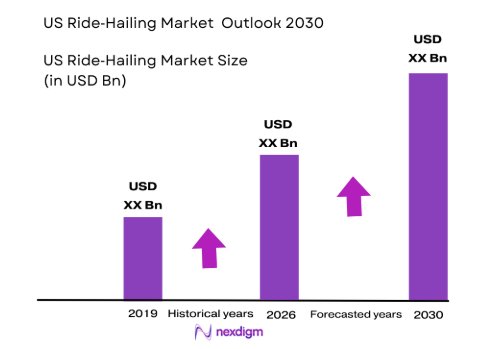
The USA ride-hailing services market was valued at USD ~ billion in 2024 and is anticipated to reach approximately USD~ billion in 2025. This growth is driven by the increasing reliance on mobile-based transportation options, especially in urban areas where consumers seek flexible, convenient, and cost-effective alternatives to traditional car ownership. The market’s expansion is also fuelled by advancements in technology such as mobile app development, GPS navigation systems, and surge pricing algorithms. Additionally, an increasing shift towards shared mobility, coupled with a rise in smartphone penetration and changing consumer preferences toward cashless transactions, continues to boost market demand. Regulatory support, along with improved safety and customer experience, plays a pivotal role in the market’s sustained growth trajectory.
The United States, particularly cities such as New York, Los Angeles, San Francisco, and Chicago, dominate the ride-hailing market due to a combination of factors including dense urban populations, high disposable income, and extensive infrastructure that supports easy access to ride-hailing services. These cities exhibit high adoption rates driven by both consumer demand for on-demand mobility and the proliferation of app-based services. Additionally, cities with progressive regulations, such as California, are seeing growth in services like Uber and Lyft due to favorable laws that regulate transportation networks while encouraging innovation. Other factors contributing to dominance include traffic congestion, limited parking spaces, and the evolving shift away from car ownership in favor of shared services.
Market Segmentation
By Service Type
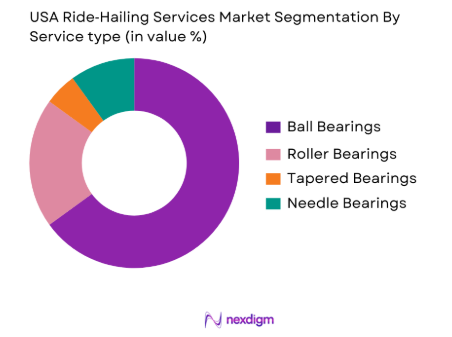
The USA ride-hailing market is segmented by service type into Standard Rides, Shared Rides, Premium Rides, and Micro-Mobility services. The Standard Rides segment is currently dominating the market, driven by its broad consumer base and consistent demand for basic transportation services. Standard ride services, such as UberX and Lyft, are more affordable and are widely used by everyday consumers who prefer convenience over luxury. The rapid adoption of ride-hailing services for commuting, leisure, and even deliveries further cements the dominance of this segment. Additionally, factors such as the availability of ride-hailing services in almost every city and increased access to mobile devices have facilitated the growth of standard rides as the primary mode of ride-hailing in the United States.
By Booking Channel
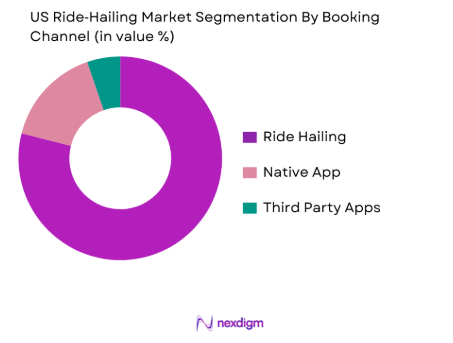
The market is segmented by booking channels into Native App, Third-Party App Integrations, and Corporate Platforms. The Native App segment holds the dominant market share, with ride-hailing giants like Uber and Lyft generating the bulk of their bookings through their proprietary mobile apps. This segment benefits from the convenience and familiarity consumers have with using brand-specific apps for a seamless experience. Moreover, the growing emphasis on customer loyalty programs and app-based promotions helps ride-hailing companies retain users and incentivize frequent bookings. The direct access provided by native apps allows for a better user experience, offering personalized services and integrated payment systems, which are driving the growth of this segment in the U.S.
Competitive Landscape
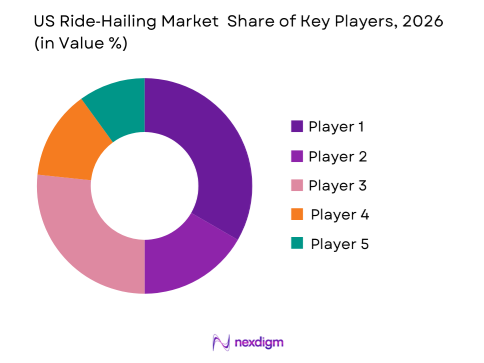
The USA ride-hailing services market is highly competitive, with global players such as Uber and Lyft dominating the landscape. Other players, including Via and local firms, cater to specific niche segments, such as premium services, shared rides, or corporate transport. The competition is also marked by the increasing adoption of autonomous vehicle technologies, which may shape future competitive dynamics. Innovations in fleet management, safety features, pricing strategies, and customer service continue to differentiate the offerings of these leading firms. Moreover, the regulatory environment, particularly in major urban centers, plays a critical role in shaping the operational strategies of these companies.
| Company Name | Establishment Year | Headquarters | Service Type | Fleet Size | User Base | Revenue | Technology |
| Uber Technologies | 2009 | San Francisco, CA | ~ | ~ | ~ | ~ | ~ |
| Lyft, Inc. | 2012 | San Francisco, CA | ~ | ~ | ~ | ~ | ~ |
| Via Transportation | 2012 | New York, NY | ~ | ~ | ~ | ~ | ~ |
| Curb Mobility | 2009 | New York, NY | ~ | ~ | ~ | ~ | ~ |
| Revel (EV Focused) | 2018 | Brooklyn, NY | ~ | ~ | ~ | ~ | ~ |
US Ride-Hailing Market Dynamics & Drivers
Growth Catalysts
Digital Wallet & Contactless Payments
The rise of digital wallets and contactless payments has become a major catalyst in the U.S. ride-hailing market. In 2024, the value of mobile payment transactions in the U.S. reached USD~ trillion, with over 75% of smartphone users in the U.S. utilizing mobile payment solutions like Apple Pay and Google Wallet. This growing adoption of cashless and secure digital transactions has positively impacted the adoption of ride-hailing services, as users now demand convenient, seamless payment options without the need for physical money. Additionally, in 2025, the total number of mobile wallet users in the U.S. was approximately ~ million, a number that is expected to continue rising as more riders and drivers embrace mobile payment options, making ride-hailing services even more accessible and user-friendly.
Micro-Mobility Integration
Micro-mobility solutions like e-scooters and e-bikes are becoming an essential part of the U.S. urban transportation ecosystem. In 2024, the U.S. saw over 10 million e-scooter and e-bike trips, with cities like San Francisco, Washington D.C., and Austin at the forefront of adoption. The U.S. Department of Transportation’s Federal Transit Administration noted that over 20% of public transit riders were integrating micro-mobility for first- and last-mile connections in major urban areas. The trend is being driven by a desire for eco-friendly, cost-effective, and time-efficient alternatives to traditional car travel, especially for short trips. The integration of micro-mobility into existing ride-hailing platforms by companies like Uber and Lyft is expected to further fuel growth in this segment, offering greater flexibility for consumers and reducing the environmental impact of short-distance travel.
Challenges
Driver Retention & Wage Pressure
The U.S. ride-hailing market faces persistent challenges related to driver retention and wage pressure. As of 2024, approximately ~ million drivers were actively working for ride-hailing platforms in the U.S. However, high turnover rates continue to plague the industry, with some studies estimating that up to 50% of drivers leave the platforms within the first year. The increasing pressure on ride-hailing companies to provide fair compensation is compounded by the rising cost of living, particularly in urban areas. In cities like San Francisco, where ride-hailing wages are below the median living wage, driver shortages are becoming more prevalent. As driver retention issues intensify, companies must consider increasing incentives and offering more benefits to maintain a reliable workforce.
Safety & Liability Protocols
In response to safety concerns, U.S. ride-hailing companies are under increasing pressure to strengthen their safety protocols. In 2024, over 300 safety incidents were reported to Uber, with the company facing heightened scrutiny regarding passenger and driver safety. Furthermore, concerns about driver screening, background checks, and insurance coverage have led to increased costs for ride-hailing companies as they comply with evolving safety regulations. The National Highway Traffic Safety Administration (NHTSA) has also initiated new guidelines for ride-hailing companies, mandating stricter driver background checks and vehicle safety standards. As these regulations continue to tighten, companies will face higher operational costs to meet safety and liability requirements, impacting their profitability.
Opportunities
Autonomous Taxi Integration
The growing shift towards autonomous vehicles represents a significant opportunity for the U.S. ride-hailing market. In 2024, Waymo, the autonomous vehicle division of Alphabet Inc., began expanding its fully autonomous taxi service in Phoenix, Arizona. The potential for autonomous taxis to reduce operating costs—by eliminating the need for human drivers—could significantly alter the market dynamics. In addition, the deployment of autonomous vehicles could enhance service availability, allowing ride-hailing companies to operate more efficiently across urban areas with minimal human labour costs. The integration of autonomous taxis is expected to contribute to the growth of ride-hailing services, especially as regulations and safety measures continue to evolve to accommodate these vehicles.
Corporate & Subscription Revenue Streams
Ride-hailing companies are increasingly focusing on diversifying their revenue streams through corporate partnerships and subscription-based models. In 2024, Uber launched its Uber for Business platform, which serves over~corporate clients, providing a dedicated ride-hailing solution for employees. Similarly, Lyft’s subscription service, Lyft Pink, offers members discounted rides, priority support, and other perks. As businesses continue to adopt flexible work models, including hybrid work arrangements, the demand for corporate transportation services is expected to increase, providing ride-hailing companies with a steady source of revenue. Furthermore, subscription-based services cater to the growing consumer preference for convenience and cost-effectiveness, ensuring recurring revenue streams for operators.
Future Outlook
Over the next several years, the USA ride-hailing market is expected to experience significant growth, driven by increasing consumer demand for more convenient, flexible transportation solutions. Advancements in autonomous vehicle technology and the integration of electric vehicles into ride-hailing fleets are anticipated to disrupt traditional models, contributing to a shift toward greener, more efficient rides. Additionally, the expansion of ride-sharing networks and the increase in corporate partnerships are likely to open new revenue streams. Continued regulatory support, along with technological innovations, will also play a crucial role in the market’s evolution.
Major Players
- Uber Technologies Inc.
- Lyft Inc.
- Via Transportation, Inc.
- Curb Mobility LLC
- Revel
- Gett
- Alto Experience, Inc.
- Wingz, Inc.
- Zūm Services, Inc.
- Safr Technologies, Inc.
- Juno
- Arro, Inc.
- RideCo, Inc.
- HopSkipDrive, Inc.
- Lyft Business
Key Target Audience
- Investors and Venture Capitalist Firms
- Government and Regulatory Bodies
- Public Transportation Authorities
- Fleet Management Companies
- Technology Providers
- Automobile Manufacturers
- Corporate Travel & Transport Managers
- Municipal Government Agencies
Research Methodology
Step 1: Identification of Key Variables
The initial phase involves identifying the main stakeholders in the USA ride-hailing market. This includes ride-hailing service providers, drivers, riders, technology enablers, and regulatory bodies. Data will be gathered using a combination of secondary research and proprietary databases, focusing on the evolution of the market and the variables influencing demand and supply.
Step 2: Market Analysis and Construction
During this phase, historical market data will be compiled and analyzed. Key metrics such as market value, growth trends, service type adoption, and pricing models will be evaluated. A comprehensive demand-supply framework will be constructed to capture ride volume, fleet capacity, and utilization rates.
Step 3: Hypothesis Validation and Expert Consultation
Hypotheses regarding market trends and growth drivers will be validated through expert consultations, including industry leaders, operational managers, and regulatory experts. Computer-assisted telephone interviews (CATIs) will provide insights from key players in the field.
Step 4: Research Synthesis and Final Output
The final phase involves synthesizing the data from primary and secondary sources, validating it with insights from consultations with key stakeholders, and ensuring its reliability. This analysis will lead to a robust and accurate forecast, helping stakeholders make informed decisions regarding investments, technology, and policy.

- Executive Summary
- Research Methodology (Market Definitions and Assumptions, Abbreviations, Price & Utilization Index, Driver Supply Model, Market Sizing & Forecasting Approach, Validation Techniques, Gig‑Worker Participation Rate Analysis, Data Sources & Limitations)

- Definition, Ride‑Hailing vs. Ride‑Sharing vs. TNCs
- Service Models
- Industry Genesis & Digital Disruption in Urban Mobility

- Growth Catalysts
Urban Commute Shift
Digital Wallet & Contactless Payments
Micro‑Mobility Integration - Challenges
Regulatory & Licensing Costs
Driver Retention & Wage Pressure
Safety & Liability Protocols - Opportunities
Autonomous Taxi Integration
EV Fleet Optimization & Greener Rides
Corporate & Subscription Revenue Streams - Trends
Surge Pricing Patterns
Cross‑Platform Partnerships
Intermodality with Public Transit

- Total Gross Booking Value, 2019-2025
- Revenue Share by Service Type, 2019-2025
- Ride Volume, 2019-2025
- Average Fare & Yield per Ride, 2019-2025

- By Service Type (In Value %)
Standard/On‑Demand Rides
Shared Rides/Pooling
Premium/Black Car Services
Micro‑Mobility Extensions
Autonomous/Robo‑Taxi Pilots - By Booking Channel (In Value %)
Native App
Partner App Integrations
Corporate & B2B Platforms - By Pricing Model (In Value %)
Dynamic Surge Pricing
Subscription‑Based Rides
Flat & Promotional Pricing - By End User Segment (In Value %)
Individual Consumers
Corporate Pass Programs
Event & Institutional Contract Rides
Government/Transit Partnerships - By Geography (In Value %)
East Coast
West Coast
Central US
South & Southeast

- Market Structure & Market Share (Value & Volume)
- Cross‑Comparison Parameters (Business Overview, Market Share, Revenue Streams, Pricing & Yield Metrics, Driver Supply & Retention Metrics, Service Coverage, Technology Stack & Platform Capabilities, Fleet Composition, Strategic Partnerships & Ecosystems, Profitability & Margin Structure)
- SWOT Analysis
- Price Matrix
- Porter’s Five Forces
- Major Players
Detailed Competitor Profiles
Uber Technologies, Inc.
Lyft, Inc.
Via Transportation, Inc.
Curb Mobility LLC
Wingz, Inc.
Arro, Inc.
Zūm Services, Inc.
Alto Experience, Inc.
Gett, Inc.
HopSkipDrive, Inc.
RideCo Inc.
Safr Technologies, Inc.
Juno
Revel
Local/Regional Operators

- Rider Demand Elasticity & Price Sensitivity
- Driver Supply Elasticity & Incentive Response
- Utilization Rates by Market Tier
- Passenger Retention Metrics
- Satisfaction & NPS Indicators

- Market Value Projection, 2019-2025
- Ride Volume & Utilization Outlook, 2019-2025
- Average Fare Outlook, 2019-2025
- Service Type Demand Trajectories, 2019-2025


 Request a Sample
 Ask for Customization
 Get a Quote
 Enquire Now