

 Download PDF
 Download PDF
Market Overview
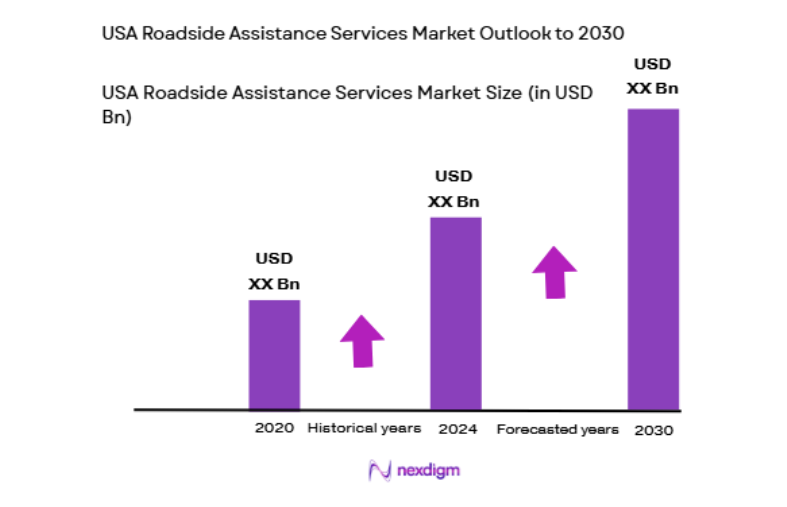
The USA Roadside Assistance Services Market has seen significant growth driven by increasing vehicle ownership, demand for convenience, and a rise in consumer awareness regarding emergency services. The market size for roadside assistance services in the USA has reached USD ~ billion in 2024, with continued expansion expected due to growing dependence on vehicles and technological integration into service models. The increase in urbanization and longer travel distances have further propelled the demand for roadside support services. This market is mainly fueled by partnerships between roadside assistance providers and insurance companies, automotive manufacturers, and technology firms aiming to enhance customer service offerings.
The dominance of key players in metropolitan cities such as New York, Los Angeles, and Chicago can be attributed to high vehicle ownership rates and extensive road networks. These cities also feature robust infrastructure, offering service providers the ability to deliver efficient and timely roadside assistance. Additionally, states with vast rural areas, like Texas and Florida, show a growing demand for long-distance towing and emergency roadside assistance, further increasing the market’s reach. These regions benefit from well-developed service hubs, allowing providers to cater to both urban and rural populations effectively.
Market Segmentation
By Service Type
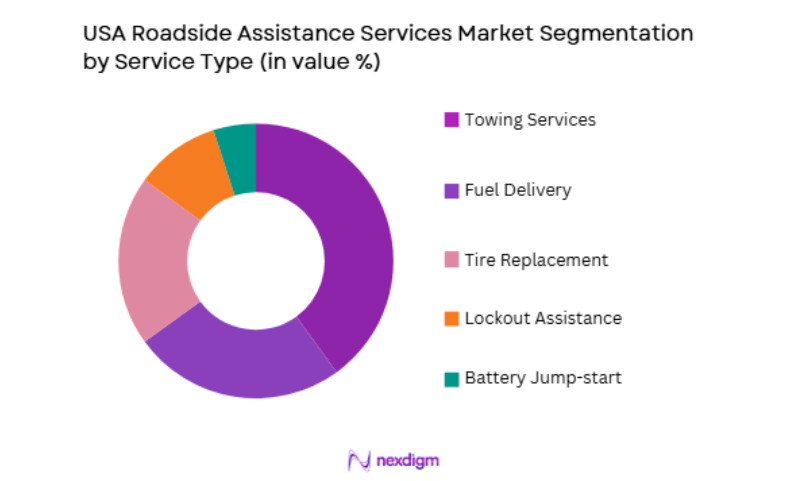
The USA Roadside Assistance Services market is segmented by service type into towing services, fuel delivery, tire replacement, lockout assistance, and battery jump-starts. Recently, towing services have seen the largest share due to the increasing incidence of vehicle breakdowns, accidents, and long-distance travel. Consumers often prefer reliable and quick towing to get their vehicles to the nearest repair shop, driving the demand for towing services in the USA. The convenience and peace of mind provided by these services also contribute to their dominance in the market.
By Technology Adoption
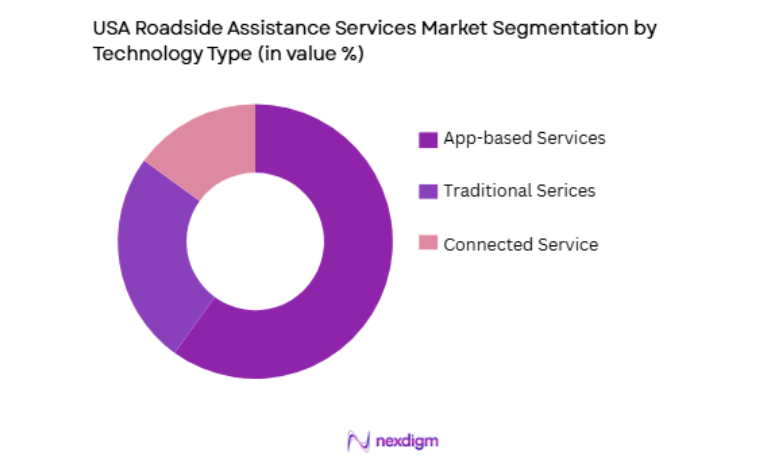
The market is also segmented by technology adoption into traditional, app-based, and connected services. App-based services, which offer convenience and real-time assistance via mobile applications, have become a dominant market segment. The demand for easy access to roadside assistance through smartphones has increased, especially in tech-savvy demographics. This convenience has made app-based services the preferred choice for many consumers, further propelling their market share. As connected technologies, such as vehicle telematics, grow in use, this segment is expected to continue expanding.
Competitive Landscape
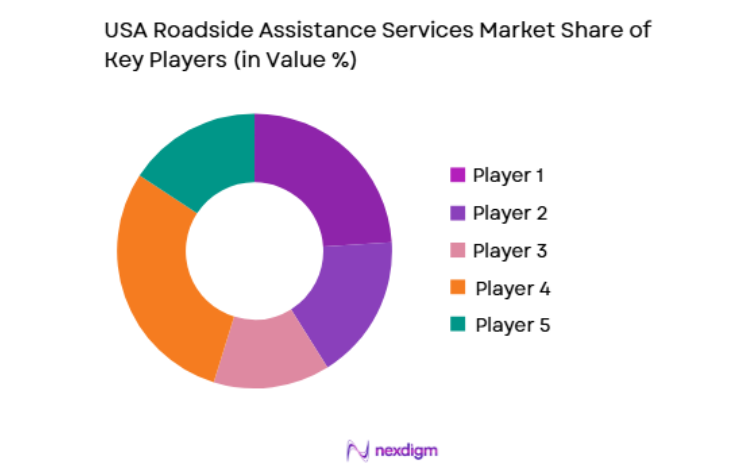
The competitive landscape of the USA Roadside Assistance Services market reflects a blend of traditional service providers and new tech-driven platforms. Major players are actively consolidating their positions through partnerships with vehicle manufacturers, insurance companies, and technology firms. This has led to improved service offerings and competitive pricing. Companies are investing in mobile apps and AI-powered services to attract a broader customer base, ensuring faster and more efficient roadside support.
| Company Name | Establishment Year | Headquarters | Technology Focus | Market Reach | Key Products | Revenue (USD) |
| AAA | 1902 | Heathrow, FL | ~ | ~ | ~ | ~ |
| Allstate | 1931 | Northbrook, IL | ~ | ~ | ~ | ~ |
| Good Sam | 1966 | Lincolnshire, IL | ~ | ~ | ~ | ~ |
| Better World Club | 1995 | California | ~ | ~ | ~ | ~ |
| Urgent.ly | 2013 | San Francisco, CA | ~ | ~ | ~ | ~ |
USA Roadside Assistance Services Market Analysis
Growth Drivers
Rising Vehicle Ownership
The USA has seen a consistent increase in vehicle ownership, with more households relying on cars for daily transportation, leading to a surge in demand for roadside assistance services. Vehicle owners are more likely to invest in services that provide emergency support in case of breakdowns, accidents, or other unexpected events. This trend is further amplified by the increase in road accidents and the growing need for services like towing, fuel delivery, and tire replacement. The growing dependency on vehicles in urban and suburban settings is creating a significant opportunity for service providers to cater to this rising demand for emergency services. Additionally, with more people driving long distances for travel, roadside assistance is becoming a crucial element in providing peace of mind, especially in more remote locations where service centers are sparse. The integration of new technologies, such as app-based requests and real-time tracking, has made roadside assistance more accessible, which drives market expansion. Over time, these factors combine to stimulate substantial growth in the sector, ensuring the long-term sustainability of roadside assistance services.
Technological Advancements in Service Delivery
The adoption of technology has been a key driver in the growth of roadside assistance services in the USA. Innovations in mobile applications, real-time tracking, and automated dispatching have drastically improved the efficiency of service delivery. Many roadside assistance providers have now integrated GPS and AI-powered systems into their services, allowing faster response times and more accurate assistance delivery. These advancements not only enhance customer experience but also reduce operational costs by optimizing route planning and service management. App-based platforms, which allow users to summon help directly from their phones, have gained significant popularity due to their ease of use. The rise of connected vehicle technologies has further bolstered this trend, enabling automated alerts and direct connections with roadside service providers. These technological improvements have made services more convenient and reliable, driving further growth in demand for roadside assistance services across the country.
Market Challenges
High Operational Costs
One of the primary challenges facing the USA Roadside Assistance Services market is the high operational costs associated with providing services. Roadside assistance providers must manage a large fleet of vehicles, staff, and advanced technology systems to maintain timely and efficient service delivery. Additionally, the cost of integrating new technologies such as mobile apps, GPS, and AI-driven systems can be significant, especially for smaller service providers. The complexity of managing service logistics across a vast and diverse country further increases operational expenses, as different regions may require varying levels of service and infrastructure. With increasing competition, companies are under pressure to keep prices competitive while still delivering high-quality service. This delicate balance between cost-efficiency and service quality is a significant challenge that many companies in the market face today. Moreover, rising fuel costs and the need for regular fleet maintenance add additional strain to service providers’ profitability, further complicating market dynamics.
Consumer Price Sensitivity
Another challenge faced by the roadside assistance market in the USA is consumer price sensitivity. While roadside assistance services are vital for many vehicle owners, some consumers perceive them as an additional expense, particularly those who rarely require emergency services. Despite the convenience these services provide, price remains a significant factor for many customers when deciding whether to purchase roadside assistance coverage. Consumers are often reluctant to pay annual membership fees for services they may only need infrequently, leading to lower adoption rates, especially among younger drivers or those with lower incomes. This sensitivity to pricing can limit the market’s growth potential, particularly in a competitive landscape where companies strive to offer the best value for money while maintaining service quality. Furthermore, the market faces challenges in convincing consumers to upgrade their plans, as many believe basic coverage is sufficient, thus limiting revenue growth for service providers.
Opportunities
Expansion of Tech-driven Solutions
The increasing reliance on technology in the USA presents a significant opportunity for roadside assistance providers to enhance service offerings. With mobile technology and IoT rapidly advancing, companies can offer app-based solutions that connect users to assistance providers instantly. This can create more efficient, transparent, and faster response times, improving customer satisfaction. Service providers can further explore opportunities to integrate machine learning and predictive analytics to anticipate vehicle breakdowns and offer preventive measures, such as sending reminders for tire checks or battery maintenance. Additionally, integrating telematics systems into vehicles will allow for real-time diagnostics and immediate connection to roadside assistance, allowing companies to offer more personalized and immediate support. The ability to track vehicles and predict service needs using data analytics presents an exciting growth opportunity for businesses. As the demand for these tech-driven services increases, the market is expected to grow rapidly, with both consumers and service providers benefiting from greater convenience and efficiency.
Growth in Subscription-based Models
Subscription-based models are emerging as a key opportunity in the roadside assistance market. By offering flexible monthly or annual subscription options, providers can ensure a steady and predictable revenue stream while catering to the growing preference for subscription-based services. These models not only make services more accessible by reducing upfront costs but also allow companies to expand their customer base by offering tiered plans. Consumers can choose plans based on their specific needs, such as basic roadside assistance or premium services that include extensive coverage. Furthermore, subscription models help create long-term customer relationships, as users are more likely to remain loyal to services they have subscribed to, especially if the service is perceived as valuable and cost-effective. As the market continues to mature, the shift toward subscription models will be a key factor in driving growth and ensuring customer retention.
Future Outlook
The future outlook for the USA Roadside Assistance Services market is highly promising, with expected growth driven by continued technological advancements, an increase in vehicle ownership, and rising consumer expectations for reliable emergency services. As vehicle fleets continue to expand, the demand for roadside assistance will grow, particularly in suburban and rural regions. Technological developments, such as mobile apps, AI, and connected vehicle systems, will streamline service delivery and improve efficiency. Additionally, regulatory support is likely to strengthen, further promoting the availability and accessibility of roadside services. The overall market is poised for innovation, with new service models, like subscription-based plans, offering flexibility and convenience to customers.
Major Players
- AAA
- Allstate
- Good Sam
- Better World Club
- Urgent.ly
- National Auto Club
- Roadside Masters
- Agero
- SOS Assistance
- Towing.com
- Car Care Plan
- Road America
- OnStar
- Mobilize
- GeoRoadside
Key Target Audience
- Investments and venture capitalist firms
- Government and regulatory bodies
- Vehicle manufacturers
- Automotive insurers
- Fleet operators
- Vehicle service providers
- Service technology developers
- Auto parts distributors
Research Methodology
Step 1: Identification of Key Variables
Identifying key variables such as service types, technology adoption rates, and regional demand patterns ensures a clear focus for research.
Step 2: Market Analysis and Construction
A comprehensive analysis of market trends, historical data, and future growth projections is conducted, alongside segmentation analysis based on technology and service type.
Step 3: Hypothesis Validation and Expert Consultation
Engaging with industry experts, service providers, and stakeholders to validate hypotheses and gather real-world insights ensures the robustness of the findings.
Step 4: Research Synthesis and Final Output
The final research output synthesizes collected data and expert insights, presenting a thorough analysis of the market dynamics and forecasts.

- Executive Summary
- Research Methodology (Definitions, Scope, Industry Assumptions, Market Sizing Approach, Primary & Secondary Research Framework, Data Collection & Verification Protocol, Analytic Models & Forecast Methodology, Limitations & Research Validity Checks)

- Market Definition and Scope
- Value Chain & Stakeholder Ecosystem
- Regulatory / Certification Landscape
- Sector Dynamics Affecting Demand

- Growth Drivers
Increase in Vehicle Ownership
Advancements in Telematics Technology
Growth in Subscription-Based Service Models - Market Challenges
Rising Operational Costs
Customer Retention and Satisfaction
Regulatory Barriers Across States - Market Opportunities
Expansion of Mobile-Based Roadside Assistance Solutions
Partnerships with Insurance Companies for Comprehensive Coverage
Integration of AI for Enhanced Service Efficiency - Trends
Growth in On-Demand Roadside Assistance
Integration of IoT for Predictive Assistance
Increased Use of Telematics and GPS in Service Dispatch - Government regulations
- SWOT analysis
- Porters 5 forces

- By Market Value, 2019-2024
- By Installed Units, 2019-2024
- By Average System Price, 2019-2024
- By System Complexity Tier, 2019-2024

- By System Type (In Value%)
Towing Services
Flat Tire Assistance
Battery Jump-start Services
Lock-out Assistance
Fuel Delivery Services - By Platform Type (In Value%)
Mobile Applications
Phone-Based Services
Online Platforms
In-Vehicle Systems
Telematics-Based Solutions - By Fitment Type (In Value%)
Vehicle-Specific Assistance Solutions
Mobile Application Integrations
Telematics Unit Fitment
Portable Assistance Devices
Service Contract Solutions - By EndUser Segment (In Value%)
Individual Vehicle Owners
Fleet Operators
Insurance Companies

- Market Share Analysis
- Cross Comparison Parameters (System Type, Platform Type, Procurement Channel, EndUser Segment, Fitment Type)
- SWOT Analysis of Key Competitors
- Pricing & Procurement Analysis
- Key Players
AAA (American Automobile Association)
Agero
Allstate Motor Club
Geico Emergency Roadside Service
Progressive Roadside Assistance
BCAA (British Columbia Automobile Association)
Good Sam Roadside Assistance
Nationwide Roadside Assistance
State Farm Roadside Assistance
Roadside Masters
SOS Roadside Assistance
Rescue Roadside Assistance
Towing.com
Green Flag Roadside Assistance
Honest John’s Roadside Assistance

- Rising Demand for Fleet Assistance Solutions
- Integration of Roadside Assistance in Car Leasing
- Increased Use of Mobile Apps for Roadside Assistance Requests
- Growth of Roadside Assistance in Insurance Policies

- Forecast Market Value, 2025-2030
- Forecast Installed Units, 2025-2030
- Price Forecast by System Tier, 2025-2030
- Future Demand by Platform, 2025-2030


 Request a Sample
 Ask for Customization
 Get a Quote
 Enquire Now