

 Download PDF
 Download PDF
Market Overview
The USA Robotics market is expected to reach USD ~ billion in 2024, driven by the increasing demand for automation and advanced robotics across various industries, including manufacturing, healthcare, and logistics. Robotics technology is being rapidly adopted to improve operational efficiency, reduce costs, and address labor shortages. Innovations in artificial intelligence, machine learning, and collaborative robotics are enabling industries to automate complex tasks, creating substantial market growth opportunities.
The market is primarily driven by key regions such as California, Michigan, and Ohio, which host a large number of manufacturing and automotive facilities. These states have seen significant investments in robotic technologies to meet the growing need for automation. Additionally, the healthcare sector in states like New York and Massachusetts is increasingly adopting robotics for surgical procedures and patient care, fueling the demand for robotics systems in medical applications. The concentration of industry players and innovation hubs in these regions plays a crucial role in driving the market’s growth.
Market Segmentation
By Product Type
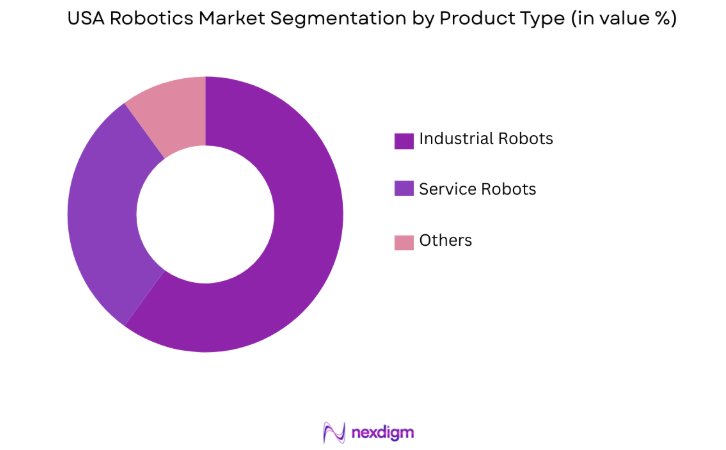
The USA Robotics market is segmented by product type into industrial robots, service robots, and others. Recently, industrial robots have captured a dominant market share due to their widespread adoption in manufacturing and automotive industries. These robots are increasingly utilized for tasks such as assembly, welding, painting, and material handling, which are critical in mass production. The demand for industrial robots has been driven by their ability to enhance precision, reduce operational costs, and increase production efficiency, particularly in automotive and electronics sectors. With advancements in AI and machine learning, industrial robots are becoming smarter and more adaptable, further contributing to their dominance.
By End-User Industry
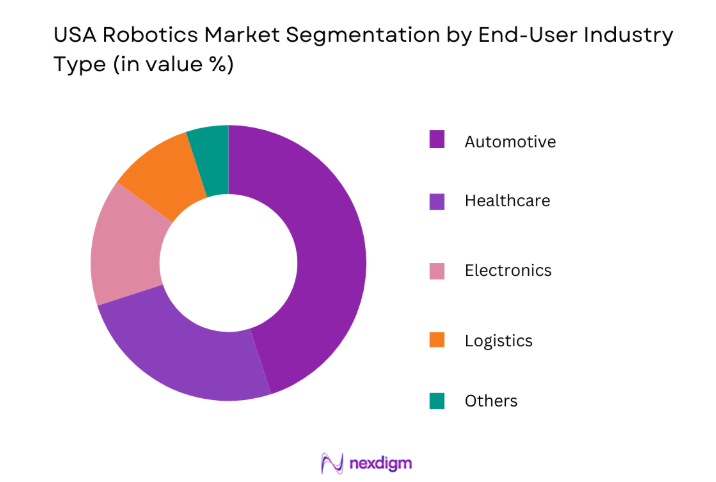
The USA Robotics market is segmented by end-user industry into automotive, healthcare, electronics, logistics, and others. The automotive industry holds a dominant market share in robotics adoption due to its focus on automation in production lines. Robotics is heavily used in tasks such as welding, assembly, and testing, where precision and speed are critical. The automotive industry’s demand for robots is driven by the need for higher quality, reduced production time, and cost savings. Furthermore, the industry’s push towards electric vehicles and smart manufacturing is further enhancing the adoption of robotics to meet new production demands.
Competitive Landscape
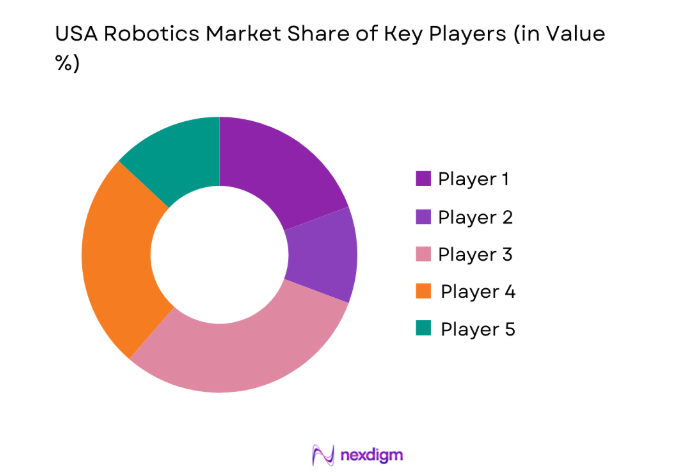
The competitive landscape of the USA Robotics market is dominated by several established players that are constantly innovating and expanding their product offerings. These companies are focusing on acquisitions and partnerships to strengthen their market position, while also investing heavily in research and development to introduce next-generation robotics solutions. Companies are increasingly focusing on collaborative robots and AI-driven systems to meet the evolving needs of various industries. The market sees high competition with companies vying to develop robotics solutions that are not only cost-effective but also adaptable to different industry applications.
| Company Name | Establishment Year | Headquarters | Technology Focus | Market Reach | Key Products | Revenue | Additional Parameter |
| ABB | 1988 | Zurich, Switzerland | ~ | ~ | ~ | ~ | ~ |
| FANUC Corporation | 1956 | Oshino, Japan | ~ | ~ | ~ | ~ | ~ |
| KUKA | 1898 | Augsburg, Germany | ~ | ~ | ~ | ~ | ~ |
| iRobot | 1990 | Bedford, USA | ~ | ~ | ~ | ~ | ~ |
| Universal Robots | 2005 | Odense, Denmark | ~ | ~ | ~ | ~ | ~ |
USA Robotics Market Analysis
Growth Drivers
Technological Advancements in AI and Machine Learning
Technological advancements in artificial intelligence (AI) and machine learning have been key growth drivers for the USA Robotics market. AI technologies allow robots to perform tasks that were previously considered too complex for automation, such as perception, decision-making, and adaptation. As AI continues to evolve, robots are becoming more autonomous and capable of learning from their environments, which allows them to be deployed across a wide range of industries. Machine learning algorithms enable robots to improve their performance over time, reducing the need for human intervention and making them more efficient. The ongoing development of AI in robotics also leads to enhanced flexibility, allowing robots to be used in diverse applications, from industrial automation to healthcare. With the ability to process vast amounts of data in real-time, AI-driven robots can adapt to new tasks quickly, improving productivity and offering manufacturers a higher return on investment. As these technologies mature, their integration into robotics systems is expected to drive further growth in the market.
Labor Shortages and Demand for Automation
Labor shortages, particularly in skilled labor, have been a significant driver for the growth of the USA Robotics market. As industries face challenges in hiring qualified workers, robotics presents a viable solution to address these labor gaps. In sectors like manufacturing, automotive, and logistics, robots are increasingly being used to perform repetitive and labor-intensive tasks, such as assembly, packaging, and material handling. These tasks are critical to maintaining production schedules and ensuring quality standards. With the increasing complexity of manufacturing processes and the need for 24/7 production, automation is seen as an essential tool for maintaining competitiveness in the global market. Robots can operate continuously without fatigue, improving efficiency and reducing downtime in production lines. Furthermore, the aging workforce in key industries further accelerates the shift towards robotics, as companies seek to maintain productivity levels without relying solely on human labor.
Market Challenges
High Initial Investment Costs
A significant challenge faced by the USA Robotics market is the high initial investment required for deploying robotics systems. While automation can offer significant long-term cost savings through increased productivity and reduced labor costs, the upfront costs associated with purchasing and installing robots can be prohibitive for small and medium-sized enterprises (SMEs). The cost of industrial robots, sensors, controllers, and integration systems can be a barrier for many businesses, particularly those with limited budgets. Despite the cost-effectiveness in the long run, the high capital expenditure may deter businesses from adopting robotics solutions, especially in industries where profit margins are thin. As a result, companies may delay or forego automation investments, limiting overall market growth. To mitigate this challenge, robotics vendors are increasingly offering financing options and lower-cost solutions to make automation more accessible to a wider range of businesses.
Integration and Interoperability Issues
The integration of robotics systems with existing infrastructure and machinery poses a significant challenge for many businesses. While robotics technology has advanced rapidly, many companies still rely on legacy systems that may not be compatible with modern robotic solutions. The need for seamless integration between robotics systems, software, and production equipment can be complex and time-consuming, requiring significant expertise and resources. Interoperability issues can lead to delays in implementation, higher costs, and operational inefficiencies. Furthermore, the lack of standardized protocols for robotics systems across different industries can further complicate integration efforts. Businesses may be hesitant to invest in new robotics solutions due to the potential for costly integration challenges, hindering the market’s growth.
Opportunities
Growth in Collaborative Robotics
The rise of collaborative robots (cobots) presents a significant opportunity for the USA Robotics market. Unlike traditional robots that operate in isolation, cobots are designed to work alongside human operators in a shared workspace. These robots are equipped with advanced sensors and AI systems that allow them to safely interact with humans, enabling them to assist in tasks such as assembly, packaging, and testing. The demand for cobots has grown rapidly as businesses seek to automate tasks while still maintaining a flexible workforce. Cobots are particularly beneficial in industries where precision and flexibility are essential, such as electronics and consumer goods manufacturing. Their ability to work in tandem with humans reduces the need for separate robotic cells and minimizes the space requirements for automation. As businesses continue to embrace the concept of Industry 4.0, the adoption of collaborative robots is expected to drive growth in the robotics market, as they offer a more cost-effective and adaptable solution compared to traditional automation systems.
Expansion of Robotics in Healthcare
The healthcare sector presents a significant growth opportunity for the USA Robotics market, particularly in the areas of surgery and rehabilitation. Robotic surgical systems, such as those used for minimally invasive procedures, are becoming increasingly popular due to their ability to enhance precision, reduce recovery times, and improve patient outcomes. These robots enable surgeons to perform complex procedures with greater accuracy and control, leading to fewer complications and faster recovery. Additionally, robots are being used in rehabilitation, where they assist patients in regaining mobility and strength following surgery or injury. The increasing demand for robotic solutions in healthcare is being driven by the need for improved patient care, the growing aging population, and advancements in robotic technology that allow for more personalized and effective treatments. As the healthcare industry continues to adopt robotic technologies, the demand for medical robots is expected to rise significantly.
Future Outlook
The future of the USA Robotics market is poised for substantial growth, driven by continuous technological advancements in AI, machine learning, and collaborative robotics. Over the next five years, the adoption of robotics across industries will increase as businesses seek to enhance productivity, reduce labor costs, and maintain competitiveness. Regulatory support, particularly in healthcare and manufacturing, will further encourage the development and deployment of robotics solutions. As robots become more affordable, intelligent, and capable of handling diverse tasks, their integration into everyday operations will become increasingly common, leading to expanded market opportunities.
Major Players
- ABB
- FANUC Corporation
- KUKA
- iRobot
- Universal Robots
- Mitsubishi Electric
- Yaskawa Electric
- Kawasaki Robotics
- Teradyne
- Denso Robotics
- Omron Corporation
- Bosch Rexroth
- Comau
- Stäubli Robotics
- Epson Robots
Key Target Audience
- Investments and venture capitalist firms
- Government and regulatory bodies
- Robotics manufacturers
- Industrial automation companies
- Healthcare providers
- Automotive manufacturers
- Logistics companies
Research Methodology
Step 1: Identification of Key Variables
Identification of key variables influencing the robotics market, including technological trends, regulatory factors, and consumer demand, is crucial for structuring the research.
Step 2: Market Analysis and Construction
An in-depth analysis of market trends, segmentation, and competitive forces is performed to build a comprehensive market model.
Step 3: Hypothesis Validation and Expert Consultation
Industry experts and stakeholders are consulted to validate assumptions and refine hypotheses about market dynamics.
Step 4: Research Synthesis and Final Output
The research findings are synthesized into a final report, providing actionable insights and strategic recommendations for businesses in the robotics sector.

- Executive Summary
- Research Methodology (Definitions, Scope, Industry Assumptions, Market Sizing Approach, Primary & Secondary Research Framework, Data Collection & Verification Protocol, Analytic Models & Forecast Methodology, Limitations & Research Validity Checks)

- Market Definition and Scope
- Value Chain & Stakeholder Ecosystem
- Regulatory / Certification Landscape
- Sector Dynamics Affecting Demand

- Growth Drivers
Increasing Demand for Robotics in Manufacturing Automation
Growth in Robotics for Healthcare and Medical Applications
Rising Use of Robotics in Logistics and Warehousing - Market Challenges
High Capital Costs of Robotic Systems
Complexity in Integrating Robots with Legacy Systems
Limited Availability of Skilled Workforce for Robotic Solutions - Market Opportunities
Expanding Use of Collaborative Robots in Small and Medium Enterprises
Rising Demand for Autonomous Robots in Retail and Service Sectors
Adoption of Robotics in Agriculture and Precision Farming - Trends
Increase in Collaborative Robotics for Human-Robot Interaction
Growing Use of AI and Machine Learning in Robotics - Government Regulations
- SWOT Analysis
- Porter’s Five Forces

- By Market Value, 2020-2025
- By Installed Units, 2020-2025
- By Average System Price, 2020-2025
- By System Complexity Tier, 2020-2025

- By System Type (In Value%)
Industrial Robots
Collaborative Robots
Autonomous Mobile Robots
Service Robots
Humanoid Robots - By Platform Type (In Value%)
Manufacturing Automation Platforms
Logistics and Warehouse Automation Platforms
Healthcare and Medical Robotics Platforms
Security and Surveillance Robotics Platforms - By Fitment Type (In Value%)
New Robotics System Installations
Retrofit Robotics Integration
Fully Autonomous Robotic Systems
Human-Robot Collaborative Systems - By End User Segment (In Value%)
Manufacturing and Industrial Enterprises
Healthcare and Medical Institutions
Logistics and Infrastructure Operators

- Market Share Analysis
- Cross Comparison Parameters (Robot Technology Portfolio, Application Coverage, System Integration, Market Reach, After-Sales Service, Pricing Strategy, R&D Investment)
- SWOT Analysis of Key Competitors
- Pricing & Procurement Analysis
- Key Players
ABB Robotics
KUKA AG
Fanuc Corporation
Yaskawa Electric Corporation
Omron Corporation
Universal Robots
Boston Dynamics
SoftBank Robotics
iRobot Corporation
Teradyne Robotics Group
Nachi Fujikoshi Corporation
Kawasaki Robotics
Mitsubishi Electric Robotics
Delta Electronics Robotics
Hanson Robotics

- Manufacturing Companies Integrating Robotics to Improve Efficiency
- Healthcare Institutions Deploying Robotics for Surgery and Assistance
- Logistics Providers Expanding Use of Robotics for Inventory Management
- Retailers Utilizing Robots for Customer Interaction and Service

- Forecast Market Value, 2026-2035
- Forecast Installed Units, 2026-2035
- Price Forecast by System Tier, 2026-2035
- Future Demand by Platform, 2026-2035


 Request a Sample
 Ask for Customization
 Get a Quote
 Enquire Now