

 Download PDF
Market Overview
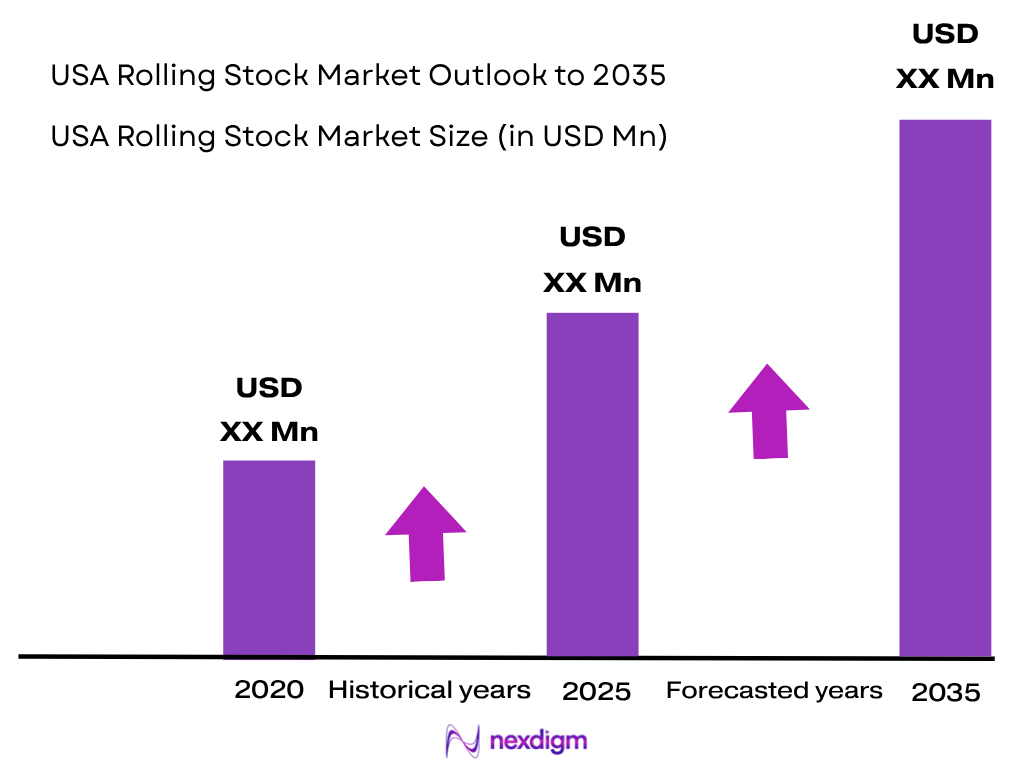
The USA Rolling Stock Market is valued at ~USD XX billion, supported by continuous fleet modernization requirements, freight rail expansion, urban transit investments, and replacement of aging rail assets. The market includes locomotives, freight wagons, passenger coaches, rapid transit vehicles, and rail components. The U.S. rolling stock manufacturing industry is primarily structured around locomotives, rail cars, and component suppliers serving freight and passenger transportation networks. (US International Trade Commission) Growth is supported by federal railway infrastructure funding, modernization programs, and increasing demand for efficient freight transportation.
The USA Rolling Stock Market is concentrated around regions with extensive freight corridors, large metropolitan transit systems, and major railway hubs. California dominates passenger rolling stock demand due to extensive commuter rail and urban transit networks, while Texas supports freight rolling stock demand because of major industrial activity, ports, and interstate trade routes. Illinois remains a critical railway hub due to Chicago’s position as one of the largest freight interchange centers in North America. The U.S. freight network includes major Class I railroads operating across extensive rail corridors, supporting continuous demand for locomotives, freight cars, and maintenance equipment.
Market Segmentation
By Rolling Stock Type
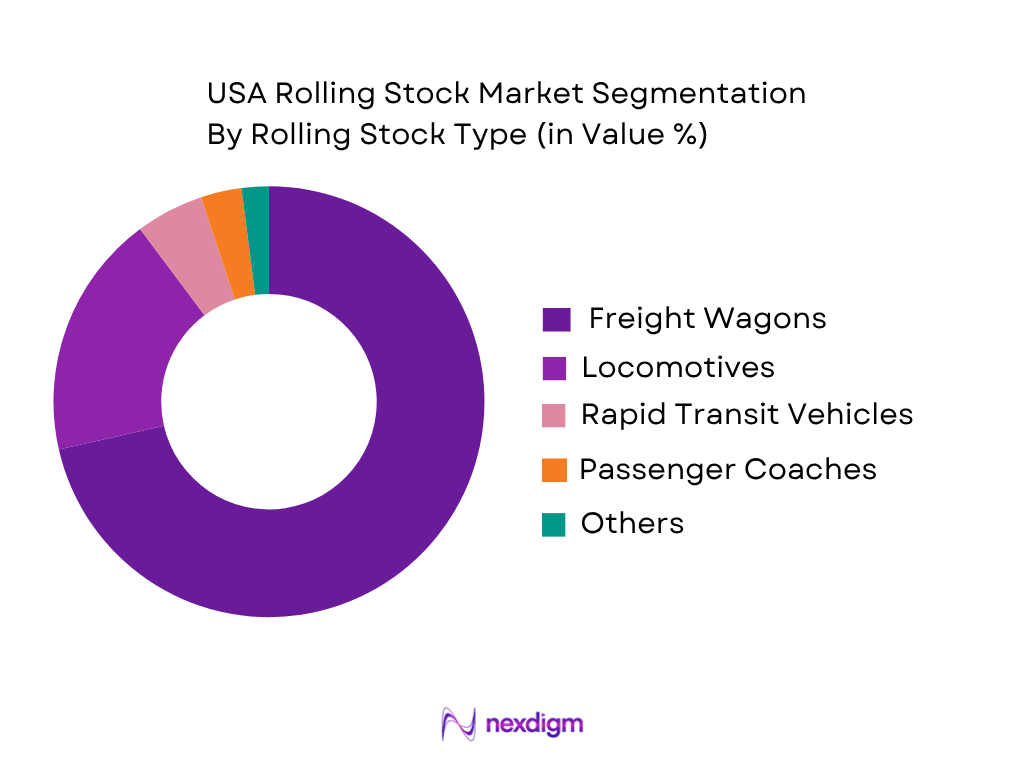
Freight Wagons represent the dominant segment due to the strong position of rail freight transportation in the United States. Freight railroads transport bulk commodities, agricultural products, industrial materials, chemicals, and intermodal cargo, creating consistent replacement and expansion demand for railcars. The U.S. rolling stock industry has historically focused heavily on freight-oriented manufacturing, including locomotives and rail cars designed for heavy-load transportation. (US International Trade Commission) Increasing intermodal transportation activity, industrial production, and logistics optimization continue to support demand for covered hoppers, tank cars, flat cars, and specialized freight wagons. Fleet renewal programs by major freight operators also contribute to replacement demand as older railcars require modernization to meet efficiency and safety requirements.
By Propulsion Type
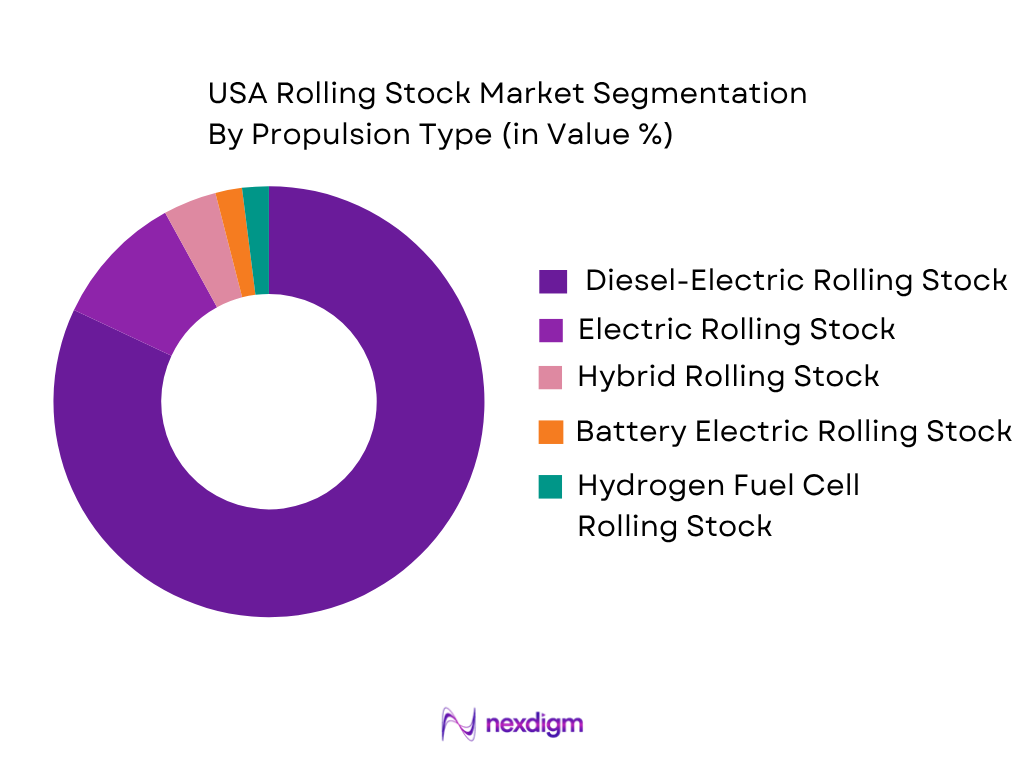
Diesel-electric rolling stock dominates due to the extensive freight rail network and operational requirements across long-distance routes. Most U.S. freight locomotives continue using diesel-electric technology because of its suitability for heavy-haul operations, long distances, and limited electrified rail infrastructure. (US International Trade Commission) However, battery-electric and hybrid technologies are gaining attention due to emission reduction targets and sustainability initiatives. Rail operators and manufacturers are increasingly exploring alternative propulsion solutions for short-haul freight, passenger rail, and urban transit applications.
Competitive Landscape
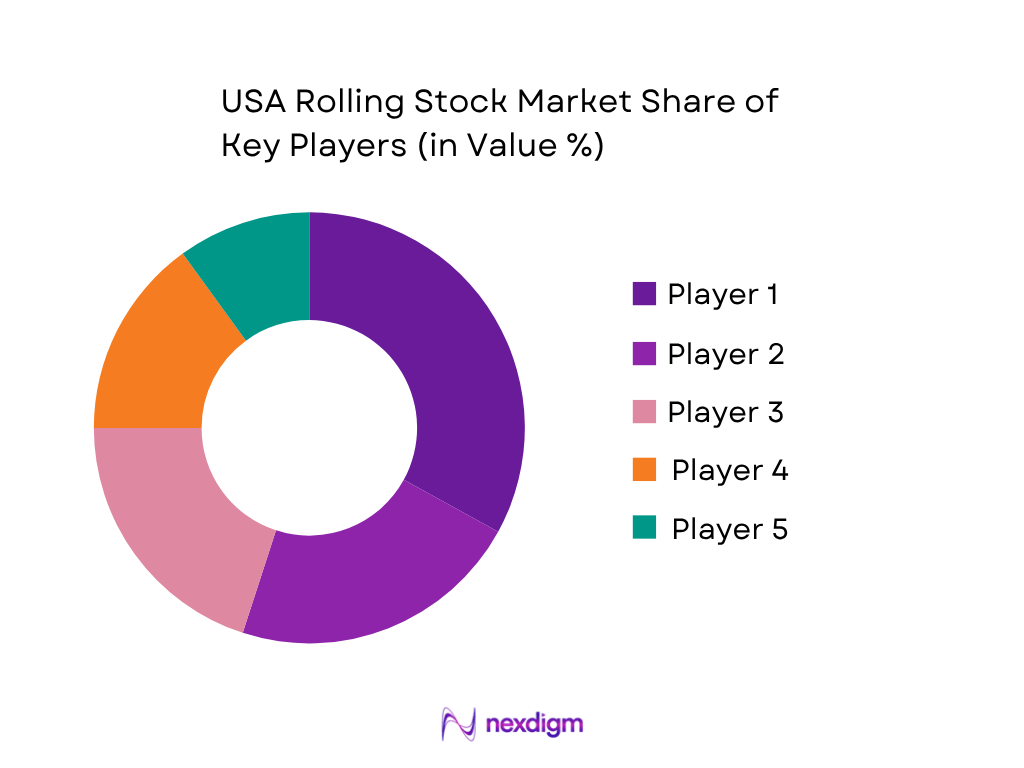
The USA Rolling Stock Market is characterized by the presence of global railway technology companies and specialized domestic manufacturers. Competition is concentrated among companies providing locomotives, freight cars, passenger rail vehicles, components, and maintenance services. The market includes manufacturers such as Wabtec, Alstom, Siemens Mobility, Stadler Rail, and Greenbrier Companies.
| Company | Establishment Year | Headquarters | Key Products | Major Segment | Manufacturing Capability | Technology Focus | Service Network | Key Strength |
| Wabtec Corporation | 1999 | Pittsburgh, USA | ~ | ~ | ~ | ~ | ~ | ~ |
| Alstom | 1928 | Saint-Ouen, France | ~ | ~ | ~ | ~ | ~ | ~ |
| Siemens Mobility | 1847 | Munich, Germany | ~ | ~ | ~ | ~ | ~ | ~ |
| Greenbrier Companies | 1974 | Lake Oswego, USA | ~ | ~ | ~ | ~ | ~ | ~ |
| Stadler Rail | 1942 | Bussnang, Switzerland | ~ | ~ | ~ | ~ | ~ | ~ |
USA Rolling Stock Market Analysis
Growth Drivers
Amtrak Fleet Modernization Programs
Amtrak fleet modernization programs are supporting demand for new passenger coaches, locomotives, and advanced trainsets as the U.S. passenger rail network undergoes capacity and reliability improvements. Amtrak recorded 32.8 million passenger trips in 2024, reflecting stronger utilization of intercity rail services and increasing requirements for modern rolling stock. The company has continued replacing aging equipment with new ALC-42 locomotives, Airo trainsets, and next-generation passenger vehicles designed for improved efficiency and passenger experience. Federal transportation funding has also accelerated rail modernization activities, with the U.S. government allocating significant infrastructure support through the Infrastructure Investment and Jobs Act. The U.S. Department of Transportation reported transportation infrastructure investments exceeding USD 110 billion under the act across multiple programs, supporting rail upgrades, fleet renewal, and network improvements. Modern passenger vehicles equipped with digital systems, improved accessibility features, and energy-efficient propulsion are becoming priorities for transit agencies. These modernization initiatives are expected to sustain demand for passenger rolling stock manufacturers, component suppliers, and maintenance providers across the USA rolling stock ecosystem.
Freight Rail Capacity Expansion
Freight rail capacity expansion remains a major growth driver for the USA rolling stock market due to the importance of rail transportation in domestic supply chains. The U.S. freight rail network spans approximately 140,000 route miles, supporting movement of commodities, agricultural products, industrial materials, and intermodal shipments. In 2024, U.S. freight railroads handled approximately 25.2 million carloads and intermodal units, demonstrating continuous demand for freight wagons, locomotives, and specialized rail equipment. Growth in domestic manufacturing, energy transportation, and e-commerce logistics is increasing requirements for higher-capacity freight rolling stock. The Association of American Railroads reported that railroads transported more than 1.5 billion tons of freight annually, highlighting the strategic importance of rail infrastructure for the economy. Freight operators are investing in modern locomotives with improved fuel efficiency, advanced monitoring systems, and higher operational reliability. Replacement of older freight cars, expansion of intermodal services, and demand for specialized wagons for chemicals, agriculture, and automotive transportation are strengthening procurement activity within the freight rolling stock segment.
Market Challenges
High Rolling Stock Manufacturing Costs
High manufacturing costs represent a significant challenge for the USA rolling stock market due to the complexity of designing, producing, and certifying advanced rail vehicles. Rolling stock requires specialized materials, safety systems, propulsion technologies, and compliance with Federal Railroad Administration standards, increasing production complexity. Inflationary pressure has also affected transportation manufacturing costs, with the U.S. Bureau of Labor Statistics reporting continued increases in producer prices across transportation equipment categories during 2024. Modern rolling stock increasingly incorporates advanced electronics, automated control systems, energy-efficient propulsion, and digital monitoring technologies, which increase component requirements and engineering costs. Passenger rail operators and transit agencies must balance fleet modernization needs with budget constraints, often extending procurement timelines. Freight operators also face challenges when replacing large fleets because locomotive and wagon investments require substantial capital allocation. The long lifecycle of rail assets, often exceeding 25 years, requires manufacturers to provide durable solutions with lower maintenance requirements. These cost pressures create barriers for smaller operators and increase dependence on government-supported financing programs for large-scale fleet modernization projects.
Long Procurement Cycles
Long procurement cycles remain a major challenge in the USA rolling stock market because rail vehicle acquisition involves extensive planning, funding approvals, manufacturing, testing, and regulatory certification processes. Passenger rail procurement programs frequently require multiple years from initial planning to fleet deployment due to infrastructure compatibility assessments and safety validation requirements. The Federal Railroad Administration regulates safety standards for rolling stock operations, requiring manufacturers and operators to comply with detailed technical specifications before vehicles enter service. Transit agencies often coordinate procurement with federal and state funding schedules, which can delay project execution. The complexity of integrating new vehicles with existing rail infrastructure, signaling systems, maintenance facilities, and operational procedures further extends deployment timelines. In 2024, U.S. transportation infrastructure programs continued emphasizing modernization and reliability improvements, increasing demand for efficient procurement frameworks. However, supply chain disruptions affecting critical components such as propulsion systems, semiconductors, and specialized steel continue creating delivery challenges. These extended timelines reduce market flexibility and require manufacturers to maintain long-term production planning capabilities.
Market Opportunities
High-Speed Rail Development
High-speed rail development represents a significant opportunity for the USA rolling stock market as government and private stakeholders explore faster intercity transportation solutions. Growing congestion in major transportation corridors has increased interest in rail alternatives capable of reducing travel times and improving connectivity between metropolitan regions. Federal infrastructure initiatives have increased funding availability for passenger rail expansion, including corridor development, station improvements, and rail system modernization. The U.S. Department of Transportation announced billions of dollars in rail infrastructure support programs focused on improving passenger rail networks and developing future transportation capacity. High-speed rail projects require specialized rolling stock, including electric multiple units, high-performance locomotives, advanced braking systems, and lightweight passenger coaches. Regions such as California, Texas, and the Northeast Corridor are key areas where high-speed rail planning and investment activities are advancing. The opportunity extends beyond vehicle manufacturing to include maintenance services, signaling integration, and digital rail technologies. As the USA seeks more efficient and sustainable transportation systems, demand for advanced passenger rolling stock is expected to increase.
Battery and Hydrogen Train Adoption
Battery and hydrogen train adoption creates emerging opportunities for the USA rolling stock market as operators pursue lower-emission alternatives to traditional diesel-powered vehicles. Rail transportation is increasingly included in national decarbonization strategies, encouraging investment in alternative propulsion technologies. The U.S. Environmental Protection Agency continues supporting emission reduction initiatives across transportation sectors, while federal clean transportation programs are encouraging innovation in zero-emission technologies. Battery-electric locomotives and hydrogen fuel cell trains are being evaluated for regional passenger routes, switching operations, and short-distance freight applications where full electrification may not be economically practical. In 2024, the USA continued expanding clean energy infrastructure, with renewable electricity generation capacity exceeding 300 gigawatts according to national energy statistics, supporting broader electrification trends. Alternative propulsion rolling stock requires new manufacturing capabilities, including advanced battery systems, hydrogen storage technology, and specialized power management solutions. These developments provide opportunities for rolling stock manufacturers, component suppliers, and technology providers to participate in the transition toward cleaner rail transportation systems.
Future Outlook
The USA Rolling Stock Market is expected to experience steady expansion driven by rail infrastructure modernization, freight transportation demand, urban transit development, and adoption of advanced propulsion technologies. Aging railway fleets, government-supported infrastructure upgrades, and increasing emphasis on sustainable transportation will create opportunities for manufacturers and component suppliers. Future growth will be supported by digital railway solutions, predictive maintenance technologies, battery-powered trains, and modernization of passenger rail networks.
Major Players
- Wabtec Corporation
- Alstom
- Siemens Mobility
- Stadler Rail
- Greenbrier Companies
- Trinity Industries
- CRRC Corporation
- Hitachi Rail
- Kawasaki Heavy Industries
- Hyundai Rotem
- Progress Rail
- Talgo
- Mitsubishi Heavy Industries
- Nippon Sharyo
- Brookville Equipment Corporation
Key Target Audience
- Freight Railroad Operators (Union Pacific Railroad, BNSF Railway, CSX Transportation, Norfolk Southern Railway)
- Passenger Rail Operators (Amtrak)
- Urban Transit Authorities (Metropolitan Transportation Authority, Los Angeles County Metropolitan Transportation Authority, Chicago Transit Authority)
- Rolling Stock Manufacturers and OEMs (Wabtec Corporation, Alstom, Siemens Mobility)
- Rail Component Manufacturers (Traction Systems, Bogie Manufacturers, Brake System Suppliers)
- Investments and Venture Capitalist Firms (Transportation Infrastructure Funds, Industrial Technology Investment Firms)
- Government and Regulatory Bodies (Federal Railroad Administration, Federal Transit Administration, U.S. Department of Transportation)
- Railway Leasing and Fleet Management Companies
Research Methodology
Step 1: Identification of Key Variables
The initial phase involves defining the USA Rolling Stock Market ecosystem by identifying manufacturers, freight operators, passenger rail agencies, component suppliers, and infrastructure stakeholders. Secondary research is conducted using railway databases, government transportation statistics, fleet information, procurement records, and industry publications to establish the key market variables influencing demand and supply.
Step 2: Market Analysis and Construction
This phase focuses on collecting historical information related to rolling stock production, fleet expansion, replacement cycles, procurement activities, and railway modernization programs. The analysis evaluates freight locomotive demand, passenger rail investments, transit vehicle requirements, and component replacement trends to develop market estimates.
Step 3: Hypothesis Validation and Expert Consultation
Market assumptions are validated through discussions with railway manufacturers, suppliers, fleet operators, and transportation industry professionals. These consultations provide insights into procurement strategies, technology adoption, maintenance requirements, and future investment priorities within the rolling stock ecosystem.
Step 4: Research Synthesis and Final Output
The final stage combines primary insights and secondary research findings to create a comprehensive assessment of market size, competitive positioning, segmentation trends, and future growth opportunities. Data validation is performed through cross-checking fleet statistics, manufacturer information, and railway investment plans.

- Executive Summary
- Research Methodology (Market Definitions and Scope, Rolling Stock Market Taxonomy, Market Sizing Framework, Top-Down Market Assessment, Bottom-Up Market Validation, Demand-Side Analysis, Supply-Side Analysis, Railway Operator Interviews, OEM and Component Supplier Interviews, Fleet Data Analysis, Procurement Pipeline Assessment, Infrastructure Investment Review, Data Triangulation, Forecasting Model, Market Forecasting Assumptions, Research Limitations)

- Definition and Scope
- Evolution of USA Rolling Stock Industry
- Historical Timeline of Major Rolling Stock Industry Developments
- USA Rail Transportation Ecosystem Analysis
- Rolling Stock Value Chain Analysis
- Rolling Stock Supply Chain Analysis

- Growth Drivers (Amtrak Fleet Modernization Programs, Freight Rail Capacity Expansion, Urban Transit Investment Growth, Positive Train Control Implementation, Rail Decarbonization Initiatives)
- Market Challenges (High Rolling Stock Manufacturing Costs, Long Procurement Cycles, Supply Chain Constraints, Infrastructure Compatibility Issues, Skilled Workforce Shortage)
- Market Opportunities (High-Speed Rail Development, Battery and Hydrogen Train Adoption, Freight Rail Automation, Smart Maintenance Technologies, Aging Fleet Replacement Demand)
- Market Trends (Rail Electrification, Lightweight Rolling Stock Materials, Digital Train Management Systems, Predictive Maintenance Adoption, Autonomous Train Technology Development)
- Government Regulations and Policies (Federal Railroad Administration Safety Standards, Federal Transit Administration Funding Programs, Positive Train Control Requirements, Buy America Compliance, Rail Safety Improvement Regulations)
- SWOT Analysis
- Porter’s Five Forces Analysis
- PESTLE Analysis
- Stakeholder Ecosystem Analysis
- Railway Competition Ecosystem Analysis

- By Market Value (2020-2025)
- By Rolling Stock Units Delivered (2020-2025)
- By Fleet Replacement Demand (2020-2025)
- By New Train Procurement Value (2020-2025)
- By Refurbishment and Maintenance Revenue (2020-2025)

- By Rolling Stock Type (In Value %)
Passenger Rolling Stock
High-Speed Rail Vehicles
Intercity Passenger Coaches
Commuter Rail Vehicles
Regional Rail Multiple Units
Metro and Urban Transit Rail Vehicles
Light Rail Vehicles
Streetcars and Tram Vehicles
Freight Rolling Stock
Covered Hopper Cars
Tank Cars
Boxcars
Flat Cars
Coal Cars
Intermodal Freight Cars
Autorack Rail Cars - By Propulsion Type (In Value %)
Diesel-Electric Locomotives
Electric Locomotives
Battery Electric Rolling Stock
Hydrogen Fuel Cell Trains
Hybrid Propulsion Trains - By Application (In Value %)
Freight Transportation
Passenger Transportation
Urban Transit Systems
Industrial Rail Operations
Mining and Bulk Material Transportation - By Component Type (In Value %)
Car Body and Structural Components
Bogies and Wheelsets
Traction Systems
Brake Systems
Interior Systems
Control and Communication Systems - By Ownership and Operator Type (In Value %)
Class I Freight Railroads
Regional Rail Operators
Short Line Rail Operators
Government-Owned Passenger Rail Operators
Urban Transit Authorities
Private Rail Operators - By Maintenance Type (In Value %)
New Rolling Stock Manufacturing
Overhaul and Refurbishment
Component Replacement
Predictive Maintenance Services
Fleet Modernization Upgrades

- Market Share Analysis of Major Players (By Revenue, Rolling Stock Segment, Vehicle Deliveries, Freight Segment, Passenger Segment, Maintenance Services)
- Cross Comparison Parameters (Product Portfolio Coverage, Rolling Stock Manufacturing Capacity, Freight and Passenger Train Expertise, Order Backlog Strength, Manufacturing Facility Network, Propulsion Technology Capability, Aftermarket Service Network, Digital Rail Technology Integration)
- Pricing Analysis by Rolling Stock Category
- Detailed Profiles of Major Companies
Alstom
Siemens Mobility
Wabtec Corporation
CRRC Corporation Limited
Stadler Rail
Hitachi Rail
Hyundai Rotem
Kawasaki Heavy Industries
Progress Rail
Greenbrier Companies
Trinity Industries
American Railcar Industries
Nippon Sharyo
Talgo
Mitsubishi Heavy Industries

- Rolling Stock Demand Assessment
- Freight Rail Operator Consumption Behavior
- Passenger Rail Consumer Behavior
- Procurement Decision Factors
- Regional Consumer Demand Analysis

- By Market Value (2026-2035)
- By Rolling Stock Units Delivered (2026-2035)
- By Fleet Replacement Demand (2026-2035)
- By New Train Procurement Value (2026-2035)
- By Refurbishment and Maintenance Revenue (2026-2035)


 Request a Sample
 Ask for Customization
 Get a Quote
 Enquire Now