

 Download PDF
 Download PDF
Market Overview
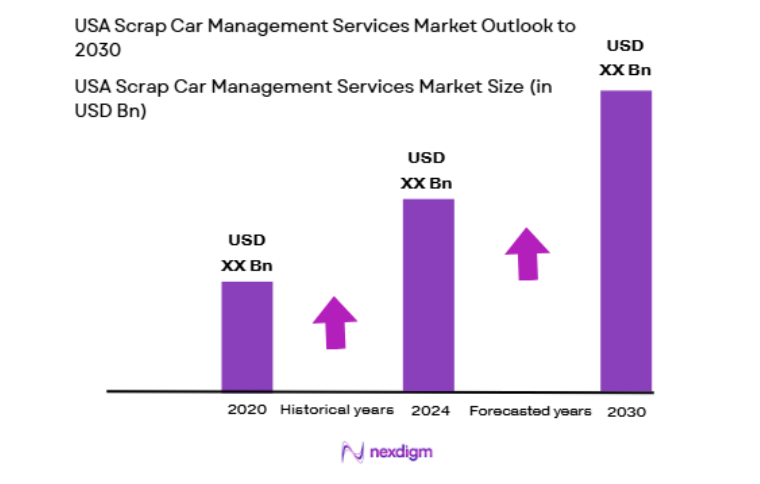
The USA Scrap Car Management Services market, valued at approximately ~ billion, is primarily driven by stringent regulations on vehicle disposal, the increasing adoption of recycling technologies, and a rising focus on environmental sustainability. The growing demand for processed metal and reusable automotive parts further fuels this market. As consumer awareness of the benefits of recycling continues to rise, the market’s growth is supported by innovations in scrap vehicle processing and enhanced demand for recycled materials from automotive manufacturers.
The dominant regions in the market include key urban centers such as California, Texas, and Florida. These areas have robust infrastructure, favorable regulatory environments, and a higher concentration of automotive industries, making them major hubs for scrap vehicle processing. The presence of large automotive manufacturers and strong recycling initiatives in these states helps maintain their dominance. Additionally, government incentives supporting environmental sustainability and the proper disposal of end-of-life vehicles contribute significantly to regional market leadership.
Market Segmentation
By Product Type
USA Scrap Car Management Services market is segmented by product type into scrap car collection systems, scrap car recycling systems, vehicle depollution systems, end-of-life vehicle (ELV) processing systems, and waste disposal systems. Recently, the scrap car recycling systems segment has dominated the market share due to rising demand for processed metals, sustainability initiatives, and growing recycling regulations. The increasing focus on circular economy practices in the automotive industry, combined with technological advancements in vehicle recycling, further solidifies the dominance of this sub-segment.

By Platform Type
USA Scrap Car Management Services market is segmented by platform type into land-based platforms, mobile platforms, facility-based platforms, integrated platforms, and hybrid platforms. The land-based platforms sub-segment holds the largest market share, as land-based operations are cost-effective and scalable. These platforms are often seen as the most reliable and efficient option for the transportation and processing of scrap vehicles. Furthermore, land-based platforms are better equipped to meet the increasing demand for scrap vehicles in both urban and rural areas, making them a dominant choice in the market.

Competitive Landscape
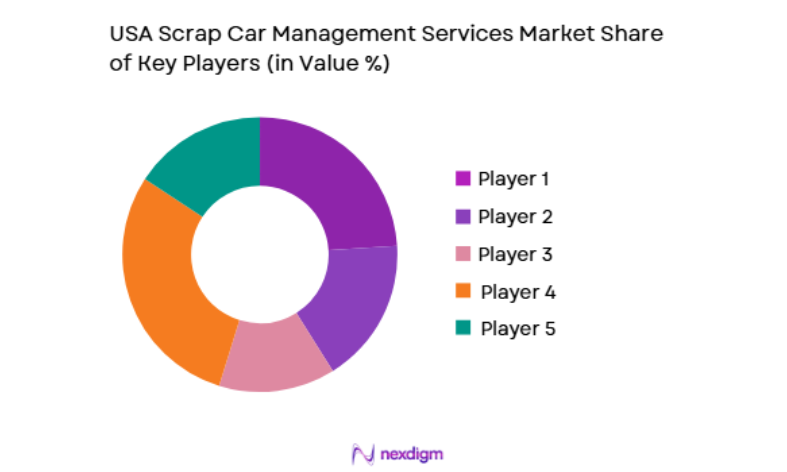
The competitive landscape of the USA Scrap Car Management Services market is shaped by the presence of key players specializing in vehicle recycling, depollution, and end-of-life vehicle processing. These players are consolidating their market presence through strategic acquisitions, expanding their service offerings, and investing in technological advancements to streamline operations. Major players also focus on optimizing their recycling processes and meeting government regulations to enhance their competitive edge. As the market evolves, competition among established players and new entrants is expected to intensify.
| Company Name | Establishment Year | Headquarters | Technology Focus | Market Reach | Key Products | Revenue | Additional Parameter |
| CarMax | 1984 | Richmond, VA | ~ | ~ | ~ | ~ | ~ |
| LKQ Corporation | 1998 | Chicago, IL | ~ | ~ | ~ | ~ | ~ |
| Schnitzer Steel | 1906 | Portland, OR | ~ | ~ | ~ | ~ | ~ |
| AutoNation | 1996 | Fort Lauderdale, FL | ~ | ~ | ~ | ~ | ~ |
| Recology | 1920 | San Francisco, CA | ~ | ~ | ~ | ~ | ~ |
USA Scrap Car Management Services Market Analysis
Growth Drivers
Increased Environmental Regulations
The growing emphasis on environmental sustainability has resulted in the implementation of stringent regulations for the recycling and disposal of scrap vehicles. Government initiatives, such as recycling incentives, mandates for proper disposal, and extended producer responsibility, are driving scrap car management companies to invest in more efficient and eco-friendly technologies. The increasing global demand for recycled metals, including aluminum, copper, and steel, further supports the industry. The rising regulatory pressure on vehicle manufacturers and scrap yards to meet sustainability targets also accelerates market growth, as companies seek to comply with laws aimed at reducing carbon footprints. By adopting advanced recycling systems, companies can increase operational efficiency while adhering to environmental policies, which not only aligns with regulatory compliance but also attracts environmentally-conscious consumers.
Technological Advancements in Recycling Technologies
Advances in recycling technologies, including automated systems and AI-powered sorting technologies, have significantly enhanced the efficiency and profitability of scrap car management services. The development of advanced vehicle depollution systems, which remove hazardous materials from end-of-life vehicles, is boosting recycling rates and reducing environmental hazards. Automation in scrap processing and vehicle dismantling has further streamlined operations, reducing labor costs and increasing throughput. As these technologies become more affordable, they are expected to gain wider adoption across the industry, enhancing operational efficiency. Furthermore, these innovations help recycling centers maintain competitive advantage by offering enhanced capabilities for handling larger volumes of scrap vehicles, contributing to increased market share.
Market Challenges
High Operational Costs for Advanced Recycling Technologies
One of the significant challenges facing the USA Scrap Car Management Services market is the high cost of implementing advanced recycling technologies. Many recycling companies struggle to justify the upfront capital investment in automated and AI-powered recycling systems, which can be prohibitively expensive. These technologies, although promising in terms of efficiency and throughput, often require significant investment in infrastructure, training, and maintenance. Smaller players with limited financial resources may face difficulty in competing with larger, more established companies that can absorb these costs. This high barrier to entry for new market participants slows down the overall adoption of these technologies, hindering growth in the sector. Additionally, the ongoing operational costs of running these systems can also impact the profitability of businesses, making it essential for companies to optimize operations to maintain financial sustainability.
Regulatory Compliance and Complexity
Navigating the complex web of regulations surrounding the scrap car management industry remains a significant challenge. The USA market is subject to a wide range of environmental, safety, and waste management laws that differ from state to state. Adherence to these regulations is critical, but the complexity and cost of compliance can strain resources, particularly for smaller companies. The constant evolution of environmental laws, along with the introduction of new recycling standards and reporting requirements, requires companies to invest in legal counsel, compliance monitoring, and operational adjustments. Failure to comply can result in hefty fines, legal penalties, and damage to a company’s reputation. As the regulatory landscape becomes more stringent, businesses will need to adopt more efficient and comprehensive compliance strategies to remain competitive in the market.
Opportunities
Expansion of Circular Economy Practices
One of the most promising opportunities in the USA Scrap Car Management Services market is the expanding role of circular economy practices in the automotive industry. As car manufacturers and consumers become increasingly aware of the environmental benefits of recycling, there is a growing demand for the reuse of automotive parts and materials. The circular economy model emphasizes the importance of reducing waste and extending the lifecycle of materials, which aligns with the objectives of scrap car management services. By leveraging this trend, companies can gain access to a broader customer base that prioritizes sustainable practices. Additionally, this shift toward circularity can open up new revenue streams through the sale of high-quality recycled automotive components, such as engines, transmissions, and body panels, which can be reused in the manufacturing of new vehicles.
Technological Innovations in Scrap Processing
The development of next-generation technologies, such as robotic dismantling systems and advanced vehicle depollution techniques, offers a significant opportunity for market growth. By adopting cutting-edge technologies, scrap car management companies can enhance their operational efficiency, reduce processing costs, and improve the quality of recycled materials. Moreover, the use of automation in sorting and dismantling vehicles can help businesses manage larger volumes of scrap cars while maintaining high levels of precision and safety. These innovations are not only expected to reduce operational costs but also contribute to higher recycling rates, further bolstering the industry’s profitability. As these technologies become more accessible and cost-effective, they are expected to drive growth and competitiveness in the market.
Future Outlook
The future of the USA Scrap Car Management Services market is promising, with technological advancements, regulatory support, and demand-side factors expected to drive significant growth over the next five years. As recycling technologies continue to evolve, businesses are likely to see improved operational efficiency and higher profitability, particularly as automation and AI integration become more widespread. The growing emphasis on sustainability and circular economy practices will further stimulate demand for scrap car management services. Additionally, government incentives and stricter environmental regulations will provide continued support for the market, making it a favorable environment for both established players and new entrants to expand and innovate.
Major Players
- CarMax
- LKQ Corporation
- Schnitzer Steel
- AutoNation
- Recology
- SA Recycling
- Gerdau
- Ferrous Processing & Trading
- Commercial Metals Company
- TOMRA
- Mercedes-Benz Recycling
- Toyota Tsusho Corporation
- United Scrap Metal
- Fujimoto Industries
- Daimler AG
Key Target Audience
- Investments and venture capitalist firms
- Government and regulatory bodies
- Automotive manufacturers
- Recycling and waste management companies
- Environmental consultants
- Scrap car management service providers
- Auto part manufacturers
- Automotive parts retailers
Research Methodology
Step 1: Identification of Key Variables
Key market variables such as scrap vehicle volumes, regulatory environment, and technological advancements were identified through industry reports, expert opinions, and historical data analysis.
Step 2: Market Analysis and Construction
Market construction was done by analyzing historical market trends, reviewing secondary data sources, and validating findings with primary research from industry players.
Step 3: Hypothesis Validation and Expert Consultation
Experts from the recycling and automotive industries were consulted to validate hypotheses on growth drivers, market challenges, and opportunities.
Step 4: Research Synthesis and Final Output
Final output was derived from the synthesis of market data, expert insights, and current industry trends, resulting in a comprehensive market report.

- Executive Summary
- Research Methodology (Definitions, Scope, Industry Assumptions, Market Sizing Approach, Primary & Secondary Research Framework, Data Collection & Verification Protocol, Analytic Models & Forecast Methodology, Limitations & Research Validity Checks]

- Market Definition and Scope
- Value Chain & Stakeholder Ecosystem
- Regulatory / Certification Landscape
- Sector Dynamics Affecting Demand

- Growth Drivers
Increase in Scrap Vehicle Disposal Regulations
Rising Demand for Recycled Automotive Materials
Technological Advancements in Vehicle Recycling Processes - Market Challenges
Complex Regulatory Compliance
High Cost of Recycling Technology
Environmental Impact Concerns - Market Opportunities
Partnerships with Automotive Manufacturers for Recycling
Emerging Demand for Eco-friendly Recycling Practices
Technological Innovations in Automated Scrap Vehicle Processing - Trends
Integration of AI and Automation in Recycling Processes
Growing Preference for Circular Economy in Automotive Industry
Increased Focus on Sustainable Vehicle Depollution Technologies - Government regulations
- SWOT analysis
- Porters 5 forces

- By Market Value, 2020-2024
- By Installed Units, 2020-2024
- By Average System Price, 2020-2024
- By System Complexity Tier, 2020-2024

- By System Type (In Value%)
Scrap Car Collection Systems
Scrap Car Recycling Systems
Vehicle Depollution Systems
End-of-Life Vehicle (ELV) Processing Systems
Waste Disposal Systems - By Platform Type (In Value%)
Land-based Platforms
Mobile Platforms
Facility-based Platforms
Integrated Platforms
Hybrid Platforms - By Fitment Type (In Value%)
On-site Solutions
Off-site Solutions
Modular Solutions
Custom-built Solutions
Automated Solutions - By End User Segment (In Value%)
Recycling Centers
Automotive Manufacturers
Waste Management Companies
Government Agencies
Private Sector / Scrap Yards - By Procurement Channel (In Value%)
Direct Procurement
Private Sector Procurement
Government Contracts

- Market Share Analysis
- Cross Comparison Parameters (System Type, Platform Type, Procurement Channel, EndUser Segment, Fitment Type, Technology Integration, Environmental Impact, Cost Efficiency, Recycling Rate, Regional Regulation Compliance)
- SWOT Analysis of Key Competitors
- Pricing & Procurement Analysis
- Key Players
CarMax
LKQ Corporation
Schnitzer Steel Industries
AutoNation
Recology
SA Recycling
Gerdau
Ferrous Processing & Trading
Commercial Metals Company
TOMRA
Mercedes-Benz Recycling
Toyota Tsusho Corporation
United Scrap Metal
Fujimoto Industries
Daimler AG

- Recycling Centers Adopting Advanced Sorting Technologies
- Automotive Manufacturers Integrating Sustainability Practices
- Waste Management Companies Expanding Scrap Car Services
- Private Scrap Yards Increasing Demand for Recycling Equipment

- Forecast Market Value, 2025-2030
- Forecast Installed Units, 2025-2030
- Price Forecast by System Tier, 2025-2030
- Future Demand by Platform, 2025-2030


 Request a Sample
 Ask for Customization
 Get a Quote
 Enquire Now