

 Download PDF
 Download PDF
Market Overview
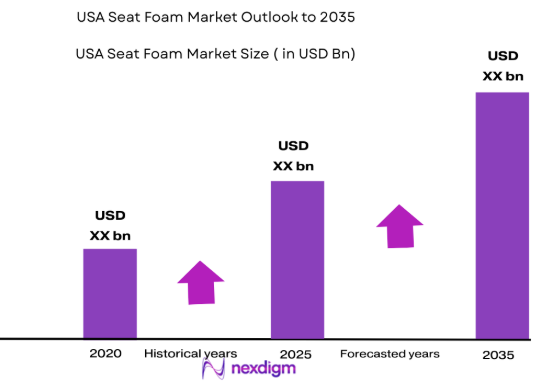
The USA Seat Foam Market is valued at approximately USD ~ billion based on a recent historical assessment, supported by data from the American Chemistry Council and U.S. automotive production statistics published by federal agencies. Demand is primarily driven by passenger vehicle manufacturing volumes, rising electric vehicle output, and growing integration of premium seating systems. Increased focus on ergonomic comfort, lightweight materials, and interior durability continues to stimulate procurement of advanced polyurethane foam solutions.
Detroit, Nashville, and Arlington remain dominant production hubs due to concentrated automotive assembly plants and established supplier ecosystems. Michigan and Tennessee benefit from integrated chemical supply chains and proximity to major OEM facilities. Southern states have gained prominence through electric vehicle manufacturing investments and incentive-backed industrial clusters. Strong logistics infrastructure, advanced polymer processing capabilities, and regulatory compliance expertise reinforce regional dominance within the USA Seat Foam Market.
Market Segmentation
Product Type
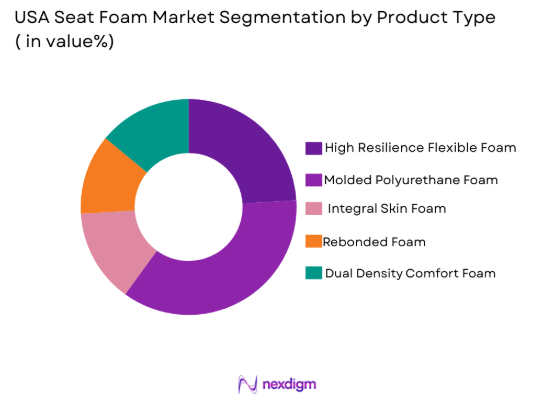
USA Seat Foam Market market is segmented by product type into High Resilience Flexible Foam, Molded Polyurethane Foam, Integral Skin Foam, Rebonded Foam, and Dual Density Comfort Foam. Recently, Molded Polyurethane Foam has a dominant market share due to factors such as demand patterns, brand presence, infrastructure availability, and consumer preference. Molded polyurethane foam is widely preferred by automotive OEMs because it allows precision contouring for seat geometry while maintaining structural integrity and durability under repetitive load conditions. Its compatibility with automated molding systems reduces production variability and supports high volume manufacturing lines. Furthermore, the material offers balanced density and resilience characteristics that align with comfort and safety requirements defined under federal vehicle performance standards. Tier 1 seat manufacturers rely on molded polyurethane solutions because they provide design flexibility for integrating heating, ventilation, and sensor modules within seat assemblies. The cost efficiency of raw material procurement and established domestic chemical supply networks also support its continued dominance across passenger and commercial vehicle platforms.
By Platform Type
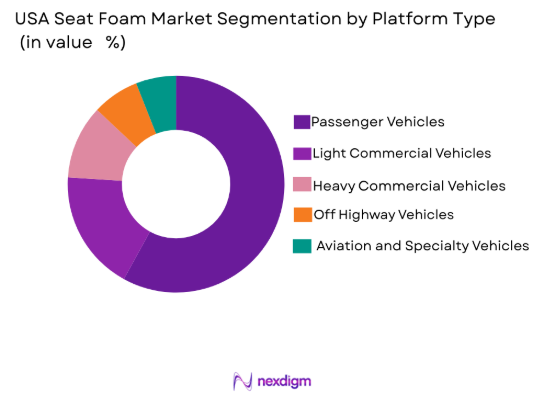
USA Seat Foam Market market is segmented by platform type into Passenger Vehicles, Light Commercial Vehicles, Heavy Commercial Vehicles, Off Highway Vehicles, and Aviation and Specialty Vehicles. Recently, Passenger Vehicles have a dominant market share due to factors such as demand patterns, brand presence, infrastructure availability, and consumer preference. Passenger vehicles represent the largest volume segment within the domestic automotive industry, supported by sustained production across sedans, SUVs, and crossover categories. Increasing consumer preference for comfort features, adjustable seating configurations, and premium interiors drives higher foam consumption per vehicle. Electric vehicle manufacturers also integrate advanced cushioning systems to compensate for battery weight distribution and enhance cabin experience. Large scale OEM assembly operations in key manufacturing states ensure consistent procurement of seat foam materials. Established supplier partnerships between foam manufacturers and automotive seat integrators further reinforce the platform’s leadership position within overall market demand.
Competitive Landscape
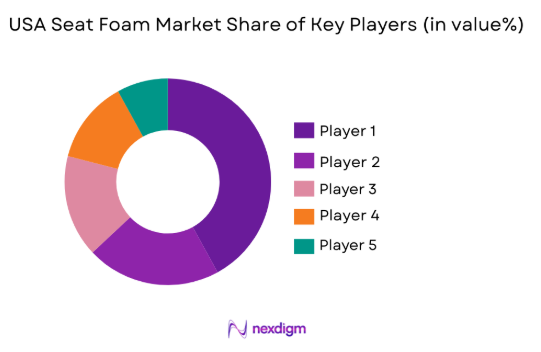
The USA Seat Foam Market demonstrates moderate consolidation with a combination of global chemical companies and specialized seating component manufacturers influencing supply structures. Leading firms maintain long term OEM contracts and vertically integrated polyurethane production capabilities, strengthening pricing control and technical differentiation. Strategic collaborations between foam producers and automotive seat integrators enhance innovation cycles, particularly in lightweight and low emission material development.
|
Company Name |
Establishment Year | Headquarters | Technology Focus | Market Reach | Key Products | Revenue | Manufacturing Footprint |
| Adient plc | 2016 | USA | ~ | ~ | ~ | ~ | ~ |
| Lear Corporation | 1917 | USA | ~ | ~ | ~ | ~ | ~ |
| Toyota Boshoku Corporation | 1918 | Japan | ~ | ~ | ~ | ~ | |
| Woodbridge Foam Corporation | 1978 | Canada | ~ | ~ | |||
| BASF SE | 1865 | Germany | ~ | ~ | ~ | ~ | ~ |
USA Seat Foam Market Market Analysis
Growth Drivers
Expansion of Domestic Automotive Manufacturing and Electric Vehicle Production
The significantly accelerating demand within the USA Seat Foam Market as vehicle assembly volumes increase across multiple states supported by federal incentives and infrastructure investments. Automotive production capacity expansion directly correlates with higher consumption of polyurethane based seat foam materials because each newly assembled vehicle requires integrated cushioning systems that meet comfort and safety standards. Electric vehicle manufacturing plants in southern and midwestern regions are incorporating advanced seating architectures that rely on precision molded foam components to optimize cabin ergonomics and accommodate battery placement constraints. Federal policy measures promoting domestic manufacturing and supply chain resilience have encouraged localized sourcing of seating components, thereby benefiting domestic foam manufacturers. Increased investment in electric mobility platforms also stimulates demand for lightweight interior components that enhance driving range and energy efficiency. Seat foam producers are responding by scaling up capacity and modernizing molding facilities to align with just in time production models adopted by automotive OEMs. As new vehicle models are introduced with upgraded interior configurations, per vehicle foam content continues to increase, strengthening overall market value. Long term supply contracts between foam suppliers and major seat integrators ensure production stability while encouraging collaborative product development initiatives focused on durability and sustainability. Collectively, these structural manufacturing trends create a sustained and predictable demand environment for seat foam materials across passenger and commercial vehicle categories.
Rising Consumer Preference for Comfort Oriented and Premium Interior Design
The reshaping procurement strategies among automotive OEMs, resulting in higher specification foam solutions and increased material usage per vehicle platform. Consumers are increasingly valuing ergonomic seating performance, vibration dampening capability, and long term resilience, prompting manufacturers to integrate multi density and contour molded foam technologies. Enhanced awareness of driver fatigue and long distance travel comfort has led to adoption of advanced cushioning formulations that balance firmness and elasticity. Luxury and mid segment vehicles now incorporate ventilated and heated seating systems, which require specialized foam structures compatible with embedded airflow channels and electronic modules. Tier 1 seat manufacturers are prioritizing foam materials that support design flexibility while maintaining structural compliance under federal safety regulations. Retail vehicle buyers demonstrate strong preference for upgraded interior trims, reinforcing OEM decisions to allocate greater budget share to seat comfort components. Continuous innovation in polyurethane chemistry enables production of low emission and odor controlled foam materials that enhance cabin air quality. The integration of smart sensors within seat assemblies further necessitates precision molded foam components capable of accommodating embedded electronics. These evolving consumer expectations and design enhancements collectively expand the functional role of seat foam beyond cushioning, strengthening its strategic importance within overall automotive interior systems.
Market Challenges
Volatility in Polyurethane Raw Material Prices and Supply Chain Constraints
Represents a critical operational challenge for manufacturers operating within the USA Seat Foam Market, as key feedstocks such as polyols and isocyanates are subject to fluctuating global supply dynamics. Chemical production facilities often depend on petroleum derived inputs, making pricing vulnerable to crude oil market movements and geopolitical uncertainties. Sudden cost increases compress profit margins for foam producers that are bound by long term OEM contracts with fixed pricing structures. Supply chain disruptions, including transportation bottlenecks and regional production outages, can delay raw material delivery and disrupt just in time manufacturing processes. Automotive OEMs typically impose strict delivery schedules, limiting flexibility for foam suppliers facing upstream material shortages. Environmental regulations governing chemical processing and emission standards may further increase compliance related costs and restrict production volumes. Domestic sourcing initiatives have mitigated some risks but cannot entirely eliminate exposure to international feedstock dependencies. Smaller manufacturers are particularly vulnerable due to limited bargaining power and lower inventory buffers. These cumulative pressures create financial uncertainty and compel market participants to invest in supply diversification and strategic inventory planning.
Stringent Environmental Compliance and Recycling Limitations
present structural obstacles for the USA Seat Foam Market as regulatory bodies increasingly enforce emission controls and sustainability mandates across chemical manufacturing operations. Polyurethane foam production involves chemical reactions that must adhere to environmental protection standards related to air emissions and workplace safety. Compliance investments in emission control equipment and monitoring systems raise operational expenditures for manufacturers. Growing emphasis on circular economy principles requires development of recyclable or bio based foam formulations, yet technical limitations in separating bonded foam from composite seat structures complicate large scale recycling initiatives. Automotive OEMs are under pressure to reduce lifecycle environmental impact, compelling suppliers to demonstrate measurable sustainability performance. Research and development expenditures required for alternative material innovation may strain smaller producers with limited capital resources. Waste management and disposal regulations further add to logistical complexity, particularly when dealing with post consumer foam scrap. Certification requirements and documentation processes increase administrative burdens across the supply chain. Collectively, these environmental compliance factors constrain flexibility and elevate production costs within the market landscape.
Opportunities
Adoption of Bio Based and Low Emission Polyurethane Formulations
offers a significant opportunity for expansion within the USA Seat Foam Market as automotive manufacturers intensify sustainability commitments and seek to lower carbon footprints across vehicle components. Bio based polyols derived from renewable resources provide an alternative to petroleum dependent feedstocks, enabling partial substitution without compromising mechanical performance characteristics. Increasing consumer awareness regarding environmental responsibility enhances brand value for OEMs that integrate sustainable interior materials. Regulatory incentives and state level sustainability programs further encourage adoption of environmentally friendly manufacturing processes. Foam producers investing in advanced chemistry research can differentiate through reduced volatile organic compound emissions and improved recyclability. Collaboration with chemical technology providers facilitates scaling of innovative formulations to commercial production levels. Electric vehicle manufacturers particularly prioritize sustainable materials to align with broader environmental positioning strategies. Lifecycle assessment tools increasingly guide procurement decisions, rewarding suppliers capable of demonstrating quantifiable environmental benefits. These combined dynamics create a favorable environment for innovation led growth within sustainable foam technologies.
Integration of Smart Seating Systems with Embedded Sensor Technologies
Represents a forward looking opportunity as vehicles incorporate advanced driver monitoring and occupant detection features requiring adaptive seat architectures. Modern seating systems integrate pressure sensors, weight detection modules, and climate control components that rely on precision molded foam for accurate functionality. As vehicles evolve toward higher levels of automation, seating configurations may become more flexible, increasing demand for modular foam designs. Foam manufacturers capable of producing customized shapes that accommodate embedded electronics can establish strategic partnerships with seat integrators. Advanced molding technologies enable incorporation of channels and cavities without compromising structural stability. Rising demand for health monitoring features within vehicles further stimulates integration of sensing systems within seat structures. Research into responsive and adaptive foam materials may support future dynamic comfort adjustments. Automotive safety standards also necessitate reliable occupant detection systems, strengthening the importance of compatible foam engineering. The convergence of comfort, safety, and digital functionality creates long term growth potential tied to technological innovation within seating systems.
Future Outlook
The USA Seat Foam Market is expected to witness stable expansion driven by sustained automotive production and ongoing electrification initiatives. Technological advancements in lightweight and sustainable polyurethane formulations will shape product innovation over the next five years. Regulatory focus on emission reduction and recycling efficiency will encourage material optimization and process modernization. Demand side factors including premium vehicle interiors and smart seating integration are likely to reinforce long term market resilience.
Major Players
- L3Harris Technologies
- Elbit Systems of America
- BAE Systems Inc
- Leonardo DRS
- Teledyne Technologies
- Northrop Grumman Corporation
- Raytheon Technologies Corporation
- Thales Defense and Security Inc
- Sierra Nevada Corporation
- General Dynamics Mission Systems
- FLIR Systems Inc
- HensoldtUSA
- ATN Corporation
- PhotonisDefense
- Armasight Inc
Key Target Audience
- Defense Equipment Manufacturers
- Homeland Security Agencies
- Border Protection Authorities
- Military Procurement Departments
- Private Security Firms
- Investments and venture capitalist firms
- Government and regulatory bodies
- Defense Electronics Distributors
Research Methodology
Step 1: Identification of Key Variables
Comprehensive identification of production volumes, polyurethane consumption rates, OEM procurement structures, and regulatory benchmarks was conducted to define core market variables. Both supply side and demand side factors were mapped to determine value chain interdependencies.
Step 2: Market Analysis and Construction
Market size was constructed using a bottom up approach integrating vehicle production statistics with average foam consumption per vehicle. Data triangulation across chemical industry associations and automotive manufacturing databases ensured accuracy.
Step 3: Hypothesis Validation and Expert Consultation
Preliminary findings were validated through consultations with polyurethane manufacturers, automotive seating integrators, and regulatory specialists. Expert insights were incorporated to refine assumptions and confirm demand trends.
Step 4: Research Synthesis and Final Output
All validated data points were synthesized into structured analytical frameworks including segmentation, competitive benchmarking, and forecast mode

- Executive Summary
- Research Methodology (Definitions, Scope, Industry Assumptions, Market Sizing Approach, Primary & Secondary Research Framework, Data Collection & Verification Protocol, Analytic Models & Forecast Methodology, Limitations & Research Validity Checks)

- Market Definition and Scope
- Value Chain & Stakeholder Ecosystem
- Regulatory / Certification Landscape
- Sector Dynamics Affecting Demand
- Strategic Initiatives & Infrastructure Growth

- Growth Drivers
Rising vehicle production volumes across passenger and commercial segments
Increasing demand for enhanced seating comfort and ergonomic design
Light weighting initiatives to improve fuel efficiency and EV range
Expansion of electric vehicle manufacturing capacity in the United States
Growing focus on interior customization and premium seating systems - Market Challenges
Volatility in polyol and isocyanate raw material prices
Stringent environmental regulations on VOC emissions
Supply chain disruptions impacting chemical feedstock availability
Pressure on pricing from OEM cost reduction initiatives
Technical challenges in recycling and end of life foam management - Market Opportunities
Adoption of bio based and sustainable foam formulations
Integration of smart seating with embedded sensors
Expansion in electric and autonomous vehicle seating architectures - Trends
Shift toward low density high resilience foams for weight reduction
Growing preference for multi layer dual hardness seating systems
Increased automation in foam molding and cutting processes
Development of recyclable and circular economy compatible foams
Collaborative product development between foam suppliers and seat OEMs - Government Regulations & Defense Policy
EPA emission standards governing chemical processing and VOC limits
FMVSS safety standards influencing seat structural integration
State level sustainability mandates promoting recycled material adoption
SWOT Analysis
Stakeholder and Ecosystem Analysis
Porter’s Five Forces Analysis
Competition Intensity and Ecosystem Mapping

- By Market Value, 2019-2025
- By Installed Units, 2019-2025
- By Average System Price, 2019-2025
- By System Complexity Tier, 2019-2025

- By System Type (In Value%)
High Resilience Flexible Foam
Molded Polyurethane Foam
Integral Skin Foam
Rebonded Foam
Dual Density Comfort Foam - By Platform Type (In Value%)
Passenger Vehicles
Light Commercial Vehicles
Heavy Commercial Vehicles
Off Highway Vehicles
Aviation and Specialty Vehicles - By Fitment Type (In Value%)
OEM Fitment
Aftermarket Replacement
Custom Performance Seating
Luxury Vehicle Fitment
Fleet Retrofitting - By EndUser Segment (In Value%)
Automotive OEMs
Tier 1 Seat Manufacturers
Commercial Fleet Operators
Aerospace Seat Integrators
Aftermarket Distributors - By Procurement Channel (In Value%)
Direct OEM Contracts
Long Term Supply Agreements
Spot Procurement
Distributor Networks
Online B2B Platforms - By Material / Technology (in Value %)
Conventional Polyurethane Foam
Bio Based Polyurethane Foam
Memory Foam Technology
Recycled Content Foam
Low VOC Emission Foam

- Market structure and competitive positioning
- Market share snapshot of major players
- Cross Comparsion Parameters (Product Portfolio Depth, Manufacturing Footprint, Raw Material Integration, Sustainability Initiatives, OEM Partnerships, R&D Capability, Pricing Strategy, Capacity Expansion, Aftermarket Reach)
- SWOT Analysis of Key Competitors
- Pricing & Procurement Analysis
- Porter’s Five Forces
- Key Players
Adient plc
Lear Corporation
Toyota Boshoku Corporation
Faurecia SE
Magna International Inc.
Woodbridge Foam Corporation
Recticel NV
Carpenter Co.
BASF SE
Dow Inc.
Huntsman Corporation
FXI Holdings Inc.
Saint Gobain Performance Plastics
Tenneco Inc.
Grammer AG

- Automotive OEMs prioritize durability, comfort, and lightweight compliance
- Seat integrators demand precision molded foam for modular architectures
- Fleet operators focus on cost efficiency and long service life
- Aerospace and specialty vehicle users require fire-retardant high-performance foams

- Forecast Market Value, 2026-2030
- Forecast Installed Units, 2026-2030
- Price Forecast by System Tier, 2026-2030
- Future Demand by Platform, 2026-2030


 Request a Sample
 Ask for Customization
 Get a Quote
 Enquire Now