
 Download PDF
 Download PDF
Market Overview
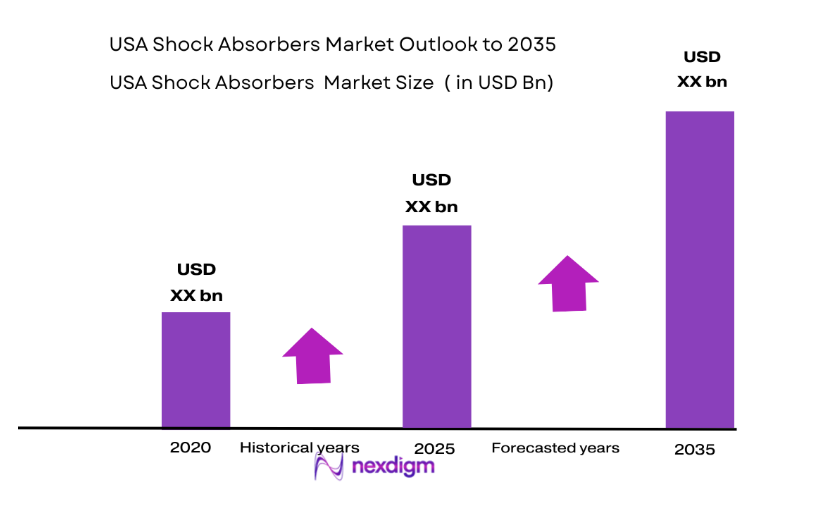
The USA shock absorbers market is expected to experience significant growth, driven by the increasing demand for advanced suspension systems in the automotive industry. The market size is substantial, valued at approximately USD ~ billion, as the need for improved ride comfort, vehicle safety, and better performance in various vehicle segments continues to rise. This growth is supported by technological advancements in shock absorber designs, including electronic and gas-filled systems, along with consumer preference for high-quality ride experiences and the expansion of electric vehicle production, which requires enhanced suspension systems.
The dominant players in the USA shock absorbers market are primarily concentrated in states with high automotive production and vehicle usage, such as Michigan, California, and Texas. These regions have established themselves as key hubs for vehicle manufacturing, with numerous automotive OEMs and aftermarket suppliers based in these areas. The continuous development of automotive technologies, including electric and hybrid vehicles, has made these regions central to the market’s growth. Additionally, the increasing number of commercial and electric vehicles in these states contributes significantly to the market demand for high-performance shock absorbers, strengthening their dominance in the industry.
Market Segmentation
By Product Type:
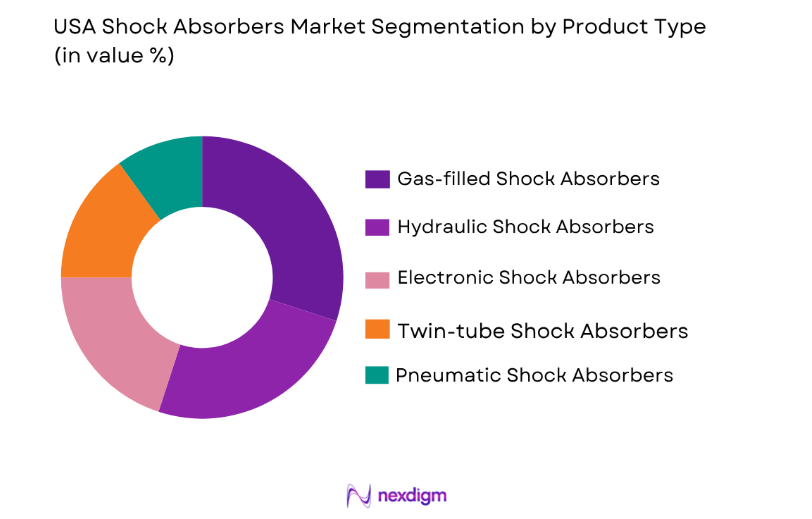
The USA shock absorbers market is segmented by product type into hydraulic shock absorbers, pneumatic shock absorbers, gas-filled shock absorbers, electronic shock absorbers, and twin-tube shock absorbers. Recently, gas-filled shock absorbers have dominated the market due to factors such as their superior performance in providing enhanced ride quality, durability, and improved handling for both passenger and commercial vehicles. With growing consumer preference for high-performance suspension systems, gas-filled shock absorbers are widely adopted in a variety of vehicles, contributing to their market dominance. Additionally, their compatibility with advanced automotive technologies like electronic control systems has further accelerated their growth in the market.
By Fitment Type:
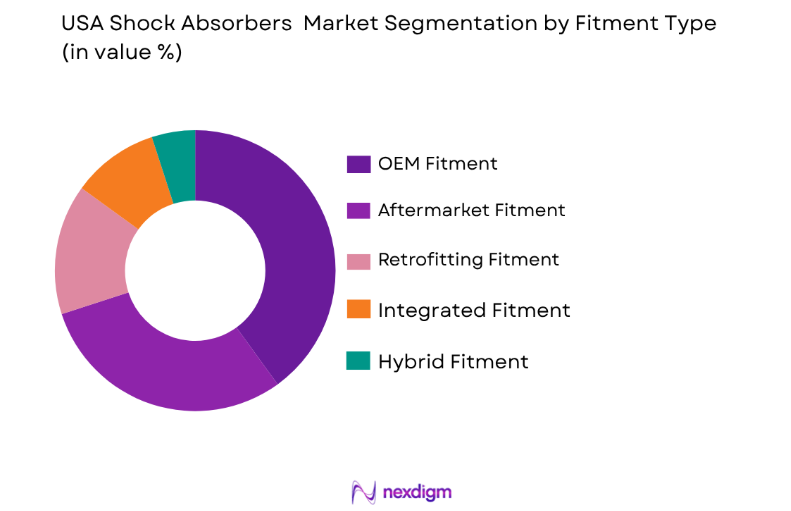
The USA shock absorbers market is segmented by fitment type into OEM fitment, aftermarket fitment, retrofitting fitment, hybrid fitment, and integrated fitment. OEM fitment currently holds a dominant market share, driven by the increasing demand for original equipment parts in newly manufactured vehicles. With the rising trend of vehicle production in the country, manufacturers are increasingly focusing on high-quality OEM shock absorbers, ensuring that they meet rigorous standards for performance, safety, and longevity. Furthermore, with the development of electric and hybrid vehicles, OEMs are now also investing in advanced suspension technologies to enhance the performance of these new vehicle types, which further solidifies OEM fitment’s leading position in the market.
Competitive Landscape
The competitive landscape of the USA shock absorbers market is characterized by a high level of consolidation with the presence of both global players and regional suppliers. Major companies in the market are leveraging advanced manufacturing capabilities and technological innovations to maintain a competitive edge. These companies focus on providing a broad range of shock absorbers to meet the diverse needs of the automotive and commercial vehicle industries. Strategic collaborations and acquisitions are common, as companies aim to expand their product portfolios and improve market reach. Leading players are also investing in R&D to develop products with better performance, efficiency, and durability, catering to the growing demand for high-performance suspension systems in both the OEM and aftermarket sectors.
| Company Name | Establishment Year | Headquarters | Technology Focus | Market Reach | Key Products | Revenue | Additional Parameter |
| Monroe | 1916 | Michigan, USA | ~ | ~ | ~ | ~ | ~ |
| KYB Corporation | 1944 | Japan | ~ | ~ | ~ | ~ | ~ |
| Tenneco | 1940 | Illinois, USA | ~ | ~ | ~ | ~ | ~ |
| ZF Friedrichshafen | 1915 | Germany | ~ | ~ | ~ | ~ | ~ |
| Bilstein | 1873 | Germany | ~ | ~ | ~ | ~ | ~ |

USA Shock Absorbers Market Analysis
Growth Drivers
Increased Vehicle Production:
The growing demand for vehicles in the USA continues to be a significant growth driver for the shock absorbers market. With the automotive industry experiencing consistent growth, driven by consumer preferences for new and advanced vehicle models, there is an increasing need for high-performance suspension systems. The rise in vehicle production has led to a higher demand for shock absorbers as a crucial component of the suspension system. Furthermore, the rise of electric vehicles (EVs) has added another layer of demand, as EV manufacturers require advanced suspension solutions to improve ride comfort, handling, and overall vehicle performance. The shift toward more efficient and eco-friendly vehicle models has spurred innovation in shock absorber designs, contributing to the market’s expansion. As consumer preferences evolve, the integration of new technologies and materials into shock absorbers continues to drive their demand in the vehicle manufacturing process. This surge in vehicle production, particularly in key automotive manufacturing hubs like Michigan, California, and Texas, further accelerates the need for shock absorbers, benefiting manufacturers in the region. The continued growth of the electric vehicle sector also plays a pivotal role in boosting the demand for high-performance shock absorbers that cater to these new vehicle designs.
Technological Advancements in Suspension Systems:
The rapid advancements in suspension technology are another key driver for the USA shock absorbers market. With the continuous development of new technologies such as electronic shock absorbers and adaptive suspension systems, the market has seen a significant shift toward more advanced and efficient shock absorbers. These innovations not only improve vehicle performance but also enhance the overall driving experience by providing better comfort, stability, and control. Electronic shock absorbers, for example, allow for real-time adjustments to the vehicle’s suspension system, providing enhanced ride comfort and improved handling. As consumers demand higher performance from their vehicles, particularly in the luxury and electric vehicle segments, manufacturers are focusing on incorporating these new technologies into their suspension systems. The incorporation of smart suspension systems, such as those that use sensors and control systems to adjust damping characteristics, is expected to drive further growth in the market. With the focus on producing vehicles with advanced ride handling capabilities, these technological advancements are expected to continue driving the demand for shock absorbers, particularly in high-end and electric vehicle models.
Market Challenges
Raw Material Price Volatility:
One of the key challenges faced by the USA shock absorbers market is the volatility in raw material prices. Shock absorbers are manufactured using various materials, including steel, aluminum, rubber, and hydraulic fluids, and fluctuations in the prices of these materials can have a significant impact on manufacturing costs. Price instability, caused by factors such as geopolitical tensions, supply chain disruptions, and fluctuating demand in key markets, creates uncertainty for manufacturers. This volatility not only affects production costs but also hampers profitability, as manufacturers may struggle to pass these increased costs onto consumers without impacting sales. Moreover, the increased cost of raw materials could result in higher prices for consumers, potentially reducing the demand for premium shock absorber systems. This challenge is particularly pertinent in an environment where automakers and suppliers are also dealing with the rising costs of electric vehicle production and the development of new suspension systems. Manufacturers must find ways to mitigate these cost pressures while maintaining product quality and competitive pricing in order to stay ahead in the market.
Regulatory and Compliance Pressures:
Regulatory and compliance pressures represent another challenge for the USA shock absorbers market. As environmental concerns continue to grow, stricter emissions regulations and fuel efficiency standards are being implemented across various vehicle categories. These regulations not only apply to the vehicles themselves but also impact the components used in manufacturing, including shock absorbers. With an increased focus on reducing vehicle weight and improving fuel efficiency, manufacturers must adapt their designs to meet these standards. This can lead to higher costs in research and development, as companies need to invest in new technologies and materials that comply with these regulatory requirements. Moreover, the complexity of regulatory compliance in different regions of the USA can increase operational costs for manufacturers, as they must adhere to state-specific rules and guidelines while also meeting federal standards. This challenge, combined with the pressure to maintain product performance and cost-effectiveness, presents a significant hurdle for market players. Manufacturers will need to invest in innovative solutions that not only comply with regulations but also enhance the functionality and appeal of their shock absorbers in a competitive market.
Opportunities
Integration of Advanced Materials in Shock Absorbers:
The increasing focus on lightweight materials and advanced composites offers a significant opportunity for the USA shock absorbers market. Manufacturers are actively exploring ways to reduce the weight of shock absorbers while maintaining their durability and performance. The integration of materials such as carbon fiber, aluminum alloys, and advanced polymers into shock absorber designs is expected to enhance performance by providing higher strength-to-weight ratios. Lightweight materials contribute to overall vehicle weight reduction, which plays a crucial role in improving fuel efficiency and vehicle performance, especially in electric and hybrid vehicles. With the rise in demand for more energy-efficient vehicles, the use of advanced materials in shock absorbers presents a significant growth opportunity for manufacturers. As consumers continue to prioritize fuel economy and performance, manufacturers that focus on incorporating these materials into their shock absorbers will be well-positioned to capitalize on this trend. Additionally, the integration of advanced materials also provides manufacturers with the ability to offer premium products that appeal to the growing market of electric vehicles and performance-oriented cars, driving further market expansion.
Emerging Demand for Autonomous Vehicles:
The development of autonomous vehicles represents a significant opportunity for the USA shock absorbers market. With the rise of self-driving cars, there is an increasing need for advanced suspension systems that can support the unique demands of autonomous driving. These vehicles require suspension systems that can provide superior comfort, stability, and adaptability to varying road conditions, as well as accommodate the specific needs of autonomous driving technologies. Shock absorbers in autonomous vehicles will need to be integrated with sensors and control systems to ensure optimal performance and smooth driving experiences. Additionally, autonomous vehicles are expected to be equipped with advanced safety features that rely on suspension systems to ensure vehicle stability during emergency maneuvers. As the development of autonomous vehicles continues to progress, manufacturers that specialize in advanced shock absorbers will find new opportunities to meet the specific demands of these vehicles. The growing interest in autonomous vehicles and the technological innovations associated with them will be a key driver of future demand for shock absorbers in the USA market.
Future Outlook
The future outlook for the USA shock absorbers market is promising, with expected growth driven by technological advancements in suspension systems, increased vehicle production, and the rising demand for electric and autonomous vehicles. Over the next five years, the market is likely to see significant growth as automakers focus on enhancing ride comfort, vehicle performance, and fuel efficiency. Regulatory support for the automotive industry, particularly in areas related to emissions and fuel efficiency, will further drive the demand for advanced suspension solutions. Additionally, as consumers continue to prioritize vehicle safety and comfort, shock absorber manufacturers will have ample opportunities to innovate and expand their product offerings to meet these evolving demands.
Major Players
- Monroe
- KYB Corporation
- Tenneco
- ZF Friedrichshafen
- Bilstein
- Showa Corporation
- Mando Corporation
- Fox Racing Shox
- Hitachi Automotive Systems
- Magneti Marelli
- Sachs
- Delphi Technologies
- Trelleborg AB
- Federal-Mogul Motorparts
- Valeo
Key Target Audience
- Investments and venture capitalist firms
- Government and regulatory bodies
- Automotive OEMs
- Tier-1 suppliers
- Fleet operators
- Vehicle manufacturers
- Automotive aftermarket suppliers
- Electric vehicle manufacturers
Research Methodology
Step 1: Identification of Key Variables
Identifying the key drivers, challenges, and trends impacting the market.
Step 2: Market Analysis and Construction
Analyzing the data to construct an accurate picture of market dynamics.
Step 3: Hypothesis Validation and Expert Consultation
Validating assumptions with market experts and industry leaders.
Step 4: Research Synthesis and Final Output
Synthesizing the findings into a comprehensive report that addresses the market’s key issues.

- Executive Summary
- Research Methodology (Definitions, Scope, Industry Assumptions, Market Sizing Approach, Primary & Secondary Research Framework, Data Collection & Verification Protocol, Analytic Models & Forecast Methodology, Limitations & Research Validity Checks)

- Market Definition and Scope
- Value Chain & Stakeholder Ecosystem
- Regulatory / Certification Landscape
- Sector Dynamics Affecting Demand

- Growth Drivers
Increased Vehicle Production
Rising Demand for Electric Vehicles
Technological Advancements in Shock Absorber Design - Market Challenges
Rising Raw Material Costs
Vehicle Weight Reduction Trends
Technological Integration Challenges - Market Opportunities
Growing Demand for Ride Comfort Solutions
Shift to Lightweight Materials
Rising Demand for Advanced Suspension Systems - Trends
Integration of Smart Suspension Technologies
Advances in Materials for Durability
Increase in Focus on Sustainability - Government Regulations

- By Market Value, 2020-2025
- By Installed Units,2020-2025
- By Average System Price, 2020-2025
- By System Complexity Tier, 2020-2025

- By System Type (In Value%)
Hydraulic Shock Absorbers
Pneumatic Shock Absorbers
Gas-filled Shock Absorbers
Electronic Shock Absorbers
Twin-tube Shock Absorbers - By Platform Type (In Value%)
Passenger Cars
Light Commercial Vehicles
Heavy Commercial Vehicles
Motorcycles
Electric Vehicles - By Fitment Type (In Value%)
OEM Fitment
Aftermarket Fitment
Retrofitting Fitment
Hybrid Fitment
Integrated Fitment - By EndUser Segment (In Value%)
Automotive Manufacturers
Automotive Aftermarket
Vehicle Service Centers
OEM Parts Suppliers
Fleet Operators

- Market Share Analysis
- CrossComparison Parameters (System Type, Platform Type, Fitment Type, EndUser Segment, Procurement Channel)
- SWOT Analysis of Key Competitors
- Pricing & Procurement Analysis
- Porter’s Five Forces
- Key Players
Monroe
KYB Corporation
Boge
Gabriel
Sachs
Tenneco
ZF Friedrichshafen
Magneti Marelli
Bilstein
Showa Corporation
Mando Corporation
Aston Martin
Ohlins
Hella
Eibach

- Increasing Focus on Ride Comfort in Vehicles
- Adoption of Advanced Shock Absorbers in Electric Vehicles
- Rising Aftermarket Demand for Suspension Systems
- Focus on Cost-Effective Maintenance Solutions

- Forecast Market Value, 2026-2035
- Forecast Installed Units, 2026-2035
- Price Forecast by System Tier, 2026-2035
- Future Demand by Platform, 2026-2035


 Request a Sample
 Ask for Customization
 Get a Quote
 Enquire Now