

 Download PDF
Market Overview
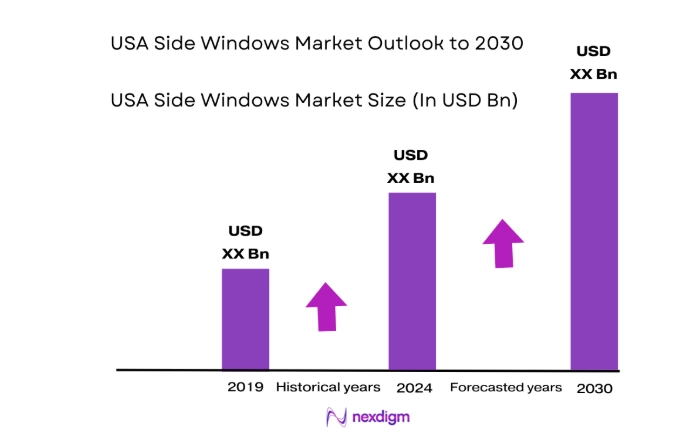
The USA Side Windows market current size stands at around USD ~ million, reflecting steady replacement cycles and OEM integration across passenger and commercial vehicle platforms. Demand is sustained by collision repair frequency, aging vehicle parc requiring periodic glazing replacement, and rising adoption of laminated and acoustic side glass for safety and comfort. OEM sourcing diversification and localization of processing capacity shape supply resilience. Technology differentiation around coatings and noise attenuation influences procurement decisions across factory-installed and aftermarket channels.
Demand concentration is strongest in California, Texas, Florida, Michigan, and Ohio, supported by dense vehicle ownership, high traffic intensity, and extensive repair networks. Urban corridors with high accident incidence and insurance penetration drive replacement volumes. Manufacturing and processing clusters near automotive assembly plants in the Midwest improve lead times. Policy emphasis on vehicle safety compliance and environmental standards supports adoption of advanced laminated and coated side glazing across premium and mass-market segments.
Market Segmentation
By Glass Type
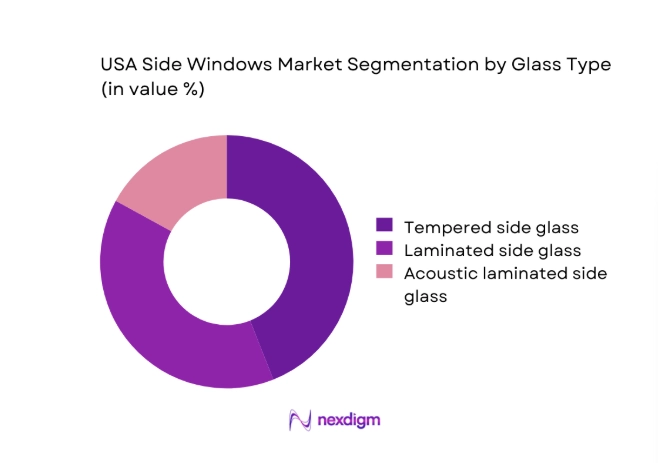
Laminated side glass dominates value contribution due to growing safety mandates, acoustic comfort requirements, and theft-deterrence preferences across premium and upper-mid segments. Tempered glass remains prevalent in cost-sensitive models and high-volume fleet applications, where replacement frequency and price sensitivity shape procurement. Acoustic laminated variants gain traction in EVs and premium SUVs due to noise insulation priorities and cabin comfort expectations. OEMs increasingly specify laminated constructions for front door windows to align with evolving safety standards, while quarter glass applications continue to favor tempered formats due to structural integration and weight considerations. The aftermarket mirrors OEM trends as insurers approve laminated replacements for front door installations, raising value share.
By Sales Channel
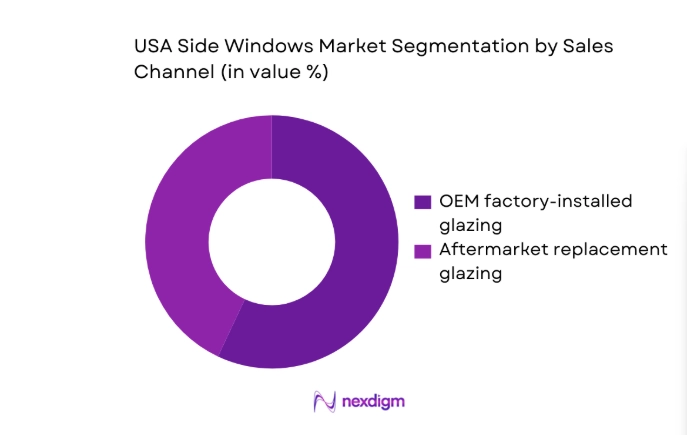
OEM factory-installed glazing contributes higher value share driven by specification upgrades, acoustic features, and coating adoption aligned with vehicle refresh cycles. Aftermarket replacement volumes remain robust due to collision repair frequency, vandalism incidents, and aging vehicles requiring glazing replacements. Insurer-approved parts lists increasingly include laminated side windows for front doors, elevating average value in the replacement channel. Digital claims processing and networked installers improve turnaround times, reinforcing aftermarket resilience. Fleet operators prioritize standardized SKUs and service-level agreements, while retail consumers favor certified installers with warranty coverage. Channel strategies emphasize local stocking near metro corridors to reduce lead times and breakage risk.
Competitive Landscape
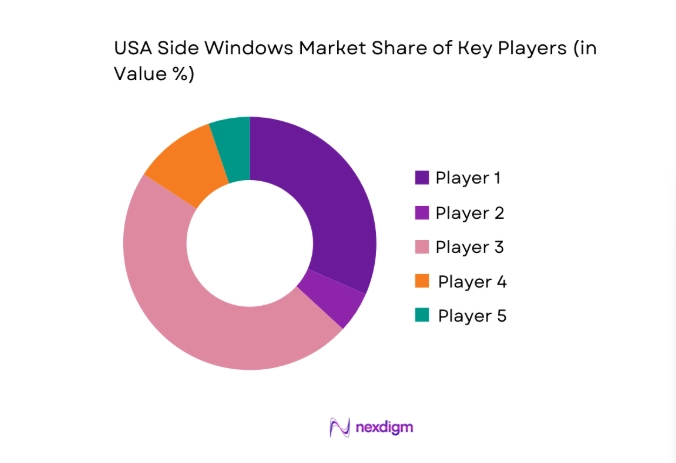
The competitive environment is characterized by vertically integrated manufacturers supplying OEM programs alongside regional processors serving insurance-led replacement demand. Differentiation centers on laminated technology depth, coating capabilities, localized processing capacity, and compliance readiness with safety and environmental standards. Channel strength in metro repair networks and insurer partnerships shapes replacement volumes.
| Company Name | Establishment Year | Headquarters | Formulation Depth | Distribution Reach | Regulatory Readiness | Service Capability | Channel Strength | Pricing Flexibility |
| AGC Automotive | 1907 | Tokyo, Japan | ~ | ~ | ~ | ~ | ~ | ~ |
| NSG Group | 1918 | Tokyo, Japan | ~ | ~ | ~ | ~ | ~ | ~ |
| Saint-Gobain Sekurit | 1665 | Courbevoie, France | ~ | ~ | ~ | ~ | ~ | ~ |
| Fuyao Glass Industry Group | 1987 | Fuzhou, China | ~ | ~ | ~ | ~ | ~ | ~ |
| Guardian Glass | 1932 | Auburn Hills, USA | ~ | ~ | ~ | ~ | ~ | ~ |
USA Side Windows Market Analysis
Growth Drivers
Rising vehicle production and sales in the U.S.
Vehicle output recovered with 10,611,555 units assembled domestically in 2023, supported by capacity utilization near 78 across Midwest plants and sustained labor stabilization following 2022 disruptions. New model launches expanded trim-level glazing specifications, adding laminated constructions on front doors for multiple platforms. Registrations reached 15,456,321 in 2024, increasing factory-installed side glazing fitments per vehicle at 4 units for sedans and 6 units for SUVs. Insurance penetration above 200,000,000 active policies sustains replacement demand after collisions. Federal safety updates in 2023 accelerated OEM validation cycles for laminated side windows, strengthening procurement commitments across refreshed vehicle lines nationwide.
Increasing adoption of laminated side windows for safety and noise reduction
Front-door laminated side glazing expanded across 27 refreshed models released in 2023 and 19 additional updates in 2024, driven by occupant protection standards and cabin noise reduction targets. Acoustic interlayers reduce cabin noise by 3 to 5 decibels in urban driving conditions, supporting premium positioning. Highway safety guidance updates in 2023 prompted validation protocols across 12 crash scenarios for side impacts, favoring laminated constructions over tempered alternatives. EV programs increased laminated fitment due to powertrain noise absence revealing wind noise. Urban congestion indexes across 387 metropolitan corridors elevated comfort priorities, reinforcing laminated adoption in high-mileage commuter vehicles.
Challenges
Volatility in raw material prices for soda ash and float glass
Float glass inputs face supply volatility as 2023 logistics constraints affected 14 major ports, extending lead times by 6 to 9 weeks for critical minerals. Soda ash mining disruptions in 2022 reduced quarterly shipments by 2.1 million tons, tightening input availability for U.S. processors. Energy intensity of float lines at 1,600 degrees Celsius exposes producers to electricity and natural gas price swings following 2024 grid volatility events across Texas and California. Furnace relining cycles of 12 to 15 years require planned shutdowns, constraining output during peak demand. These factors complicate production scheduling and inventory planning for side glazing processors.
High energy costs impacting glass manufacturing margins
Float glass furnaces operate continuously at temperatures above 1,500 degrees Celsius, consuming 4 to 5 gigajoules per ton of output, making producers sensitive to regional power price spikes observed in 2024 heatwave periods across 6 states. Grid congestion increased curtailment hours by 18 percent in summer peaks, forcing load shifting and temporary throughput reductions. Natural gas storage variability during 2023 winter events constrained fuel procurement planning. Compliance with emissions monitoring under updated federal rules in 2023 added 24 reporting checkpoints annually per facility, increasing operational overhead and diverting maintenance resources from capacity optimization initiatives across U.S. glazing lines.
Opportunities
Penetration of acoustic and infrared-reflective side glass in mass-market vehicles
Consumer noise sensitivity rose as average daily commute times reached 27 minutes in 2024 across 52 metropolitan areas, increasing demand for quieter cabins in non-premium segments. Acoustic interlayer adoption expanded into 14 mid-range trims introduced in 2023, supported by manufacturing learning curves that reduced cycle times by 18 percent per batch. Infrared-reflective coatings lowered cabin temperature by 2 to 4 degrees Celsius in summer testing across Arizona and Nevada corridors, aligning with thermal comfort targets. Federal efficiency labeling updates in 2024 incentivized OEMs to integrate glazing that reduces HVAC load, broadening adoption beyond luxury vehicles.
Growth of EVs driving lightweight and coated glazing solutions
Battery electric vehicle registrations increased to 1,189,000 in 2024, elevating focus on mass reduction per vehicle to extend range by 5 to 8 kilometers per 100 kilometers in standardized cycles. Thinner laminated constructions and hybrid interlayers reduced side glazing mass by 0.6 kilograms per door in 2023 pilot programs. Coated glazing improved solar rejection, reducing HVAC energy draw during urban stop-and-go conditions measured across 9 metropolitan test corridors. Charging infrastructure expansion to 192,000 public ports in 2024 increased urban EV utilization, reinforcing demand for comfort-enhancing side glazing in daily commuting applications.
Future Outlook
Through 2030, OEM specification upgrades, safety compliance evolution, and EV penetration will continue to shape side glazing design and procurement. Localization of processing capacity and insurer-aligned aftermarket approvals are expected to stabilize lead times. Technology convergence around laminated, acoustic, and coated side windows will extend into mass-market platforms as comfort expectations rise. Regulatory alignment and supply chain resilience will remain central to competitive positioning.
Major Players
- AGC Automotive
- NSG Group
- Saint-Gobain Sekurit
- Fuyao Glass Industry Group
- Guardian Glass
- Vitro Automotive Glass
- PPG Industries
- Central Glass
- Xinyi Glass
- Carlex Glass America
- Corning Incorporated
- Glaston Corporation
- Nippon Sheet Glass North America
- Sisecam Automotive
- Vitro Architectural Glass
Key Target Audience
- Automotive OEM procurement teams
- Tier-1 glazing system integrators
- Aftermarket distributors and installer networks
- Insurance companies and claims administrators
- Fleet operators and mobility service providers
- Collision repair chains and service centers
- Investments and venture capital firms
- Government and regulatory bodies with agency names such as NHTSA and EPA
Research Methodology
Step 1: Identification of Key Variables
Vehicle parc by segment, side window fitment rates, laminated versus tempered adoption, insurer replacement protocols, and coating penetration were defined as core variables. Regulatory compliance thresholds and safety validation checkpoints were mapped to specification requirements. Supply chain nodes, processing capacity localization, and installer network density were included to capture channel dynamics.
Step 2: Market Analysis and Construction
Platform-level fitment mapping across refreshed models was constructed to estimate unit flows without disclosing market scale. Replacement cycles were aligned with collision frequency indicators and insurance coverage patterns. Technology adoption curves for laminated and coated glazing were modeled using validation cycles and manufacturing learning rates.
Step 3: Hypothesis Validation and Expert Consultation
Engineering, safety compliance, and operations experts validated assumptions on laminated adoption, furnace utilization constraints, and coating performance thresholds. Repair network managers reviewed installer capacity and turnaround benchmarks. Policy specialists assessed implications of safety and emissions compliance on glazing specifications.
Step 4: Research Synthesis and Final Output
Findings were synthesized across OEM programs, replacement channels, and regulatory pathways to ensure coherence. Scenario testing evaluated supply resilience under energy and logistics volatility. Insights were consolidated into actionable themes for procurement, manufacturing localization, and technology prioritization.

- Executive Summary
- Research Methodology (Market Definitions and OEM glazing specifications mapping, Primary interviews with automotive OEMs and Tier-1 glass suppliers, Dealer and installer channel surveys for replacement demand, Analysis of vehicle parc and side window fitment rates by model year, Pricing audits across OEM, aftermarket, and insurance claim data, Teardown analysis of laminated and tempered side window technologies, Trade data and plant capacity assessment for U.S. automotive glass)

- Definition and Scope
- Market evolution
- Usage and replacement pathways
- Ecosystem structure
- Supply chain and channel structure
- Regulatory environment

- Growth Drivers
Rising vehicle production and sales in the U.S.
Increasing adoption of laminated side windows for safety and noise reduction
Growth in vehicle parc and collision repair frequency
Stricter safety standards encouraging advanced glazing adoption
Premium vehicle penetration driving acoustic and UV-protective glass demand
Electrification trends increasing focus on lightweight glazing - Challenges
Volatility in raw material prices for soda ash and float glass
High energy costs impacting glass manufacturing margins
Supply chain disruptions and dependence on imported float glass
Price sensitivity in aftermarket replacement segments
Complex certification and compliance requirements
Fragility and logistics costs for bulky glass components - Opportunities
Penetration of acoustic and infrared-reflective side glass in mass-market vehicles
Growth of EVs driving lightweight and coated glazing solutions
Rising insurance-covered replacements boosting aftermarket volumes
Localization of glass manufacturing and processing capacity in the U.S.
Partnerships with ADAS suppliers for sensor-compatible glazing
Recycling and cullet utilization to reduce production costs - Trends
Shift from tempered to laminated side windows in premium models
Integration of UV and IR coatings for thermal comfort
Increasing use of privacy-tinted and smart glass options
Digitization of aftermarket distribution and claims processing
OEM sourcing diversification to mitigate supply risks
Design convergence toward thinner, lightweight side glazing - Government Regulations
- SWOT Analysis
- Stakeholder and Ecosystem Analysis
- Porter’s Five Forces Analysis
- Competition Intensity and Ecosystem Mapping

- By Value, 2019–2024
- By Shipment Volume, 2019–2024
- By Installed Base, 2019–2024
- By Average Selling Price, 2019–2024

- By Glass Type (in Value %)
Tempered side glass
Laminated side glass
Acoustic laminated side glass - By Vehicle Type (in Value %)
Passenger cars
Light commercial vehicles
Heavy commercial vehicles - By Propulsion Type (in Value %)
Internal combustion engine vehicles
Hybrid vehicles
Battery electric vehicles - By Sales Channel (in Value %)
OEM factory-installed glazing
Aftermarket replacement glazing - By Application (in Value %)
Front door side windows
Rear door side windows
Quarter glass and fixed side windows

- Market structure and competitive positioning
Market share snapshot of major players - Cross Comparison Parameters (product portfolio breadth, OEM approval coverage, manufacturing footprint in North America, pricing competitiveness, supply reliability, technology differentiation, aftermarket reach, sustainability initiatives)
- SWOT Analysis of Key Players
- Pricing and Commercial Model Benchmarking
- Detailed Profiles of Major Companies
AGC Automotive
NSG Group (Pilkington)
Saint-Gobain Sekurit
Fuyao Glass Industry Group
Guardian Glass
Vitro Automotive Glass
PPG Industries
Central Glass
Xinyi Glass
Carlex Glass America
Corning Incorporated
Glaston Corporation
Nippon Sheet Glass North America
Sisecam Automotive
Vitro Architectural Glass

- Demand and utilization drivers
- Procurement and tender dynamics
- Buying criteria and vendor selection
- Budget allocation and financing preferences
- Implementation barriers and risk factors
- Post-purchase service expectations

- By Value, 2025–2030
- By Shipment Volume, 2025–2030
- By Installed Base, 2025–2030
- By Average Selling Price, 2025–2030


 Request a Sample
 Ask for Customization
 Get a Quote
 Enquire Now