
 Download PDF
 Download PDF
Market Overview
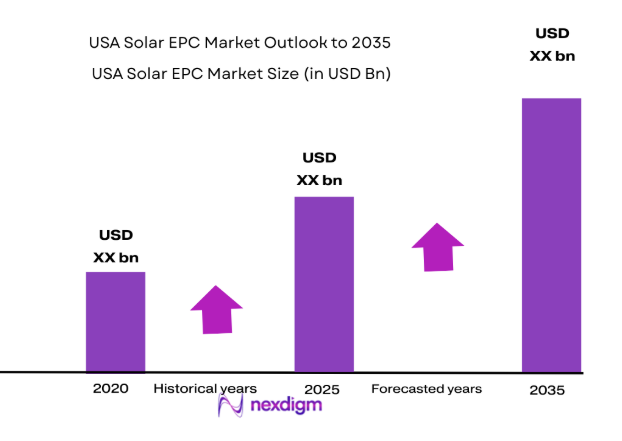
The USA Solar EPC market is expected to see significant growth driven by favorable governmental incentives and the accelerating demand for clean energy solutions. As of a recent historical assessment, the market size stands at approximately USD ~ billion. This growth is fueled by the increasing adoption of solar energy across residential, commercial, and industrial sectors, coupled with advancements in solar technology that reduce costs and enhance efficiency. Additionally, strong regulatory frameworks and the push for decarbonization are key factors in this expansion.
Dominant regions in the USA include California, Texas, and Florida, where abundant sunlight and supportive government policies create a strong foundation for solar energy growth. These regions benefit from state-specific renewable energy mandates, excellent solar resources, and established infrastructure. As key areas in the transition to green energy, they continue to attract investments and drive market expansion. Furthermore, the ongoing development of solar projects, coupled with initiatives like the Solar Investment Tax Credit (ITC), further consolidates their dominance in the market.
Market Segmentation
By Product Type
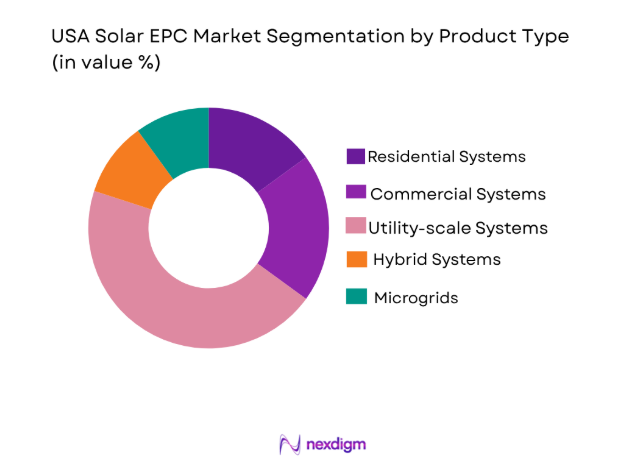
The USA Solar EPC market is segmented by product type into residential systems, commercial systems, utility-scale systems, hybrid systems, and microgrids. Recently, utility-scale systems have dominated the market share due to their capacity to generate large amounts of electricity at lower costs per unit. The demand for renewable energy from utility providers, coupled with favorable policies such as the ITC, has made utility-scale projects more financially attractive. These large-scale projects are critical to meeting renewable energy targets and offer significant cost benefits, making them the preferred choice for long-term energy generation.
By Platform Type
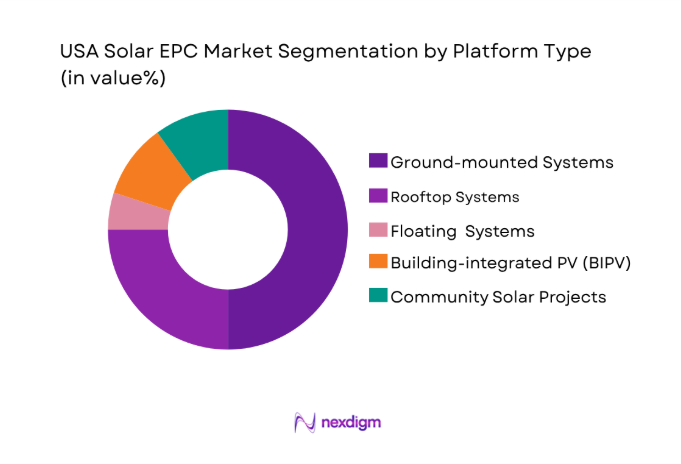
The USA Solar EPC market is segmented by platform type into ground-mounted systems, rooftop systems, floating systems, BIPV (Building Integrated Photovoltaics) systems, and community solar systems. Ground-mounted systems currently hold the dominant market share as they are scalable and highly efficient, especially in large, open spaces. These systems are particularly suited for utility-scale projects where large areas are available, and they benefit from economies of scale. The rising demand for clean energy from utilities and the growing number of solar projects are key factors behind the dominance of ground-mounted platforms.
Competitive Landscape
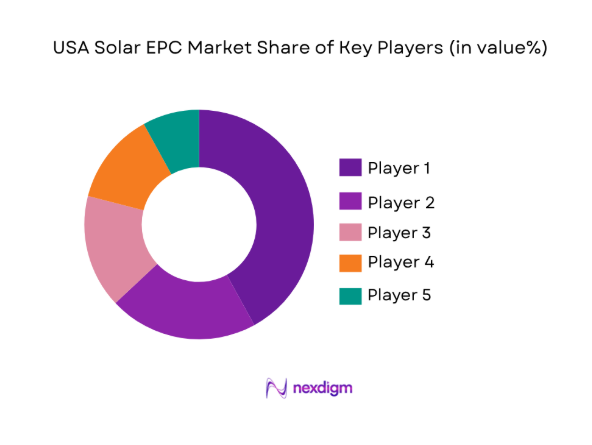
The competitive landscape of the USA Solar EPC market is characterized by a high level of consolidation, with major players holding a significant share of the market. These players are influencing market trends through their innovative solar technologies, strategic partnerships, and ability to scale projects. The market also sees continuous advancements in solar technology, driving new entrants to adapt and innovate to remain competitive. The presence of large players and a strong focus on technology innovation continue to shape the competitive dynamics, with a high emphasis on cost efficiency and regulatory compliance.
| Company Name | Establishment Year | Headquarters | Technology Focus | Market Reach | Key Products | Revenue | Market-specific Parameter |
| First Solar | 1999 | Tempe, AZ | ~ | ~ | ~ | ~ | ~ |
| SunPower | 1985 | San Jose, CA | ~ | ~ | ~ | ~ | ~ |
| NextEra Energy | 1925 | Juno Beach, FL | ~ | ~ | ~ | ~ | ~ |
| Sunrun | 2007 | San Francisco, CA | ~ | ~ | ~ | ~ | ~ |
| Vivint Solar | 2011 | Lehi, UT | ~ | ~ | ~ | ~ | ~ |
USA Solar EPC Market Analysis
Growth Drivers
Government Incentives
Government incentives, such as the Solar Investment Tax Credit (ITC), continue to play a pivotal role as growth drivers in the solar EPC market. These incentives significantly reduce the financial burden of installing solar energy systems by offering tax reductions for solar investments, making them more affordable for both residential and commercial sectors. The availability of tax credits has a direct impact on the decision-making process, especially for businesses and homeowners who may otherwise be hesitant to make the initial investment. With the reduction in upfront costs, more individuals and companies are opting for solar installations, which in turn drives demand for solar EPC services. Additionally, these incentives help create a stable financial environment for solar projects, encouraging private sector investment and helping the market grow at a faster pace.
Technological Advancements
Technological advancements have greatly contributed to the growth of the USA Solar EPC market, with significant improvements in solar panel efficiency and energy storage solutions. The continued reduction in the cost of solar panels and an increase in their efficiency have made solar energy an increasingly attractive option. Advancements in photovoltaic technology enable higher energy production per unit area, making solar systems more effective in generating power. Furthermore, the development of energy storage systems, such as batteries, allows for better energy management, ensuring a consistent power supply even when the sun isn’t shining. As the cost of energy storage solutions continues to fall, the combination of solar and storage systems becomes a more viable option, driving adoption across various sectors. These technological improvements provide both economic and operational advantages, making solar energy an increasingly competitive alternative to traditional energy sources.
Market Challenges
High Initial Capital Investment
A major challenge that continues to impact the solar EPC market is the high initial capital investment required for solar projects, particularly in the utility-scale segment. Despite the overall reduction in solar technology costs, the substantial upfront costs for the installation of large-scale solar systems remain a significant barrier. These projects require significant investments in infrastructure, equipment, and labor, which may deter potential investors and customers, especially when financing options are limited. While solar energy offers lower operational costs and long-term savings, many businesses and individuals still face difficulty in overcoming the initial financial hurdle. This barrier is particularly acute in the utility-scale sector, where projects demand large tracts of land and substantial investments in grid integration. Financial models, such as power purchase agreements (PPAs), have been developed to mitigate this challenge, but the capital-intensive nature of solar projects continues to slow down adoption, particularly in areas where financing options are not readily accessible.
Regulatory and Permitting Issues
Another significant challenge facing the USA Solar EPC market is the complex regulatory and permitting process that often delays project timelines and increases costs. Solar projects, especially those of large scale, require extensive permitting, environmental assessments, and compliance with local, state, and federal regulations. The regulatory landscape for solar installations can vary widely between states, with some states having more streamlined processes and others experiencing bureaucratic inefficiencies. These discrepancies in regulatory processes can cause delays and uncertainty, ultimately affecting project completion and increasing costs. In urban areas, where land availability is limited and local zoning laws are more complex, solar installations face even more hurdles. Navigating through the permitting process can take months or even years, creating an unpredictable environment for solar developers and investors. These regulatory barriers hinder the growth of the solar EPC market and reduce investor confidence, making it difficult for the market to expand at the desired pace.
Opportunities
Expansion of Solar in Rural Areas
Rural areas represent a significant untapped opportunity for the USA Solar EPC market, particularly for large-scale solar installations. These areas generally offer more available land for solar farms, which is ideal for utility-scale projects that require expansive areas to generate substantial amounts of power. Furthermore, rural regions often have lower energy costs, and solar energy can help reduce dependence on centralized grid systems. In many rural areas, the existing electrical infrastructure is outdated or unreliable, and solar energy provides an ideal solution to meet local energy demands while reducing operational costs. With solar projects offering both financial savings and increased energy security, rural communities present a lucrative market for solar EPC companies. Additionally, the government’s focus on renewable energy targets, along with various incentives aimed at accelerating solar adoption, creates a favorable environment for solar developments in rural areas. This presents an excellent growth opportunity for EPC providers to expand their services and reach untapped markets.
Technological Integration with Energy Storage
The integration of solar power with energy storage solutions, such as batteries, presents a growing opportunity for the USA Solar EPC market. As the sun is not always shining, energy storage systems help mitigate the intermittent nature of solar power generation. Pairing solar energy with storage systems allows for a continuous supply of electricity, making solar energy a more reliable and attractive option for both residential and commercial applications. With advancements in storage technology, such as lithium-ion batteries, the cost of storage solutions has decreased, making it easier to integrate solar power with energy storage. The growing demand for energy independence, coupled with increasing consumer interest in off-grid solutions, further fuels the adoption of solar-plus-storage systems. As the technology continues to improve and become more affordable, the solar EPC market will see significant growth in this sector, providing EPC providers with a new revenue stream and opportunities for innovation. This trend is especially relevant in remote areas and regions with unreliable grid infrastructure, where solar storage solutions can provide a reliable, self-sufficient energy system.
Future Outlook
The future outlook of the USA Solar EPC market is highly positive, with continued growth expected in the coming years. Technological advancements, including increased efficiency of solar panels and the widespread adoption of energy storage solutions, will propel the market forward. Additionally, the strong regulatory support from both federal and state governments will continue to incentivize solar adoption. As more industries embrace renewable energy, the demand for solar EPC services will continue to increase, providing ample growth opportunities across various market segments.
Major Players
- First Solar
- SunPower
- NextEra Energy
- Sunrun
- Vivint Solar
- Trina Solar
- Canadian Solar
- JinkoSolar
- Hanwha Q CELLS
- BayWa r.e.
- SolarCity
- Array Technologies
- SMA Solar Technology
- Enphase Energy
- GE Renewable Energy
Key Target Audience
- Investments and venture capitalist firms
- Government and regulatory bodies
- Solar developers and installers
- Renewable energy utilities
- Commercial building owners
- Residential homeowners
- Financial institutions
Research Methodology
Step 1: Identification of Key Variables
Key variables impacting the market, such as technological trends, market size, and regulatory factors, are identified and assessed for their influence on the solar EPC market.
Step 2: Market Analysis and Construction
Comprehensive market analysis is conducted through both primary and secondary research, covering the major market segments and sub-segments for solar EPC.
Step 3: Hypothesis Validation and Expert Consultation
Hypotheses are validated through expert consultations and feedback from industry leaders to ensure accurate and reliable findings.
Step 4: Research Synthesis and Final Output
The gathered data is synthesized into a comprehensive report, with findings validated through cross-referencing multiple sources to ensure accuracy and relevance.

- Executive Summary
- Research Methodology (Definitions, Scope, Industry Assumptions, Market Sizing Approach, Primary & Secondary Research Framework, Data Collection & Verification Protocol, Analytic Models & Forecast Methodology, Limitations & Research Validity Checks)

- Market Definition and Scope
- Value Chain & Stakeholder Ecosystem
- Regulatory / Certification Landscape
- Sector Dynamics Affecting Demand
- Strategic Initiatives & Infrastructure Growth

- Growth Drivers
Government Incentives and Tax Credits
Declining Solar Panel Costs
Growing Demand for Renewable Energy
Technological Advancements in Solar Technologies
Increasing Energy Independence and Sustainability Focus - Market Challenges
High Initial Capital Investment
Regulatory Hurdles and Permitting Delays
Interconnection Costs and Grid Limitations
Competition from Alternative Renewable Sources
Lack of Skilled Workforce in Solar Industry - Market Opportunities
Expansion of Solar Power in Rural and Remote Areas
Increasing Adoption of Energy Storage Solutions
Technological Innovation in Solar Panel Efficiency - Trends
Rise of Solar-Plus-Storage Solutions
Growing Integration of AI in Solar EPC Operations - Government Regulations
Incentive Programs and Tax Credits
Net Metering Policies
State-Level Solar Mandates - SWOT Analysis
- Porter’s Five Forces

- By Market Value, 2020-2025
- By Installed Units, 2020-2025
- By Average System Price, 2020-2025
- By System Complexity Tier, 2020-2025

- By System Type (In Value%)
Residential Systems
Commercial Systems
Utility-Scale Systems
Hybrid Systems
Microgrids - By Platform Type (In Value%)
Ground-Mounted Systems
Rooftop Systems
Floating Systems
BIPV (Building Integrated Photovoltaics) Systems
Community Solar Systems - By Fitment Type (In Value%)
On-premise Solutions
Off-premise Solutions
Hybrid Solutions
Integrated Solutions - By End User Segment (In Value%)
Residential
Commercial
Government
Industrial

- Market Share Analysis
- Cross Comparison Parameters (System Type, Platform Type, End User Segment, Procurement Channel, System Complexity, Fitment Type, Geographic Coverage)
- SWOT Analysis of Key Competitors
- Pricing & Procurement Analysis
- Key Players
First Solar
SunPower
NextEra Energy
Vivint Solar
Sungevity
Trina Solar
Canadian Solar
JinkoSolar
Hanwha Q CELLS
BayWa r.e.
SolarCity
Array Technologies
SMA Solar Technology
Enphase Energy
GE Renewable Energy

- Increasing Residential Demand for Solar Installations
- Government and Public Sector Adoption of Solar Solutions
- Commercial Sector’s Push for Sustainability
- Rising Industrial Investments in Solar Power

- Forecast Market Value, 2026-2035
- Forecast Installed Units, 2026-2035
- Price Forecast by System Tier, 2026-2035
- Future Demand by Platform, 2026-2035


 Request a Sample
 Ask for Customization
 Get a Quote
 Enquire Now