

 Download PDF
Market Overview
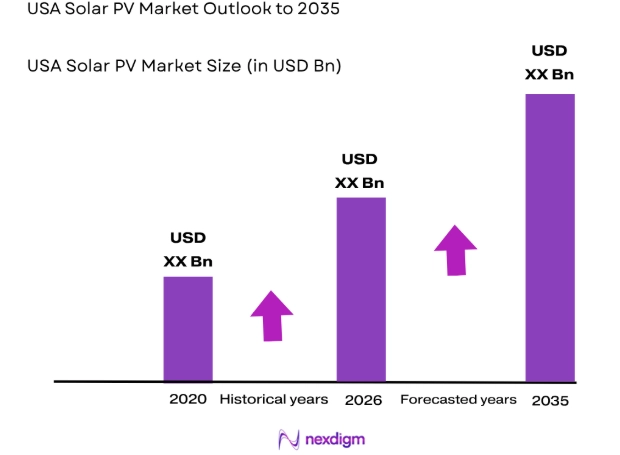
The USA Solar PV market is projected to reach approximately USD ~ billion based on a recent historical assessment. This market growth is driven by a combination of federal and state incentives for solar energy installations, increasing demand for clean energy, and advancements in photovoltaic (PV) technology. The falling cost of solar panel systems and the transition to more sustainable energy sources are also critical factors contributing to the expansion of solar PV adoption across residential, commercial, and industrial sectors in the United States.
California, Texas, and Florida are key regions dominating the USA Solar PV market. These states benefit from abundant sunlight and favorable policies that incentivize solar energy development. California, in particular, leads in solar installations, driven by its aggressive renewable energy targets and government-backed incentives. Texas and Florida follow closely behind, with growing installations due to cost-effective solar solutions and expanding consumer awareness of environmental sustainability. These regions are pivotal to the continued growth of the solar PV market in the country.
Market Segmentation
By System Type
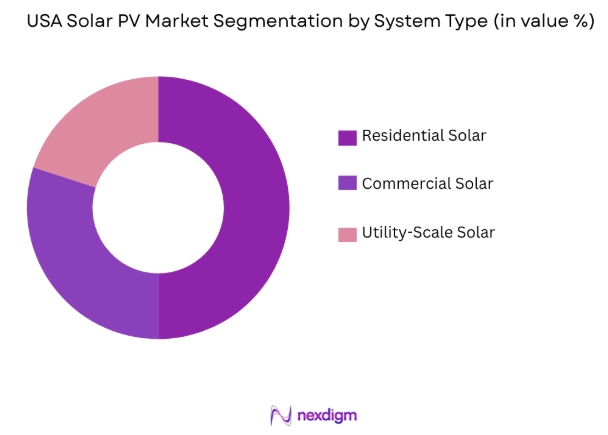
The USA Solar PV market is segmented by system type into residential, commercial, and utility-scale solar systems. Recently, the residential solar segment has seen a dominant market share due to favorable policy incentives such as tax credits and rebates, along with the growing trend of energy independence among homeowners. The increased affordability of solar panel systems, combined with awareness of the financial benefits of solar energy (such as lower utility bills and increased property value), has driven the strong demand for residential installations. This trend is expected to continue, with residential solar remaining a significant contributor to market growth.
By End-User
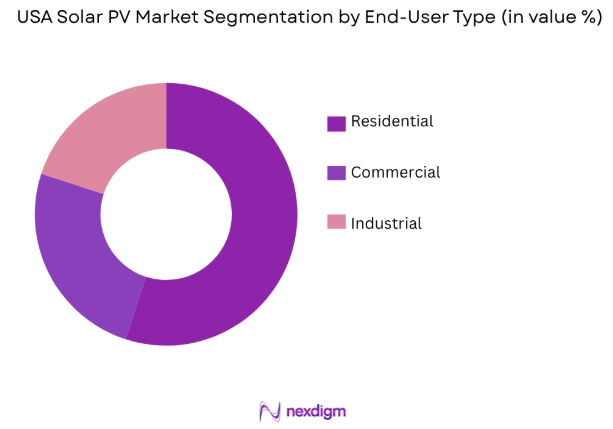
The USA Solar PV market is segmented by end-user into residential, commercial, and industrial sectors. The residential sector has been the dominant sub-segment, driven by incentives for homeowners, such as the federal solar tax credit and local rebates, that make solar energy more affordable. As energy prices rise and awareness of environmental impacts increases, more homeowners are opting to install solar systems on their properties. Moreover, advancements in technology have made solar panels more affordable and efficient, fueling demand in this sub-segment, and further positioning it as the primary contributor to market growth.
Competitive Landscape
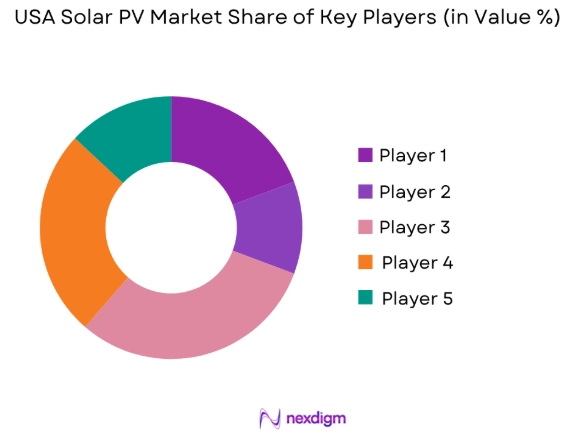
The competitive landscape of the USA Solar PV market is characterized by intense competition among both domestic and international solar manufacturers, EPC (engineering, procurement, and construction) contractors, and installation companies. The market has seen a wave of consolidation, as large companies acquire smaller firms to expand their technological capabilities and geographic reach. As the industry continues to mature, companies are increasingly investing in research and development to enhance solar panel efficiency and reduce installation costs, while also working to capitalize on the growing demand for solar energy systems across various sectors.
| Company Name | Establishment Year | Headquarters | Technology Focus | Market Reach | Key Products | Revenue (USD Billion) | Market-Specific Parameter |
| First Solar | 1999 | Tempe, USA | ~ | ~ | ~ | ~ | ~ |
| SunPower Corporation | 1985 | San Jose, USA | ~ | ~ | ~ | ~ | ~ |
| Tesla | 2003 | Palo Alto, USA | ~ | ~ | ~ | ~ | ~ |
| Vivint Solar | 2011 | Lehi, USA | ~ | ~ | ~ | ~ | ~ |
| Enphase Energy | 2006 | Fremont, USA | ~ | ~ | ~ | ~ | ~ |
USA Solar PV Market Analysis
Growth Drivers
Government Incentives and Tax Credits
Government incentives and tax credits are key drivers of the growth in the USA Solar PV market. The federal Investment Tax Credit (ITC) provides homeowners and businesses with a tax reduction based on the total cost of their solar installation. This incentive significantly reduces the upfront cost, making solar more affordable and attractive to a wider consumer base. Furthermore, state-level incentives, such as rebates, property tax exemptions, and solar renewable energy certificates (SRECs), further encourage the adoption of solar systems. These financial incentives have created a favorable market environment, leading to strong year-over-year growth in residential, commercial, and industrial solar installations. As the cost of solar energy continues to fall, these incentives will play a crucial role in maintaining the market’s growth trajectory.
Technological Advancements in Solar Panel Efficiency
Technological advancements in solar panel efficiency are fueling the growth of the USA Solar PV market. Recent innovations in photovoltaic (PV) technology have led to more efficient and cost-effective solar panels, which deliver higher energy outputs for less investment. Solar panels have become more durable, with longer lifespans and better performance in various environmental conditions, making them a more reliable energy source. Innovations such as bifacial solar panels and improvements in inverter technology have improved overall system efficiency. Additionally, the development of advanced energy storage solutions, such as lithium-ion batteries, has enabled users to store excess energy for later use, further increasing the appeal of solar energy systems. These technological improvements are making solar energy a more competitive alternative to traditional energy sources, driving adoption across various market segments.
Market Challenges
Interconnection and Grid Integration
One major challenge in the USA Solar PV market is the integration of solar power into the existing power grid. Solar energy production is intermittent, meaning it is not always available when demand is highest. This variability can create challenges in maintaining grid stability and balancing supply and demand. The need for additional infrastructure, such as energy storage systems and grid upgrades, is crucial to fully integrating solar power into the U.S. grid. In many regions, utility companies must make significant investments in grid modernization to accommodate growing renewable energy generation. The slow pace of regulatory approvals and the high costs associated with upgrading the grid have created a bottleneck in the adoption of solar power. Addressing these grid integration challenges is essential to ensuring the long-term growth of the solar market.
High Upfront Costs for Consumers
Despite the long-term cost savings, the high initial investment for solar installations remains a significant barrier to widespread adoption. Although the cost of solar panels has decreased over the years, the upfront cost of purchasing and installing a solar energy system can still be prohibitively high for some consumers. This is particularly true for residential installations, where installation and equipment costs can range from tens of thousands of dollars. While government incentives and financing options, such as solar leases and power purchase agreements (PPAs), have made solar more accessible, many homeowners and small businesses are still hesitant to make the upfront investment. The high initial cost can discourage potential buyers, particularly in lower-income communities where access to financing may be limited. As the cost of solar technology continues to fall, this challenge is expected to diminish over time.
Opportunities
Residential Solar Energy Expansion
The increasing demand for residential solar energy systems represents a significant opportunity for growth in the USA Solar PV market. With growing awareness of environmental issues and the financial benefits of solar power, more homeowners are considering solar installations. Solar energy allows consumers to reduce their reliance on grid power, lower electricity bills, and increase the value of their properties. Additionally, advances in solar technology have made residential solar systems more affordable and efficient, while government incentives such as the federal ITC and state-level rebates have made solar more financially accessible. The rise in energy independence and the desire for sustainable living are expected to continue driving the demand for residential solar systems in the U.S.
Solar Power in Commercial and Industrial Sectors
The commercial and industrial sectors offer significant opportunities for growth in the USA Solar PV market. Businesses are increasingly adopting solar energy to reduce energy costs, improve sustainability, and meet corporate social responsibility (CSR) goals. Large-scale commercial and industrial installations benefit from economies of scale, making solar a more affordable energy source. The ability to lock in long-term energy savings through power purchase agreements (PPAs) or leasing options makes solar attractive to companies looking to reduce operating costs. Additionally, government incentives and the push for carbon neutrality are encouraging companies to invest in solar power as part of their overall sustainability strategies. This sector’s growth potential is significant, with many industries adopting solar systems across warehouses, factories, and office buildings.
Future Outlook
The future of the USA Solar PV market looks highly promising, with continued strong growth expected in residential, commercial, and industrial sectors. Technological innovations in solar panel efficiency, energy storage systems, and grid integration solutions will drive further adoption of solar energy across various market segments. Additionally, increasing federal and state support for clean energy will continue to incentivize solar energy installations. The rise of distributed energy systems, such as home solar panels coupled with battery storage, will also contribute to the market’s expansion. Over the next five years, solar power will increasingly play a central role in the transition to a sustainable energy future in the United States.
Major Players
- First Solar
- SunPower Corporation
- Tesla
- Vivint Solar
- Enphase Energy
- LG Solar
- Canadian Solar
- JinkoSolar
- Trina Solar
- Sunrun
- REC Group
- Vestas
- SolarEdge
- SMA Solar Technology
- Solaria
Key Target Audience
- Investments and venture capitalist firms
- Government and regulatory bodies
- Energy producers and developers
- Large-scale energy consumers
- Independent power producers
- Renewable energy equipment manufacturers
- Solar EPC solution providers
Research Methodology
Step 1: Identification of Key Variables
Key market drivers, challenges, and opportunities affecting the USA Solar PV market are identified. This includes examining government policies, technological trends, and economic factors influencing solar energy adoption.
Step 2: Market Analysis and Construction
Market segmentation is performed by analyzing the various components of the solar PV market, including system types, end-user sectors, and technological trends. Quantitative and qualitative data are used to construct a comprehensive market forecast.
Step 3: Hypothesis Validation and Expert Consultation
Consultation with industry experts, including solar manufacturers, EPC contractors, and policymakers, is conducted to validate the hypotheses and ensure the accuracy of market assumptions.
Step 4: Research Synthesis and Final Output
The collected data is synthesized into a detailed market report, which provides actionable insights into trends, opportunities, and strategic recommendations for stakeholders in the USA Solar PV market.

- Executive Summary
- Research Methodology (Definitions, Scope, Industry Assumptions, Market Sizing Approach, Primary & Secondary Research Framework, Data Collection & Verification Protocol, Analytic Models & Forecast Methodology, Limitations & Research Validity Checks)

- Market Definition and Scope
- Value Chain & Stakeholder Ecosystem
- Regulatory / Certification Landscape
- Sector Dynamics Affecting Demand

- Growth Drivers
Government Incentives and Subsidies for Solar Energy
Technological Advancements in Solar Panels
Growing Demand for Clean Energy - Market Challenges
Intermittency and Storage Issues with Solar Energy
High Initial Capital Investment
Regulatory Barriers - Market Opportunities
Expanding Residential Solar Installations
Integration with Energy Storage Solutions
Development of Floating Solar Projects - Trends
Increasing Adoption of Solar in Commercial Sectors
Advancements in Solar Panel Efficiency - Government Regulations
- SWOT Analysis
- Porter’s Five Forces

- By Market Value, 2020-2025
- By Installed Units, 2020-2025
- By Average System Price, 2020-2025
- By System Complexity Tier, 2020-2025

- By System Type (In Value%)
Utility-scale Solar Systems
Residential Solar Systems
Commercial Solar Systems
Community Solar Systems
Hybrid Solar Systems - By Platform Type (In Value%)
Rooftop Platforms
Ground-mounted Platforms
Floating Platforms
Integrated Platforms - By Fitment Type (In Value%)
Fixed Solutions
Tracking Solutions
Hybrid Solutions
Modular Solutions - By End User Segment (In Value%)
Residential Sector
Commercial Sector
Industrial Sector

- Market Share Analysis
- Cross Comparison Parameters (System Type, Platform Type, Procurement Channel, End User Segment, Fitment Type, Technological Integration, Installation Scale)
- SWOT Analysis of Key Competitors
- Pricing & Procurement Analysis
- Key Players
First Solar
SunPower
Vivint Solar
Tesla
Canadian Solar
JinkoSolar
Trina Solar
Enphase Energy
SMA Solar Technology
LONGi Solar
Sunrun
Rivian
Brookfield Renewable Partners
Sungrow Power
NextEra Energy

- Growth in Residential Solar Adoption
- Expansion in the Commercial Sector
- Increasing Demand in Industrial Applications
- Government’s Role in Driving Solar Energy

- Forecast Market Value, 2026-2035
- Forecast Installed Units, 2026-2035
- Price Forecast by System Tier, 2026-2035
- Future Demand by Platform, 2026-2035


 Request a Sample
 Ask for Customization
 Get a Quote
 Enquire Now