
 Download PDF
 Download PDF
Market Overview
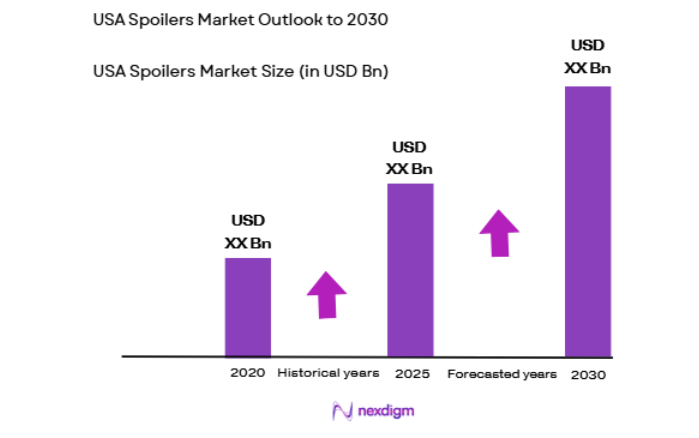
The USA spoilers market is valued at approximately USD ~ billion based on a recent historical assessment derived from U.S. light vehicle production statistics and automotive exterior component revenue data, reflecting OEM-installed and aftermarket aerodynamic styling component demand across passenger cars, SUVs, and pickup trucks. Market expansion is driven by annual vehicle production exceeding 10 million units and increasing adoption of factory-integrated aerodynamic elements in modern vehicle design, alongside strong aftermarket customization activity supporting replacement and performance styling upgrades nationwide.
Automotive manufacturing and customization hubs including Michigan, California, Texas, Florida, and Ohio dominate the USA spoilers market due to concentration of vehicle assembly plants, automotive exterior suppliers, and performance modification industries. These regions benefit from strong automotive culture, high vehicle ownership, and extensive aftermarket accessory distribution networks. Presence of performance vehicle communities and customization workshops further accelerates spoiler adoption for styling and aerodynamic enhancement, reinforcing regional leadership in both production and consumption of automotive spoiler systems.
Market Segmentation
By Product Type
USA Spoilers market is segmented by product type into rear deck spoilers, roof spoilers, lip spoilers, active deployable spoilers, and truck bed spoilers. Recently, rear deck spoilers has a dominant market share due to factors such as widespread OEM integration across sedans and SUVs, aesthetic enhancement preferences, and aerodynamic stability benefits at highway speeds. Rear deck spoilers are commonly included as factory styling elements or optional packages on mainstream vehicle models, ensuring large installation volumes. Aftermarket demand is also strong because they are easily retrofit components that significantly alter vehicle appearance, supporting both OEM and customization-driven market dominance.

By Vehicle Type
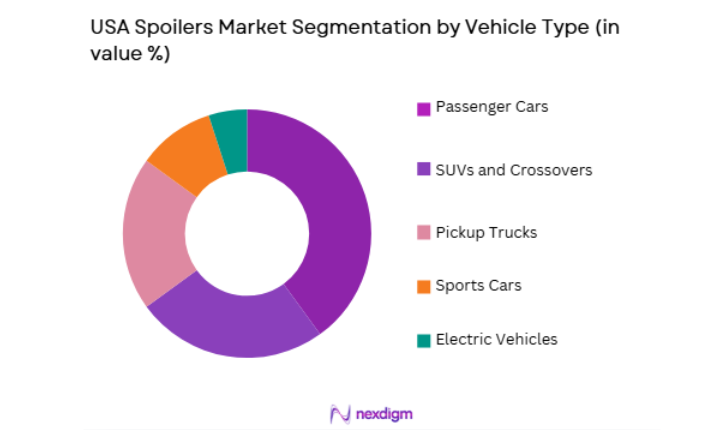
USA Spoilers market is segmented by vehicle type into passenger cars, SUVs and crossovers, sports cars, pickup trucks, and electric vehicles. Recently, passenger cars has a dominant market share due to factors such as high production volume, styling differentiation strategies, and aerodynamic performance requirements in sedan and coupe body styles. Automakers frequently integrate rear deck spoilers into trunk lid designs to improve airflow and visual sportiness. Passenger cars also dominate aftermarket customization activity because of enthusiast communities and performance upgrades, ensuring sustained installation demand across both OEM and accessory channels.
Competitive Landscape
The USA spoilers market is moderately consolidated with global automotive exterior component suppliers dominating OEM integration, while numerous performance brands compete in aftermarket styling segments. Major suppliers leverage advanced plastics, composites, and aerodynamic simulation technologies to deliver integrated spoiler systems aligned with vehicle design. OEM relationships and scale manufacturing provide competitive advantage, while customization-focused firms differentiate through carbon fiber materials and performance styling aesthetics.
| Company Name | Establishment Year | Headquarters | Technology Focus | Market Reach | Key Products | Revenue | Material Expertise |
| Magna International | 1957 | Canada | ~ | ~ | ~ | ~ | ~ |
| Plastic Omnium | 1946 | France | ~ | ~ | ~ | ~ | ~ |
| SRG Global | 2009 | USA | ~ | ~ | ~ | ~ | ~ |
| SMP Automotive | 1959 | Germany | ~ | ~ | ~ | ~ | ~ |
| Polytec Group | 1986 | Austria | ~ | ~ | ~ | ~ | ~ |

USA Spoilers Market Analysis
Growth Drivers
Increasing Integration of Aerodynamic Styling Components in Mass-Market Vehicles
Increasing integration of aerodynamic styling components in mass-market vehicles is a major growth driver for the USA spoilers market because automakers increasingly incorporate spoilers as standard design elements to enhance vehicle appearance, brand differentiation, and aerodynamic stability. Modern passenger cars and SUVs commonly feature trunk, roof, or tailgate spoilers integrated directly into body panels during manufacturing. These components improve airflow separation and reduce lift at highway speeds, contributing to handling stability and fuel efficiency. Automotive design trends emphasize sporty aesthetics even in mainstream vehicles, making spoilers widespread across mid-range segments rather than limited to performance models. High production volumes of sedans, crossovers, and sport-utility vehicles therefore generate substantial OEM spoiler installation demand. Platform standardization allows shared spoiler architectures across multiple models, further increasing production scale. Integrated painting and molding processes also reduce incremental manufacturing cost, encouraging broader adoption. As aerodynamic styling becomes universal across vehicle categories, spoilers transition from niche performance parts to essential exterior components, structurally expanding the USA spoilers market.
Expansion of Automotive Customization and Performance Aftermarket Culture
Expansion of automotive customization and performance aftermarket culture strongly drives the USA spoilers market because vehicle owners increasingly modify appearance and aerodynamics through aftermarket body components including spoilers. Car enthusiast communities, motorsport influence, and social media exposure promote personalization trends that prioritize sporty visual upgrades. Spoilers are among the most visible and easily installed exterior modifications, making them popular entry-level customization products. Pickup trucks, sports coupes, and compact cars frequently receive aftermarket spoilers to enhance styling or perceived performance. Online retail platforms and specialty automotive accessory stores provide wide product availability across price tiers and materials. Carbon fiber and performance-grade spoilers command premium pricing and strong enthusiast demand. Vehicle modification culture is especially strong in urban and suburban regions with active automotive events and clubs. Replacement demand also arises from accident repair and styling updates. The combination of lifestyle-driven customization and accessible installation therefore sustains a robust aftermarket growth channel within the USA spoilers market.
Market Challenges
Material Cost Volatility and Composite Manufacturing Complexity
Material cost volatility and composite manufacturing complexity present a significant challenge in the USA spoilers market because spoiler production relies heavily on engineering plastics, fiberglass, and carbon fiber composites whose costs fluctuate with petrochemical and advanced material supply chains. Lightweight and high-strength materials are essential for aerodynamic performance and durability, but they increase production expense relative to basic molded plastics. Carbon fiber spoilers in particular require specialized layup and curing processes that raise labor and tooling costs. OEM contracts often impose cost targets that limit material selection flexibility for suppliers. Aftermarket manufacturers face pricing pressure while maintaining aesthetic quality and structural rigidity. Fluctuating resin and fiber prices create margin uncertainty and inventory risk. Manufacturing defects or surface imperfections can lead to rejection due to visible exterior placement. Balancing performance materials with cost competitiveness therefore remains a persistent production and profitability challenge across the USA spoilers industry.
Fitment Compatibility and Vehicle Model Variation Constraints
Fitment compatibility and vehicle model variation constraints challenge the USA spoilers market because spoiler geometry must precisely match trunk lids, tailgates, or rooflines that vary across vehicle models and generations. OEM integration requires vehicle-specific tooling and engineering validation, increasing development cost. Aftermarket suppliers must produce multiple variants to cover different models, complicating inventory and distribution. Incorrect fitment leads to installation difficulty, customer dissatisfaction, and product returns. Adhesive-mounted spoilers require precise curvature matching to ensure secure attachment and appearance alignment. Rapid vehicle design updates shorten product lifecycle and require frequent redesign. Customization shops must adapt products to unique installations, increasing labor time. Lack of universal mounting standards across vehicles limits cross-platform compatibility. Managing extensive model variation while maintaining production efficiency therefore remains a structural constraint in the USA spoilers market.
Opportunities
Adoption of Active Aerodynamic Spoiler Systems in Electric and Performance Vehicles
Adoption of active aerodynamic spoiler systems in electric and performance vehicles represents a major opportunity in the USA spoilers market because deployable spoilers optimize airflow dynamically to balance efficiency and stability across driving conditions. Electric vehicles require aerodynamic efficiency to maximize driving range, encouraging integration of retractable spoilers that reduce drag at low speeds and increase downforce at high speeds. Performance vehicles also use active spoilers to enhance handling and braking stability. These systems incorporate sensors, actuators, and electronic control, increasing component value relative to fixed spoilers. Premium vehicle segments increasingly adopt such technologies, expanding market potential. Suppliers capable of mechatronic integration can secure high-value OEM contracts. As electrification and performance engineering converge in modern vehicle design, active aerodynamic spoilers represent a technologically advanced growth segment within the USA spoilers market.
Growth of Lightweight Composite and Carbon Fiber Spoiler Materials
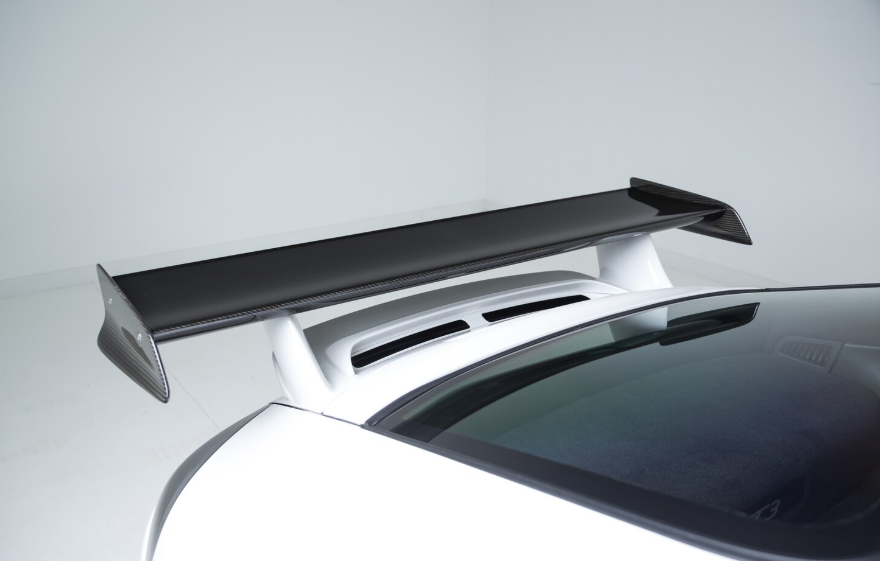
Growth of lightweight composite and carbon fiber spoiler materials offers significant opportunity in the USA spoilers market because vehicle manufacturers and consumers seek weight reduction and premium aesthetics simultaneously. Carbon fiber spoilers provide high stiffness-to-weight ratio and distinctive visual texture appealing to performance enthusiasts. Lightweight composites also support fuel efficiency and electric vehicle range objectives. OEM adoption of visible carbon fiber components in premium vehicles is increasing, expanding material demand. Aftermarket brands market carbon fiber spoilers as high-end customization upgrades with strong margins. Advances in resin transfer molding and automated composite manufacturing are improving scalability and cost efficiency. Motorsport influence further reinforces consumer perception of carbon fiber as performance material. As lightweighting and premium styling trends accelerate across automotive design, composite spoilers will experience expanding adoption across OEM and aftermarket channels in the USA spoilers market.
Future Outlook
The USA spoilers market is expected to expand steadily over the next five years driven by continued integration of aerodynamic styling elements in mainstream vehicles and sustained automotive customization demand. Electric vehicle design evolution will accelerate adoption of active and lightweight spoilers. Advanced composite materials and automated manufacturing will improve scalability. Regulatory emphasis on efficiency and stability will support aerodynamic component integration. Both OEM and aftermarket channels are projected to sustain long-term growth.
Major Players
- Magna International
- Plastic Omnium
- SRG Global
- SMP Automotive
- Polytec Group
- Rehau Automotive
- INOAC Corporation
- JAC Products
- AIR Design
- Roush Performance
- APR Performance
- Seibon Carbon
- Anderson Composites
- Duraflex
- VIS Racing
Key Target Audience
- Automotive OEM manufacturers
- Automotive exteriorcomponent suppliers
- Automotive aftermarket distributors
- Vehicle customization shops
- Performance vehicle manufacturers
- Electric vehicle manufacturers
- Investments and venture capitalist firms
- Government and regulatory bodies
Research Methodology
Step 1: Identification of Key Variables
Key variables including vehicle production volume, aerodynamic component adoption rates, customization trends, material cost dynamics, and OEM integration levels were identified to define structural demand drivers in the USA spoilers market.
Step 2: Market Analysis and Construction
Market sizing integrated automotive production statistics, spoiler installation ratios across vehicle segments, and aftermarket sales data to estimate total demand across OEM and customization channels.
Step 3: Hypothesis Validation and Expert Consultation
Consultations with automotive exterior engineers, aftermarket manufacturers, and customization workshops validated adoption trends, material preferences, pricing structures, and fitment constraints affecting spoiler demand.
Step 4: Research Synthesis and Final Output
Quantitative modeling and qualitative insights were synthesized into a comprehensive framework covering segmentation, competitive landscape, technological evolution, and growth outlook across the USA spoilers market.

- Executive Summary
- Research Methodology (Definitions, Scope, Industry Assumptions, Market Sizing Approach, Primary & Secondary Research Framework, Data Collection & Verification Protocol, Analytic Models & Forecast Methodology, Limitations & Research Validity Checks)

- Market Definition and Scope
- Value Chain & Stakeholder Ecosystem
- Regulatory / Certification Landscape
- Sector Dynamics Affecting Demand
- Strategic Initiatives & Infrastructure Growth

- Growth Drivers
Rising demand for vehicle aerodynamics and styling differentiation
Expansion of performance and sports vehicle segments
Growth of automotive customization culture - Market Challenges
Material cost volatility in composites and plastics
Fitment compatibility across vehicle models
Price competition in aftermarket spoiler kits - Market Opportunities
Adoption of active aerodynamic spoiler systems
Lightweight carbon fiber and composite spoiler materials
Integration of spoilers in electric vehicle designs - Trends
Shift toward integrated body-colored spoilers
Increasing use of deployable active spoilers
Growth of aftermarket performance styling kits - Government regulations
- SWOT analysis
- Porters 5 forces

- By Market Value, 2019-2025
- By Installed Units, 2019-2025
- By Average System Price, 2019-2025
- By System Complexity Tier, 2019-2025

- By System Type (In Value%)
Rear Deck Spoilers
Roof Spoilers
Lip Spoilers
Active Deployable Spoilers
Truck Bed Spoilers - By Platform Type (In Value%)
Passenger Cars
SUVs and Crossovers
Sports Cars
Pickup Trucks
Electric Vehicles - By Fitment Type (In Value%)
OEM Integrated Spoilers
Aftermarket Bolt-On Spoilers
Adhesive Mounted Spoilers
Active Electronic Spoilers
Custom Performance Spoilers - By End User Segment (In Value%)
Automotive OEM Manufacturers
Performance Vehicle Owners
Automotive Aftermarket Enthusiasts
Fleet and Commercial Vehicle Operators
Vehicle Customization Shops - By Procurement Channel (In Value%)
OEM Supply Contracts
Automotive Aftermarket Retailers
Online Performance Parts Platforms
Specialty Auto Accessory Stores

- Market Share Analysis
- Cross Comparison Parameters (Material Type, Aerodynamic Function, Vehicle Compatibility, Mounting Method, Price Tier, Weight Reduction, Surface Finish Quality, Active Deployment Mechanism, OEM Integration Level, Paint Match Capability, Structural Rigidity, Installation Complexity)
- SWOT Analysis of Key Competitors
- Pricing & Procurement Analysis
- Key Players
Magna International
Plastic Omnium
SRG Global
SMP Automotive
Rehau Automotive
INOAC Corporation
Polytec Group
JAC Products
AIR Design
Roush Performance
APR Performance
Seibon Carbon
Anderson Composites
Duraflex
VIS Racing

- Performance vehicle owners drive styling upgrades
- OEMs integrate spoilers for aerodynamics and branding
- Customization shops enable aftermarket installation
- SUV owners adopt roof spoilers for aesthetics

- Forecast Market Value, 2026-2030
- Forecast Installed Units, 2026-2030
- Price Forecast by System Tier, 2026-2030
- Future Demand by Platform, 2026-2030


 Request a Sample
 Ask for Customization
 Get a Quote
 Enquire Now