
 Download PDF
Market Overview
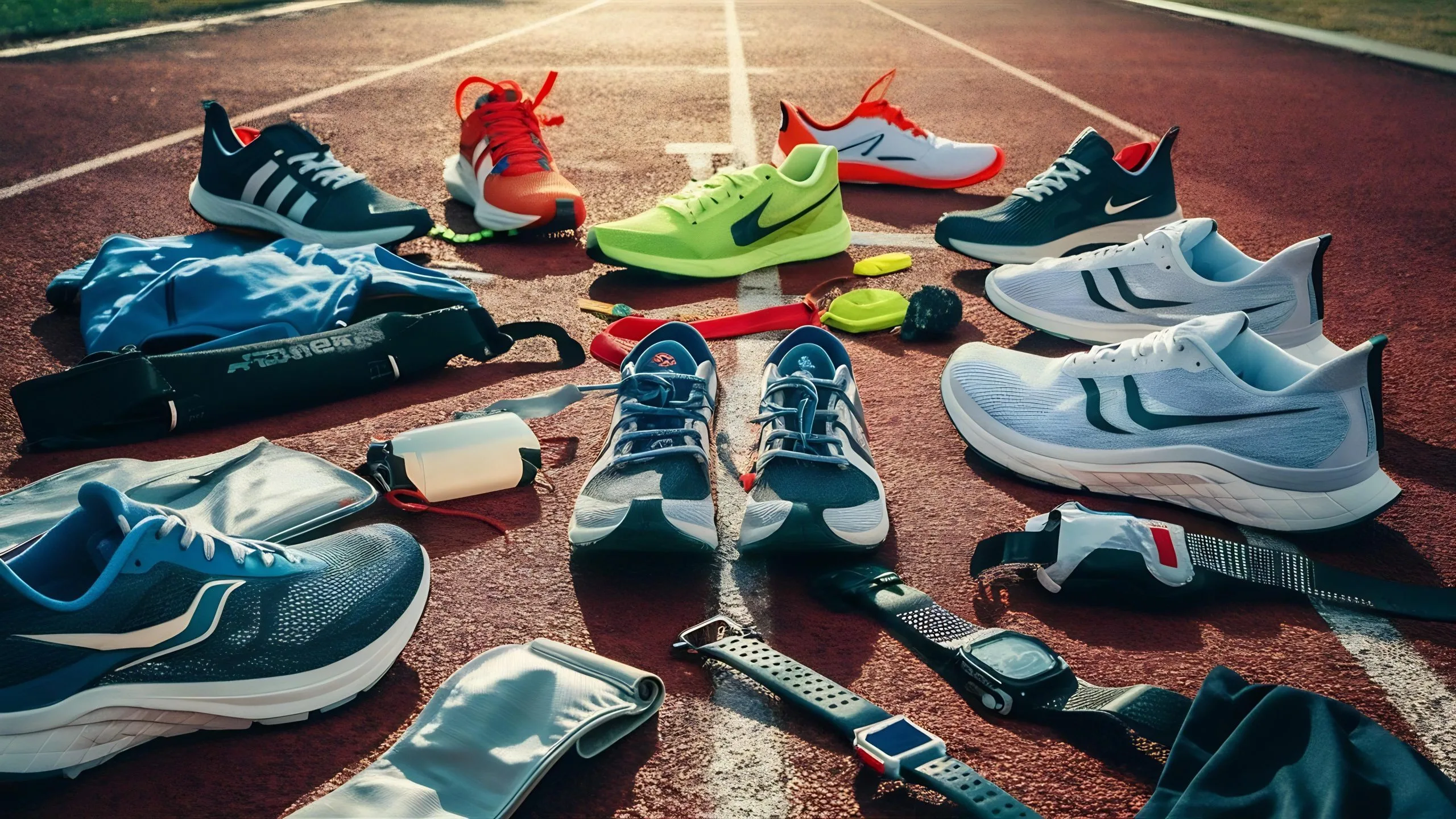
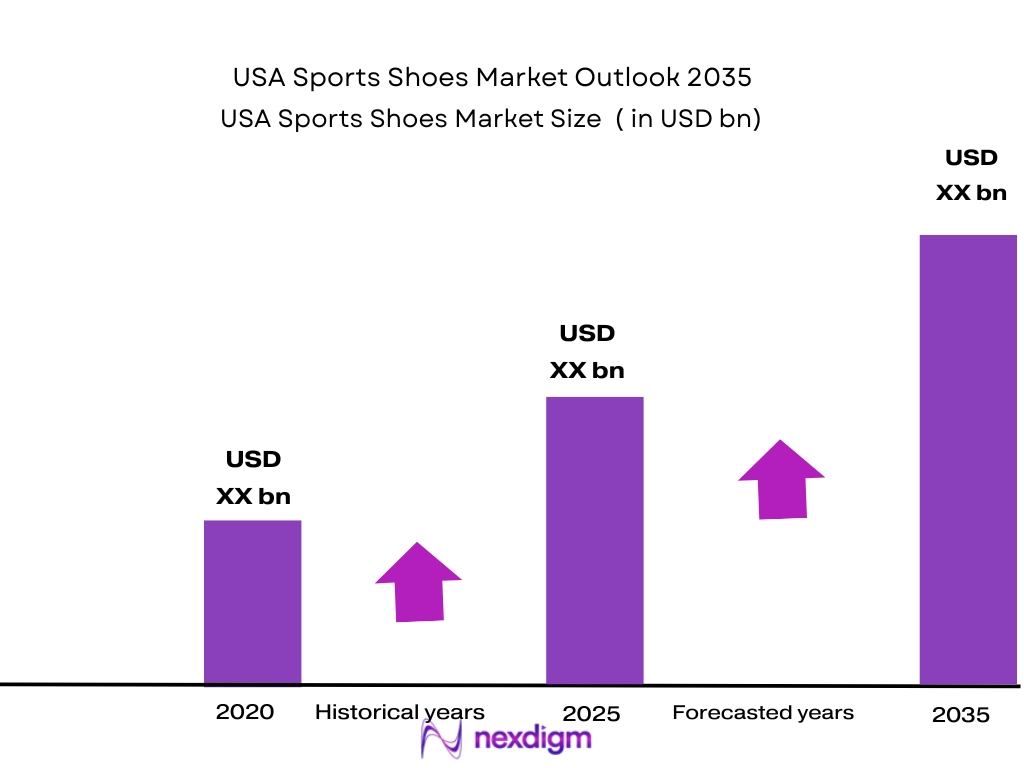
The USA Sports Shoes market—often referred to within athletic/athletic footwear—was valued at USD ~ billion in revenue in 2024, based on current athletic footwear industry data covering functionality and performance oriented shoes. This figure reflects revenue largely from sports and performance footwear sold within the United States, including running, training, basketball, and other sport‑specific categories. Sales are primarily driven by increased consumer focus on fitness, athleisure trends, and performance‑enhancing product releases from major brands that combine technology and style.
Leading metropolitan areas and regions such as New York, Los Angeles, Chicago, Dallas, and Miami dominate the USA sports shoes market due to higher disposable incomes, strong retail infrastructure, concentration of brand flagship stores, and active consumer lifestyles. These cities also host major sporting events and have dense populations that adopt fitness and sports trends quickly, reinforcing strong demand for both performance and lifestyle sports shoes. Additionally, domestic and international brands concentrate marketing and retail efforts in these hubs to maximize visibility and consumer reach.
Market Segmentation
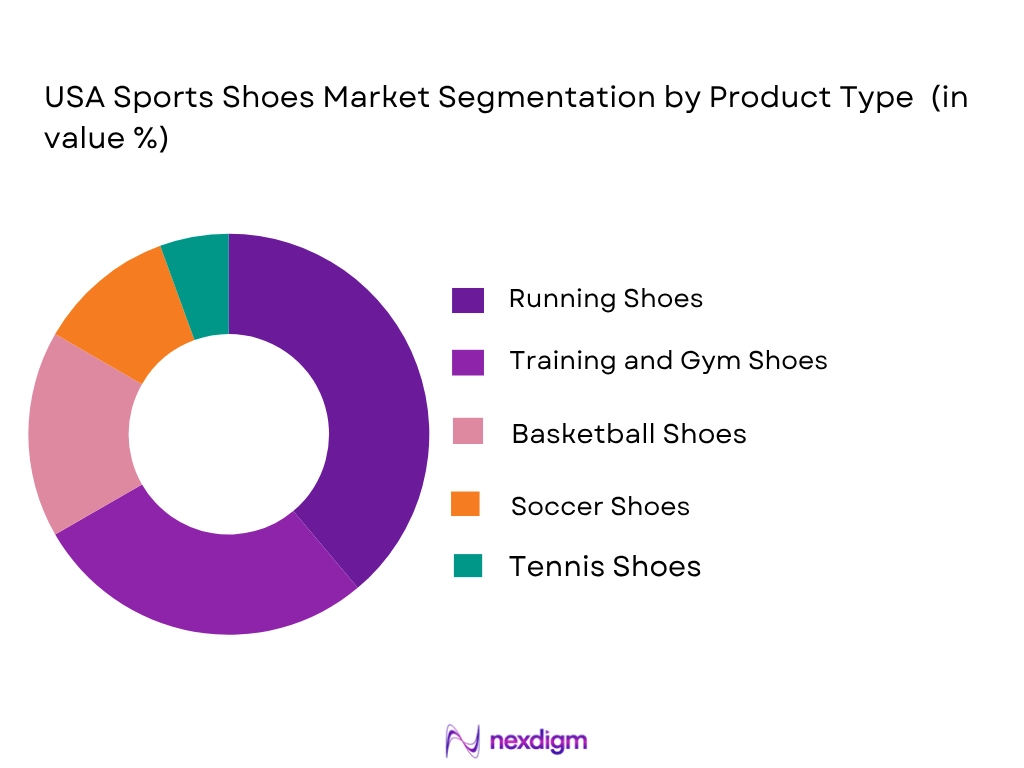
By Product Type
The USA sports shoes market is segmented into running, training, basketball, soccer/field, and casual sports shoes. Running shoes hold the dominant share due to widespread participation in running events, heightened focus on cardiovascular fitness, and continuous innovation in cushioning and performance technologies. Many consumers purchase running footwear not just for athlete training but also for daily fitness routines, making it both the most pervasive and fastest‑adopted segment. Additionally, the running category enjoys strong endorsement from major brands through high‑visibility product launches and targeted marketing, which further cements its share leadership.
By Distribution Channel
The distribution channel segmentation includes specialty retail, e‑commerce, brand flagship stores, and sporting goods chains.E‑commerce leads the 2024 market share due to rapid consumer adoption of online shopping, convenience, wider product selection, and frequent digital promotions. Online growth has been further accelerated by enhanced digital experiences, mobile‑first retail strategies, and robust delivery infrastructure, enabling consumers to access the latest product drops directly from brands or multi‑brand platforms. Despite continued relevance of physical stores for fitting experiences, online channels now generate the highest proportion of sales in the sports shoes market.
Competitive Landscape
The USA sports shoes market is concentrated among a few major players that influence global and regional dynamics with extensive product portfolios, strong brand equity, and advanced innovation pipelines. These companies compete on performance, design, technology, and distribution scope, shaping trends across professional and recreational usage segments.
| Company | Establishment Year | Headquarters | Core Product Focus | Market Reach | Brand Strength | Innovation Focus | Distribution Network |
| Nike Inc. | 1964 | United States | ~ | ~ | ~ | ~ | ~ |
| Adidas AG | 1949 | Germany | ~ | ~ | ~ | ~ | ~ |
| Under Armour Inc. | 1996 | United States | ~ | ~ | ~ | ~ | ~ |
| New Balance Athletics Inc. | 1906 | United States | ~ | ~ | ~ | ~ | ~ |
| Puma SE | 1948 | Germany | ~ | ~ | ~ | ~ | ~ |
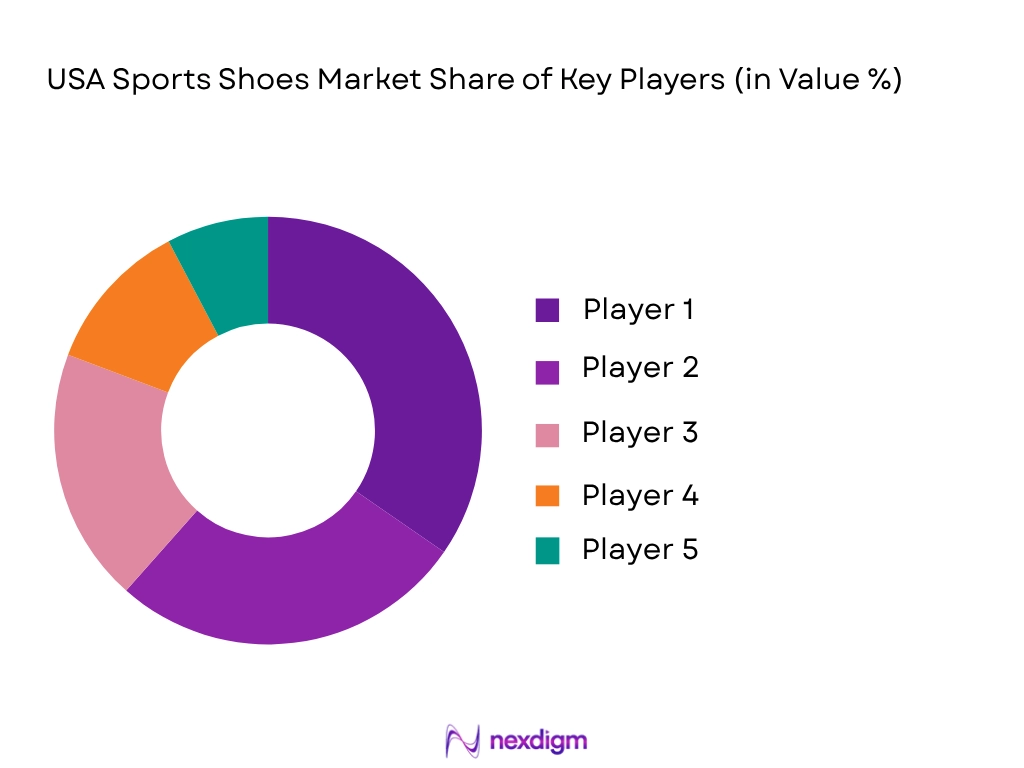
USA Sports Shoes Market Analysis
Growth Drivers
Increasing Participation in Sports and Fitness Activities
The United States has witnessed a significant surge in recreational and professional sports participation, driven by rising awareness of physical fitness and health benefits. Community programs, corporate wellness initiatives, and school-level sports activities have encouraged more individuals to engage in regular exercise. This increase in active participation directly boosts demand for sports shoes across categories such as running, basketball, and training. Additionally, the growing popularity of endurance sports like marathons and triathlons has created niche markets for specialized footwear. Consumers are increasingly seeking performance-oriented shoes that provide comfort, durability, and injury prevention, fueling the expansion of the sports footwear sector and creating opportunities for brands to introduce innovative and activity-specific products.
Technological Advancements in Sports Shoes
Technological innovation has become a major growth driver in the U.S. sports shoe market. Manufacturers are investing heavily in materials science and biomechanics to produce footwear that is lightweight, breathable, and optimized for performance. Developments like responsive cushioning, anti-slip soles, and moisture-wicking fabrics enhance both comfort and athletic outcomes. Advanced design software enables precision in fit and motion analysis, reducing injury risks and improving endurance. Brands are also integrating wearable sensors and smart technology into shoes, tracking metrics such as stride length and energy expenditure. These innovations appeal to performance-focused athletes and casual fitness enthusiasts alike, positioning technology-driven products as premium offerings and supporting higher price points while differentiating brands in a competitive marketplace.
Market Challenges
High Cost of Advanced Sports Shoes
Premium sports shoes that incorporate cutting-edge technologies, materials, and design elements often come with high price tags, creating a barrier for price-sensitive consumers. While such shoes offer enhanced performance and durability, the cost can deter adoption, especially among younger or budget-conscious buyers. This price sensitivity can limit market penetration for new entrants and constrain sales growth for high-end models. Brands must balance the investment in research and development with consumer willingness to pay. Additionally, the prevalence of counterfeit and low-cost alternatives complicates market dynamics, potentially affecting brand perception and profitability. Effective pricing strategies and value communication are critical to overcoming this challenge.
Rapid Product Obsolescence and Changing Consumer Preferences
The sports shoe market is highly dynamic, with frequent product launches, seasonal collections, and evolving fashion trends. Consumer preferences shift rapidly, influenced by social media, celebrity endorsements, and emerging sports trends. Shoes that are innovative today may become outdated quickly, requiring companies to continuously update designs and technologies. This rapid obsolescence increases inventory risks, production costs, and marketing expenditures. Brands must anticipate trends, maintain flexible supply chains, and respond quickly to consumer demands to remain competitive. Failure to adapt can result in unsold inventory and decreased brand loyalty, highlighting the need for agile product development and effective trend forecasting.
Opportunities
Expansion of Eco-Friendly and Sustainable Sports Shoes
Environmental awareness among U.S. consumers is driving demand for sustainable and eco-friendly sports footwear. Companies are increasingly exploring materials like recycled plastics, organic cotton, and biodegradable soles to reduce ecological impact. Eco-conscious consumers are willing to pay a premium for products aligned with their values, creating a lucrative market segment. In addition to materials, sustainable manufacturing processes and ethical supply chain practices enhance brand reputation. Partnerships with environmental organizations and clear communication of sustainability initiatives can strengthen consumer trust. The growing regulatory focus on environmental standards further encourages innovation in green footwear. This trend represents a strategic opportunity for brands to differentiate themselves while contributing to long-term environmental responsibility.
Digitalization and Smart Sports Shoes Technology
The integration of digital technology into sports shoes represents a significant growth opportunity. Smart shoes equipped with sensors, GPS, and performance-tracking software enable users to monitor metrics such as running pace, step count, and energy expenditure in real time. This data-driven approach appeals to fitness enthusiasts, professional athletes, and health-conscious consumers seeking actionable insights. Connectivity with mobile apps and wearable devices enhances user engagement and personalization. Moreover, digital customization tools allow consumers to design shoes according to individual preferences and biomechanics, increasing satisfaction and brand loyalty. As wearable technology adoption rises, smart sports shoes are poised to transform traditional footwear into multifunctional fitness devices, opening new revenue streams for manufacturers.
Future Outlook
Health, and performance lifestyles. Evolving digital retail ecosystems and omnichannel engagement will further enhance accessibility and broaden market reach. Innovation in shoe materials, biomechanics, and customization options is anticipated to stimulate repeat purchases and premium product demand. Sustainability considerations and lightweight performance designs will shape future product strategies. Brand competition remains intense, driving improvements across quality, branding, and consumer experience platforms.
Major Players
- Nike Inc.
- Adidas AG
- Under Armour Inc.
- New Balance Athletics Inc.
- Puma SE
- Skechers USA Inc.
- ASICS Corporation
- Reebok International Limited
- Converse Inc.
- Vans Inc.
- Brooks Sports Inc.
- Hoka One One
- On Holding AG
- Saucony (Wolverine Worldwide)
- Mizuno Corporation
Key Target Audience
- Sports Equipment Manufacturers and Brands
- Retailers and E‑commerce Platforms
- Investors and Venture Capitalist Firms
- Government and Regulatory Bodies
- Sports Teams and Professional Training Organizations
- Athletic Clubs and Fitness Centers
- Supply Chain and Logistics Providers
- Material and Technology Innovators in Footwear
Research Methodology
Step 1: Identification of Key Variables
The initial phase constructs a comprehensive framework of industry segments, consumer use categories, product types, and distribution channels. Secondary data from industry databases and proprietary sources are used to map the ecosystem and highlight critical variables shaping the market.
Step 2: Market Analysis and Construction
This phase involves collecting historical revenue figures, evolving trend patterns, and segment performance metrics. Methods include analysis of retail sales, import/export data, consumer behavior trends, and competitive positioning to generate a structured view of market scale and dynamics.
Step 3: Hypothesis Validation and Expert Consultation
Market assumptions are tested and refined through interviews with industry experts, brand leaders, and channel partners. These discussions contribute operational insights and validate segment performance estimates, helping ensure data accuracy and contextual relevance.
Step 4: Research Synthesis and Final Output
The final stage synthesizes quantitative analysis with expert inputs to produce a validated market report. This involves triangulating data from bottom‑up and top‑down approaches to confirm market size, growth rates, and segment insights, ensuring a comprehensive industry view.

- Executive Summary
- Research Methodology (Market Definitions and Assumptions, Abbreviations, Market Sizing Approach, Consolidated Research Approach, Understanding Market Potential Through In-Depth Industry Interviews, Primary Research Approach, Limitations and Future Conclusions)

- Definition and Scope
- Market Dynamics Overview
- Market Genesis and Evolution
- Key Players and Market Timeline
- Business Cycle and Trends
- Supply Chain and Value Chain Analysis

- Growth Drivers
Increasing Participation in Sports and Fitness Activities
Technological Advancements in Sports Shoes (Lightweight, Breathable, Performance Enhancements)
Rising Health Consciousness and Active Lifestyle Adoption
Growth of E-commerce and Online Sales Channels
Innovations in Custom-Fitting and Personalization - Market Challenges
High Cost of Advanced Sports Shoes
Rapid Product Obsolescence and Changing Consumer Preferences
Environmental Impact and Sustainability Concerns
Intense Competition from Local and Global Brands
Regulatory Challenges and Standards Compliance - Opportunities
Expansion of Eco-Friendly and Sustainable Sports Shoes
Digitalization and Smart Sports Shoes Technology
Growth in Indoor Sports and Training Facilities
Rise in Women’s and Youth Sports Participation
Expansion of Subscription and Rental Models for Sports Shoes - Trends
Shift Toward Lightweight and Flexible Shoes
Custom-Fitting and Personalization
Integration of Data Analytics and AI for Performance Tracking
Emergence of Sports Fashion and Lifestyle Segments
Increasing Popularity of Mobile Fitness and Sports Apps - Government Regulations
Import and Export Regulations
Health and Safety Standards for Sports Shoes
Environmental Regulations (Sustainability and Recyclability)
Sports Equipment Standards and Certification
Taxation and Import Duties on Sports Shoes - SWOT Analysis
- Porter’s Five Forces

- By Value, 2020–2025
- By Volume, 2020–2025
- By Average Price, 2020–2025

- By Product Type (In Value %)
Running Shoes
Training and Gym Shoes
Basketball Shoes
Soccer Shoes
Tennis Shoes - By Material Type (In Value %)
Synthetic Materials
Leather
Textile / Mesh
Rubber - By Usage Type (In Value %)
Professional / Competitive Sports
Recreational Sports - By End User (In Value %)
Individual Consumers
Sports Teams and Clubs
Retailers
Institutions and Academies - By Distribution Channel (In Value %)
Direct Sales (Brand Stores, Flagship Stores)
Distributors and Wholesalers
Online Channels (E-commerce Websites)
Retail Chains (Sporting Goods Stores) - By Price Tier (In Value %)
Economy / Entry-Level
Mid-Tier
Premium / High-End

- Market Share of Major Players by Value/Volume
- Market Share of Major Players by Product Type
- Market Share of Major Players by Material Type
- Cross Comparison Parameters (Company Overview, Business Strategies, Recent Developments, Strength, Weakness, Organizational Structure, Revenues, Revenues by Product Type, Distribution Channels, Dealer Networks, Production Capacity, Unique Value Offerings)
- SWOT Analysis of Major Players
- Pricing Analysis Based on Product Categories for Major Players
- Detailed Profiles of Major Companies
Nike Inc.
Adidas AG
PUMA SE
Under Armour Inc.
New Balance Athletics Inc.
ASICS Corporation
Skechers USA Inc.
Reebok International Limited
Brooks Sports Inc.
Converse Inc.
Vans Inc.
Mizuno Corporation
Fila Holdings Corporation
Saucony Inc.
Hoka One One

- Market Demand and Utilization
- Purchasing Power and Budget Allocations
- Regulatory and Compliance Requirements
- Needs, Desires, and Pain Point Analysis
- Decision-Making Process

- By Value, 2026–2035
- By Volume, 2026–2035
- By Average Price, 2026–2035


 Request a Sample
 Ask for Customization
 Get a Quote
 Enquire Now