
 Download PDF
 Download PDF
Market Overview
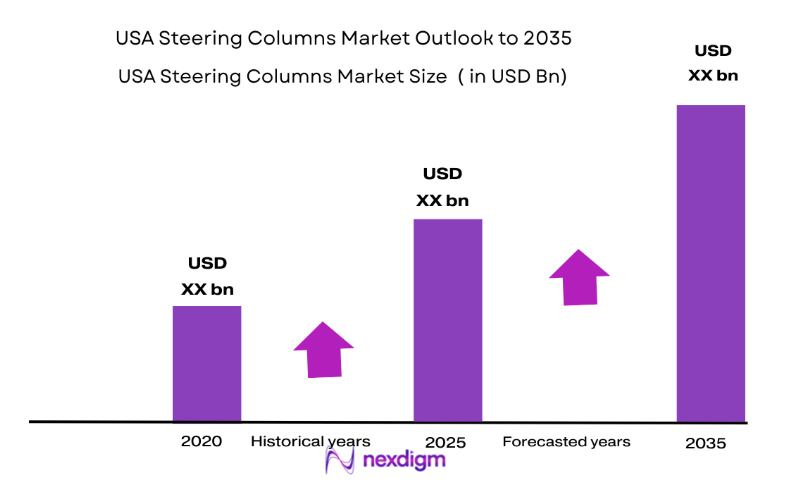
The USA Steering Columns market is projected to experience significant growth driven by factors such as the increasing demand for enhanced vehicle safety, the rise in automotive production, and the adoption of advanced steering technologies. Based on a recent historical assessment, the market size is expected to reach approximately USD ~ billion, with steering columns being a crucial component in the development of advanced driver assistance systems (ADAS) and autonomous vehicles. Technological innovations in steering by-wire systems and electronic steering systems are further fueling market growth, as manufacturers aim to meet stringent regulatory requirements and consumer demand for improved vehicle performance and safety.
The USA remains a dominant player in the steering columns market, with major automotive manufacturing hubs such as Michigan, California, and Tennessee leading the way in production and R&D investments. Factors such as the presence of established automotive OEMs, a strong supplier base, and a favorable regulatory environment contribute to the country’s market dominance. Additionally, regions with a high concentration of electric vehicle (EV) production, such as California, are expected to witness increased demand for advanced steering systems that cater to the evolving needs of the automotive industry.
Market Segmentation
By Product Type:
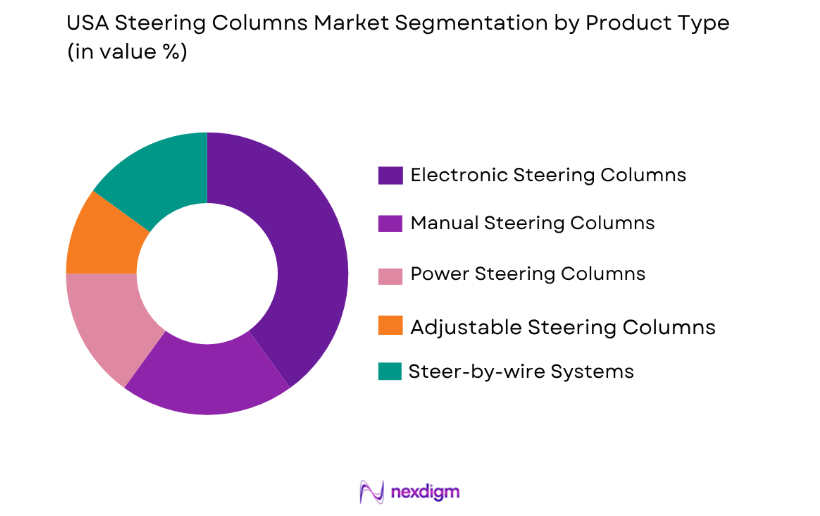
The USA Steering Columns market is segmented by product type into electronic steering columns, manual steering columns, power steering columns, adjustable steering columns, and steer-by-wire systems. Recently, electronic steering columns have dominated the market due to their growing popularity in electric and autonomous vehicles. These systems offer advanced features such as adaptive steering and precision control, which are crucial for meeting the safety and performance requirements of modern vehicles. Moreover, electronic steering systems are highly sought after due to their ability to integrate with autonomous driving technologies, offering more precise and responsive handling for vehicles equipped with ADAS. As consumers demand more personalized and intuitive driving experiences, electronic steering columns are expected to capture a larger market share, particularly with the shift towards electric and self-driving vehicles.
By Platform Type:
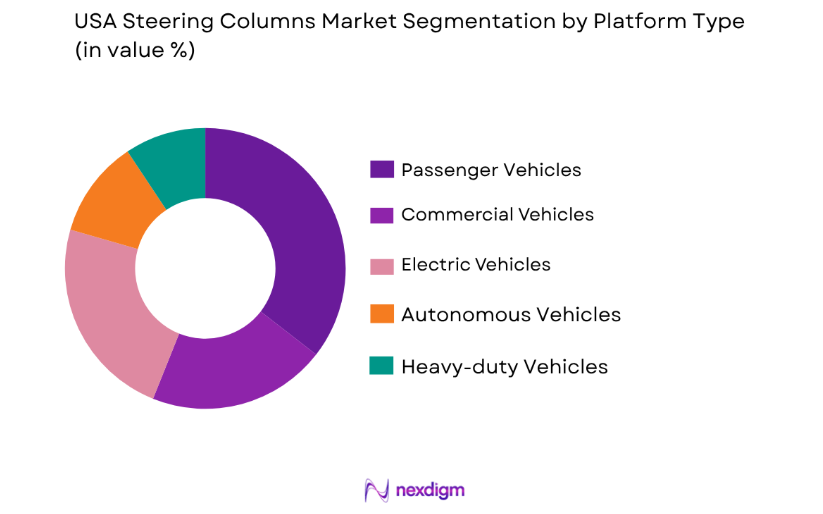
The market is segmented by platform type into passenger vehicles, commercial vehicles, electric vehicles, autonomous vehicles, and heavy-duty vehicles. Among these, electric vehicles (EVs) have witnessed the highest growth due to the increasing adoption of clean and sustainable transportation solutions. EVs require advanced steering systems that provide better energy efficiency, ease of control, and integration with battery-powered systems. This segment has gained significant traction in recent years, driven by consumer demand for eco-friendly transportation and the support from government incentives aimed at reducing carbon emissions. Additionally, autonomous vehicles, which often use advanced steering technologies, are also contributing to the increased demand for specialized steering columns that can enhance driving control and safety in self-driving environments.
Competitive Landscape
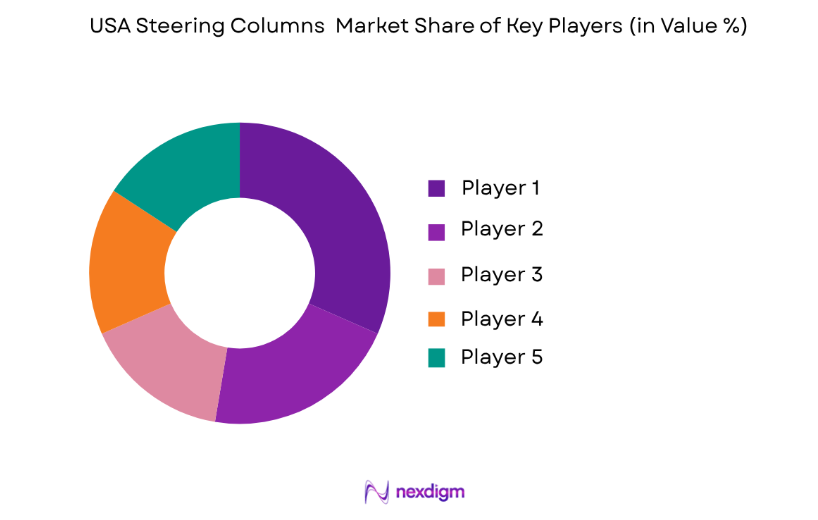
The competitive landscape of the USA Steering Columns market is characterized by a mix of large multinational companies and specialized suppliers. The market is moderately consolidated, with major players continually investing in research and development to advance steering technologies, particularly in the realm of electronic and steer-by-wire systems. The ongoing trend of mergers and acquisitions is reshaping the competitive dynamics, as companies aim to strengthen their position in the growing electric and autonomous vehicle markets. The influence of key players is significant, and their technological innovations play a pivotal role in driving the overall growth of the steering columns market.
| Company Name | Establishment Year | Headquarters | Technology Focus | Market Reach | Key Products | Revenue (USD) | Market-specific Parameter |
| ZF Friedrichshafen AG | 1915 | Friedrichshafen, Germany | ~ | ~ | ~ | ~ | ~ |
| JTEKT Corporation | 2006 | Osaka, Japan | ~ | ~ | ~ | ~ | ~ |
| Mando Corporation | 1962 | Pyeongtaek, South Korea | ~ | ~ | ~ | ~ | ~ |
| Nexteer Automotive | 1906 | Saginaw, Michigan | ~ | ~ | ~ | ~ | ~ |
| TRW Automotive | 2002 | Livonia, Michigan | ~ | ~ | ~ | ~ | ~ |
USA Steering Columns Market Analysis
Growth Drivers
Increasing Demand for Electric Vehicles:
The demand for electric vehicles (EVs) is one of the key growth drivers for the USA Steering Columns market. With the global shift towards sustainable transportation solutions, EVs have become increasingly popular among consumers seeking cleaner and more efficient alternatives to traditional internal combustion engine vehicles. The adoption of EVs has been further accelerated by government incentives and policies aimed at reducing carbon emissions and promoting green technologies. As EV manufacturers look to enhance the driving experience, the demand for advanced steering systems, such as electronic steering columns and steer-by-wire technologies, has surged. These systems not only provide greater energy efficiency but also contribute to reducing the overall weight of the vehicle, improving both performance and range. Additionally, the rise of EVs has created new opportunities for manufacturers of steering columns to innovate and adapt their technologies to meet the specific needs of electric platforms, driving further growth in this market segment.
Technological Advancements in Autonomous Vehicles:
The rapid advancements in autonomous vehicle technologies are another significant growth driver for the steering columns market in the USA. As the automotive industry moves towards fully autonomous driving, steering systems are evolving to accommodate the new requirements of self-driving vehicles. Autonomous vehicles rely heavily on precise control mechanisms to navigate safely and efficiently, which makes the role of steering columns even more critical. In particular, steer-by-wire systems and advanced electronic steering technologies are gaining traction due to their ability to integrate with autonomous control systems. These technologies provide enhanced control and adaptability, enabling autonomous vehicles to respond to environmental cues with higher precision. As autonomous vehicle development continues to gain momentum, the demand for specialized steering columns tailored to these platforms is expected to rise significantly, driving growth in the steering columns market.
Market Challenges
High Production Costs:
The high production costs of advanced steering columns, particularly electronic and steer-by-wire systems, represent a significant challenge for market growth. These systems require the integration of sophisticated electronic components, sensors, and advanced materials, which increases the overall cost of manufacturing. Additionally, the need for constant innovation and R&D investment to meet evolving safety and performance standards adds to the financial burden for manufacturers. Smaller and mid-sized players may find it difficult to compete with larger, more established companies that have the resources to invest in cutting-edge technologies. While the demand for advanced steering systems is growing, the high production costs limit the affordability of these systems for certain segments of the market, particularly in the lower-end vehicle segments, which may hinder overall market expansion.
Stringent Regulatory Standards:
Regulatory standards in the automotive industry, particularly those related to safety and environmental sustainability, pose another challenge to the growth of the steering columns market. In many regions, including the USA, steering systems must comply with rigorous safety and performance requirements to ensure the safety of drivers and passengers. These standards often require significant investment in testing, certification, and compliance, which can increase development timelines and costs for manufacturers. Moreover, as new technologies such as steer-by-wire and autonomous vehicle systems emerge, the regulatory landscape is continuously evolving, making it difficult for manufacturers to keep pace with the changing requirements. The need to meet stringent regulations can be a barrier to innovation, as companies must allocate substantial resources to ensure that their products comply with these standards.
Opportunities
Integration of Steer-by-wire Systems in Autonomous Vehicles:
The growing popularity of autonomous vehicles presents a significant opportunity for the steering columns market, particularly with the adoption of steer-by-wire systems. These systems eliminate the need for a physical mechanical link between the steering wheel and the wheels, offering greater flexibility and design freedom for vehicle manufacturers. Steer-by-wire systems can be easily integrated with advanced driver assistance systems (ADAS) and autonomous driving technologies, enabling a more seamless driving experience. As autonomous vehicles continue to evolve and gain traction in the market, the demand for steer-by-wire systems is expected to increase, creating new growth opportunities for steering column manufacturers. The ability of these systems to provide precise, responsive control while reducing the complexity and weight of traditional steering systems positions steer-by-wire as a key opportunity for growth in the market.
Growth of Electric Vehicle Infrastructure:
The expansion of electric vehicle (EV) infrastructure presents another opportunity for the steering columns market, particularly as more consumers and businesses transition to EVs. As the adoption of EVs continues to rise, there is a growing need for specialized steering systems that are compatible with electric drivetrains and battery systems. The increasing number of EV charging stations, along with government support for EV infrastructure development, is expected to drive the demand for EVs, subsequently increasing the demand for advanced steering systems. Manufacturers that can provide steering columns tailored to the unique needs of EVs, such as lightweight materials and energy-efficient systems, will be well-positioned to capitalize on this growing trend. The rise in EV infrastructure is likely to drive sustained demand for advanced steering columns over the coming years, offering a promising growth avenue for market participants.
Future Outlook
Over the next five years, the USA Steering Columns market is expected to experience continued growth driven by advancements in electric and autonomous vehicle technologies. The increasing adoption of electric vehicles (EVs), coupled with the rise of autonomous driving systems, will lead to higher demand for innovative steering technologies such as steer-by-wire and electronic steering columns. Regulatory support, such as stricter safety and environmental regulations, will further accelerate the shift towards advanced steering systems. Additionally, the ongoing investment in EV infrastructure will create a favorable environment for the expansion of the steering columns market. Technological advancements, including integration with ADAS and the development of new, more efficient systems, will be key drivers of growth in the coming years.
Major Players
- ZF Friedrichshafen AG
- JTEKT Corporation
- Mando Corporation
- Nexteer Automotive
- TRW Automotive
- Bosch Mobility Solutions
- Delphi Technologies
- Thyssenkrupp AG
- GKN Automotive
- Omron Corporation
- Faurecia
- Valeo SA
- Schaeffler Group
- Lear Corporation
- Magna International
Key Target Audience
- Investments and venture capitalist firms
- Government and regulatory bodies
- Automotive OEMs
- Electric vehicle manufacturers
- Tier 1 automotive suppliers
- Commercial vehicle manufacturers
- Fleet management companies
- EV infrastructure developers
Research Methodology
Step 1: Identification of Key Variables
The first step involves identifying the key variables that drive the USA Steering Columns market, including consumer demand for advanced steering technologies, regulatory factors, and technological trends.
Step 2: Market Analysis and Construction
In this phase, the market size and segmentation are analyzed based on historical data, market trends, and current consumer preferences. The analysis considers both the automotive sector and advancements in EV and autonomous vehicle technologies.
Step 3: Hypothesis Validation and Expert Consultation
Expert consultations and industry surveys are conducted to validate the findings and hypotheses developed in the previous steps. Insights from market experts, automotive engineers, and regulatory bodies are crucial in refining the analysis.
Step 4: Research Synthesis and Final Output
The final stage involves synthesizing all research findings, creating detailed reports, and validating data to ensure accuracy and relevance. This step culminates in the preparation of the market outlook and competitive landscape analysis.

- Executive Summary
- Research Methodology (Definitions, Scope, Industry Assumptions, Market Sizing Approach, Primary & Secondary Research Framework, Data Collection & Verification Protocol, Analytic Models & Forecast Methodology, Limitations & Research Validity Checks)

- Market Definition and Scope
- Value Chain & Stakeholder Ecosystem
- Regulatory / Certification Landscape
- Sector Dynamics Affecting Demand

- Growth Drivers
Increasing Vehicle Production
Technological Advancements in Steering Systems
Rising Demand for Electric Vehicles - Market Challenges
High Manufacturing Costs
Stringent Regulatory Standards
Integration of New Technologies - Market Opportunities
Emerging Demand for Autonomous Vehicles
Growth of EV Infrastructure
Adoption of Lightweight Steering Solutions - Trends
Rise in Steering-by-wire Technology
Integration of AI for Steering Systems
Shift towards Lightweight Materials in Manufacturing| - Government Regulations
- SWOT Analysis of Key Competitors

- By Market Value, 2020-2025
- By Installed Units, 2020-2025
- By Average System Price, 2020-2025
- By System Complexity Tier, 2020-2025

- By System Type (In Value%)
Electronic Steering Columns
Manual Steering Columns
Power Steering Columns
Adjustable Steering Columns
Steer-by-wire Systems - By Platform Type (In Value%)
Passenger Vehicles
Commercial Vehicles
Electric Vehicles
Autonomous Vehicles
Heavy-Duty Vehicles - By Fitment Type (In Value%)
OEM Fitment
Aftermarket Fitment
Retrofit Fitment
Modular Fitment
Integrated Fitment - By EndUser Segment (In Value%)
Automobile Manufacturers
Automotive Component Suppliers
Aftermarket Service Providers
Fleet Operators
Consumers

- Market Share Analysis
- CrossComparison Parameters (System Type, Platform Type, Fitment Type, EndUser Segment, Procurement Channel)
- SWOT Analysis of Key Competitors
- Pricing & Procurement Analysis
- Porter’s Five Forces
- Key Players
ZF Friedrichshafen AG
JTEKT Corporation
Thyssenkrupp AG
Mando Corporation
Adient PLC
Bosch Mobility Solutions
Delphi Technologies
Nexteer Automotive
TRW Automotive
Fujikiko Co. Ltd
GKN Automotive
Omron Corporation
Faurecia
Valeo SA
Schaeffler Group

- Automotive OEMs’ Adoption of Advanced Steering Systems
- Increasing Demand for Personalized Steering Experience
- Growth in Fleet Services’ Steering System Requirements
- Rising Popularity of Driver Assistance Technologies

- Forecast Market Value, 2026-2035
- Forecast Installed Units, 2026-2035
- Price Forecast by System Tier, 2026-2035
- Future Demand by Platform, 2026-2035


 Request a Sample
 Ask for Customization
 Get a Quote
 Enquire Now