

 Download PDF
Market Overview
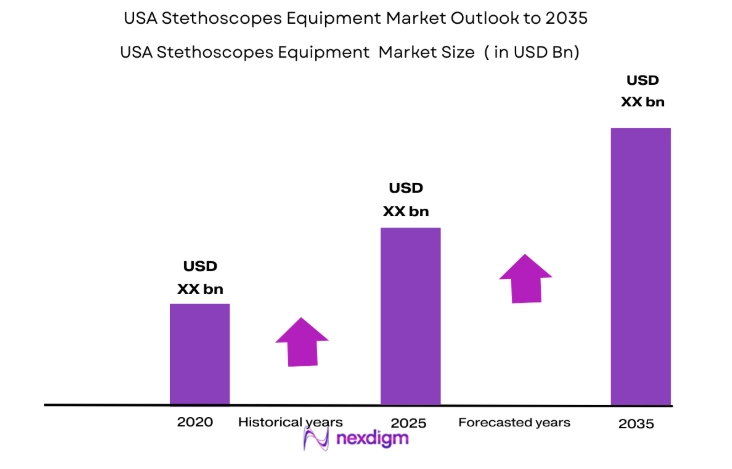
The USA stethoscopes equipment market is valued at approximately $ ~ million, based on a recent historical assessment. The market’s growth is driven by the increasing prevalence of cardiovascular diseases, rising demand for advanced diagnostic tools, and greater adoption of electronic stethoscopes among healthcare providers. Additionally, technological advancements, including Bluetooth and digital stethoscopes, have expanded the product range, driving the demand for higher-end devices. The preference for precise and enhanced acoustic performance, along with the shift towards remote monitoring in healthcare, has significantly influenced market growth.
The USA remains a key market for stethoscope manufacturers, with major cities like New York, Los Angeles, and Chicago being dominant due to their highly developed healthcare infrastructure and large patient populations. These cities host leading hospitals and medical centers, driving demand for advanced medical devices. Moreover, the widespread adoption of telemedicine in these regions has increased the need for digital and Bluetooth-enabled stethoscopes, further solidifying the country’s dominance in the global market. With regulatory support from organizations such as the FDA, the market is poised for steady growth in the coming years.
Market Segmentation
By Product Type:
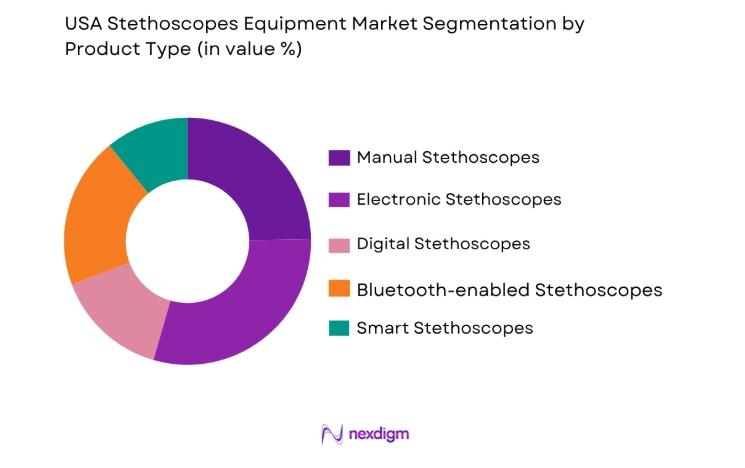
The USA stethoscopes equipment market is segmented by product type into manual, electronic, digital, Bluetooth-enabled, and smart stethoscopes. Recently, Bluetooth-enabled stethoscopes have dominated the market due to the growing demand for remote patient monitoring and the integration of advanced technologies into medical devices. Bluetooth stethoscopes enable healthcare professionals to easily share real-time data with remote specialists, improving diagnostic accuracy and patient care. The increasing adoption of telemedicine has further propelled the demand for Bluetooth-enabled devices, particularly in urban areas where telehealth services are expanding rapidly.
By End-User Segment:
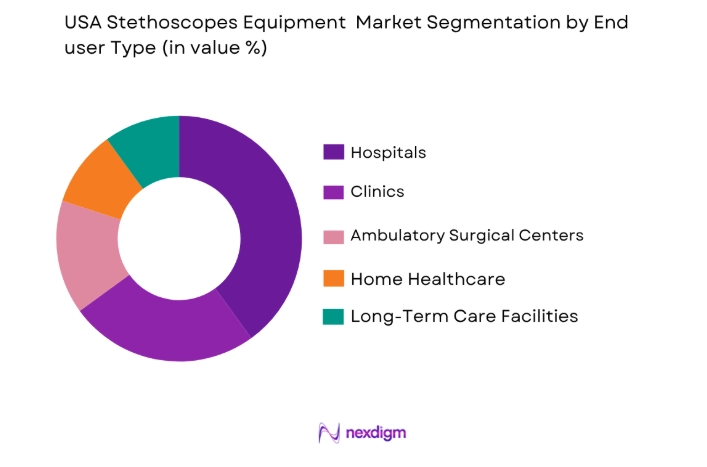
The market is further segmented by end-user, including hospitals, clinics, ambulatory surgical centers, home healthcare providers, and long-term care facilities. Among these, hospitals hold the dominant market share due to their high demand for advanced diagnostic tools, including stethoscopes, as part of patient care protocols. Hospitals are the primary centers for critical care and complex diagnostics, where high-quality stethoscopes are necessary for effective diagnosis, especially in areas such as cardiology. The preference for digital and Bluetooth stethoscopes in hospitals is driving growth, particularly in cities with large healthcare infrastructures.
Competitive Landscape
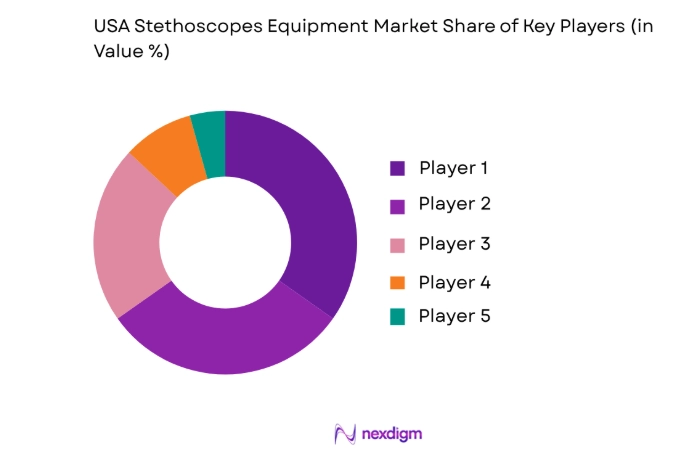
The USA stethoscopes equipment market is highly competitive, with several global and regional players consolidating their market positions. Companies like 3M Health Care, Medtronic, and Welch Allyn dominate the market due to their established brand presence, technological innovation, and distribution networks. Mergers and acquisitions are common, as these companies seek to expand their product offerings and strengthen their market reach. The presence of several large and well-funded companies has led to continuous advancements in stethoscope technologies, including the integration of digital and Bluetooth features.
| Company Name | Establishment Year | Headquarters | Technology Focus | Market Reach | Key Products | Revenue | Additional Parameter |
| 3M Health Care | 1902 | St. Paul, MN, USA | ~ | ~ | ~ | ~ | ~ |
| Medtronic | 1949 | Dublin, Ireland | ~ | ~ | ~ | ~ | ~ |
| Welch Allyn | 1915 | Skaneateles Falls, NY, USA | ~ | ~ | ~ | ~ | ~ |
| Eko Health | 2013 | San Francisco, CA, USA | ~ | ~ | ~ | ~ | ~ |
| Thinklabs | 1996 | Denver, CO, USA | ~ | ~ | ~ | ~ | ~ |
USA Stethoscopes Equipment Market Analysis
Growth Drivers
Technological Advancements in Stethoscopes:
The continuous innovation in stethoscope technology is a primary growth driver for the market. Traditional stethoscopes are being increasingly replaced by digital and Bluetooth-enabled models, which offer superior acoustic performance and greater convenience for healthcare professionals. These advancements allow for better diagnostics, especially in areas requiring precise auscultation, such as cardiology. Additionally, Bluetooth technology enables healthcare providers to connect their stethoscopes to mobile devices and transmit data in real time. This not only improves patient care but also fosters the growing trend of telemedicine. The rise of wearable health devices has also supported this shift, as patients and doctors alike demand more versatile and accurate diagnostic tools. The incorporation of AI and machine learning into stethoscope technology further enhances diagnostic accuracy, making them a valuable tool in both remote and traditional healthcare settings. The increasing adoption of telehealth services in the USA has directly contributed to the demand for these advanced stethoscopes. The ability to remotely monitor patients via connected devices has become a critical factor in managing chronic diseases, particularly in rural and underserved areas.
Growing Demand for Remote Patient Monitoring:
The increasing demand for remote patient monitoring solutions is a significant driver for the stethoscope market. As the healthcare industry moves towards telemedicine and home care solutions, the need for diagnostic tools that can function in remote settings has risen substantially. Stethoscopes with Bluetooth and digital capabilities have enabled healthcare providers to conduct virtual consultations and monitor patients from a distance. This has become especially critical in the context of the COVID-19 pandemic, where social distancing measures made it difficult for patients to visit healthcare facilities. With more patients opting for virtual consultations, remote monitoring tools like digital stethoscopes are gaining traction. Additionally, patients suffering from chronic conditions such as heart disease or respiratory disorders require constant monitoring, which has led to an increase in the demand for stethoscopes capable of transmitting real-time data. This trend is supported by the growing use of mobile health apps and wearable devices, which enhance the monitoring capabilities of advanced stethoscopes.
Market Challenges
High Cost of Advanced Stethoscopes:
The high cost of advanced stethoscopes is a significant challenge for the market, particularly in regions with limited healthcare budgets. Although digital and Bluetooth stethoscopes offer superior diagnostic capabilities, their high price points limit their accessibility, especially for smaller healthcare providers, clinics, and home healthcare services. The cost of these advanced models can be a barrier to their adoption, particularly in low-income areas where traditional stethoscopes are more affordable and accessible. Healthcare facilities operating on tight budgets may prioritize cost-effective solutions over advanced technologies, which could slow down the market’s growth. Additionally, the lack of insurance coverage for such devices in certain regions exacerbates the financial challenge. As a result, many healthcare providers and individuals may opt for more affordable traditional stethoscopes, limiting the market’s potential for widespread adoption of the latest technologies. Although the benefits of advanced stethoscopes are clear, the high upfront cost remains a major hurdle for both healthcare providers and patients in adopting these devices.
Regulatory Hurdles in Device Approval:
Regulatory hurdles related to the approval of new stethoscope technologies, particularly digital and Bluetooth-enabled models, present a significant challenge for manufacturers. These devices must undergo rigorous testing and certification processes by regulatory bodies such as the FDA before they can enter the market. The lengthy approval timelines and high costs associated with obtaining regulatory certifications can delay the introduction of new products and increase the financial burden on manufacturers. Furthermore, evolving regulatory standards for medical devices, particularly in the USA, add complexity to the development process. Stethoscope manufacturers must ensure compliance with both regional and global regulatory frameworks, which may vary depending on the market they wish to enter. This can be particularly challenging for smaller companies with limited resources, which may struggle to meet the stringent requirements for device approval. These regulatory challenges can slow the pace of innovation in the stethoscope market and limit the availability of new, advanced products for consumers.
Opportunities
Integration with Artificial Intelligence:
The integration of artificial intelligence (AI) into stethoscopes presents a significant opportunity for the market, enabling healthcare providers to enhance diagnostic accuracy and efficiency. AI-powered stethoscopes can analyze sounds and vibrations in real time, providing immediate feedback on potential health issues, such as heart murmurs or irregular breathing patterns. This technology has the potential to revolutionize the diagnostic process by reducing human error and enabling more accurate, data-driven decision-making. AI integration can also improve patient outcomes by identifying problems earlier, allowing for faster intervention and treatment. Furthermore, AI can enable the integration of stethoscopes with other health monitoring tools, such as wearable devices and mobile health apps, creating a more comprehensive approach to patient care. As the adoption of AI in healthcare continues to grow, stethoscopes that leverage this technology will be in high demand, offering significant growth potential for manufacturers. The opportunity to improve diagnostics in both clinical and remote settings, particularly for chronic disease management, presents a substantial market opportunity for AI-integrated stethoscopes.
Expansion in Emerging Markets:
Another significant opportunity for the stethoscope market is the expansion into emerging markets, where rising healthcare spending and infrastructure development are driving demand for medical devices. Countries in Asia-Pacific, Latin America, and Africa are experiencing rapid growth in their healthcare sectors, particularly in urban areas where healthcare access is improving. As these regions continue to develop, there is an increasing need for advanced medical devices, including stethoscopes, to meet the demands of growing patient populations. In these markets, digital and Bluetooth-enabled stethoscopes are particularly appealing due to their ability to support remote consultations and provide more accurate diagnostics in areas with limited access to healthcare professionals. Furthermore, government initiatives to improve healthcare infrastructure and expand access to quality care are expected to further drive demand for stethoscopes. Manufacturers that focus on adapting their products to meet the specific needs of emerging markets, such as offering affordable pricing and ensuring compatibility with local health systems, will be well-positioned to capitalize on these growth opportunities.
Future Outlook
The future outlook for the stethoscope market indicates continued growth driven by technological advancements, particularly in the digital and Bluetooth-enabled segments. As healthcare systems become more integrated and telemedicine becomes a staple, the demand for advanced stethoscopes will increase. Additionally, as regulatory frameworks continue to evolve, more sophisticated stethoscope technologies will gain approval, further expanding the market. The integration of artificial intelligence and machine learning into diagnostic tools is expected to enhance their capabilities, leading to greater market adoption. Market growth will also be supported by government initiatives aimed at improving healthcare infrastructure, particularly in emerging markets where stethoscope demand is growing.
Major Players
- 3M Health Care
- Medtronic
- Welch Allyn
- Eko Health
- Thinklabs
- Omron Healthcare
- Boso
- ADC
- Littmann
- Riester
- Contec
- Audiology Systems
- Huntleigh Healthcare
- American Diagnostic Corporation (ADC)
- DRE Medical
Key Target Audience
- Hospitals
- Clinics
- Ambulatory SurgicalCenters
- Home Healthcare Providers
- Government and Regulatory Bodies
- Health Insurance Companies
- Investment and Venture Capitalist Firms
- Medical Equipment Distributors
Research Methodology
Step 1: Identification of Key Variables
This step involves recognizing key market drivers, restraints, and opportunities that will impact the market’s growth.
Step 2: Market Analysis and Construction
Data is analyzed and segmented based on product types, end-users, and regions to understand trends and growth prospects.
Step 3: Hypothesis Validation and Expert Consultation
Key hypotheses are tested through primary research, including consultations with industry experts, to validate insights.
Step 4: Research Synthesis and Final Output
The final report is synthesized, incorporating all findings, to provide actionable insights and market forecasts.

- Executive Summary
- Research Methodology (Definitions, Scope, Industry Assumptions, Market Sizing Approach, Primary & Secondary Research Framework, Data Collection & Verification Protocol, Analytic Models & Forecast Methodology, Limitations & Research Validity Checks)

- Market Definition and Scope
- Value Chain & Stakeholder Ecosystem
- Regulatory / Certification Landscape
- Sector Dynamics Affecting Demand

- Growth Drivers
Increased Healthcare Spending
Technological Advancements in Medical Devices
Rising Demand for Remote Healthcare Solutions - Market Challenges
High Cost of Advanced Models
Competition from Non-traditional Healthcare Monitoring Devices
Regulatory Barriers in Device Approval - Market Opportunities
Growth in Telemedicine and Remote Monitoring
Expansion of Healthcare Infrastructure in Emerging Markets
Increased Adoption of Smart Healthcare Devices - Trends
Integration with Wearable Devices
Use of AI in Diagnostic Stethoscopes
Growing Preference for Patient-friendly, Easy-to-use Devices - Government Regulations

- By Market Value, 2020-2025
- By Installed Units, 2020-2025
- By Average System Price, 2020-2025
- By System Complexity Tier, 2020-2025

- By System Type (In Value%)
Manual Stethoscopes
Electronic Stethoscopes
Digital Stethoscopes
Bluetooth-enabled Stethoscopes
Smart Stethoscopes - By Platform Type (In Value%)
Standalone Devices
Mobile Device Integrated
Cloud-based Systems
Hybrid Systems
Desktop-based Systems - By Fitment Type (In Value%)
Headset Fitment
Chest-piece Fitment
Ergonomic Fitment
Pediatric Fitment
Universal Fitment - By EndUser Segment (In Value%)
Hospitals
Clinics
Ambulatory Surgical Centers
Home Healthcare

- Market Share Analysis
- CrossComparison Parameters (Price Range, System Complexity, End User Demand, Geographic Presence, Sales Channels)
- SWOT Analysis of Key Competito
- Pricing & Procurement Analysis
- Porter’s Five Forces
- Key Players
3M Health Care
ADC
Welch Allyn
Littmann (3M)
Eko Health
Medtronic
Sona Health
Thinklabs
Omron Healthcare
Boso
Littmann
Audiology Systems
Riester
Contec
American Diagnostic Corporation (ADC)
Huntleigh Healthcare

- Hospitals and Medical Centers
- Primary Care Providers
- Emergency Medical Services
- At-home Care Providers

- Forecast Market Value, 2026-2035
- Forecast Installed Units, 2026-2035
- Price Forecast by System Tier, 2026-2035
- Future Demand by Platform, 2026-2035


 Request a Sample
 Ask for Customization
 Get a Quote
 Enquire Now