
 Download PDF
Market Overview
USA struts (automotive shocks and struts) market size was approximately USD ~ billion in 2024, reflecting the value of strut and related suspension system demand across passenger and commercial vehicle segments. This figure is drawn from industry‐specific analysis that captures both OEM and aftermarket revenue in the United States automotive suspension space
The USA, particularly states like California, Texas, and Michigan, plays a dominant role in the struts market due to their large automotive manufacturing hubs and well-established vehicle production facilities. The presence of major automotive OEMs and suppliers in these regions supports the demand for suspension systems. Furthermore, the high vehicle density in urban centers and a focus on enhancing ride comfort and vehicle stability contribute to the prominence of struts in these areas. Technological innovations in strut materials and designs also fuel market demand in these key regions.

Market Segmentation
By Product Type:
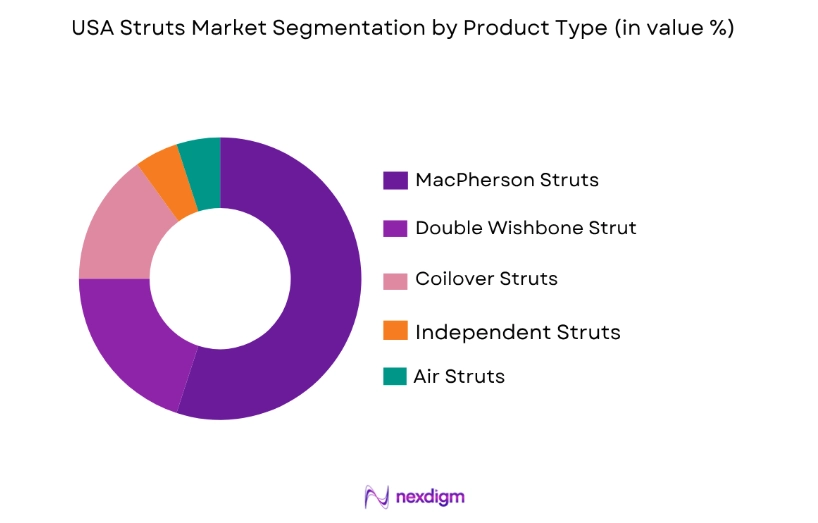
The USA Struts market is segmented by product type into various sub-segments, including MacPherson struts, double wishbone struts, and coilover struts. Recently, MacPherson struts have a dominant market share due to factors such as their widespread use in mainstream vehicles, cost-effectiveness, and ease of manufacturing. This design is favored by many automotive manufacturers for its simplicity and efficiency, offering a balance between performance and affordability. Additionally, the increasing demand for passenger cars and light-duty vehicles, where MacPherson struts are commonly used, further strengthens their market position. Due to the widespread adoption of this type in both the OEM and aftermarket sectors, MacPherson struts remain the leading choice in the struts market.
By Fitment Type:
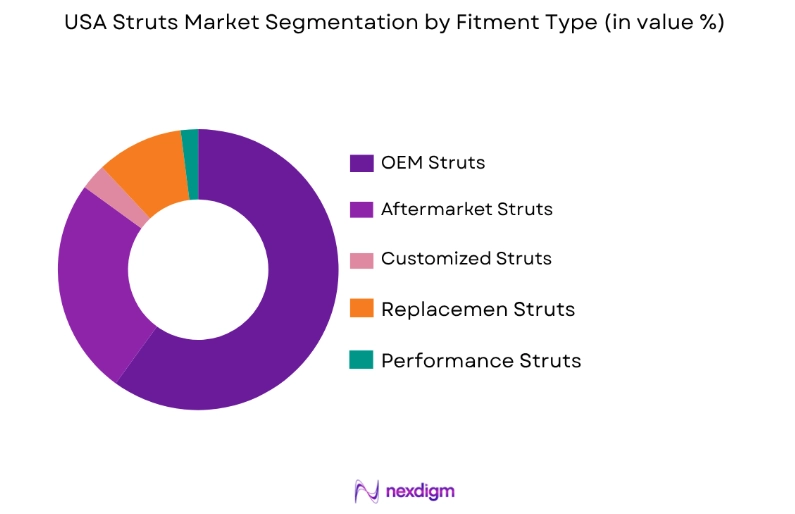
The market for struts in the USA is segmented by fitment type, with sub-segments including OEM struts, aftermarket struts, and replacement struts. The OEM struts sub-segment holds a dominant share in the market, primarily driven by the high volume of vehicle production and original equipment demand. Automakers prefer OEM struts due to their reliability, compatibility, and performance, which are crucial for maintaining vehicle quality standards. Moreover, advancements in manufacturing processes and increased production capacities in the automotive sector have further contributed to the growing demand for OEM struts. With consumer preferences for factory-installed components, the OEM segment continues to lead the struts market.
Competitive Landscape
The competitive landscape of the USA Struts market is characterized by a mix of established global players and regional manufacturers. Major players focus on technological innovations, partnerships, and expanding their market reach through strategic acquisitions and collaborations. The market remains consolidated, with a few players holding significant shares, but new entrants and local manufacturers continue to emerge. Innovations in strut designs, such as air suspension systems and smart struts, are expected to shape the competitive dynamics, providing new growth opportunities.
| Company Name | Establishment Year | Headquarters | Technology Focus | Market Reach | Key Products | Revenue | Market-specific Parameter |
| KYB Corporation | 1919 | Japan | ~ | ~ | ~ | ~ | ~ |
| Tenneco | 1940 | USA | ~ | ~ | ~ | ~ | ~ |
| Monroe | 1916 | USA | ~ | ~ | ~ | ~ | ~ |
| Bilstein | 1954 | Germany | ~ | ~ | ~ | ~ | ~ |
| ZF Friedrichshafen | 1915 | Germany | ~ | ~ | ~ | ~ | ~ |

USA Struts Market Analysis
Growth Drivers
Technological Advancements in Suspension Systems:
The advancement of suspension technologies has significantly impacted the growth of the USA Struts market. With increasing consumer demand for improved ride comfort, handling, and vehicle performance, automakers are focused on integrating advanced suspension systems in their new vehicle models. Innovations such as adaptive dampers, active suspension, and air struts are revolutionizing the struts market, offering enhanced vehicle dynamics and control. The growing popularity of electric vehicles (EVs), which demand lightweight and energy-efficient suspension solutions, also fuels the demand for innovative strut systems. These developments are not only limited to high-end luxury cars but are increasingly being adopted across mid-range and mass-market vehicles, driving market expansion. Furthermore, stricter government regulations on vehicle safety and emissions are pushing manufacturers to invest in advanced suspension technologies that not only improve comfort but also reduce environmental impact. The demand for these technologies has resulted in a significant increase in market investments and R&D efforts, further propelling the growth of the struts market.
Growth in Vehicle Production:
The rise in global vehicle production, particularly in the USA, is a primary growth driver for the struts market. As vehicle manufacturers scale up production to meet growing consumer demand, the need for reliable and high-performance suspension systems, including struts, has surged. The continuous development of new vehicle models, along with the introduction of new segments such as electric and autonomous vehicles, has contributed to the heightened demand for struts. Furthermore, the automotive aftermarket has witnessed significant growth, with a higher number of vehicle owners opting for aftermarket strut replacements to enhance the performance of their vehicles. This has contributed to an increase in the overall market size for struts, creating a sustained demand for high-quality struts across various vehicle segments.
Market Challenges
High Manufacturing Costs:
One of the major challenges facing the USA Struts market is the high cost of manufacturing advanced strut systems. The production of high-performance suspension systems requires significant investments in technology, research and development, and raw materials. The cost of premium materials, such as aluminum and composite materials, which are often used in high-end struts, further increases the overall production costs. Additionally, labor costs associated with precision manufacturing processes and stringent quality control requirements add to the financial burden for manufacturers. This creates a challenge for strut manufacturers, particularly smaller players, to remain competitive while maintaining profitability. Furthermore, as consumer demand grows for more affordable vehicles, balancing cost and performance becomes a critical challenge, limiting the potential growth of the market for certain vehicle segments.
Fluctuating Raw Material Prices:
The struts market is also facing challenges from fluctuating raw material prices, which can significantly impact the cost of manufacturing struts. Key materials, such as steel, aluminum, and rubber, are subject to price volatility due to changes in global supply chains, geopolitical factors, and trade tariffs. These fluctuations can affect the profitability of manufacturers, as they are forced to adjust production costs or absorb the price increases, which could lead to higher prices for consumers. The inability to maintain stable prices can create uncertainties in the market, leading to difficulties in pricing strategies and potentially impacting demand. Manufacturers must continually adapt to these changes while striving to maintain product quality and competitive pricing.
Opportunities
Growth in Electric Vehicle Demand:
The rapid growth of the electric vehicle (EV) market presents a significant opportunity for the USA Struts market. As the automotive industry shifts towards more sustainable and eco-friendly transportation solutions, the demand for EVs has surged. This transition has created a need for lightweight and energy-efficient suspension systems, which are essential for optimizing the performance and range of electric vehicles. Struts manufacturers have the opportunity to innovate and develop specialized suspension systems tailored for electric vehicles, addressing the unique requirements of these vehicles. By focusing on EV-specific suspension solutions, strut manufacturers can tap into a growing segment that is expected to dominate the automotive market in the coming years. The shift towards electric mobility not only drives demand for struts in new vehicle production but also in the aftermarket as EVs gain market share.
Adoption of Advanced Suspension Technologies:
As automotive manufacturers strive to meet consumer demands for better ride comfort, enhanced vehicle stability, and improved safety, the adoption of advanced suspension technologies presents an opportunity for growth in the struts market. Innovations such as active suspension systems, air suspension, and electronically controlled dampers are gaining popularity in both passenger and commercial vehicles. These technologies provide enhanced performance, contributing to an overall improved driving experience. As these technologies become more affordable and accessible, they will be integrated into a wider range of vehicle types, expanding the potential customer base for struts manufacturers. Additionally, the integration of smart suspension systems in autonomous and connected vehicles opens up new opportunities for innovation and market expansion.
Future Outlook
The USA Struts market is poised for continued growth over the next five years, driven by technological advancements in suspension systems, a rise in vehicle production, and an increasing demand for electric vehicles. The ongoing focus on improving ride comfort, safety, and fuel efficiency will fuel further adoption of advanced strut designs. As manufacturers invest in R&D to develop lightweight and energy-efficient suspension solutions, the market is expected to witness innovations that will enhance both vehicle performance and consumer satisfaction. Furthermore, regulatory support and the rise in vehicle production will continue to drive market expansion, presenting long-term opportunities for struts manufacturers.
Major Players
- KYB Corporation
- Tenneco
- Monroe
- Bilstein
- ZF Friedrichshafen AG
- Sachs
- Gabriel
- Showa Corporation
- TRW Automotive
- Koni
- Arnott
- Racing Beat
- FCS Automotive
- Delphi Technologies
- Mando Corporation
Key Target Audience
- Investments and venture capitalist firms
- Government and regulatory bodies
- Automotive OEMs
- Automotive aftermarket suppliers
- Fleet operators
- Vehicle dealerships
- EV manufacturers
- Automotive parts distributors
Research Methodology
Step 1: Identification of Key Variables
Identifying key market variables, including product types, consumer preferences, and technological trends, is essential for establishing a comprehensive market analysis.
Step 2: Market Analysis and Construction
Analyzing the current market scenario through secondary research, followed by construction of market dynamics based on primary data sources, ensures accuracy in predictions and growth estimates.
Step 3: Hypothesis Validation and Expert Consultation
Validating market hypotheses through discussions with industry experts and stakeholders provides deeper insights and refines the analysis.
Step 4: Research Synthesis and Final Output
Synthesizing collected data and analysis into a final report, offering actionable insights and strategic recommendations for stakeholders.

- Executive Summary
- Research Methodology (Definitions, Scope, Industry Assumptions, Market Sizing Approach, Primary & Secondary Research Framework, Data Collection & Verification Protocol, Analytic Models & Forecast Methodology, Limitations & Research Validity Checks)

- Market Definition and Scope
- Value Chain & Stakeholder Ecosystem
- Regulatory / Certification Landscape
- Sector Dynamics Affecting Demand

- Growth Drivers
Increase in Vehicle Production
Rising Consumer Demand for Vehicle Comfort
Technological Advancements in Strut Designs - Market Challenges
High Cost of High-Performance Struts
Increased Competition from Alternative Suspension Systems
Fluctuations in Raw Material Prices - Market Opportunities
Expansion in Electric Vehicle Markets
Rising Demand for Strut Performance Enhancements
Technological Innovations in Strut Materials - Trends
Growth of Autonomous Vehicles
Integration of Smart Technologies in Struts
Shift Toward Lightweight Strut Designs - Government Regulations
- SWOT Analysis of Key Competitors

- By Market Value, 2020-2025
- By Installed Units, 2020-2025
- By Average System Price, 2020-2025
- By System Complexity Tier, 2020-2025

- By System Type (In Value%)
MacPherson Struts
Double Wishbone Struts
Coilover Struts
Independent Struts
Air Struts - By Platform Type (In Value%)
Passenger Vehicles
Commercial Vehicles
Heavy Duty Trucks
SUVs
Electric Vehicles - By Fitment Type (In Value%)
OEM Struts
Aftermarket Struts
Replacement Struts
Customized Struts
Performance Struts - By EndUser Segment (In Value%)
Automotive Manufacturers
Automotive Repair Shops
Vehicle Dealerships
End Consumers

- Market Share Analysis
- CrossComparison Parameters (System Type, Platform Type, Fitment Type, EndUser Segment, Procurement Channel)
- SWOT Analysis of Key Competitors
- Pricing & Procurement Analysis
- Porter’s Five Forces
- Key Players
BorgWarner
KYB Corporation
Tenneco
Magna International
ZF Friedrichshafen AG
Monroe
Sachs
Bilstein
Gabriel
Showa Corporation
TRW Automotive
Koni
Arnott
Racing Beat
FCS Automotive

- Demand from Electric Vehicle Manufacturers
- Shift Toward Performance Struts in Sports Cars
- Growth in Automotive Aftermarket
- Rising Popularity of High-end Suspension Kits

- Forecast Market Value, 2026-2035
- Forecast Installed Units, 2026-2035
- Price Forecast by System Tier, 2026-2035
- Future Demand by Platform, 2026-2035


 Request a Sample
 Ask for Customization
 Get a Quote
 Enquire Now