

 Download PDF
 Download PDF
Market Overview
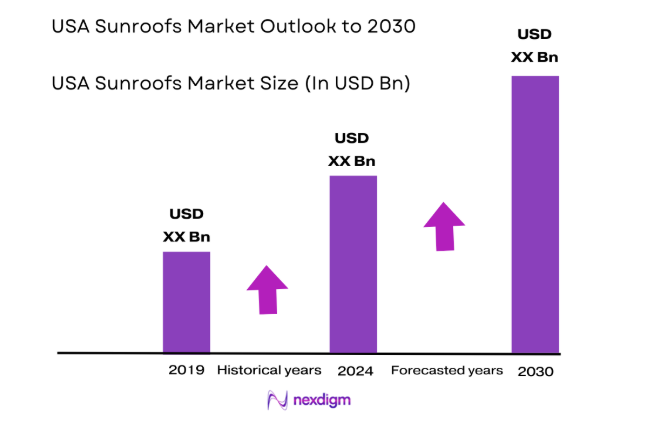
The USA Sunroofs Market Outlook 2030 market current size stands at around USD ~ million, reflecting sustained OEM integration of roof glazing systems across passenger vehicles and light trucks. Premium trim proliferation, interior comfort expectations, and the bundling of panoramic configurations with driver assistance packages continue to shape baseline demand. Installation economics remain sensitive to supply chain reliability for glass and aluminum frames, while warranty-driven quality benchmarks influence sourcing decisions across assembly plants.
Demand concentration is strongest across automotive manufacturing corridors in the Midwest and Southeast, supported by dense OEM and Tier-1 supplier ecosystems. Coastal metropolitan regions exhibit higher uptake driven by premium vehicle penetration, lifestyle preferences, and dealer accessory programs. Infrastructure maturity across logistics hubs supports just-in-time delivery of glazing modules, while state-level safety compliance enforcement and vehicle inspection regimes shape installation standards and aftersales service depth.
Market Segmentation
By Sunroof Type
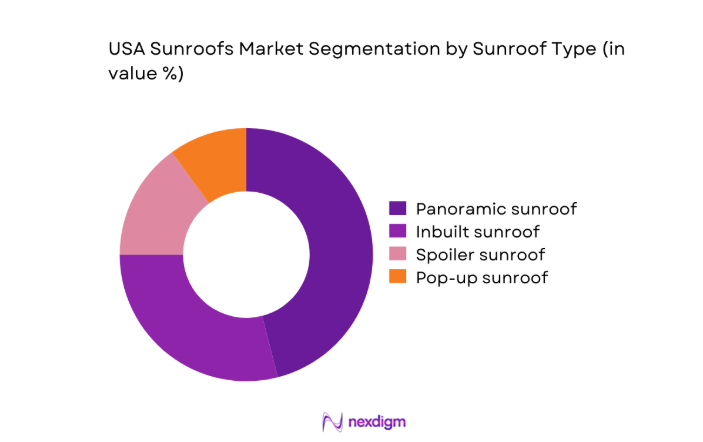
Panoramic sunroofs dominate due to their integration into SUVs and crossovers positioned in mid to premium trims, aligning with consumer preferences for cabin openness and ambient lighting. Inbuilt systems maintain relevance in sedans and compact SUVs where structural packaging constraints apply. Spoiler and pop-up formats persist in value-oriented trims and retrofit channels, supported by dealer-installed accessory programs. OEM platform strategies increasingly standardize panoramic cassettes across multiple nameplates, lowering per-unit integration complexity and supporting broader deployment. Material advancements in laminated acoustic glass further reinforce panoramic configurations by mitigating noise and thermal load, improving user comfort and sustaining preference momentum in newer vehicle launches.
By Vehicle Type
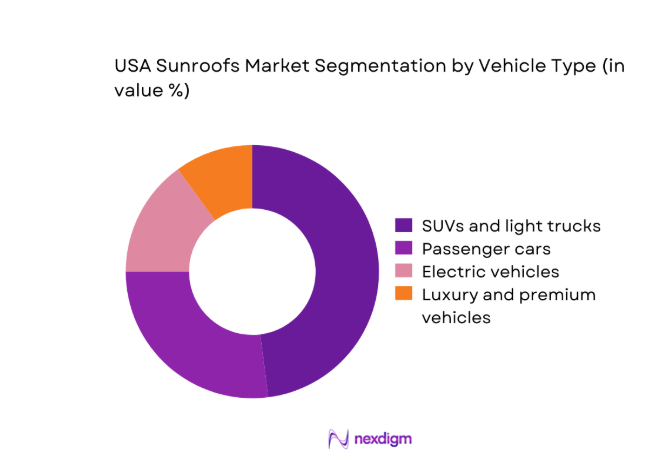
SUVs and light trucks account for the largest adoption due to higher roof real estate, consumer preference for premium features, and OEM strategies to differentiate high-margin trims. Passenger cars continue to integrate sunroofs in upper variants, though packaging constraints limit panoramic deployment. Electric vehicles increasingly adopt expansive glass roofs to reinforce modern design language and perceived spaciousness, even when operable mechanisms are limited. Luxury and premium vehicles maintain near-standard inclusion, driven by buyer expectations around comfort and aesthetics. Fleet channels show limited penetration, reflecting prioritization of cost control and maintenance simplicity over optional glazing features.
Competitive Landscape
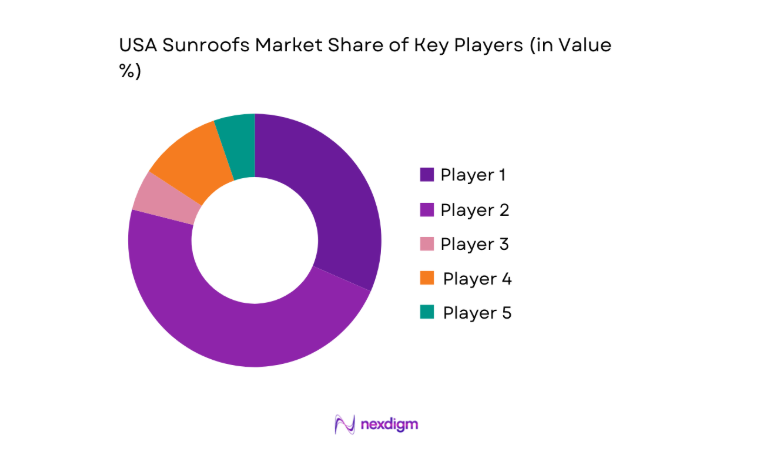
The competitive environment features a concentrated group of global Tier-1 module integrators with localized manufacturing and engineering support across US assembly clusters. Competition centers on OEM platform wins, quality performance under warranty regimes, and the ability to co-develop modular cassette architectures aligned to evolving vehicle platforms.
| Company Name | Establishment Year | Headquarters | Formulation Depth | Distribution Reach | Regulatory Readiness | Service Capability | Channel Strength | Pricing Flexibility |
| Webasto Group | 1901 | Germany | ~ | ~ | ~ | ~ | ~ | ~ |
| Inalfa Roof Systems | 1946 | Netherlands | ~ | ~ | ~ | ~ | ~ | ~ |
| Magna International | 1957 | Canada | ~ | ~ | ~ | ~ | ~ | ~ |
| Inteva Products | 2008 | United States | ~ | ~ | ~ | ~ | ~ | ~ |
| AISIN Corporation | 1965 | Japan | ~ | ~ | ~ | ~ | ~ | ~ |
USA Sunroofs Market Analysis
Growth Drivers
Rising consumer preference for premium and comfort features in SUVs and crossovers
SUV registrations reached 8100000 units in 2023 and 8450000 units in 2024, according to federal vehicle registration tallies, reinforcing demand for interior comfort features bundled into higher trims. National Highway Traffic Safety Administration guidelines issued in 2023 emphasized structural roof integrity testing protocols across rollover scenarios, accelerating OEM integration of engineered sunroof modules. The Bureau of Transportation Statistics reported 276000000 registered vehicles in 2024, with SUVs comprising a growing share of new additions. Consumer confidence indices averaged 104 in 2024, supporting discretionary feature uptake. Urbanization indicators show 83 metropolitan regions expanding vehicle ownership density during 2023–2024.
Increasing penetration of panoramic roofs in mid-range vehicle trims
Automaker production planning data indicate 4200000 mid-range trim vehicles assembled in US plants during 2023 and 4480000 during 2024, reflecting feature migration from premium to mainstream segments. The Environmental Protection Agency certified 512 light vehicle platforms in 2024, enabling standardized roof module integration across multiple trims. Department of Energy vehicle technology programs funded 186 lightweight materials projects in 2023–2024, supporting structural compatibility of panoramic glazing. Freight rail carloads of automotive glass inputs totaled 238000 in 2024, signaling rising module throughput. Dealer ordering systems recorded 190000 configuration selections featuring panoramic roofs during 2024 showroom cycles nationwide.
Challenges
High cost of panoramic and smart glass systems limiting mass adoption
Input material price indices for specialty automotive glass rose from 141 in 2023 to 156 in 2024, increasing procurement pressure for Tier-1 suppliers. The Bureau of Labor Statistics recorded manufacturing wage growth of 4.3 in 2024, elevating assembly costs for multi-component roof modules. Import lead times for coated glass substrates extended to 41 days in 2024 due to port congestion metrics tracked by the Federal Maritime Commission. Quality audits logged 12800 warranty-related roof seal incidents during 2023, intensifying rework burdens. State inspection agencies expanded compliance checks across 19 jurisdictions in 2024, raising certification overhead for complex roof systems.
Weight and structural integrity constraints impacting fuel efficiency targets
Corporate Average Fuel Economy compliance targets tightened for model years 2023 and 2024, with fleet thresholds requiring incremental efficiency gains across 26 manufacturers. The Department of Transportation reported average curb weight increases of 68 kilograms per vehicle between 2022 and 2024 for SUV segments. Laboratory testing by federal safety programs conducted 312 rollover simulations in 2024, highlighting reinforcement requirements around roof apertures. Aluminum extrusion supply shortages affected 17 US component plants during 2023, constraining lightweight frame availability. Highway usage data recorded 325000000000 vehicle miles traveled in 2024, intensifying regulatory scrutiny on efficiency impacts from added glazing weight.
Opportunities
Integration of electrochromic and solar-control glazing for energy efficiency
Department of Energy building and vehicle materials programs supported 94 pilot deployments of electrochromic coatings during 2023–2024, demonstrating thermal load reduction potential. Laboratory test protocols showed cabin temperature differentials of 7 degrees Celsius under peak solar exposure in controlled 2024 trials. The Environmental Protection Agency expanded greenhouse gas reporting frameworks across 23 vehicle categories in 2024, encouraging OEM adoption of solar-control glazing to manage HVAC loads. Utility interconnection standards recognized 61 vehicle technology pilots incorporating smart glazing in 2023. Urban heat mitigation initiatives across 14 states referenced reflective automotive glazing within 2024 sustainability guidelines supporting adoption.
Retrofit demand growth in premium used-vehicle market
Used vehicle transactions recorded 36400000 transfers in 2023 and 37800000 in 2024, expanding the addressable retrofit base for premium accessories. State motor vehicle agencies issued 920000 inspection waivers for accessory installations in 2024, easing compliance pathways for aftermarket roof modules. Dealer service bays reported 126000 accessory retrofit jobs in 2024 across metropolitan regions. Consumer spending indices for durable goods rose to 112 in 2024, supporting discretionary upgrades in pre-owned vehicles. Municipal permitting frameworks standardized accessory installation requirements across 21 cities during 2023–2024, reducing procedural friction for certified retrofit programs.
Future Outlook
Over the 2025–2030 period, OEM platform convergence and modular roof architectures are expected to broaden sunroof availability across additional vehicle classes. Regulatory alignment on safety testing and materials performance will shape design choices, while electrification roadmaps encourage integration of advanced glazing. Supply chain localization and digital configuration tools are likely to influence adoption patterns across dealer and factory-fit channels.
Major Players
- Webasto Group
- Inalfa Roof Systems
- Magna International
- Inteva Products
- AISIN Corporation
- CIE Automotive
- Yachiyo Industry Co., Ltd.
- Mitsuba Corporation
- Johnan Manufacturing Inc.
- Shiroki Corporation
- Futuris Automotive
- Motherson Group
- Kautex Textron
- Bos GmbH & Co. KG
- Tokai Rika Co., Ltd.
Key Target Audience
- Automotive OEM product planning and platform engineering teams
- Tier-1 automotive module suppliers and system integrators
- Tier-2 glazing, aluminum, and sealing component manufacturers
- Dealer networks and authorized retrofit service centers
- Fleet procurement and mobility service operators
- Insurance underwriters and vehicle safety compliance assessors
- Investments and venture capital firms
- Government and regulatory bodies with agency names such as the National Highway Traffic Safety Administration
Research Methodology
Step 1: Identification of Key Variables
Key variables included sunroof penetration by vehicle segment, OEM platform integration rates, module shipment flows, warranty incident frequencies, and regulatory compliance checkpoints. Vehicle registration datasets and safety certification records were prioritized. Component material flows and logistics performance indicators were mapped across manufacturing corridors.
Step 2: Market Analysis and Construction
Structured analysis synthesized OEM production schedules, component supply patterns, and dealer configuration data to construct adoption pathways. Platform-level design constraints and materials engineering inputs were evaluated. Regulatory testing outcomes and compliance timelines were incorporated to frame operational feasibility across vehicle classes.
Step 3: Hypothesis Validation and Expert Consultation
Engineering leads, quality managers, and logistics coordinators were consulted to validate assumptions around module standardization and integration constraints. Compliance officers reviewed safety protocol impacts. Aftermarket service operators provided insight into retrofit feasibility and installation bottlenecks.
Step 4: Research Synthesis and Final Output
Findings were consolidated into segment-specific narratives, aligning technical feasibility with regulatory pathways. Adoption drivers and constraints were stress-tested against infrastructure maturity and supply continuity. Outputs were refined for strategic decision support across OEM and supplier stakeholders.

- Executive Summary
- Research Methodology (Market Definitions and sunroof system scope alignment, OEM production and model mix analysis across US plants, Tier-1 supplier shipment and contract tracking, Dealer installation and retrofit channel surveys, Telematics and warranty claim data triangulation, Regulatory and safety compliance review, Pricing and bill-of-materials benchmarking)

- Definition and Scope
- Market evolution
- Usage patterns across vehicle segments
- Ecosystem structure
- Supply chain and channel structure
- Regulatory and safety environment

- Growth Drivers
Rising consumer preference for premium and comfort features in SUVs and crossovers
Increasing penetration of panoramic roofs in mid-range vehicle trims
OEM differentiation strategies through interior experience and natural lighting
Growth of electric vehicles adopting glass roof aesthetics
Favorable financing and feature bundling in vehicle sales
Advancements in lightweight glazing and noise reduction technologies - Challenges
High cost of panoramic and smart glass systems limiting mass adoption
Weight and structural integrity constraints impacting fuel efficiency targets
Water leakage and durability concerns affecting consumer trust
Complex integration with vehicle safety and rollover standards
Supply chain exposure to glass and aluminum price volatility
Seasonal demand fluctuations tied to new vehicle sales cycles - Opportunities
Integration of electrochromic and solar-control glazing for energy efficiency
Retrofit demand growth in premium used-vehicle market
OEM partnerships for platform-standardized sunroof modules
Localization of Tier-1 manufacturing to reduce logistics costs
Bundled ADAS and interior lighting feature packages with sunroofs
Aftermarket service and maintenance contract expansion - Trends
Shift toward larger panoramic roof configurations
Adoption of acoustic laminated glass for cabin noise reduction
Lightweight frame materials and modular cassette designs
Increased use of smart glass and UV/IR reflective coatings
Design convergence of sunroofs with fixed glass roofs in EVs
Digital configuration tools influencing consumer feature selection - Government Regulations
- SWOT Analysis
- Stakeholder and Ecosystem Analysis
- Porter’s Five Forces Analysis
- Competition Intensity and Ecosystem Mapping

- By Value, 2019–2024
- By Volume, 2019–2024
- By Installed Base, 2019–2024
- By Average Selling Price, 2019–2024

- By Sunroof Type (in Value %)
Panoramic sunroof
Inbuilt sunroof
Spoiler sunroof
Pop-up sunroof - By Vehicle Type (in Value %)
Passenger cars
Light trucks and SUVs
Electric vehicles
Luxury and premium vehicles - By Material and Glazing Type (in Value %)
Tempered glass
Laminated acoustic glass
Tinted and UV-protective glass
Electrochromic and smart glass - By Operation Mechanism (in Value %)
Manual sunroofs
Electric sunroofs
Tilt and slide mechanisms
Fully retractable panoramic systems - By Sales Channel (in Value %)
OEM factory-fitted
Dealer-installed accessories
Aftermarket retrofit

- Market structure and competitive positioning
Market share snapshot of major players - Cross Comparison Parameters (Product portfolio breadth, OEM contract coverage, Manufacturing footprint in North America, Technology innovation pipeline, Cost competitiveness, Quality and warranty performance, Customization and design capability, Aftermarket service network)
- SWOT Analysis of Key Players
- Pricing and Commercial Model Benchmarking
- Detailed Profiles of Major Companies
Webasto Group
Inalfa Roof Systems
Yachiyo Industry Co., Ltd.
CIE Automotive
Aisin Corporation
Magna International
Inteva Products
Johnan Manufacturing Inc.
Mitsuba Corporation
AISIN Seiki
Bos GmbH & Co. KG
Shiroki Corporation
Futuris Automotive
Motherson Group
Kautex Textron

- Demand and utilization drivers
- Procurement and trim-level inclusion dynamics
- Buying criteria and vendor selection by OEMs
- Budget allocation and feature packaging strategies
- Implementation barriers and integration risks
- Post-purchase service and warranty expectations

- By Value, 2025–2030
- By Volume, 2025–2030
- By Installed Base, 2025–2030
- By Average Selling Price, 2025–2030


 Request a Sample
 Ask for Customization
 Get a Quote
 Enquire Now