

 Download PDF
Market Overview
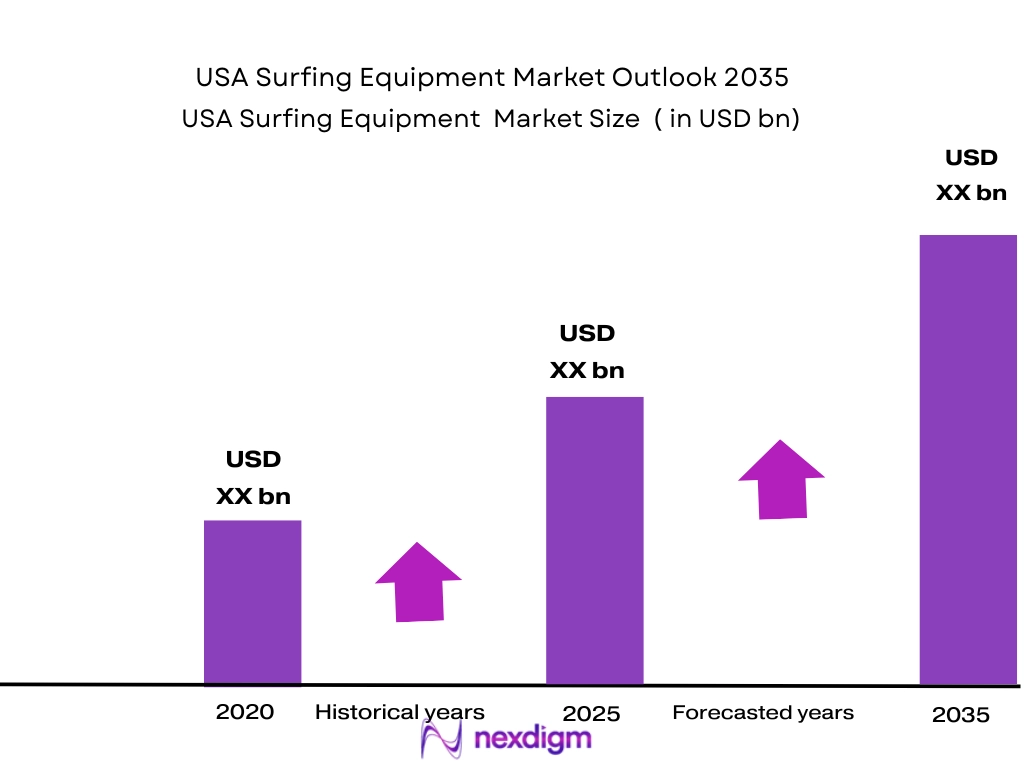
The USA surfing equipment market, valued at USD ~ billion in 2024, is driven by the increasing participation in surfing across all levels, including recreational surfers, professional athletes, and the rising popularity of surfing as an eco-friendly sport. Surf tourism plays a pivotal role, with tourists flocking to famous surf destinations like California, Hawaii, and Florida, further boosting the demand for surfboards, wetsuits, and other gear. Technological innovations in surfboard construction and material advancements are enhancing product performance, catering to consumers’ growing expectations of durability and environmental sustainability. The market is also experiencing increased consumer focus on the performance and safety features of surfing equipment, contributing to steady market growth.
California, Hawaii, and Florida are the dominant regions in the USA surfing equipment market due to their longstanding cultural ties to surfing and ideal weather conditions for year-round participation in the sport. California remains the largest hub for surfing, with its large population of enthusiasts and global influence on the surfing culture. Hawaii, often considered the birthplace of modern surfing, continues to lead in terms of professional surfing events and surf tourism. Florida has witnessed growing interest in the sport due to its extensive coastline and increasing investment in beach tourism. These regions’ combination of favorable surfing conditions, strong local cultures, and tourism-driven demand for equipment creates a dominant position for these areas in the market.
Market Segmentation
By Equipment Type
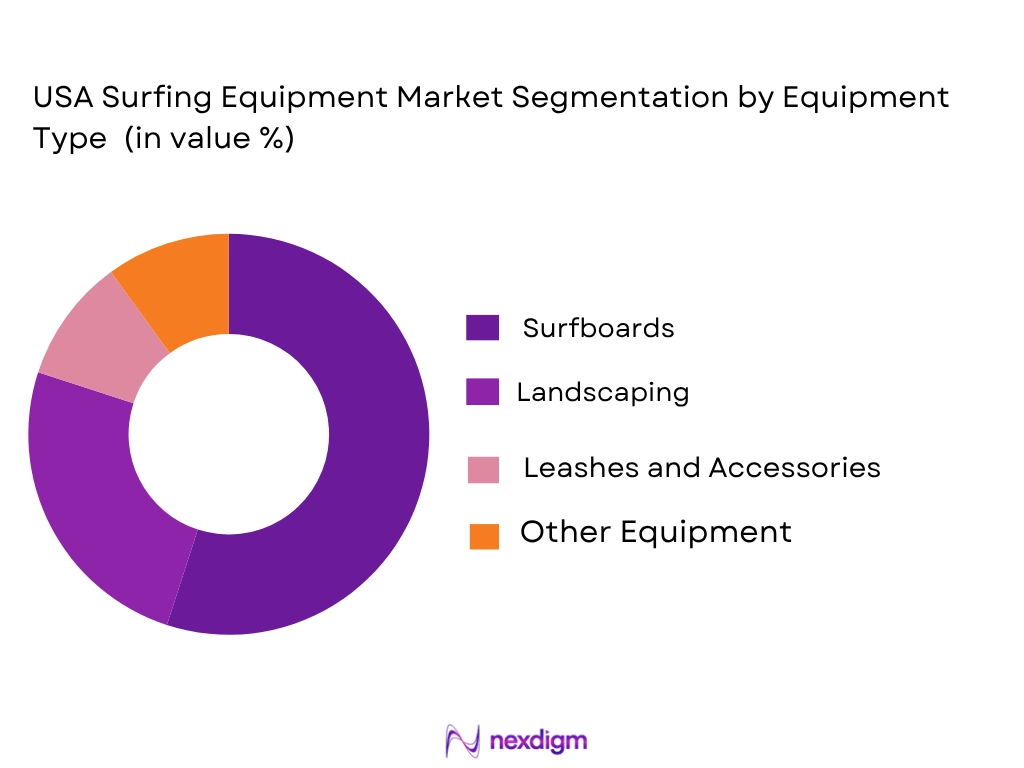
The USA surfing equipment market is segmented into surfboards, wetsuits, surfboard accessories (including leashes and fins), and other equipment. Among these, surfboards dominate the market due to their fundamental role in the sport and their high frequency of purchase. Recently, performance-based surfboards, including custom boards tailored for specific wave conditions, have gained popularity, further driving demand. Surfboards made from advanced materials such as carbon fiber and epoxy are increasingly favored for their lighter weight, durability, and environmental friendliness. This growth is complemented by innovations in surfboard designs, such as shorter boards for urban environments and longboards for traditional surf experiences.
By End-User
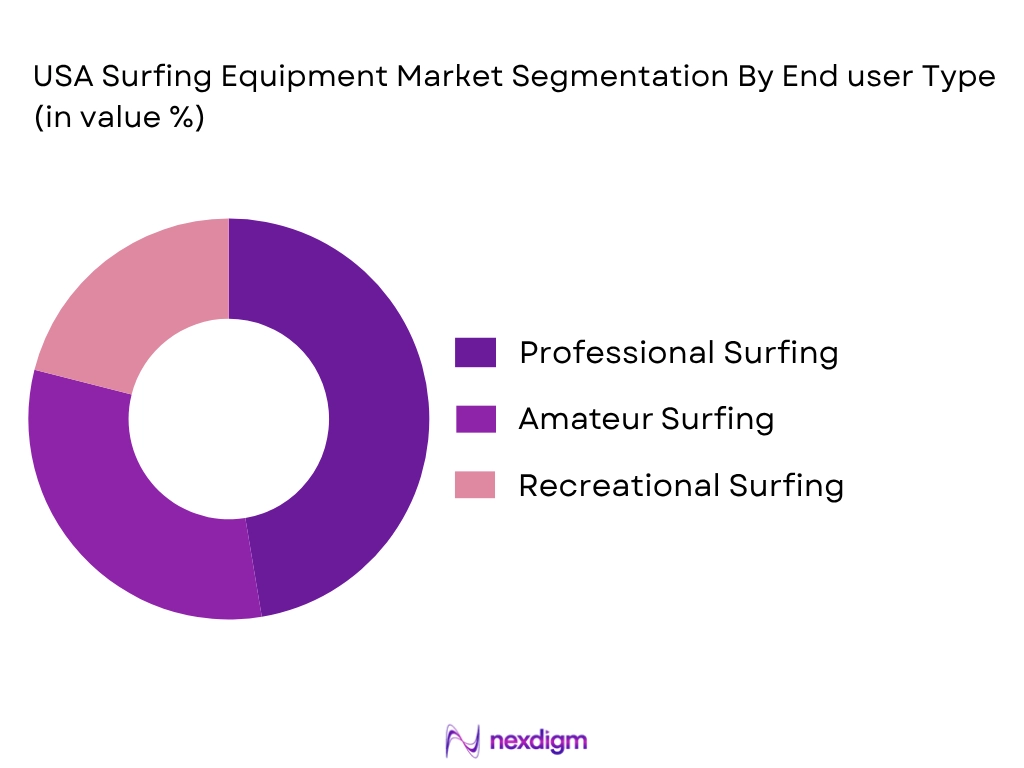
The USA surfing equipment market is also segmented by end-use, which includes professional surfing, amateur surfing, and recreational surfing. The recreational surfing segment has gained significant traction, especially due to the sport’s increasing appeal as a fitness activity and a leisure pursuit. This segment is expected to continue dominating, as the popularity of surfing expands beyond coastal regions and into inland areas. Amateur surfing also represents a growing segment, driven by grassroots interest in surfing and increased accessibility to surf equipment. Professional surfing continues to be a niche but high-value market, with elite surfers and athletes demanding specialized, high-performance gear for competitive events.
Competitive Landscape
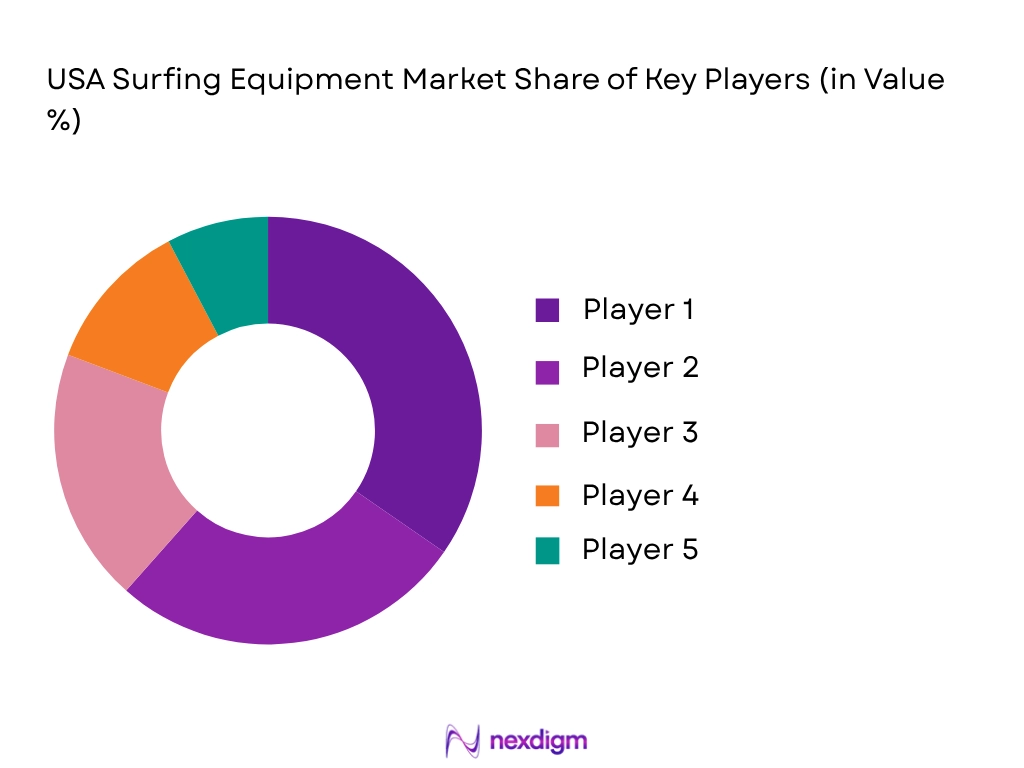
The USA surfing equipment market is dominated by a mix of established global brands and niche players known for innovation and high-performance products. Key players in the market include Quiksilver, Billabong International, Rip Curl, Surftech, and Channel Islands Surfboards. These companies are leading the market by maintaining strong brand loyalty, continuous product innovation, and a solid presence in retail and online distribution channels. Their extensive product ranges, including surfboards, wetsuits, and accessories, meet the diverse needs of surfers at all levels, from beginners to professionals.
| Company Name | Establishment Year | Headquarters | Product Range | Annual Revenue | Global Presence | Distribution Channels |
| Quiksilver | 1969 | USA | ~ | ~ | ~ | ~ |
| Billabong | 1973 | Australia | ~ | ~ | ~ | ~ |
| Rip Curl | 1969 | Australia | ~ | ~ | ~ | ~ |
| Surftech | 1989 | USA | ~ | ~ | ~ | ~ |
| Channel Islands | 1969 | USA | ~ | ~ | ~ | ~ |
USA Surfing Equipment Market Analysis
Growth Drivers
Growth in Surfing Popularity
The increasing popularity of surfing, especially among younger generations, is a key driver of growth in the USA surfing equipment market. Surfing is no longer limited to coastal regions, with more people across the country taking up the sport as both a recreational activity and a form of fitness. Social media and the growing visibility of professional surfers have contributed to the sport’s rise, with surf events like the World Surf League gaining global attention. Additionally, surf culture is being embraced by mainstream fitness enthusiasts who see surfing as a full-body workout. As more people take up the sport, the demand for high-quality surfing equipment, such as surfboards, wetsuits, and accessories, continues to increase.
Technological Advancements in Surf Equipment
Technological advancements have significantly transformed the surfing equipment market, contributing to increased demand for specialized products. Innovations in materials, such as lightweight and durable carbon fiber surfboards and eco-friendly wetsuits made from plant-based materials, are appealing to both professional surfers and recreational enthusiasts. The use of 3D printing for custom boards and advancements in board design for specific wave conditions have also led to more personalized equipment options. Wetsuit technology has also seen improvements, offering better insulation, flexibility, and comfort in varying water temperatures. These advancements not only enhance the surfing experience but also drive consumers to invest in the latest and most efficient equipment available.
Market Challenges
High Cost of Premium Equipment
One of the major challenges facing the USA surfing equipment market is the high cost of premium gear. High-quality surfboards, especially custom-made boards designed for specific wave conditions, can be prohibitively expensive, limiting their accessibility to a broader range of consumers. Similarly, wetsuits made from advanced materials that offer superior performance, such as those designed for extreme cold or comfort, are often priced beyond the budgets of casual surfers. While premium products offer durability and advanced features, they remain out of reach for many aspiring surfers. This pricing barrier has the potential to slow the adoption of surfing equipment among new entrants into the market.
Seasonal Demand Fluctuations
The seasonal nature of surfing significantly affects the market’s growth, as demand for equipment tends to fluctuate with the surf seasons. Surfing is predominantly a summer sport in many regions, particularly in areas like the East Coast and Northern California. During the off-season, which occurs in colder months, equipment sales drop, and consumers are less likely to purchase new surfboards or wetsuits. This seasonality also impacts surf-related businesses such as rentals and lessons, leading to revenue declines in the off-season. Consequently, manufacturers and retailers must adapt their strategies to mitigate these fluctuations, focusing on year-round engagement through promotions, sales, and online channels.
Opportunities
Increasing Interest in Sustainable Surfing Gear
With growing environmental awareness, there is a rising demand for sustainable surfing gear. Many consumers are seeking products made from eco-friendly materials, such as surfboards made from recycled plastic or bio-based resins and wetsuits made from natural rubber or plant-based materials. Surfing brands are responding by focusing on environmentally conscious manufacturing processes to reduce waste and their overall carbon footprint. These sustainable products not only attract environmentally conscious consumers but also appeal to the growing segment of millennials and Gen Z, who are increasingly making purchasing decisions based on a brand’s sustainability practices. This shift provides a significant opportunity for companies to develop and market eco-friendly alternatives.
Expansion of Women’s Surfing Market
The expansion of women’s participation in surfing presents a significant growth opportunity for the surfing equipment market. Female surfers now represent a rapidly growing segment, with increased visibility in the professional arena and more women taking up surfing recreationally. This shift has led to a rise in demand for women-specific surfboards, wetsuits, and accessories that cater to their unique needs, such as designs offering better comfort and performance. As brands begin to offer more gender-specific equipment and apparel, this market segment is expected to continue expanding. Companies that prioritize inclusivity and cater to the needs of female surfers are likely to benefit from this trend, capturing a larger share of the market.
Future Outlook
Over the next 5 years, the USA surfing equipment market is expected to experience steady growth driven by the increasing popularity of surfing, technological advancements in surf gear, and the growing trend of eco-friendly surfing products. The rise of surfing as a recreational and competitive sport, coupled with the increasing number of surfing events and participation in surf tourism, will continue to stimulate demand for high-performance and sustainable surfboards, wetsuits, and accessories. As consumers become more conscious about environmental issues, manufacturers will focus on producing equipment made from eco-friendly materials, further boosting the market’s growth. Additionally, the expansion of surf tourism will contribute to the market, with equipment rentals and sales seeing growth in key surfing destinations.
Major Players
- Quiksilver
- Billabong International
- Rip Curl
- Surftech
- Channel Islands Surfboards
- Hurley International
- Lost Surfboards
- O’Neill Wetsuits
- Firewire Surfboards
- Dakine
- Xcel Wetsuits
- Roxy
- Patagonia
- Vissla
- Al Merrick
Key Target Audience
- Investments and Venture Capitalist Firms
- Government and Regulatory Bodies
- Surfing Equipment Retailers
- Surfboard Manufacturers
- Sports and Outdoor Retail Chains
- Professional Surfing Organizations
- Surfing Tourism Agencies
- Eco-conscious Consumers and Environmental NGOs
Research Methodology
Step 1: Identification of Key Variables
In this phase, we identify and define the key variables influencing the USA Surfing Equipment market, such as consumer preferences, equipment performance standards, and emerging trends in eco-friendly products. This is accomplished through a combination of desk research and interviews with key industry stakeholders.
Step 2: Market Analysis and Construction
We gather historical data on surfing equipment sales, product trends, and market demographics. The goal is to assess market penetration, identify growth drivers, and evaluate consumer spending patterns to forecast future trends accurately.
Step 3: Hypothesis Validation and Expert Consultation
Market hypotheses are tested through structured interviews with industry experts, manufacturers, retailers, and consumers. These consultations provide insights into specific market drivers, technological developments, and consumer behavior that validate our market model.
Step 4: Research Synthesis and Final Output
In the final phase, we synthesize all gathered data, validate it with direct industry feedback, and provide a comprehensive market report. This report incorporates insights from multiple data sources to ensure accuracy and relevance.

- Executive Summary
- Research Methodology (Market Definitions and Assumptions, Abbreviations, Market Sizing Approach, Consolidated Research Approach, Understanding Market Potential Through In-Depth Industry Interviews, Primary Research Approach, Limitations and Future Conclusions)

- Definition and Scope
- Market Dynamics Overview
- Market Genesis
- Major Players and Market Timeline
- Business Cycle and Trends
- Supply Chain and Value Chain Analysis

- Growth Drivers
Growth in Surfing Popularity
Technological Advancements in Surf Equipment
Expansion of Surfing Tourism - Market Challenges
High Cost of Premium Equipment
Seasonal Demand Fluctuations
Limited Awareness of Eco-Friendly Alternatives - Opportunities
Increasing Interest in Sustainable Surfing Gear
Expansion of Women’s Surfing Market
Surf Equipment Rental and Subscription Services - Trends
Rise in Eco-Friendly Surf Products
Growth of Smart Surfing Technology
Customization of Surfboards and Wetsuits - Government Regulations
Environmental Regulations
Safety Standards for Surfing Equipment - SWOT Analysis
- Porter’s Five Forces Analysis

- By Value, 2020-2025
- By Volume, 2020-2025
- By Average Price, 2020-2025

- By Equipment Type (In Value %)
Surfboards
Wetsuits
Leashes and Accessories
Other Equipment - By End-User (In Value %)
Professional Surfing
Amateur Surfing
Recreational Surfing - By Distribution Channel (In Value %)
Online Retailers
Specialty Surf Shops
Department Stores
Other Retail Channels - By Price Tier (In Value %)
Economy / Entry-Level
Mid-Tier
Premium / High-End

- Market Share of Major Players by Value/Volume
- Market Share of Major Players by Equipment Type
- Market Share of Major Players by Distribution Channel
- Cross Comparison Parameters (Company Overview, Business Strategies, Recent Developments, Strengths, Weaknesses, Organizational Structure, Revenues, Revenues by Equipment Type, Number of Retail Outlets, Distribution Channels, Margins, Production Capabilities, Unique Value Offering)
- SWOT Analysis of Major Players
- Pricing Analysis Based on Equipment Categories for Major Players
- Detailed Profiles of Major Companies
Quiksilver
Billabong International
Rip Curl
Surftech
Channel Islands Surfboards
Hurley International
Lost Surfboards
O’Neill Wetsuits
Firewire Surfboards
Dakine
Others

- Purchasing Power and Budget Allocations
- Willingness to pay for custom-made boards
- Popularity of subscription-based equipment services
- Growth in budget-friendly surf gear demand
- Use of financing options for high-end products

- By Value, 2026-2035
- By Volume, 2026-2035
- By Average Price, 2026-2035


 Request a Sample
 Ask for Customization
 Get a Quote
 Enquire Now