

 Download PDF
 Download PDF
Market Overview
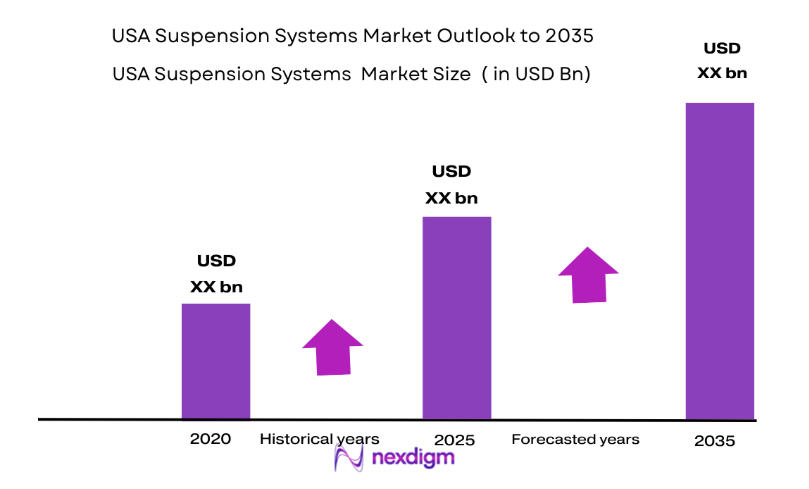
The USA Suspension Systems market is estimated at USD ~ billion based on industry market analysis for the U.S. automobile steering and suspension segment, which includes suspension system components valued separately within this broader category. This figure reflects actual reported revenues from key OEM and aftermarket channels, driven by ongoing demand for vehicle comfort, safety performance, and adoption of advanced suspension technologies in both passenger and commercial vehicle platforms.
The USA is a dominant player in the suspension systems market due to its large automotive manufacturing base, particularly in cities like Detroit, Michigan, and other regions with robust automotive manufacturing hubs. These areas have a high concentration of vehicle production plants, leading to a substantial demand for suspension components. Furthermore, the adoption of electric vehicles (EVs) is contributing to the expansion of the market, with companies focusing on providing specialized suspension systems for these vehicles. As a result, the USA remains a key market for suspension systems, driven by infrastructure, innovation, and a high level of consumer demand for improved vehicle performance.
Market Segmentation
By Product Type:
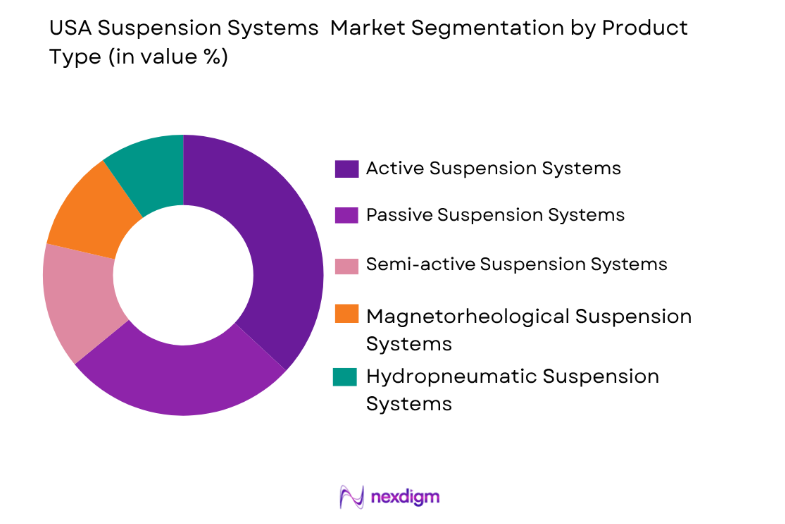
USA Suspension Systems market is segmented by product type into active suspension systems, passive suspension systems, semi-active suspension systems, magnetorheological suspension systems, and hydropneumatic suspension systems. Recently, active suspension systems have dominated the market due to their superior performance in providing a smooth and controlled ride by adapting to road conditions in real-time. The rising demand for enhanced vehicle performance, improved safety, and the growing focus on autonomous vehicle technologies have driven this sub-segment’s growth. Additionally, the integration of active suspension systems in premium and electric vehicles has bolstered their market share. These systems offer advanced features such as real-time damping adjustments, further boosting their dominance in the market.
By Vehicle Type:
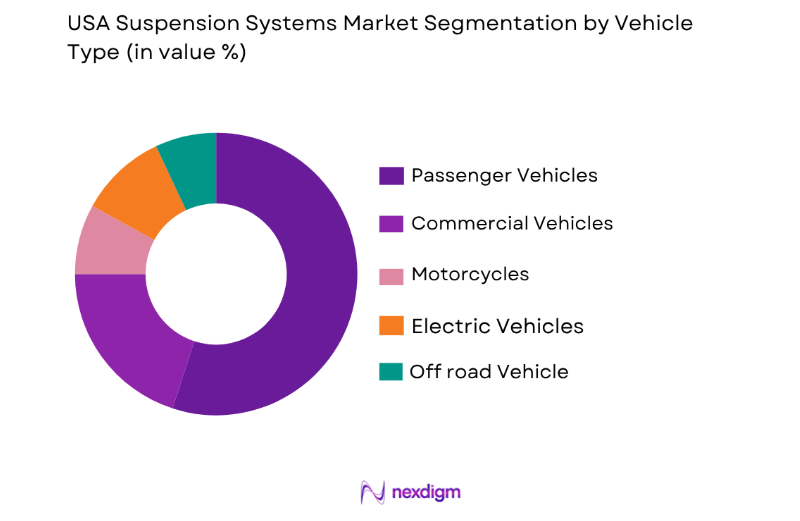
The USA Suspension Systems market is segmented by vehicle type into passenger vehicles, commercial vehicles, motorcycles, electric vehicles (EVs), and off-road vehicles. Among these, passenger vehicles hold the largest share of the market. This is primarily due to the high volume of passenger vehicle production and the growing demand for advanced suspension systems that enhance ride quality, safety, and handling. Consumer preferences for vehicles with improved comfort and performance, particularly in mid- and high-end vehicle segments, have driven the demand for advanced suspension technologies. Furthermore, the increasing adoption of EVs and their need for specialized suspension systems has contributed to the dominance of passenger vehicles in the market.
Competitive Landscape
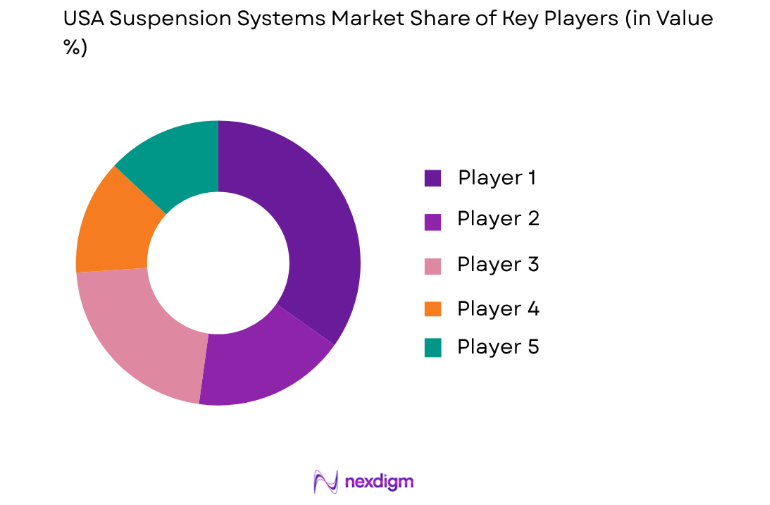
The competitive landscape of the USA Suspension Systems market is highly consolidated, with major players significantly influencing market dynamics through innovations, partnerships, and mergers. Companies such as ZF Friedrichshafen, Tenneco, and Delphi Technologies lead the market, investing heavily in R&D to improve suspension technologies. These players are focused on developing advanced suspension solutions, such as active suspension systems and electromagnetic suspension systems, to cater to the rising demand for enhanced comfort, safety, and vehicle performance. The dominance of major players is further supported by their extensive distribution networks and established relationships with automakers.
| Company Name | Establishment Year | Headquarters | Technology Focus | Market Reach | Key Products | Revenue (USD) | Additional Parameter |
| ZF Friedrichshafen | 1915 | Friedrichshafen, DE | ~ | ~ | ~ | ~ | ~ |
| Tenneco | 1940 | Lake Forest, USA | ~ | ~ | ~ | ~ | ~ |
| Delphi Technologies | 1994 | Troy, Michigan, USA | ~ | ~ | ~ | ~ | ~ |
| KYB Corporation | 1944 | Tokyo, Japan | ~ | ~ | ~ | ~ | ~ |
| Mando Corporation | 1962 | Seoul, South Korea | ~ | ~ | ~ | ~ | ~ |
USA Suspension Systems Market Analysis
Growth Drivers
Increasing Demand for Vehicle Comfort and Safety:
The growing consumer demand for improved vehicle comfort and safety features is one of the primary drivers of the USA Suspension Systems market. As consumers become more conscious of ride quality, suspension systems are being upgraded to provide smoother, more stable rides while also enhancing vehicle handling. This has led automakers to increasingly adopt advanced suspension technologies such as active and semi-active systems, which are capable of adjusting to road conditions in real-time to ensure optimal comfort and safety. As consumers prioritize comfort and the ability to adapt to various road conditions, manufacturers are integrating sophisticated suspension systems into a wide range of vehicles, including passenger cars and electric vehicles (EVs). Moreover, the push for enhanced safety features in the automotive industry has made advanced suspension systems a critical component for improving vehicle dynamics, reducing the risk of accidents, and boosting overall vehicle performance. This demand is expected to grow as vehicle performance and comfort become more closely aligned with consumer expectations, driving market expansion for suspension systems across multiple vehicle types.
Technological Advancements in Suspension Systems:
Technological advancements in suspension systems, particularly in the development of active suspension systems, are a key driver in the USA Suspension Systems market. Active suspension systems, which can adjust to the road conditions in real-time, offer significant improvements in ride comfort, handling, and stability compared to traditional passive systems. The increasing adoption of this technology in both passenger and electric vehicles (EVs) has boosted the demand for advanced suspension solutions. Additionally, the integration of magnetorheological and air suspension technologies is expanding the possibilities for vehicle suspension design, enhancing both performance and comfort. The advancements in sensor technology, control systems, and energy management are transforming the suspension systems market, with the ability to precisely adjust the suspension based on varying road conditions and vehicle speed. As vehicle manufacturers continue to innovate and develop new solutions for improving vehicle dynamics and ride quality, the suspension systems market is expected to continue to expand, with a strong focus on enhancing both comfort and safety features.
Market Challenges
High Cost of Advanced Suspension Technologies
One of the major challenges facing the USA Suspension Systems market is the high cost of advanced suspension technologies. Systems such as active suspension and magnetorheological suspension are significantly more expensive than traditional passive suspension systems, which can be a barrier for many automakers, especially those focused on mass-market vehicles. The integration of these advanced systems adds to the overall cost of vehicle production, which may impact the pricing strategy for automakers. Additionally, the higher cost of maintenance and repair for these systems, due to their complex components and electronic controls, can also deter consumers from opting for vehicles equipped with these advanced suspension systems. As a result, while the demand for such systems is growing, the associated costs remain a challenge for manufacturers and consumers alike, especially in the price-sensitive segments of the market. To address this challenge, manufacturers need to find ways to reduce the production and maintenance costs of these systems while maintaining their performance and durability.
Regulatory and Compliance Issues
Regulatory challenges also pose a significant hurdle for the USA Suspension Systems market. The suspension systems used in vehicles must comply with a range of safety and environmental regulations, which vary by state and federal government requirements. As regulatory standards for vehicle safety and environmental performance become increasingly stringent, automakers are required to develop suspension systems that meet these evolving standards, which can complicate the design and production processes. These regulations may involve restrictions on material use, vehicle weight, emissions, and energy consumption, all of which influence the design and functionality of suspension systems. Additionally, there are compliance challenges in terms of certification, testing, and ensuring that suspension systems meet both safety and environmental standards. As automakers navigate these complex regulatory landscapes, the additional time and costs associated with compliance can impact the development and pricing of suspension systems, ultimately influencing market growth and competitiveness.
Opportunities
Expansion of Electric Vehicle Market:
The rapid expansion of the electric vehicle (EV) market presents a significant opportunity for the USA Suspension Systems market. As EV adoption continues to grow, there is a rising demand for specialized suspension systems that cater to the unique needs of electric vehicles. EVs generally require more sophisticated suspension systems due to their heavier battery packs and different weight distribution compared to traditional vehicles. Suspension systems for EVs must also address the need for greater energy efficiency, reduced noise levels, and improved ride comfort. As automakers increasingly focus on EV production, there is an opportunity for suspension system manufacturers to develop and supply advanced suspension solutions that meet the specific requirements of electric vehicles. This includes providing lightweight, durable, and energy-efficient suspension systems that help enhance the performance of EVs. Moreover, the integration of active and semi-active suspension systems in EVs can significantly improve driving experience and vehicle stability, further boosting market opportunities for suspension technologies in this growing segment.
Development of Autonomous Vehicle Suspension Systems:
Another significant opportunity for the USA Suspension Systems market lies in the development of suspension systems for autonomous vehicles (AVs). Autonomous vehicles require advanced suspension technologies that can support the precise control and handling needed for self-driving capabilities. Suspension systems in AVs must offer superior stability and performance to accommodate various driving scenarios, from city streets to highways. Moreover, autonomous vehicles are expected to rely more heavily on sensors and data-driven control systems to adjust suspension settings in real time, which could drive further advancements in suspension technologies. The integration of intelligent suspension systems that can communicate with the vehicle’s autonomous driving software to adjust the ride quality and vehicle dynamics will be crucial for ensuring safety, comfort, and performance in AVs. As autonomous vehicle technology continues to evolve, the demand for advanced, adaptive suspension systems is expected to increase, presenting significant growth opportunities for manufacturers in the suspension systems market.
Future Outlook
The USA Suspension Systems market is expected to experience robust growth over the next five years, driven by technological advancements in suspension systems, increased adoption of electric and autonomous vehicles, and growing demand for improved vehicle performance and comfort. The market will benefit from regulatory support focused on vehicle safety and environmental standards, which will encourage the development of innovative suspension solutions. As automakers continue to invest in research and development, suspension systems that offer real-time adaptation, energy efficiency, and enhanced stability will gain prominence. Demand for specialized suspension solutions in EVs and autonomous vehicles will further fuel market expansion, providing opportunities for manufacturers to capitalize on emerging trends and consumer preferences.
Major Players
- ZF Friedrichshafen
- Tenneco
- Delphi Technologies
- KYB Corporation
- Mando Corporation
- Bilstein
- Monroe
- Gabriel
- Sachs
- Koni
- RideTech
- FCS Automotive
- Arnott Industries
- Kyb
- Hitachi Automotive Systems
Key Target Audience
- Investments and venture capitalist firms
- Government and regulatory bodies
- Automotive manufacturers
- Electric vehicle companies
- Commercial vehicle companies
- OEM suspension system suppliers
- Fleet operators
- Automotive component suppliers
Research Methodology
Step 1: Identification of Key Variables
This step involves identifying the key factors that drive the market dynamics, including market drivers, challenges, and opportunities.
Step 2: Market Analysis and Construction
In this step, a thorough analysis of the suspension systems market is performed, including segmentation and data collection.
Step 3: Hypothesis Validation and Expert Consultation
The research hypotheses are validated through consultations with industry experts and market participants to ensure accuracy.
Step 4: Research Synthesis and Final Output
The final report synthesizes all data and insights into a comprehensive, actionable market report.

- Executive Summary
- Research Methodology (Definitions, Scope, Industry Assumptions, Market Sizing Approach, Primary & Secondary Research Framework, Data Collection & Verification Protocol, Analytic Models & Forecast Methodology, Limitations & Research Validity Checks)

- Market Definition and Scope
- Value Chain & Stakeholder Ecosystem
- Regulatory / Certification Landscape
- Sector Dynamics Affecting Demand

- Growth Drivers
Rising Vehicle Production in the USA
Technological Advancements in Suspension Systems
Growing Demand for Enhanced Comfort and Safety Features - Market Challenges
High Cost of Advanced Suspension Systems
Challenges in Technological Integration
Regulatory and Compliance Challenges in Suspension Manufacturing - Market Opportunities
Expansion of Electric Vehicle Market
Growing Popularity of Autonomous Vehicles
Advancements in Active Suspension Technology - Trends
Increased Use of Adaptive Suspension Systems
Shift Towards Electrified Suspension Technologies
Integration of AI and Machine Learning in Suspension Control Systems - Government Regulations
- SWOT Analysis of Key Competitors

- By Market Value, 2020-2025
- By Installed Units, 2020-2025
- By Average System Price, 2020-2025
- By System Complexity Tier, 2020-2025

- By System Type (In Value%)
Active Suspension Systems
Passive Suspension Systems
Semi-active Suspension Systems
Magnetorheological Suspension Systems
Hydropneumatic Suspension Systems - By Platform Type (In Value%)
Passenger Vehicles
Commercial Vehicles
Heavy Machinery
Motorcycles
Electric Vehicles - By Fitment Type (In Value%)
OEM Fitment
Aftermarket Fitment
Retrofit Fitment
Re-manufactured Systems
Hybrid Systems - By EndUser Segment (In Value%)
Automobile Manufacturers
Aftermarket Retailers
Fleet Operators
Heavy Machinery Companies
Electric Vehicle Manufacturers

- Market Share Analysis
- CrossComparison Parameters (System Type, Platform Type, Procurement Channel, EndUser Segment, Fitment Type)
- SWOT Analysis of Key Competitors
- Pricing & Procurement Analysis
- Porter’s Five Forces
- Key Players
ZF Friedrichshafen
Magneti Marelli
Tenneco
KYB Corporation
Continental AG
BorgWarner
Delphi Technologies
Mando Corporation
Wabco
Sachs
Bosch
Hitachi Automotive SystemsAutoliv
Sumitomo Electric Industries
Miranda Automotive

- Increasing Demand for Suspension Systems in Commercial Vehicles
- Rising Demand for Suspension Systems in Electric Vehicles
- Technological Adoption in the Aftermarket Segment
- Growth in the Heavy Machinery and Construction Sector

- Forecast Market Value, 2026-2035
- Forecast Installed Units, 2026-2035
- Price Forecast by System Tier, 2026-2035
- Future Demand by Platform, 2026-2035


 Request a Sample
 Ask for Customization
 Get a Quote
 Enquire Now