

 Download PDF
 Download PDF
Market Overview
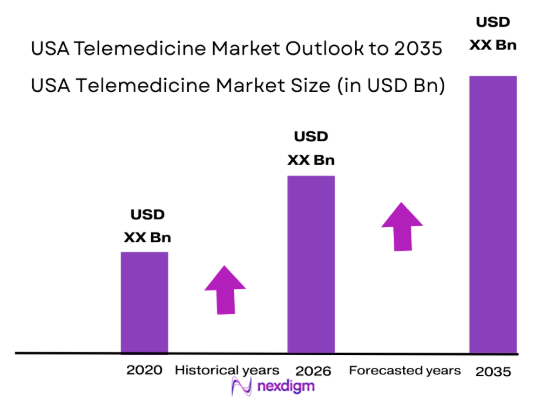
The USA Telemedicine market is valued at approximately USD ~ billion, driven by increased demand for remote healthcare services. Factors such as the aging population, the growing prevalence of chronic diseases, and the need for cost-effective healthcare solutions contribute significantly to market growth. The expansion of telemedicine platforms and virtual consultations, supported by technology advancements, is fueling the adoption of telemedicine in various sectors. The market is further supported by governmental incentives and investments that help boost infrastructure for remote care.
The USA is leading the telemedicine market due to the significant adoption of digital health solutions across the country. Cities like New York, Los Angeles, and Chicago have witnessed higher telemedicine usage due to their well-established healthcare systems and technological infrastructure. The increasing focus on reducing healthcare costs while improving service delivery, especially in rural areas, has driven the market’s growth. Additionally, government policies that support telemedicine adoption and reimbursement have contributed to the dominance of these cities in the USA.
Market Segmentation
By System Type
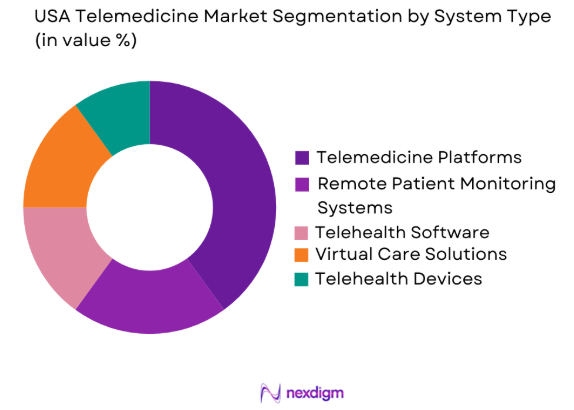
The USA Telemedicine market is segmented by system type into telemedicine platforms, remote patient monitoring systems, telehealth software, virtual care solutions, and telehealth devices. Among these, telemedicine platforms have the dominant market share due to their widespread adoption in providing remote healthcare services across various specialties. These platforms are highly valued for their scalability, ability to integrate with existing healthcare systems, and user-friendly interfaces. The growing need for virtual consultations, particularly post-pandemic, has also significantly contributed to the dominance of telemedicine platforms.
By Platform Type
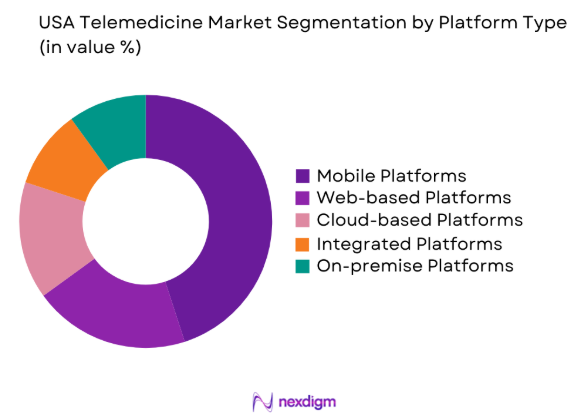
The market is segmented into mobile platforms, web-based platforms, cloud-based platforms, integrated platforms, and on-premise platforms. Mobile platforms hold the dominant share due to the increasing use of smartphones and mobile applications for telemedicine services. These platforms offer convenience, flexibility, and wide accessibility, making them a preferred choice for healthcare providers and patients alike. The rise of mobile health applications and their integration with telemedicine services further bolsters the growth of this sub-segment.
Competitive Landscape
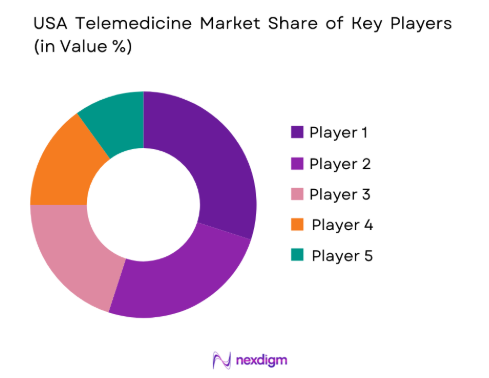
The USA Telemedicine market is highly competitive, with several established players offering a variety of digital health solutions. Major players are focusing on strategic collaborations, technological innovations, and mergers to enhance their market presence. The market is also seeing an increase in the entry of new players, further intensifying competition. Consolidation is taking place as companies aim to expand their product portfolios and strengthen their customer base.
| Company Name | Establishment Year | Headquarters | Technology Focus | Market Reach | Key Products | Revenue (USD) | Additional Parameter |
| Teladoc Health | 2002 | Purchase, NY | ~ | ~ | ~ | ~ | ~ |
| Amwell | 2006 | Boston, MA | ~ | ~ | ~ | ~ | ~ |
| MDTech | 2005 | California, USA | ~ | ~ | ~ | ~ | ~ |
| Doctor On Demand | 2012 | San Francisco, CA | ~ | ~ | ~ | ~ | ~ |
| HealthTap | 2010 | Mountain View, CA | ~ | ~ | ~ | ~ | ~ |
USA Telemedicine Market Analysis
Growth Drivers
Increased adoption of telemedicine platforms
The widespread use of telemedicine platforms has driven the growth of the USA telemedicine market. This growth is fueled by technological advancements in digital health solutions and the growing demand for remote healthcare services. With healthcare accessibility becoming a critical issue, especially in rural and underserved areas, telemedicine platforms provide a practical solution. These platforms enable virtual consultations, reducing travel costs and improving convenience for patients, which contributes to a significant reduction in healthcare expenses. Additionally, the COVID-19 pandemic acted as a catalyst, accelerating telemedicine adoption. Government support for telemedicine expansion, including reimbursement policies and grants, has further propelled market growth.
Rise in chronic disease management
Chronic diseases, such as diabetes, cardiovascular diseases, and respiratory conditions, are on the rise in the USA. This trend has contributed significantly to the growth of the telemedicine market, as telehealth solutions enable better management of these conditions through remote patient monitoring, follow-ups, and virtual consultations. With the aging population requiring continuous monitoring, the demand for telemedicine services has surged. Telemedicine allows healthcare providers to monitor patients’ health remotely, improving outcomes and reducing the burden on hospitals and healthcare systems. The integration of wearable devices and smart technology in telemedicine further enhances chronic disease management by providing real-time data to physicians, improving treatment efficacy.
Market Challenges
Regulatory barriers
Regulatory barriers continue to challenge the growth of the telemedicine market in the USA. Telemedicine providers face differing regulations across states, with some enforcing strict licensing and reimbursement policies, limiting service expansion. The absence of uniform standards for telemedicine practices makes it difficult for healthcare providers to implement consistent systems and processes. Furthermore, the complex reimbursement process from insurers and government bodies can delay telemedicine adoption. As regulations evolve, providers must stay updated on the latest laws and policies, navigating these hurdles to ensure compliance and expand their services. Overcoming these regulatory challenges is crucial for the continued growth and success of telemedicine in the USA.
Privacy and security concerns
Privacy and security concerns pose a significant challenge for telemedicine providers. As sensitive health data is transmitted digitally, the risk of cyber-attacks and data breaches increases. Telemedicine platforms must comply with strict regulations, such as HIPAA, to protect patient information. However, as the platforms expand, maintaining the security of patient data becomes more complex. Healthcare organizations must invest heavily in cybersecurity solutions to prevent breaches, which can be both costly and time-consuming. Additionally, the lack of trust in digital platforms can hinder patient engagement and slow the adoption of telemedicine services, as patients may be hesitant to share personal information online.
Opportunities
Integration of artificial intelligence (AI) and machine learning (ML) in telemedicine
The integration of AI and ML into telemedicine platforms offers substantial growth opportunities. These technologies can enhance diagnostics, create personalized treatment plans, and automate routine tasks, improving the efficiency of telemedicine services. AI-powered systems analyze patient data to identify patterns and predict health outcomes, enabling accurate diagnoses and timely interventions. This reduces human error, improves patient outcomes, and streamlines healthcare operations. Additionally, AI and ML can enhance virtual consultations by providing real-time support to healthcare providers, ensuring better decision-making and improving overall service quality. This technological advancement significantly strengthens the capabilities of telemedicine platforms, driving their growth in the healthcare market.
Telemedicine for mental health services
Telemedicine has become an ideal platform for delivering mental health services, as demand continues to rise. With the growing prevalence of mental health disorders and the stigma surrounding treatment, telemedicine provides a confidential and accessible solution for patients seeking counseling and therapy. Virtual services allow patients to connect with therapists remotely, eliminating geographical barriers and reducing wait times for appointments. This convenience encourages more individuals to seek care, presenting a significant growth opportunity for telemedicine providers. The expansion into mental health services allows telemedicine companies to address the increasing need for accessible mental healthcare, meeting the demands of a broader and diverse patient base.
Future Outlook
The future outlook for the USA telemedicine market appears positive, with substantial growth expected in the coming years. As technological innovations continue to enhance telemedicine platforms, the demand for virtual healthcare services is likely to rise. Regulatory support, including telemedicine reimbursement policies and broader insurance coverage, will further facilitate the growth of the market. Moreover, the increasing demand for affordable and convenient healthcare solutions, combined with the growth of chronic diseases, will create more opportunities for telemedicine providers. The shift towards digital healthcare, especially for mental health services, will continue to drive demand across urban and rural areas, contributing to the market’s expansion.
Major Players
- Teladoc Health
- Amwell
- MDTech
- Doctor On Demand
- HealthTap
- eVisit
- InTouch Health
- LivongoHealth
- CareClix
- HealthMine
- Zocdoc
- American Well
- Teladoc Health
- DoctorLink
- Babylon Health
Key Target Audience
- Investments and venture capitalist firms
- Government and regulatory bodies
- Healthcare providers
- Insurance companies
- Pharmaceutical companies
- Medical device manufacturers
- Digital health technology firms
- Technology integrators
Research Methodology
Step 1: Identification of Key Variables
Identification of key market variables and relevant data sources that will be analyzed.
Step 2: Market Analysis and Construction
The process of building a detailed market model by segmenting the market, gathering data, and performing analyses.
Step 3: Hypothesis Validation and Expert Consultation
Validation of hypotheses using expert consultations and feedback to ensure the accuracy of the findings.
Step 4: Research Synthesis and Final Output
Synthesizing the research findings into a comprehensive market report, ensuring all insights are actionable and relevant.

- Executive Summary
- Research Methodology (Definitions, Scope, Industry Assumptions, Market Sizing Approach, Primary & Secondary Research Framework, Data Collection & Verification Protocol, Analytic Models & Forecast Methodology, Limitations & Research Validity Checks)

- Market Definition and Scope
- Value Chain & Stakeholder Ecosystem
- Regulatory / Certification Landscape
- Sector Dynamics Affecting Demand
- Strategic Initiatives & Infrastructure Growth

- Growth Drivers
Expansion of Remote Healthcare Services
Rising Demand for Affordable Healthcare
Technological Advancements in Telemedicine - Market Challenges
Regulatory Hurdles in Telemedicine Implementation
Data Security and Privacy Concerns
Limited Access to High-Speed Internet in Rural Areas - Market Opportunities
Integration of AI and Machine Learning in Telemedicine
Growth of Telemedicine in Rural and Underserved Areas
Government and Insurance Reimbursement Policies - Trends
Increase in Virtual Care Adoption
Telemedicine for Mental Health Services
Focus on Preventive Healthcare - Government Regulations
- SWOT Analysis of Key Competitors
- Porter’s Five Forces

- By Market Value, 2020-2025
- By Installed Units, 2020-2025
- By Average System Price, 2020-2025
- By System Complexity Tier, 2020-2025

- By System Type (In Value%)
Telemedicine Platforms
Remote Patient Monitoring Systems
Telehealth Software
Virtual Care Solutions
Telehealth Devices - By Platform Type (In Value%)
Mobile Platforms
Web-based Platforms
Cloud-based Platforms
Integrated Platforms
On-premise Platforms - By Fitment Type (In Value%)
On-premise Solutions
Cloud-based Solutions
Hybrid Solutions
Modular Solutions
Integrated Solutions - By End User Segment (In Value%)
Healthcare Providers
Patients
Insurance Providers
Government Agencies
Telemedicine Technology Companies - By Procurement Channel (In Value%)
Direct Procurement
Government Tenders
Private Sector Procurement
Online Bidding Platforms
Third-party Distributors

- Market Share Analysis
- Cross Comparison Parameters (System Type, Platform Type, Procurement Channel, End User Segment, Fitment Type, Deployment Model, Technology Integration, Regulatory Compliance, Market Reach, Pricing Strategy)
- SWOT Analysis of Key Competitors
- Pricing & Procurement Analysis
- Key Players
Teladoc Health
Amwell
MDTech
Doctor On Demand
American Well
CareClix
Livongo Health
eVisit
InTouch Health
Teledoc Health
CVS Health
Zocdoc
HealthTap
DoctorLink
HealthMine

- Increasing Adoption Among Healthcare Providers
- Government’s Role in Promoting Telemedicine
- Growth of Patient Demand for Telemedicine Solutions
- Expansion of Telemedicine in Specialty Areas

- Forecast Market Value, 2026-2035
- Forecast Installed Units, 2026-2035
- Price Forecast by System Tier, 2026-2035
- Future Demand by Platform, 2026-2035


 Request a Sample
 Ask for Customization
 Get a Quote
 Enquire Now