
 Download PDF
Market Overview
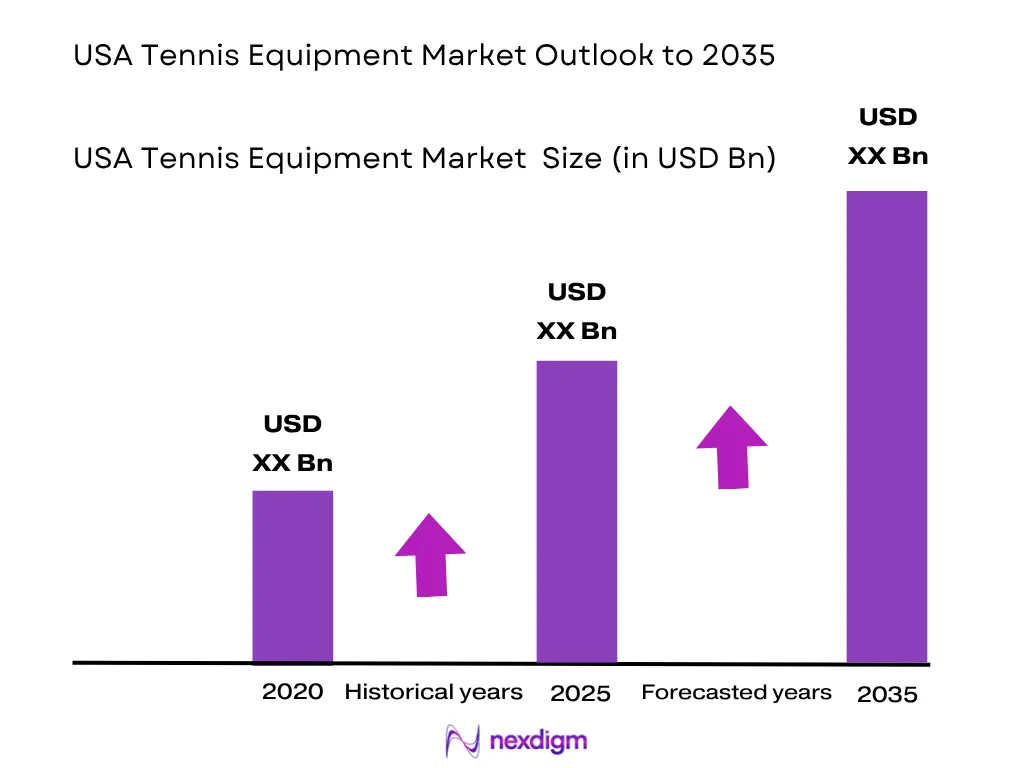
The USA Tennis Equipment Market is valued at approximately USD ~ billion in 2025, driven by increasing participation and demand for high-performance tennis gear. Factors like rising interest in tennis, driven by the sport’s inclusion in schools and youth programs, professional endorsements, and technological innovations in equipment design, have significantly fueled the market’s growth. Additionally, innovations in racket and ball materials, such as graphite and carbon fiber, are enhancing the performance of tennis players, contributing to a consistent rise in demand. As tennis continues to be a popular sport among all age groups, the market is seeing strong growth, with an uptick in both recreational and competitive participation. The USA, particularly cities like New York, California, and Florida, is home to a high concentration of tennis players and events, which positions it as a leader in the global tennis equipment market. Key cities dominate due to their long-standing cultural affinity for tennis and the presence of iconic tournaments such as the U.S. Open in New York, which attracts global attention. The country’s strong infrastructure, including tennis clubs, schools, and recreational centers, combined with growing youth sports programs, supports the continued demand for tennis equipment. Florida, California, and New York, with their year-round favorable climates and tennis-centered events, play a crucial role in the market’s expansion.
Market Segmentation
By Product Type
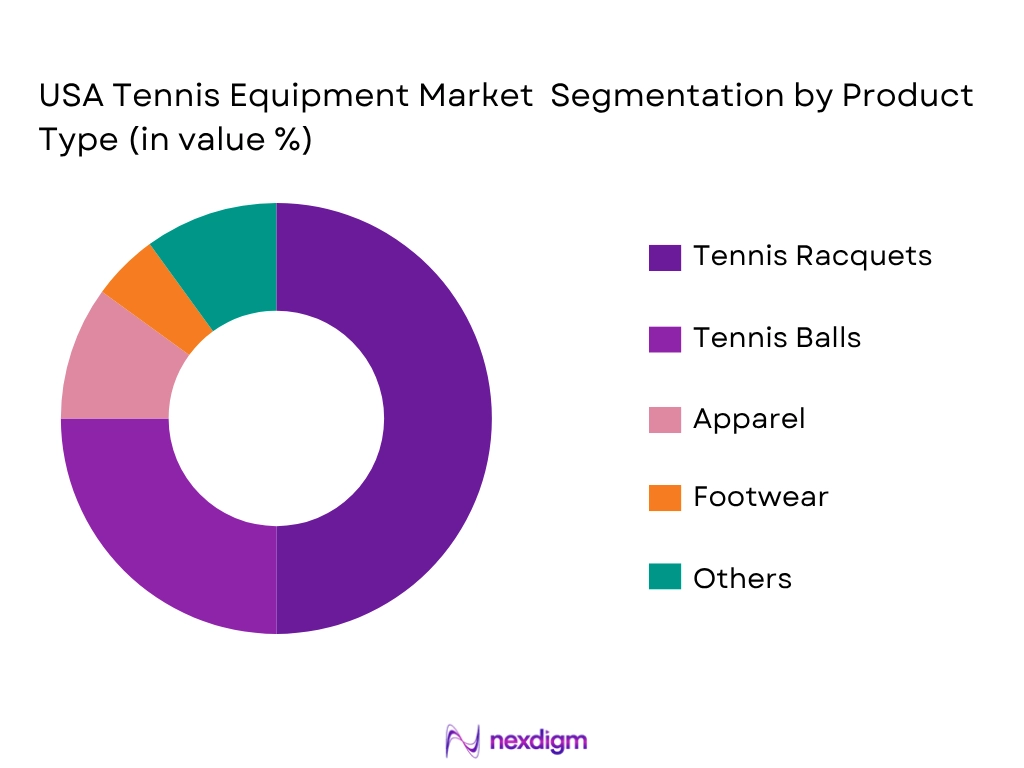
The USA Tennis Equipment Market is segmented by product type into tennis racquets, tennis balls, apparel, footwear, accessories (strings, bags, grips), and training equipment (ball machines, etc.). The tennis racquets segment currently dominates the market due to continuous innovations in racquet technology, with brands like Wilson and Babolat leading the way. These innovations focus on improving power, control, and comfort, meeting the evolving demands of players at all levels. As technology continues to improve, high-performance racquets remain a top choice for both amateur and professional players, driving the dominant share of the product type market. Their widespread use in both recreational and professional settings makes racquets a cornerstone in the tennis equipment market.
By Material
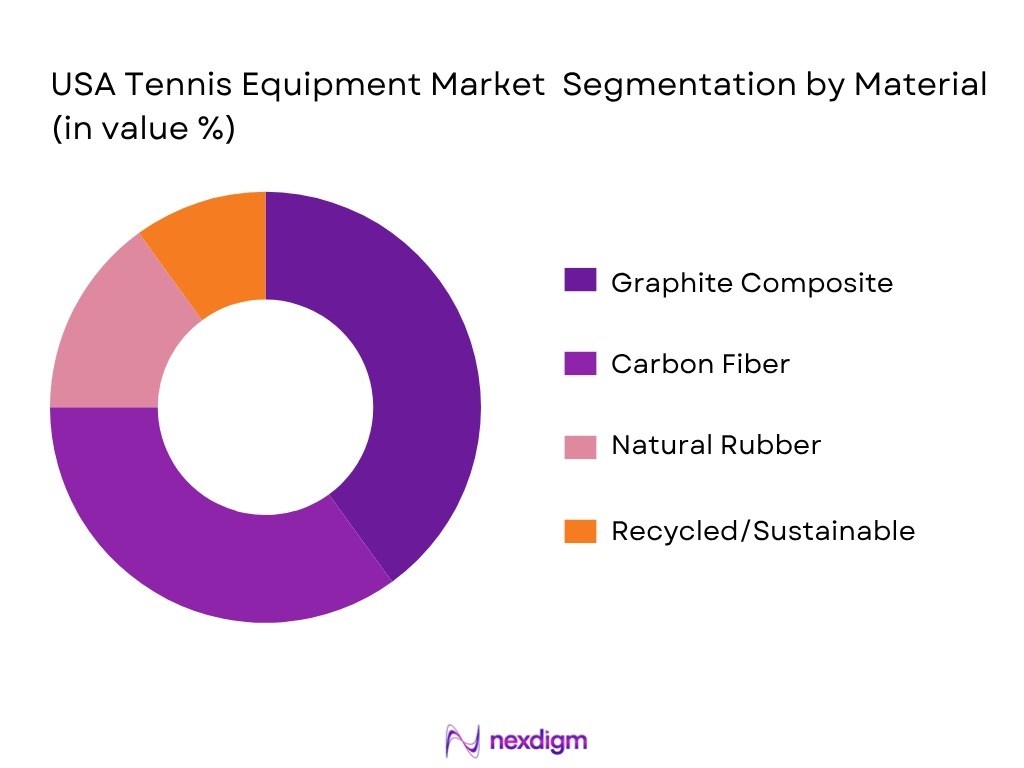
The material segment of the USA Tennis Equipment Market is divided into graphite composite, carbon fiber, natural rubber, and recycled/sustainable materials. Among these, graphite composite and carbon fiber have a dominant market share due to their strength, lightweight properties, and excellent performance characteristics. These materials have revolutionized tennis racquet design, offering players superior power and control while maintaining durability. The popularity of high-performance racquets made from these materials among both professional athletes and serious amateurs has propelled their dominance in the material segment. Furthermore, sustainable materials are slowly gaining attention as consumers become more eco-conscious, though they still account for a smaller portion of the market.
Competitive Landscape
The USA Tennis Equipment Market is dominated by a few key players, including Wilson Sporting Goods, Babolat, HEAD Sport GmbH, Dunlop Sports, and Yonex. These companies have built strong brand recognition and trust over the years. Their extensive distribution networks, endorsements from professional players, and ongoing innovations in equipment design have solidified their leadership positions. These companies not only cater to professionals but also serve the recreational segment, contributing to their broad market presence.
| Company Name | Establishment Year | Headquarters | Market Share (by Value) | Product Portfolio | R&D Innovation | Global Reach | Sustainability Initiatives | Pricing Strategy | Endorsements |
| Wilson Sporting Goods | 1914 | Chicago, IL, USA | Dominant | ~ | ~ | ~ | ~ | ~ | ~ |
| Babolat | 1875 | Lyon, France | Strong | ~ | ~ | ~ | ~ | ~ | ~ |
| HEAD Sport GmbH | 1950 | Austria | Strong | ~ | ~ | ~ | ~ | ~ | ~ |
| Dunlop Sports | 1927 | Basingstoke, UK | Moderate | ~ | ~ | ~ | ~ | ~ | ~ |
| Yonex | 1946 | Tokyo, Japan | Moderate | ~ | ~ | ~ | ~ | ~ | ~ |
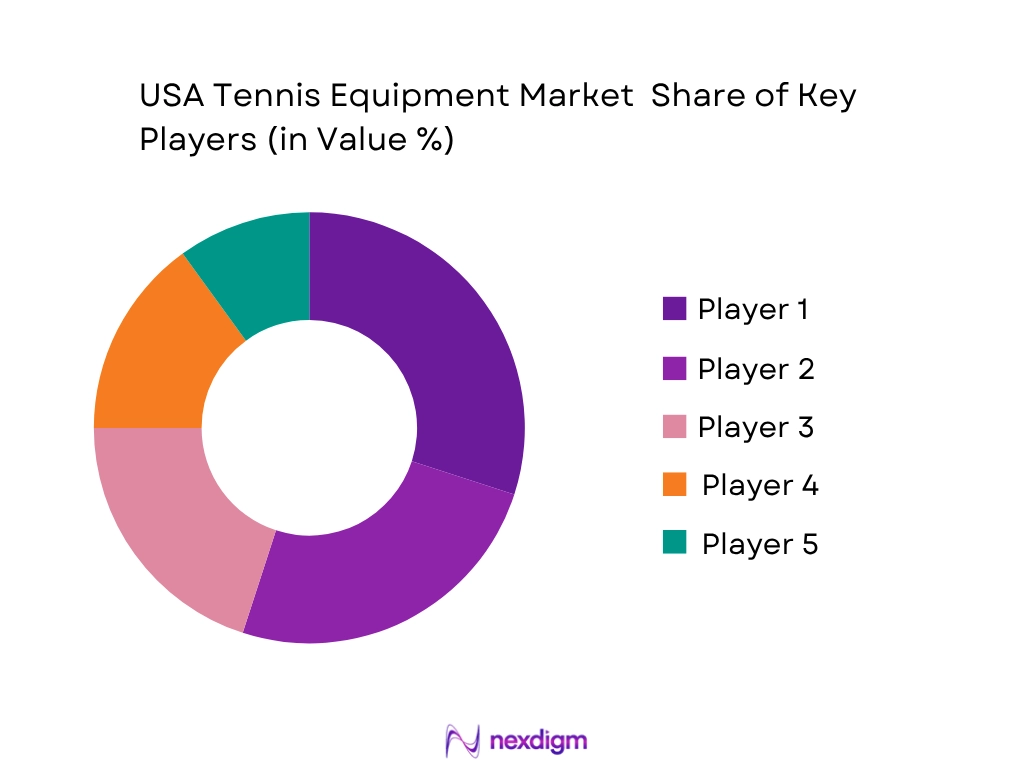
USA Tennis Equipment Market Analysis
Growth Drivers
Rising Tennis Participation
Rising participation in tennis has been a key driver of the market. As of 2023, there were approximately 21 million tennis players in the U.S., reflecting a steady rise in recreational and competitive tennis participation. The increased awareness about the physical and mental health benefits of tennis is encouraging more individuals, especially in urban areas, to engage with the sport. Moreover, tennis’ popularity is bolstered by initiatives from the United States Tennis Association (USTA) and various grassroots programs aimed at getting children and adults to play tennis. These efforts align with the U.S. government’s broader push for promoting physical activity and sports, as part of the Healthy People 2030 initiative, which aims to increase sports participation among Americans to foster a healthier nation. This growth in tennis players leads directly to an increased demand for tennis equipment, such as racquets, balls, and apparel, which is expected to continue its upward trajectory. Furthermore, USTA’s initiatives, like National Tennis Month and Tennis in the Parks, help increase participation rates, contributing to the sustained demand for tennis-related products.
Increased Health/Fitness Orientation
The growing emphasis on health and fitness in the U.S. is another significant driver of the tennis equipment market. With an increasing focus on maintaining an active lifestyle, many individuals have turned to sports like tennis as part of their fitness routines. According to the U.S. Bureau of Labor Statistics, there was a 5.2% rise in fitness center memberships in 2023. Tennis, being a sport that is both physically engaging and mentally stimulating, has seen an upsurge in participation, especially among middle-aged and senior citizens, who consider it a fun and low-impact way to maintain their health. The trend of working from home, which became more prevalent post-pandemic, has also shifted some people’s leisure and fitness activities toward outdoor sports, including tennis. This trend not only influences consumer behavior toward purchasing tennis equipment but also boosts the growth of recreational tennis clubs and tennis-centric fitness centers. As Americans seek healthier alternatives and integrate fitness into their daily lives, tennis is expected to remain a favored activity, fueling the demand for specialized equipment.
Market Challenges
Seasonality and Tournament-Driven Demand Swings
Seasonality continues to impact the U.S. tennis equipment market, with spikes in demand typically tied to major tournaments like the U.S. Open. While summer months see heightened interest in the sport, especially as outdoor play increases, winter months often experience a lull in tennis activity, limiting the overall demand for tennis equipment. According to data from the National Tennis Foundation, participation levels fluctuate by season, with the highest tennis play typically occurring between June and September. The demand for tennis equipment peaks around these major tournaments, particularly in New York during the U.S. Open, but slows significantly in colder regions during the winter. This creates instability in market revenue streams, which manufacturers and retailers must navigate. Furthermore, product demand also fluctuates based on the timing of these tournaments, with a noticeable uptick in equipment sales leading up to major events. The dependency on tournament-driven sales patterns can create supply chain challenges and lead to overstocking or understocking. Addressing the seasonality of demand remains a key challenge for market players, requiring strategic planning around production, inventory management, and retail distribution.
Fluctuations in Raw Material Costs
The fluctuations in raw material costs, particularly for essential components like rubber and graphite, present a significant challenge to the U.S. tennis equipment market. The price of graphite, a crucial material for racquets, saw a sharp increase in 2023 due to supply chain issues and production slowdowns in key sourcing countries. Additionally, the cost of rubber, used in tennis balls, has been volatile, affected by global supply chain disruptions and increases in raw material prices. In 2024, natural rubber prices rose by approximately 10% due to higher transportation and extraction costs in Southeast Asia, a key region for rubber production. Such fluctuations are a key concern for manufacturers as they face rising production costs, which may lead to higher retail prices for consumers. Companies involved in producing tennis balls and racquets must find ways to absorb these costs without significantly increasing prices, which could dampen consumer demand. These price volatility issues, combined with the general global economic pressures, add complexity to the industry’s growth and profitability.
Market Opportunities
Smart Equipment
The rise of smart tennis equipment is creating substantial opportunities in the U.S. tennis equipment market. Smart racquets, for instance, have seen increased interest from both recreational and professional players, particularly for their ability to track performance metrics such as swing speed, ball impact location, and stroke consistency. These innovations are backed by advancements in sensor technology and wearable devices. As of 2025, various high-tech brands have introduced smart racquets equipped with sensors that sync with mobile applications to provide real-time feedback and performance analysis. With 58 million U.S. adults engaging in tennis-related activities, many of them are eager to adopt technology that enhances their game. The increasing demand for fitness tracking and the rising interest in data-driven sports have made smart tennis equipment an attractive option for both new and experienced players. Additionally, younger generations, who are more tech-savvy, are likely to be drawn to such innovations, thereby expanding the market for these products. The ability to integrate technology into a traditional sport like tennis is expected to drive a significant portion of future growth in the market.
Sustainable/Eco-Friendly Gear
Sustainability is becoming an increasingly important factor in consumer purchasing decisions in the U.S. tennis equipment market. With growing concerns about environmental sustainability, players and manufacturers are turning to eco-friendly materials. Tennis equipment manufacturers are increasingly incorporating recycled and sustainable materials into their products. For example, several companies have started producing tennis balls made from recycled rubber, and racquet frames that use bio-based resins instead of traditional plastics. In 2025, demand for sustainable products is being driven by younger generations who are more conscious of environmental issues. According to a study by the National Tennis Industry, eco-conscious players are more likely to purchase tennis equipment made from sustainable materials. This demand is further supported by U.S. environmental regulations that encourage the use of recycled materials and the reduction of carbon footprints. Manufacturers are responding to this shift by incorporating sustainable practices in their product design and production processes, opening up a new and lucrative market segment. The growing preference for eco-friendly gear presents a clear opportunity for market players to expand their product lines and cater to environmentally aware consumers.
Future Outlook
Over the next decade, the USA Tennis Equipment Market is expected to experience steady growth, driven by the continued popularity of tennis across all age groups. The expansion of youth and community tennis programs and the increasing demand for high-performance gear, along with the rising interest in sustainable and eco-friendly tennis equipment, will contribute to market growth. Innovations such as smart racquets and wearable technology are also expected to revolutionize the sport, driving new consumer interest and increasing demand for cutting-edge products. The ongoing support from professional endorsements and the growing number of recreational players will ensure the market remains dynamic and responsive to consumer needs.
Major Players
- Wilson Sporting Goods
- Babolat
- HEAD Sport GmbH
- Dunlop Sports
- Yonex
- Nike, Inc.
- Adidas AG
- Prince Global Sports
- Tecnifibre
- K-Swiss, Inc.
- Gamma Sports
- Solinco, Inc.
- Li-Ning (U.S. operations)
- Asics Corporation
- Penn (Dunlop)
Key Target Audience
- Investments and Venture Capitalist Firms
- Government and Regulatory Bodies (e.g., USTA, Tennis Industry Association)
- Major Sports Retail Chains (e.g., Dick’s Sporting Goods, REI)
- Sports Equipment Manufacturers
- Tennis Clubs and Recreation Centers
- Tennis Apparel and Footwear Brands
- Professional Tennis Organizations (e.g., ATP, WTA)
- Fitness and Health Companies (Sports Equipment Retailers)
Research Methodology
Step 1: Identification of Key Variables
The first step involves identifying and categorizing key stakeholders in the USA Tennis Equipment Market, such as manufacturers, distributors, and retailers. This is achieved through a combination of secondary research from industry reports and proprietary data sources, along with interviews with industry experts.
Step 2: Market Analysis and Construction
In this phase, we analyze historical market data to determine the growth trajectory, including examining product penetration and sales trends for major segments. This data is validated through primary sources such as surveys and expert opinions.
Step 3: Hypothesis Validation and Expert Consultation
We develop hypotheses based on the analysis of historical and current data, followed by validation through interviews with industry experts, such as manufacturers and distributors, to refine the insights and ensure accuracy.
Step 4: Research Synthesis and Final Output
The final phase integrates all collected data, including interviews with key market players, to create a comprehensive market report. This phase synthesizes insights into a cohesive output, detailing market trends, growth drivers, and competitive analysis.

- Executive Summary
- Research Methodology (Definitions and Assumptions; Data Sources and Sampling, Market Sizing Approach, Primary & Secondary Research, Limitations), Outline of research design, data collection techniques and validation (top-down and bottom-up) for the USA tennis equipment market, Limitations and Assumptions)

- Definition and Scope
- Market Genesis and Evolution
- Key Milestones and Innovations Timeline
- Business Cycle and Seasonality
- Supply Chain and Value Chain Analysis

- Growth Drivers (Rising tennis participation (21 million US players in 2022), increased health/fitness orientation, youth sports programs and funding, professional player endorsements, technological innovation in equipment design)
- Market Challenges (Seasonality and tournament-driven demand swings, fluctuations in raw material costs (rubber, plastics), supply chain disruptions; intense brand competition, alternate sports)
- Opportunities (Smart equipment (sensor-embedded rackets and wearables), sustainable/eco-friendly gear (recycled materials in rackets, shoes), expansion of youth and community tennis programs, tennis tourism and recreational camps)
- Trends (Performance-focused R&D (graphite/carbon rackets), customization and 3D-printed components, growth of e-commerce in sports retail, convergence of tennis and lifestyle (athleisure fashion), rise of direct-to-consumer brand strategies)
- Government and Regulatory (Product safety and performance standards for sports gear, import/export tariffs on sports equipment, certification and eco-labeling initiatives, government funding for sports infrastructure and school programs)
- SWOT Analysis (Strengths, Weaknesses, Opportunities, Threats of the USA tennis equipment market)
- Stakeholder Ecosystem (Relationships among manufacturers, distributors, retail chains, sports federations (e.g. USTA), tennis clubs and coaches)
- Porter’s Five Forces (Competitive rivalry, supplier power (e.g. material suppliers), buyer power, threat of new entrants (niche sports tech startups), threat of substitutes)

- By Value (2020-2025)
- By Volume (2020-2025)
- By Average Selling Price Trends (2020-2025)

- By Product Type (In Value %)
Tennis Racquets
Tennis Balls
Apparel
Footwear
Accessories (Strings, Bags, Grips, Training Gear)
Training Equipment (e.g. Ball Machines) - By Material (In Value %)
Graphite Composite
Carbon Fiber
Natural Rubber
Recycled/Sustainable Materials - By Buyer Segment (In Value %)
Individual Players
Clubs
Schools
Recreation Centers - By Distribution Channel (In Value %)
Specialty Sports Stores
Online Retailers
Multi-Brand Sports Outlets
Club/Pro-Shop Sales - By Region (In Value %)
Northeast
South
Midwest
West

- Market Share of Major Players (by Value/Volume) – Leading brands by revenue/units (e.g. Wilson, Head, Babolat) and segment share)
- Cross-Comparison Parameters (Brand Legacy and Global Presence; Product Portfolio & R&D Innovation, Professional Endorsements/Sponsorships, Distribution & Retail Network, E-commerce & Digital Strategy, Manufacturing & Supply Chain Capacity, Pricing Strategy, Sustainability/Material Initiatives)
- SWOT of Major Players (Strengths, Weaknesses, Opportunities, Threats for key companies)
- Pricing Analysis (Average selling prices and SKU-level pricing for major brands, premium vs standard product lines)
- Company Profiles of Major Competitors
Wilson Sporting Goods
Babolat
HEAD Sport GmbH
Dunlop Sports
Yonex Co., Ltd.
Nike, Inc.
Adidas AG
ASICS Corporation Prince Global Sports
Tecnifibre
K-Swiss, Inc.
Gamma Sports
Penn (Dunlop)
Solinco, Inc.
Li-Ning

- Demand and Utilization (Sales breakdown by end-user type: recreational players vs professional athletes, club/academy purchases)
- Consumer Demographics and Purchasing Behavior (Age, income, gender distribution, purchasing frequency, channel preferences)
- Budget and Price Sensitivity (Pricing tiers: premium vs mid-range vs value segment, consumer spending patterns on equipment and apparel)
- Needs, Desires and Pain Points (Comfort, performance, and durability requirements, desire for brand/image, issues like gear availability or fitting)
- Decision-Making Process (Influencers in purchase decisions: coaches’ recommendations, peer reviews, online research, role of professional endorsements and demo clinics)

- By Value (2026-2035)
- By Volume (2026-2035)
- By Average Selling Price Trends (2026-2035)


 Request a Sample
 Ask for Customization
 Get a Quote
 Enquire Now