

 Download PDF
Market Overview
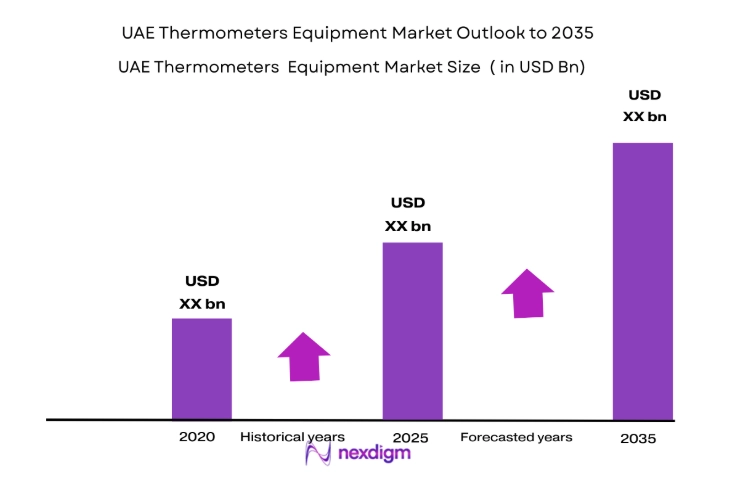
The USA thermometers equipment market, based on a recent historical assessment, was valued at approximately USD ~ billion in 2024. The market is primarily driven by the increasing demand for medical-grade thermometers, industrial temperature measurement systems, and emerging smart technologies. Factors such as the growing healthcare sector, demand for non-contact thermometers, and the rise in regulatory standards for temperature monitoring across industries have significantly contributed to this market’s expansion. Furthermore, the shift toward IoT-enabled devices in healthcare and industrial applications continues to fuel the market growth.
The dominant countries in the thermometers equipment market include the United States, Canada, and Mexico, with the USA leading the way. The prevalence of advanced healthcare systems, technological infrastructure, and regulatory frameworks contributes to the USA’s dominance. Additionally, the country’s early adoption of smart medical devices, paired with an expanding industrial sector that requires precise temperature monitoring, creates a strong demand. Cities such as New York, Los Angeles, and Chicago are key hubs due to their large healthcare facilities, industrial presence, and technological innovation, supporting the market’s robust performance.
Market Segmentation
By Product Type:
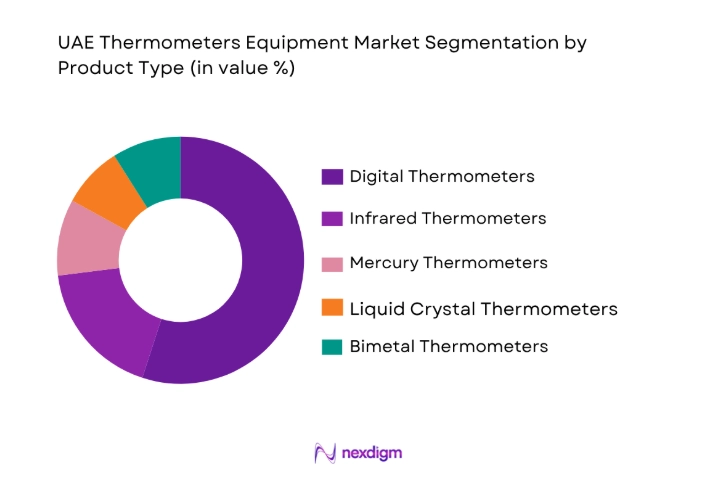
USA thermometers equipment market is segmented by product type into digital thermometers, infrared thermometers, mercury thermometers, liquid crystal thermometers, and bimetal thermometers. Recently, digital thermometers have been the dominant market segment due to their growing demand in both medical and industrial applications. These thermometers offer precision, ease of use, and quick results, which have led to increased consumer preference. Additionally, their ability to integrate with other technologies such as smartphones and health monitoring systems has further driven their popularity across both consumer and healthcare markets.
By Platform Type:
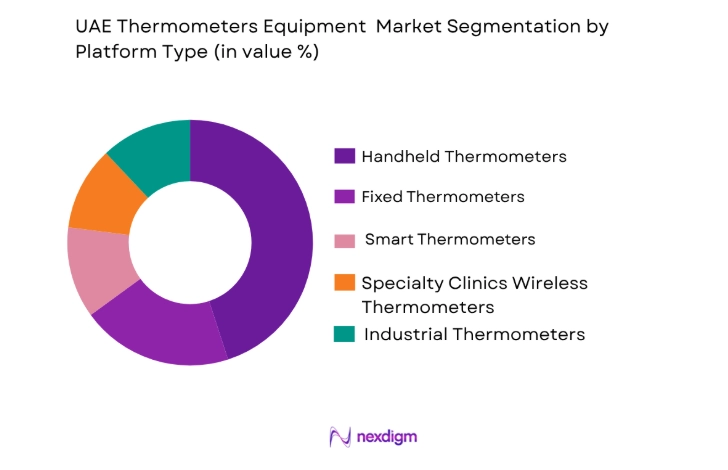
USA thermometers equipment market is segmented by platform type into handheld thermometers, fixed thermometers, smart thermometers, wireless thermometers, and industrial thermometers. Recently, handheld thermometers have dominated the market share, largely driven by their portability, convenience, and growing demand in both household and healthcare settings. The flexibility of handheld devices for quick and easy temperature checks, coupled with their widespread use in homecare and medical facilities, has led to their increased adoption across the market.
Competitive Landscape
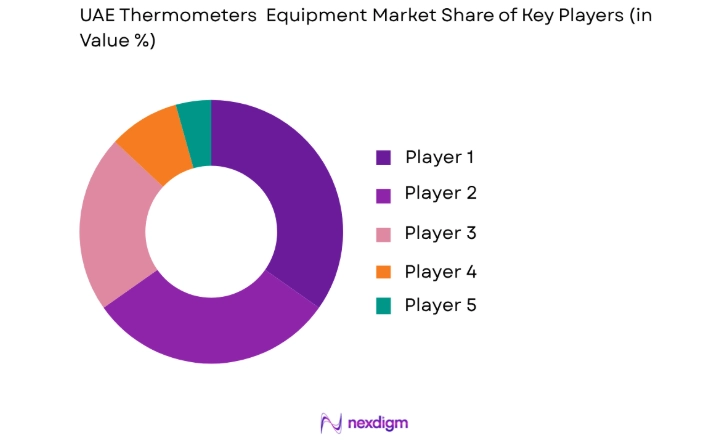
The competitive landscape of the USA thermometers equipment market is characterized by a combination of both global and regional players striving for market consolidation. Key players are leveraging technological advancements, such as the integration of smart technology, IoT, and non-contact measurement systems, to maintain a competitive edge. Collaboration, mergers, and acquisitions have been common strategies as companies aim to expand their product offerings and market reach. Major players are also focused on providing innovative, accurate, and reliable thermometers, gaining substantial influence in the market through product diversification and strategic positioning.
| Company Name | Establishment Year | Headquarters | Technology Focus | Market Reach | Key Products | Revenue (USD) |
| Thermo Fisher Scientific | 1956 | Waltham, Massachusetts | ~ | ~ | ~ | ~ |
| Siemens Healthineers | 1847 | Erlangen, Germany | ~ | ~ | ~ | ~ |
| Omron Healthcare | 1933 | Kyoto, Japan | ~ | ~ | ~ | ~ |
| Honeywell International | 1906 | Morris Plains, New Jersey | ~ | ~ | ~ | ~ |
| Fluke Corporation | 1948 | Everett, Washington | ~ | ~ | ~ | ~ |
USA Thermometers Equipment Market Analysis
Growth Drivers
Technological Advancements in Thermometer Design:
Technological advancements in thermometer design are a significant driver of growth in the market. With the rising demand for more efficient, accurate, and user-friendly devices, innovations in sensor technology have enabled thermometers to provide faster and more accurate readings. The integration of advanced technologies such as infrared sensors, smart connectivity, and Bluetooth capabilities in thermometers has contributed to the market’s expansion. These innovations have revolutionized thermometer use, particularly in healthcare, by making temperature monitoring more efficient and accessible. Additionally, the growing popularity of non-contact thermometers in response to the global pandemic has further accelerated the adoption of advanced thermometer technologies. Furthermore, advancements in digital platforms have allowed for greater connectivity, enabling users to store and track temperature data more efficiently. The increasing reliance on IoT-enabled devices in healthcare and industrial sectors is expected to continue driving market growth, making advanced thermometer technologies essential across various sectors.
Regulatory and Health Guidelines on Temperature Monitoring:
Stringent regulatory and health guidelines on temperature monitoring have also played a crucial role in the market’s growth. Governments and regulatory bodies across the globe have imposed regulations requiring accurate and reliable temperature monitoring systems in healthcare settings, workplaces, and even households. These guidelines often mandate the use of medical-grade thermometers for health-related purposes such as monitoring fevers and detecting potential illnesses. The focus on ensuring accurate temperature measurements has led to increased adoption of thermometers, particularly in medical institutions, nursing homes, and hospitals. Moreover, these regulations also extend to industries where precise temperature control is critical for processes, such as food safety, pharmaceuticals, and manufacturing. By enforcing such standards, regulatory bodies contribute to the market’s expansion and encourage technological advancements to meet these requirements.
Market Challenges
High Cost of Advanced Thermometers
One of the primary challenges faced by the USA thermometers equipment market is the high cost of advanced thermometer systems. The introduction of smart thermometers and other high-tech temperature monitoring devices often comes with a hefty price tag, which may limit their adoption among smaller healthcare providers, households, and businesses. While advanced features such as wireless capabilities, IoT connectivity, and non-contact measurement systems offer significant benefits, the increased cost of manufacturing and the research and development involved can make these devices less accessible to price-sensitive consumers and organizations. This challenge is particularly evident in regions with lower healthcare spending or in industries where temperature monitoring is less critical. The high upfront costs of advanced thermometers also hinder market penetration in certain sectors, limiting growth opportunities for manufacturers. To overcome this, companies are working to develop cost-effective solutions, but affordability remains a key concern for widespread adoption.
Product Calibration and Accuracy Challenges:
The need for regular calibration and accuracy maintenance of thermometers is another major challenge for the market. While many thermometers are designed to offer high precision, over time, the accuracy of the readings can degrade, especially in industrial environments where temperature monitoring is a continuous requirement. Frequent calibration and maintenance are necessary to ensure accurate readings, but this can add to the overall cost of ownership for users. Moreover, a lack of proper calibration can lead to unreliable data, which is critical in sectors like healthcare and food safety, where accurate temperature readings are essential for patient care and compliance with health regulations. The need for periodic maintenance and calibration of thermometers can therefore act as a barrier to the adoption of high-tech devices, particularly in settings where ongoing operational costs are a concern. Manufacturers are working on developing more durable and low-maintenance products, but ensuring sustained accuracy remains a challenge.
Opportunities
Expansion of Smart Thermometers in Healthcare:
One of the most significant opportunities for the USA thermometers equipment market lies in the growing demand for smart thermometers in the healthcare sector. The rise of the Internet of Things (IoT) has led to a surge in the development and adoption of connected devices, and thermometers are no exception. Smart thermometers offer the ability to wirelessly transmit temperature data to mobile applications, allowing for real-time monitoring of health conditions. This is especially important for remote patient monitoring, where patients can track their temperature and other vital signs from home. The ability to integrate with health management apps and electronic health records (EHR) systems enhances the usability and convenience of these devices, making them increasingly popular among healthcare providers and consumers alike. Furthermore, the ability to track temperature trends over time offers significant benefits in managing chronic conditions or monitoring recovery progress. This trend presents a significant growth opportunity for companies to develop and market innovative smart thermometers designed to meet the needs of both consumers and healthcare professionals.
Increased Focus on Industrial Temperature Monitoring:
Another growing opportunity in the USA thermometers equipment market is the increasing demand for industrial temperature monitoring. Industries such as manufacturing, food processing, and pharmaceuticals require precise temperature control for quality assurance and regulatory compliance. Industrial thermometers, which include infrared and contactless models, are essential in maintaining temperature accuracy for production processes, ensuring product quality, and preventing losses. As industries adopt automation and digitization, the need for accurate and efficient temperature monitoring systems is expected to rise. Moreover, the growing focus on energy efficiency and environmental sustainability is driving the demand for energy-efficient temperature monitoring devices that help optimize industrial processes. Companies have an opportunity to capitalize on this trend by developing specialized industrial thermometer solutions tailored to meet the specific needs of various industries.
Future Outlook
Over the next five years, the USA thermometers equipment market is expected to experience sustained growth, driven by advancements in technology and increasing demand from both the healthcare and industrial sectors. The growing integration of IoT in thermometers, coupled with the rise of telemedicine and remote patient monitoring, will further propel the market. Furthermore, regulatory support for precision temperature monitoring and safety standards in healthcare and industrial applications will create a favorable environment for growth. Technological innovations such as the development of more accurate, portable, and cost-effective thermometers will also contribute to the expansion of the market.
Major Players
- Thermo Fisher Scientific
- Siemens Healthineers
- Omron Healthcare
- Honeywell International
- Fluke Corporation
- 3M
- Exergen Corporation
- Panasonic Healthcare
- Medtronic
- Braun GmbH
- GE Healthcare
- Yokogawa Electric Corporation
- Schneider Electric
- Schott AG
- Vaisala
Key Target Audience
- Investments and venture capitalist firms
- Government and regulatory bodies
- Healthcare providers and hospitals
- Industrial manufacturing companies
- Pharmaceutical companies
- Food and beverage industries
- Retailers of medical equipment
- Healthcare technology developers
Research Methodology
Step 1: Identification of Key Variables
The key variables influencing the market, such as product types, technologies, and market trends, are identified. These include factors like healthcare demand, technological advancements, and industry-specific requirements.
Step 2: Market Analysis and Construction
Data on market size, growth, and trends are gathered through primary and secondary research. Market segmentation and competitive landscape are then constructed based on gathered data.
Step 3: Hypothesis Validation and Expert Consultation
The research findings are validated through expert consultations and interviews with industry leaders. Feedback is incorporated to refine market predictions and insights.
Step 4: Research Synthesis and Final Output
The final report is synthesized, incorporating all data, analysis, and expert inputs, and is formatted to present a clear overview of the market trends, opportunities, and challenges.

- Executive Summary
- Research Methodology (Definitions, Scope, Industry Assumptions, Market Sizing Approach, Primary & Secondary Research Framework, Data Collection & Verification Protocol, Analytic Models & Forecast Methodology, Limitations & Research Validity Checks)

- Market Definition and Scope
- Value Chain & Stakeholder Ecosystem
- Regulatory / Certification Landscape
- Sector Dynamics Affecting Demand

- Growth Drivers
Increase in Health & Safety Regulations
Technological Advancements in Thermometer Designs
Rising Demand in the Healthcare Sector - Market Challenges
Cost Implications of Advanced Thermometer Systems
Regulatory Hurdles & Certification Delays
Market Saturation in Developed Regions - Market Opportunities
Growth in Emerging Markets
Increased Demand for Contactless Solutions
Integration with Smart Devices and IoT - Trends
Smart Thermometer Integration
Portable & Compact Devices
Energy Efficiency in Thermometer Design - Government Regulations

- By Market Value, 2020-2025
- By Installed Units, 2020-2025
- By Average System Price, 2020-2025
- By System Complexity Tier, 2020-2025

- By System Type (In Value%)
Digital Thermometers
Infrared Thermometers
Mercury Thermometers
Liquid Crystal Thermometers
Bimetal Thermometers - By Platform Type (In Value%)
Handheld Thermometers
Fixed Thermometers
Smart Thermometers
Wireless Thermometers
Industrial Thermometers - By Fitment Type (In Value%)
Wall-Mounted Thermometers
Portable Thermometers
Embedded Thermometers
Stand-Alone Thermometers
Integrated Thermometers - By EndUser Segment (In Value%)
Healthcare Sector
Industrial Sector
Retail & Commercial Sector
Residential Sector

- Market Share Analysis
- CrossComparison Parameters (Price, Technology, Performance, Market Share, Product Portfolio)
- SWOT Analysis of Key Competitors
- Pricing & Procurement Analysis
- Porter’s Five Force
- Key Players
Thermo Fisher Scientific
Siemens Healthineers
Honeywell International
Omron Healthcare
Philips Healthcare
3M
GE Healthcare
Fluke Corporation
Braun GmbH
Yokogawa Electric Corporation
Schneider Electric
Medtronic
Panasonic Healthcare
Exergen Corporation
Schlumberger Limited

- Healthcare Facilities’ Adoption Trends
- Thermometer Demand in Industrial Manufacturing
- Consumer Preferences in Retail & Commercial Sectors
- Rising Awareness for Accurate Temperature Measurement in Households

- Forecast Market Value, 2026-2035
- Forecast Installed Units, 2026-2035
- Price Forecast by System Tier, 2026-2035
- Future Demand by Platform, 2026-2035


 Request a Sample
 Ask for Customization
 Get a Quote
 Enquire Now