

 Download PDF
 Download PDF
Market Overview
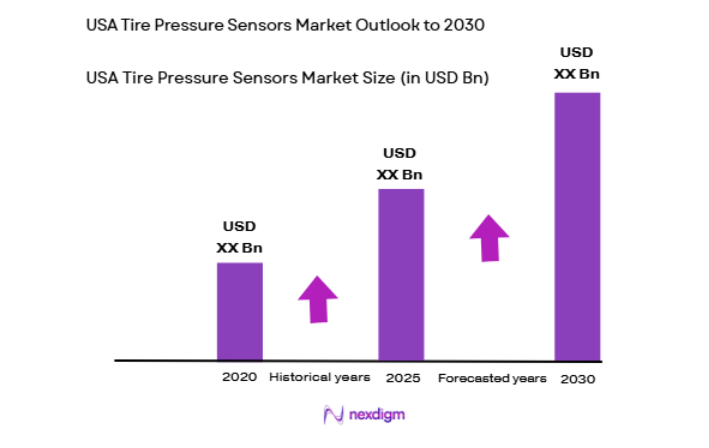
The USA Tire Pressure Sensors market, commonly referred to as the Tire Pressure Monitoring System (TPMS) market, forms a key component of automotive safety and vehicle diagnostics. Based on a recent historical assessment, the broader tire pressure monitoring system market globally was estimated at around USD ~ billion, with North America—including the United States—being one of the largest regional contributors to this value due to stringent federal safety regulations and widespread adoption in passenger and commercial vehicles. TPMS technology is valued since it enhances road safety by continuously monitoring tire pressure and alerting drivers to deviations.
Based on a recent regional assessment, the United States remains a leading national market for tire pressure sensors owing to strong regulatory mandates requiring TPMS installation in new vehicles and a high level of vehicle ownership. Automotive hubs such as Michigan and Ohio anchor OEM production and integration of tire pressure sensors, while regions like Texas and California benefit from active aftermarket service ecosystems and fleet operations that utilize TPMS for maintenance and safety compliance. The advanced automotive manufacturing infrastructure and connected vehicle trends further sustain demand for tire pressure sensors across both OEM and aftermarket channels.
Market Segmentation
By Product Type
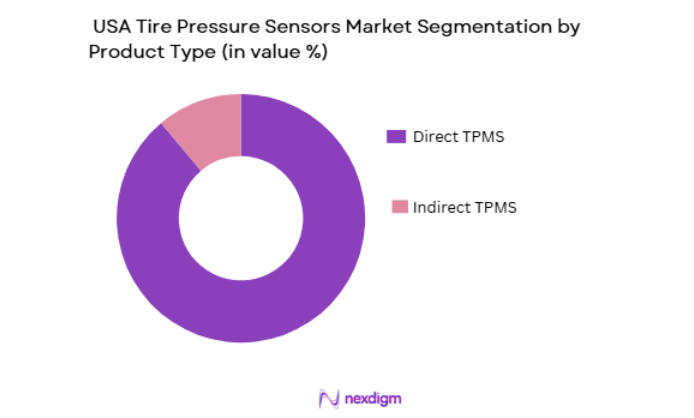
USA Tire Pressure Sensors market is segmented by product type into direct and indirect tire pressure monitoring systems (TPMS). Recently, direct TPMS has dominated the market share due to its higher accuracy and real-time tire pressure monitoring, which aligns with the increasing consumer preference for safety and convenience features in vehicles. Direct TPMS allows for immediate alerts to the driver about under-inflated tires, thereby contributing to better fuel efficiency and safer driving. The widespread adoption of this system in both OEM and aftermarket segments has led to its dominance, particularly in light of regulations mandating its use in newer vehicles.
By Application Type
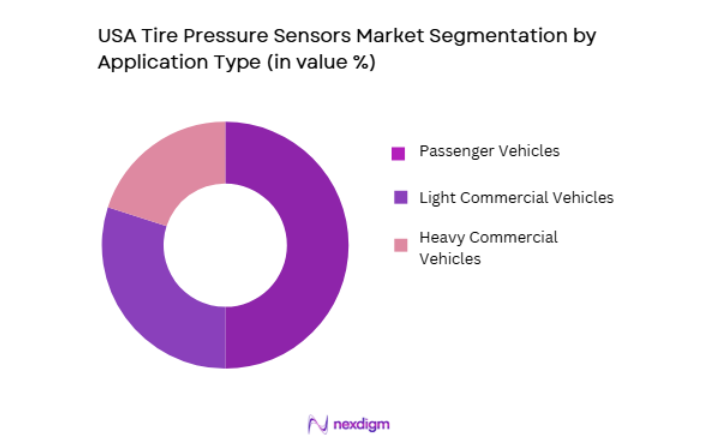
USA Tire Pressure Sensors market is segmented by application into passenger vehicles, light commercial vehicles, and heavy commercial vehicles. Among these, passenger vehicles dominate the market share due to their higher adoption rates and stringent regulatory requirements. The increasing consumer preference for vehicles equipped with advanced safety features, such as tire pressure sensors, coupled with rising awareness about road safety, has contributed to the significant share of passenger vehicles in the market. Moreover, the regulatory push for TPMS in new vehicles has made the integration of tire pressure sensors a standard feature in passenger cars.
Competitive Landscape
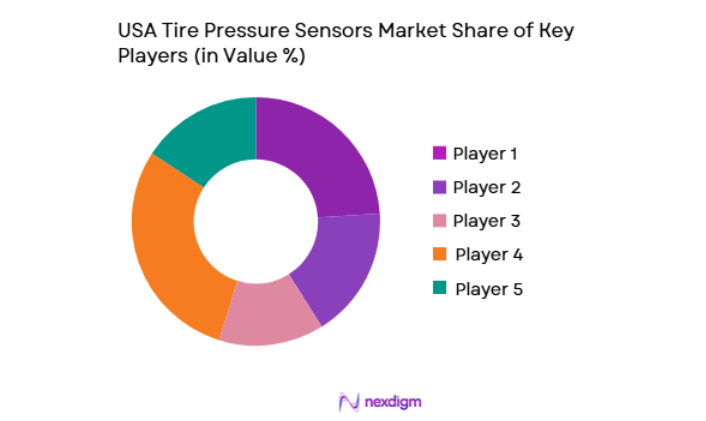
The competitive landscape of the USA Tire Pressure Sensors market is highly dynamic, with key players focusing on technological advancements, partnerships, and product diversification. Major companies are consolidating their market positions through acquisitions and collaborations. With technological advancements in sensor accuracy and the integration of these sensors into wider automotive systems, competition has intensified. Leading companies continue to innovate to meet the growing demand for smart tire management solutions, particularly in light of emerging consumer preferences for connected and autonomous vehicles.
| Company Name | Establishment Year | Headquarters | Technology Focus | Market Reach | Key Products | Revenue | Additional Parameter |
| Sensata Technologies | 1999 | Attleboro, MA, USA | ~ | ~ | ~ | ~ | ~ |
| Schrader Electronics | 1984 | Asheville, NC, USA | ~ | ~ | ~ | ~ | ~ |
| Continental AG | 1871 | Hanover, Germany | ~ | ~ | ~ | ~ | ~ |
| Denso Corporation | 1949 | Kariya, Japan | ~ | ~ | ~ | ~ | ~ |
| Honeywell International | 1906 | Morris Plains, NJ, USA | ~ | ~ | ~ | ~ | ~ |
USA Tire Pressure Sensors Market Analysis
Growth Drivers
Government Regulations on Vehicle Safety
The growing regulatory emphasis on vehicle safety standards has been a significant driver of the USA Tire Pressure Sensors market. Several laws and regulations mandate the use of tire pressure monitoring systems in all new vehicles, particularly in passenger vehicles. This has led to the widespread adoption of TPMS in the automotive industry, as manufacturers seek to comply with regulations and improve safety. Furthermore, these regulatory measures are encouraging consumers to seek vehicles with enhanced safety features, including TPMS. As a result, the USA Tire Pressure Sensors market has experienced significant demand in recent years, with new vehicle production increasingly favoring TPMS systems for their role in preventing tire-related accidents and optimizing fuel efficiency.
Technological Advancements in Sensor Technology
Another important growth driver for the USA Tire Pressure Sensors market is the continuous technological advancements in sensor technologies. Recent developments have led to the introduction of highly accurate, real-time tire pressure monitoring systems that offer greater reliability and performance. These innovations allow for enhanced consumer experiences, as drivers are alerted promptly to tire pressure issues, preventing potential vehicle damage and improving road safety. The increased adoption of smart tire sensors, integrated with vehicle monitoring systems, is also boosting the market. The shift toward connected vehicles, which allows for remote monitoring and real-time data analysis, further accelerates the growth of this market segment.
Market Challenges
High Cost of Advanced TPMS Solutions
One of the major challenges faced by the USA Tire Pressure Sensors market is the high cost of advanced TPMS solutions, particularly in the case of direct TPMS. These systems require more sophisticated hardware and software, leading to increased manufacturing costs. As a result, vehicles equipped with advanced TPMS can be more expensive than those using traditional tire monitoring methods, making them less accessible to budget-conscious consumers. This can hinder the broader adoption of TPMS across all vehicle segments, particularly in lower-end models or regions with less stringent safety regulations. Despite the long-term benefits of improved safety and fuel efficiency, the initial cost barrier remains a significant challenge for widespread adoption.
Technological Integration and Standardization Issues
Another significant challenge is the difficulty in achieving universal integration and standardization of tire pressure monitoring systems across different vehicle platforms and manufacturers. The lack of industry-wide standardization in TPMS systems has resulted in compatibility issues, particularly in the aftermarket segment. Vehicle manufacturers may use proprietary systems that are not easily compatible with third-party TPMS products, leading to integration challenges. Additionally, the diverse technological requirements of various vehicle types further complicate the development of standardized solutions that can work across multiple vehicle brands and models. This fragmentation in the market can create confusion for consumers and drive up costs, limiting the effectiveness of TPMS adoption.
Opportunities
Expansion of Autonomous Vehicles
One of the key opportunities in the USA Tire Pressure Sensors market is the rise of autonomous vehicles. As self-driving technology continues to evolve, the need for more advanced safety systems, including tire pressure sensors, is expected to increase. Autonomous vehicles require precise monitoring and control of all vehicle systems to ensure safe operation, and TPMS is integral to that process. As the adoption of autonomous and semi-autonomous vehicles grows, tire pressure monitoring systems will become a crucial part of the overall vehicle safety architecture. This presents an exciting opportunity for TPMS manufacturers to innovate and develop systems that are compatible with the growing autonomous vehicle market, potentially leading to new product lines and revenue streams.
Integration of IoT and Smart Vehicle Systems
The integration of tire pressure sensors with Internet of Things (IoT) technology presents another promising opportunity for the USA Tire Pressure Sensors market. The IoT ecosystem allows for remote monitoring and data collection from vehicles, which can provide real-time insights into tire performance, pressure, and maintenance needs. By leveraging IoT technology, TPMS manufacturers can offer more advanced, connected solutions that provide added value to consumers and fleet operators. These smart systems enable predictive maintenance, improving vehicle safety and reducing downtime. With the automotive industry’s growing focus on connectivity and smart vehicle features, IoT integration offers significant potential for TPMS market growth, paving the way for innovative solutions and expanding market applications.
Future Outlook
The future outlook for the USA Tire Pressure Sensors market is optimistic, with continued advancements in technology, regulatory support, and increasing consumer demand for safety features. Over the next five years, technological developments such as the integration of TPMS with autonomous vehicle systems and IoT-based smart vehicle networks are expected to drive market growth. Regulatory frameworks will likely continue to support the widespread adoption of TPMS, making them a standard feature in new vehicles. With increasing awareness of road safety, tire performance optimization, and fuel efficiency, the demand for TPMS is expected to rise, positioning the market for steady growth.
Major Players
- Sensata Technologies
- Schrader Electronics
- Continental AG
- Denso Corporation
- Honeywell International
- Valeo
- ZF Friedrichshafen AG
- Bendix Commercial Vehicle Systems
- Huf Hülsbeck & Fürst GmbH & Co. KG
- Pacific Industrial Co., Ltd.
- NXP Semiconductors
- Autoliv Inc.
- TomTom Telematics
- Delphi Technologies
- Calsonic Kansei Corporation
Key Target Audience
- Investments and venture capitalist firms
- Government and regulatory bodies
- Automotive manufacturers
- Tire manufacturers
- Fleet management companies
- Vehicle safety technology developers
- OEM suppliers
- Automotive aftermarket service providers
Research Methodology
Step 1: Identification of Key Variables
Key variables influencing the USA Tire Pressure Sensors market were identified, including technological advancements, regulatory factors, and demand patterns.
Step 2: Market Analysis and Construction
Market analysis was performed using data from primary and secondary sources to construct an accurate representation of the market landscape.
Step 3: Hypothesis Validation and Expert Consultation
Expert consultations were conducted to validate the hypotheses and insights derived from initial data analysis.
Step 4: Research Synthesis and Final Output
Final research output was synthesized, combining insights from all data points and expert consultations to provide a comprehensive report.

- Executive Summary
- Research Methodology (Definitions, Scope, Industry Assumptions, Market Sizing Approach, Primary & Secondary Research Framework, Data Collection & Verification Protocol, Analytic Models & Forecast Methodology, Limitations & Research Validity Checks)

- Market Definition and Scope
- Value Chain & Stakeholder Ecosystem
- Regulatory / Certification Landscape
- Sector Dynamics Affecting Demand
- Strategic Initiatives & Infrastructure Growth

- Growth Drivers
Increasing Demand for Automotive Safety Features
Rising Adoption of Electric Vehicles
Government Regulations Mandating TPMS Installation - Market Challenges
High Cost of Advanced Tire Pressure Sensors
Technical Challenges in Integrating TPMS with New Vehicle Models
Consumer Awareness and Market Penetration Issues - Market Opportunities
Growing Demand for Wireless and Integrated TPMS Solutions
Expansion in Fleet Management Systems
Technological Advancements in Tire Pressure Sensor Durability - Trends
Advancements in IoT Integration with TPMS
Shift Towards Autonomous Vehicle Integration
Rising Focus on Sustainable Automotive Solutions - Government regulations
- SWOT analysis
- Porters 5 forces

- By Market Value, 2019-2025
- By Installed Units, 2019-2025
- By Average System Price, 2019-2025
- By System Complexity Tier, 2019-2025

- By System Type (In Value%)
Direct Tire Pressure Monitoring Systems (TPMS)
Indirect Tire Pressure Monitoring Systems
Self-Calibrating TPMS
Dual-Mode TPMS
Wireless TPMS - By Platform Type (In Value%)
Passenger Vehicles
Commercial Vehicles
Electric Vehicles
Heavy Duty Vehicles
Off-road Vehicles - By Fitment Type (In Value%)
OEM Fitment
Aftermarket Fitment
Integrated TPMS with Tire Systems
Retrofit TPMS Solutions
Upgraded TPMS Systems - By EndUser Segment (In Value%)
Automotive OEMs
Vehicle Aftermarket Retailers
Fleet Operators
Automotive Component Manufacturers
Government and Regulatory Bodies - By Procurement Channel (In Value%)
Direct Procurement from Manufacturers
Automotive Dealerships
Third-Party Distributors
Online Retailers

- Market Share Analysis
- Cross Comparison Parameters (Sensor Accuracy, Power Consumption, Sensor Life, Integration with Vehicle Platforms, Cost of Installation, Data Transmission Range, System Compatibility, Maintenance Frequency, Response Time, Environmental Resistance)
- SWOT Analysis of Key Competitors
- Pricing & Procurement Analysis
- Key Players
Sensata Technologies
Huf Hülsbeck & Fürst
Continental AG
ZF Friedrichshafen AG
NXP Semiconductors
TE Connectivity
Parker Hannifin
Denso Corporation
Valeo
Omron Corporation
Aptiv
Schrader International
Preh GmbH
Alligator Ventilfabrik Gmb
Pacific Industrial Co. Ltd.

- Automotive OEMs’ Requirement for Advanced Safety Features
- Fleet Operators’ Focus on Reducing Operational Costs through TPMS
- Government Mandates on Tire Pressure Monitoring Systems
- Consumers’ Growing Awareness of Tire Safety and Fuel Efficiency

- Forecast Market Value, 2026-2030
- Forecast Installed Units, 2026-2030
- Price Forecast by System Tier, 2026-2030
- Future Demand by Platform, 2026-2030


 Request a Sample
 Ask for Customization
 Get a Quote
 Enquire Now