

 Download PDF
Market Overview
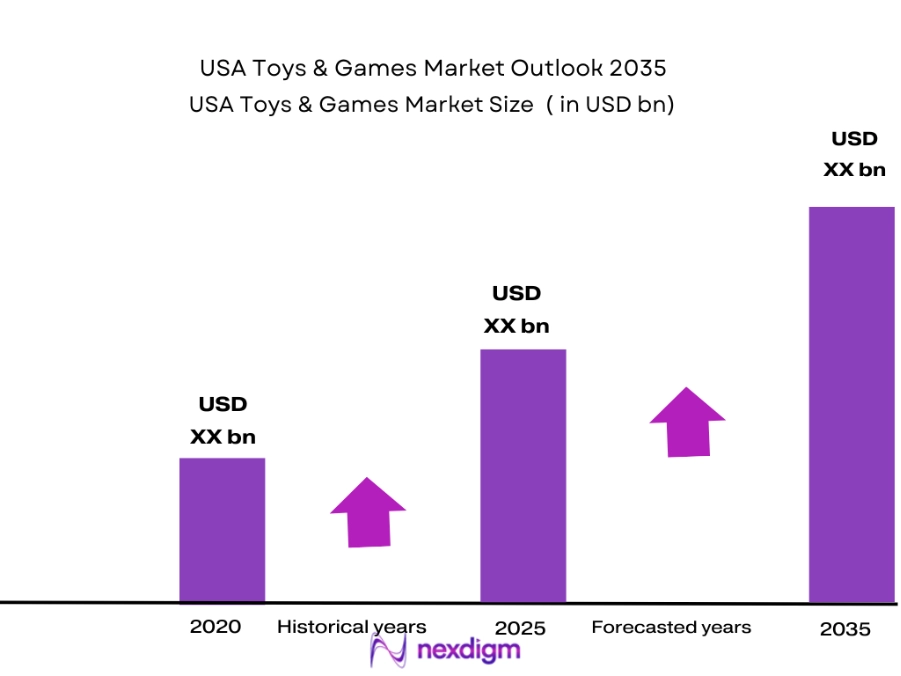
The USA Toys & Games market is valued at approximately USD ~ billion in 2025, based on industry data showing total production value and demand within the country’s toy sector. Household spending represents the large majority of this demand, and the proportion of imports indicates sustained consumer appetite across traditional and digital toy categories. This size reflects firm consumer spending patterns and sector resilience after recent market corrections.
The market’s dominance is concentrated in major urban economic hubs such as New York, California, and Texas, where high population density, elevated disposable incomes, and strong retail infrastructure support larger volumes of toy and game purchases. These regions host major distribution networks and serve as test markets for product launches by key global brands, reinforcing their market-leading positions. According to multiple sources, the US toys & games sector is projected to grow at a compound annual growth rate (CAGR) of ~4.0 % over the 2025–2035 period, supported by expanding demand for educational, interactive, and tech-enabled toys.
Market Segmentation
By Product Type
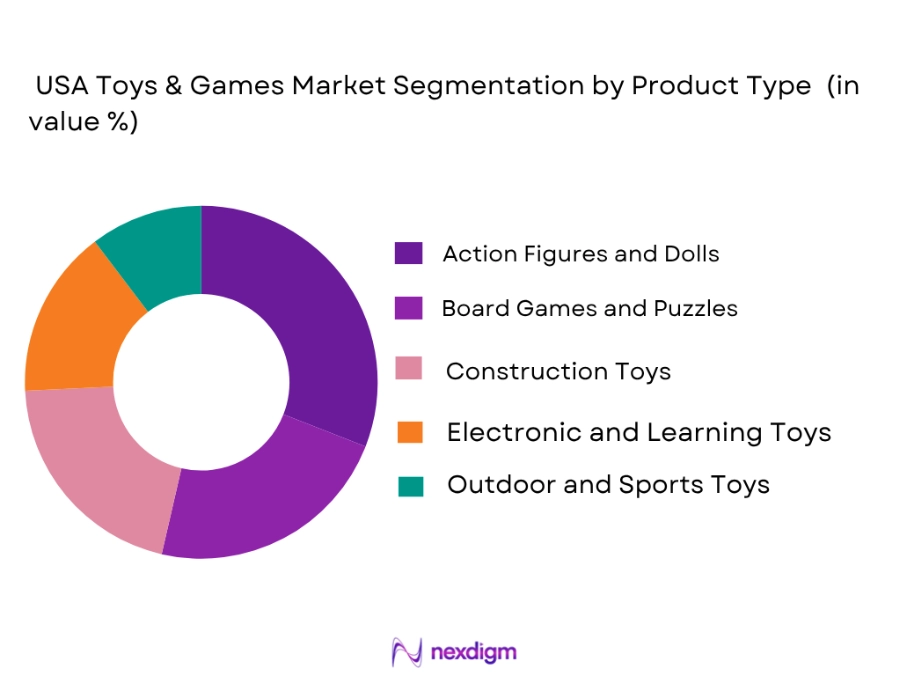
The USA Toys & Games market is segmented by product type into Educational Toys, Action Figures & Dolls, Board Games & Puzzles, Electronic/Interactive Toys, and Outdoor Toys. In 2025, the Educational Toys segment holds the largest market share at 30 %, driven by strong parental and educator preference for products that support early childhood learning and STEM‑related play. Parents increasingly prioritize toys that combine fun and developmental benefits, leading to higher spending on items such as construction sets and cognitive learning toys. Additionally, schools and educational programs have incorporated interactive and developmental toys into curricula, further bolstering this segment’s dominance.
By Distribution Channel
The market is also segmented by distribution channel into Mass Merchandisers, Specialty Toy Stores, Online Retailers, Department Stores, and Other Retail Channels. In 2025, Online Retailers are the dominant distribution channel, accounting for 40 % of market share. This dominance stems from growth in e‑commerce penetration, consumer preference for convenience, wider product availability, and competitive pricing. Major global platforms such as Amazon and Walmart’s online stores significantly influence consumer buying behavior, particularly among younger parents and tech‑savvy shoppers. Online channels have also integrated enhanced product discovery tools and fast‑delivery options, strengthening their role in overall market purchase patterns.

Competitive Landscape
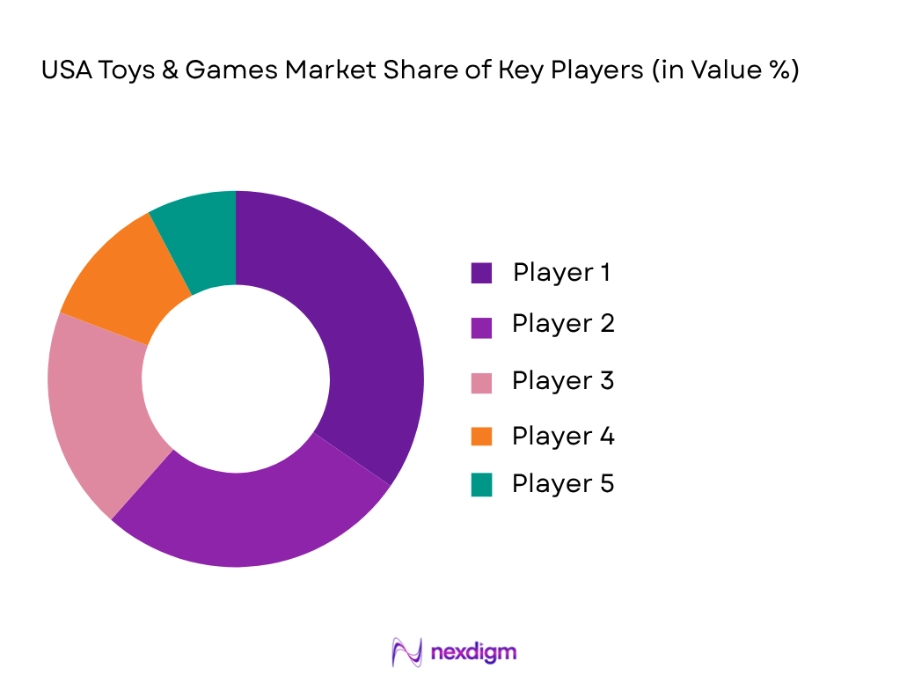
The USA Toys & Games market is consolidated around several major global and domestic companies that shape product innovation, distribution and branding strategies. Major players maintain extensive retail networks, licensing agreements, and diversified product portfolios, which reinforce competitive intensity across both traditional and digital toy categories.
| Company | Year Established | Headquarters | Product Scope | Retail Presence | Distribution Reach | Licensing Partnerships | Innovation Focus |
| Hasbro, Inc. | 1923 | Rhode Island, USA | ~ | ~ | ~ | ~ | ~ |
| Mattel, Inc. | 1945 | California, USA | ~ | ~ | ~ | ~ | ~ |
| LEGO Group | 1932 | Billund, Denmark | ~ | ~ | ~ | ~ | ~ |
| Spin Master Corp. | 1994 | Ontario, Canada | ~ | ~ | ~ | ~ | ~ |
| Bandai Namco Holdings | 1950 | Tokyo, Japan | ~ | ~ | ~ | ~ | ~ |
USA Toys & Games Market Analysis
Growth Drivers
Rising Disposable Income and Consumer Spending
The USA Toys & Games market is strongly supported by increasing disposable income and higher consumer spending across households. Families are willing to allocate more resources toward leisure and play, particularly for children’s development and entertainment. Middle- and upper-income households are purchasing premium and licensed products, which include high-end collectibles, tech-enabled toys, and branded sets. This financial capacity allows retailers and manufacturers to introduce innovative, higher-priced products without compromising demand. Seasonal spikes, such as during holidays, further amplify spending, enabling businesses to maintain consistent revenue growth. Additionally, promotional campaigns, brand loyalty programs, and bundled offerings have strengthened consumer engagement, contributing to sustained expansion across traditional and digital toy segments.
Digital Integration in Toys
Digital integration has emerged as a key driver in the USA Toys & Games market, enhancing play experiences through interactive, app-connected, or augmented reality (AR) products. Toys equipped with smart features—such as sensors, connectivity modules, and AI-driven gameplay—appeal to both children and parents seeking educational and entertainment value. Companies leverage technology to create hybrid physical-digital experiences that extend product lifecycles and engagement levels. For example, programmable robots, AR-enhanced board games, and app-compatible construction sets provide continuous interaction beyond traditional toy usage. This trend aligns with broader consumer technology adoption in households, fostering higher purchase frequency and willingness to invest in tech-forward toys, thus strengthening market growth.
Market Challenges
High Competition and Price Pressure
The USA Toys & Games market is highly competitive, with numerous global and domestic players vying for consumer attention. Established brands like Hasbro and Mattel compete with emerging startups and niche manufacturers, creating intense price pressure across product categories. Seasonal promotions, discounts, and aggressive marketing campaigns are used to capture market share, which can erode margins for smaller players. Competition is not limited to traditional toys; digital games, mobile apps, and online entertainment alternatives also compete for the same consumer budget. This environment requires constant innovation, marketing investment, and cost optimization. Companies must balance affordability and profitability while differentiating their offerings to remain relevant in a crowded marketplace.
Regulatory Compliance and Safety Standards
Regulatory compliance and stringent safety requirements present significant challenges in the USA Toys & Games market. Manufacturers must adhere to standards set by organizations such as the U.S. Consumer Product Safety Commission (CPSC), including limits on hazardous materials, choking hazards, and labeling regulations. Non-compliance can result in recalls, fines, or brand damage, which directly affect profitability and market reputation. Additionally, evolving environmental regulations and import/export policies necessitate continuous adaptation of production processes. Companies must invest in rigorous testing, quality assurance, and documentation, which increases operational costs. Ensuring compliance while maintaining competitive pricing and product innovation requires careful planning and risk management strategies across the supply chain.
Opportunities
Expansion of Smart and Educational Toys
The demand for educational and smart toys presents a significant growth opportunity in the USA market. Parents and educators increasingly value products that support cognitive development, STEM skills, and interactive learning. Smart toys equipped with AI, robotics, and connected apps offer engaging, skill-building experiences that extend beyond traditional play. Companies can capitalize on this trend by developing versatile products for multiple age groups, integrating gamification elements, and collaborating with educational content providers. The focus on learning through play aligns with government initiatives and school programs emphasizing early childhood development. Leveraging technology in toys not only drives higher consumer engagement but also encourages repeat purchases, strengthening long-term market growth prospects.
Growth of Subscription-Based Toy Services
Subscription-based toy services are emerging as a strategic opportunity in the USA Toys & Games market, appealing to parents seeking convenience, variety, and cost-effectiveness. These services deliver curated toy boxes on a monthly or quarterly basis, often tailored by age and learning objectives. The model supports recurring revenue for manufacturers and retailers while fostering brand loyalty and customer retention. It also addresses storage and clutter concerns in households, making it attractive for urban families. Subscription models allow companies to gather valuable consumer data for product development, marketing, and personalization strategies. With increasing adoption of e-commerce and on-demand services, this segment has substantial potential to capture a growing share of the market.
Future Outlook
Over the next decade, the USA Toys & Games market is expected to sustain moderate growth, propelled by dynamic shifts in consumer preferences toward interactive and educational play products, expanding digital convergence within physical toys, and continued strength in e‑commerce distribution. Continuous investment in product innovation, licensing collaborations with entertainment franchises, and an expanding adult play market also contribute to positive prospects. As global media content continues to influence toy demand, manufacturers are likely to integrate more technology‑enabled play experiences to meet evolving consumer expectations. Projected growth will be supported by demographic trends, sustained consumer spending power in core regions, and rising demand for STEM‑oriented products.
Major Players
- Hasbro, Inc.
- Mattel, Inc.
- LEGO Group
- Spin Master Corp.
- Bandai Namco Holdings
- Funko, Inc.
- VTech Holdings Ltd.
- Fisher‑Price (Mattel subsidiary)
- Tomy Company, Ltd.
- Jakks Pacific, Inc.
- Melissa & Doug
- Ravensburger
- Nintendo Co., Ltd.
- Playmobil
- MGA Entertainment
Key Target Audience
- Toy and Game Manufacturing Companies
- Retail Chain Buyers and Category Managers
- E‑Commerce Platform Strategic Planners
- Brand Licensing and IP Partnerships
- Consumer Goods Investment Analysts
- Investments and Venture Capitalist Firms
- Government and Regulatory Bodies
- Import/Export Trade Policy Advisors
Research Methodology
Step 1: Identification of Key Variables
The initial phase involves defining the product scope and stakeholder map for the USA Toys & Games market, using industry databases, government statistics and company disclosures to determine major variables like revenue, product types, and distribution channels.
Step 2: Market Analysis and Construction
Historical sales and revenue data are compiled from credible secondary sources and industry reports to establish baseline market size and segmentation. Trends in household consumption, retail performance, and product investment are evaluated to build the market model.
Step 3: Hypothesis Validation and Expert Consultation
Preliminary findings are validated through interviews with industry experts and executives from prominent toy firms. These consultations help refine assumptions about growth dynamics, distribution shifts, and consumer preferences.
Step 4: Research Synthesis and Final Output
The final analysis synthesizes secondary data with expert insights to ensure accuracy. This phase finalizes market size, segmentation, competitive mapping, and future projections, providing a validated and comprehensive view of the market.

- Executive Summary
- Research Methodology (Market Definitions and Assumptions, Abbreviations, Market Sizing Approach, Consolidated Research Approach, Understanding Market Potential Through In-Depth Industry Interviews, Primary Research Approach, Limitations and Future Conclusions)

- Definition and Scope
- Market Dynamics Overview
- Market Genesis
- Major Players and Market Timeline
- Business Cycle and Trends
- Supply Chain and Value Chain Analysis

- Growth Drivers
Rising Disposable Income and Consumer Spending
Digital Integration in Toys
Popularity of Collectibles and Licensed Products
Growth of E-Commerce and Online Retail Channels - Market Challenges
High Competition and Price Pressure
Seasonal Demand Fluctuations
Regulatory Compliance and Safety Standards
Rapid Technological Changes - Opportunities
Expansion of Smart and Educational Toys
Growth of Subscription-Based Toy Services
Licensing Partnerships with Entertainment Franchises
Increasing Demand for Eco-Friendly and Sustainable Toys - Trends
Integration of AR/VR and AI Technologies
Shift Toward STEM/STEAM Educational Toys
Customization and Personalization of Products
Growth of Online and Direct-to-Consumer Sales - Government Regulations
Safety and Quality Standards
Import and Product Compliance Regulations
Environmental and Sustainability Policies
Consumer Protection Regulations

- By Value, 2020-2025
- By Volume, 2020-2025
- By Average Price, 2020-2025

- By Product (In Value %)
Action Figures and Dolls
Board Games and Puzzles
Construction Toys
Electronic and Learning Toys
Outdoor and Sports Toys - By Age Group (In Value %)
Infants and Toddlers
Children (3-12 Years)
Teenagers
Adults - By Distribution Channel (In Value %)
Mass Merchandisers
Specialty Toy Stores
Online Retailers
Department Stores
Other Retail Channels - By Price Tier (In Value %)
Economy / Entry-Level
Mid-Tier
Premium / High-End

- Market Share of Major Players by Value/Volume
- Market Share of Major Players by Product Type
- Market Share of Major Players by Distribution Channel
- Cross Comparison Parameters (Company Overview, Business Strategies, Recent Developments, Strength, Weakness, Organizational Structure, Revenues, Revenues by Product Type, Number of Retail Outlets, Distribution Channels, Number of Dealers and Distributors, Margins, Production Capabilities, Unique Value Offering)
- SWOT Analysis of Major Players
- Pricing Analysis Based on Product Categories for Major Players
- Detailed Profiles of Major Companies
Hasbro, Inc.
Mattel, Inc.
LEGO Group
Spin Master Corp.
Bandai Namco Holdings
Funko, Inc.
VTech Holdings Ltd.
Fisher-Price
Tomy Company, Ltd.
Jakks Pacific, Inc.
Melissa & Doug
Ravensburger
Nintendo Co., Ltd.
Playmobil
Smoby Toys

- Market Demand and Utilization
- Purchasing Power and Budget Allocations
- Regulatory and Compliance Requirements
- Needs, Desires, and Pain Point Analysis
- Decision-Making Process

- By Value, 2026-2035
- By Volume, 2026-2035
- By Average Price, 2026-2035


 Request a Sample
 Ask for Customization
 Get a Quote
 Enquire Now