

 Download PDF
 Download PDF
Market Overview
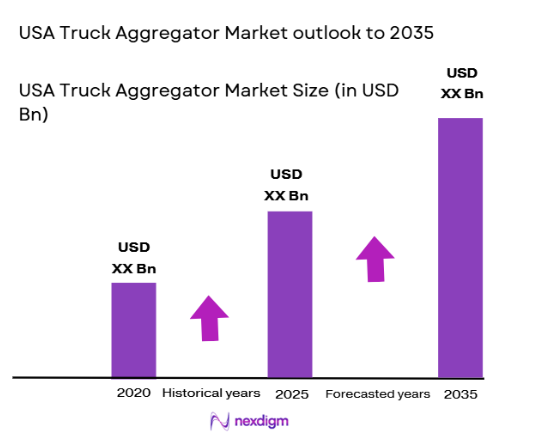
The USA Truck Aggregator Market reached approximately USD ~ billion based on a recent historical assessment, driven by accelerated digitalization of freight brokerage, expansion of e-commerce distribution networks, and rising shipper demand for real-time capacity access. Growth is supported by fragmented trucking supply, where millions of small carriers rely on digital platforms to access loads. Increased adoption of automated pricing, route optimization, and instant booking tools has expanded transaction volumes across digital freight marketplaces nationwide.
Major logistics hubs including Chicago, Dallas–Fort Worth, Atlanta, Los Angeles, and Memphis dominate activity due to dense freight corridors, intermodal infrastructure, and concentration of large shippers and distribution centers. The United States leads globally because of its highly fragmented trucking industry, advanced logistics technology adoption, and large domestic freight volumes. Strong presence of digital freight platforms, venture-backed logistics startups, and established third-party logistics providers further consolidates national leadership in truck aggregation services.
Market Segmentation
By Service Type
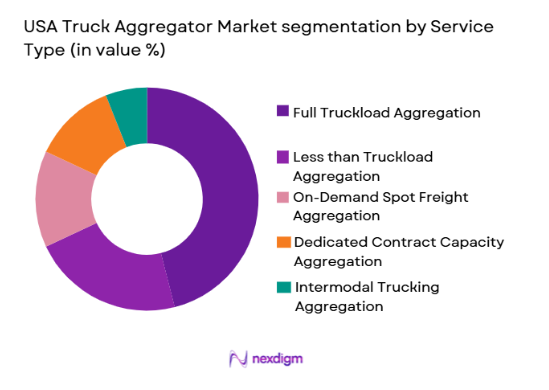
USA Truck Aggregator Market is segmented by service type into full truckload aggregation, less-than-truckload aggregation, on-demand spot freight aggregation, dedicated contract capacity aggregation, and intermodal trucking aggregation. Recently, full truckload aggregation has a dominant market share due to high long-haul freight volumes, standardized shipment sizes, and strong demand from large retailers and manufacturers. Digital platforms prioritize full truckload transactions because they enable faster matching, higher revenue per load, and scalable automation. Major carriers and shippers prefer aggregated full truckload capacity to optimize network utilization and reduce brokerage costs across nationwide routes.
By End User
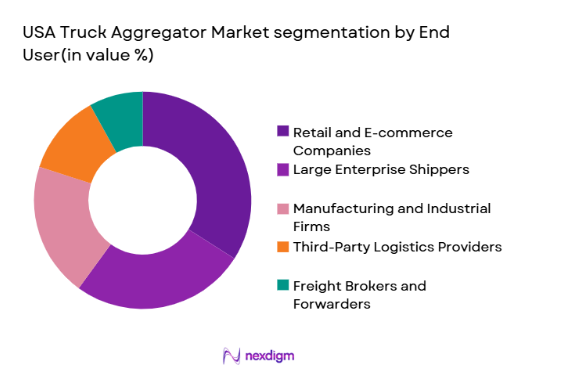
USA Truck Aggregator Market is segmented by end user into large enterprise shippers, third-party logistics providers, freight brokers and forwarders, retail and e-commerce companies, and manufacturing and industrial firms. Recently, retail and e-commerce companies have a dominant market share due to high shipment frequency, nationwide fulfillment networks, and time-sensitive delivery requirements. Aggregator platforms enable these firms to secure flexible capacity during demand peaks and optimize last-mile replenishment. Rapid expansion of omnichannel retail distribution and fulfillment center networks has further increased reliance on digital truck aggregation across major consumption corridors.
Competitive Landscape
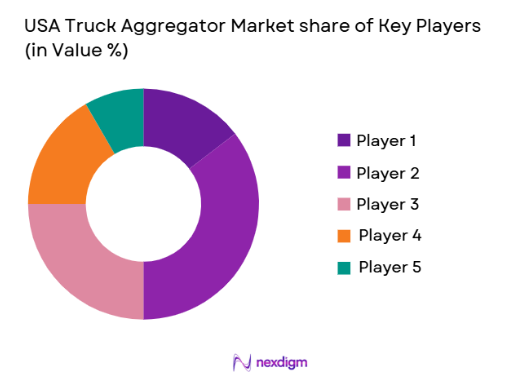
The USA Truck Aggregator Market exhibits moderate consolidation, with a mix of technology-driven digital freight platforms and established logistics providers expanding aggregation capabilities. Large third-party logistics firms leverage extensive carrier networks and integrated transportation management systems, while technology-native platforms compete through automation, pricing algorithms, and real-time visibility tools. Strategic partnerships, acquisitions, and platform integrations have strengthened nationwide coverage and service depth, increasing competitive barriers for smaller entrants.
| Company Name | Establishment Year | Headquarters | Technology Focus | Market Reach | Key Products | Revenue | Carrier Network Size |
| Uber Freight | 2017 | Chicago, USA | ~ | ~ | ~ | ~ | ~ |
| C.H. Robinson | 1905 | Minnesota, USA | ~ | ~ | ~ | ~ | ~ |
| J.B. Hunt Transport | 1961 | Arkansas, USA | ~ | ~ | ~ | ~ | ~ |
| XPO Logistics | 1989 | Connecticut, USA | ~ | ~ | ~ | ~ | ~ |
| Echo Global Logistics | 2005 | Chicago, USA | ~ | ~ | ~ | ~ | ~ |
USA Truck Aggregator Market Analysis
Growth Drivers
Digitalization of Freight Brokerage and Carrier Matching:
The rapid digitalization of freight brokerage operations has fundamentally transformed how trucking capacity is sourced, priced, and allocated across the United States freight ecosystem. Aggregator platforms replace manual broker processes with algorithm-driven load matching, automated rate discovery, and real-time carrier selection, improving efficiency across fragmented trucking supply networks. Millions of small and medium carriers lack direct shipper access, creating structural dependence on digital marketplaces that consolidate demand. Shippers increasingly require instant booking and shipment visibility, pushing adoption of integrated aggregator platforms nationwide. Technology investment by logistics providers has expanded platform capabilities, including predictive pricing and automated dispatch. Integration with transportation management systems enables enterprise shippers to procure truck capacity seamlessly within digital workflows. High domestic freight volumes across retail, manufacturing, and agriculture sustain transaction growth on these platforms. Venture capital and strategic investment have accelerated platform scaling, carrier onboarding, and geographic expansion. As digital brokerage penetration rises, truck aggregation platforms become core infrastructure in freight procurement across the United States.
E-commerce Expansion and High-Frequency Freight Demand:
The structural expansion of e-commerce distribution networks has significantly increased shipment frequency, geographic dispersion, and variability in trucking demand across the United States. Retailers and online marketplaces operate nationwide fulfillment networks requiring continuous truck capacity for inventory replenishment and inter-facility transfers. Demand peaks during seasonal and promotional cycles create volatile capacity requirements that traditional contract trucking cannot fully accommodate. Aggregator platforms provide on-demand access to thousands of carriers, enabling rapid response to demand fluctuations. Shorter delivery windows and inventory decentralization increase shipment volumes across regional lanes. Reverse logistics and omnichannel fulfillment further multiply truck movements between warehouses and stores. Retail and e-commerce firms prioritize digital procurement tools to optimize transport costs and ensure delivery reliability. Growth of same-day and next-day fulfillment models intensifies reliance on flexible truck aggregation. As e-commerce freight intensity rises nationwide, digital truck aggregators capture increasing transaction share across distribution corridors.
Market Challenges
Driver Shortage and Capacity Volatility in US Trucking:
Persistent driver shortages across the United States trucking industry create structural constraints on available hauling capacity, directly affecting the reliability and scalability of aggregation platforms. Aging driver demographics, high turnover rates, and regulatory working-hour limits reduce effective truck supply in key freight corridors. Capacity shortages intensify during peak shipping seasons, causing rate volatility and load rejections within digital marketplaces. Aggregator platforms depend on consistent carrier participation to maintain matching efficiency and service reliability. Smaller carriers often exit the market during downturns, further fragmenting supply. Recruitment and retention challenges increase operating costs across trucking fleets, raising platform procurement prices. Volatile fuel costs and insurance premiums amplify carrier uncertainty and capacity withdrawal risks. Geographic imbalances between load supply and truck availability create empty miles and inefficiencies. These structural labor and capacity issues limit predictable scaling of digital aggregation services across national freight networks.
Thin Margins and Intense Price Competition Among Platforms:
Digital truck aggregation operates within highly competitive freight brokerage economics characterized by low margins and aggressive price competition across platforms. Shippers prioritize lowest transportation rates, forcing aggregators to compress commissions and transaction spreads. Carrier loyalty is limited because drivers frequently switch platforms seeking higher load payouts. Entry of technology startups and large logistics firms increases competitive intensity in digital freight marketplaces. Platforms invest heavily in technology development, marketing, and carrier incentives, raising operating costs. Freight rate volatility reduces predictable revenue streams for aggregation providers. Large shippers negotiate contract pricing, limiting platform profitability. Consolidation pressures encourage mergers and acquisitions to achieve scale efficiencies. Profitability depends on transaction volume growth rather than margin expansion. These structural pricing pressures challenge long-term financial sustainability for many digital truck aggregation platforms.
Opportunities
Integration with Autonomous and Electric Trucking Ecosystems:
The emergence of autonomous driving technology and electric trucking fleets presents a transformative opportunity for truck aggregation platforms to coordinate and optimize next-generation freight capacity. Autonomous trucks are expected to operate continuously with minimal downtime, requiring centralized digital dispatch and load allocation systems. Aggregator platforms are positioned to manage routing, utilization, and scheduling across autonomous fleets. Electric trucks introduce charging constraints and range considerations that benefit from algorithmic optimization within aggregation networks. Large carriers adopting zero-emission fleets seek digital marketplaces to maximize utilization and return on asset investment. Regulatory incentives for sustainable freight encourage fleet electrification across major corridors. Platforms integrating sustainability metrics and energy optimization tools gain competitive advantage. Aggregators may coordinate mixed fleets of conventional and autonomous vehicles for efficient network balancing. As advanced truck technologies scale nationally, digital aggregation systems become essential orchestration infrastructure for freight movement.
Embedded Financial Services and Freight Payment Platforms:
Truck aggregation platforms are increasingly expanding into embedded financial services, including freight factoring, instant carrier payments, fuel financing, and insurance products integrated directly within digital marketplaces. Small carriers face cash-flow constraints due to long shipper payment cycles, creating demand for rapid settlement services. Aggregators offering instant payment improve carrier retention and platform loyalty. Financial data generated through transaction histories enables credit risk assessment and tailored financing products. Integrated payment solutions streamline shipper billing and reconciliation processes. Platforms monetize financial services through transaction fees and lending margins, diversifying revenue beyond brokerage spreads. Digital wallets and settlement automation reduce administrative costs across freight transactions. Partnerships with fintech providers accelerate service deployment across carrier networks. As financial integration deepens, aggregation platforms evolve into comprehensive freight commerce ecosystems serving both logistics and financial needs of trucking participants.
Future Outlook
The USA Truck Aggregator Market is expected to expand steadily over the next five years, supported by continued digital transformation in freight procurement and brokerage automation. Increasing adoption of AI-driven pricing, predictive capacity planning, and real-time visibility tools will strengthen platform value propositions. Regulatory emphasis on freight efficiency and sustainability will encourage digital coordination of trucking networks. E-commerce growth, supply-chain resilience strategies, and multimodal integration will further increase reliance on truck aggregation platforms nationwide.
Major Players
- Uber Freight
- C.H. Robinson
- J.B. Hunt Transport
- XPO Logistics
- Echo Global Logistics
- Landstar System
- Schneider National
- Ryder System
- Werner Enterprises
- Loadsmart
- Transfix
- Flock Freight
- Convoy
- DAT Freight & Analytics
- Trimble Transportation
Key Target Audience
- Trucking and freight brokerage companies
- Logistics technology platform providers
- Retail and e-commerce supply chain firms
- Manufacturing and industrial shippers
- Third-party logistics providers
- Transportation management system vendors
- Investments and venture capitalist firms
- Government and regulatory bodies
Research Methodology
Step 1: Identification of Key Variables
Market variables including freight volumes, digital brokerage penetration, carrier fragmentation, platform transaction values, and pricing dynamics were identified from industry databases, logistics reports, and transportation statistics to define structural market drivers and constraints.
Step 2: Market Analysis and Construction
Market size and segmentation were constructed using triangulation of freight brokerage revenue data, digital platform transaction estimates, and trucking industry statistics across service types, end users, and technology adoption levels within the United States logistics sector.
Step 3: Hypothesis Validation and Expert Consultation
Industry assumptions regarding aggregation adoption, pricing structures, and carrier participation were validated through expert interviews with logistics operators, digital freight platforms, and supply-chain professionals to ensure realistic representation of operational dynamics.
Step 4: Research Synthesis and Final Output
Validated data and qualitative insights were synthesized into structured market analysis, competitive benchmarking, and future outlook assessments, ensuring internal consistency, methodological transparency, and alignment with observed freight industry trends.

- Executive Summary
- Research Methodology (Definitions, Scope, Industry Assumptions, Market Sizing Approach, Primary & Secondary Research Framework, Data Collection & Verification Protocol, Analytic Models & Forecast Methodology, Limitations & Research Validity Checks)

- Market Definition and Scope
- Value Chain & Stakeholder Ecosystem
- Regulatory / Certification Landscape
- Sector Dynamics Affecting Demand
- Strategic Initiatives & Infrastructure Growth

- Growth Drivers
Expansion of E Commerce Driven Freight Demand
Fragmented Carrier Base Requiring Digital Aggregation
Shipper Need for Real Time Capacity Visibility
Cost Optimization Pressure in Trucking Procurement
Digitalization of Freight Brokerage Operations - Market Challenges
Thin Margins in Digital Freight Brokerage
Driver Shortage and Capacity Volatility
Integration Complexity with Legacy TMS Systems
Regulatory Compliance Burden in Trucking
Intense Platform Competition and Price Undercutting - Market Opportunities
Cross Border North American Freight Aggregation Expansion
Integration with Autonomous and Electric Truck Fleets
Embedded Freight Financing and Payment Solutions - Trends
AI Driven Instant Freight Pricing and Booking
Shift Toward Multimodal Aggregation Platforms
Real Time Carbon Emission Tracking Integration
API First Logistics Platform Ecosystems
Growth of Guaranteed Capacity Products - Government Regulations & Defense Policy
FMCSA Electronic Logging and Safety Compliance
US Data Privacy and Freight Data Governance
Interstate Trucking and Cabotage Regulations - SWOT Analysis
- Stakeholder and Ecosystem Analysis
- Porter’s Five Forces Analysis
- Competition Intensity and Ecosystem Mapping

- By Market Value, 2020-2025
- By Installed Units, 2020-2025
- By Average System Price, 2020-2025
- By System Complexity Tier, 2020-2025

- By System Type (In Value%)
Full Truckload Aggregation Platforms
Less Than Truckload Aggregation Platforms
On Demand Spot Freight Platforms
Dedicated Contract Capacity Platforms
Intermodal Trucking Aggregation Platforms - By Platform Type (In Value%)
Mobile Application Based Platforms
Web Based Freight Marketplaces
API Integrated Shipper Platforms
EDI Enabled Enterprise Platforms
Telematics Embedded Platforms - By Fitment Type (In Value%)
Cloud SaaS Aggregator Platforms
On Premise TMS Integrated Platforms
Hybrid Deployment Platforms
White Label Logistics Platforms
Embedded Marketplace Modules - By EndUser Segment (In Value%)
Large Enterprise Shippers
Third Party Logistics Providers
Freight Brokers and Forwarders
Retail and E Commerce Companies
Manufacturing and Industrial Firms - By Procurement Channel (In Value%)
Direct Platform Subscription
Transaction Based Booking
Enterprise Contract Agreements
Channel Partner Procurement
Telematics OEM Bundling - By Material / Technology (in Value %)
AI Based Route Optimization Engines
Real Time IoT Tracking Systems
Digital Freight Matching Algorithms
Dynamic Pricing Optimization Tools
Blockchain Freight Documentation

- Market structure and competitive positioning
- Market share snapshot of major players
- CrossComparison Parameters (Network coverage, Carrier base size, Pricing model, Service types, Integration APIs, Real time visibility, Capacity assurance, Sustainability tools, Payment terms, Analytics)
- SWOT Analysis of Key Players
- Pricing & Procurement Analysis
- Key Players
Uber Freight
C.H. Robinson
J.B. Hunt Transport
Schneider National
XPO Logistics
Landstar System
Echo Global Logistics
Loadsmart
Transfix
Flock Freight
Convoy Platform
DAT Solutions
Trimble Transportation
Ryder System
Werner Enterprises

- Large shippers prioritizing contracted digital capacity access
- 3PL providers integrating aggregator APIs into TMS workflows
- Retail and e commerce firms demanding instant spot coverage
- Manufacturers optimizing freight procurement through platforms

- Forecast Market Value, 2026-2035
- Forecast Installed Units, 2026-2035
- Price Forecast by System Tier, 2026-2035
- Future Demand by Platform, 2026-2035


 Request a Sample
 Ask for Customization
 Get a Quote
 Enquire Now