
 Download PDF
Market Overview
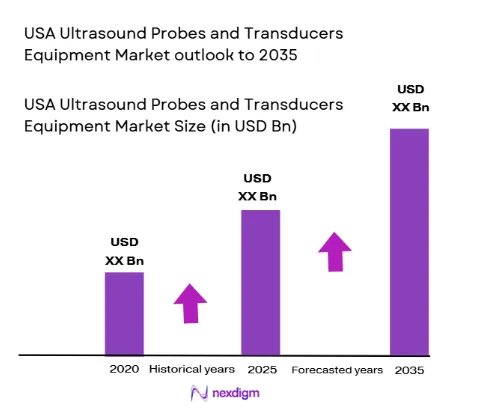
The USA Ultrasound Probes and Transducers Equipment market size has seen significant growth, valued at USD ~ billion. This growth is largely attributed to rising healthcare demand, technological advancements, and the increasing adoption of non-invasive diagnostic tools. The rise in the number of chronic diseases and the expanding geriatric population have further boosted the demand for ultrasound equipment, as these systems offer precise imaging solutions for early detection and monitoring of various conditions. Additionally, increasing investments in healthcare infrastructure, especially in diagnostic and imaging facilities, are propelling market growth.
Several cities and regions in the USA are particularly dominant in the ultrasound probes and transducers equipment market. The leading markets are centered around major metropolitan areas, including New York, Los Angeles, and Chicago. These cities are home to numerous hospitals, diagnostic centers, and research institutions that drive demand for advanced medical imaging technologies. The availability of cutting-edge healthcare infrastructure, along with a high number of healthcare professionals and institutions specializing in imaging technology, contributes to their market dominance. These areas also benefit from substantial healthcare funding and an expanding population in need of medical services.
Market Segmentation
By Product Type:
USA Ultrasound Probes and Transducers Equipment market is segmented by product type into Linear Probes, Convex Probes, Phased Array Probes, Endocavitary Probes, and Tissue Doppler Imaging Probes. Recently, Linear Probes have a dominant market share due to their versatility in various medical applications such as musculoskeletal, vascular, and abdominal imaging. Their popularity is also driven by the increasing demand for portable, high-performance ultrasound systems in emergency and point-of-care settings. These probes are lightweight, easy to handle, and provide high-resolution images, which makes them an essential part of diagnostic procedures across hospitals and clinics.

By Platform Type:
USA Ultrasound Probes and Transducers Equipment market is segmented by platform type into Portable Ultrasound Systems, Handheld Ultrasound Systems, Cart-based Ultrasound Systems, Robotic Ultrasound Systems, and Wearable Ultrasound Devices. Portable Ultrasound Systems dominate the market share due to their compact design, cost-effectiveness, and ease of use in a variety of settings, including emergency care, field settings, and rural healthcare facilities. Their growing popularity is supported by increasing healthcare needs for on-the-spot diagnostic capabilities. These systems offer flexibility and ease of deployment, making them a preferred choice for both clinicians and patients, particularly in point-of-care environments.

Competitive Landscape
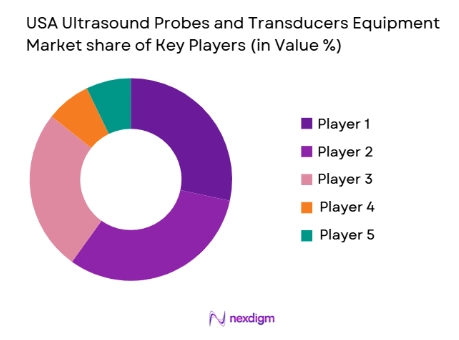
The USA Ultrasound Probes and Transducers Equipment market has a highly competitive landscape, driven by both established players and emerging innovators. Market consolidation is prevalent, with several large multinational corporations holding significant market share. These companies invest heavily in R&D to develop innovative products and expand their market reach. Leading players are focusing on enhancing the quality and functionality of their ultrasound systems, which has intensified competition. The continuous improvements in technology, combined with a strong focus on customer satisfaction and after-sales service, have helped these players secure dominance in the market.
| Company Name | Establishment Year | Headquarters | Technology Focus | Market Reach | Key Products | Revenue (USD) | Additional Parameter |
| GE Healthcare | 1892 | Chicago, USA | ~ | ~ | ~ | ~ | ~ |
| Siemens Healthineers | 1847 | Erlangen, Germany | ~ | ~ | ~ | ~ | ~ |
| Philips Healthcare | 1891 | Amsterdam, Netherlands | ~ | ~ | ~ | ~ | ~ |
| Mindray | 1991 | Shenzhen, China | ~ | ~ | ~ | ~ | ~ |
| Canon Medical Systems | 1933 | Tokyo, Japan | ~ | ~ | ~ | ~ | ~ |
USA Ultrasound Probes and Transducers Equipment Market Analysis
Growth Drivers
Technological Advancements in Ultrasound Systems:
The rapid advancements in ultrasound technology have become a key growth driver for the USA Ultrasound Probes and Transducers Equipment market. Innovations in probe designs, imaging resolution, and portability have significantly improved the capabilities of ultrasound systems, offering enhanced diagnostic accuracy. The integration of Artificial Intelligence (AI) and machine learning into ultrasound equipment further supports the drive for precision in medical diagnostics. These advancements contribute to a growing preference for ultrasound systems over traditional imaging modalities due to their non-invasive nature, portability, and ability to provide real-time results. Furthermore, the continuous miniaturization of ultrasound devices has opened new opportunities for point-of-care applications, including in remote or underserved regions, where larger, more expensive systems may not be practical. As healthcare institutions prioritize faster and more reliable diagnostic tools, the demand for advanced ultrasound systems continues to grow, driving the expansion of the ultrasound probe and transducer market.
Rising Prevalence of Chronic Diseases and Aging Population:
The increasing prevalence of chronic diseases, particularly cardiovascular conditions, cancers, and musculoskeletal disorders, has also been a key factor fueling the growth of the ultrasound probes and transducers market. As the population ages, there is a growing demand for early diagnostic tools to detect these conditions at an early stage, when treatment options are more effective. Ultrasound is widely used for screening purposes in various medical fields, such as obstetrics, cardiology, and oncology, due to its non-invasive and safe nature. The aging population, which is prone to age-related diseases, is driving the need for ultrasound technology, further bolstering the growth of the market. The healthcare industry is witnessing an increasing number of geriatric patients requiring routine checkups and imaging diagnostics, further enhancing the demand for advanced ultrasound systems in hospitals and clinics. This driver is set to maintain momentum in the foreseeable future.
Market Challenges
High Cost of Ultrasound Equipment:
One of the major challenges in the USA Ultrasound Probes and Transducers Equipment market is the high upfront cost associated with advanced ultrasound systems. While ultrasound probes and transducers are less expensive compared to other imaging technologies, the overall cost of ultrasound equipment, especially high-end systems, remains a significant barrier for small to mid-sized healthcare facilities. The acquisition of ultrasound machines requires substantial capital investment, which can be prohibitive for some clinics, particularly in rural areas or developing regions of the country. Additionally, the ongoing maintenance and repair costs associated with these systems add to the financial burden. Despite technological advancements and reductions in the cost of some components, many hospitals, especially in underserved regions, still struggle to afford high-quality ultrasound systems. This challenge can slow down market penetration and the adoption of new ultrasound technology, impacting overall market growth.
Shortage of Skilled Professionals:
The shortage of trained healthcare professionals is another challenge hindering the widespread adoption of ultrasound technology in the USA. Ultrasound systems, while generally user-friendly, require highly skilled operators to ensure accurate diagnosis and effective use of the equipment. As the demand for ultrasound systems rises, so does the need for qualified sonographers and technicians. However, there is a growing shortage of trained ultrasound professionals in the healthcare sector, which is exacerbated by the rapid expansion of imaging facilities and the increasing complexity of diagnostic imaging technology. The shortage of skilled professionals poses a significant challenge for healthcare institutions, as they may face delays in providing diagnostic services and may not be able to fully utilize the capabilities of advanced ultrasound systems. This limits the market’s ability to meet the growing demand for ultrasound-based diagnostic solutions.
Opportunities
Expansion of Ultrasound in Point-of-Care Applications:
The rapid expansion of point-of-care ultrasound (POCUS) offers significant opportunities for the USA Ultrasound Probes and Transducers Equipment market. Point-of-care ultrasound systems are increasingly being adopted by healthcare professionals for immediate, bedside diagnostics. These compact, portable devices offer real-time imaging, which is especially useful in emergency settings, intensive care units, and in-home care situations. The growing trend toward decentralization of healthcare and the increasing demand for on-the-spot diagnostics are driving the demand for POCUS devices. This shift is particularly important in underserved areas, where patients may face long waiting times for diagnostic imaging. Furthermore, the growing acceptance of ultrasound technology in non-traditional settings such as rural clinics, sports medicine, and emergency departments is expected to open new avenues for growth. The ability to provide immediate, accurate diagnostic results will enhance patient care and lead to better healthcare outcomes, making point-of-care ultrasound an attractive opportunity in the market.
Integration of Artificial Intelligence in Ultrasound Imaging:
The integration of artificial intelligence (AI) and machine learning into ultrasound imaging systems is another exciting opportunity for the USA Ultrasound Probes and Transducers Equipment market. AI technologies are being used to automate image analysis, allowing for quicker and more accurate diagnoses. This integration is improving workflow efficiency and reducing the risk of human error in interpreting ultrasound images. AI-powered ultrasound systems can assist healthcare providers in detecting anomalies such as tumors, heart conditions, and vascular issues with greater precision. These innovations are likely to drive the next wave of growth in the market, as healthcare professionals embrace AI-enhanced systems for better diagnostic accuracy. The growing trend toward digitalization in healthcare and the push for more efficient, precise diagnostic tools will make AI-integrated ultrasound devices more mainstream, thus creating significant opportunities for market expansion in the coming years.
Future Outlook
The future of the USA Ultrasound Probes and Transducers Equipment market looks promising, with significant growth expected over the next five years. Continued advancements in technology, particularly in the areas of miniaturization, AI integration, and image quality, will drive innovation and expand the market. Regulatory support, particularly through government initiatives promoting healthcare digitization and medical imaging, will play a key role in facilitating market growth. Additionally, the increasing demand for point-of-care and portable ultrasound devices is expected to increase as healthcare professionals focus on providing real-time diagnostics. Technological developments, coupled with a growing healthcare infrastructure, will create favorable conditions for market expansion.
Major Players
- GE Healthcare
- Siemens Healthineers
- Philips Healthcare
- Mindray
- Canon Medical Systems
- Fujifilm Sonosite
- Hitachi Healthcare
- Toshiba Medical Systems
- Esaote
- Hologic
- B. Braun Melsungen AG
- Analogic Corporation
- Carestream Health
- Samsung Medison
- Aloka Co. Ltd
Key Target Audience
- Healthcare providers
- Diagnostic imaging centers
- Hospitals and clinics
- Government and regulatory bodies
- Investors and venture capitalists
- Equipment distributors
- Medical equipment suppliers
- Healthcare technology companies
Research Methodology
Step 1: Identification of Key Variables
The first step involves identifying the primary variables influencing the market, including technological advancements, consumer behavior, regulatory changes, and competitive dynamics. This helps in shaping the research framework.
Step 2: Market Analysis and Construction
Market analysis includes reviewing available data, reports, and historical trends to construct a reliable market model. It includes assessing segment performance, competitor strategies, and potential market shifts.
Step 3: Hypothesis Validation and Expert Consultation
In this step, hypotheses regarding market trends, drivers, and challenges are validated through expert consultations with industry leaders, professionals, and key stakeholders.
Step 4: Research Synthesis and Final Output
The final step involves synthesizing all research findings into actionable insights, reports, and forecasts. This output is then presented to the stakeholders for decision-making and strategic planning.

- Executive Summary
- Research Methodology (Definitions, Scope, Industry Assumptions, Market Sizing Approach, Primary & Secondary Research Framework, Data Collection & Verification Protocol, Analytic Models & Forecast Methodology, Limitations & Research Validity Checks)

- Market Definition and Scope
- Value Chain & Stakeholder Ecosystem
- Regulatory / Certification Landscape
- Sector Dynamics Affecting Demand
- Strategic Initiatives & Infrastructure Growth

- Growth Drivers
Rising prevalence of chronic diseases
Technological advancements in ultrasound probes
Increasing demand for portable and handheld ultrasound systems
Growing healthcare infrastructure in emerging economies
Government investments in healthcare digitization - Market Challenges
High cost of advanced ultrasound systems
Lack of trained professionals to operate advanced equipment
Regulatory challenges for approval of new technologies
Maintenance and repair costs of ultrasound probes
Limited reimbursement policies for ultrasound diagnostics - Market Opportunities
Integration of AI in ultrasound systems for enhanced diagnostics
Expansion of ultrasound usage in veterinary care
Rising demand for point-of-care ultrasound solutions - Trends
Miniaturization of ultrasound devices
Increase in telemedicine and remote diagnostics
Shift towards non-invasive diagnostic techniques
Use of 3D/4D imaging technology in ultrasound probes
Rising popularity of portable ultrasound for homecare applications - Government Regulations & Defense Policy
FDA regulatory standards for ultrasound devices
Policy support for ultrasound technology adoption in rural healthcare
Government-backed initiatives for affordable ultrasound systems in emerging markets - SWOT Analysis
- Stakeholder and Ecosystem Analysis
- Porter’s Five Forces Analysis
- Competition Intensity and Ecosystem Mapping

- By Market Value, 2020-2025
- By Installed Units, 2020-2025
- By Average System Price, 2020-2025
- By System Complexity Tier, 2020-2025

- By System Type (In Value%)
Linear Probes
Convex Probes
Phased Array Probes
Endocavitary Probes
Tissue Doppler Imaging Probes - By Platform Type (In Value%)
Portable Ultrasound Systems
Handheld Ultrasound Systems
Cart-based Ultrasound Systems
Robotic Ultrasound Systems
Wearable Ultrasound Devices - By Fitment Type (In Value%)
Handheld Ultrasound Probes
Stationary Ultrasound Probes
Modular Ultrasound Probes
Fixed Ultrasound Probes
Miniaturized Ultrasound Probes - By EndUser Segment (In Value%)
Hospitals
Diagnostic Clinics
Ambulatory Surgical Centers
Veterinary Clinics
Research and Educational Institutes - By Procurement Channel (In Value%)
Direct Procurement
Distributors and Resellers
Online Platforms
OEM Partnerships
Third-party Healthcare Platforms - By Material / Technology (in Value%)
Piezoelectric Materials
Phased Array Technology
Miniaturized Sensor Technology
Flexible Ultrasound Probes
Hybrid Technology Probes

- Market structure and competitive positioning
- Market share snapshot of major players
- CrossComparison Parameters (Revenue, Market Share, Product Portfolio, Geographical Presence, R&D Investment, Brand Reputation, Strategic Alliances, Customer Base, Product Innovations, Pricing Strategy)
- SWOT Analysis of Key Players
- Pricing & Procurement Analysis
- Key Players
GE Healthcare
Philips Healthcare
Siemens Healthineers
Samsung Medison
Canon Medical Systems
Mindray
Esaote
Hologic
Toshiba Medical
Fujifilm Sonosite
Hitachi Healthcare
B. Braun
Lantheus Medical Imaging
Carestream Health
Analogic Corporation

- Increasing demand for ultrasound diagnostics in hospitals
- Surge in adoption of ultrasound equipment in veterinary care
- Rising preference for outpatient diagnostics in diagnostic clinics
- Adoption of ultrasound technology in research and educational institutes

- Forecast Market Value, 2026-2035
- Forecast Installed Units, 2026-2035
- Price Forecast by System Tier, 2026-2035
- Future Demand by Platform, 2026-2035


 Request a Sample
 Ask for Customization
 Get a Quote
 Enquire Now