
 Download PDF
Market Overview
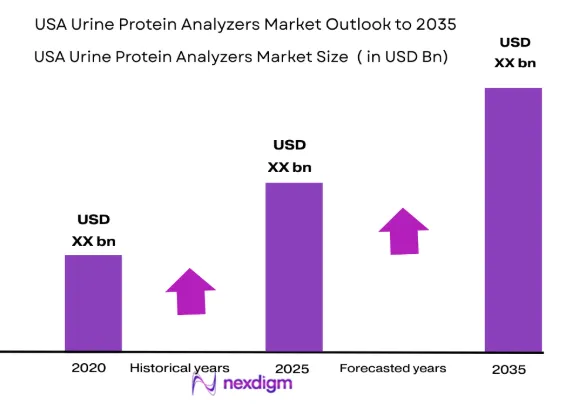
The USA urine pH meters market is experiencing robust growth, driven by increasing awareness about urinary health and the rising prevalence of urinary disorders. Based on a recent historical assessment, the market is expected to reach a size of approximately USD ~ billion. The demand for urine pH meters is being further propelled by technological advancements that offer greater accuracy and convenience for both healthcare providers and individual consumers. Moreover, the growing adoption of homecare urine pH meters is expected to contribute significantly to the market’s expansion.
The USA urine pH meters market shows substantial dominance across urban centers, especially in major metropolitan cities. This trend is primarily driven by the high concentration of healthcare facilities, increased healthcare spending, and the rising awareness of preventative healthcare. Cities like New York, Los Angeles, and Chicago are leading in demand due to their advanced healthcare infrastructure and large consumer base. Additionally, states with higher levels of health consciousness, such as California and Florida, continue to showcase higher adoption rates of urine pH meters, fostering the market’s overall growth in the country.
Market Segmentation
By Product Type
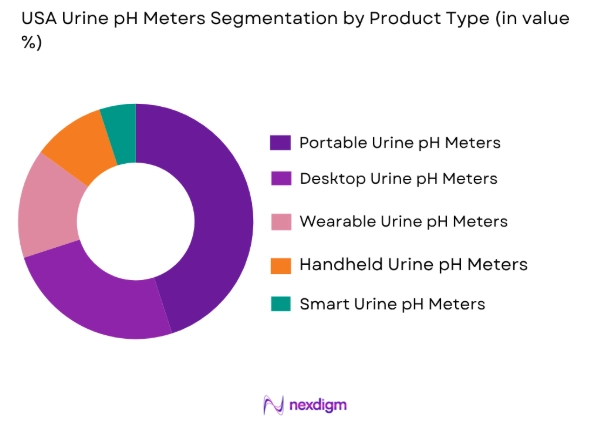
The USA urine pH meters market is segmented by product type into portable, desktop, wearable, handheld, and smart urine pH meters. Recently, the portable urine pH meters sub-segment has gained a dominant market share. This growth is driven by the rising demand for portable and convenient health monitoring devices that allow consumers to monitor their health status on-the-go. The portable nature of these devices aligns with increasing consumer preference for health tracking in home settings, further increasing their demand in healthcare and personal use. Consumers prefer portable pH meters due to their ease of use, mobility, and accessibility compared to traditional, larger desktop models.
By Platform Type
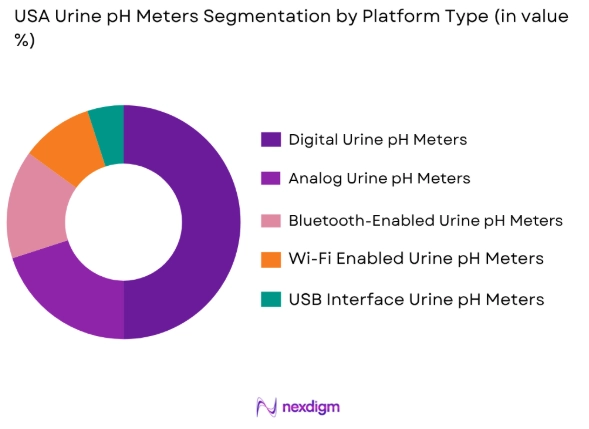
The market is segmented into analog, digital, Bluetooth-enabled, Wi-Fi-enabled, and USB-interface urine pH meters. The digital urine pH meters sub-segment dominates the market due to the increasing demand for accurate, user-friendly, and easy-to-read devices. Digital meters offer higher precision, better results, and a more modern experience compared to traditional analog models. Their enhanced connectivity features, such as integration with mobile health apps, also contribute to their growing market share. As consumers continue to prioritize ease of use and advanced functionalities, digital urine pH meters continue to capture a larger portion of the market.
Competitive Landscape
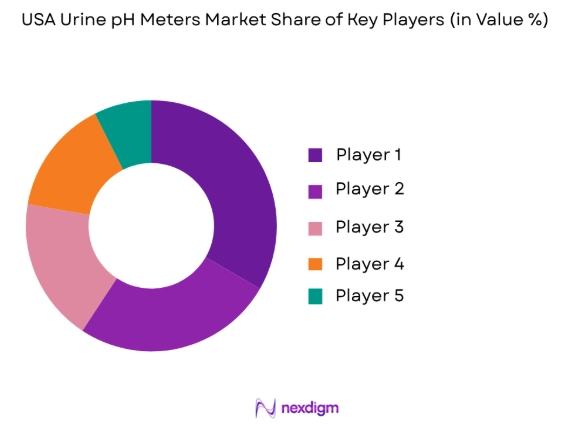
The competitive landscape of the USA urine pH meters market is dominated by several major players, with strong consolidation taking place. Companies are increasingly focusing on technological innovations and strategic acquisitions to strengthen their market position. Key players are heavily investing in research and development to introduce smarter, more efficient devices, which is expected to boost market competition. Additionally, the rise in partnerships between healthcare providers and technology companies is contributing to greater market consolidation, offering consumers better access to high-quality products. The dominance of a few key players is evident, as they continue to expand their product portfolios and invest in consumer outreach strategies.
| Company Name | Establishment Year | Headquarters | Technology Focus | Market Reach | Key Products | Revenue (USD Million) | Additional Market-Specific Parameter |
| Thermo Fisher Scientific | 1956 | Waltham, MA, USA | ~ | ~ | ~ | ~ | ~ |
| Hach Company | 1947 | Loveland, CO, USA | ~ | ~ | ~ | ~ | ~ |
| Horiba Ltd. | 1953 | Kyoto, Japan | ~ | ~ | ~ | ~ | ~ |
| Mettler Toledo | 1945 | Greifensee, Switzerland | ~ | ~ | ~ | ~ | ~ |
| Apera Instruments | 2007 | Pittsburgh, PA, USA | ~ | ~ | ~ | ~ | ~ |
USA Urine pH Meters Market Analysis
Growth Drivers
Rising Prevalence of Chronic Kidney Disease and Related Conditions
Chronic Kidney Disease (CKD) affects 37 million adults in the U.S., with an increasing number of undiagnosed cases. This rising prevalence creates demand for diagnostic devices such as urine pH meters, aiding early detection and monitoring of kidney health. Kidney disease care costs more than $77 billion annually. Additionally, CKD is often linked with other conditions like diabetes and hypertension, further driving the need for ongoing monitoring. As awareness of CKD rises, there will be greater emphasis on early detection to prevent further progression. Diagnostic tools like urine pH meters play a key role in managing these interconnected health issues.
Increasing Adoption of Point‑of‑Care Diagnostics in U.S. Healthcare Delivery
The U.S. point‑of‑care diagnostics market, valued at USD 9.45 billion in 2023, continues growing due to the demand for rapid and convenient diagnostic solutions. Point-of-care testing tools, including urine pH meters, enable real-time results and faster clinical decision-making, benefiting both healthcare providers and patients. With an increased focus on reducing hospital wait times and improving patient outcomes, healthcare providers are turning to these devices for quicker diagnosis. This shift is fostering a move towards more decentralized healthcare, reducing strain on hospitals and improving patient satisfaction. Point-of-care testing is anticipated to become an even greater part of clinical workflows in the future.
Challenges
High Health Expenditures and Systemic Cost Pressures
The U.S. healthcare system spends $5.28 trillion annually, which consumes nearly 18% of GDP. These high expenditures place pressure on healthcare budgets, making the adoption of diagnostic tools like urine pH meters difficult unless they demonstrate significant cost-effectiveness and clinical utility in both institutional and home settings. Many healthcare systems prioritize cost-saving measures, making it essential for diagnostic tools to show clear value in reducing overall treatment costs. As a result, manufacturers must ensure their products are not only effective but also affordable for widespread adoption. Hospitals and healthcare providers are more likely to invest in diagnostic tools that offer long-term cost reductions.
Regulatory and Compliance Requirements for Diagnostic Devices
Urine pH meters face strict regulatory requirements, including FDA approval and adherence to CLIA guidelines for clinical testing. Compliance with these regulations can slow product development and increase costs. Devices marketed for home use must meet additional consumer safety standards, complicating market entry and increasing operational expenses. Navigating these regulatory processes can delay product launches, limiting the speed at which these devices reach the market. Furthermore, manufacturers must stay updated with evolving standards and regulations, which adds complexity to the production and distribution of diagnostic devices. Non-compliance can lead to legal and financial consequences, hindering growth opportunities.
Opportunities
Expansion of Home‑Based Monitoring and Personalized Diagnostics
The U.S. home testing market, valued at USD 5.04 billion in 2024, continues expanding as consumers seek self-monitoring solutions for health conditions like kidney disease. Mobile diagnostics such as urine pH meters fit into this trend, offering users convenient and actionable health insights directly in their homes. As consumer confidence in home-based diagnostics increases, the demand for easy-to-use, reliable tools grows. Home monitoring devices provide the convenience of continuous health management, enabling patients to track their conditions independently. The growing trend of personalized healthcare creates significant opportunities for tailored solutions, allowing individuals to better manage chronic conditions in real-time.
Telemedicine and Remote Care Delivery Integration
Telemedicine usage in the U.S. healthcare system surged during the pandemic and remains strong, with hospital-at-home models growing. Remote monitoring technologies, including urine pH meters, can integrate into these systems, enabling real-time disease management and reducing the need for in-person visits. This trend is facilitating broader access to healthcare services, especially in rural or underserved areas. The integration of diagnostic devices with telemedicine platforms supports continuous monitoring and immediate clinical response, improving patient outcomes. As telehealth continues to evolve, the demand for connected diagnostic tools will increase, creating new business opportunities for manufacturers.
Future Outlook
The future of the USA urine pH meters market is optimistic, with significant growth expected over the next few years. Driven by increasing health awareness, the adoption of homecare devices, and continuous technological innovations, the market is set to expand further. Regulatory support and advancements in sensor technology will continue to improve device accuracy and ease of use, driving demand in both healthcare and consumer sectors. The growing interest in wearable devices and integration with digital health platforms is also expected to provide new opportunities for manufacturers, contributing to the overall growth of the market.
Major Players
- ThermoFisher Scientific
- Hach Company
- Horiba Ltd.
- Mettler Toledo
- Apera Instruments
- Danaher Corporation
- Agilent Technologies
- Milwaukee Instruments
- PalintestLtd.
- ExtechInstruments
- Hanna Instruments
- Oakton Instruments
- VWR International
- Lovibond
- Bio-Rad Laboratories
Key Target Audience
- Investments and venture capitalist firms
- Government and regulatory bodies
- Healthcare providers and hospitals
- Medical device manufacturers
- Health insurance companies
- Retailers of medical devices
- Pharmacies and drugstores
- Urinary health product distributors
Research Methodology
Step 1: Identification of Key Variables
The key variables affecting the market, such as product type, technology, and end-user segments, are identified. This helps in understanding the factors that drive the market’s growth.
Step 2: Market Analysis and Construction
In-depth market analysis is conducted using both primary and secondary research methods to create a clear picture of the market size, growth trends, and segmentation.
Step 3: Hypothesis Validation and Expert Consultation
Expert consultations and feedback from industry professionals validate the hypotheses formulated during market construction.
Step 4: Research Synthesis and Final Output
The research data is synthesized to generate a comprehensive market report that offers actionable insights and a clear market outlook.

- Executive Summary
- Research Methodology (Market Definitions and Standardizations, Assumptions and Normalizations, Data Sources and Triangulation Logic, Bottom‑Up Market Sizing and Validation Approach, Top‑Down Opportunity Estimation Protocol, Primary Research Intercept Framework, Limitations and Future Method Refinements)

- Definition and Scope
- Market Genesis and Evolution
- Healthcare System & Diagnostic Trends in the USA
- Industry Value Chain and Distribution Architecture

- Growth Drivers
Rising Prevalence of Kidney Disorders
Increasing Demand for Point-of-Care Diagnostics
Government Support for Healthcare Innovations
Technological Advancements in Diagnostic Devices - Challenges
High Cost of Advanced pH Meters
Regulatory Compliance and Certification Requirements
Market Fragmentation and Competition
Adoption Barriers in Low-Income Regions - Opportunities
Development of Mobile and Home-Based Testing Solutions
Expansion of Diagnostic Services in Rural and Underserved Areas
Integration of Artificial Intelligence (AI) and Machine Learning
Rising Healthcare Expenditure and Investment - Trends
Miniaturization and Portability of Devices
Increased Adoption of IoT in Diagnostic Devices
Growth in Subscription-Based Healthcare Models
Sustainability and Energy Efficiency Trends - Regulatory & Compliance Landscape
- SWOT Analysis
- Ecosystem Mapping
- Porter’s Five Forces Analysis

- By Current Market Size – Value (USD) & Volume, 2020-2025
- By Market Density, 2020-2025
- By Price Band Analysis, 2020-2025

- By Product (In Value%)
Portable Urine pH Meters
Desktop Urine pH Meters
Wearable Urine pH Meters
Handheld Urine pH Meters
Smart Urine pH Meters - By Platform (In Value%)
Analog Urine pH Meters
Digital Urine pH Meters
Bluetooth-Enabled Urine pH Meters
Wi-Fi Enabled Urine pH Meters
USB Interface Urine pH Meters - By Distribution Channel (In value %)
Online Sales Platforms
Direct Sales (OEM)
Healthcare Equipment Distributors
Retail Pharmacies & Stores - By Price Tier (In Value %)
Economy / Entry‑Level
Mid‑Tier
Premium - By Application (In Value %)
Kidney Disease Monitoring
Urinary Tract Infection (UTI) Management
Acid-Base Imbalance Detection
Others - By Geography (In Value %)
Northeast USA
Midwest USA
South USA
West USA

- Market Share by Value & Volume
- Brand Positioning / Value Proposition Mapping
- Cross‑Comparison Parameters (Company Overview, Product Portfolio Breadth, Distribution and Sales Channels, After‑Sales Support and Warranty Coverage, R&D Investment and Product Innovation Brand, Loyalty and Customer Satisfaction Index, Distribution Network Strength and Efficiency Product Lifecycle and Upgrade Path , Marketing and Branding Strategy, Competitive Positioning in Niche Markets, Financial Stability and Annual Revenue, Industry Awards and Recognitions, Global Presence and Export Capabilities, Supplier Relationships and Procurement Strategy)
- Competitor Analysis and Profiles
Abbott Laboratories
Siemens Healthineers
Roche Diagnostics
Beckman Coulter
ACON Laboratories
Thermo Fisher Scientific
Urinary pH Diagnostics Inc.
Bio-Rad Laboratories
EKF Diagnostics
Medline Industries
BioMérieux
Labcorp
Quest Diagnostics

- Consumer Purchase Patterns
- Frequency of Use and Testing Preferences
- Brand Loyalty and Repurchase Intentions
- Price Sensitivity and Brand Value Perception

- By Current Market Size – Value (USD) & Volume, 2026-2035
- By Market Density, 2026-2035
- By Price Band Analysis, 2026-2035


 Request a Sample
 Ask for Customization
 Get a Quote
 Enquire Now