

 Download PDF
Market Overview
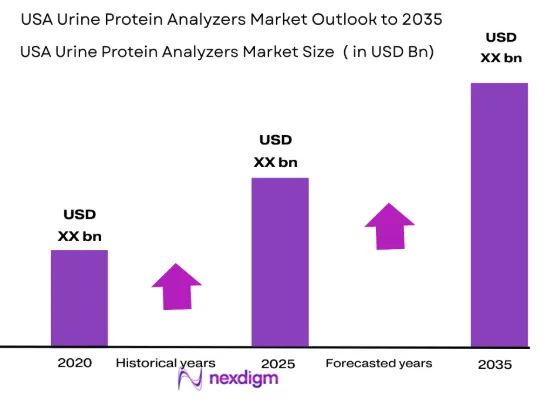
The USA Urine Protein Analyzers Market hasbeen witnessing significant growth, driven by increasing demand for diagnostic solutions in the healthcare sector. The market size for 2025 is estimated to be valued at USD ~ billion, propelled by advancements in medical technologies and growing awareness of the importance of early-stage detection of kidney diseases. The demand for urine protein analyzers is being fueled by the rise in chronic kidney diseases, diabetes, and hypertension. Additionally, a greater focus on healthcare infrastructure and point-of-care diagnostics has played a pivotal role in expanding the market.
Key cities and regions driving the market include metropolitan areas like New York, Los Angeles, and Chicago. These cities are centers for advanced healthcare infrastructure, research activities, and leading medical institutions, contributing to higher demand for innovative diagnostic tools. Moreover, the USA benefits from a robust healthcare regulatory framework and ongoing advancements in the medical technology sector, which further enhance the availability and adoption of urine protein analyzers. This dominance is supported by the concentration of healthcare providers, research centers, and hospitals in these regions, making them central hubs for market growth.
Market Segmentation
By Product Type
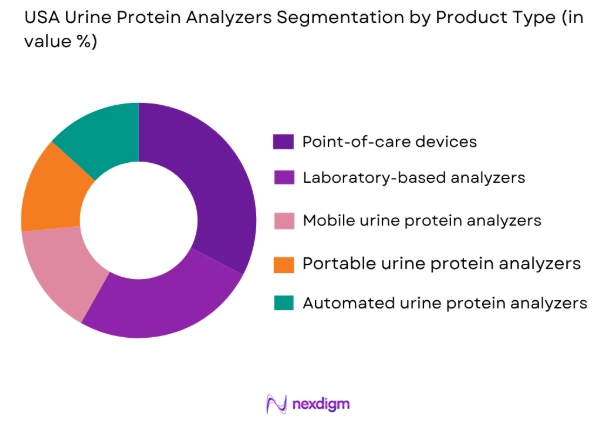
The USA Urine Protein Analyzers Market is segmented by product type into point-of-care devices, laboratory-based analyzers, mobile urine protein analyzers, portable urine protein analyzers, and automated urine protein analyzers. Recently, point-of-care devices have dominated the market due to their user-friendly design, rapid results, and ability to be used outside traditional hospital settings. With the increasing demand for quick diagnostics in remote areas and among home-care patients, these devices are gaining significant traction. Their portability and ease of use make them ideal for both healthcare professionals and patients, enabling better access to diagnostic results in real-time and supporting their increasing market share.
By Platform Type
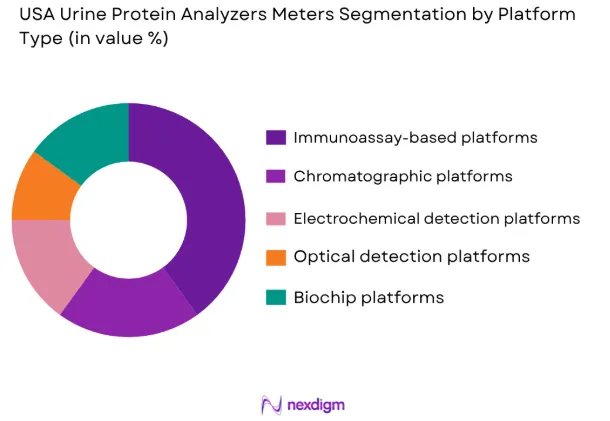
The market is segmented by platform type into immunoassay-based platforms, chromatographic platforms, electrochemical detection platforms, optical detection platforms, and biochip platforms. Among these, immunoassay-based platforms have a dominant share, driven by their high sensitivity and specificity in detecting urine protein levels. These platforms are widely used due to their reliable results and are integral in both clinical and research laboratories. As they can handle a wide range of protein detection and analysis tasks, their high accuracy and established presence in medical diagnostics have ensured their leading market position.
Competitive Landscape
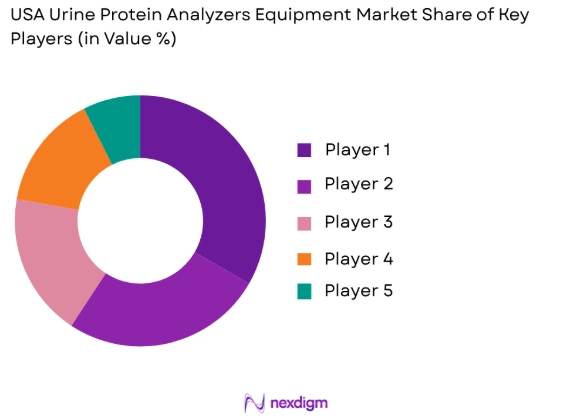
The competitive landscape of the USA Urine Protein Analyzers Market is marked by a mix of established players and innovative newcomers. Major players are focusing on mergers and acquisitions, product innovations, and strategic partnerships to expand their market reach. A trend toward consolidation has been observed, with leading companies collaborating with healthcare providers and research institutions to increase their market presence and enhance product offerings. Companies are also investing in next-generation technologies, such as AI-integrated platforms, to maintain a competitive edge in this growing market.
| Company Name | Establishment Year | Headquarters | Technology Focus | Market Reach | Key Products | Revenue (USD) | Additional Parameter |
| Thermo Fisher Scientific | 1956 | Waltham, MA, USA | ~ | ~ | ~ | ~ | ~ |
| Siemens Healthineers | 1843 | Erlangen, Germany | ~ | ~ | ~ | ~ | ~ |
| Abbott Laboratories | 1888 | Abbott Park, IL, USA | ~ | ~ | ~ | ~ | ~ |
| Beckman Coulter | 1935 | Brea, CA, USA | ~ | ~ | ~ | ~ | ~ |
| Danaher Corporation | 1969 | Washington, D.C., USA | ~ | ~ | ~ | ~ | ~ |
USA Urine Protein Analyzers Market Analysis
Growth Drivers
Technological Advancements in Protein Analyzers
Technological advancements in urine protein analyzers have significantly contributed to the growth of the market. Innovations such as real-time data analytics, integration of artificial intelligence (AI) for faster result interpretation, and miniaturization of devices have improved the functionality and accessibility of these analyzers. AI-powered urine analyzers are able to detect minute levels of proteins with high precision, allowing for early-stage disease detection, particularly in kidney disorders. This shift towards automation and AI-enhanced platforms has resulted in more accurate and faster diagnostics, which is crucial for timely medical intervention and treatment. Furthermore, the integration of these analyzers with hospital management systems and electronic health records (EHR) facilitates seamless data tracking and patient management, boosting demand from both hospitals and clinics. As healthcare providers increasingly adopt advanced diagnostic tools, technological advancements continue to be one of the primary growth drivers in the urine protein analyzer market.
Rising Awareness of Proteinuria Testing
Rising Awareness of Proteinuria Testing is a crucial factor driving the demand for urine protein analyzers in the USA. As healthcare awareness increases, more individuals are becoming conscious of the risks associated with kidney diseases, particularly conditions like proteinuria. Educational campaigns, healthcare initiatives, and doctor recommendations are highlighting the importance of early detection and regular monitoring. As a result, there is growing adoption of proteinuria testing among at-risk populations, such as those with diabetes, hypertension, and a family history of kidney disease. This awareness is expanding the market for urine protein analyzers, fostering both preventive and diagnostic use in healthcare settings.
Market Challenges
High Cost of Advanced Urine Protein Analyzers
One of the major challenges facing the USA Urine Protein Analyzers Market is the high cost of advanced systems. Despite technological advancements that improve the functionality and speed of these devices, the price remains a significant barrier for adoption, particularly in smaller healthcare centers and low-resource settings. High-end urine protein analyzers, such as those used in laboratory-based settings, require substantial investment in both equipment and maintenance. Additionally, the integration of AI and automation features into these systems adds further costs, making it difficult for small healthcare providers to afford these innovations. This price sensitivity limits the widespread adoption of high-tech urine protein analyzers, especially in developing regions of the USA. Efforts to lower the costs of production and make these devices more affordable are essential to addressing this challenge and expanding the market reach.
Regulatory Hurdles for New Product Approvals
Another challenge that significantly impacts the growth of the urine protein analyzer market is the complex and stringent regulatory environment. The regulatory approval process for medical devices in the USA is rigorous and time-consuming, requiring manufacturers to meet strict standards set by agencies such as the FDA. These regulations are essential to ensure the safety and efficacy of the analyzers; however, they can delay the introduction of new products to the market. In addition, the constant evolution of regulations around medical device approval and compliance can pose difficulties for manufacturers, particularly smaller firms that lack the resources to navigate complex regulatory pathways. These hurdles not only increase the cost and time required to bring new products to market but also limit the ability of manufacturers to scale rapidly in response to growing demand.
Opportunities
Expanding Home Care and Point-of-Care Testing Markets
The growing demand for point-of-care testing presents a significant opportunity for the urine protein analyzer market. With increasing health concerns such as chronic kidney diseases and the rising incidence of diabetes and hypertension, there is a need for faster, more accessible diagnostic tools. Point-of-care devices allow for rapid and accurate results, making them ideal for use in emergency situations, rural areas, and home care. The convenience of these devices, coupled with their ability to provide immediate results, enhances patient care and speeds up the decision-making process. As healthcare systems shift towards providing decentralized care, the demand for point-of-care urine protein analyzers is expected to grow rapidly, presenting substantial opportunities for manufacturers and healthcare providers alike.
Growth in Emerging Economies
USA Urine Protein Analyzers market, as developing regions experience increased healthcare investments. These economies are expanding access to diagnostic technologies, improving healthcare infrastructure, and boosting public health initiatives. International partnerships and global health programs are supporting the adoption of advanced diagnostic devices, including urine protein analyzers. As these markets grow, there is a rising demand for affordable, efficient, and mobile diagnostic solutions. The expansion of point-of-care and home-based testing in emerging economies further accelerates market growth.
Future Outlook
The future outlook for the USA Urine Protein Analyzers Market is positive, with steady growth projected over the next five years. Factors such as continued technological innovations, regulatory support, and the rising prevalence of chronic diseases like kidney disorders will contribute to this growth. Increased adoption of point-of-care devices, driven by a demand for faster and more accurate diagnostics, will further boost the market. With growing healthcare infrastructure and expanding access to diagnostic tools in underserved regions, the urine protein analyzer market is set to see significant advancements in both technology and market penetration.
Major Players
- ThermoFisher Scientific
- Siemens Healthineers
- Abbott Laboratories
- Beckman Coulter
- Danaher Corporation
- BD (Becton Dickinson)
- Mindray
- Sysmex Corporation
- F. Hoffmann-La Roche Ltd.
- Ortho Clinical Diagnostics
- A. Menarini Diagnostics
- Epson
- Bio-Rad Laboratories
- EKF Diagnostics
- LabCorp
Key Target Audience
- Investments and venture capitalist firms
- Government and regulatory bodies
- Healthcare providers
- Medical device manufacturers
- Diagnostic laboratories
- Hospitals and healthcare institutions
- Research institutions and clinical trialcenters
- Urineanalyzerdistributors and resellers
Research Methodology
Step 1: Identification of Key Variables
We identify the critical variables influencing the USA Urine Protein Analyzers Market, including technology advancements, regulations, and key drivers such as disease prevalence and healthcare infrastructure.
Step 2: Market Analysis and Construction
We gather and analyze historical market data, trends, and future forecasts, constructing a robust market model to project future market scenarios.
Step 3: Hypothesis Validation and Expert Consultation
We validate our market hypotheses by consulting with industry experts and conducting primary and secondary research to ensure the accuracy and relevance of the market data.
Step 4: Research Synthesis and Final Output
Finally, we synthesize the findings from various sources, creating a comprehensive market report that covers key insights, opportunities, and challenges in the market.

- Executive Summary
- Research Methodology (Market Definitions and Standardizations, Assumptions and Normalizations, Data Sources and Triangulation Logic, Bottom‑Up Market Sizing and Validation Approach, Top‑Down Opportunity Estimation Protocol, Primary Research Intercept Framework, Limitations and Future Method Refinements)

- Definition and Scope
- Market Genesis and Evolution
- Healthcare System & Diagnostic Trends in the USA
- Industry Value Chain and Distribution Architecture

- Growth Drivers
Increasing Prevalence of Kidney Diseases
Rising Awareness of Proteinuria Testing
Technological Advancements in Protein Analyzers - Market Challenges
High Cost of Advanced Urine Protein Analyzers
Lack of Skilled Healthcare Professionals
Regulatory Hurdles for New Product Approvals - Market Opportunities
Expanding Home Care and Point-of-Care Testing Markets
Growth in Emerging Economies
Partnerships with Healthcare Providers - Trends
Integration of Artificial Intelligence and Machine Learning
Development of Non-Invasive Testing Technologies
Shift Towards Personalized Medicine - Government Regulations
- SWOT Analysis
- Ecosystem Mapping
- Porter’s Five Forces Analysis

- By Current Market Size – Value (USD) & Volume, 2020-2025
- By Market Density, 2020-2025
- By Price Band Analysis, 2020-2025

- By Product (In Value%)
Point-of-Care Devices
Laboratory-Based Analyzers
Mobile Urine Protein Analyzers
Portable Urine Protein Analyzers
Automated Urine Protein Analyzers - By Platform (In Value%)
Immunoassay-Based Platforms
Chromatographic Platforms
Electrochemical Detection Platforms
Optical Detection Platforms
Biochip Platforms - By Distribution Channel (In value %)
Online Sales Platforms
Direct Sales (OEM)
Healthcare Equipment Distributors
Retail Pharmacies & Stores - By Price Tier (In Value %)
Economy / Entry‑Level
Mid‑Tier
Premium - By Application (In Value %)
Chronic Kidney Disease Detection
Pregnancy and Pre-Eclampsia Testing
Urinary Tract Infection Detection
Diabetes Management
Others - By Geography (In Value %)
Northeast USA
Midwest USA
South USA
West USA

- Market Share by Value & Volume
- Brand Positioning / Value Proposition Mapping
- Cross‑Comparison Parameters (Company Overview, Product Portfolio Breadth, Distribution and Sales Channels, After‑Sales Support and Warranty Coverage, R&D Investment and Product Innovation, Brand Loyalty and Customer Satisfaction Index)
- Competitor Analysis and Profiles
Abbott Laboratories
Siemens Healthineers
Roche Diagnostics
Beckman Coulter
ACON Laboratories
Thermo Fisher Scientific
Urinary Protein Diagnostics Inc.
Bio-Rad Laboratories
EKF Diagnostics
Medline Industries
BioMérieux
Labcorp
Quest Diagnostics

- Consumer Purchase Patterns
- Frequency of Use and Testing Preferences
- Brand Loyalty and Repurchase Intentions
- Price Sensitivity and Brand Value Perception

- By Current Market Size – Value (USD) & Volume, 2026-2035
- By Market Density, 2026-2035
- By Price Band Analysis, 2026-2035


 Request a Sample
 Ask for Customization
 Get a Quote
 Enquire Now