

 Download PDF
 Download PDF
Market Overview
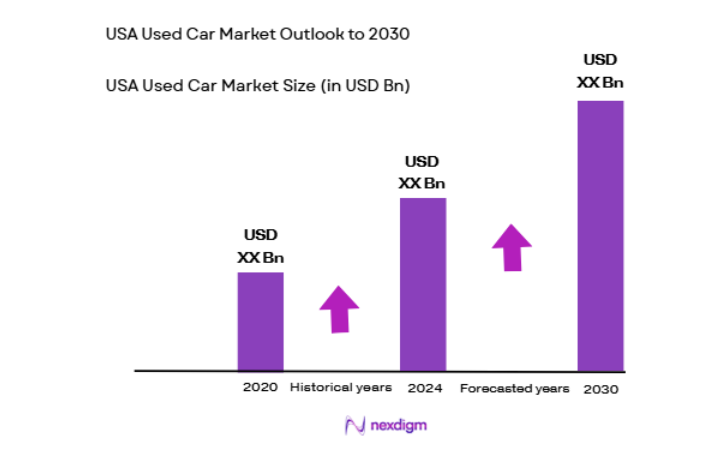
The USA Used Car Market is a significant segment of the automotive industry, with substantial value driven by a high demand for affordable and reliable vehicles. Based on a recent historical assessment, the market was valued at USD ~ billion in 2024. The market is primarily driven by factors such as increasing vehicle costs, a growing preference for pre-owned vehicles, and the expanding availability of online platforms for car sales. The demand is further fueled by economic conditions that make used cars more appealing to budget-conscious consumers.
The United States remains a leader in the used car market, benefiting from its large and diverse automotive fleet. Major cities like Los Angeles, New York, and Chicago serve as hubs for both buying and selling used cars, supported by a vast network of dealerships and online platforms. These regions benefit from a mix of high vehicle ownership, strong aftermarket services, and consumer preference for the value provided by used cars. The extensive infrastructure and established consumer habits make these areas dominant in driving the used car market.
Market Segmentation
By Vehicle Type
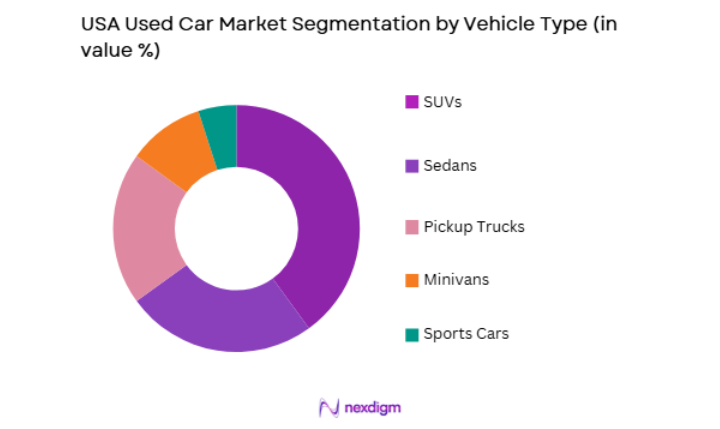
The USA Used Car Market is segmented by vehicle type into sedans, SUVs, pickup trucks, minivans, and sports cars. SUVs have emerged as the dominant sub-segment due to their popularity among U.S. consumers who seek versatility, comfort, and off-road capabilities in their vehicles. The demand for used SUVs is driven by their suitability for families, outdoor activities, and a growing preference for fuel-efficient models in the second-hand vehicle market. This segment continues to benefit from consumer trends favoring higher seating positions, larger cargo capacity, and all-weather performance.
By Platform Type
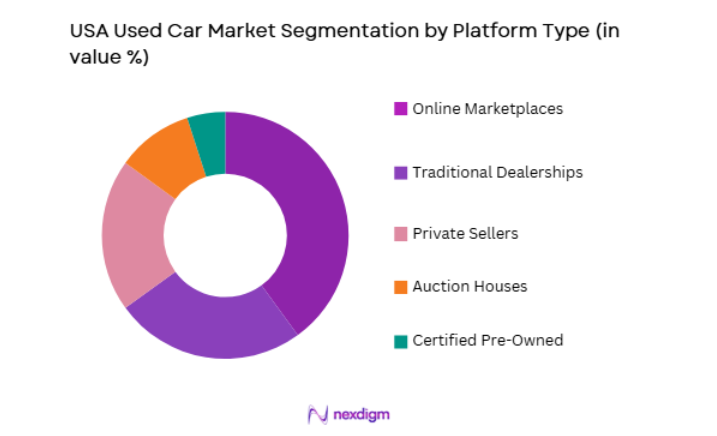
The USA Used Car Market is segmented by platform type into online marketplaces, traditional dealerships, private sellers, auction houses, and certified pre-owned (CPO) programs. Online marketplaces, such as CarMax, Vroom, and Carvana, dominate the market due to the rising trend of digital car buying. These platforms offer a convenient, transparent, and efficient car-buying process, enabling customers to browse, compare, and purchase vehicles from the comfort of their homes. The ease of online research, vehicle delivery options, and financing plans have made online platforms increasingly popular among U.S. consumers.
Competitive Landscape
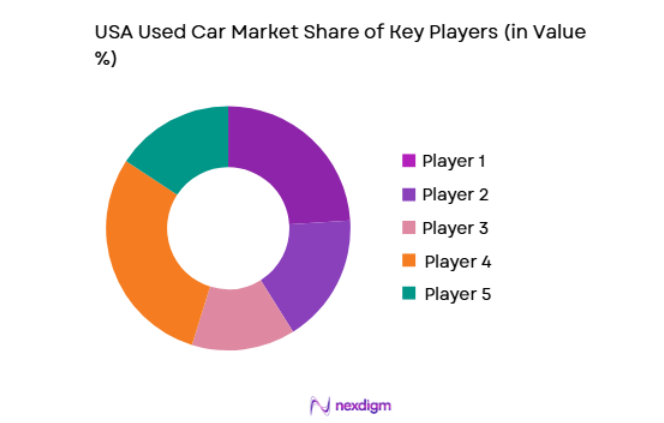
The competitive landscape in the USA Used Car Market is characterized by significant consolidation, with a few large players dominating the online and dealership sectors. Companies such as CarMax, AutoNation, and Carvana have substantial market share, benefiting from their widespread presence, strong brand recognition, and extensive customer networks. Increasingly, these players are integrating digital platforms with physical dealerships, enhancing their ability to meet consumer demand for convenient and flexible used car purchasing experiences.
| Company Name | Establishment Year | Headquarters | Technology Focus | Market Reach | Key Products | Revenue (USD) |
| CarMax | 1993 | Richmond, VA | ~ | ~ | ~ | ~ |
| AutoNation | 1996 | Fort Lauderdale, FL | ~ | ~ | ~ | ~ |
| Carvana | 2012 | Tempe, AZ | ~ | ~ | ~ | ~ |
| Vroom | 2013 | New York, NY | ~ | ~ | ~ | ~ |
| TrueCar | 2005 | Santa Monica, CA | ~ | ~ | ~ | ~ |
USA Used Car Market Analysis
Growth Drivers
Rising Demand for Affordable Vehicles
The increasing demand for affordable vehicles, especially in the wake of economic uncertainty and high new car prices, is a significant growth driver for the USA Used Car Market. As the cost of new vehicles continues to rise due to inflation, consumer preferences are shifting toward used cars, which offer lower purchase prices and slower depreciation rates. Additionally, the availability of low-interest financing and extended warranties for used cars has further spurred consumer interest. Economic factors, such as wage stagnation and higher cost-of-living expenses, have also contributed to the growing popularity of used cars. With more budget-conscious consumers seeking cost-effective alternatives, the used car market is expected to see sustained growth over the next few years.
Digital Transformation of the Car Buying Process
The rapid digital transformation of the car buying process is another key growth driver for the USA Used Car Market. Online platforms such as CarMax, Carvana, and Vroom have revolutionized the way consumers buy used cars, offering them convenience, transparency, and a seamless purchasing experience. Consumers can now research, compare, and purchase used cars online without ever visiting a physical dealership. The convenience of having cars delivered to their doorstep, coupled with the ability to review vehicle histories, financing options, and customer reviews online, has significantly increased the appeal of digital platforms. This shift to online car sales is expected to continue driving market growth, as more consumers embrace the ease of shopping for used vehicles from home.
Market Challenges
Quality and Condition Variability in Used Cars
One of the significant challenges in the USA Used Car Market is the variability in the quality and condition of used vehicles. While some vehicles undergo comprehensive inspections and are certified as pre-owned, others may have hidden issues that could lead to costly repairs down the road. Consumers often face difficulty in assessing the true condition of a used car, especially when purchasing from private sellers or non-certified dealerships. This uncertainty can lead to hesitation in purchasing and a lack of trust in certain used car platforms. While some players have implemented strict certification programs and inspection standards, maintaining consistency in quality remains a challenge for the industry, especially in the unregulated private sales segment.
Supply Chain Issues and Vehicle Availability
The USA Used Car Market also faces challenges related to supply chain disruptions and vehicle availability, especially in the aftermath of global chip shortages and manufacturing delays. The scarcity of new vehicles caused by production slowdowns has reduced the availability of high-quality used cars, leading to higher prices. Dealerships and online platforms are struggling to secure sufficient inventory, which has led to price hikes and reduced choices for consumers. As the used car market relies heavily on trade-ins and vehicle acquisition from new car dealerships, supply chain issues affecting new car production have ripple effects on the availability of used cars. The ongoing challenges in vehicle sourcing will continue to affect the market in the short term.
Opportunities
Growth in Subscription-Based Vehicle Models
The increasing trend of subscription-based vehicle ownership models presents a unique opportunity for the USA Used Car Market. Subscription services allow consumers to drive a used car for a fixed monthly fee, which includes maintenance, insurance, and the option to switch cars periodically. This model appeals to consumers who prefer flexibility and lower long-term commitments compared to traditional car ownership. The rise of car subscription services, especially in urban areas, provides a new revenue stream for used car dealerships and online platforms. As more consumers seek hassle-free alternatives to car ownership, subscription-based models are expected to become a key opportunity in the used car market.
Expansion of Certified Pre-Owned (CPO) Programs
Certified Pre-Owned (CPO) programs offer a significant growth opportunity for the USA Used Car Market. These programs provide consumers with the assurance of high-quality used vehicles that have undergone thorough inspections and come with warranties, enhancing consumer confidence in buying pre-owned cars. With growing consumer concerns about vehicle reliability and longevity, CPO programs offer a way to bridge the gap between new and used car sales. Automakers and dealerships are increasingly investing in expanding their CPO offerings, making this a key opportunity for growth in the market. As more consumers look for certified vehicles with extended warranties, CPO programs are poised to expand in popularity, driving further growth in the used car segment.
Future Outlook
The future of the USA Used Car Market is bright, with significant growth anticipated due to continued consumer demand for affordable vehicles and the increasing preference for online car-buying platforms. Technological advancements in digital vehicle sales, as well as the growing acceptance of used electric vehicles and hybrid models, will continue to fuel market expansion. Regulatory changes and shifts in consumer behavior towards flexible car ownership models, such as subscriptions, will further shape the market dynamics in the coming years.
Major Players
- CarMax
- AutoNation
- Carvana
- Vroom
- TrueCar
- DriveTime Automotive
- Lithia Motors
- EchoPark Automotive
- Penske Automotive
- Group 1 Automotive
- Asbury Automotive
- Sonic Automotive
- CarGurus
- Hertz Global Holdings
- Enterprise Holdings
Key Target Audience
- Automotive Manufacturers
- Fleet Operators
- Government Agencies
- Regulatory Bodies
- Investors and Venture Capital Firms
- Dealerships
- Online Marketplaces
- Automotive Aftermarket Suppliers
Research Methodology
Step 1: Identification of Key Variables
Identify key factors such as consumer preferences, regulatory trends, and technology adoption that influence the used car market.
Step 2: Market Analysis and Construction
Use data from primary and secondary sources to construct a comprehensive market model.
Step 3: Hypothesis Validation and Expert Consultation
Consult with automotive industry experts and key stakeholders to validate assumptions and insights.
Step 4: Research Synthesis and Final Output
Compile the findings into a report that provides actionable insights for stakeholders in the used car market.

- Executive Summary
- Research Methodology (Definitions, Scope, Industry Assumptions, Market Sizing Approach, Primary & Secondary Research Framework, Data Collection & Verification Protocol, Analytic Models & Forecast Methodology, Limitations & Research Validity Checks)

- Market Definition and Scope
- Value Chain & Stakeholder Ecosystem
- Regulatory / Certification Landscape
- Sector Dynamics Affecting Demand
- Strategic Initiatives & Infrastructure Growth

- Growth Drivers
Rising demand for affordable vehicles
Increase in online car sales
Growing acceptance of used cars in new car markets - Market Challenges
Supply chain disruptions affecting vehicle availability
Fluctuating used car prices
Quality and condition variations in the used car market - Market Opportunities
Expansion of online platforms for used car sales
Increased demand for electric and hybrid used cars
Growth in CPO (Certified Pre-Owned) programs - Trends
Rise in online car sales platforms
Shift toward hybrid and electric used vehicles
Increasing popularity of subscription-based car models - Government regulations
Regulations on used car emissions
Standards for certified pre-owned vehicles
Consumer protection laws in used car sales - SWOT analysis
- Porters 5 forces

- By Market Value, 2019-2024
- By Installed Units, 2019-2024
- By Average System Price, 2019-2024
- By System Complexity Tier, 2019-2024

- By Vehicle Type (In Value%)
Sedans
SUVs
Pickup Trucks
Minivans
Sports Cars - By Platform Type (In Value%)
Online Marketplaces
Dealerships
Private Sellers
Auction Houses
Certified Pre-Owned (CPO) Programs - By Fitment Type (In Value%)
OEM Used Cars
Aftermarket Used Cars
Certified Pre-Owned (CPO)
Refurbished Used Cars
Leased Used Cars - By EndUser Segment (In Value%)
Individual Buyers
Fleet Buyers
Leasing Companies
Dealerships
Rental Agencies - By Procurement Channel (In Value%)
Online Platforms
Traditional Dealerships
Private Purchases

- Market Share Analysis
- Cross Comparison Parameters (Vehicle Type, Platform Type, Procurement Channel, EndUser Segment, Fitment Type, Pricing Trends, Technological Integration, Customer Demographics, Market Reach, Product Availability)
- SWOT Analysis of Key Competitors
- Pricing & Procurement Analysis
- Key Players
CarMax
AutoNation
Vroom
Shift Technologies
TrueCar
Carvana
Penske Automotive
Group 1 Automotive
Lithia Motors
DriveTime Automotive
Sonic Automotive
Asbury Automotive
EchoPark Automotive
Hertz Global Holdings
Enterprise Holdings

- Growth in consumer demand for used vehicles
- Increasing interest in leasing used vehicles
- Expanding market for electric and hybrid vehicles
- Growing use of online platforms for car buying and selling

- Forecast Market Value, 2025-2030
- Forecast Installed Units, 2025-2030
- Price Forecast by System Tier, 2025-2030
- Future Demand by Platform, 2025-2030


 Request a Sample
 Ask for Customization
 Get a Quote
 Enquire Now