
 Download PDF
 Download PDF
Market Overview
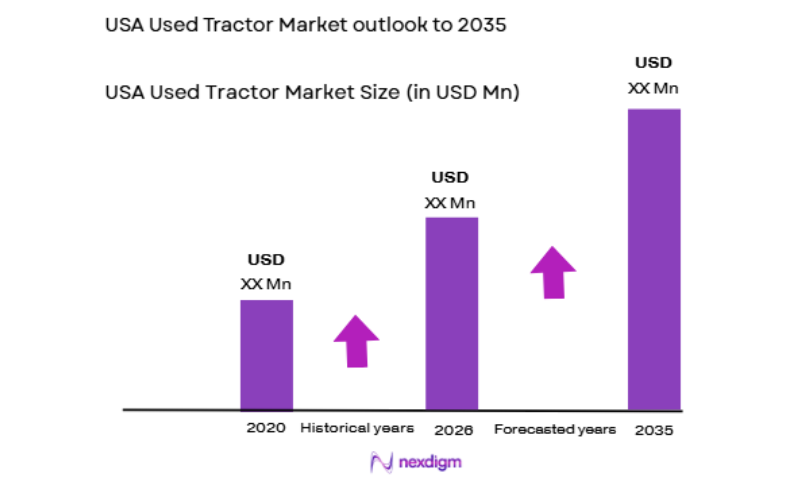
The USA Used Tractor market is valued at approximately USD ~ billion, driven by the demand for cost-effective solutions in agriculture, particularly from small and medium-sized farms. As agricultural production continues to rise, the need for efficient, yet affordable machinery grows. Used tractors are increasingly seen as a viable alternative to new machines, offering farmers significant savings while providing the essential capabilities needed for modern farming operations. Technological advancements and improved durability in used tractors further enhance their attractiveness in the market.
The market is mainly concentrated in agricultural hubs across the country, including states such as California, Iowa, and Nebraska. These areas, known for their extensive farming operations, are the primary demand centers for used tractors. With a well-established infrastructure for both the sale and maintenance of used equipment, these regions dominate the market. The accessibility of repair services and spare parts in these areas further boosts the demand, making them key players in the used tractor market.
Market Segmentation
By Product Type
The USA Used Tractor market is segmented by product type into compact tractors, utility tractors, row crop tractors, orchard tractors, and garden tractors. Recently, compact tractors have dominated the market share due to their versatility, ease of use, and affordability for small to medium-scale farms. These tractors are ideal for a wide range of tasks, including landscaping, small-scale farming, and light construction work. The rising demand for compact tractors is driven by their ability to operate in smaller spaces, making them suitable for diverse agricultural operations in both rural and urban settings.

By Platform Type
The market is segmented by platform type into wheel-mounted tractors, track-mounted tractors, self-propelled tractors, trailer-mounted tractors, and automated tractors. Wheel-mounted tractors currently hold the largest market share due to their affordability, ease of use, and ability to operate in various terrains. These tractors are commonly used in general farming operations, making them the preferred choice for most farmers. The flexibility and lower operating costs of wheel-mounted tractors contribute to their dominance in the market, especially in smaller farming operations that require versatile equipment.

Competitive Landscape
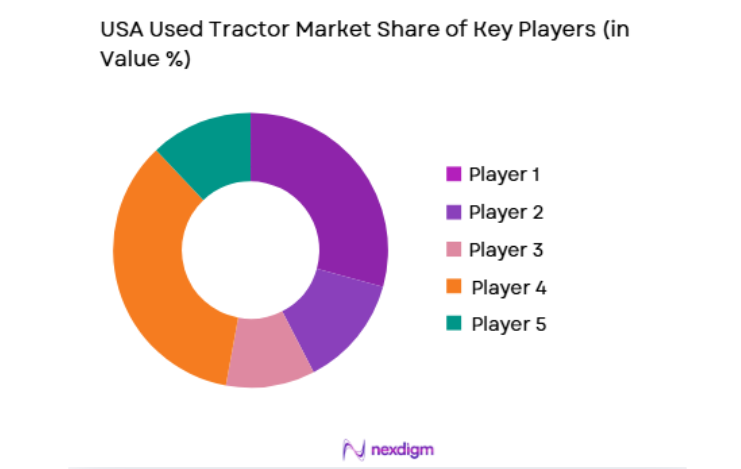
The competitive landscape of the USA Used Tractor market is characterized by a mix of established global players and local distributors. While large manufacturers such as John Deere, Kubota, and Massey Ferguson dominate the market, smaller players and independent dealers play a key role in offering used tractors, providing competition based on price, service, and customization options. Consolidation in the industry is apparent, as major players continue to expand their offerings, including financing and after-sales services, to strengthen their positions in both the new and used tractor markets.
| Company Name | Establishment Year | Headquarters | Technology Focus | Market Reach | Key Products | Revenue (USD Billion) | Additional Market-Specific Parameter |
| John Deere | 1837 | Moline, IL, USA | ~ | ~ | ~ | ~ | ~ |
| Kubota Corporation | 1890 | Osaka, Japan | ~ | ~ | ~ | ~ | ~ |
| Massey Ferguson | 1847 | Beauvais, France | ~ | ~ | ~ | ~ | ~ |
| CLAAS | 1913 | Harsewinkel, Germany | ~ | ~ | ~ | ~ | ~ |
| AGCO Corporation | 1990 | Duluth, GA, USA | ~ | ~ | ~ | ~ | ~ |
USA Used Tractor Market Analysis
Growth Drivers
Technological Advancements in Used Tractor Equipment
Technological advancements in used tractor equipment are a significant growth driver for the market. As tractors become more advanced, even older models are being upgraded with newer technologies, such as GPS, auto-steering, and automated systems. These enhancements make used tractors more efficient, reliable, and cost-effective, encouraging their adoption. Furthermore, technological innovations have increased the lifespan and functionality of used tractors, making them a more attractive option for farmers. The growing trend of precision farming, which requires advanced machinery, has further accelerated the demand for both new and used tractors equipped with cutting-edge technology. These innovations allow farmers to reduce input costs, increase productivity, and make better decisions, driving the demand for more technologically advanced used tractors.
Government Support for Agricultural Mechanization
Government support for agricultural mechanization is another key growth driver in the USA Used Tractor market. Agricultural policies aimed at improving productivity and efficiency in the farming sector are promoting the adoption of mechanized farming equipment, including used tractors. Government subsidies, low-interest loans, and financing options are helping small and medium-scale farmers access affordable machinery. As part of its agricultural modernization strategy, the US government is encouraging the use of tractors and other mechanized equipment to reduce manual labor, increase production efficiency, and ensure sustainable farming practices. The rise in government initiatives to promote farm mechanization, especially in rural areas, is significantly boosting the demand for used tractors, as these programs make purchasing such equipment more financially feasible for farmers.
Market Challenges
High Maintenance and Repair Costs of Used Tractors
One of the primary challenges facing the USA Used Tractor market is the high maintenance and repair costs associated with older equipment. While used tractors offer a more affordable initial investment compared to new ones, the costs of maintaining and repairing older machinery can add up quickly. Farmers may struggle with the availability of spare parts, especially for older models, leading to increased downtime and additional repair costs. These factors can make the total cost of ownership for used tractors higher than expected, causing some farmers to hesitate in purchasing used equipment. Furthermore, the lack of technical expertise in rural areas can lead to delays in repair work, reducing the overall effectiveness of the machinery.
Limited Access to Financing for Small Scale Farmers
Access to financing remains a significant challenge for small-scale farmers in the USA Used Tractor market. Many small farmers face difficulty securing loans or credit to purchase used tractors due to high interest rates, stringent lending terms, and a lack of collateral. Although government programs are available to assist in financing, they are often limited in scope or have complex application processes. This restricts the ability of small-scale farmers to invest in necessary equipment, thereby limiting their operational efficiency. The lack of affordable and accessible financing options remains a critical barrier for many farmers who could otherwise benefit from upgrading to more efficient used tractors.
Opportunities
Rise in Demand for Used Tractor Rentals
The rise in demand for used tractor rentals presents a significant opportunity in the market. Many small and medium-scale farmers are opting for rental services due to the high initial cost of purchasing a tractor. Renting used tractors allows farmers to access high-quality machinery without the long-term financial commitment of ownership. This model is particularly attractive for seasonal use or small-scale operations, where purchasing new or used equipment may not be economically viable. The growing trend of agricultural equipment leasing is creating new business opportunities for rental companies, who are increasingly offering flexible rental terms and maintenance services, making it a win-win for both farmers and rental service providers.
Refurbishment and Upgrades of Used Tractors
The refurbishment and upgrading of used tractors present another key opportunity in the market. Many used tractors on the market can be modernized with new technologies, improving their performance and extending their lifespan. Refurbished tractors, which include updated features like GPS systems, enhanced fuel efficiency, and advanced safety mechanisms, are highly attractive to farmers seeking affordable yet advanced equipment. This growing trend of refurbishing used tractors not only benefits farmers by providing them with cost-effective solutions but also enables dealerships and manufacturers to generate additional revenue by offering these upgraded machines. The demand for refurbished tractors is expected to increase as the agricultural industry continues to prioritize efficiency and sustainability.
Future Outlook
The future outlook for the USA Used Tractor market looks positive, with steady growth expected due to ongoing technological advancements, increased government support for mechanization, and the rise in agricultural rental services. The market will benefit from the continued demand for affordable farming equipment, with used tractors offering a cost-effective solution for farmers. Innovations in tractor technology, such as improved fuel efficiency and automation, will continue to enhance the attractiveness of used tractors. Government policies promoting farm modernization and mechanization will further support the market’s growth over the coming years.
Major Players
- John Deere
- Kubota Corporation
- Massey Ferguson
- CLAAS
- AGCO Corporation
- New Holland Agriculture
- Case IH
- Sampo Rosenlew
- Foton Lovol International Heavy Industry
- Yanmar Co.
- Zoomlion Heavy Industry
- Mahindra & Mahindra
- Dongfeng Agricultural Machinery
- LiuGong Machinery
- Jiangsu Yueda Intelligent Agricultural Equipment
Key Target Audience
- Investments and venture capitalist firms
- Government and regulatory bodies
- Agricultural machinery manufacturers
- Farming co-operatives
- Agricultural equipment distributors
- Agricultural machinery leasing companies
- Large-scale farming operations
- Agricultural service providers
Research Methodology
Step 1: Identification of Key Variables
Identifying key factors affecting the market, such as technological trends, demand for specific tractor types, and financial constraints.
Step 2: Market Analysis and Construction
Gathering data from primary and secondary sources to construct a comprehensive analysis of the market, focusing on segmentation and growth patterns.
Step 3: Hypothesis Validation and Expert Consultation
Engaging with industry experts and stakeholders to validate research findings and ensure accurate market projections.
Step 4: Research Synthesis and Final Output
Compiling and synthesizing the research data into a final market report, providing actionable insights and strategic recommendations.

- Executive Summary
- Research Methodology (Definitions, Scope, Industry Assumptions, Market Sizing Approach, Primary & Secondary Research Framework, Data Collection & Verification Protocol, Analytic Models & Forecast Methodology, Limitations & Research Validity Checks)

- Market Definition and Scope
- Value Chain & Stakeholder Ecosystem
- Regulatory / Certification Landscape
- Sector Dynamics Affecting Demand

- Growth Drivers
Increase in Agricultural Production and Demand for Efficiency
Government Support for Agricultural Mechanization
Technological Advancements in Tractor Equipment - Market Challenges
High Maintenance Costs of Used Tractors
Lack of After-Sales Support for Used Equipment
Limited Access to Financing for Small Scale Farmers - Market Opportunities
Growth of the Agricultural Equipment Rental Market
Rising Demand for Sustainable and Low-Cost Tractors
Technological Upgrades and Refurbishing of Used Tractors - Trends
Rising Popularity of Autonomous Tractors
Increasing Adoption of IoT and Smart Technology in Tractors
Shift Towards Environmentally Sustainable Farming Equipment - Government regulations
- SWOT analysis
- Porters 5 forces

- By Market Value, 2020-2025
- By Installed Units, 2020-2025
- By Average System Price, 2020-2025
- By System Complexity Tier, 2020-2025

- By System Type (In Value%)
Compact Tractors
Utility Tractors
Row Crop Tractors
Orchard Tractors
Garden Tractors - By Platform Type (In Value%)
Wheel-mounted Tractors
Track-mounted Tractors
Self-propelled Tractors
Trailer-mounted Tractors
Automated Tractors - By Fitment Type (In Value%)
Aftermarket Tractors
OEM Tractors
Customized Tractors
Standardized Tractors
Refurbished Tractors - By EndUser Segment (In Value%)
Large Scale Farms
Small Scale Farms
Agricultural Co-operatives
Government and Public Sector
Agricultural Equipment Rental Services - By Procurement Channel (In Value%)
Direct Procurement
Agricultural Equipment Dealers
Online Marketplaces
Government Tenders

- Market Share Analysis
- Cross Comparison Parameters (System Type, Platform Type, Procurement Channel, EndUser Segment, Fitment Type, Market Share, Operational Efficiency, Fuel Efficiency, After-Sales Service, Equipment Age, Technology Integration)
- SWOT Analysis of Key Competitors
- Pricing & Procurement Analysis
- Key Players
Kubota Corporation
John Deere
Case IH
Massey Ferguson
New Holland Agriculture
Claas
AGCO Corporation
Sampo Rosenlew
Mahindra & Mahindra
Yanmar Co.
Zoomlion Heavy Industry
Dongfeng Agricultural Machinery
LiuGong Machinery
Jiangsu Yueda Intelligent Agricultural Equipment
Foton Lovol International Heavy Industry

- Large scale farms increasing demand for cost-effective machinery
- Government and co-operatives supporting agricultural mechanization
- Small scale farmers’ preference for affordable, refurbished equipment
- Rental services providing affordable options for smaller farms

- Forecast Market Value, 2026-2035
- Forecast Installed Units, 2026-2035
- Price Forecast by System Tier, 2026-2035
- Future Demand by Platform, 2026-2035


 Request a Sample
 Ask for Customization
 Get a Quote
 Enquire Now