
 Download PDF
Market Overview
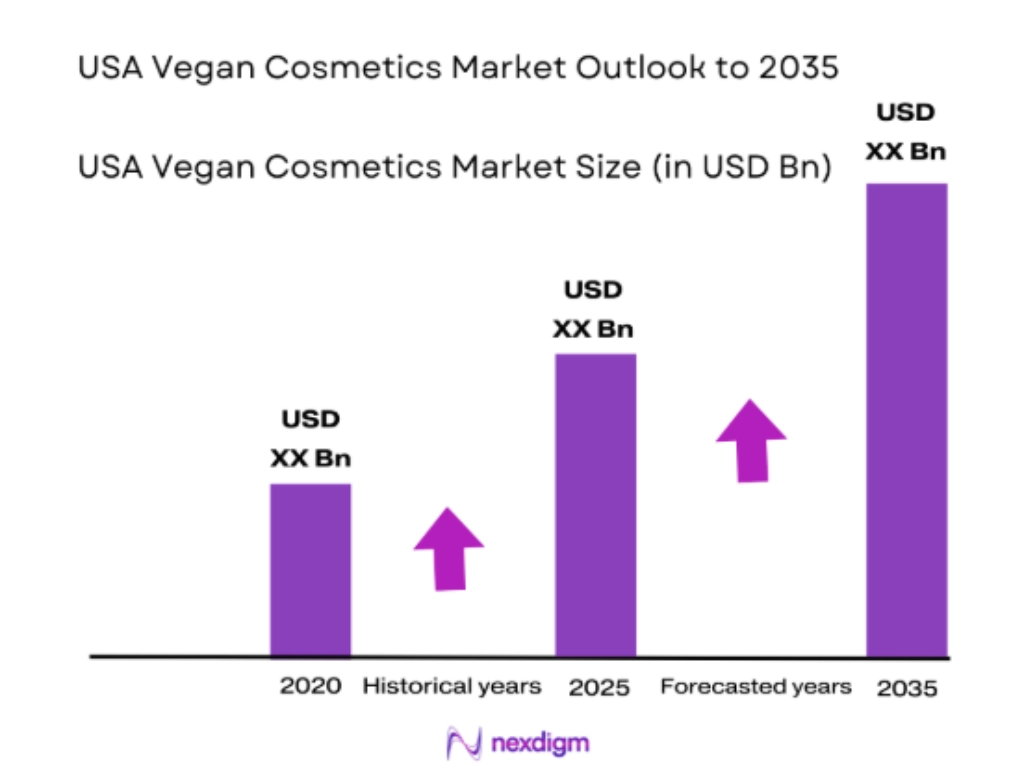
The USA vegan cosmetics market is valued at approximately USD ~ billion, supported by a steady increase from USD ~ billion, driven by strong consumer inclination toward ethical consumption and ingredient transparency. Growth is underpinned by rising demand for plant-based formulations, expansion of certified vegan SKUs, and increasing online penetration. Major retail platforms and direct-to-consumer channels have accelerated accessibility, while premiumization trends and dermatologically safe formulations continue to enhance average selling prices across categories.
The market is geographically dominated by metropolitan hubs such as New York, Los Angeles, San Francisco, and Chicago due to higher disposable income, early adoption of clean beauty trends, and strong retail infrastructure. Coastal regions lead in innovation and brand launches owing to proximity to beauty incubators and influencer ecosystems. These cities also benefit from a dense concentration of specialty retailers, strong e-commerce logistics, and a consumer base that prioritizes sustainability, wellness, and cruelty-free product positioning.
Market Segmentation
By Product Category
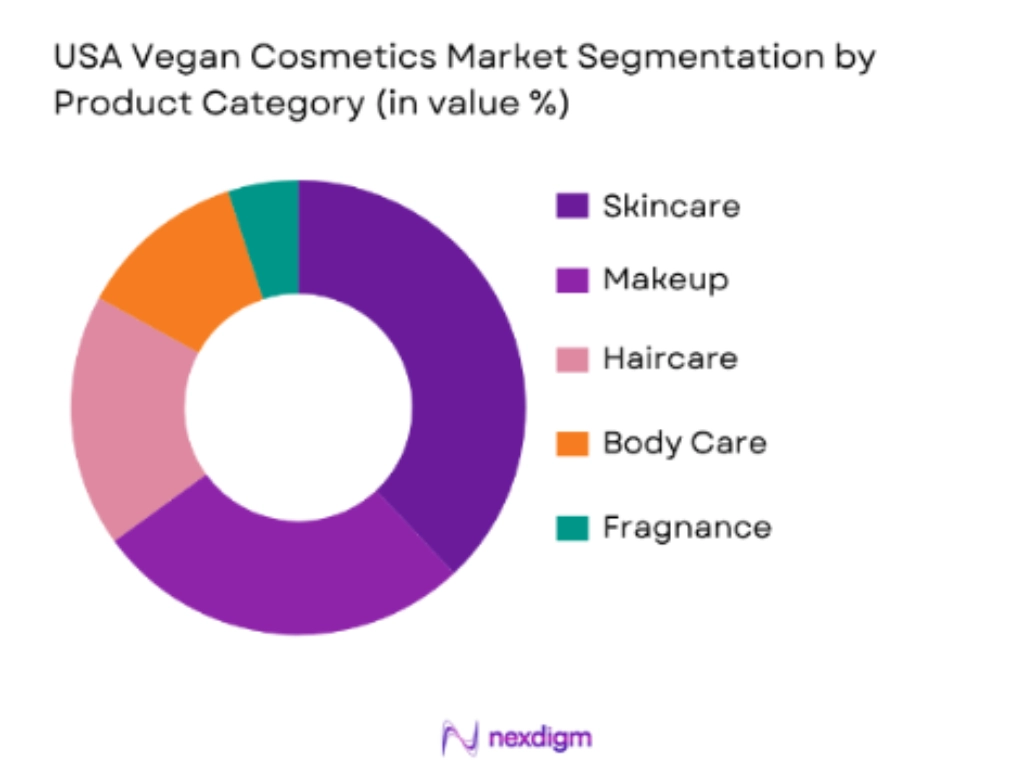
The USA vegan cosmetics market is segmented by product category into skincare, makeup, haircare, body care, and fragrance. Skincare dominates the market due to increasing consumer awareness around ingredient safety, dermatological compatibility, and long-term skin health. Vegan skincare aligns with the broader “skinification” trend, where consumers seek functional, treatment-based products with plant-derived actives. Additionally, concerns around sensitive skin and allergen-free formulations have boosted adoption. The expansion of serums, moisturizers, and barrier-repair products in vegan formats has further strengthened this segment’s leadership position.
By Distribution Channel
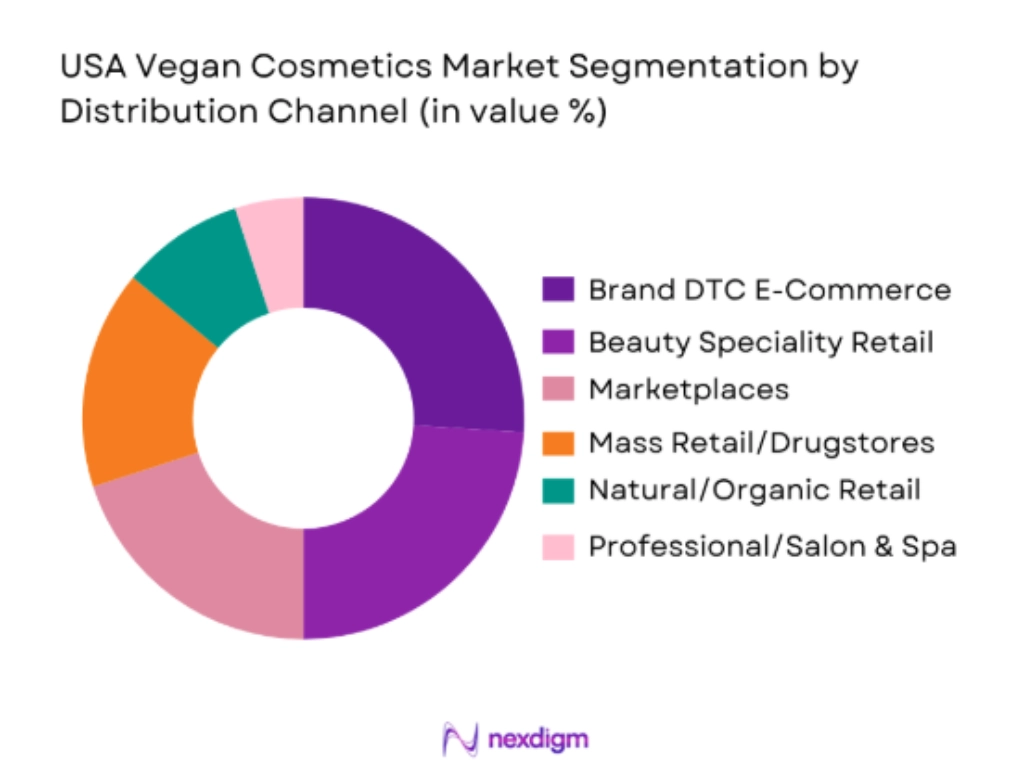
The market is segmented by distribution channel into brand DTC e-commerce, beauty specialty retail, marketplaces, mass retail/drugstores, natural/organic retail, and professional/salon & spa. Brand DTC e-commerce holds a dominant position due to its ability to offer curated brand experiences, personalized recommendations, and direct engagement with consumers. This channel also allows brands to communicate vegan claims transparently and control pricing strategies. Subscription models, exclusive product drops, and influencer-led campaigns have further accelerated DTC growth, while improved logistics and digital marketing capabilities continue to enhance conversion rates and customer retention.
Market Competitive Landscape
The USA vegan cosmetics market is moderately consolidated with a mix of established global brands and emerging indie players. Companies differentiate themselves through certification credibility, ingredient innovation, and omnichannel presence. Strong brand storytelling and sustainability positioning remain key competitive levers, while partnerships with influencers and dermatologists enhance market visibility.
| Company Name | Establishment Year | Headquarters | Vegan SKU Penetration | Certification Mix | Core Category Focus | Price Positioning | Channel Strength | Sustainability Initiatives |
| e.l.f. Beauty | 2004 | Oakland, USA | – | – | – | – | – | – |
| Pacifica Beauty | 1996 | Portland, USA | – | – | – | – | – | – |
| Milk Makeup | 2016 | New York, USA | – | – | – | – | – | – |
| ILIA Beauty | 2011 | Laguna Beach, USA | – | – | – | – | – | – |
| Herbivore Botanicals | 2011 | Seattle, USA | – | – | – | – | – | – |
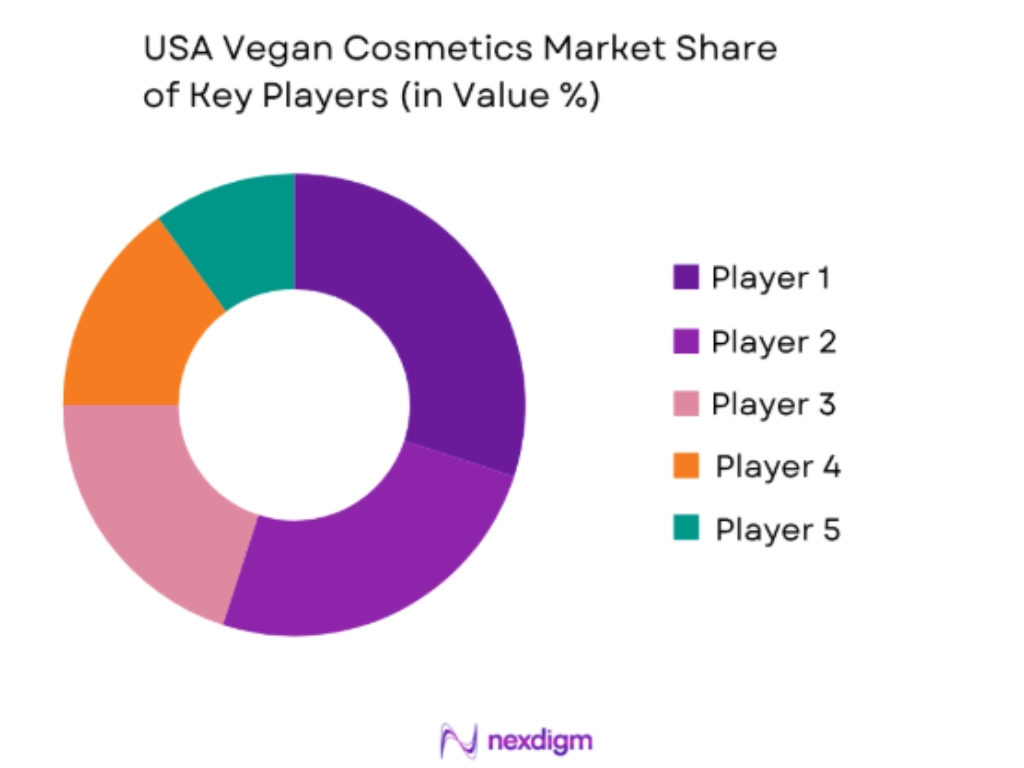
USA Vegan Cosmetics Market Analysis
Growth Drivers
Ethical Consumption
Ethical consumption is a tangible demand driver for USA vegan cosmetics because consumers now have both the spending capacity and the labeling infrastructure to act on animal-free preferences at scale. The World Bank places U.S. GDP at USD 28.75 trillion and GDP per capita at USD 84,534 for 2024, while the U.S. Bureau of Economic Analysis reported that disposable personal income rose by USD 79.7 billion and personal consumption expenditures rose by USD 133.6 billion in December 2024 alone. That purchasing power is increasingly meeting clearly signposted ethical-product ecosystems: PETA stated in July 2025 that its Ultimate Cruelty-Free List covered more than 6,300 manufacturers of cosmetics, personal-care, and household items, and The Vegan Society reported in 2025–2026 that the Vegan Trademark covered over 70,000 products across 68 countries, including over 35,000 cosmetic and toiletry products. For vegan cosmetics, this matters because ethical intent is no longer abstract; consumers can identify, compare, and buy products with third-party verification instead of relying only on brand claims, which materially strengthens the category’s conversion potential in makeup, skincare, haircare, and body care.
Ingredient Transparency
Ingredient transparency is now a direct growth lever for USA vegan cosmetics because regulatory infrastructure has moved closer to product-level disclosure, which favors brands built around explicit ingredient exclusion. FDA states that every marketed cosmetic product must be listed by a responsible person and that the listing includes product ingredients, with updates required annually. As of January 6, 2026, FDA reported 14,299 unique active cosmetic facility registrations and 992,907 unique active cosmetic product listings under MoCRA. The underlying compliance timetable also became operational in 2024: FDA’s guidance says facilities entering cosmetic manufacturing after December 29, 2022 had to register within 60 days or by February 27, 2024, and products first marketed after that date had to be listed within 120 days or by April 27, 2024, with FDA’s enforcement discretion running until July 1, 2024. In a market like vegan cosmetics, where brands frequently differentiate through exclusions such as beeswax, lanolin, carmine, collagen, and animal-derived glycerin, this structured listing environment improves the commercial value of clear formulations. Backed by a 2024 U.S. economy of USD 28.75 trillion, transparency is becoming a scalable purchasing criterion rather than a niche brand story.
Market Restraints
Claim Ambiguity
Claim ambiguity remains a real restraint in USA vegan cosmetics because “vegan,” “cruelty-free,” and “animal test-free” do not function as identical legal or commercial signals. PETA stated in July 2025 that there are few specific laws worldwide, and none in the U.S., regarding labeling products as ‘cruelty-free’ or ‘no animal testing’. FDA’s own framework reinforces the gap between registration and endorsement: the agency explicitly says cosmetic registration and listing are not an approval program and not a promotional tool. That becomes more problematic as scale rises. FDA reported 992,907 active cosmetic product listings and 14,299 active facilities as of January 6, 2026, yet the FDA cosmetics warning-letter page lists only 3 individual cosmetics warning letters dated in 2024. In practice, vegan-cosmetics shoppers face a large and still uneven field of self-declared marketing language, while brands that invest in stricter ingredient screening and third-party validation must compete on the same digital shelf with looser claims. Even in a high-income market with GDP per capita of USD 84,534 in 2024, label confusion can slow conversion, increase comparison friction, and dilute trust in premium vegan positioning.
Certification Cost
Certification cost restrains USA vegan cosmetics less through government filing fees and more through cumulative compliance, renewal, and logo-licensing burden. FDA states that the fee for cosmetic facility registration and product listing under MoCRA is USD 0, but that does not eliminate operating cost. FDA also requires product-listing updates annually, facility-registration renewal every 2 years, and notes that obtaining an ESG NextGen account for submission can take 1 to 3 weeks. On the third-party side, PETA says listing is free but using its logo requires a one-time USD 350 licensing fee, while The Vegan Society states that the Vegan Trademark is renewed yearly. These requirements matter more in a fast-moving U.S. beauty channel because distribution is large and competitive: U.S. Census Bureau data show health and personal care store sales of USD 475,970 million in 2025, and the March 2026 retail release reported USD 74,164 million in health and personal care store sales for the current month. For vegan cosmetics start-ups and small brands, certification is commercially valuable, but stacking annual documentation, supplier verification, and logo rights can still delay launches and compress already-tight operating bandwidth.
Market Opportunities
Refillable Formats
Refillable formats are a credible forward opportunity for USA vegan cosmetics because current regulatory and retail conditions already show operational room for scale without relying on future assumptions. California’s 2025 reuse-and-refill assessment documented beauty-adjacent refill activity in personal care, including 37 shampoo refill-dispensing observations and 3 shampoo refill single-use observations, while also recording 9 in-person community pop-up events to test and observe solution access. That is still early-stage, but it shows refill is no longer theoretical inside liquid personal-care routines that overlap directly with vegan haircare and body-care portfolios. The broader retail base is large enough to absorb format innovation: U.S. Census Bureau data show health and personal care store sales at USD 475,970 million in 2025, with USD 74,164 million reported in the March 2026 retail release. Add a 2024 U.S. GDP per capita of USD 84,534, and the commercial logic becomes clearer: vegan brands are well positioned to combine ingredient ethics with packaging reduction in categories such as shampoo, body wash, lotion, and cleansers, especially where repeat purchase cycles are frequent and consumer-owned containers are practical.
Vegan SPF Innovation
Vegan SPF innovation is a strong opportunity because sun-protection need is already large, while the regulatory pathway for sunscreen innovation improved in 2025. The National Cancer Institute reported that 100,640 people in the United States were expected to be diagnosed with melanoma in 2024, with 8,290 estimated deaths, and also noted that basal and squamous cell carcinomas occur in 3.3 million individuals each year. On the regulatory side, FDA announced in December 2025 that it was proposing to add bemotrizinol as a permitted sunscreen active ingredient, expanding the range of active ingredients available to formulators and widening consumer choice if finalized. That matters to vegan cosmetics because SPF remains one of the hardest areas to balance performance, elegance, ingredient-exclusion rules, and sensitive-skin compatibility. The commercial backdrop is also supportive: U.S. health and personal care store sales reached USD 475,970 million in 2025, and BEA reported consumer spending up by USD 133.6 billion in December 2024. In that context, vegan SPF sits at the intersection of daily-use skincare, preventive health relevance, and formulation innovation, making it one of the cleaner whitespace opportunities in the category.
Market Future Outlook
Over the next decade, the USA vegan cosmetics market is expected to experience sustained growth driven by continuous innovation in plant-based formulations, expansion of certification frameworks, and increasing consumer awareness regarding ethical consumption. Advancements in biotechnology-derived ingredients and improvements in product performance will address earlier limitations related to texture and pigmentation.
Major Players in the Market
- e.l.f. Beauty
- Pacifica Beauty
- Milk Makeup
- KVD Beauty
- Rare Beauty
- ILIA Beauty
- Saie
- Youth To The People
- Herbivore Botanicals
- CoverGirl
- Urban Decay
- tarte cosmetics
- Tower 28 Beauty
- cocokind
- Axiology Beauty
Key Target Audience
- Cosmetic manufacturers and product developers
- Retail chains and specialty beauty stores
- E-commerce platforms and marketplace operators
- Investments and venture capitalist firms
- Government and regulatory bodies (U.S. Food and Drug Administration, Federal Trade Commission)
- Packaging and sustainability solution providers
- Dermatology clinics and skincare professionals
- Ingredient suppliers and biotechnology firms
Research Methodology
Step 1: Identification of Key Variables
The initial phase involves mapping the ecosystem of the USA vegan cosmetics market, identifying stakeholders such as manufacturers, suppliers, retailers, and certification bodies. Secondary research from industry databases and company reports is used to define variables influencing demand, including pricing, ingredient trends, and consumer behavior patterns.
Step 2: Market Analysis and Construction
Historical data is compiled and analyzed to estimate market size, segmentation, and growth trends. This includes evaluating revenue streams across categories, analyzing SKU distribution, and understanding channel-wise sales performance. Data triangulation ensures accuracy across multiple sources.
Step 3: Hypothesis Validation and Expert Consultation
Key assumptions and findings are validated through expert interviews with industry professionals, including brand executives, retailers, and formulation specialists. These consultations provide insights into operational challenges, innovation trends, and consumer preferences, refining the overall analysis.
Step 4: Research Synthesis and Final Output
The final phase integrates findings from primary and secondary research to develop a comprehensive report. Data is cross-verified through bottom-up and top-down approaches, ensuring reliability and consistency. The output delivers actionable insights into market dynamics, competitive positioning, and future opportunities.

- Executive Summary
- Research Methodology (Market Definitions and Assumptions, Abbreviations, Bottom-Up Market Mapping, Top-Down Market Validation, Triangulation Through Primary Interviews, Brand and SKU Universe Construction, Channel Benchmarking Framework, Pricing Benchmarking Logic, Certification and Claim-Mapping Approach, Consumer Cohort Analysis Framework, Limitations and Research Considerations)

- Definition and Scope
- Market Genesis and Evolution of Vegan Beauty in the United States
- Distinction Between Vegan, Cruelty-Free, Clean, Natural, Organic, and Sensitive-Skin Positioning
- Value Chain Analysis
- Supply Chain Analysis
- Raw Material and Ingredient Substitution Landscape
- Packaging and Sustainability Transition Landscape
- Innovation Timeline of Vegan Beauty Brands and Retailers
- Business Cycle and Demand Seasonality

- Growth Drivers (Ethical Consumption, Ingredient Transparency, Skinification, Sensitive-Skin Demand, Clean Beauty Convergence, Social Commerce Influence, Omnichannel Accessibility, Celebrity/Creator-Led Brand Pull)
- Market Restraints (Claim Ambiguity, Certification Cost, Formula Stability Challenges, Pigment and Texture Performance Gaps, Premium Pricing Pressure, Shelf Competition, Consumer Skepticism, Regulatory Scrutiny)
- Market Opportunities (Refillable Formats, Vegan SPF Innovation, Dermatologist-Backed Vegan Skincare, Men’s Vegan Grooming, Hybrid Skincare-Makeup, Travel Minis, Shade Expansion, Marketplace Premiumization)
- Market Trends (Tinted and Skin-Like Finishes, Multi-Use Formats, Fragrance-Free Expansion, Fermentation-Derived Actives, Barrier Repair Positioning, Minimalist Routines, Wellness-Led Beauty, Value-Conscious Premiumization)
- Regulatory Landscape (MoCRA Readiness, Facility Registration, Product Listing, Adverse Event Reporting, Label Claim Guardrails, Ingredient Disclosure, Packaging Label Compliance, State-Level Claim Exposure)
- Ingredient and Formulation Benchmarking (Beeswax Alternatives, Carmine Alternatives, Lanolin Alternatives, Vegan Collagen Alternatives, Plant Oils and Butters, Biotech Actives, Preservative Systems, Sensory Performance)
- Pricing Analysis (ASP by Category, ASP by Channel, Promotional Intensity, Bundle Economics, Trial-Size Pricing, Prestige Mark-Up, Marketplace Discounting, Subscription Economics)
- Consumer Purchase Journey Analysis (Discovery Channel, Trial Trigger, Review Dependency, Sampling Role, Repurchase Driver, Claim Priority, Shade Match Friction, Abandonment Factors)
- Trade and Retailer Analysis (Shelf Placement, Filter Visibility, Assortment Breadth, Retailer Badging, Tester Availability, Sampling Support, Launch Cadence, Door Productivity)
- Porter’s Five Forces
- SWOT Analysis
- Stakeholder Ecosystem
- White Space Opportunity Mapping (Underpenetrated Categories, Channel Gaps, Certification Gaps, Shade Gaps, Price White Spaces, Region White Spaces, Consumer White Spaces, Packaging White Spaces)

- By Value(2020-2025)
- By Volume(2020-2025)
- By Average Selling Price(2020-2025)
- By Organized vs Unorganized Share(2020-2025)
- By Branded vs Private Label Share(2020-2025)

- By Product Category (In Value %)
Makeup
Skincare
Haircare
Body Care
Fragrance - By Category Function (In Value%)
Face Makeup
Eye Makeup
Lip Products
Facial Skincare
Body Skincare
Hair Treatment
Cleansing
Sun Protection - By Claim Architecture (In Value%)
100% Vegan
Vegan + Cruelty-Free
Vegan + Clean
Vegan + Dermatologist-Tested/Sensitive-Skin
Vegan + Sustainable Packaging - By Certification / Trust Marker (In Value%)
Leaping Bunny Certified
Vegan Society Trademark
Vegan Action Certified
PETA Beauty Without Bunnies
Self-Declared Vegan Claims - By Price Tier (In Value%)
Mass
Masstige
Prestige
Premium/Luxury
Indie Premium - By Distribution Channel (In Value%)
Brand DTC E-Commerce
Beauty Specialty Retail
Mass Retail/Drugstores
Marketplaces
Natural/Organic Retail
Professional/Salon & Spa - By Consumer Cohort (In Value%)
Gen Z
Millennials
Gen X
Baby Boomers+
Gender-Neutral/Men’s Grooming Buyers - By Region (In Value%)
Northeast
Midwest
South
West

- Market Share Analysis of Major Players (By Value, By Volume, By Category Mix, By Channel Presence)
- Cross Comparison Parameters (Vegan SKU Penetration, Third-Party Certification Mix, Hero Category Concentration, Average Selling Price Band, Shade Range Depth, Ingredient Exclusion Breadth, Omni-Channel Reach, Sustainability/Refillability Adoption)
- Competitive Positioning Matrix (Mass vs Prestige, Makeup-Led vs Skincare-Led, Certified vs Self-Declared, DTC-Led vs Retail-Led)
- SWOT Analysis of Major Players
- Pricing Benchmarking of Key SKUs Across Major Players (Foundation/Tint, Mascara, Lip, Serum, Cleanser, Hair Treatment, Body Care, Fragrance)
- Shelf and Digital Visibility Benchmarking (Search Ranking, Retail Filters, Review Count, Rating Strength, Social Engagement, Creator Partnerships)
- Detailed Profiles of Major Companies
e.l.f. Beauty
Pacifica Beauty
Milk Makeup
KVD Beauty
Rare Beauty
ILIA Beauty
Saie
Youth To The People
Herbivore Botanicals
CoverGirl
Urban Decay
tarte cosmetics
Tower 28 Beauty
cocokind
Axiology Beauty

- Demand by Routine Stage (Prep, Correct, Color, Treat, Protect, Finish; Usage Intensity, Basket Mix, Repurchase Cycle)
- Purchase Decision Matrix (Claim Priority, Ingredient Exclusion Priority, Price Sensitivity, Performance Expectations, Brand Trust Triggers)
- Consumer Pain Point Analysis (Shade Mismatch, Texture Performance, Wear Time, Sensitivity Reactions, Certification Confusion, Price Accessibility)
- Brand Switching and Loyalty Analysis (Repurchase Rate, Trial-to-Repeat Conversion, Promo Sensitivity, Channel Migration, Review Influence)
- Average Basket and Consumption Pattern Analysis (Units per Basket, Multi-Category Penetration, Cross-Sell Affinity, Refill/Replacement Frequency)
- Buyer Persona Mapping (Conscious Minimalist, Clean Beauty Upgrader, Prestige Vegan Enthusiast, Sensitive-Skin Seeker, Trend-Driven Social Shopper)

- By Value(2026-2035)
- By Volume(2026-2035)
- By Average Selling Price(2026-2035)
- By Organized vs Unorganized Share(2026-2035)
- By Branded vs Private Label Share(2026-2035)


 Request a Sample
 Ask for Customization
 Get a Quote
 Enquire Now