

 Download PDF
 Download PDF
Market Overview
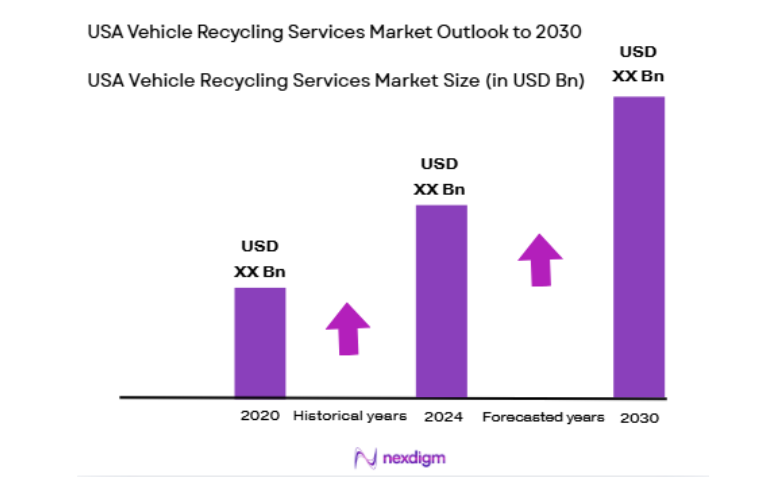
The USA Vehicle Recycling Services Market is a vital sector of the automotive industry, driven by increased vehicle end-of-life rates, a rising demand for recycled materials, and stringent government regulations on vehicle disposal. Based on a recent historical assessment, the market is valued at USD ~ billion, fueled by growing awareness and the implementation of sustainable practices in vehicle disposal and recycling. This market has seen consistent growth, largely supported by advancements in recycling technologies and the adoption of eco-friendly methods in vehicle dismantling processes.
Dominant cities like Los Angeles, Detroit, and Houston are key hubs for vehicle recycling services in the USA, primarily due to their high vehicle concentrations and the availability of advanced recycling infrastructure. These cities are also influenced by local environmental regulations that promote efficient waste management practices and vehicle recycling. Additionally, the presence of major automotive manufacturers and scrap yards in these areas supports the growth of recycling services, establishing them as leaders in this market.
Market Segmentation
By Vehicle Type
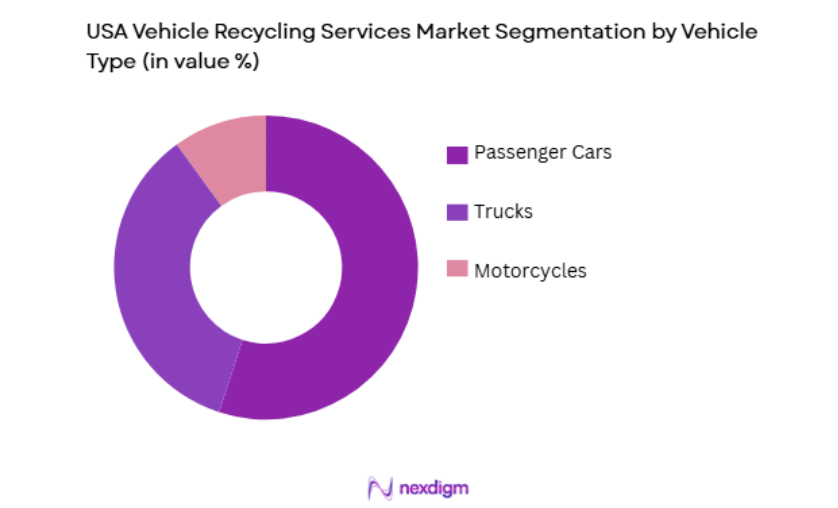
The USA Vehicle Recycling Services Market is segmented by vehicle type into passenger cars, trucks, and motorcycles. Recently, passenger cars have been dominating the market share due to the high volume of vehicles reaching end-of-life, driven by longer vehicle lifespans and increased consumer demand for newer models. The widespread adoption of fuel-efficient and electric vehicles also contributes to the growing need for recycling services as these vehicles approach their end of use. This segment benefits from economies of scale, infrastructure, and evolving regulations that mandate recycling of automotive parts and materials.
By Recycling Method
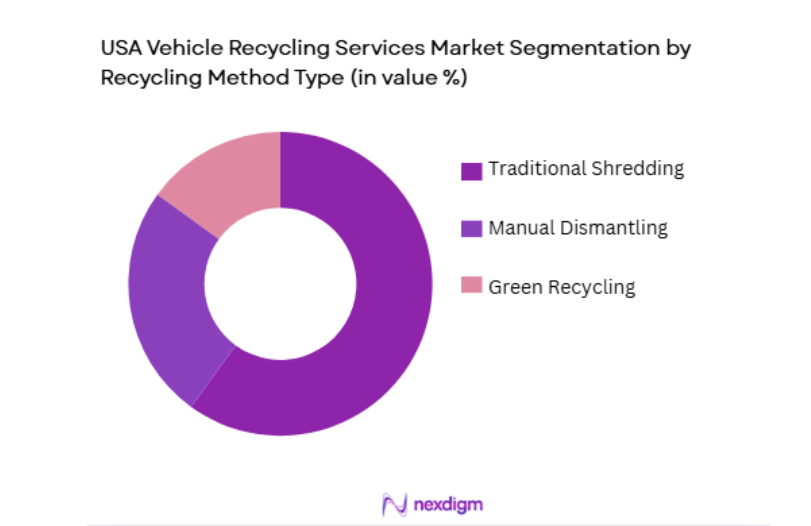
The market is also segmented by recycling method into traditional shredding, manual dismantling, and green recycling. Recently, traditional shredding has seen a dominant market share, driven by its efficiency and cost-effectiveness in processing large volumes of vehicles. This method is preferred by major recycling facilities as it allows for the rapid separation of reusable parts and materials. However, green recycling is growing in popularity due to increasing environmental regulations and the need for sustainable practices.
Competitive Landscape
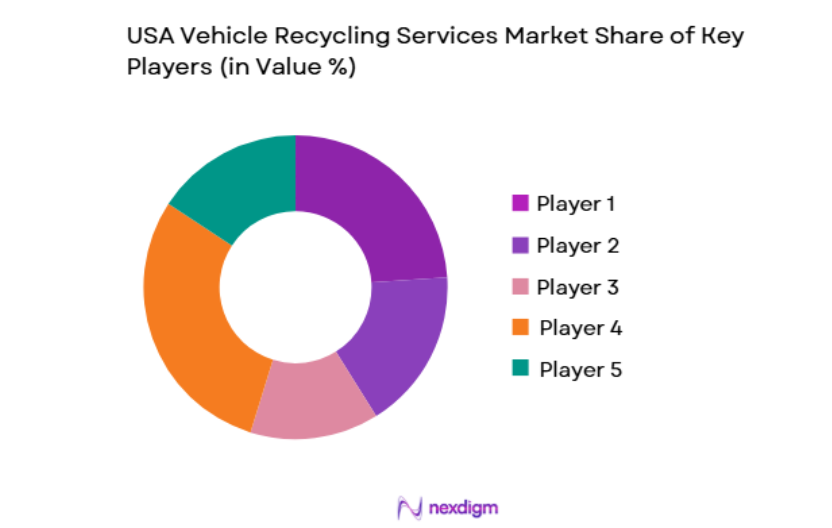
The USA Vehicle Recycling Services Market is characterized by consolidation, with a few major players controlling the bulk of the market share. These companies benefit from well-established supply chains, recycling technologies, and strategic partnerships with automotive manufacturers. The influence of major players such as Auto Salvage, LKQ Corporation, and Schnitzer Steel Industries helps set market standards and drive innovation in recycling practices.
| Company Name | Establishment Year | Headquarters | Technology Focus | Market Reach | Key Products | Revenue | Additional Market-Specific Parameter |
| Auto Salvage | 1980 | Texas, USA | ~ | ~ | ~ | ~ | ~ |
| LKQ Corporation | 1998 | Illinois, USA | ~ | ~ | ~ | ~ | ~ |
| Schnitzer Steel Industries | 1906 | Oregon, USA | ~ | ~ | ~ | ~ | ~ |
| Sims Metal Management | 1917 | New York, USA | ~ | ~ | ~ | ~ | ~ |
| Ferrous Processing & Trading | 1944 | Michigan, USA | ~ | ~ | ~ | ~ | ~ |
USA Vehicle Recycling Services Market Analysis
Growth Drivers
Increasing Demand for Recycled Materials
The USA Vehicle Recycling Services Market has witnessed significant growth due to the increasing demand for recycled materials. The automotive industry, along with other sectors like construction and manufacturing, requires high-quality recycled metals, plastics, and rubber components, which are extracted from vehicles. The value of using recycled materials lies in the lower environmental impact and cost-efficiency compared to virgin resources, a key factor driving the expansion of vehicle recycling services. With sustainability becoming a top priority for companies, the demand for these materials is expected to rise. Additionally, regulations that encourage the use of recycled materials in the automotive sector are further driving this trend. This growing demand not only supports the market but also makes vehicle recycling a profitable business. Recycling has also become an essential part of the circular economy, which further accelerates the demand for processed vehicle parts and materials. As the need for sustainable practices rises, more companies are adopting vehicle recycling services, increasing competition and ensuring long-term market stability.
Government Regulations on Waste Management
Another significant driver for the USA Vehicle Recycling Services Market is the implementation of stringent government regulations on waste management and vehicle disposal. Federal and state-level regulations require automakers and recycling facilities to adhere to specific environmental standards when it comes to vehicle disposal. These regulations mandate the recycling of hazardous materials and the reduction of waste going to landfills, which directly influences the market’s growth. The U.S. Environmental Protection Agency (EPA) enforces these regulations, ensuring that recycling facilities meet the necessary standards. Additionally, recycling services that comply with these regulations can access government grants and incentives, which support their operations and encourage investment in more sustainable technologies. These regulatory measures are contributing to the growth of the vehicle recycling industry by creating a structured environment that mandates responsible disposal and recycling practices, thus driving market expansion.
Market Challenges
High Operational Costs of Recycling Facilities
One of the key challenges facing the USA Vehicle Recycling Services Market is the high operational costs associated with recycling facilities. The process of dismantling, sorting, and recycling vehicles involves substantial infrastructure investments, including the need for specialized equipment, labor, and compliance with environmental regulations. The complexity of processing different vehicle types and components also adds to the cost burden. Despite the profitability of recycling certain materials like metals, the cost of handling hazardous materials, maintaining safety standards, and ensuring compliance with local laws makes it financially challenging for smaller players to compete in this space. Additionally, the fluctuation in raw material prices can impact the financial stability of recycling companies, making them highly vulnerable to market volatility. Therefore, overcoming these high operational costs is a critical challenge for the industry’s growth and profitability.
Lack of Standardization in Recycling Practices
Another challenge faced by the vehicle recycling sector in the USA is the lack of standardization in recycling practices. Different states and municipalities have varying regulations and standards regarding vehicle recycling, which can lead to inconsistent practices and inefficiencies. Without a unified set of standards across the country, it becomes difficult for companies to ensure uniform quality and maximize efficiency in the recycling process. Moreover, the absence of industry-wide best practices means that recycling facilities may not fully optimize their operations, leading to lower recovery rates of reusable materials and increased environmental impacts. This lack of consistency also makes it harder for new entrants to establish themselves in the market and forces existing players to navigate a complex regulatory landscape, impacting their overall competitiveness.
Opportunities
Technological Advancements in Recycling Equipment
The USA Vehicle Recycling Services Market has significant opportunities for growth through technological advancements in recycling equipment. The development of automated systems and AI-powered technologies is revolutionizing vehicle dismantling and material recovery. Advanced shredders, separation systems, and robotic processes are increasing efficiency and reducing the costs associated with manual labor. Additionally, innovations in recycling technologies can lead to higher recovery rates of valuable materials like metals and plastics, which can be sold at premium prices. As these technologies become more widely adopted, the market will experience increased profitability and enhanced sustainability, as well as the potential for new business models in the recycling sector.
Expansion of Electric Vehicle Recycling Services
With the rapid adoption of electric vehicles (EVs), there is a growing demand for specialized recycling services that cater to these vehicles’ unique components, such as batteries and electronic systems. The USA Vehicle Recycling Services Market has an opportunity to expand by offering services tailored to EV recycling. As the number of electric vehicles on the road increases, so does the need for efficient battery recycling and disposal of electronic components. Recycling facilities can capitalize on this trend by investing in the necessary infrastructure to handle EVs, which will not only diversify their service offerings but also position them as leaders in the growing market for EV-related recycling services. By tapping into this emerging niche, recycling companies can generate new revenue streams while supporting the transition to cleaner, more sustainable transportation solutions.
Future Outlook
The USA Vehicle Recycling Services Market is expected to see continued growth in the coming years, driven by increasing consumer demand for recycled automotive parts, advancements in recycling technology, and the expansion of regulations aimed at promoting sustainability. Technological advancements in the recycling process will play a crucial role in improving the efficiency of vehicle dismantling and material recovery, creating new opportunities for market players. Additionally, the increasing popularity of electric vehicles will demand specialized recycling services for EV batteries and electronic systems, further bolstering market growth. Overall, the future outlook for the vehicle recycling market in the USA remains positive, with a focus on sustainability, technological innovation, and regulatory support.
Major Players
- Auto Salvage
- LKQ Corporation
- Schnitzer Steel Industries
- Sims Metal Management
- Ferrous Processing & Trading
- U.S. Auto Parts Network
- R2 Recycling
- Greenway Recycling
- Capstone Recycling
- A-1 Recycling
- End of Life Vehicle Solutions
- Scrap Metal Services
- Recycled Auto Parts
- Auto Wreckers
- Junk Car Kings
Key Target Audience
- Investments and venture capitalist firms
- Government and regulatory bodies
- Automotive manufacturers
- Recycling facility operators
- Environmental NGOs
- Logistics and transportation companies
- Automotive parts suppliers
- Waste management services
Research Methodology
Step 1: Identification of Key Variables
Key variables affecting the USA Vehicle Recycling Services Market were identified through a combination of secondary research, industry reports, and expert consultations. This step included an analysis of market trends, competitive dynamics, and regulatory landscape.
Step 2: Market Analysis and Construction
A comprehensive market analysis was performed using historical data, current market trends, and emerging technological advancements. The market model was built based on these insights, including segmentation and growth forecasts.
Step 3: Hypothesis Validation and Expert Consultation
The initial market model was validated through consultations with industry experts, recycling facility operators, and automotive manufacturers to ensure accuracy and feasibility.
Step 4: Research Synthesis and Final Output
All data was synthesized to generate the final research output, ensuring it was aligned with market dynamics, industry drivers, and challenges, with clear insights for stakeholders.

- Executive Summary
- Research Methodology (Definitions, Scope, Industry Assumptions, Market Sizing Approach, Primary & Secondary Research Framework, Data Collection & Verification Protocol, Analytic Models & Forecast Methodology, Limitations & Research Validity Checks)

- Market Definition and Scope
- Value Chain & Stakeholder Ecosystem
- Regulatory / Certification Landscape
- Sector Dynamics Affecting Demand

- Growth Drivers
Environmental Regulations Supporting Recycling
Increase in End-of-Life Vehicle Numbers
Government Incentives for Recycling Initiatives
- Market Challenges
High Capital Investment in Recycling Infrastructure
Regulatory Barriers in Vehicle Dismantling
Fluctuations in Scrap Material Prices - Market Opportunities
Technological Advancements in Recycling Processes
Expansion of Urbanization Driving Vehicle Disposal
Circular Economy Initiatives and Recycled Material Demand - Trends
Increase in Vehicle Electrification and Recycling Adaptations
Smart Recycling Solutions for Improved Efficiency
Rising Popularity of Green Vehicles - Government regulations
- SWOT analysis
- Porters 5 forces

- By Market Value 2019-2024
- By Installed Units 2019-2024
- By Average System Price 2019-2024
- By System Complexity Tier 2019-2024

- By System Type (In Value%)
Automobile Dismantling
Shredding Systems
Depollution Systems
Automotive Parts Reprocessing
End-of-Life Vehicle (ELV) Processing - By Platform Type (In Value%)
Online Platforms
Automotive Recyclers
Scrapyard Solutions
Automobile Manufacturers
Third-party Vendors - By Fitment Type (In Value%)
On-site Processing
Mobile Processing Units
Recycling Plant Integration
Modular Recycling Solutions
Automated Systems - By EndUser Segment (In Value%)
Vehicle Manufacturers
Recyclers and Scrap Dealers
Government Agencies
Private Vehicle Owners
Insurance Companies - By Procurement Channel (In Value%)
Direct Procurement
Automotive Auctions
Online Bidding Platforms

- Market Share Analysis
- Cross Comparison Parameters (System Type, Platform Type, Procurement Channel, EndUser Segment, Fitment Type, Regulatory Compliance, Recycling Efficiency, Market Penetration, Technological Integration, Environmental Impact)
- SWOT Analysis of Key Competitors
- Pricing & Procurement Analysis
- Key Players
Ford Motor Company
General Motors
Toyota Motor Corporation
Honda Motor Co.
Scrap Mart
Sims Metal Management
LKQ Corporation
Cox Automotive
Harris Shredders
Wendell August Forge
Nucor Corporation
Ferrous Processing & Trading
Republic Services
Schnitzer Steel Industries
Toyota Tsusho America

- Government Incentives for Recycling in Fleet Management
- Vehicle Manufacturers’ Role in End-of-Life Vehicle Processing
- Private Vehicle Owners’ Awareness of Recycling Options
- Insurance Companies’ Involvement in Salvage and Reprocessing

- Forecast Market Value, 2025-2030
- Forecast Installed Units, 2025-2030
- Price Forecast by System Tier, 2025-2030
- Future Demand by Platform, 2025-2030


 Request a Sample
 Ask for Customization
 Get a Quote
 Enquire Now