
 Download PDF
 Download PDF
Market Overview
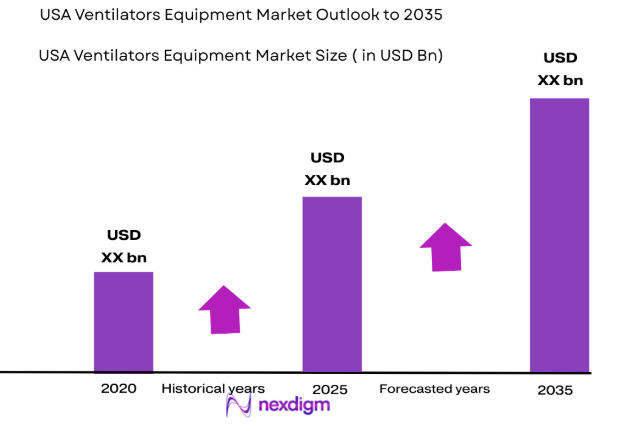
The USA ventilators equipment market has been experiencing steady growth, driven by the increasing demand for respiratory support systems across healthcare settings. Based on a recent historical assessment, the market size for ventilators is valued at approximately USD ~ billion. The expansion of healthcare infrastructure, particularly in critical care units, combined with the rising prevalence of respiratory diseases and emergencies, has significantly contributed to this market growth. Technological innovations in ventilator designs, including non-invasive and portable systems, have further spurred the market’s expansion.
Dominant countries in the market include the United States, owing to its advanced healthcare infrastructure, significant government investments, and high healthcare expenditures. The U.S. healthcare system, with its well-established hospitals and emergency services, continues to be a dominant force in the demand for ventilators. Moreover, the prevalence of chronic respiratory diseases, such as COPD and asthma, along with a large aging population, has bolstered the need for advanced respiratory equipment. As a result, the U.S. remains the largest consumer of ventilator equipment in North America and globally.
Market Segmentation
By Product Type
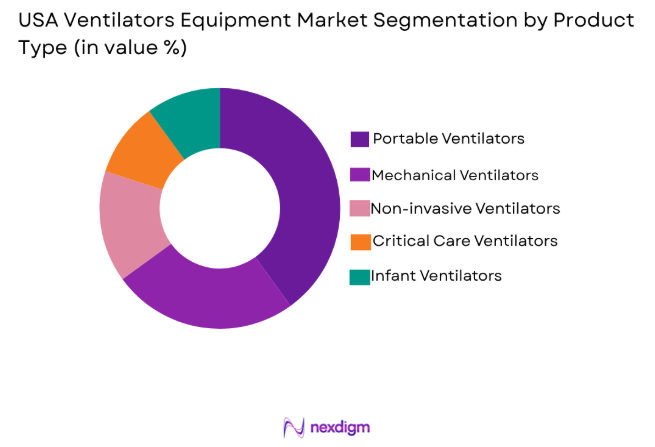
USA ventilators equipment market is segmented by product type into portable ventilators, mechanical ventilators, non-invasive ventilators, critical care ventilators, and infant ventilators. Recently, portable ventilators have gained significant traction in the market due to their compact design, ease of use, and increasing demand for homecare and emergency applications. The portability factor makes them ideal for use in ambulances, field hospitals, and home settings, where patients require continuous monitoring and support. The portability and flexibility of these devices, coupled with rising patient preference for home care, have positioned them as a dominant sub-segment in the market.
By Platform Type
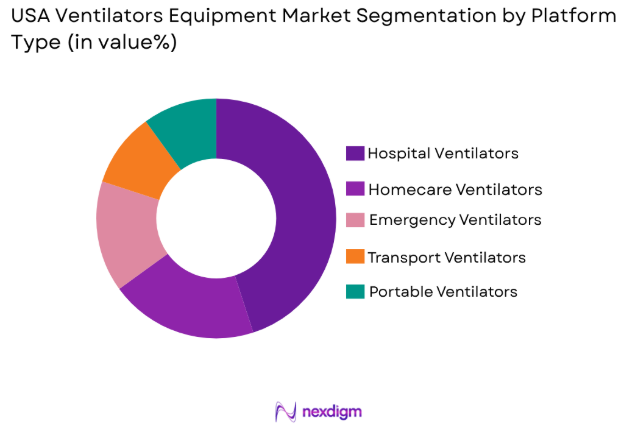
USA ventilators equipment market is also segmented by platform type into hospital ventilators, homecare ventilators, emergency ventilators, transport ventilators, and portable ventilators. Recently, hospital ventilators have dominated the market share due to their widespread use in critical care units and emergency departments. The demand for hospital-based ventilators has surged in response to the increasing number of respiratory cases requiring intensive care. Furthermore, hospitals’ robust infrastructure and capacity to support advanced ventilator systems have reinforced the prevalence of hospital ventilators in the market.
Competitive Landscape
The competitive landscape of the USA ventilators equipment market is dominated by several key players who have a strong presence due to their technological advancements and expansive product portfolios. These companies are continuously innovating to improve the performance and versatility of ventilators, ensuring compliance with stringent regulatory standards. As the demand for advanced ventilator solutions increases, mergers, acquisitions, and strategic partnerships are becoming common to enhance product offerings and market reach.
| Company Name | Establishment Year | Headquarters | Technology Focus | Market Reach | Key Products | Revenue (USD) | R&D Investment (%) |
| Philips Healthcare | 1891 | Netherlands | ~ | ~ | ~ | ~ | ~ |
| Medtronic | 1949 | Ireland | ~ | ~ | ~ | ~ | ~ |
| Drägerwerk AG & Co. KGaA | 1889 | Germany | ~ | ~ | ~ | ~ | ~ |
| GE Healthcare | 1892 | USA | ~ | ~ | ~ | ~ | ~ |
| Hamilton Medical | 1978 | Switzerland | ~ | ~ | ~ | ~ | ~ |
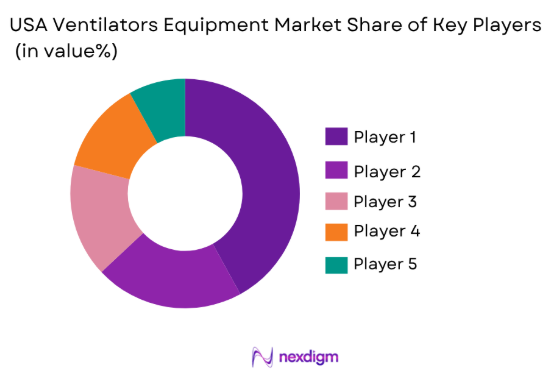
USA Ventilators Equipment Market Analysis
Growth Drivers
Increasing Prevalence of Respiratory Diseases
The growing prevalence of respiratory diseases such as chronic obstructive pulmonary disease (COPD) and asthma is significantly driving the demand for ventilators. With a larger portion of the population facing chronic respiratory conditions, the need for constant ventilation support in both hospital and homecare settings has become crucial. Healthcare providers are focused on enhancing their respiratory support offerings to accommodate a higher patient volume. This increasing burden of respiratory diseases in the U.S. is further intensified by an aging population and higher instances of lifestyle-related diseases. These factors contribute directly to a higher demand for both critical care and home-use ventilators, as more individuals require assistance with breathing due to their medical conditions. The U.S. healthcare system is investing heavily in these technologies to address the growing need.
Technological Advancements in Ventilator Equipment
The continuous evolution of ventilator technology is a major growth driver for the market. Modern ventilators are increasingly incorporating advanced features such as real-time monitoring, automated pressure adjustments, and non-invasive methods of ventilation. These technologies enable more efficient management of patients, especially those with chronic conditions or those requiring long-term care. Moreover, the development of portable and compact ventilators has expanded the range of applications beyond traditional hospital settings. These innovations not only enhance the effectiveness of treatments but also make ventilators more accessible and easier to use in various healthcare environments. With ongoing improvements in smart ventilation systems, the market is expected to see continued growth driven by technology’s ability to offer more versatile and user-friendly solutions.
Market Challenges
High Cost of Advanced Ventilator Systems
One of the major challenges facing the ventilator market is the high cost of advanced ventilator systems, particularly in the case of high-tech units designed for critical care. These systems often require substantial initial investments, which may be a barrier for smaller hospitals, clinics, and homecare providers. Although the benefits of advanced features such as real-time monitoring and non-invasive technology are evident, the upfront costs associated with these systems may deter their widespread adoption. Many healthcare institutions, especially in developing regions, find it difficult to afford the latest models, which limits the market penetration of advanced ventilators. Consequently, the high cost of these systems is a key constraint, making it essential for manufacturers to find ways to lower production costs and offer more affordable options without compromising on quality.
Lack of Skilled Professionals for Ventilator Management
The growing demand for ventilators in various healthcare settings has exposed a significant challenge related to the lack of skilled professionals capable of managing these complex systems. While ventilators are critical to patient care, their operation requires in-depth knowledge and training. There is a shortage of trained respiratory therapists and healthcare workers with the expertise to properly use, maintain, and troubleshoot advanced ventilators. This skill gap could lead to improper use, potentially resulting in complications for patients and reducing the overall effectiveness of the equipment. As ventilator technologies become more sophisticated, addressing the need for highly skilled personnel in both hospital and home settings becomes increasingly critical.
Opportunities
Growing Demand for Homecare Ventilators
The rise in homecare services, driven by an aging population and the need for more personalized care, presents a significant opportunity for the ventilator market. Many patients with chronic respiratory conditions now prefer to receive care at home, which has led to an increase in demand for homecare ventilators. These ventilators are designed to be compact, portable, and easy to use, which makes them ideal for at-home care. As healthcare systems globally continue to push for more home-based care solutions, manufacturers have an opportunity to meet the growing demand for affordable, efficient, and user-friendly ventilators designed specifically for home use. This trend presents a substantial growth avenue for ventilator suppliers, particularly in regions with an aging population.
Emerging Markets in Asia-Pacific
As healthcare infrastructures in emerging markets, particularly in Asia-Pacific, continue to develop, new opportunities for ventilator manufacturers are emerging. Countries such as India, China, and Southeast Asia are witnessing an increasing need for advanced respiratory care equipment due to rising healthcare needs, aging populations, and a higher prevalence of respiratory diseases. This presents a promising opportunity for market expansion, as these regions continue to invest in healthcare facilities and equipment. By focusing on providing affordable yet high-quality ventilator solutions, manufacturers can cater to the rapidly growing demand in these emerging markets. Strategic partnerships with local distributors can help penetrate these markets more effectively and increase market share in these high-growth regions.
Future Outlook
Over the next five years, the USA ventilators equipment market is expected to experience steady growth driven by technological innovations and an increasing prevalence of respiratory diseases. Advancements in non-invasive and portable ventilators, as well as integration with AI and IoT for smarter patient monitoring, will shape the market’s trajectory. Additionally, regulatory support for advanced medical devices and growing demand for homecare solutions will drive the adoption of ventilators in non-hospital settings. As healthcare infrastructures continue to expand and adapt to the needs of aging populations, the demand for ventilators is anticipated to increase, especially in remote and underserved areas.
Major Players
- Philips Healthcare
- Medtronic
- Drägerwerk AG & Co. KGaA
- GE Healthcare
- Hamilton Medical
- Fisher & Paykel Healthcare
- Smiths Medical
- ResMed
- Invacare Corporation
- Becton, Dickinson and Company
- Vyaire Medical
- Getinge Group
- Mindray
- Linde Group
- Steris Corporation
Key Target Audience
- Investments and venture capitalist firms
- Government and regulatory bodies
- Healthcare providers (hospitals, clinics, etc.)
- Ambulance and emergency service providers
- Home healthcare agencies
- Medical equipment distributors
- Health insurance companies
Research Methodology
Step 1: Identification of Key Variables
This step involves identifying the core factors that impact the USA ventilators equipment market, such as market size, key players, product types, and geographical distribution.
Step 2: Market Analysis and Construction
In this phase, comprehensive data is gathered from multiple primary and secondary sources to build a robust model that represents the USA ventilators equipment market.
Step 3: Hypothesis Validation and Expert Consultation
Expert consultations are conducted to validate the assumptions, trends, and key findings from the initial research and to refine the market model for greater accuracy.
Step 4: Research Synthesis and Final Output
The final research output synthesizes all findings into a structured report that provides detailed insights and actionable recommendations for stakeholders in the ventilators market.

- Executive Summary
- Research Methodology (Definitions, Scope, Industry Assumptions, Market Sizing Approach, Primary & Secondary Research Framework, Data Collection & Verification Protocol, Analytic Models & Forecast Methodology, Limitations & Research Validity Checks)

- Market Definition and Scope
- Value Chain & Stakeholder Ecosystem
- Regulatory / Certification Landscape
- Sector Dynamics Affecting Demand
- Strategic Initiatives & Infrastructure Growth

- Growth Drivers
Increasing Prevalence of Respiratory Diseases
Technological Advancements in Ventilator Equipment
Rising Geriatric Population and Chronic Respiratory Disorders - Market Challenges
High Cost of Advanced Ventilator Systems
Lack of Skilled Professionals for Ventilator Management
Regulatory and Certification Hurdles - Market Opportunities
Growing Demand for Homecare Ventilators
Emerging Markets in Asia-Pacific
Rising Investments in Healthcare Infrastructure - Trends
Increased Adoption of Non-invasive Ventilators
Integration of Artificial Intelligence in Ventilator Systems - Government Regulations
- SWOT Analysis
- Porter’s Five Forces

- By Market Value, 2020-2025
- By Installed Units, 2020-2025
- By Average System Price, 2020-2025
- By System Complexity Tier, 2020-2025

- By System Type (In Value%)
Portable Ventilators
Mechanical Ventilators
Non-invasive Ventilators
Critical Care Ventilators
Infant Ventilators - By Platform Type (In Value%)
Hospital Ventilators
Homecare Ventilators
Emergency Ventilators
Transport Ventilators
Portable Ventilators - By Fitment Type (In Value%)
Fixed Ventilators
Transportable Ventilators
Non-invasive Ventilators
Wearable Ventilators - By End User Segment (In Value%)
Hospitals & Clinics
Home Care Settings
Ambulances & Emergency Units

- Market Share Analysis
- Cross Comparison Parameters (Price, Installed Units, System Complexity, Fitment Type, Platform Type, Regional Growth, Regulatory Environment)
- SWOT Analysis of Key Competitors
- Pricing & Procurement Analysis
- Key Players
Philips Healthcare
Medtronic
Drägerwerk AG & Co. KGaA
GE Healthcare
Hamilton Medical
Fisher & Paykel Healthcare
Smiths Medical
ResMed
Invacare Corporation
Becton, Dickinson and Company
Vyaire Medical
Getinge Group
Mindray
Linde Group
Steris Corporation

- Hospitals & Clinics
- Home Care Settings
- Emergency and Transport Services
- Ambulatory Surgical Centers

- Forecast Market Value, 2026-2035
- Forecast Installed Units, 2026-2035
- Price Forecast by System Tier, 2026-2035
- Future Demand by Platform, 2026-2035


 Request a Sample
 Ask for Customization
 Get a Quote
 Enquire Now