
 Download PDF
Market Overview
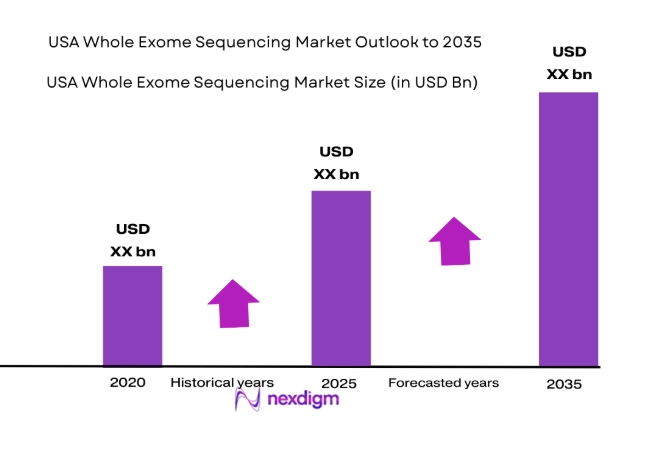
The USA Whole Exome Sequencing market has experienced significant growth, driven by advancements in genomics research and the increasing adoption of precision medicine. Based on a recent historical assessment, the market is valued at USD ~ billion in 2024, with demand propelled by technological improvements, particularly in sequencing platforms and bioinformatics tools. The expansion of genetic testing for personalized healthcare and the rising incidence of genetic disorders further fuel the market’s trajectory.
The United States, being a leader in genomics research, continues to dominate the market due to its robust healthcare infrastructure, extensive research institutions, and significant funding for genetic research. Cities like San Francisco, Boston, and New York, with their strong focus on biotech and medical research, contribute to the growth of the sector. Furthermore, regulatory support and increased healthcare investments in the country further bolster the market’s position in the global arena.
Market Segmentation
By Product Type
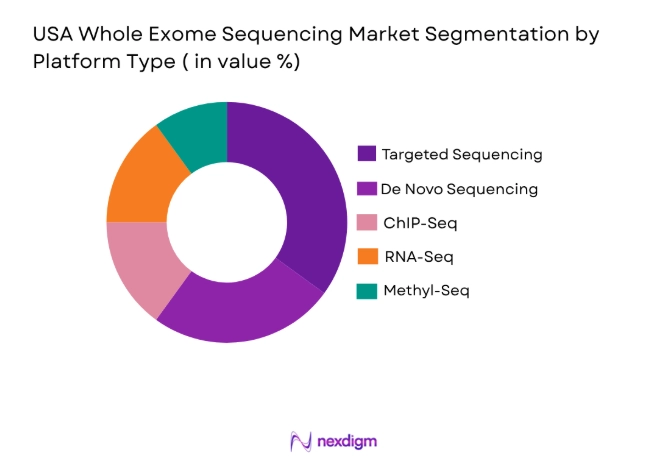
USA Whole Exome Sequencing market is segmented by product type into Targeted Sequencing, De Novo Sequencing, ChIP-Seq, RNA-Seq, and Methyl-Seq. Recently, the Targeted Sequencing sub-segment has gained a dominant market share due to its specific applications in research and diagnostics. Targeted sequencing’s ability to focus on known areas of the genome has made it the preferred choice for clinicians and researchers aiming for precise and efficient outcomes. Furthermore, its cost-effectiveness and ability to provide accurate, targeted information have fueled demand across multiple industries, making it a key driver of growth within the market.
By Platform Type
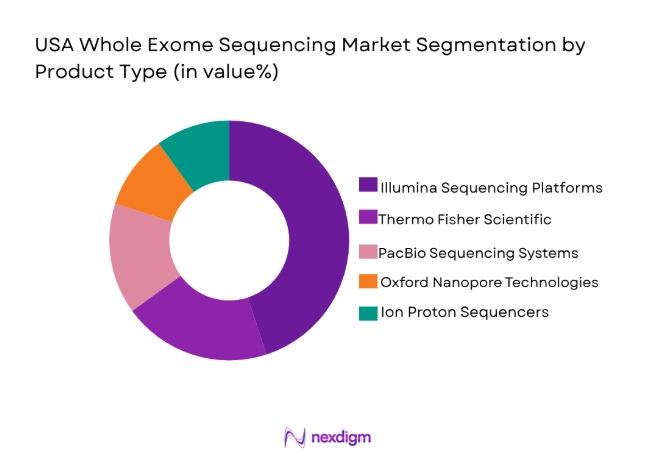
USA Whole Exome Sequencing market is segmented by platform type into Illumina Sequencing Platforms, Thermo Fisher Scientific Platforms, PacBio Sequencing Systems, Oxford Nanopore Technologies, and Ion Proton Sequencers. Among these, Illumina Sequencing Platforms hold the largest share, primarily due to their high throughput, accuracy, and widespread adoption in research and clinical settings. Illumina’s continuous innovation in next-generation sequencing technologies and its strong market presence make it the dominant platform in whole exome sequencing, ensuring its leading position in the competitive landscape.
Competitive Landscape
The USA Whole Exome Sequencing market is highly competitive, with a mix of well-established players and emerging biotech companies leading the innovation front. The market sees consolidation through acquisitions and collaborations between sequencing platform providers and biotechnology firms. These collaborations focus on enhancing product offerings, broadening service portfolios, and improving market penetration, ensuring a continued competitive edge for the major players in the market.
| Company Name | Establishment Year | Headquarters | Technology Focus | Market Reach | Key Products | Revenue | Sequencing Efficiency |
| Illumina | 1998 | San Diego, USA | ~ | ~ | ~ | ~ | ~ |
| Thermo Fisher Scientific | 2006 | Waltham, USA | ~ | ~ | ~ | ~ | ~ |
| Pacific Biosciences | 2004 | Menlo Park, USA | ~ | ~ | ~ | ~ | ~ |
| Oxford Nanopore Technologies | 2005 | Oxford, UK | ~ | ~ | ~ | ~ | ~ |
| Fulgent Genetics | 2011 | Temple City, USA | ~ | ~ | ~ | ~ | ~ |
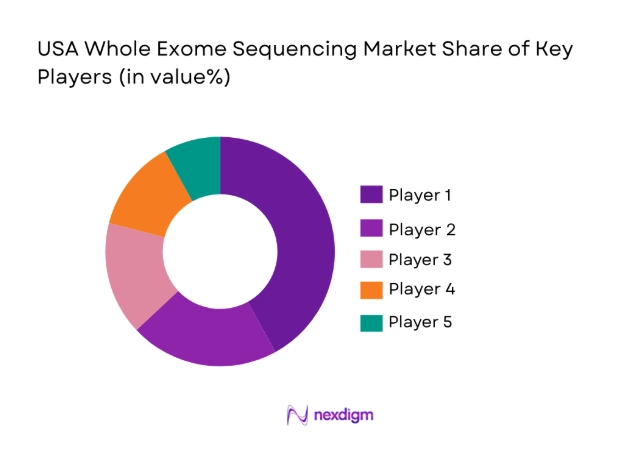
USA Whole Exome Sequencing Market Analysis
Growth Drivers
Technological Advancements in Sequencing Platforms
The rapid advancements in whole exome sequencing technology, particularly the development of high-throughput sequencing platforms, have significantly enhanced the scalability and efficiency of genomic testing. These platforms enable faster and more accurate sequencing, which has helped reduce costs per genome analyzed. Technological innovations such as automation, miniaturization, and the use of AI-driven data analysis tools have made whole exome sequencing more accessible and practical for clinical and research applications. As a result, these innovations continue to drive adoption across the healthcare and biotechnology sectors, offering valuable insights into genetic disorders, personalized medicine, and drug development.
Increasing Demand for Personalized Medicine
Personalized medicine is gaining momentum as one of the key growth drivers for the USA Whole Exome Sequencing market. As healthcare providers move towards more tailored treatments, the need for precise genetic information has become critical. Whole exome sequencing enables the identification of genetic mutations that could lead to customized treatment plans, ensuring more effective therapies for individuals. With growing awareness of the benefits of personalized medicine, both patients and healthcare providers are increasingly turning to whole exome sequencing to guide clinical decisions. This shift towards personalized healthcare is expected to continue, fostering further growth in the market.
Market Challenges
High Costs of Sequencing
Despite technological advancements, the high costs associated with whole exome sequencing remain a significant barrier to widespread adoption. The cost of sequencing platforms, coupled with the expense of data storage, analysis, and interpretation, can be prohibitive for smaller healthcare providers and research institutions. This challenge is particularly evident in emerging markets, where budgets for genomic testing are limited. Although the cost of sequencing has decreased over the years, it is still a substantial factor limiting the accessibility and widespread use of whole exome sequencing, especially in less economically developed regions.
Regulatory Hurdles and Data Privacy Concerns
Another significant challenge in the USA Whole Exome Sequencing market is the complex regulatory environment surrounding genetic testing and data privacy. As whole exome sequencing generates sensitive genetic information, maintaining the privacy and security of patient data is a top priority. Additionally, navigating the regulatory frameworks set forth by agencies like the FDA and HIPAA adds complexity to the market. These regulations can delay the approval of new sequencing technologies and hinder the speed at which these innovations reach the market, further increasing the costs and limiting access.
Opportunities
Expanding Applications in Disease Diagnosis
One of the most promising opportunities for the USA Whole Exome Sequencing market lies in its expanding use in disease diagnosis, particularly for rare and complex genetic disorders. Whole exome sequencing provides a comprehensive and cost-effective means of identifying mutations that are responsible for a variety of diseases. As the medical community continues to discover new genetic markers for diseases, whole exome sequencing will play a crucial role in diagnosing conditions earlier and more accurately, offering better prognosis and treatment options. This opportunity is particularly relevant in oncology, where genetic testing is increasingly being used to determine personalized treatment protocols.
Government Funding and Support for Genomic Research
The ongoing push for genomic research and personalized medicine by the U.S. government presents an exciting opportunity for the whole exome sequencing market. Programs and initiatives like the Precision Medicine Initiative and the National Institutes of Health’s funding for genomic research provide significant financial backing and support for the development of next-generation sequencing technologies. These government initiatives are helping to accelerate research and development efforts, making whole exome sequencing more accessible and driving innovation in the healthcare sector.
Future Outlook
Over the next five years, the USA Whole Exome Sequencing market is expected to continue its upward trajectory, with substantial growth in demand driven by advancements in sequencing technologies and increased adoption in personalized medicine. Innovations in AI, machine learning, and cloud computing will further enhance the capabilities of whole exome sequencing platforms, enabling faster and more accurate data analysis. Additionally, as regulatory frameworks become more refined and supportive of genomic testing, the market will likely see increased investment, paving the way for further technological and commercial growth in the sector.
Major Players
- Illumina
- Thermo Fisher Scientific
- Pacific Biosciences
- Oxford Nanopore Technologies
- Fulgent Genetics
- Agilent Technologies
- Bio-Rad Laboratories
- PerkinElmer
- Roche
- Qiagen
- Siemens Healthineers
- GeneDx
- Invitae
- Sanger Institute
- BGI Genomics
Key Target Audience
- Investments and venture capitalist firms
- Government and regulatory bodies
- Hospitals and healthcare providers
- Biotech companies
- Pharmaceutical companies
- Research institutions
- Diagnostic laboratories
Research Methodology
Step 1: Identification of Key Variables
This step involves identifying the key variables and metrics that influence the market, including market size, segmentation, technology trends, and growth drivers.
Step 2: Market Analysis and Construction
In this step, the market is analyzed using quantitative and qualitative methods, including industry reports, primary research, and secondary data sources, to build a comprehensive model.
Step 3: Hypothesis Validation and Expert Consultation
Market hypotheses are tested and validated through interviews with industry experts, key players, and stakeholders to ensure accuracy and relevance.
Step 4: Research Synthesis and Final Output
The findings from various research phases are synthesized into a final market report, which includes comprehensive insights and forecasts for the market.

- Executive Summary
- Research Methodology (Definitions, Scope, Industry Assumptions, Market Sizing Approach, Primary & Secondary Research Framework, Data Collection & Verification Protocol, Analytic Models & Forecast Methodology, Limitations & Research Validity Checks)

- Market Definition and Scope
- Value Chain & Stakeholder Ecosystem
- Regulatory / Certification Landscape
- Sector Dynamics Affecting Demand
- Strategic Initiatives & Infrastructure Growth

- Growth Drivers
Rising Prevalence of Genetic Disorders
Advancements in Sequencing Technology
Increasing Demand for Personalized Medicine - Market Challenges
High Cost of Whole Exome Sequencing
Regulatory Hurdles in Gene Editing Technologies
Data Privacy and Security Concerns - Market Opportunities
Growing Investment in Genomics Research
Expansion of Healthcare Access in Emerging Markets
Collaborations Between Biotech Firms and Research Institutions - Trends
Integration of AI in Genomic Research
Increase in Government Funding for Genetic Research - Government Regulations
- SWOT Analysis
- Porter’s Five Forces

- By Market Value, 2020-2025
- By Installed Units, 2020-2025
- By Average System Price, 2020-2025
- By System Complexity Tier, 2020-2025

- By System Type (In Value%)
Targeted Sequencing
De Novo Sequencing
ChIP-Seq
RNA-Seq
Methyl-Seq - By Platform Type (In Value%)
Illumina Sequencing Platforms
Thermo Fisher Scientific Platforms
PacBio Sequencing Systems
Oxford Nanopore Technologies
Ion Proton Sequencers - By Fitment Type (In Value%)
On-premise Solutions
Cloud-based Solutions
Hybrid Solutions
Modular Solutions - By End User Segment (In Value%)
Hospitals and Clinics
Research Institutes
Pharmaceutical and Biotechnology Companies

- Market Share Analysis
- Cross Comparison Parameters (System Type, Platform Type, End User Segment, Fitment Type, Price, Demand, Technology Adoption)
- SWOT Analysis of Key Competitors
- Pricing & Procurement Analysis
- Key Players
Illumina
Thermo Fisher Scientific
Pacific Biosciences
Oxford Nanopore Technologies
GeneDx
Invitae Corporation
Sanger Institute
BGI Genomics
Fulgent Genetics
Myriad Genetics
Quest Diagnostics
Agilent Technologies
PerkinElmer
Eurofins Scientific
Grail

- Hospitals’ Increasing Adoption of Genetic Testing
- Research Institutes Leveraging Whole Exome Sequencing for Discoveries
- Pharmaceutical Companies Using Genomic Data for Drug Development
- Government Agencies Promoting Genomic Research and Healthcare Integration

- Forecast Market Value, 2026-2035
- Forecast Installed Units, 2026-2035
- Price Forecast by System Tier, 2026-2035
- Future Demand by Platform, 2026-2035


 Request a Sample
 Ask for Customization
 Get a Quote
 Enquire Now