

 Download PDF
Market Overview
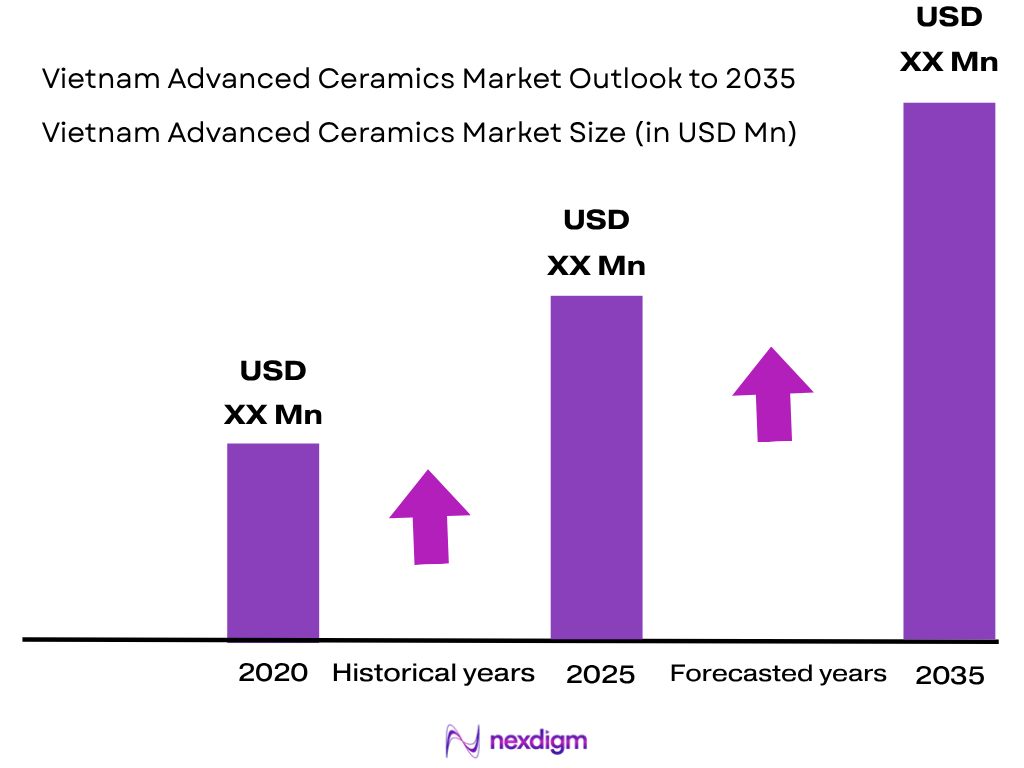
The Vietnam Advanced Ceramics Market is driven primarily by the expansion of electronics manufacturing, semiconductor localization, automotive electrification, telecommunications infrastructure and industrial automation. Electronics and semiconductor manufacturing are particularly important because advanced ceramics provide electrical insulation, thermal management, wear resistance, dielectric performance and dimensional stability in demanding applications. Vietnam recorded USD 405.53 billion in total merchandise exports and USD 380.76 billion in imports in 2024, demonstrating the scale of its manufacturing and trade ecosystem. Electronics, computers and components alone generated USD 72.6 billion of exports and USD 107.1 billion of imports, supporting downstream demand for specialized ceramic materials and components.
Ho Chi Minh City, Hanoi, Bac Ninh, Hai Phong, Thai Nguyen and the wider northern manufacturing corridor represent the most important demand centers for advanced ceramics because of their concentration of electronics, semiconductor-related manufacturing, engineering, automotive and industrial production. Northern Vietnam is particularly important for electronics and semiconductor supply chains, while Ho Chi Minh City and surrounding southern provinces provide a large base of industrial manufacturing and technology companies. The national semiconductor strategy further strengthens this geographic concentration by targeting capabilities across semiconductor research, design, manufacturing, packaging and testing.
Market Segmentation
By Material Type
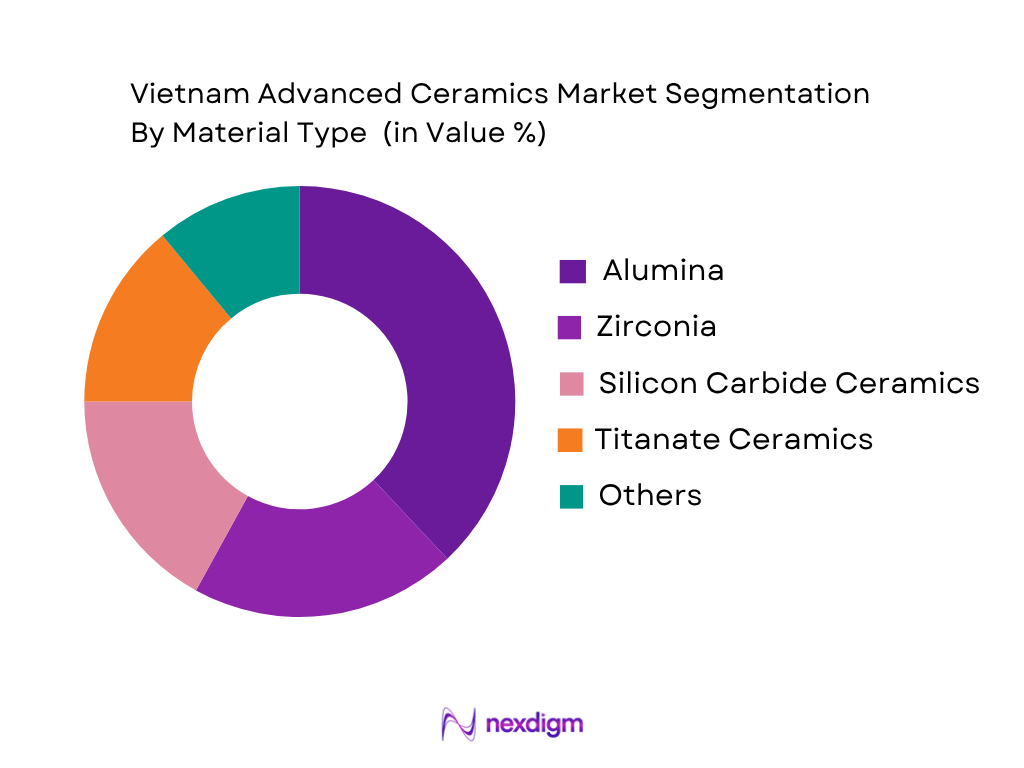
The Vietnam Advanced Ceramics Market can be segmented by material type into alumina ceramics, zirconia ceramics, silicon carbide ceramics, silicon nitride ceramics, aluminum nitride ceramics, ceramic matrix composites and other advanced ceramic materials. Alumina ceramics are expected to remain the leading material category because of their broad applicability across electrical insulation, electronic components, wear-resistant parts, industrial equipment and semiconductor-related applications. Their combination of electrical insulation, hardness, chemical resistance and thermal stability makes alumina suitable for both relatively standardized components and demanding industrial applications. Silicon carbide and aluminum nitride are increasingly relevant where higher thermal performance is required, particularly in power electronics and semiconductor processing. Zirconia has stronger relevance in medical, dental and precision applications because of its mechanical properties and biocompatibility. Vietnam’s growing electronics ecosystem creates an especially strong addressable base for alumina and other technical ceramics. The government’s semiconductor strategy is designed to establish domestic capabilities across design, fabrication, packaging and testing, potentially broadening requirements for high-purity ceramic components and processing equipment.
By Application
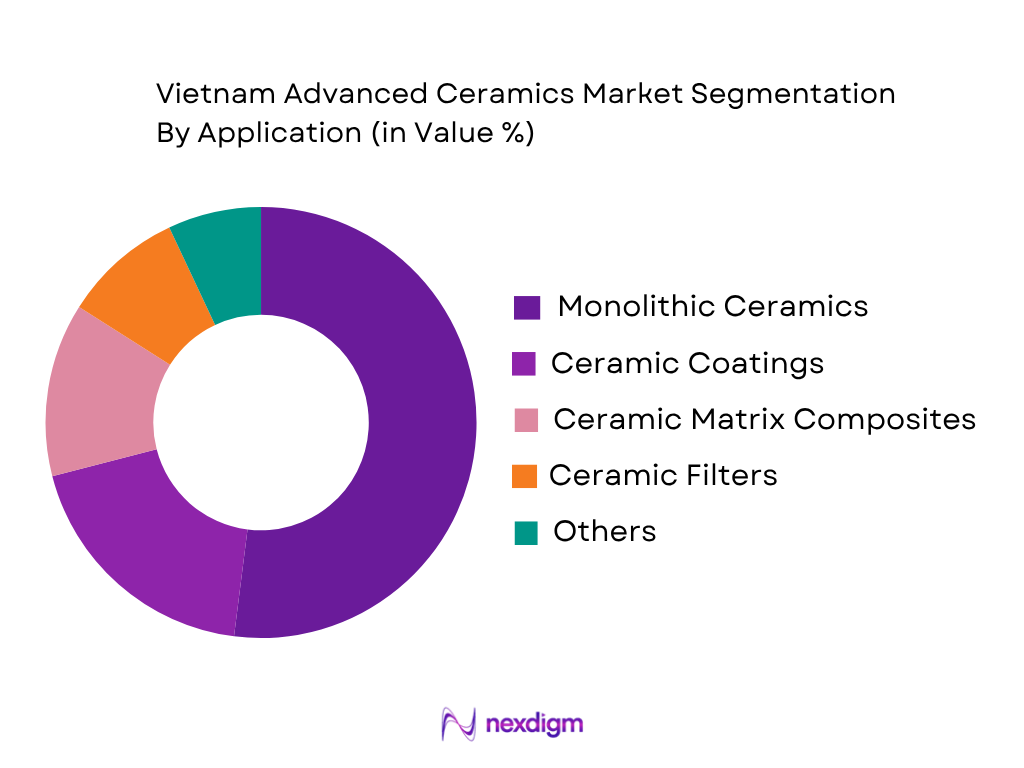
The Vietnam Advanced Ceramics Market can be segmented by application into electronics and semiconductor, automotive and electric vehicles, medical and healthcare, electrical and power, telecommunications, industrial machinery, aerospace and defense, and energy applications. Electronics and semiconductor applications represent the most strategically important segment because Vietnam has developed a large electronics manufacturing base and is now pursuing deeper semiconductor capabilities. Advanced ceramics are used for semiconductor equipment components, ceramic packages, substrates, electrical insulation, heat dissipation, precision handling components and high-temperature processing systems. Vietnam’s electronics, computers and components exports reached USD 72.6 billion in 2024, while imports reached USD 107.1 billion, demonstrating the depth of the electronics production ecosystem. The government’s semiconductor strategy also calls for 10 semiconductor packaging and testing plants, alongside 100 semiconductor design companies, creating additional potential demand for high-purity and precision ceramic materials.
Competitive Landscape
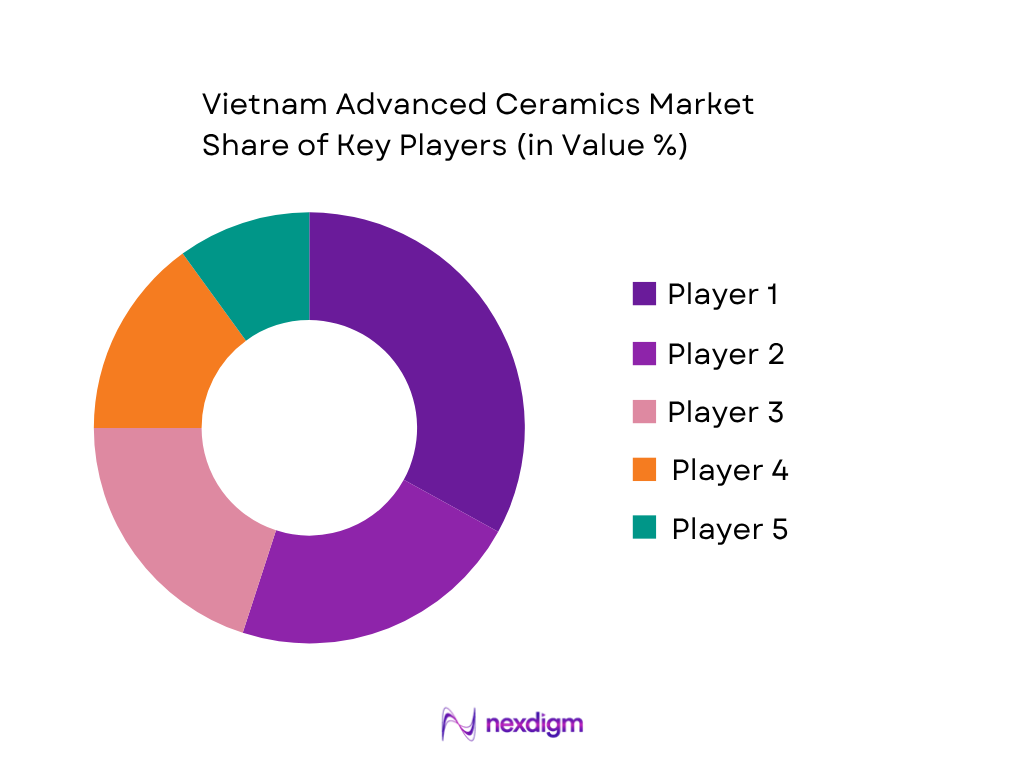
The Vietnam Advanced Ceramics Market has a mixed competitive structure involving international advanced-material manufacturers, specialized ceramic producers, electronics-material suppliers and companies serving semiconductor, automotive, industrial and medical applications. Competition is increasingly influenced by material purity, thermal conductivity, dielectric performance, machining precision, component customization and qualification capability rather than simply production volume. Vietnam’s expanding electronics ecosystem and semiconductor strategy are also encouraging suppliers capable of meeting international manufacturing and quality requirements. The government has identified semiconductor development as a strategic industrial priority, with the national roadmap extending across research, design, manufacturing, packaging and testing.
| Company | Established | Headquarters | Key Ceramic Materials | Major Applications | Manufacturing Capability | Vietnam Relevance | Key Differentiator | Market Position |
| Kyocera Corporation | 1959 | Kyoto, Japan | ~ | ~ | ~ | ~ | ~ | ~ |
| CoorsTek, Inc. | 1910 | Colorado, USA | ~ | ~ | ~ | ~ | ~ | ~ |
| CeramTec GmbH | 1903 | Plochingen, Germany | ~ | ~ | ~ | ~ | ~ | ~ |
| Morgan Advanced Materials | 1856 | Windsor, UK | ~ | ~ | ~ | ~ | ~ | ~ |
| Saint-Gobain Ceramics | 1665 | Paris, France | ~ | ~ | ~ | ~ | ~ | ~ |
Vietnam Advanced Ceramics Market Analysis
Growth Drivers
Electronics Manufacturing Expansion
Electronics manufacturing is a major demand catalyst for Vietnam’s advanced ceramics industry because ceramic substrates, insulators, packages, dielectric components and precision ceramic parts are increasingly required in high-density electronic assemblies. The National Statistics Office reported that Vietnam’s electronics, computers and components exports reached USD 72.6 billion in 2024, compared with USD 57.3 billion in 2023, while imports reached USD 107.1 billion. The same official data shows that production of electronic, computer and optical products increased by 8.3 in the industrial production index during 2024. This expanding manufacturing base supports demand for alumina, zirconia, aluminum nitride and other technical ceramics with controlled electrical, thermal and dimensional properties. Vietnam’s overall manufacturing and processing sector also recorded an industrial production index increase of 9.6 in 2024, providing a broader industrial customer base for precision ceramic components. The government’s semiconductor strategy further reinforces this driver by targeting 100 semiconductor design companies, 1 semiconductor fabrication plant and 10 semiconductor packaging and testing plants, creating additional requirements for ceramic substrates, high-purity components and semiconductor-processing hardware.
Semiconductor Supply-Chain Development
Vietnam’s semiconductor development program is creating a specific industrial pathway for advanced ceramics because semiconductor fabrication, packaging and testing require materials capable of withstanding high temperatures, chemical exposure, electrical loads and precision-processing conditions. The Government of Vietnam’s semiconductor strategy targets 100 design enterprises, 1 small-scale fabrication plant and 10 packaging and testing plants, establishing concrete downstream demand points for ceramic packages, substrates, insulating components, wafer-handling parts and thermal-management materials. The strategy also targets more than 50,000 semiconductor engineers and graduates, expanding the technical workforce supporting semiconductor production and associated materials. In 2024, Vietnam’s electronics, computers and components trade reached a combined USD 179.7 billion, comprising USD 72.6 billion of exports and USD 107.1 billion of imports. This scale indicates an established electronics supply chain into which semiconductor-related advanced ceramics can integrate. Vietnam’s industrial production index for electronic, computer and optical products increased by 8.3 in 2024, while manufacturing and processing increased by 9.6, demonstrating strengthening industrial activity. The combination of semiconductor policy, electronics production and technical workforce development creates a strong foundation for localized advanced-ceramic component manufacturing and supplier qualification.
Market Challenges
Imported Advanced Ceramic Powder Dependency
Dependence on imported specialized materials and production inputs remains a structural challenge for Vietnam’s advanced ceramics industry because high-purity ceramic powders, additives, processing chemicals and precision manufacturing equipment require established international supply chains. Vietnam’s 2024 trade data shows the scale of imported industrial inputs: total imports reached USD 380.76 billion, with production materials accounting for USD 356.43 billion. Imports of machinery, equipment, tools and spare parts reached USD 48.9 billion, while chemicals represented another significant industrial input category. Electronics, computers and components alone recorded USD 107.1 billion of imports, highlighting the country’s continuing reliance on imported technology and intermediate products. For advanced ceramics, this creates exposure to international logistics, qualification requirements, foreign technology and specialized raw-material availability. The challenge is particularly relevant for aluminum nitride, high-purity alumina, silicon carbide and semiconductor-grade ceramic materials, where consistency of particle size, purity and sintering behavior is critical. Vietnam’s semiconductor strategy is designed partly to strengthen domestic capabilities, but the current supply-chain structure means that local ceramic producers must develop powder processing, formulation, sintering and precision machining capabilities while continuing to meet global electronics qualification requirements.
Limited Domestic Precision Processing and Skilled Technical Workforce
Advanced ceramics require specialized powder preparation, forming, sintering, grinding, polishing, coating and inspection capabilities, creating a significant qualification barrier for Vietnamese suppliers seeking to move beyond conventional ceramic production. The challenge is reinforced by the current scale of industrial technology imports: Vietnam imported USD 48.9 billion of machinery, equipment, tools and spare parts in 2024. At the same time, the government’s semiconductor strategy identifies workforce development as a priority, targeting more than 50,000 semiconductor engineers and graduates. Government reporting indicates that approximately 7,000 engineers were already working in semiconductor design companies, alongside around 6,000 engineers and 10,000 technicians in semiconductor packaging, testing and materials or equipment companies. These figures show that specialist capabilities are developing but also illustrate the need for continued workforce expansion. Advanced ceramics suppliers must combine materials science, precision machining, semiconductor process knowledge and quality-control capabilities, which can lengthen customer qualification cycles. Vietnam’s industrial production index for manufacturing and processing increased by 9.6 in 2024, indicating expanding industrial demand, but this growth also increases the need for suppliers capable of meeting tighter dimensional, thermal and electrical specifications. Source: Government of Vietnam and National Statistics Office of Vietnam.
Market Opportunities
Semiconductor Ceramic Components
Semiconductor ceramic components represent a strong future opportunity because Vietnam is moving from an electronics assembly base toward a broader semiconductor ecosystem encompassing design, manufacturing, packaging and testing. The government’s semiconductor strategy establishes targets for 100 semiconductor design companies, 1 fabrication plant and 10 packaging and testing plants, creating identifiable future demand points for ceramic packages, substrates, wafer-handling components, insulators and high-temperature processing parts. Vietnam already has a substantial electronics manufacturing base, with electronics, computers and components generating USD 72.6 billion in exports in 2024 and USD 107.1 billion in imports. The combined trade value of USD 179.7 billion demonstrates the scale of the surrounding electronics ecosystem. Advanced ceramics can capture additional value as semiconductor operations become more technically sophisticated, particularly where components require electrical insulation, thermal stability, chemical resistance or dimensional precision. The opportunity extends beyond finished ceramic components to domestic powder processing, precision machining, surface treatment and quality-control services. Government workforce initiatives also target more than 50,000 semiconductor engineers and graduates, supporting the technical capability required for increasingly specialized ceramic applications. Source: Government of Vietnam and National Statistics Office of Vietnam.
EV Power Electronics Ceramics
EV power electronics create an opportunity for advanced ceramics through demand for electrically insulating, thermally stable and mechanically robust components used around power modules, inverters, chargers, sensors and other high-voltage systems. Vietnam’s industrial production index for motor-vehicle manufacturing increased by 21.1 in 2024, while production of electrical equipment increased by 11.9, providing direct evidence of strengthening automotive and electrical manufacturing activity. At the broader industrial level, manufacturing and processing increased by 9.6 during the same period. These developments support opportunities for alumina, aluminum nitride, silicon carbide-based ceramic components and other engineered ceramics capable of managing electrical insulation and heat dissipation. Vietnam’s electronics ecosystem adds another demand layer, with electronics, computers and components exports reaching USD 72.6 billion in 2024. As automotive manufacturing becomes more electronics-intensive, ceramic suppliers can target power-electronics substrates, insulating components, thermal-management assemblies and precision sensor housings. The opportunity is particularly relevant to suppliers that can combine ceramic material development with precision machining and component-level engineering rather than competing only in commodity ceramic production.
Future Outlook
The Vietnam Advanced Ceramics Market is positioned for continued development as the country’s industrial base moves toward semiconductor manufacturing, advanced electronics, electric mobility and higher-value engineering production. The strongest long-term demand opportunity is expected to originate from semiconductor and electronics applications requiring thermal management, electrical insulation, high-purity materials and precision components. Vietnam’s national semiconductor strategy targets 100 design companies, 1 fabrication plant and 10 packaging and testing plants, providing a defined industrial framework for advanced-material suppliers.
The country’s electronics trade base further supports this outlook. Electronics, computers and components generated USD 72.6 billion in exports and USD 107.1 billion in imports in 2024, while total merchandise trade reached USD 786.29 billion. Future market development is therefore expected to emphasize high-purity alumina, aluminum nitride, silicon carbide, zirconia, ceramic substrates, semiconductor-processing components, power-electronics ceramics and customized technical ceramic assemblies.
Major Players
- Kyocera Corporation
- CoorsTek, Inc.
- CeramTec GmbH
- Morgan Advanced Materials
- Saint-Gobain Ceramics
- Murata Manufacturing Co., Ltd.
- TDK Corporation
- NGK Insulators, Ltd.
- Tosoh Corporation
- 3M
- Rauschert Group
- Ceradyne
- Ferrotec Holdings Corporation
- Maruwa Co., Ltd.
- Niterra Co., Ltd.
Key Target Audience
- Advanced ceramics manufacturers and ceramic component producers
- Semiconductor manufacturers and semiconductor packaging/testing companies
- Electronics OEMs and electronic component manufacturers
- Automotive and electric-vehicle component manufacturers
- Industrial machinery and precision-engineering companies
- Investments and venture capitalist firms (technology, semiconductor and advanced-material investment funds)
- Government and regulatory bodies (Ministry of Industry and Trade, Ministry of Science and Technology, Ministry of Planning and Investment)
- Medical-device and healthcare equipment manufacturers
Research Methodology
Step 1: Identification of Key Variables
The initial phase involves mapping Vietnam’s advanced ceramics ecosystem across raw-material suppliers, powder producers, ceramic processors, component manufacturers, distributors and end-use industries. Particular attention is given to semiconductor, electronics, automotive, medical, energy and industrial applications.
Step 2: Market Analysis and Construction
Historical and current market information is structured according to material type, application, manufacturing process and end-use industry. Demand indicators including electronics production, semiconductor development, automotive manufacturing, industrial investment and trade flows are incorporated into the market framework.
Step 3: Hypothesis Validation and Expert Consultation
Market hypotheses are validated through consultations with ceramic manufacturers, component suppliers, electronics manufacturers, semiconductor stakeholders, automotive suppliers and industrial users. Discussions focus on material specifications, qualification requirements, procurement patterns, application growth and supply-chain constraints.
Step 4: Research Synthesis and Final Output
The final stage triangulates secondary statistics, company-level information, industry interviews and application-level demand indicators. The resulting model is cross-checked across material and application segments to establish a consistent view of Vietnam’s advanced ceramics ecosystem and future demand structure.

- Executive Summary
- Research Methodology (Market Definition and Scope, Advanced Ceramics Classification, Market Sizing Framework, Top-Down Market Assessment, Bottom-Up Market Assessment, Demand-Side Analysis, Supply-Side Analysis, Import-Export Reconciliation, Production Capacity Mapping, Application-Level Demand Mapping, Primary Research, Expert Interviews, Data Triangulation, Forecasting Framework, Assumptions and Limitations)

- Definition and Scope
- Evolution of Vietnam Advanced Ceramics Industry
- Advanced Ceramics Industry Ecosystem
- Advanced Ceramics Value Chain Analysis
- Advanced Ceramics Supply Chain Analysis
- Domestic Manufacturing and Import Dependency Assessmen

- Growth Drivers (Electronics Manufacturing Expansion, Semiconductor Supply-Chain Development, EV Manufacturing, Industrial Automation, Medical Device Manufacturing, Telecommunications Infrastructure, Aerospace and Defence Localization, High-Temperature Industrial Applications)
- Market Challenges (Imported Advanced Ceramic Powder Dependency, Limited Domestic Precision Processing, High Technology Qualification Requirements, Imported Production Equipment, Skilled Technical Workforce Constraints, Long OEM Qualification Cycles, Limited Local Material Development, Technology Transfer Constraints)
- Market Opportunities (Semiconductor Ceramic Components, Electronics Substrates, EV Power Electronics Ceramics, Advanced Bioceramics, Ceramic Matrix Composites, Thermal Management Ceramics, Precision Ceramic Components, Domestic Powder Processing, Defence and Aerospace Ceramics)
- Market Trends (Electronics Miniaturization, High-Purity Ceramic Materials, Ceramic Substrates for Power Electronics, Semiconductor Equipment Localization, Ceramic Additive Manufacturing, Advanced Bioceramics, Thermal Management Materials, Ceramic Coatings)
- Government and Industrial Policy Environment (Semiconductor Development, Electronics Manufacturing, Supporting Industries, High-Tech Manufacturing, Industrial Localization, R&D Incentives, Technology Transfer, Investment Promotion)
- SWOT Analysis
- Porter’s Five Forces Analysis
- PESTLE Analysis

- By Market Value (2020-2025)
- By Production Volume (2020-2025)
- By Domestic Consumption Volume (2020-2025)
- By Domestic Production (2020-2025)
- By Import Volume (2020-2025)
- By Export Volume (2020-2025)
- By Application Revenue (2020-2025)
- By Material Consumption (2020-2025)
- By Domestic vs Imported Supply (2020-2025)

- By Material Type (In Value %)
Alumina
Zirconia
Silicon Carbide
Silicon Nitride
Aluminum Nitride
Titanates
Ferrites
Zirconates
Other Advanced Ceramic Materials - By Product Type (In Value %)
Monolithic Ceramics
Ceramic Powders
Ceramic Substrates
Ceramic Coatings
Ceramic Matrix Composites
Ceramic Tubes and Rods
Ceramic Plates and Discs - By Ceramic Function (In Value %)
Structural Ceramics
Electronic Ceramics
Electrical Ceramics
Bioceramics
Wear-Resistant Ceramics
High-Temperature Ceramics
Thermal Management Ceramics
Optical and Dielectric Ceramics - By Manufacturing Process (In Value %)
Dry Pressing
Isostatic Pressing
Injection Molding
Extrusion
Tape Casting
Slip Casting
Hot Pressing
Hot Isostatic Pressing
Spark Plasma Sintering
Additive Manufacturing - By End-Use Industry (In Value %)
Electrical and Electronics
Semiconductor Manufacturing
Automotive
Aerospace and Defence
Medical and Healthcare
Energy and Power
Telecommunications
Industrial Machinery
Chemical Processing
Environmental Applications - By Application (In Value %)
Electronic Substrates
Semiconductor Equipment Components
Insulators and Dielectrics
Sensors and Actuators
Thermal Management Components - By Geography (In Value %)
Northern Vietnam (Hanoi, Bac Ninh, Hai Phong, Thai Nguyen)
Central Vietnam (Da Nang, Quang Nam, Quang Ngai)
Southern Vietnam (Ho Chi Minh City, Binh Duong, Dong Nai, Ba Ria–Vung Tau)
Major Industrial and Electronics Manufacturing Clusters

- Market Share Analysis of Major Players (By Material, Product Type, Application, End-Use Industry, Domestic Sales, Export Sales)
- Cross Comparison Parameters (Material Portfolio Breadth, Advanced Ceramic Production Capability, Powder-to-Component Integration, Precision Machining Capability, High-Purity Material Capability, Semiconductor Component Capability, Aerospace & Defence Qualification Capability, R&D and Technology Development Intensity)
- SWOT Analysis of Major Players
- Pricing and Cost Structure Analysis
- Detailed Profiles of Major Companies
CeramTec
CoorsTek
KYOCERA Corporation
Morgan Advanced Materials
Saint-Gobain Performance Ceramics & Refractories
3M
Murata Manufacturing
NGK Insulators
Corning Incorporated
Vesuvius
Rauschert
CUMI – Carborundum Universal
TOTO Ltd.
Ceradyne
Coorstek Advanced Ceramics

- End-User Procurement Behavior
- Electronics and Semiconductor Buyer Requirements
- Automotive and EV Buyer Requirements
- Automotive and EV Buyer Requirements
- Energy and Power Buyer Requirement

- By Market Value (2026-2035)
- By Production Volume (2026-2035)
- By Domestic Consumption Volume (2026-2035)
- By Domestic Production (2026-2035)
- By Import Volume (2026-2035)
- By Export Volume (2026-2035)
- By Application Revenue (2026-2035)
- By Material Consumption (2026-2035)
- By Domestic vs Imported Supply (2026-2035)


 Request a Sample
 Ask for Customization
 Get a Quote
 Enquire Now