
 Download PDF
Market Overview
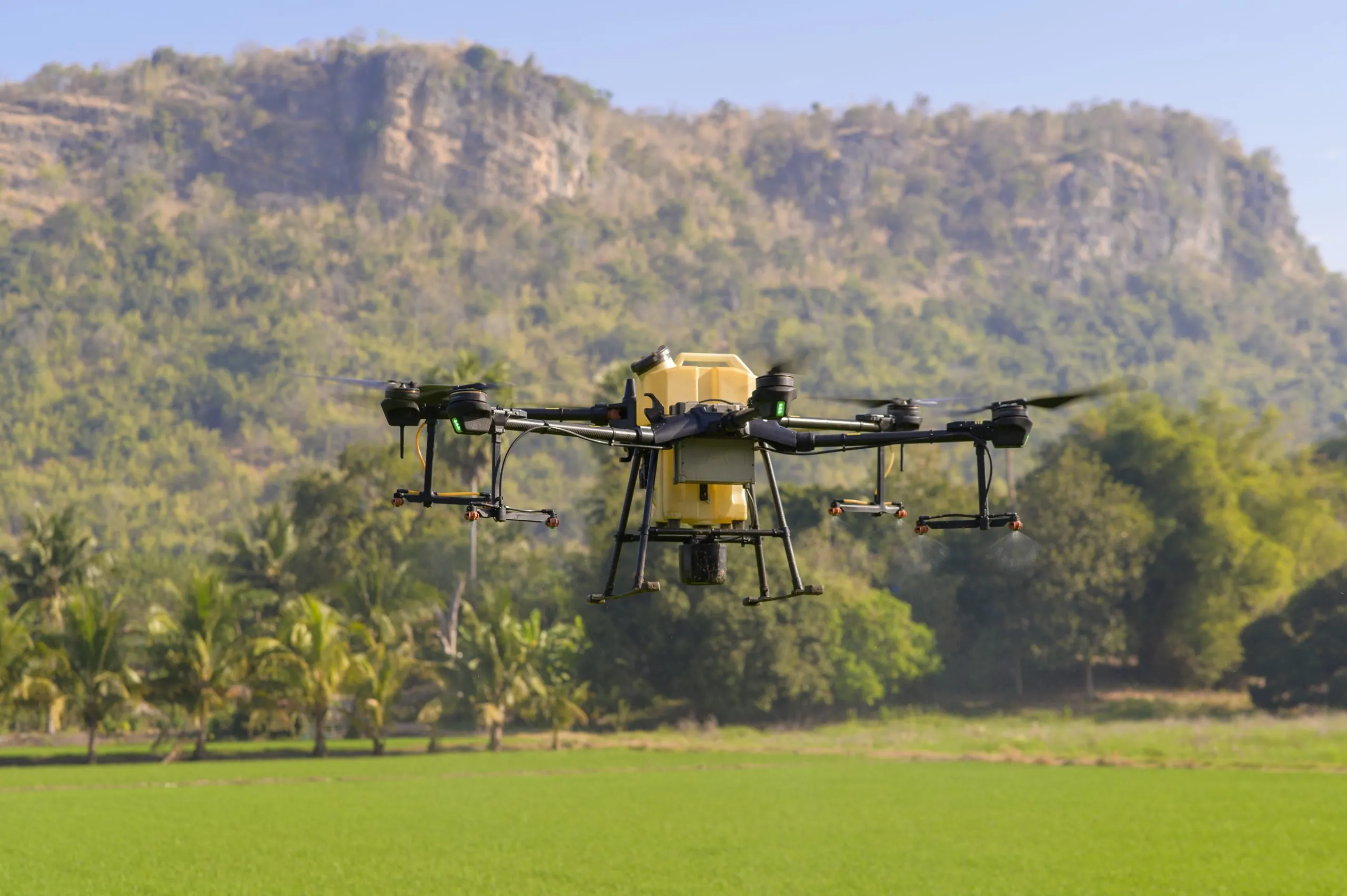
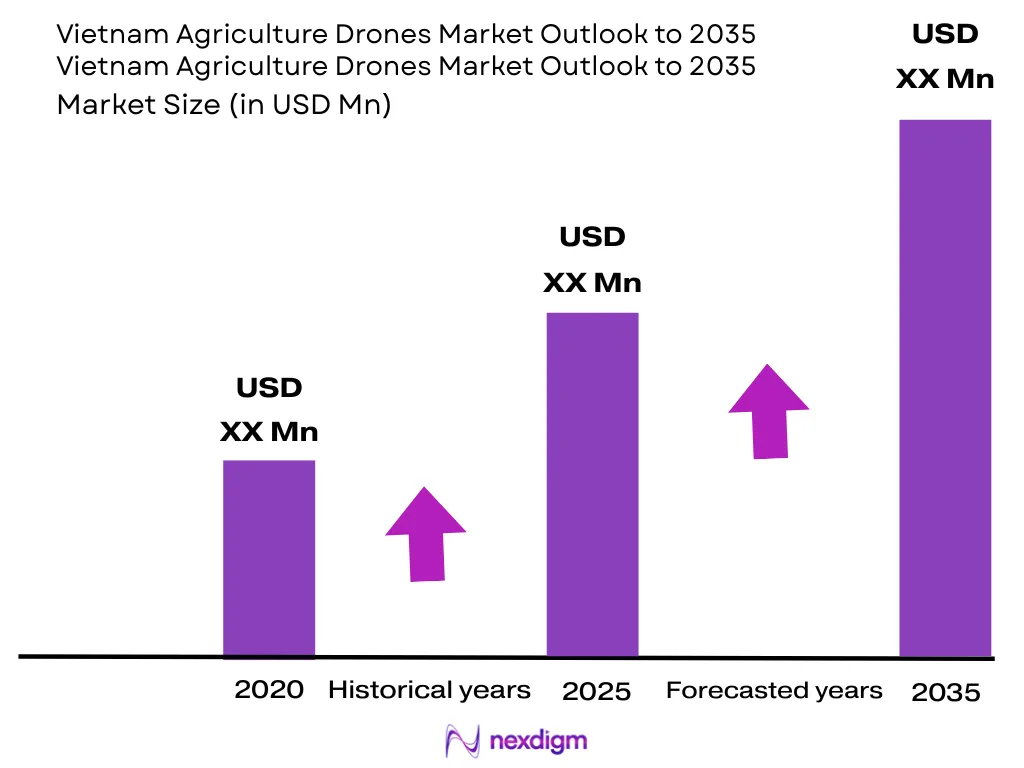
The Vietnam Agriculture Drones Market was valued at approximately USD ~ million in 2024, based on analysis of drone deployments across crop spraying, field monitoring, mapping, and precision agriculture applications. The market expansion is supported by Vietnam’s agricultural sector, which generated approximately USD 62 billion in agricultural, forestry, and fishery output and recorded agricultural exports exceeding USD 62 billion. With more than 27 million hectares of agricultural land and rice production exceeding 43 million metric tons, farmers are increasingly adopting drone technologies to improve spraying efficiency, reduce labor dependency, and optimize input utilization across commercial farming operations.
Market Segmentation
By Drone Type
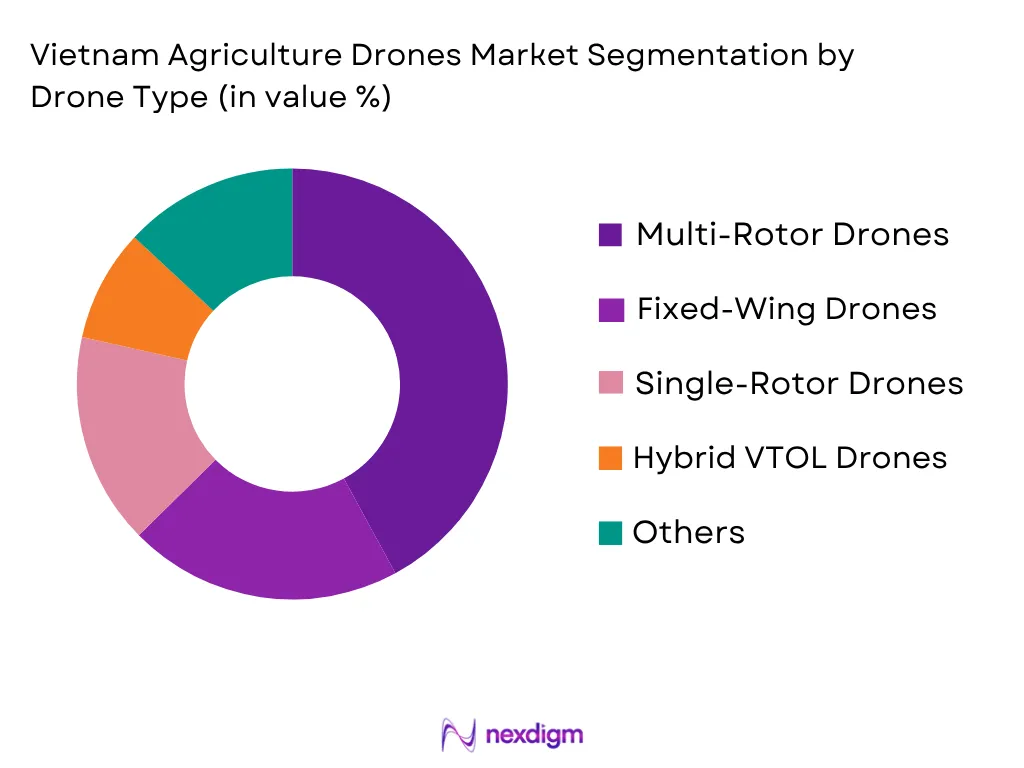
Vietnam Agriculture Drones Market is segmented by drone type into multi-rotor drones, fixed-wing drones, hybrid VTOL drones, single-rotor drones, and nano & mini agriculture drones. Recently, multi-rotor drones have maintained a dominant market share under this segmentation due to their suitability for precision spraying applications in rice paddies, fruit farms, and coffee plantations. Their ability to perform low-altitude flights, operate within fragmented agricultural fields, and deliver accurate pesticide and fertilizer application has significantly increased adoption. Multi-rotor systems require limited runway infrastructure and are easier to deploy in Vietnam’s diverse agricultural terrain. Furthermore, leading manufacturers have introduced higher payload capacities, autonomous flight planning, and real-time monitoring features, improving operational efficiency. Government initiatives promoting smart agriculture and labor-saving technologies have further accelerated the utilization of multi-rotor platforms across both individual farms and agricultural service providers.
By Application
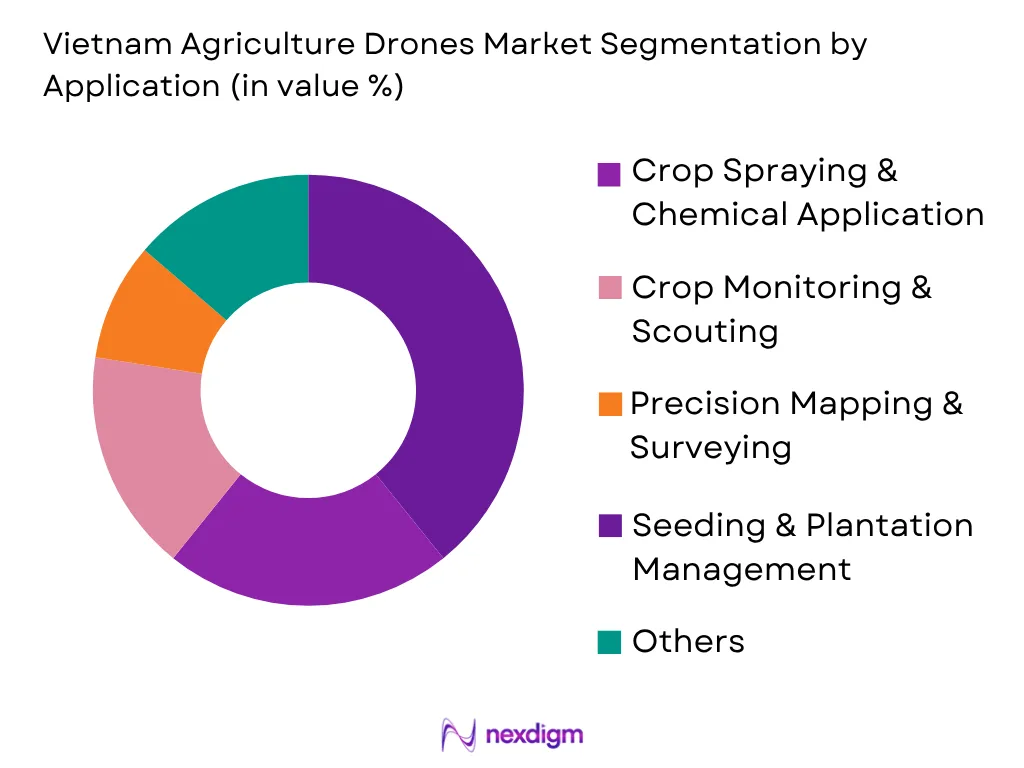
Vietnam Agriculture Drones Market is segmented by application into crop spraying & chemical application, crop monitoring & scouting, precision mapping & surveying, seeding & plantation management, crop health assessment & disease detection, livestock monitoring, and irrigation management. Recently, crop spraying & chemical application has emerged as the dominant segment owing to increasing labor shortages, rising farm input costs, and the need for precise agrochemical distribution. Drone-based spraying significantly improves operational efficiency by reducing chemical wastage while enabling rapid coverage of large cultivation areas. Rice-growing regions particularly benefit from drone spraying due to waterlogged field conditions that make conventional machinery deployment difficult. The segment is further supported by increasing awareness regarding worker safety and reduced exposure to agricultural chemicals. Service providers offering spraying-as-a-service solutions have also expanded accessibility for small and medium-scale farmers, strengthening the segment’s market leadership.
Competitive Landscape
The Vietnam Agriculture Drones Market is characterized by the presence of a combination of global drone manufacturers, regional agricultural technology providers, and specialized UAV solution companies. Market competition is primarily driven by technological innovation, payload capabilities, autonomous flight functions, precision spraying efficiency, after-sales support, and local distribution partnerships. International players continue to dominate hardware supply, while domestic firms increasingly focus on service delivery, pilot training, and precision agriculture integration.
| Company | Establishment Year | Headquarters | Agriculture Drone Portfolio | Max Payload Capacity | Precision Spraying Capability | AI Analytics Integration | Vietnam Distribution Network | Precision Agriculture Solutions |
| DJI Agriculture | 2006 | ~ | ~ | ~ | ~ | ~ | ~ | ~ |
| XAG | 2007 | ~ | ~ | ~ | ~ | ~ | ~ | ~ |
| Yamaha Motor | 1955 | ~ | ~ | ~ | ~ | ~ | ~ | ~ |
| JOUAV | 2010 | ~ | ~ | ~ | ~ | ~ | ~ | ~ |
| Terra Drone | 2016 | ~ | ~ | ~ | ~ | ~ | ~ | ~ |
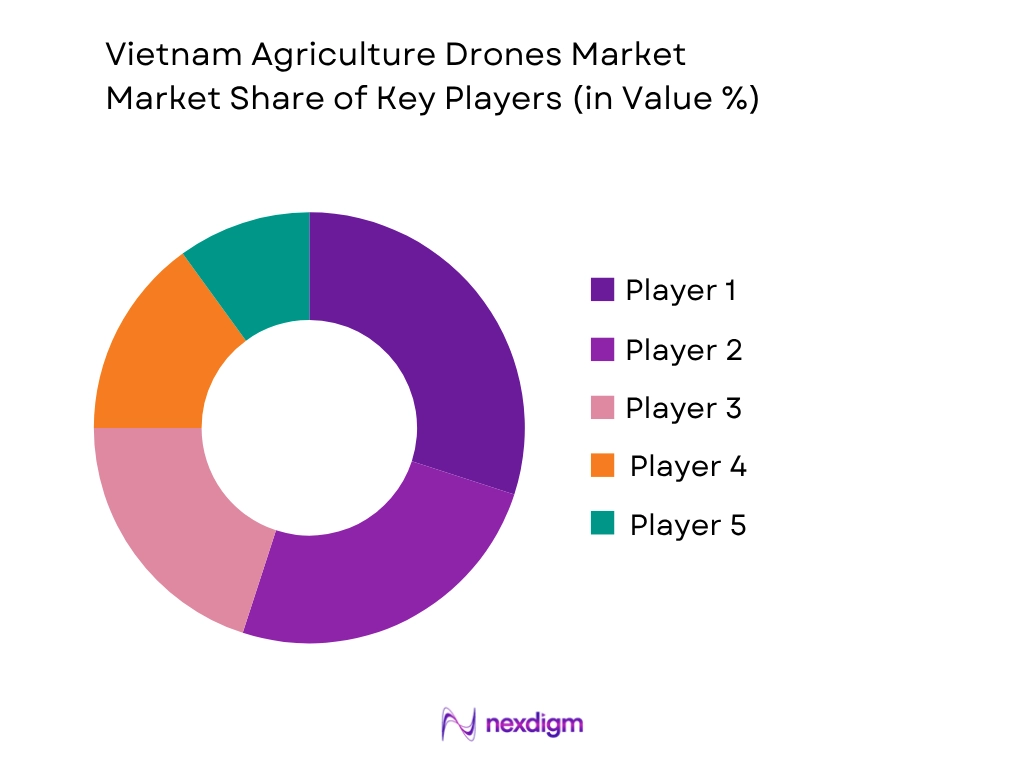
Vietnam Agriculture Drones Market Analysis
Growth Drivers
Rising Agricultural Modernization and Mechanization Initiatives
Vietnam’s accelerating agricultural modernization is a major driver for the agriculture drones market. According to the General Statistics Office of Vietnam, agriculture, forestry, and fisheries generated output exceeding VND 1.7 quadrillion while agricultural exports surpassed USD 62 billion. Vietnam cultivates approximately 11 million hectares of agricultural land, including over 7 million hectares dedicated to rice cultivation. The country produced more than 43 million metric tons of rice, maintaining its position among the world’s leading rice exporters. Large-scale cultivation of coffee, pepper, fruits, and vegetables has increased demand for precision farming technologies capable of improving productivity and resource efficiency. The World Bank reported Vietnam’s GDP exceeded USD 476 billion, reflecting continued investment capacity across rural sectors. Agriculture drones enable rapid spraying, crop monitoring, and field mapping over large cultivation areas, reducing dependence on manual labor while improving application accuracy. In regions such as the Mekong Delta and Central Highlands, increasing farm consolidation and export-oriented agricultural production have encouraged the adoption of advanced mechanization tools. As Vietnamese agriculture continues shifting toward higher productivity and technology-driven farming systems, agriculture drones are becoming increasingly important for operational efficiency, input optimization, and sustainable crop management practices.
Labor Shortages and Growing Demand for Precision Agriculture
Labor availability challenges across Vietnam’s agricultural sector are significantly accelerating demand for agriculture drones. According to national labor statistics, agriculture continues to employ more than 13 million workers; however, increasing urban migration has reduced the availability of seasonal farm labor in key agricultural regions. Vietnam’s urban population exceeded 40 million people, reflecting ongoing workforce movement from rural farming communities toward industrial and service sectors. Simultaneously, agricultural exports exceeded USD 62 billion, requiring producers to maintain high productivity standards and crop quality. Agriculture drones address labor shortages by performing spraying, monitoring, and mapping operations much faster than conventional methods. In major rice-producing provinces, drones are increasingly used to apply crop protection products while reducing field entry requirements and minimizing crop damage. Vietnam remains one of the world’s largest producers of coffee, exporting more than 1.4 million metric tons annually, while fruit exports continue expanding across Asian markets. Precision agriculture technologies supported by drones help growers improve disease detection, optimize fertilizer application, and monitor crop health across extensive farming areas. These productivity benefits are strengthening drone adoption among commercial farms, cooperatives, and agricultural service providers.
Market Challenges
High Equipment Investment Requirements and Limited Farm Scale
The high capital investment associated with agriculture drone deployment remains a significant challenge for the Vietnam Agriculture Drones Market. Vietnam’s agricultural sector consists largely of smallholder farmers managing fragmented landholdings across rice, fruit, and vegetable production systems. According to agricultural census data, millions of farming households continue operating relatively small agricultural plots. While Vietnam possesses approximately 11 million hectares of agricultural land, ownership remains highly dispersed compared with large commercial farming markets. This limits direct purchasing capacity for advanced drone systems, software platforms, batteries, and maintenance services. Although Vietnam’s GDP exceeded USD 476 billion and rural incomes continue improving, affordability remains a key consideration for many agricultural producers. Furthermore, farmers often prioritize investments in irrigation, seeds, fertilizers, and mechanized equipment before considering advanced aerial technologies. The challenge is particularly evident in northern and central farming regions where smaller farm sizes reduce utilization rates and return on investment. As a result, many producers rely on agricultural service providers rather than purchasing drones directly. Expanding financing programs, cooperative ownership models, and drone-as-a-service offerings will remain critical to overcoming adoption barriers and improving market penetration.
Regulatory Complexity and Technical Skills Gap
Regulatory compliance and shortages of skilled drone operators continue to constrain the growth of Vietnam’s agriculture drones market. Drone operations require compliance with aviation regulations, operational approvals, pilot training requirements, and airspace management protocols. As drone utilization expands across agricultural applications, operators must also manage data collection, precision mapping, flight planning, and maintenance procedures. Vietnam’s workforce increasingly supports manufacturing and services sectors, creating competition for technically skilled labor. According to government statistics, Vietnam’s population exceeds 100 million people, yet the availability of specialized agricultural drone pilots and precision agriculture technicians remains relatively limited. Agriculture drones equipped with multispectral sensors, RTK navigation systems, and autonomous flight technologies require advanced operational expertise to maximize effectiveness. Furthermore, interpreting drone-generated agricultural data requires knowledge of crop management, geospatial analytics, and digital farming practices. Many small and medium-sized farmers continue lacking familiarity with these technologies, slowing adoption rates despite growing awareness. Building comprehensive pilot certification programs, expanding agricultural technology training initiatives, and simplifying operational compliance procedures will be essential to support broader utilization of drone-based farming solutions across Vietnam’s agricultural economy.
Market Opportunities
Expansion of Drone-as-a-Service Models Across Rice and Cash Crop Production
The rapid expansion of drone-as-a-service models presents a significant opportunity for the Vietnam Agriculture Drones Market. Vietnam remains one of the largest agricultural producers in Southeast Asia, producing more than 43 million metric tons of rice annually while maintaining substantial output of coffee, fruits, vegetables, and pepper. The country’s agricultural exports exceeded USD 62 billion, highlighting the commercial importance of efficient crop management practices. Because many farming operations remain small or medium-sized, service-based drone deployment offers an economically viable alternative to direct equipment ownership. Agricultural service providers can deploy drones across multiple farms, increasing equipment utilization and reducing costs for individual growers. This model is particularly attractive within the Mekong Delta, where large rice cultivation areas require repeated spraying and monitoring activities throughout growing cycles. Service providers are also increasingly supporting coffee plantations in the Central Highlands and fruit production clusters in southern Vietnam. The combination of growing export-oriented agriculture, increasing labor constraints, and rising demand for precision farming solutions creates favorable conditions for widespread expansion of professional drone service businesses throughout Vietnam’s agricultural sector.
Integration of AI, Remote Sensing, and Smart Agriculture Platforms
The integration of agriculture drones with artificial intelligence, remote sensing technologies, and smart agriculture platforms represents a major market opportunity in Vietnam. The country manages approximately 11 million hectares of agricultural land and produces large volumes of export-oriented crops requiring precise monitoring and resource management. Vietnam’s digital transformation strategy and broader adoption of agricultural technologies are supporting increased utilization of data-driven farming solutions. Modern drones equipped with multispectral cameras, thermal sensors, and RTK navigation systems can generate highly detailed field intelligence regarding crop health, irrigation needs, nutrient deficiencies, and disease outbreaks. These capabilities are particularly valuable in high-value agricultural sectors such as coffee, fruits, vegetables, and rice cultivation. Vietnam’s agricultural exports exceeding USD 62 billion highlight the importance of maintaining quality standards and maximizing yields across competitive international markets. Artificial intelligence platforms can transform drone-collected imagery into actionable agronomic recommendations, enabling farmers to make faster and more informed decisions. As agricultural producers increasingly prioritize efficiency, sustainability, and productivity improvements, integrated drone analytics solutions are expected to become a central component of Vietnam’s evolving precision agriculture ecosystem.
Future Outlook
The Vietnam Agriculture Drones Market is expected to witness robust expansion during the forecast period, supported by increasing agricultural modernization initiatives, labor optimization requirements, and wider adoption of precision farming technologies. Rising demand for efficient crop protection solutions, growing integration of AI-powered farm analytics, and increasing awareness regarding sustainable agricultural practices are expected to strengthen market penetration. Furthermore, government-backed smart agriculture programs and the expansion of drone-as-a-service business models are likely to create favorable conditions for sustained market growth.
Major Players
- DJI Agriculture
- XAG
- Yamaha Motor
- JOUAV
- Terra Drone Corporation
- AgEagle Aerial Systems
- Sentera
- Trimble
- Drone Volt
- AeroVironment
- Hylio
- Garuda Aerospace
- Demeter Vietnam
- MimosaTEK
- Parrot Drones
Key Target Audience
- Agricultural Drone Manufacturers
- Agricultural Service Providers
- Precision Agriculture Technology Companies
- Commercial Farming Enterprises
- Agricultural Cooperatives
- Investments and Venture Capitalist Firms
- Government and Regulatory Bodies (Ministry of Agriculture and Rural Development, Civil Aviation Authority of Vietnam)
- Agrochemical and Crop Protection Companies
Research Methodology
Step 1: Identification of Key Variables
The initial phase involves constructing an ecosystem map encompassing all major stakeholders within the Vietnam Agriculture Drones Market. Extensive secondary research is conducted through government publications, industry databases, company disclosures, agricultural technology reports, and trade associations. The objective is to identify critical variables influencing market dynamics including drone deployment patterns, farm mechanization levels, precision agriculture adoption, regulatory frameworks, and technological advancements.
Step 2: Market Analysis and Construction
Historical market information is collected and analyzed to evaluate industry development patterns, drone deployment trends, application-specific demand, and revenue generation mechanisms. Supply-side assessment includes manufacturer presence, distribution networks, and technological capabilities, while demand-side evaluation focuses on agricultural enterprises, cooperatives, and service providers utilizing drone technologies.
Step 3: Hypothesis Validation and Expert Consultation
Market assumptions are validated through structured interviews with drone manufacturers, agricultural technology specialists, farm operators, agricultural cooperatives, and industry participants. These consultations provide operational insights, adoption trends, utilization patterns, and investment perspectives that strengthen the reliability of market estimates and forecasts.
Step 4: Research Synthesis and Final Output
The final stage integrates findings from primary and secondary research into a consolidated analytical framework. Data triangulation techniques are applied to validate market sizing, segmentation, competitive positioning, and future growth projections. This process ensures a comprehensive and accurate representation of the Vietnam Agriculture Drones Market.

- Executive Summary
- Research Methodology (Market Definitions and Assumptions, Abbreviations, Market Sizing Approach, Top-Down Analysis, Bottom-Up Analysis, Demand-Side Assessment, Supply-Side Assessment, Primary Industry Interviews, Data Triangulation, Forecasting Framework, Limitations and Future Conclusions)

- Definition and Scope
- Market Evolution and Industry Genesis
- Timeline of Major Industry Developments
- Vietnam Precision Agriculture Ecosystem Overview
- Agricultural Drone Value Chain Analysis

- Growth Drivers (Government Support for Smart Agriculture, Rising Labor Shortages in Farming, Expansion of Precision Agriculture Practices, Increasing Rice and Cash Crop Productivity Requirements, Growth in Agricultural Mechanization)
- Market Challenges (High Capital Investment Requirements, Drone Operator Skill Gaps, Regulatory Compliance Requirements, Battery Performance Constraints, Fragmented Farm Ownership Structure)
- Market Opportunities (AI-Enabled Crop Analytics, Drone-as-a-Service Expansion, Precision Spraying Adoption, Integration with Digital Farming Platforms, Export-Oriented High-Value Crop Monitoring)
- Market Trends (Autonomous Flight Planning, RTK-Based Precision Navigation, Multispectral Imaging Adoption, Variable Rate Application Technologies, Cloud-Based Farm Data Management)
- Government Regulations (Civil Aviation Drone Regulations, Agricultural Chemical Application Guidelines, UAV Registration Requirements, Smart Agriculture Policies, Data Security and Airspace Compliance Framework)
- SWOT Analysis
- Porter’s Five Forces Analysis
- PESTLE Analysis
- Stakeholder Ecosystem
- Competition Ecosystem

- By Market Value (2020-2025)
- By Volume (2020-2025)
- By Average Selling Price (2020-2025)

- By Drone Type (In Value %)
Multi-Rotor Drones
Fixed-Wing Drones
Hybrid VTOL Drones
Single-Rotor Drones
Nano and Mini Agriculture Drones - By Application (In Value %)
Crop Spraying and Chemical Application
Crop Monitoring and Scouting
Precision Mapping and Surveying
Seeding and Plantation Management
Crop Health Assessment and Disease Detection
Livestock Monitoring
Irrigation Management - By Farm Type (In Value %)
Rice Farms
Coffee Plantations
Fruit and Vegetable Farms
Aquaculture and Integrated Farms
Industrial Crop Farms - By Region (In Value %)
Red River Delta
Northern Midlands and Mountain Areas
North Central and Central Coastal Areas
Central Highlands
Southeast Vietnam
Mekong River Delta - By End User (In Value %)
Individual Farmers
Farmer Cooperatives
Agricultural Service Providers
Agribusiness Companies
Government and Research Institutions

- Market Share of Major Players (By Value, Volume, Drone Type, Application Segment)
- Market Share of Major Players by Agriculture Drone Type
- Cross Comparison Parameters (Payload Capacity, Flight Endurance, Spray Coverage Capacity, Precision Navigation Capability, Battery Swapping Efficiency, AI Analytics Integration, After-Sales Service Network, Agriculture Drone Training & Certification Support)
- SWOT Analysis of Major Players
- Pricing Analysis by Payload Capacity and Application Type
- Technology Benchmarking Analysis
- Detailed Profiles of Major Companies
DJI Agriculture
XAG
Yamaha Motor
Aonic (Poladrone)
JOUAV
AeroVironment
AgEagle Aerial Systems
Trimble
Sentera
Drone Volt
Terra Drone Corporation
Hylio
Garuda Aerospace
Demeter Vietnam
MimosaTEK

- Drone Utilization Assessment (Spraying Frequency, Acreage Coverage, Seasonal Usage Patterns, Service Adoption)
- Farmer Demographic Analysis (Farm Size, Crop Type, Income Level, Technology Adoption)
- Agricultural Mechanization Assessment
- Farm Input Optimization Analysis
- Precision Agriculture Readiness Analysis
- Pain Point Assessment
- Technology Adoption Barriers
- Purchase Decision-Making Process
- Ownership vs Service Model Preference

- By Market Value (2026-2035)
- By Volume (2026-2035)
- By Average Selling Price (2026-2035)


 Request a Sample
 Ask for Customization
 Get a Quote
 Enquire Now