

 Download PDF
 Download PDF
Market Overview
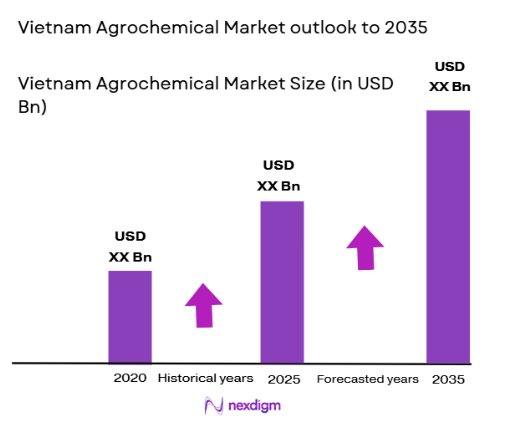
The Vietnam agrochemical market has been driven by increasing agricultural demands and the adoption of modern farming practices. In recent assessments, the market size is projected to reach approximately USD ~ billion, supported by both domestic agricultural growth and export opportunities. The growing adoption of pesticides, herbicides, and biotechnological solutions are primary drivers, with an increased focus on pest management, soil health, and crop yield enhancement contributing to the market’s robust expansion.
Vietnam remains a dominant player in the Southeast Asian agrochemical landscape due to its strong agricultural output, including rice, coffee, and fruit production. The nation’s agricultural sector has seen rapid modernization with government incentives encouraging the use of advanced agrochemical solutions. Regional cities like Ho Chi Minh City and Hanoi are at the forefront of this growth, owing to their proximity to manufacturing hubs, access to infrastructure, and the central role they play in the national agricultural supply chain.
Market Segmentation
By Product Type:
The Vietnam agrochemical market is segmented by product type into herbicides, insecticides, fungicides, biopesticides, and plant growth regulators. Recently, herbicides have dominated the market due to their critical role in rice and vegetable farming, which make up a large portion of agricultural activity. The increase in rice cultivation and the need for effective weed control have led to herbicides capturing the highest market share.

By Distribution Channel:
The Vietnam agrochemical market is segmented by distribution channel into direct sales, online platforms, government tenders, third-party distributors, and retail stores. Online platforms have gained significant market share as farmers are increasingly turning to e-commerce for their agrochemical needs. The convenience of digital transactions, combined with government incentives for digital adoption in agriculture, has fueled this sub-segment’s rapid growth. 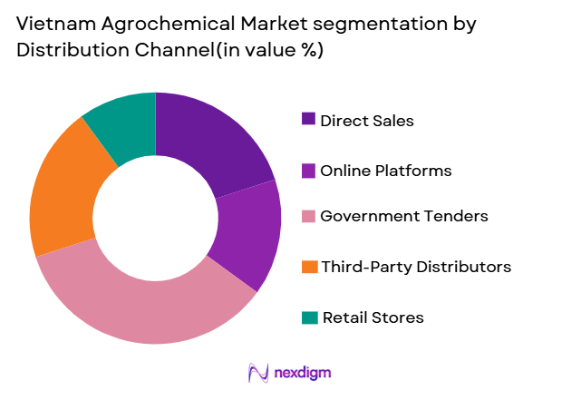
Competitive Landscape
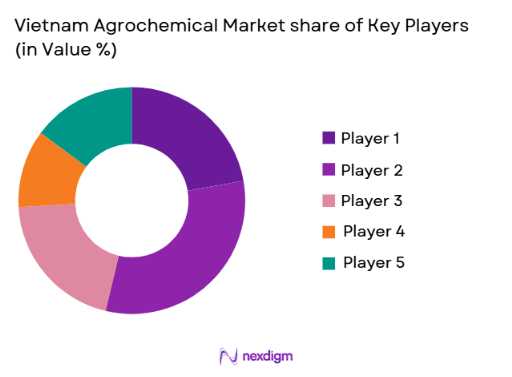
The Vietnam agrochemical market exhibits a competitive landscape dominated by both international and local players. Consolidation trends are evident as larger firms merge with local distributors to capture a significant share of the growing agrochemical market. These strategic partnerships enhance market reach and foster innovation in eco-friendly agricultural solutions.
| Company Name | Establishment Year | Headquarters | Technology Focus | Market Reach | Key Products | Revenue (USD billion) | Technology Type |
| Syngenta | 2000 | Switzerland | ~ | ~ | ~ | ~ | ~ |
| BASF | 1865 | Germany | ~ | ~ | ~ | ~ | ~ |
| Bayer CropScience | 1863 | Germany | ~ | ~ | ~ | ~ | ~ |
| UPL Limited | 1985 | India | ~ | ~ | ~ | ~ | ~ |
| Corteva Agriscience | 2019 | USA | ~ | ~ | ~ | ~ | ~ |
Vietnam Agrochemical Market Analysis
Growth Drivers
Increasing agricultural productivity:
The continuous rise in Vietnam’s agricultural output is a key growth driver for the agrochemical market. With the need to feed a growing population and enhance exports, the demand for fertilizers and crop protection products is steadily increasing. Modern farming techniques like precision agriculture have further amplified the need for efficient agrochemical solutions. This demand has been catalyzed by both the government’s push for self-sufficiency in food production and the increasing adoption of industrial farming practices across the country.
Adoption of sustainable farming practices:
Vietnam is seeing a shift toward eco-friendly farming methods, where sustainable agrochemical solutions play a vital role. As consumers demand higher food safety standards and as governments impose stricter environmental regulations, farmers are increasingly turning to biopesticides, bio-based fertilizers, and integrated pest management systems. The rise of organic farming and the push towards reducing chemical residues in food has led to increased investments in research and development of sustainable agrochemical products, further driving the market’s growth.
Market Challenges
Environmental concerns over pesticide use:
One of the primary challenges facing the Vietnam agrochemical market is the environmental impact of pesticide use. Overreliance on chemical-based agrochemicals has resulted in soil degradation, water contamination, and the loss of biodiversity in some areas. The Vietnamese government has taken steps to regulate pesticide use, encouraging farmers to adopt safer, less harmful alternatives. However, overcoming the ingrained use of chemical pesticides among farmers and shifting to safer, more sustainable agrochemical solutions remains a significant challenge.
Counterfeit agrochemicals:
The rise of counterfeit and substandard agrochemicals in Vietnam poses another challenge to the market. These products often fail to deliver the promised effectiveness, leading to poor crop yields and potential health risks for consumers. Local authorities have increased efforts to combat the issue, but the prevalence of counterfeit products continues to affect both the reputation of legitimate brands and the quality of agricultural products in the market.
Opportunities
Technological advancements in agrochemicals:
With the continuous advancement of technology in the agrochemical sector, there is significant potential for the introduction of new, more efficient products. Smart pesticides, drones for crop spraying, and AI-based crop monitoring tools are expected to change how agrochemicals are applied in the field. These technological innovations promise to improve the precision of pesticide use, reduce waste, and minimize environmental impact, presenting a strong growth opportunity for both established and new players in the market.
Increase in demand for organic products: With the global shift toward healthier lifestyles, the demand for organic agricultural products is increasing in Vietnam. This opens up a significant market for organic agrochemicals such as biopesticides and biofertilizers. As the Vietnamese government continues to incentivize organic farming, the agrochemical market is likely to see a surge in demand for non-toxic, environmentally friendly products, offering opportunities for market expansion for firms that focus on sustainable solutions.
Future Outlook
The future outlook for the Vietnam agrochemical market is positive, with steady growth anticipated over the next several years. Key factors driving this growth include technological advancements in crop protection, government support for agricultural innovation, and increasing demand for high-quality, sustainable agrochemical products. As the country continues to focus on improving agricultural output and moving towards more eco-friendly farming practices, the demand for innovative agrochemical solutions will remain strong. This will likely lead to market diversification, with significant developments in the biopesticides and organic fertilizers sectors, providing new opportunities for both domestic and international companies.
Major Players
- Syngenta
- BASF
- Bayer CropScience
- UPL Limited
- Corteva Agriscience
- FMC Corporation
- Monsanto
- Dow AgroSciences
- Nufarm
- Sumitomo Chemical
- Mahindra Agribusiness
- Vinafood 1
- LG Chem
- K+S AG
- DuPont
Key Target Audience
- Investments and venture capitalist firms
- Government and regulatory bodies
- Large-scale agricultural producers
- Farmers and agribusinesses
- Agrochemical distributors
- Private equity firms
- Financial analysts and investors
- Environmental protection agencies
Research Methodology
Step 1: Identification of Key Variables
The key variables influencing the market, including market trends, demand drivers, and regulatory factors, are identified.
Step 2: Market Analysis and Construction
The data collected is analyzed to construct a comprehensive market model, considering both historical data and potential future trends.
Step 3: Hypothesis Validation and Expert Consultation
The constructed model is validated by consulting with industry experts, stakeholders, and existing market players to ensure accuracy and applicability.
Step 4: Research Synthesis and Final Output
The final output synthesizes the findings, presenting a complete market report that addresses all relevant factors and market dynamics.

- Executive Summary
- Research Methodology(Definitions, Scope, Industry Assumptions, Market Sizing Approach, Primary & Secondary Research Framework, Data Collection & Verification Protocol, Analytic Models & Forecast Methodology, Limitations & Research Validity Checks)

- Market Definition and Scope
- Value Chain & Stakeholder Ecosystem
- Regulatory / Certification Landscape
- Sector Dynamics Affecting Demand
- Strategic Initiatives & Infrastructure Growth

- Growth Drivers
Increased Agricultural Production Demand
Shift Towards Sustainable Farming Practices
Government Support for Agrochemical Use
Technological Advancements in Crop Protection
Rise in Export Opportunities - Market Challenges
Regulatory Barriers for Agrochemical Use
High Production Costs of Eco-friendly Products
Availability of Counterfeit Agrochemicals
Market Fragmentation and Unorganized Retail
Environmental Impact Concerns - Market Opportunities
Adoption of Precision Agriculture Technologies
Development of Eco-friendly Agrochemicals
Rising Demand for Biopesticides - Trends
Increase in Adoption of Organic Farming
Growth in Demand for Customized Agrochemical Solutions
Technological Innovations in Agrochemical Production
Focus on Environmental Sustainability
Emerging Use of Drones in Agrochemical Applications - Government Regulations & Defense Policy
Government Regulations on Agrochemical Imports
Regulations on Sustainable Agrochemical Production
Subsidies for Eco-friendly Agrochemical Products - SWOT Analysis
- Stakeholder and Ecosystem Analysis
- Porter’s Five Forces Analysis
- Competition Intensity and Ecosystem Mapping

- By Market Value, 2020-2025
- By Installed Units, 2020-2025
- By Average System Price, 2020-2025
- By System Complexity Tier, 2020-2025

- By System Type (In Value%)
Herbicides
Insecticides
Fungicides
Biopesticides
Plant Growth Regulators - By Platform Type (In Value%)
Spray Equipment
Aerial Platforms
Soil Applications
Drip Irrigation Platforms
Integrated Platforms - By Fitment Type (In Value%)
On-field Solutions
Greenhouse Applications
Indoor Cultivation Systems
Organic Fitments
Customized Solutions - By EndUser Segment (In Value%)
Farmers
Agrochemical Companies
Research Institutes
Government Agencies
Distributors - By Procurement Channel (In Value%)
Direct Procurement
Online Sales Channels
Private Sector Procurement
Government Contracts
Third-party Distributors - By Material / Technology (In Value%)
Chemical-based Agrochemicals
Biotechnology-based Solutions
Nano-technology Enhanced Products
Sustainable Agrochemicals
Traditional Agrochemical Products

- Market structure and competitive positioning
- Market share snapshot of major players
- CrossComparison Parameters (Market Share, Price, Product Variety, Distribution Reach, Regulatory Compliance, R&D Investment, Customer Service, Sustainability Practices, Market Reputation, Production Capacity)
- SWOT Analysis of Key Players
- Pricing & Procurement Analysis
- Key Players
Syngenta
BASF
Bayer CropScience
Dow AgroSciences
Corteva Agriscience
Monsanto
Sumitomo Chemical
FMC Corporation
ADAMA Agricultural Solutions
UPL Limited
Nufarm
Mahindra Agribusiness
Vingroup
Vinafood 1
Pest Control Solutions

- Farmers Increasing Dependence on Agrochemicals
- Rise of Agrochemical Distributors in Rural Areas
- Governmental Push Towards Eco-friendly Alternatives
- Research Institutes’ Role in Agrochemical Development

- Forecast Market Value, 2026-2035
- Forecast Installed Units, 2026-2035
- Price Forecast by System Tier, 2026-2035
- Future Demand by Platform, 2026-2035


 Request a Sample
 Ask for Customization
 Get a Quote
 Enquire Now