

 Download PDF
Market Overview
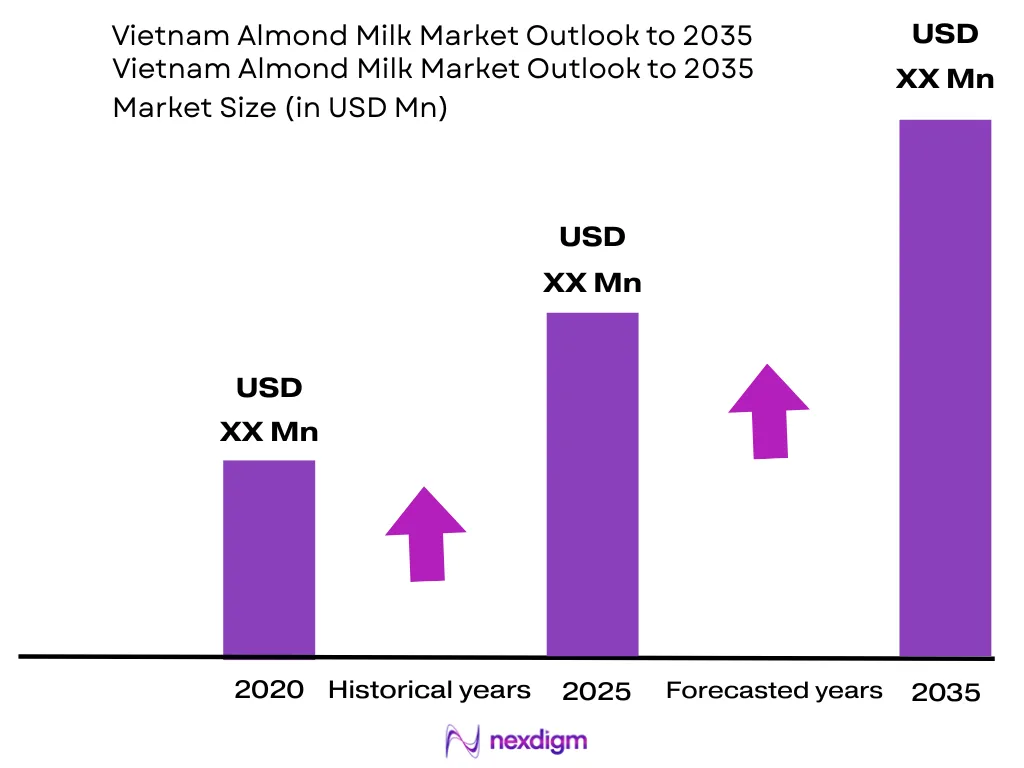
The Vietnam Almond Milk Market was valued at approximately USD ~ Million in 2025, growing from USD ~ Million in 2024, supported by rising consumer interest in plant-based nutrition, lactose-free beverages, and premium health-oriented products. Vietnam’s dairy alternatives category has expanded alongside increasing urbanization and disposable income growth. According to the General Statistics Office of Vietnam, retail sales of consumer goods exceeded VND 6.2 quadrillion in 2024, compared to VND 5.7 quadrillion in 2023, supporting greater demand for premium beverages. The market is further driven by increasing awareness of vegan diets, digestive health concerns, and demand for low-calorie dairy alternatives among urban consumers.
Market Segmentation
By Product Type
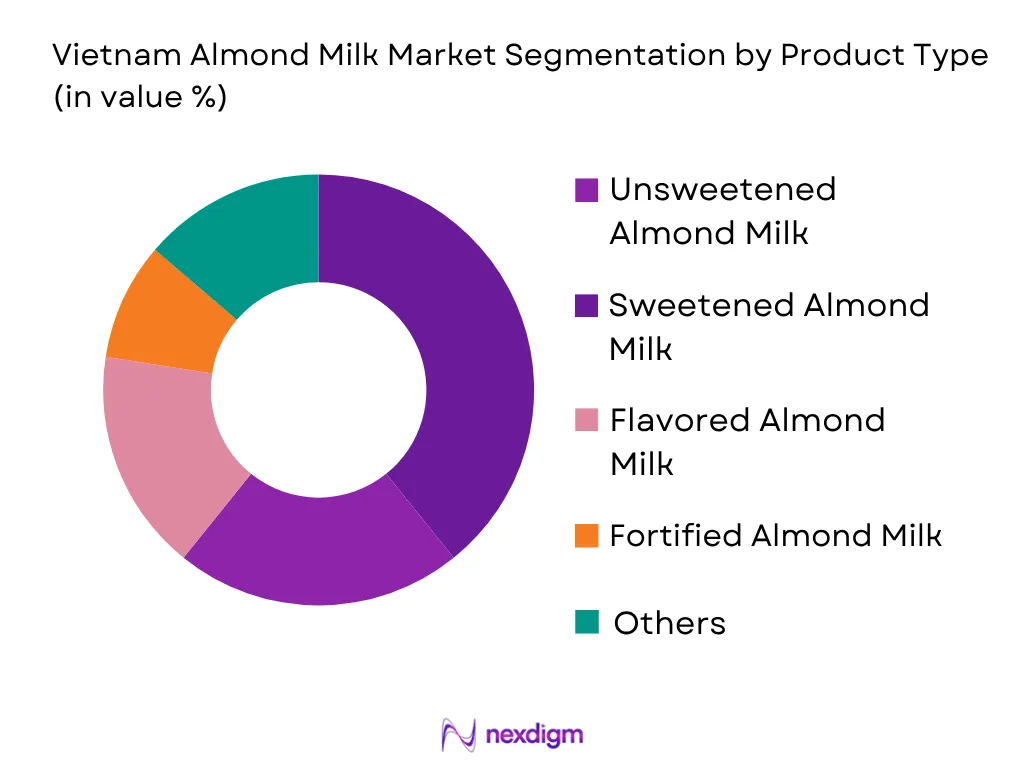
Vietnam Almond Milk Market is segmented by product type into unsweetened almond milk, sweetened almond milk, flavored almond milk, organic almond milk, and fortified almond milk. Recently, unsweetened almond milk has held a dominant market share under this segmentation due to increasing consumer preference for low-calorie and sugar-free beverages. Urban consumers in Ho Chi Minh City and Hanoi are increasingly adopting healthier lifestyles, driving demand for products with cleaner ingredient profiles. Unsweetened variants are widely preferred by fitness enthusiasts, diabetic consumers, and individuals following weight management programs. Major brands such as Almond Breeze, 137 Degrees, and Califia Farms have strengthened category awareness through premium retail channels and e-commerce platforms. Furthermore, the growing popularity of vegan diets and functional nutrition products has enhanced demand for unsweetened formulations. The segment also benefits from its versatility in smoothies, coffee beverages, and home cooking applications, making it the preferred choice among health-conscious Vietnamese consumers.
By Distribution Channel
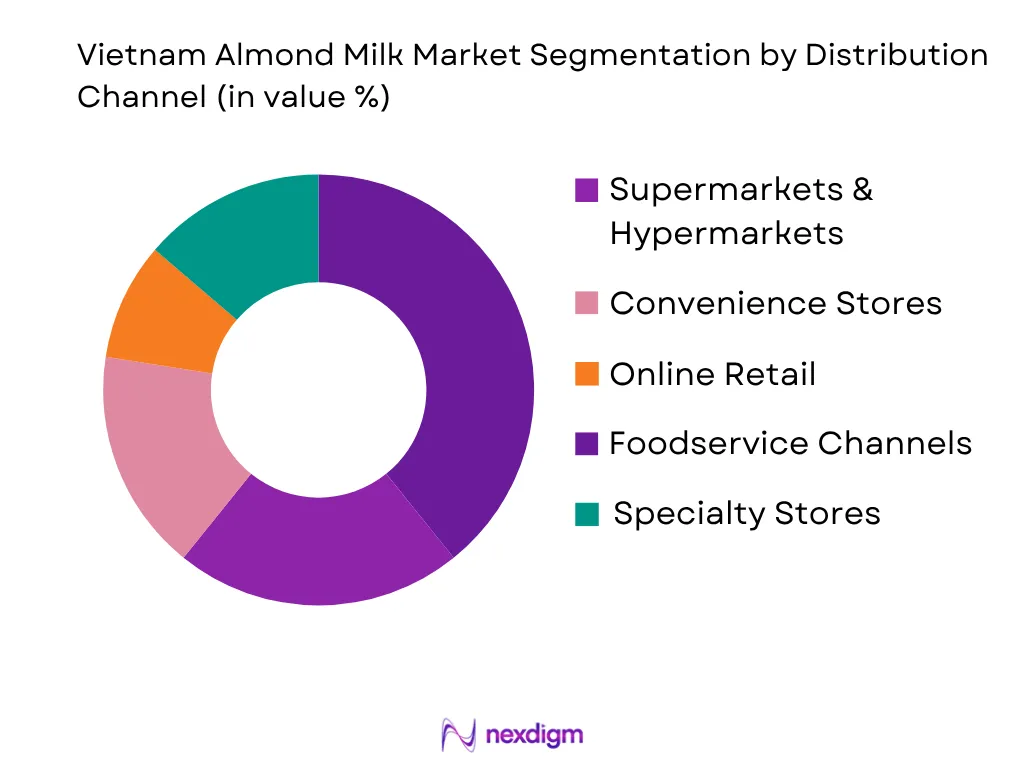
Vietnam Almond Milk Market is segmented by distribution channel into supermarkets & hypermarkets, convenience stores, specialty stores, online retail, and foodservice channels. Recently, supermarkets and hypermarkets have dominated market share due to their extensive product assortment, strong supply chain infrastructure, and ability to stock imported premium almond milk brands. Retail chains such as WinMart, Co.opmart, GO!, and Lotte Mart provide dedicated shelf space for plant-based beverages, enhancing product visibility and consumer access. These outlets attract middle-income and affluent consumers who are willing to explore health-focused alternatives to traditional dairy products. Supermarkets also offer promotional campaigns, product sampling activities, and bundled discounts that encourage trial purchases. Furthermore, imported almond milk brands often prioritize modern trade channels because of better cold-chain logistics and stronger brand presentation. The dominance of supermarkets is expected to continue as organized retail penetration expands across major Vietnamese cities and emerging urban centers.
Competitive Landscape
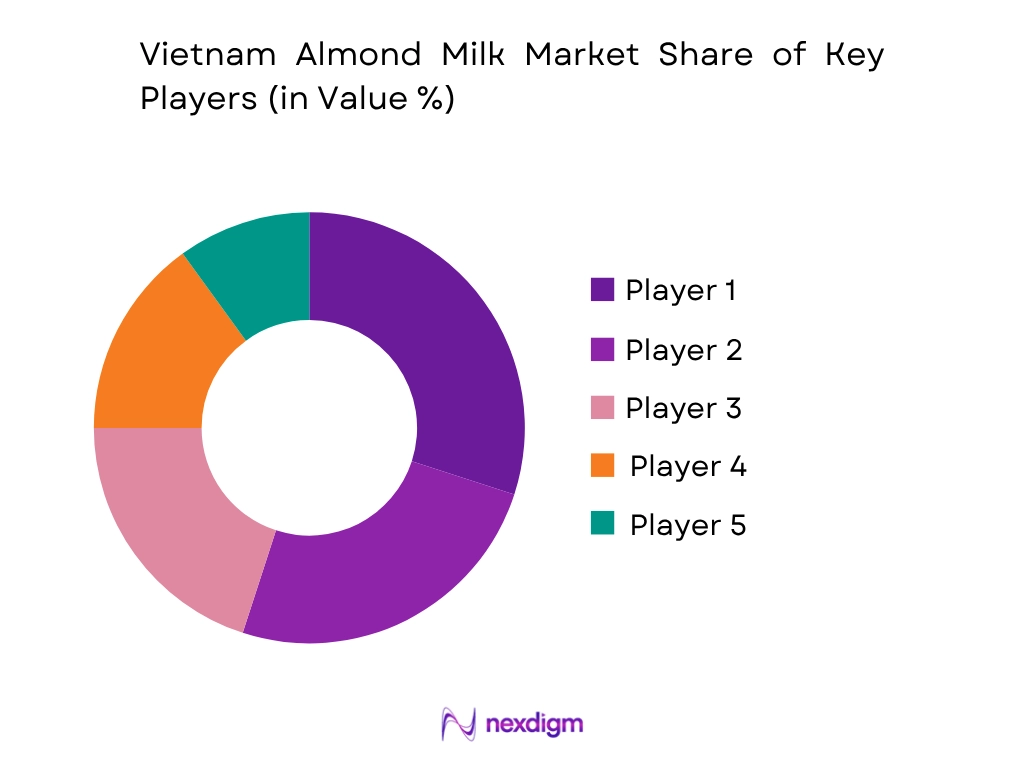
The Vietnam Almond Milk Market is moderately concentrated, with competition driven by international plant-based beverage manufacturers and selected regional brands. Global players benefit from established brand recognition, diversified product portfolios, and strong retail partnerships. Premium imported almond milk brands dominate modern trade channels, while regional manufacturers are focusing on affordability and localization strategies. Product innovation, sugar-free variants, fortified formulations, and sustainability initiatives remain key competitive differentiators.
| Company | Establishment Year | Headquarters | Product Portfolio | Organic Offering | Fortified Variants | E-Commerce Presence | Retail Presence | Foodservice Presence |
| Blue Diamond Almond Breeze | 1910 | ~ | ~ | ~ | ~ | ~ | ~ | ~ |
| Califia Farms | 2010 | ~ | ~ | ~ | ~ | ~ | ~ | ~ |
| 137 Degrees | 2017 | ~ | ~ | ~ | ~ | ~ | ~ | ~ |
| Silk (Danone) | 1977 | ~ | ~ | ~ | ~ | ~ | ~ | ~ |
| Alpro | 1980 | ~ | ~ | ~ | ~ | ~ | ~ | ~ |
Vietnam Almond Milk Market Analysis
Growth Drivers
Rising Health and Wellness Consciousness
Vietnam’s almond milk market is benefiting from growing health awareness and changing dietary preferences among urban consumers. According to the General Statistics Office of Vietnam, the country’s population exceeded 101 million people in 2024, creating a substantial consumer base for functional and health-oriented beverages. Vietnam’s GDP reached approximately USD 476 billion in 2024, while GDP per capita surpassed USD 4,700, indicating rising purchasing power and greater spending on premium food and beverage products. Urban population levels crossed 40 million residents, increasing exposure to international health trends and dairy alternatives. The Ministry of Health has also reported a rising prevalence of lifestyle-related health conditions, encouraging consumers to seek lower-calorie and cholesterol-free beverage options. Almond milk is increasingly perceived as a nutritious alternative due to its low saturated fat content and compatibility with vegan, lactose-free, and wellness-focused diets. The expansion of modern retail chains such as WinMart, Co.opmart, GO!, and Lotte Mart has improved accessibility to imported and locally distributed almond milk products. Rising disposable income, urbanization, and increased awareness regarding plant-based nutrition continue to strengthen consumer demand, making health and wellness consciousness one of the primary growth drivers for Vietnam’s almond milk market.
Expansion of Modern Retail and E-Commerce Channels
The rapid development of Vietnam’s retail infrastructure has significantly improved the availability and visibility of almond milk products. Vietnam’s retail sales of goods and consumer services exceeded VND 6.2 quadrillion in 2024, reflecting strong consumer spending across packaged food and beverage categories. Internet penetration surpassed 79 million users, while e-commerce gross merchandise value continued to expand across food and beverage segments. Major online platforms such as Shopee, Lazada, and Tiki have enabled almond milk brands to reach consumers beyond major metropolitan areas. Additionally, Vietnam recorded merchandise imports exceeding USD 380 billion, supporting the inflow of imported almond milk brands and ingredients. Organized retail networks continue to expand across Tier-1 and Tier-2 cities, providing dedicated shelf space for dairy alternatives and functional beverages. The country’s growing middle-class population and increasing smartphone adoption have accelerated online purchasing behavior. Premium grocery stores and health-focused retail outlets are also expanding product assortments to cater to health-conscious consumers. Improved cold-chain logistics, broader retail penetration, and growing digital commerce infrastructure collectively strengthen product accessibility and support the sustained growth of almond milk consumption across Vietnam.
Market Challenges
High Import Dependency and Raw Material Constraints
One of the major challenges facing the Vietnam almond milk market is its heavy reliance on imported almonds and finished almond milk products. Vietnam has limited commercial almond cultivation due to climatic conditions, making manufacturers dependent on imports from the United States and Australia. According to Vietnam Customs data, agricultural and food imports continued to increase during 2024, reflecting reliance on external supply chains. Global almond production remains concentrated in a few producing regions, particularly California, which creates vulnerability to supply disruptions caused by droughts, water restrictions, and climate-related challenges. Vietnam’s merchandise imports exceeded USD 380 billion, highlighting the country’s dependence on international sourcing across several industries. Import dependence can lead to fluctuations in raw material availability, extended lead times, and inventory management challenges for manufacturers and distributors. Furthermore, exchange rate movements between the Vietnamese Dong and major trading currencies can influence procurement strategies and product availability. As almond milk remains a niche category compared to traditional dairy and soy beverages, maintaining consistent supply chains remains a critical challenge for companies operating in the Vietnamese almond milk market.
Competition from Established Plant-Based Alternatives
The Vietnam almond milk market faces significant competition from well-established plant-based beverage categories, particularly soy milk, coconut milk, and oat-based drinks. Vietnam has a long history of soy consumption, with domestic soy beverage brands enjoying strong consumer familiarity and extensive distribution networks. The country’s agricultural sector generated more than USD 62 billion in output during recent periods, supporting the availability of local plant-based ingredients. Soy beverages are widely consumed across both urban and rural regions and are generally perceived as affordable sources of protein. Coconut-based beverages also benefit from Vietnam’s extensive coconut production and strong local supply chains. With a population exceeding 101 million people, many consumers continue to prioritize affordability and familiarity when selecting dairy alternatives. Almond milk brands must therefore invest heavily in consumer education, product differentiation, and premium positioning to justify their value proposition. Limited awareness regarding the nutritional benefits of almond milk compared to traditional alternatives can slow adoption rates, particularly outside major urban centers. This competitive landscape presents an ongoing challenge for manufacturers seeking to expand almond milk consumption nationwide.
Market Opportunities
Product Innovation and Functional Nutrition Expansion
Vietnam’s growing interest in health and wellness creates significant opportunities for almond milk manufacturers to introduce innovative and functional products. The country’s economy generated approximately USD 476 billion in GDP in 2024, reflecting increasing consumer spending power and demand for premium nutrition products. Urban households are increasingly seeking beverages enriched with vitamins, minerals, calcium, protein, and other functional ingredients. The rise of fitness centers, wellness communities, and preventive healthcare awareness has encouraged consumers to explore products offering additional nutritional benefits. Fortified almond milk, protein-enhanced formulations, sugar-free variants, and clean-label products are gaining attention among health-conscious consumers. Vietnam’s expanding middle-class population provides a favorable environment for premium beverage categories that deliver both health and convenience. Product innovation also enables companies to differentiate themselves from traditional soy and coconut beverages. Manufacturers that focus on functional nutrition, specialized dietary needs, and targeted consumer segments are likely to strengthen brand positioning and capture emerging demand within Vietnam’s evolving plant-based beverage sector.
Growth of Foodservice and Café Applications
Vietnam’s rapidly expanding foodservice sector presents a substantial opportunity for almond milk adoption. The country continues to experience strong growth in café culture, premium coffee consumption, and modern foodservice formats. Major cities such as Ho Chi Minh City, Hanoi, and Da Nang host thousands of cafés and specialty beverage outlets serving increasingly diverse consumer preferences. Tourism activity has also recovered strongly, with international visitor arrivals exceeding 17 million travelers during 2024, supporting demand across hospitality and foodservice establishments. Almond milk is increasingly utilized as a dairy alternative in coffee beverages, smoothies, desserts, and specialty drinks. The growing popularity of premium coffee chains, independent cafés, and health-focused restaurants creates new channels for almond milk manufacturers. Foodservice adoption not only increases consumption volumes but also serves as an important avenue for consumer education and product trial. As younger consumers seek customizable and plant-based beverage options, almond milk is becoming an attractive ingredient for menu innovation. This trend offers significant long-term growth potential for market participants targeting Vietnam’s expanding foodservice ecosystem.
Future Outlook
The Vietnam Almond Milk Market is expected to witness sustained growth during the forecast period owing to increasing health awareness, rising demand for plant-based nutrition, and expanding modern retail infrastructure. Consumers are increasingly shifting toward dairy alternatives due to lactose intolerance concerns and changing dietary preferences. Product innovation, including fortified and functional almond milk variants, is expected to create additional growth opportunities. Expansion of e-commerce platforms, premium grocery retail chains, and foodservice adoption will further support market penetration. Growing consumer interest in sustainable and clean-label beverages is anticipated to strengthen demand across urban and semi-urban markets.
Major Players
- Blue Diamond Almond Breeze
- Califia Farms
- 137 Degrees
- Silk (Danone)
- Alpro
- Oatly Group
- Nestlé
- Vinamilk
- TH True Milk
- Nature’s Charm
- Pacific Foods
- Minor Figures
- Isola Bio
- Earth’s Own
- Vitasoy
Key Target Audience
- Almond Milk Manufacturers
- Plant-Based Beverage Producers
- Dairy Alternative Brands
- Modern Retail Chains and Supermarkets
- Foodservice Operators and Café Chains
- E-Commerce and Online Grocery Platforms
- Investments and Venture Capitalist Firms
- Government and Regulatory Bodies
Research Methodology
Step 1: Identification of Key Variables
The initial phase involves mapping all stakeholders participating in the Vietnam Almond Milk Market ecosystem, including manufacturers, importers, distributors, retailers, and consumers. Extensive secondary research is conducted to identify critical variables affecting market demand, supply dynamics, and competitive intensity.
Step 2: Market Analysis and Construction
Historical industry data is compiled and analyzed to estimate market size, consumption volume, pricing trends, and distribution patterns. Both top-down and bottom-up methodologies are employed to ensure robust and reliable market calculations.
Step 3: Hypothesis Validation and Expert Consultation
Market assumptions are validated through interviews with industry participants, including beverage manufacturers, distributors, retail executives, and category specialists. These discussions provide operational insights and help refine market estimates and segment-level assessments.
Step 4: Research Synthesis and Final Output
The final stage involves integrating primary and secondary findings into a comprehensive market framework. Data triangulation techniques are used to validate results and ensure consistency across market size estimations, competitive analysis, and future forecasts.

- Executive Summary
- Research Methodology (Market Definitions and Assumptions, Abbreviations, Market Sizing Approach, Bottom-Up Market Assessment, Top-Down Market Validation, Industry Expert Interviews, Primary and Secondary Research Framework, Demand-Supply Mapping, Forecasting Methodology, Limitations and Conclusions)

- Definition and Scope
- Market Evolution and Industry Genesis
- Timeline of Major Almond Milk and Plant-Based Beverage Brands
- Business Cycle Analysis
- Supply Chain Analysis

- Growth Drivers (Growing Lactose Intolerance Awareness, Rising Vegan and Flexitarian Population, Expansion of Modern Retail Infrastructure, Increasing Health and Wellness Spending, Growing Demand for Plant-Based Nutrition)
- Market Challenges (Dependence on Imported Almonds, Premium Product Pricing, Limited Consumer Awareness Outside Major Cities, Competition from Soy and Oat Milk, Supply Chain Volatility)
Market Opportunities (Fortified Almond Milk Products, Organic Almond Milk Expansion, Foodservice Channel Penetration, E-Commerce Growth, Functional Beverage Innovation) - Market Trends (Sugar-Free Almond Milk, Clean Label Formulations, Barista Almond Milk, Sustainable Packaging Solutions, Protein-Enriched Almond Milk)
- Government Regulations (Food Safety Standards, Product Labeling Regulations, Import Compliance Requirements, Nutritional Claim Guidelines, Organic Product Certification)
- SWOT Analysis
- Stakeholder Ecosystem
- PESTLE Analysis
- Porter’s Five Forces Analysis
- Competition Ecosystem

- By Market Value (2020-2025)
- By Volume Consumption (2020-2025)
- By Average Retail Price (2020-2025)

- By Product Type (In Value %)
Unsweetened Almond Milk
Sweetened Almond Milk
Vanilla Flavored Almond Milk
Chocolate Flavored Almond Milk
Organic Almond Milk
Fortified Almond Milk
Barista Almond Milk
High-Protein Almond Milk - By Packaging Type (In Value %)
PET Bottles
Glass Bottles
Tetra Packs
Family Packs
Single-Serve Packs - By Distribution Channel (In Value %)
Supermarkets & Hypermarkets
Convenience Stores
Specialty Health Stores
Online Retail Platforms
Direct-to-Consumer Channels
Foodservice & Café Chains
Institutional Sales - By Consumer Category (In Value %)
Vegan Consumers
Flexitarian Consumers
Lactose Intolerant Consumers
Weight Management Consumers
Fitness & Sports Nutrition Consumers
Premium Lifestyle Consumers - By Region (In Value %)
Central Vietnam
Southern Vietnam
Ho Chi Minh City
Hanoi
Da Nang
Can Tho
Other Urban Centers


- Consumer Demographics and Consumption Patterns
- Urban vs Rural Consumption Analysis
- Consumer Awareness Levels
- Health and Wellness Purchasing Behavior
- Plant-Based Diet Adoption Trends
- Lactose Intolerance Consumption Analysis
- Consumer Pain Point Assessment
- Purchase Decision-Making Framework
- Average Monthly Beverage Spending Analysis
- Brand Loyalty and Switching Behavior

- By Market Value (2026-2035)
- By Volume Consumption (2026-2035)
- By Average Retail Price (2026-2035


 Request a Sample
 Ask for Customization
 Get a Quote
 Enquire Now