
 Download PDF
Market Overview
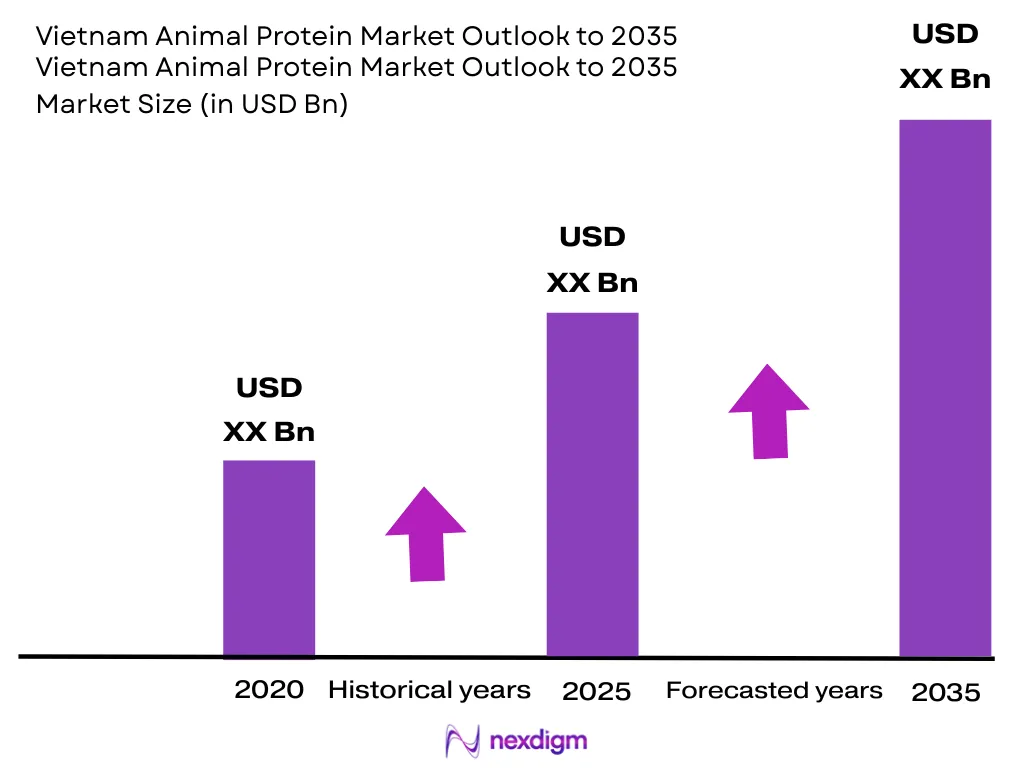
The Vietnam Animal Protein Market was valued at USD ~ Billion in 2024, based on historical production, domestic consumption, exports, and processing revenues across pork, poultry, beef, aquaculture and fish protein, and egg products. Vietnam produced approximately 7.3 million metric tons of meat and poultry during the latest reporting period, including approximately 4.4 million metric tons of pork, around 2.2 million metric tons of poultry meat, and approximately 0.4 million metric tons of beef and buffalo meat, according to statistics published by the Ministry of Agriculture and Rural Development (MARD), the General Statistics Office of Vietnam (GSO), and the Food and Agriculture Organization (FAO). Vietnam is also one of Southeast Asia’s largest aquaculture producers, with the seafood export sector — encompassing pangasius (catfish), shrimp, tilapia, and other species — generating approximately USD 9 billion in annual export revenues. The market continues to be driven by robust domestic consumer demand anchored by culturally strong pork consumption, rapid urbanisation, rising middle-class incomes, and the country’s globally competitive aquaculture export industry, alongside growing government investment in livestock modernisation and food safety infrastructure.
Market Segmentation
By Protein Type
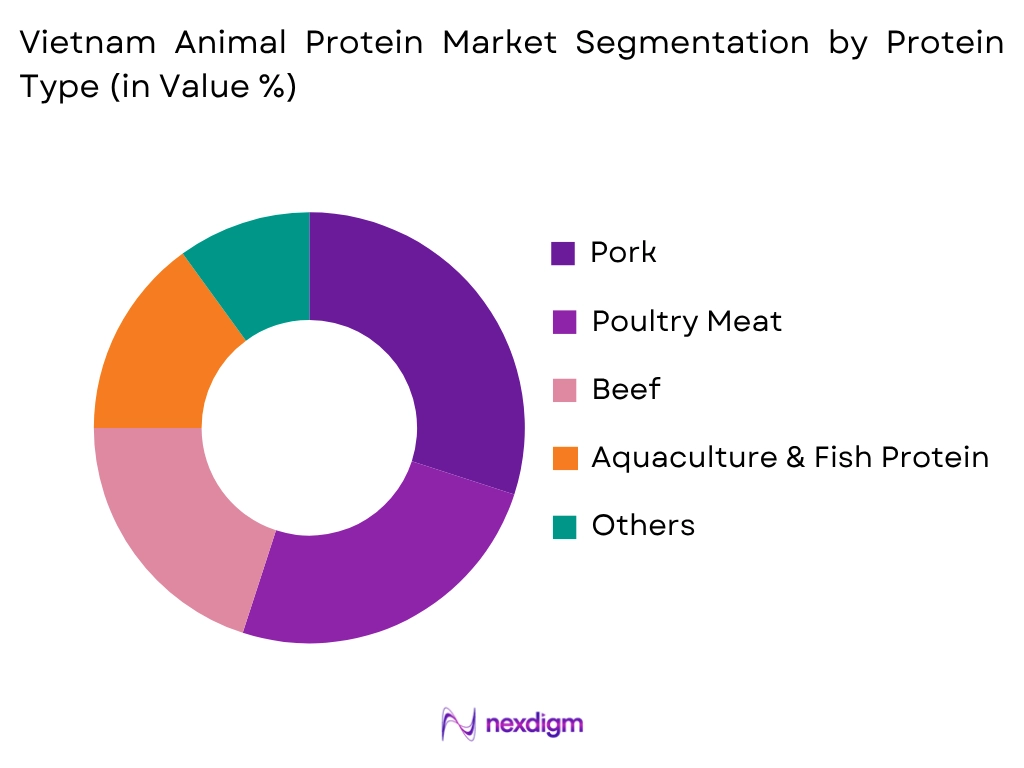
The Vietnam Animal Protein Market is segmented by protein type into Pork, Poultry Meat, Beef, Aquaculture & Fish Protein (Pangasius, Shrimp, Tilapia), Eggs, and Processed Animal Protein Products. Pork accounts for the largest share of the domestic meat market, deeply embedded in Vietnamese culinary culture and consumed across all demographic segments, geographic regions, and income levels. Vietnam consistently ranks among the world’s top ten pork producers by volume, with MARD reporting annual pork output of approximately 4.4 million metric tons during the latest reporting period. The aquaculture and fish protein segment holds unique strategic importance as Vietnam is the world’s leading exporter of pangasius (basa/tra catfish) and the world’s third-largest shrimp exporter, with these two species collectively generating the majority of Vietnam’s seafood export revenues. Poultry meat represents the second-largest and fastest-growing domestic meat category, driven by the rapid expansion of vertically integrated commercial poultry operations led by CP Vietnam, Dabaco Group, and Ba Huan Company. Processed and value-added animal protein products represent an emerging and high-growth segment supported by urbanisation, changing consumer lifestyles, and the rapid penetration of modern retail and food delivery platforms across major urban centres.
By Distribution Channel
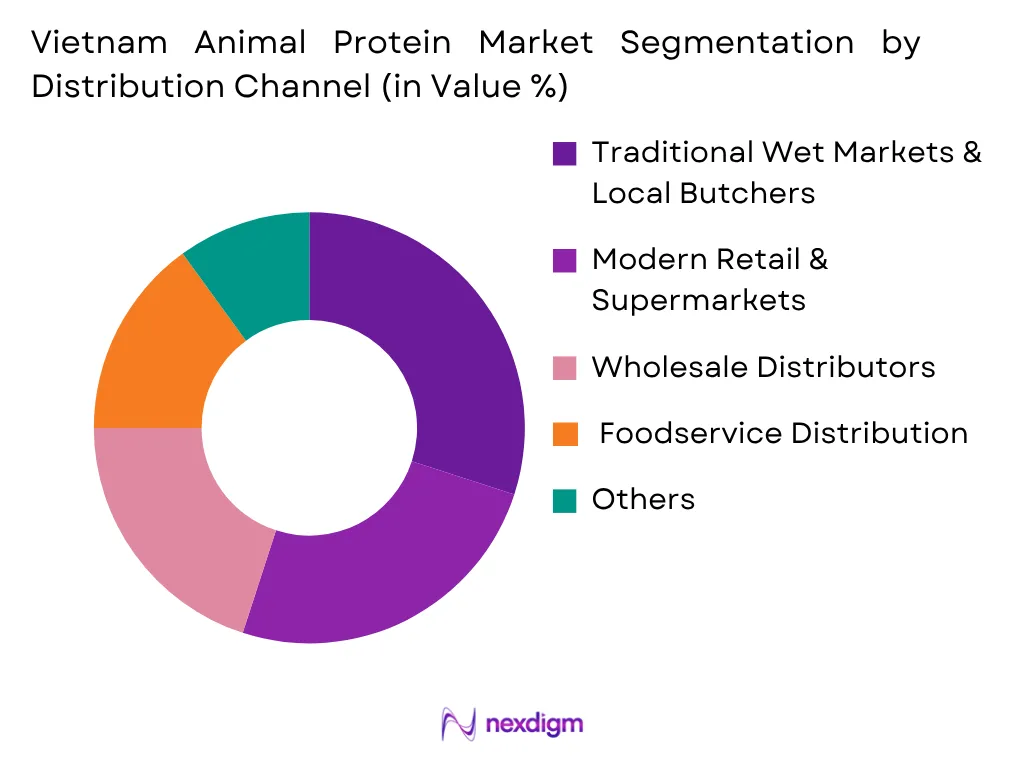
The Vietnam Animal Protein Market is segmented by distribution channel into Traditional Wet Markets, Modern Retail & Supermarkets, Wholesale Distributors, Foodservice Distribution, Export Markets, and Online Grocery & Direct-to-Consumer Platforms. Traditional wet markets continue to dominate the distribution of fresh meat and poultry across both urban and rural Vietnam, accounting for an estimated 70–75% of all fresh protein retail transactions. Vietnamese consumers have historically demonstrated strong preference for freshly slaughtered or live products purchased from wet market vendors, driven by deep-rooted cultural perceptions that fresh is superior to chilled or frozen. However, the distribution channel landscape is undergoing meaningful transformation as rapid urbanisation, rising food safety awareness following periodic disease outbreaks, and the aggressive expansion of modern retail formats — including VinMart, Co.opmart, Aeon, Lotte Mart, and MM Mega Market — shift an increasing share of protein purchases toward hygienically packaged and branded products. Online food delivery and grocery e-commerce platforms including GrabFood, ShopeeFood, and Tiki are also creating new direct-to-consumer channels for processed and value-added animal protein products, particularly among younger urban demographics in Hanoi and Ho Chi Minh City.
Competitive Landscape
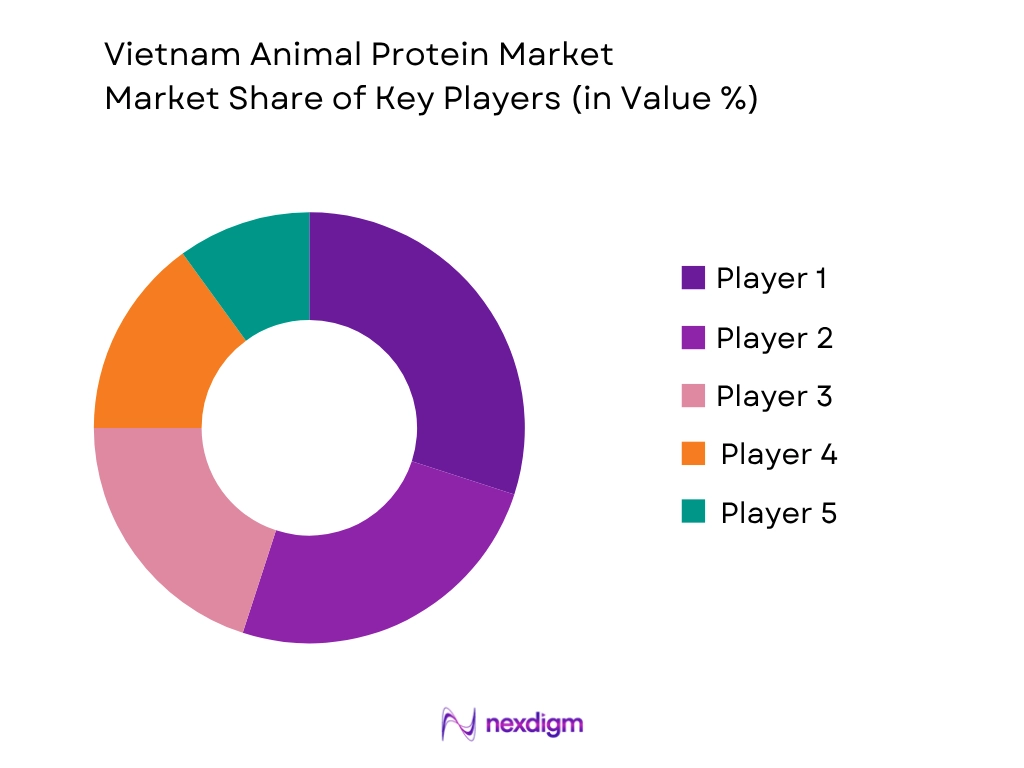
The Vietnam Animal Protein Market is characterised by a dual-track competitive structure comprising a large traditional smallholder and household farming sector alongside a rapidly growing organised segment of vertically integrated processors, multinational agribusiness companies, and export-oriented aquaculture conglomerates. Foreign-invested enterprises — particularly CP Vietnam (Charoen Pokphand Group), De Heus Vietnam, and GreenFeed Vietnam — have established dominant positions in integrated feed manufacturing, genetics, and contract farming across the pork and poultry sectors. Domestic listed companies such as Masan MEATLife, Dabaco Group, Vissan, and Ba Huan Company compete through brand development, modern processing facilities, and organised distribution networks. The export-oriented aquaculture segment is led by highly specialised companies including Minh Phu Seafood, Hung Vuong Corporation, Vinh Hoan Corporation, and Sao Ta Foods, which maintain internationally certified processing operations aligned with the food safety and sustainability requirements of premium export markets in the European Union, United States, Japan, and South Korea.
| Company | Establishment Year | Headquarters | Primary Protein Focus | Processing Facilities
|
Export Presence | Production Integration | Sustainability Programs | Value-Added Product Portfolio |
| CP Vietnam (Charoen Pokphand) | 1993 | ~ | ~ | ~ | ~ | ~ | ~ | ~ |
| Masan MEATLife (MML) | 2016 | ~ | ~ | ~ | ~ | ~ | ~ | ~ |
| Vissan (Saigon Livestock) | 1970 | ~ | ~ | ~ | ~ | ~ | ~ | ~ |
| Minh Phu Seafood | 1992 | ~ | ~ | ~ | ~ | ~ | ~ | ~ |
| Hung Vuong Corporation | 2003 | ~ | ~ | ~ | ~ | ~ | ~ | ~ |
Vietnam Animal Protein Market Analysis
Growth Drivers
Rising Urbanisation, Middle-Class Expansion, and Domestic Protein Demand Growth
Vietnam’s sustained economic growth and rapid urbanisation continue to be the most fundamental structural drivers of expanding animal protein consumption. According to the World Bank, Vietnam’s GDP reached approximately USD 430 billion in 2024, maintaining one of Southeast Asia’s highest growth rates at approximately 6–7% annually over the past decade, which has progressively elevated household incomes and dietary aspirations across the population. The General Statistics Office of Vietnam (GSO) reported that the country’s urban population now exceeds 40% of the total population of approximately 98 million people, with urban households consistently demonstrating higher per capita spending on animal protein, processed foods, and modern retail formats. The IMF projects Vietnam to sustain robust economic growth through 2035, underpinning continued increases in domestic demand across all major animal protein categories. Pork remains the cornerstone of Vietnamese dietary culture, but poultry consumption is expanding rapidly as an affordable and convenient alternative, while beef consumption is growing steadily among higher-income urban consumers. The rapid proliferation of modern foodservice formats — including international fast food chains, restaurant chains, and food delivery platforms — is creating additional demand for consistently graded, hygienically processed, and conveniently portioned animal protein products. These macroeconomic and demographic forces are expected to sustain strong compound annual growth in domestic animal protein demand across the outlook period to 2035.
Globally Competitive Aquaculture Export Sector and Free Trade Agreement Market Access
Vietnam’s aquaculture export sector represents one of the most significant structural competitive advantages within the broader animal protein market, providing scale, export revenue diversification, and international credibility that few Southeast Asian markets can replicate. According to the Vietnam Association of Seafood Exporters and Producers (VASEP), Vietnam generated approximately USD 9 billion in seafood export revenues in 2024, with shrimp and pangasius (catfish) collectively accounting for the majority of export value. Vietnam is the world’s leading exporter of pangasius, with VASEP reporting pangasius export volumes exceeding 600,000 metric tons annually to markets across the European Union, United States, China, ASEAN, and the Middle East. The country is also the world’s third-largest shrimp exporter, with white-leg shrimp and black tiger shrimp products certified under ASC, BAP, and GlobalG.A.P. standards commanding premium prices in developed country markets. The entry into force of the EU-Vietnam Free Trade Agreement (EVFTA) in 2020, the Comprehensive and Progressive Agreement for Trans-Pacific Partnership (CPTPP), and the Regional Comprehensive Economic Partnership (RCEP) has progressively reduced tariff barriers and expanded preferential market access for Vietnamese seafood, poultry, and processed meat products across major global economies. These trade agreement benefits are creating significant incentives for continued investment in processing infrastructure, food safety certifications, and product quality upgrades across the Vietnamese animal protein supply chain.
Market Challenges
African Swine Fever and Livestock Disease Vulnerability
Vietnam’s animal protein sector — and the pork industry in particular — faces persistent and severe vulnerability to livestock disease outbreaks that can rapidly destabilise production volumes, consumer prices, and farmer livelihoods across the country. The African Swine Fever (ASF) epidemic that swept through Vietnam beginning in 2019 resulted in the culling of approximately 6 million pigs, equivalent to roughly 20% of the national herd, causing dramatic supply shortfalls, pork price spikes exceeding 100% in some markets, and severe income losses for smallholder farmers who constitute the majority of Vietnam’s pig production base. According to MARD, Vietnam’s pig population required approximately two years to recover to pre-ASF levels, underscoring the magnitude and duration of disruption that disease outbreaks can inflict on the sector. In addition to ASF, Vietnam’s livestock sector faces ongoing threats from Highly Pathogenic Avian Influenza (HPAI), Foot-and-Mouth Disease (FMD), and lumpy skin disease in cattle, each of which has caused periodic production disruptions and export suspensions. The high density of smallholder livestock production units, limited biosecurity infrastructure at the farm level, and reliance on live animal transport through traditional trading networks create structural vulnerabilities that are difficult to address rapidly. MARD continues to implement national disease surveillance, emergency vaccination programmes, and farmer biosecurity training, but the scale of Vietnam’s smallholder livestock base makes comprehensive disease control a persistent and long-term challenge.
Feed Import Dependency and Environmental Compliance Pressures
Vietnam’s animal protein production sector faces significant structural cost challenges arising from high dependency on imported feed ingredients and growing environmental compliance requirements associated with intensive livestock and aquaculture farming. According to MARD, Vietnam imports approximately 70–75% of its feed ingredient requirements, including maize, soybean meal, wheat bran, and feed additives, making the domestic livestock and poultry sectors highly sensitive to global commodity price fluctuations and foreign exchange movements. The Vietnam Feed Association reported that total animal feed production exceeded 25 million metric tons in 2024, with the sector dominated by multinational companies including CP Vietnam, De Heus, GreenFeed, CJ Vina Agri, and Japfa Comfeed Vietnam. Feed costs typically account for 65–70% of total production costs in poultry and pork farming, meaning that global grain price volatility — as experienced during the 2021–2023 commodity supercycle — directly translates into farm-level profitability pressures and consumer price inflation across the animal protein supply chain. Simultaneously, intensive aquaculture and livestock operations are facing increasing environmental scrutiny from the Ministry of Natural Resources and Environment (MONRE) and provincial authorities regarding wastewater discharge, antibiotic usage, mangrove encroachment in shrimp farming zones, and greenhouse gas emissions. Compliance with increasingly stringent environmental regulations requires ongoing capital investment in wastewater treatment, manure management systems, and sustainable farming infrastructure, adding to cost pressures for producers across multiple protein categories.
Market Opportunities
Aquaculture Value-Added Export Expansion and Sustainable Seafood Certification
Vietnam’s aquaculture sector presents its most significant growth opportunity in the progressive shift from commodity-grade frozen exports toward higher-value processed, certified, and branded seafood products that command premium pricing in developed country markets. According to VASEP and the Ministry of Agriculture and Rural Development (MARD), Vietnam’s seafood export revenues have grown substantially over the past decade, but the majority of pangasius and shrimp exports continue to be shipped in commodity frozen form, leaving significant value-addition potential unrealised. Leading aquaculture exporters including Minh Phu Seafood, Vinh Hoan Corporation, and Sao Ta Foods are investing in value-added processing lines producing breaded shrimp, cooked and peeled products, individually quick-frozen (IQF) portions, and retail-ready sustainable seafood ranges certified under ASC, BAP, and GlobalG.A.P. standards. Growing consumer demand for traceable, sustainably sourced seafood products across the European Union, United States, Japan, and South Korea creates strong export pricing premiums for Vietnamese producers that achieve internationally recognised sustainability certifications. EVFTA tariff reductions have further improved cost competitiveness for certified Vietnamese seafood products in the European market relative to competing export nations. Investment in traceability systems, aquatic animal health management, water quality monitoring, and environmentally certified farming practices is therefore expected to create substantial additional export revenue opportunities for Vietnam’s seafood sector through 2035.
Pork and Poultry Sector Modernisation and Branded Meat Product Growth
The modernisation of Vietnam’s pork and poultry production and processing sectors represents a transformational opportunity to capture higher domestic market value, improve food safety standards, and build consumer brand equity in the world’s most pork-dependent emerging consumer market. According to the GSO and MARD, Vietnam’s domestic meat retail market is undergoing rapid structural change as post-ASF disease awareness, urbanisation, and rising incomes drive consumers — particularly in Hanoi and Ho Chi Minh City — toward branded, hygienically packaged, and verifiably traceable chilled and processed meat products. Masan MEATLife’s TECHmeat closed-loop pork production and processing platform, which integrates high-tech confined farming, automated slaughter, chilled distribution, and the MEAT Deli consumer brand, exemplifies the investment model that is progressively displacing wet market fresh pork sales in major urban centres. CP Vietnam continues to expand its branded C.P. range of processed and ready-to-cook poultry and pork products through modern retail and food delivery channels. Rising consumer spending power, increasing food safety consciousness, and rapid penetration of modern retail formats including VinMart, Co.opmart, and Aeon are creating structural demand for consistently quality-assured branded animal protein products. These trends are expected to accelerate investment in modern slaughterhouse infrastructure, chilled meat logistics, retail branding, and value-added product development across both the pork and poultry sectors through 2035.
Future Outlook
The Vietnam Animal Protein Market is expected to maintain robust long-term growth through 2035, driven by sustained economic expansion, urbanisation, rising consumer incomes, and the progressive premiumisation of domestic meat and seafood consumption. The aquaculture export sector is expected to continue generating significant foreign exchange revenues through value-added product development, sustainable certification programmes, and expanding preferential market access under EVFTA, CPTPP, and RCEP trade agreements. The domestic pork and poultry sectors are anticipated to undergo meaningful structural modernisation, with high-tech integrated farming, branded chilled meat distribution, and organised retail penetration progressively displacing traditional wet market channels in major urban centres. Government investment in livestock disease control, cold chain infrastructure, food safety digitalisation, and VietGAP compliance is expected to improve production efficiency and food safety standards across the market. Technology adoption in precision aquaculture, automated meat processing, and digital agri-tech platforms will further enhance competitiveness and sustainability across all major protein categories.
Major Players
- CP Vietnam (Charoen Pokphand)
- Masan MEATLife (MML)
- Vissan (Saigon Livestock)
- Minh Phu Seafood
- Hung Vuong Corporation
- De Heus Vietnam
- GreenFeed Vietnam
- Dabaco Group
- Bavi Milk & Livestock
- Ba Huan Company
- Viet Duc Breeding Cattle Company
- Trung Son Livestock
- Vinh Hoan Corporation
- Sao Ta Foods (Fimex VN)
- Nam Viet Corporation (NAVICO)
Key Target Audience
- Animal Protein Producers and Meat Processing Companies
- Livestock Producers and Integrated Farming Companies
- Food Processing and Packaged Food Manufacturers
- Retail Chains, Wholesale Distributors and Foodservice Operators
- Exporters, Importers and International Trading Companies
- Investments and Venture Capitalist Firms
- Government and Regulatory Bodies (Ministry of Agriculture and Rural Development (MARD), Vietnam Food Administration (VFA), National Agro-Forestry-Fisheries Quality Assurance Department (NAFIQAD), Vietnam Association of Seafood Exporters and Producers (VASEP), Department of Animal Health (DAH))
- Cold Chain Logistics, Storage and Distribution Companies
Research Methodology
Step 1: Identification of Key Variables
The research process begins by identifying the complete ecosystem of the Vietnam Animal Protein Market, including livestock producers, feed suppliers, meat processors, aquaculture operators, distributors, exporters, retailers, and regulatory agencies. Extensive secondary research is conducted using government publications, trade associations, customs statistics, company reports, and proprietary industry databases. This stage helps determine the major variables influencing production, consumption, trade, pricing, and investment trends across the market.
Step 2: Market Analysis and Construction
Historical market information is compiled and analysed to estimate the overall market size using both top-down and bottom-up approaches. Production volumes, domestic consumption, processing revenues, export statistics, livestock inventories, slaughter volumes, aquaculture output, and pricing trends are evaluated to construct a comprehensive market model. Demand-side and supply-side assessments are performed to validate the consistency of market estimates across various industry participants.
Step 3: Hypothesis Validation and Expert Consultation
The preliminary market findings are validated through computer-assisted telephone interviews (CATIs) and structured discussions with executives from meat processing companies, livestock producers, aquaculture operators, exporters, distributors, industry associations, and regulatory authorities. These consultations provide valuable insights regarding production capacity, utilisation rates, investment priorities, pricing dynamics, and emerging market opportunities, ensuring that the assumptions used in the research accurately reflect current industry conditions.
Step 4: Research Synthesis and Final Output
The final stage integrates findings obtained from secondary research and primary interviews to develop a comprehensive market assessment. Market estimates are cross-verified using company financial reports, trade databases, production statistics, VASEP export data, and industry publications. The resulting analysis provides detailed insights into market size, competitive positioning, segmentation, growth drivers, challenges, future opportunities, and strategic recommendations for stakeholders operating within the Vietnam Animal Protein Market.

- Executive Summary
- Research Methodology (Market Definitions and Assumptions, Abbreviations, Market Sizing Framework, Top-Down Analysis, Bottom-Up Analysis, Demand-Side Assessment, Supply-Side Assessment, Primary Industry Interviews, Trade Flow Validation, Data Triangulation, Forecasting Framework, Limitations and Future Conclusions)

- Definition and Scope
- Market Evolution and Industry Genesis
- Timeline of Major Industry Developments
- Vietnam Animal Protein Industry Ecosystem
- Supply Chain Analysis

- Growth Drivers (Rising Urbanisation and Middle-Class Incomes, Pork as Culturally Dominant Protein, Aquaculture Sector Competitiveness and Export Growth, Government Agricultural Modernisation Programs, Expansion of Modern Retail and Food Delivery Platforms, Free Trade Agreement Market Access)
- Market Challenges (African Swine Fever and Livestock Disease Risks, Feed Import Dependency and Cost Volatility, Cold Chain Infrastructure Gaps, Fragmented Smallholder Production Base, Food Safety Compliance Requirements, Environmental Pressure from Intensive Farming)
- Market Opportunities (Aquaculture Value-Added Export Expansion, Pork Sector Modernisation and Branded Meat Growth, Poultry Integration and Processing Upgrades, FTA-Driven Export Diversification, Digital Agri-Tech and Precision Livestock Farming, Sustainable Seafood Certification Programs)
- Market Trends (Modern Retail and E-Commerce Meat Penetration, VietGAP and GlobalG.A.P. Adoption, Traceability and Food Safety Digitalisation, High-Tech Livestock Farming Investment, Pangasius and Shrimp Export Premiumisation, Branded and Packaged Meat Product Growth)
- Government Regulations (Ministry of Agriculture and Rural Development (MARD) Standards, Vietnam Food Administration (VFA) Food Safety Regulations, National Agro-Forestry-Fisheries Quality Assurance Department (NAFIQAD) Export Certification, Livestock Law 2018, Veterinary Law 2015, Aquaculture Law 2017)
- Trade Policy Analysis (EVFTA, CPTPP, RCEP Trade Agreement Benefits, Tariff Structure, Import Restrictions, Veterinary Protocols, Market Access Requirements)
- Feed Industry Assessment (Maize & Soybean Import Dependency, Feed Conversion Efficiency, Feed Cost Structure, Domestic Feed Manufacturing Capacity)
- SWOT Analysis
- PESTLE Analysis
- Porter’s Five Forces Analysis
- Stakeholder Ecosystem
- Competition Ecosystem

- By Market Value (2020-2025)
- By Volume Consumption (2020-2025)
- By Average Selling Price (2020-2025)

- By Protein Type (In Value %)
Pork
Poultry Meat
Beef
Aquaculture & Fish Protein (Pangasius, Shrimp, Tilapia)
Eggs
Processed Animal Protein Products - By Product Form (In Value %)
Fresh/Chilled
Frozen
Processed & Value-Added
Cooked & Ready-to-Eat
Marinated & Seasoned Products - By End User (In Value %)
Retail Consumers
Foodservice & HoReCa
Food Processing Industry
Institutional Buyers
Export Buyers - By Distribution Channel (In Value %)
Traditional Wet Markets
Modern Retail & Supermarkets
Wholesale Distributors
Foodservice Distribution
Export Markets
Online Grocery & Direct-to-Consumer Platforms - By Production System (In Value %)
Smallholder & Household Farming
Integrated Contract Farming
Industrial Commercial Farming
Aquaculture Farming
Certified Organic & VietGAP Production - By Animal Protein Grade (In Value %)
Commodity Grade
Premium Grade
VietGAP Certified
GlobalG.A.P. / ASC Certified
Export Grade
- By Region (In Value %)
Red River Delta (North)
Northern Midlands & Mountains
North Central & Central Coast
Central Highlands
Southeast (Ho Chi Minh City Region)
Mekong River Delta (South)

- Market Share of Major Players (By Value, Production Volume, Export Volume, Protein Category, Processing Capacity)
- Cross Comparison Parameters (Slaughter Capacity, Processing Capacity, Export Market Presence, Feed Integration Level, Cold Storage Capacity, Product Portfolio Diversity, Sustainability & Food Safety Certifications, Value-Added Product Portfolio)
- SWOT Analysis of Major Players
- Pricing Analysis (By Protein Category, Processing Level, Export vs Domestic Pricing)
- Detailed Profiles of Major Companies
CP Vietnam (Charoen Pokphand)
Masan MEATLife (MML)
Vissan (Saigon Livestock)
Minh Phu Seafood
Hung Vuong Corporation
De Heus Vietnam
GreenFeed Vietnam
Dabaco Group
Bavi Milk & Livestock
Ba Huan Company
Viet Duc Breeding Cattle Company
Trung Son Livestock
Vinh Hoan Corporation
Sao Ta Foods (Fimex VN)
Nam Viet Corporation (NAVICO)

- Consumption Pattern Assessment (Per Capita Meat Consumption, Protein Preference, Meal Frequency, Household Penetration)
- Demographic Demand Analysis (Income Group, Age Group, Urban-Rural Split, Regional Preferences)
- Household Expenditure Analysis
- Protein Affordability Assessment
- Fresh vs Frozen Product Preference

- By Market Value (2026-2035)
- By Volume Consumption (2026-2035)
- By Average Selling Price (2026-2035)


 Request a Sample
 Ask for Customization
 Get a Quote
 Enquire Now