

 Download PDF
Market Overview
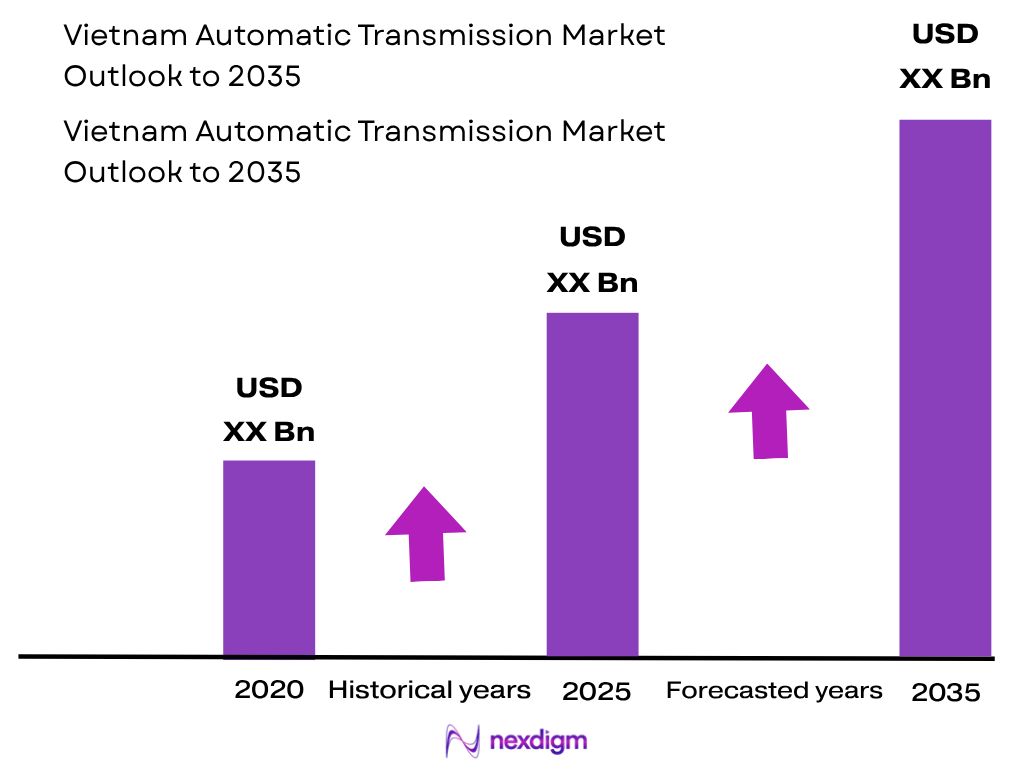
The Vietnam Automatic Transmission Market is valued at approximately ~USD XX billion, based on the requested placeholder valuation. The underlying automotive base strengthened as VAMA-member vehicle sales moved from 301,989 units in the preceding annual observation to 340,142 units in the latest annual observation, including 257,900 passenger vehicles in the latter period. VinFast separately increased global electric-vehicle deliveries from 34,855 units to 97,399 units, accelerating demand for automatic, hybrid and electric reduction-drive architectures.
Northern Vietnam, particularly Hanoi, Hai Phong and Vinh Phuc, together with Ho Chi Minh City and the southern industrial belt, forms the principal automatic-transmission demand ecosystem. VAMA-member sales across the North reached 128,502 vehicles, compared with 112,676 vehicles in the South and 54,801 vehicles in Central Vietnam in the latest annual observation. The previous national automotive base included 181,380 locally assembled vehicles and 120,609 imported CBU vehicles, supporting transmission demand across both manufacturing and import-led channels.
Market Segmentation
By Transmission Type
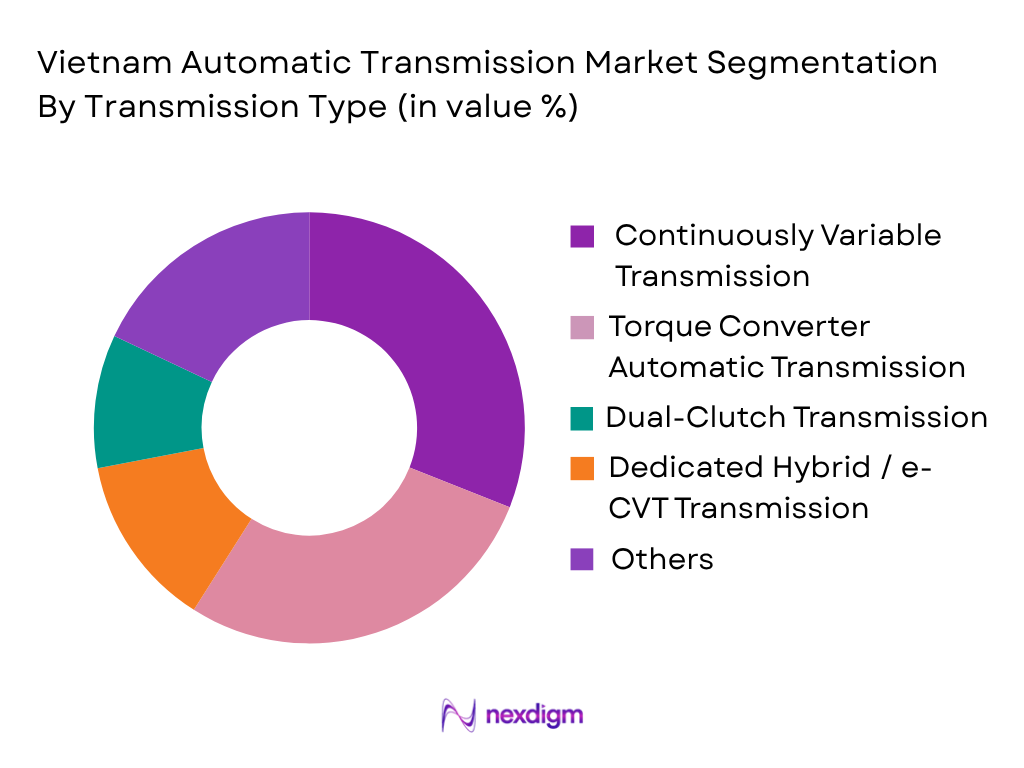
The Vietnam Automatic Transmission Market is segmented by transmission type into torque-converter automatic transmissions, continuously variable transmissions, dual-clutch transmissions, dedicated hybrid and e-CVT systems, automated manual transmissions and electric reduction gears. Continuously variable transmissions hold the dominant modeled share because CVTs are extensively fitted across compact sedans, crossovers and mass-market passenger vehicles from Japanese and Asian OEMs, which remain important in Vietnam. Their smooth urban operation, compact packaging and compatibility with smaller petrol engines make them particularly relevant for Hanoi and Ho Chi Minh City driving conditions. Torque-converter automatics remain significant in SUVs, pickups and premium vehicles where torque handling and durability are priorities. Hybrid and e-CVT architectures are expanding as electrified models become more widely available. Toyota alone sold 5,350 hybrid vehicles in Vietnam during 2024 across a portfolio of six hybrid-equipped models, demonstrating the expanding application base for electronically managed hybrid transmission architectures.
By Vehicle Type
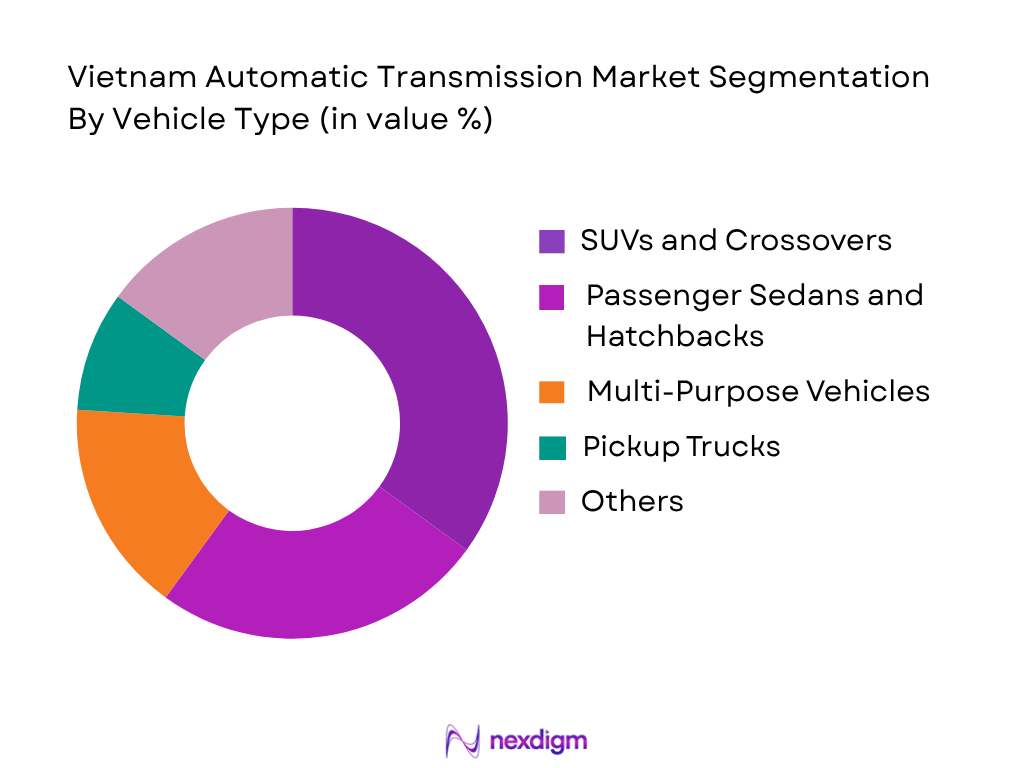
The Vietnam Automatic Transmission Market is segmented by vehicle type into passenger sedans, SUVs and crossovers, MPVs, pickups, commercial vehicles and electric passenger vehicles. SUVs and crossovers represent the dominant modeled segment, supported by changing household preferences toward higher ground clearance, flexible cabin space and multipurpose mobility. VAMA data for the first half of 2024 already recorded 30,419 SUV sales, compared with 17,946 sedans, 19,998 MPVs and 11,296 crossover-classified vehicles under its reporting structure. Automatic gearboxes are particularly common across SUV platforms, ranging from CVTs in compact crossovers to multi-speed torque-converter systems in larger SUVs. Increasing electrification also expands transmission diversity within the segment because hybrid SUVs require e-CVTs or dedicated hybrid systems while battery-electric crossovers use integrated reduction drives. Vietnam’s rising household purchasing capacity supports this shift: the National Statistics Office estimated GDP per capita at approximately USD 4,700 in 2024, compared with USD 4,323 in the preceding annual observation.
Competitive Landscape
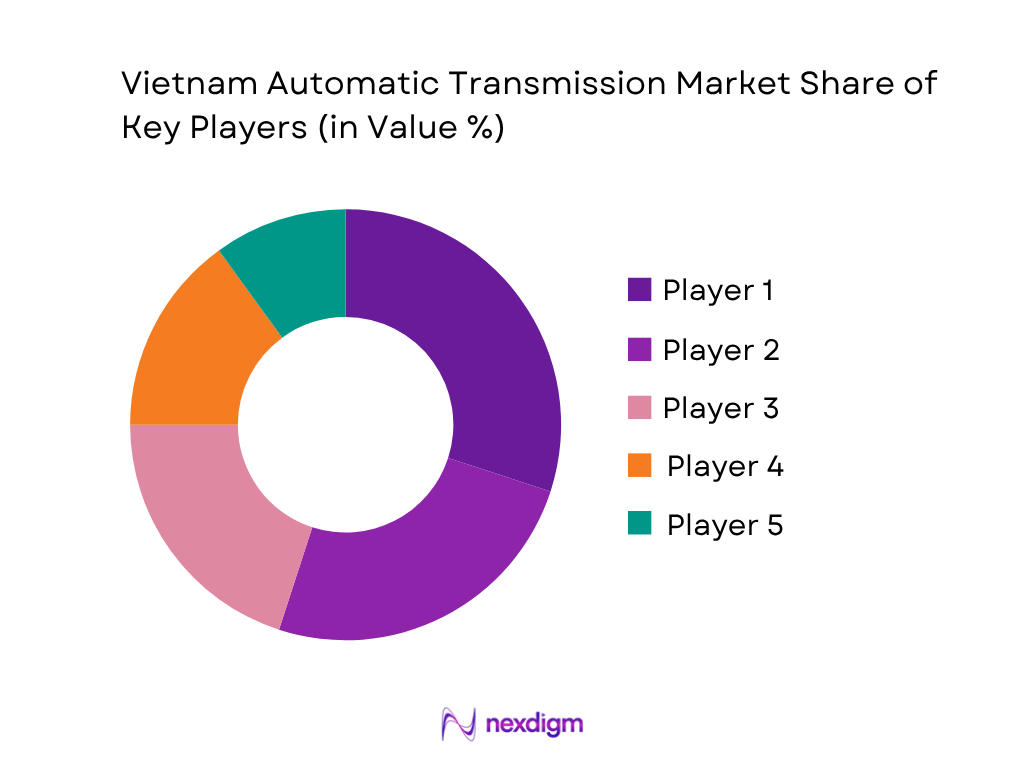
The Vietnam Automatic Transmission Market is characterized by competition among global transmission specialists, integrated automotive suppliers and OEM-owned drivetrain technology ecosystems. Aisin and JATCO maintain strong relevance through Japanese vehicle platforms, while Hyundai Transys participates through Korean vehicle architectures. ZF addresses premium, commercial and advanced electrified drivetrains, while Magna provides DCT, hybrid and electric-drive technologies. Competitive differentiation increasingly depends on hybrid capability, electric-drive integration, OEM platform relationships, regional ASEAN production support and the ability to transition from conventional gearboxes toward software-controlled electrified propulsion.
| Company | Establishment Year | Headquarters | Core Transmission Technology | CVT / DCT Capability | Hybrid Capability | Electric Drivetrain Capability | Vehicle Application Coverage | Vietnam / ASEAN Relevance |
| Aisin Corporation | 1949 | Kariya, Japan | ~ | ~ | ~ | ~ | ~ | ~ |
| JATCO Ltd. | 1999 | Fuji, Japan | ~ | ~ | ~ | ~ | ~ | ~ |
| Hyundai Transys Inc. | 1999 | Seosan, South Korea | ~ | ~ | ~ | ~ | ~ | ~ |
| ZF Friedrichshafen AG | 1915 | Friedrichshafen, Germany | ~ | ~ | ~ | ~ | ~ | ~ |
| Magna International | 1957 | Aurora, Canada | ~ | ~ | ~ | ~ | ~ |
Vietnam Automatic Transmission Market Analysis
Growth Drivers
Expanding Vehicle Sales and Automatic-Equipped Passenger Vehicle Base
Vietnam’s expanding automotive sales base is a primary growth driver for the Automatic Transmission Market because passenger cars, SUVs, crossovers and MPVs increasingly use CVTs, torque-converter automatics, DCTs and electrified transmission architectures. According to the Vietnam Automobile Manufacturers’ Association (VAMA), member companies sold 340,142 vehicles in 2024, comprising 172,730 domestically manufactured and assembled vehicles and 167,412 imported vehicles. The demand base strengthened further in 2025, when VAMA members sold 375,736 vehicles, while December alone contributed 47,067 units. These volumes create direct factory-fit and replacement demand for transmission assemblies, torque converters, CVT pulleys and belts, clutch modules, planetary gearsets, valve bodies, transmission control units, sensors and fluids. Imported vehicles also broaden the installed transmission technology base: Vietnam Customs recorded 173,561 completely built-up automobile imports in 2024, including 70,728 vehicles from Indonesia, 63,769 from Thailand and 31,112 from China. This mix introduces additional CVT, DCT, multi-speed automatic and hybrid drivetrain platforms into the country and subsequently supports spare-parts and servicing requirements. Domestic industrial activity also provides a favorable foundation. The General Statistics Office of Vietnam reported that the production index for motor vehicles increased strongly during 2024, reflecting rising activity across vehicle assembly and related manufacturing. At the macroeconomic level, World Bank data place Vietnam’s 2024 GDP at USD 476.39 billion, GDP per capita at USD 4,717.3 and population at 100,987,686 people. The combination of a large population, rising income base, stronger vehicle sales and substantial domestic and imported vehicle flows gives automatic transmission suppliers access to expanding OEM, distributor and aftermarket demand.
Rapid Hybrid and Electric Vehicle Adoption Is Expanding Electrified Drivetrain Demand
Vietnam’s transition toward hybrid and battery-electric vehicles is creating a second major growth engine for automatic and electrified transmission technologies. Hybrid vehicles eliminate the conventional manual gearbox requirement and instead depend on technologies such as e-CVT systems, planetary power-split units, dedicated hybrid transmissions, hybrid DCTs and electronically controlled drivetrains. Toyota Vietnam recorded 5,350 hybrid vehicle sales in 2024 across 6 hybrid models and 7 hybrid variants, demonstrating that electrified transmission technologies are moving beyond niche applications. Toyota also reported cumulative hybrid sales of 10,156 vehicles after four years of market presence as of the first half of 2024, while its mobility partnership with Vinasun included a plan involving 2,000 Toyota hybrid vehicles across 2024 and 2025. Battery-electric adoption is simultaneously creating demand for single-speed reduction gears, integrated electric drive units, differentials, bearings and e-axles. VinFast delivered 97,399 electric vehicles globally during 2024, including 53,139 units in the fourth quarter alone. The company subsequently delivered 175,099 electric automobiles in Vietnam during 2025, with 27,649 vehicles delivered in December 2025. Although BEVs use simpler gearboxes than conventional automatic vehicles, their expanding volume increases demand for precision reduction gearing and integrated e-drive systems, broadening the addressable drivetrain market. Vietnam’s macroeconomic base also supports the transition: World Bank data record 2024 GDP of USD 476.39 billion and GDP per capita of USD 4,717.3, while the country had a population of 100,987,686. The simultaneous expansion of conventional automatic vehicles, hybrids and BEVs therefore creates multiple technology pathways for transmission suppliers rather than a single architecture, increasing opportunities for companies capable of supplying mechanical gearing, electronics, software controls, hybrid modules and electric reduction systems.
Market Challenges
Heavy Dependence on Imported Transmissions and High-Technology Drivetrain Components
Vietnam’s dependence on imported high-value drivetrain components remains a major structural challenge for the Automatic Transmission Market because domestic supporting industries are still concentrated around comparatively simpler automotive parts rather than precision gearboxes, transmission electronics and advanced drivetrain systems. The Ministry of Industry and Trade reported in 2024 that Vietnam had 377 automotive enterprises, including 169 foreign-invested enterprises, and the industry produced 1,221 identified products. However, another Ministry assessment stated that only around 287 automotive parts and component groups had been localized, while major high-technology systems including engines, drivetrains, transmissions, safety systems, vehicle electronics and semiconductor chips remained dependent on foreign supply. A modern automobile contains around 30,000 individual components, making the technological depth required for transmission localization considerably greater than simple assembly. The scale of import dependence is also visible in complete vehicle flows. Vietnam Customs recorded 173,561 CBU automobile imports in 2024, of which 70,728 came from Indonesia, 63,769 from Thailand and 31,112 from China. VAMA separately recorded 167,412 imported vehicle sales against 172,730 domestically manufactured and assembled vehicle sales during 2024, illustrating the importance of external automotive supply chains to domestic demand. Automatic transmission suppliers are therefore exposed to foreign manufacturing capacity, logistics, exchange-rate movement, component availability and OEM sourcing decisions outside Vietnam. The broader economy is large enough to support further localization—World Bank data show 2024 GDP of USD 476.39 billion and GDP per capita of USD 4,717.3—but transmission production requires sophisticated gear cutting, heat treatment, machining, mechatronics, control electronics and quality assurance. Consequently, increasing vehicle demand does not automatically translate into equivalent domestic transmission production unless Vietnam strengthens high-precision supplier capabilities and technology transfer.
Battery-Electric Vehicle Expansion Is Substituting Conventional Multi-Speed Automatic Architectures
Rapid battery-electric vehicle adoption creates a structural technology challenge for conventional automatic transmission suppliers because most BEVs do not require the complex multi-speed architectures used in petrol and diesel vehicles. Instead of torque converters, hydraulic valve bodies, multiple clutch packs and large planetary gearsets, a typical battery-electric drivetrain uses an electric motor linked to a relatively compact single-speed reduction gear, differential and power electronics system. Vietnam is already developing a substantial installed base of such vehicles. VinFast delivered 97,399 electric automobiles globally during 2024, including 53,139 vehicles in the fourth quarter, and subsequently delivered 175,099 electric cars in Vietnam during 2025, including 27,649 units in December alone. This creates significant drivetrain demand, but the bill of materials shifts away from traditional AT, CVT and DCT technologies toward reduction gearsets, integrated e-axles, bearings, shafts, differentials and electronic controls. Conventional transmission companies that remain concentrated on torque converters, hydraulic control systems or multi-speed planetary architectures therefore face potential platform displacement even while overall vehicle demand expands. The scale of the broader market highlights why this technology shift matters: VAMA members sold 340,142 vehicles in 2024 and 375,736 vehicles in 2025, showing a substantial addressable vehicle base in which propulsion technology can progressively change. At the same time, Toyota Vietnam sold 5,350 hybrid vehicles in 2024, meaning suppliers must manage both hybrid transmission growth and BEV drivetrain substitution simultaneously. Vietnam’s macroeconomic environment provides the consumption foundation, with the World Bank recording GDP of USD 476.39 billion, GDP per capita of USD 4,717.3 and a population of 100,987,686 in 2024. The challenge is therefore not weak automotive demand but technology migration: conventional automatic transmission suppliers must redeploy engineering, tooling and supplier relationships toward hybrid and electric drivetrain components while continuing to support a large legacy ICE vehicle fleet.
Market Opportunities
Dedicated Hybrid, e-CVT and Electrified Transmission Systems Present a Strong Expansion Opportunity
Hybridization provides one of the strongest forward-looking opportunities for the Vietnam Automatic Transmission Market because hybrid vehicles retain sophisticated mechanical transmission systems while incorporating electric motors, power electronics and software controls. This creates higher technological content for drivetrain suppliers than the single-speed reduction architecture typically used in a BEV. Current market evidence already demonstrates expanding adoption. Toyota Vietnam sold 5,350 hybrid vehicles during 2024 across 6 models and 7 hybrid variants. During the first six months of 2024 alone, Toyota recorded 1,682 hybrid sales, taking cumulative Toyota hybrid deliveries in Vietnam to 10,156 vehicles after four years in the market. The company also reported a Vinasun cooperation programme involving 2,000 hybrid vehicles across 2024 and 2025, demonstrating an additional commercial-fleet application for electrified transmissions. Hybrid adoption creates requirements for planetary power-split units, e-CVTs, dedicated hybrid transmissions, electric oil pumps, clutch modules, integrated motor-generators, power-control electronics and sophisticated transmission management software. This opportunity is supported by a broader automotive demand base: VAMA members sold 340,142 vehicles during 2024 and 375,736 vehicles during 2025, providing an expanding platform pool into which hybrid technologies can penetrate. Vietnam’s industrial base is also strengthening, with the General Statistics Office recording strong growth in motor-vehicle manufacturing activity during 2024. From the macroeconomic perspective, the World Bank recorded Vietnam’s 2024 GDP at USD 476.39 billion, GDP per capita at USD 4,717.3 and population at 100,987,686. These current indicators provide the foundation for future hybrid drivetrain growth without relying on forecast statistics. Suppliers capable of integrating gears, electric motors, clutches, mechatronics and control software can address an increasingly diverse range of passenger cars, SUVs, MPVs, taxis and fleet vehicles as Vietnam moves between conventional ICE and full battery-electric mobility.
Localization of Transmission Components, Reduction Gearsets and E-Drive Systems Creates a Manufacturing Opportunity
Vietnam has a significant opportunity to localize automatic transmission and electrified drivetrain components because the existing automotive supply chain remains heavily dependent on imported high-technology systems while government policy is increasingly directed toward strengthening supporting industries. The Ministry of Industry and Trade reported in 2024 that Vietnam had 377 automotive enterprises, including 169 foreign-invested companies, and 1,221 automotive-industry products, providing an industrial base from which higher-value drivetrain manufacturing can develop. However, Ministry assessments also identify engines, transmission systems, drivetrains, electronics and other advanced components among the areas where import dependence remains substantial, demonstrating a clear localization gap. Current policy is moving directly toward this problem. Under Government Decree 205/2025/NĐ-CP, supporting-industry programmes can provide support for technology application, equipment, prototype development, training, testing and supplier integration, including support of up to 50 parts of every 100 eligible units of expenditure for specified technology-development activities and up to 70 parts of every 100 for specified supplier-development and market-linkage activities. Separately, Government Decree 21/2025/NĐ-CP extended preferential treatment for imported inputs that Vietnam cannot yet manufacture for priority automotive supporting-industry products through 31 December 2027. The scale of the potential domestic supply base is supported by current vehicle activity: VAMA recorded 172,730 locally manufactured and assembled vehicle sales in 2024, while the country also imported 173,561 complete vehicles during the year, indicating substantial demand for automotive components across both assembly and service channels. Electric propulsion adds a new localization pathway: VinFast delivered 175,099 electric automobiles in Vietnam during 2025, creating an expanding application base for reduction gears, differentials, shafts, bearings, housings and integrated e-drive components. With World Bank 2024 GDP at USD 476.39 billion and GDP per capita at USD 4,717.3, Vietnam has an economic and manufacturing platform capable of supporting greater drivetrain localization, particularly where transmission suppliers cooperate with domestic assemblers, foreign Tier-1 companies and precision-machining firms.
Future Outlook
The Vietnam Automatic Transmission Market is expected to expand at approximately ~X.X% CAGR during 2026–2035, based on the requested placeholder forecast. Market development will be shaped less by conventional manual-to-automatic conversion alone and increasingly by the transition toward hybrid transmissions, e-CVT architectures, dedicated hybrid systems and electric reduction drives. Vietnam’s automotive market is becoming technologically more diverse. Conventional CVTs and torque-converter automatic transmissions will remain important across petrol-powered sedans, SUVs, MPVs and pickups, while hybrid powertrains create additional demand for planetary power-split systems and dedicated hybrid transmissions. Toyota’s 5,350 hybrid vehicle sales in 2024, compared with roughly half that volume in the preceding period, indicate increasing consumer acceptance of electrified powertrains.
Electric-drive localization will also become increasingly important. VinFast delivered 97,399 electric automobiles globally in 2024, compared with 34,855 vehicles in 2023, supporting the development of Vietnamese expertise in electric motors, integrated drive units, reduction gearing and related power electronics. As domestic EV manufacturing expands, suppliers historically focused on conventional transmissions can reposition toward reduction gears, shafts, bearings, differentials and e-drive components.
Major Players
- Aisin Corporation – Automatic / CVT / Hybrid and e-Axle Systems
- JATCO Ltd. – CVT / Automatic / Electrified Transmission Systems
- Hyundai Transys Inc. – Automatic / DCT / Hybrid Transmissions
- ZF Friedrichshafen AG – Automatic / Hybrid / Electrified Drivetrain Systems
- Magna International – DCT / Hybrid Transmission / E-Drive Systems
- BorgWarner Inc. – DCT / Hybrid / Electrified Drivetrain Systems
- Schaeffler AG – Hybrid Transmission / E-Mobility Systems
- Valeo SE – Torque Converter / Clutch / Electrified Transmission Systems
- GKN Automotive – eDrive / Integrated Electric Drivetrain Systems
- Dana Incorporated – Spicer / Electrified Drivetrain Systems
- Allison Transmission Holdings Inc. – Fully Automatic Commercial Vehicle Transmissions
- Punch Powertrain N.V. – CVT / DCT / Dedicated Hybrid Transmissions
- Toyota Motor Corporation – Hybrid e-CVT / Power-Split Transmission Systems
- Honda Motor Co., Ltd. – CVT / e Electrified Transmission Systems
- VinFast Auto Ltd. – Electric Reduction Drive / Integrated EV Drivetrain Systems
Key Target Audience
- Automatic Transmission and Drivetrain Manufacturers
- Passenger and Commercial Vehicle OEMs
- Automotive Tier-1 and Tier-2 Component Suppliers
- Vehicle Assemblers and Automotive Supporting-Industry Manufacturers
- Transmission Distributors, Remanufacturers and Aftermarket Service Providers
- Fleet, Taxi and Commercial Vehicle Operators
- Investments and Venture Capitalist Firms
Government and Regulatory Bodies (Ministry of Construction, Vietnam Register, Ministry of Industry and Trade, Ministry of Finance, National Competition Commission)
Research Methodology
Step 1: Identification of Key Variables
The initial phase involves constructing an ecosystem map encompassing vehicle OEMs, transmission suppliers, component manufacturers, assemblers, importers, distributors, workshops and fleet operators within the Vietnam Automatic Transmission Market. Extensive secondary research is used to identify critical variables including transmission architecture, vehicle type, powertrain, OEM fitment, domestic assembly, CBU imports, localization and replacement demand.
Step 2: Market Analysis and Construction
Historical information is compiled using top-down and bottom-up approaches. The top-down assessment considers vehicle registrations, VAMA sales, domestic vehicle production, powertrain trends and automatic transmission penetration. Bottom-up analysis evaluates OEM model portfolios, gearbox fitment by vehicle platform, supplier relationships, hybrid and electric drivetrain adoption, transmission replacement volumes and aftermarket activity to construct segment-level market estimates.
Step 3: Hypothesis Validation and Expert Consultation
Market hypotheses are validated through computer-assisted telephone interviews and structured discussions with automotive OEMs, Tier-1 suppliers, component manufacturers, transmission specialists, vehicle distributors and service providers. These interactions evaluate automatic gearbox adoption, technology preferences, OEM sourcing, import dependence, repair requirements and localization potential. Primary findings are then compared with secondary evidence to refine market assumptions and competitive positioning.
Step 4: Research Synthesis and Final Output
The final phase integrates vehicle sales, production, OEM platform mapping, transmission fitment, hybrid adoption, EV deployment and aftermarket indicators. Bottom-up supplier and application findings are reconciled with top-down automotive industry statistics. This triangulation creates a comprehensive framework covering conventional automatic, CVT, DCT, hybrid transmission and electric reduction-drive technologies within the Vietnam Automatic Transmission Market.

- Executive Summary
- Research Methodology (Market Definition and Scope, Vietnam Automatic Transmission Taxonomy, Transmission Architecture Classification, Vehicle Powertrain Mapping, OEM Platform Mapping, Local Assembly and CBU Import Assessment, Transmission Installation Volume Assessment, Hybrid and Electric Drivetrain Mapping, Transmission Component and Sub-System Assessment, Aftermarket and Remanufacturing Assessment, Top-Down Market Sizing, Bottom-Up Market Construction, Primary Industry Interviews, Data Triangulation, Forecasting Framework)

- Definition and Scope
- Vietnam Automatic Transmission Industry Evolution and Technology Development
- Automatic Transmission Manufacturing and Assembly Process
- Automatic Transmission Value Chain Analysis
- Vietnam Automatic Transmission Supply Chain Analysis
- Transmission Component and Sub-System Ecosystem Analysis
- Vietnam Automatic Transmission Import Dependency and Localization Assessment
- OEM Transmission Fitment Architecture and Aftermarket Service Framework

- Growth Drivers (Increasing Automatic Gearbox Penetration, Expansion of SUV and Crossover Demand, Rising Hybrid Vehicle Adoption, Growth of Locally Assembled Vehicle Production, Increasing Urban Passenger Mobility, Expansion of Premium Vehicle Content, Greater Driving Convenience Demand, Increasing Transmission Electronics Integration)
- Market Challenges (High Dependence on Imported Transmission Assemblies, Limited Domestic Gearbox Manufacturing Capability, Low Localization of Precision Drivetrain Components, EV Substitution of Conventional Multi-Speed Transmissions, OEM Platform Concentration, Advanced Mechatronics Repair Complexity, Skilled Transmission Technician Constraints, Imported Component Supply Risk)
- Market Opportunities (Dedicated Hybrid Transmissions, e-CVT and Power-Split Hybrid Systems, Electric Reduction Gear Units, Integrated E-Axles, Localized Transmission Component Manufacturing, Automatic Transmission Remanufacturing, Commercial Vehicle Automatic Systems, Transmission Control Software and Diagnostics)
- Market Trends (CVT Penetration in Mass-Market Passenger Cars, Multi-Speed Torque-Converter Adoption, Hybrid e-CVT Expansion, Hybridized DCT Architectures, Shift-by-Wire Systems, Integrated Mechatronics, Electric Reduction Drive Adoption, Software-Controlled Drivetrain Optimization)
- Regulatory and Standards Landscape (Vietnam Automobile Industry Development Strategy, Vietnam Register Vehicle Type Approval Requirements, Vehicle Emission Standards, Fuel Consumption and Energy Efficiency Requirements, Electric Vehicle Development Policies, Automotive Supporting Industry Incentives, CKD and CBU Import Regulations, ASEAN Automotive Trade Framework)
- SWOT Analysis
- Porter’s Five Forces Analysis
- PESTLE Analysis
- Stakeholder Ecosystem
- Competition Ecosystem

- By Market Value (2020-2025)
- By Automatic Transmission Installation Volume (2020-2025)
- By New Vehicle Automatic Transmission Fitment Volume (2020-2025)
- By Domestic Transmission and Drivetrain Assembly Volume (2020-2025)
- By Import Volume (2020-2025)
- By Export Volume (2020-2025)
- By Average Selling Price (2020-2025)
- By Hybrid Transmission Volume (2020-2025)
- By Electric Reduction Gear and E-Drive Volume (2020-2025)

- By Transmission Type (In Value %)
Torque Converter Automatic Transmission
Continuously Variable Transmission
Dual-Clutch Transmission
Automated Manual Transmission
Dedicated Hybrid Transmission
Electronic Continuously Variable Transmission
Hybrid Dual-Clutch Transmission
Planetary Power-Split Hybrid Transmission
Heavy-Duty Fully Automatic Transmission
Electric Single-Speed Reduction Gear
Multi-Speed Electric Vehicle Transmission
Other Automatic Drivetrain Architectures - By Vehicle Type (In Value %)
Passenger Sedans
SUVs and Crossovers
Multi-Purpose Vehicles
Hatchbacks and Compact Cars
Pickup Trucks
Light Commercial Vehicles
Medium Commercial Vehicles
Heavy Commercial Vehicles
Buses and Coaches
Special-Purpose Vehicles
Electric Passenger Vehicles
Electric Commercial Vehicles - By Propulsion Type (In Value %)
Petrol Internal Combustion Vehicles
Diesel Internal Combustion Vehicles
Mild Hybrid Vehicles
Full Hybrid Vehicles
Plug-in Hybrid Vehicles
Battery Electric Vehicles
Range-Extended Electric Vehicles
Alternative-Fuel Commercial Vehicles - By Gear Configuration (In Value %)
Single-Speed Electric Reduction Gear
4-Speed Automatic Transmission
5-Speed Automatic Transmission
6-Speed Automatic Transmission
7-Speed Automatic Transmission
8-Speed Automatic Transmission
9-Speed Automatic Transmission
10-Speed Automatic Transmission
Variable-Ratio CVT
Power-Split e-CVT
Multi-Speed Electrified Transmission - By Sales Channel (In Value %)
OEM Factory-Fitted Transmission
Tier-1 Direct Supply
Authorized OEM Replacement Channel
Transmission Specialist Workshops
Independent Automotive Aftermarket
Remanufactured Transmission Suppliers
Authorized Dealer Service Networks
Independent Repair Garages
Online Automotive Parts Platforms
Fleet Maintenance and Service Contracts - By Region (In Value %)
Northern Vietnam
Hanoi
Hai Phong
Vinh Phuc
Ninh Binh
Central Vietnam
Da Nang
Quang Nam and Chu Lai
Southern Vietnam
Ho Chi Minh City
Dong Nai
Binh Duong
Mekong Delta
Other Vietnam

- Market Share of Major Players (By Revenue, Installation Volume, Transmission Type, Vehicle Type, Propulsion Type, OEM Fitment, Local Assembly Platform, Aftermarket Presence)
- Cross Comparison Parameters (Vietnam OEM Fitment and Local Assembly Footprint, Automatic Transmission Architecture Breadth, CVT and DCT Technology Capability, Hybrid e-CVT and Dedicated Hybrid Transmission Capability, Electric Reduction Gear and E-Axle Capability, Passenger and Commercial Vehicle Application Coverage, Localization ASEAN Supply and Import Dependency, Aftermarket Remanufacturing and Technical Support Network)
- SWOT Analysis of Major Players
- Competitive Positioning Matrix
- Product and Technology Portfolio Benchmarking
- Pricing and Distribution Network Benchmarking
- Market Entry Strategy Assessment
- Detailed Profiles of Major Companies
Aisin Corporation – Automatic / CVT / Hybrid and e-Axle Systems
JATCO Ltd. – CVT / Automatic / Electrified Transmission Systems
Hyundai Transys Inc. – Automatic / DCT / Hybrid Transmissions
ZF Friedrichshafen AG – Automatic / Hybrid / Electrified Drivetrain Systems
Magna International – DCT / Hybrid Transmission / E-Drive Systems
BorgWarner Inc. – DCT / Hybrid / Electrified Drivetrain Systems
Schaeffler AG – Hybrid Transmission / E-Mobility Systems
Valeo SE – Torque Converter / Clutch / Electrified Transmission Systems
GKN Automotive – eDrive / Integrated Electric Drivetrain Systems
Dana Incorporated – Spicer / Electrified Drivetrain Systems
Allison Transmission Holdings Inc. – Fully Automatic Commercial Vehicle Transmissions
Punch Powertrain N.V. – CVT / DCT / Dedicated Hybrid Transmissions
Toyota Motor Corporation – Hybrid e-CVT / Power-Split Transmission Systems
Honda Motor Co., Ltd. – CVT / e Electrified Transmission Systems
VinFast Auto Ltd. – Electric Reduction Drive / Integrated EV Drivetrain Systems

- Buyer Segmentation
- OEM Procurement Behaviour
- Supplier Selection Criteria
- Buyer Pain Points
- Technology Adoption Assessment
- Replacement and Repurchase Behaviour

- By Market Value (2026-2035)
- By Automatic Transmission Installation Volume (2026-2035)
- By New Vehicle Automatic Transmission Fitment Volume (2026-2035)
- By Domestic Transmission and Drivetrain Assembly Volume (2026-2035)
- By Import Volume (2026-2035)
- By Export Volume (2026-2035)
- By Average Selling Price (2026-2035)
- By Hybrid Transmission Volume (2026-2035)
- By Electric Reduction Gear and E-Drive Volume (2026-2035)


 Request a Sample
 Ask for Customization
 Get a Quote
 Enquire Now