
 Download PDF
Market Overview
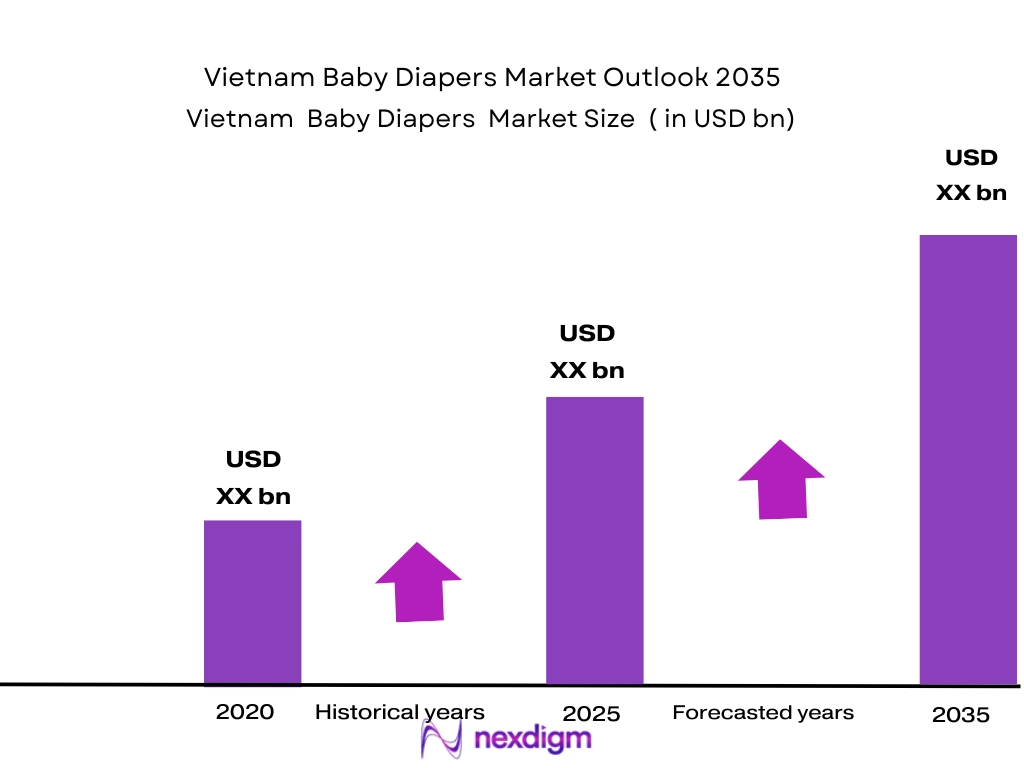
The Vietnam baby diapers market is valued at approximately USD ~ billion in 2025, reflecting steady growth driven by several factors, including an increase in the birth rate and rising disposable income. The growing middle class, improved urbanization, and heightened awareness of infant hygiene contribute significantly to the market’s expansion. Furthermore, the increasing shift toward convenience-based products, such as disposable diapers, continues to drive the demand for baby diapers across the country. Consumers’ growing preference for comfort, quality, and skin-friendly products is also a critical driver of the market.
In Vietnam, key cities like Ho Chi Minh City, Hanoi, and Da Nang dominate the market due to their high population density, better access to healthcare facilities, and the concentration of urban and middle-class families. Ho Chi Minh City, in particular, holds a significant share due to its status as an economic hub, with higher per capita income and more developed retail and distribution networks. Additionally, these cities have a higher adoption rate of international and premium diaper brands compared to rural areas.
Market Segmentation
By Product Type
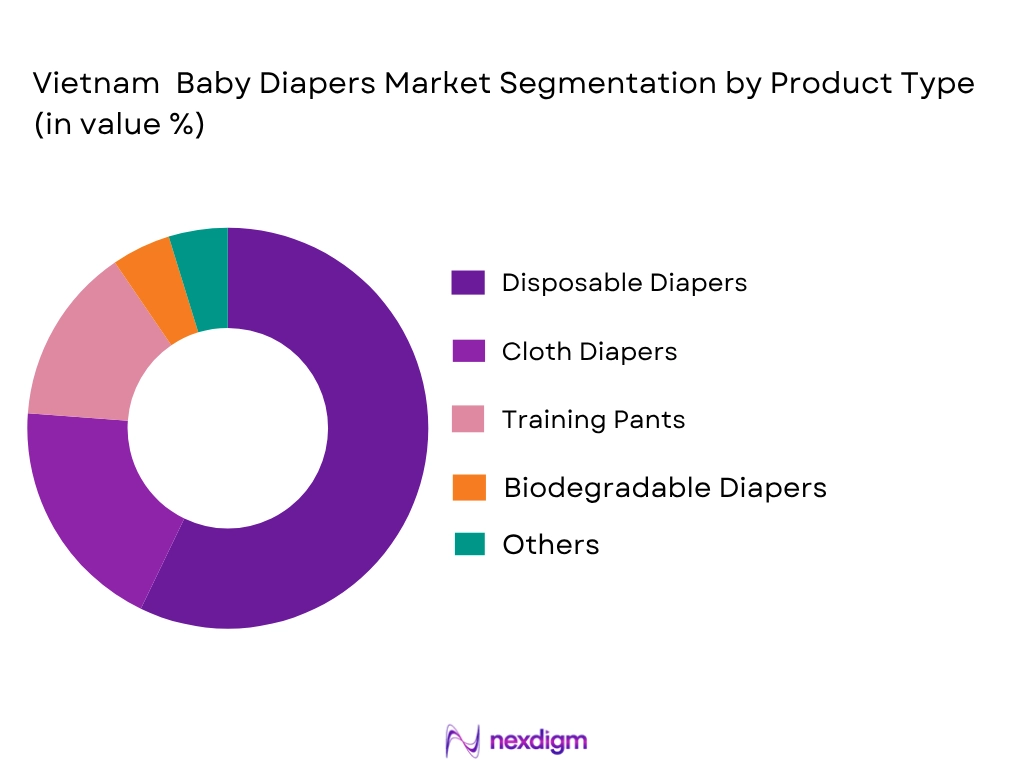
The Vietnam baby diapers market is segmented by product type into cloth diapers, disposable diapers, training pants, and biodegradable diapers. Disposable diapers dominate the market, owing to their convenience, widespread availability, and preference for single-use hygiene products. In particular, the demand for premium disposable diapers has increased, driven by the rising purchasing power of parents who prioritize convenience and quality. Disposable diapers provide the best fit for busy urban lifestyles, especially among working parents in metropolitan areas. The increase in disposable incomes and the ongoing urbanization trends also contribute to the dominance of this segment.
By Age Group
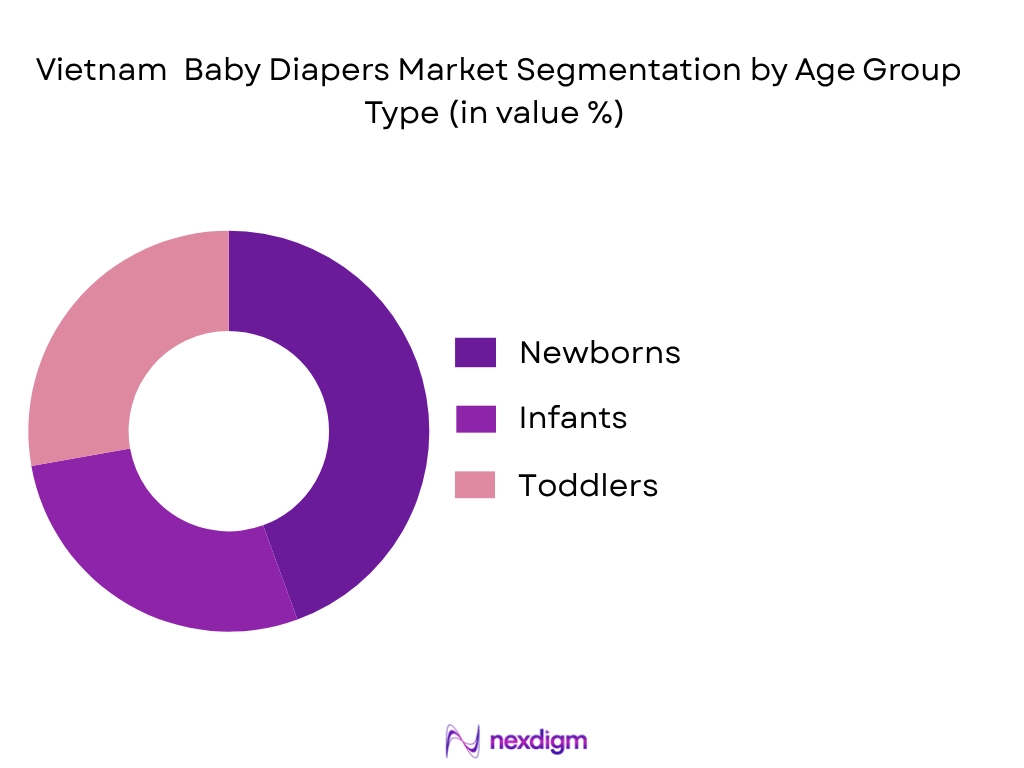
The market is segmented by age group into newborns (0-3 months), infants (3-12 months), and toddlers (12-36 months). The newborn segment holds the largest market share due to the initial demand for diapers during the first few months of an infant’s life. The increased awareness regarding infant hygiene and health has led parents to opt for premium-quality products for newborns. The demand for premium diapers in the newborn segment is also being driven by a shift toward eco-friendly and skin-friendly materials, which are perceived as being safer for babies during the early stages of life.
Competitive Landscape
The Vietnam baby diapers market is highly competitive, with the presence of both international and local brands. Major global players, such as Procter & Gamble (P&G) with its Pampers brand, and Unicharm with its MamyPoko brand, lead the market. Local brands, including Diana Unicharm and Vina-Concepts, have gained significant market share by offering affordable products and adapting to local preferences. These companies are focusing on improving product quality, launching innovative products, and expanding their retail networks to maintain their dominance in this market.
| Company Name | Establishment Year | Headquarters | Revenue (USD) | Market Share | Key Product | Distribution Network |
| Procter & Gamble (Pampers) | 1837 | USA | ~ | ~ | ~ | ~ |
| Unicharm (MamyPoko) | 1961 | Japan | ~ | ~ | ~ | ~ |
| Kimberly-Clark (Huggies) | 1872 | USA | ~ | ~ | ~ | ~ |
| Diana Unicharm | 2004 | Vietnam | ~ | ~ | ~ | ~ |
| Vina-Concepts | 2002 | Vietnam | ~ | ~ | ~ | ~ |
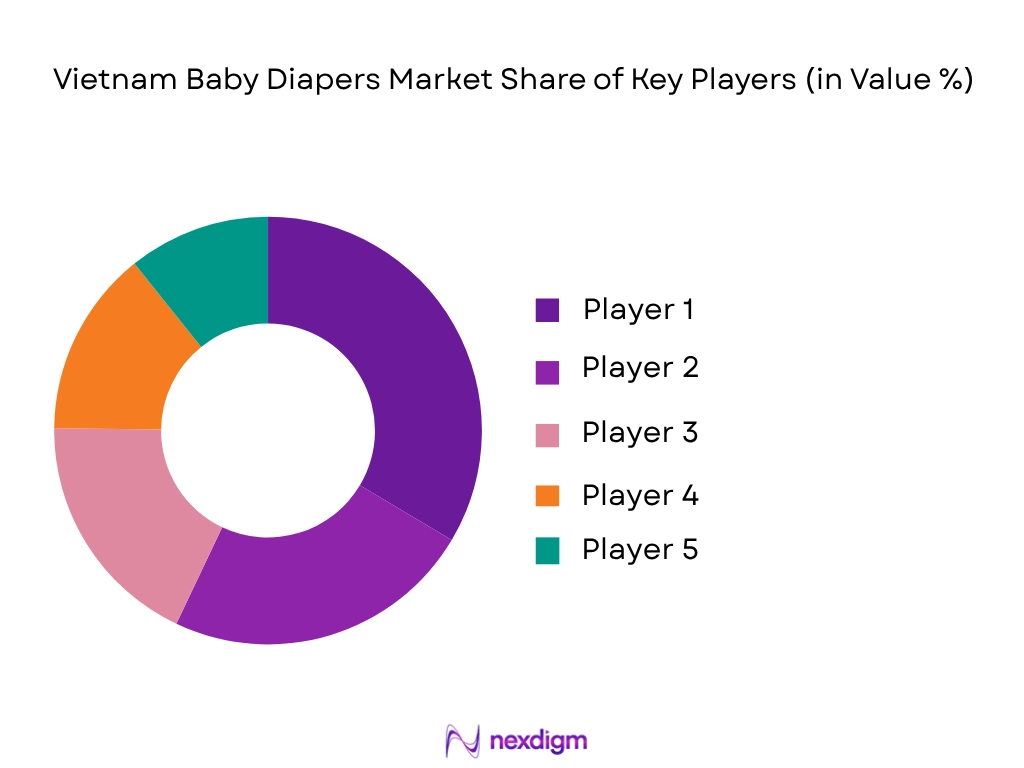
Vietnam Baby Diapers Market Analysis
Growth Drivers
Increase in Birth Rates and Population Growth
Vietnam’s growing population and relatively high birth rate are key factors driving the demand for baby diapers. As the number of newborns increases, there is a corresponding rise in the need for baby care products, including diapers. Families, particularly in urban centers, are increasingly opting for convenience-based products like disposable diapers, which offer ease of use and hygiene benefits. This demographic trend supports continuous market growth, with young families investing in quality products for their children’s well-being.
Growing Middle-Class Population and Rising Disposable Income
Vietnam’s expanding middle class and rising disposable incomes are pivotal in shaping the baby diapers market. As more families have access to higher earnings, they are more willing to spend on premium, high-quality products for their babies. This trend is evident in the increased demand for branded and environmentally friendly diaper options, where parents are seeking products that offer superior comfort and skin protection for their infants, further boosting market growth.
Market Challenges
Rising Raw Material Costs
The baby diaper industry in Vietnam faces challenges due to fluctuations in raw material costs. Key components such as superabsorbent polymers, non-woven fabrics, and other materials used in the production of diapers are subject to price volatility. As raw material costs rise, manufacturers may face increased production costs, which could be passed on to consumers. This presents a challenge for both premium and affordable diaper segments, as it impacts profit margins and price competitiveness.
Environmental Concerns Regarding Disposable Diapers
Environmental concerns related to disposable diapers have become a growing challenge in the Vietnamese market. Diapers, being single-use products, contribute to environmental pollution and are not biodegradable. As more consumers become aware of the environmental impact, there is an increasing demand for eco-friendly alternatives. However, biodegradable and sustainable diaper options tend to be more expensive, and the shift toward these products is still in its early stages, presenting challenges for manufacturers in balancing cost and sustainability.
Opportunities
Expansion of E-commerce and Online Retail Channels
The rapid growth of e-commerce and online retail channels presents a significant opportunity for the Vietnam baby diapers market. With an increasing number of consumers shopping online, brands can reach a wider audience beyond traditional retail stores. This trend is especially relevant in rural and semi-urban areas where access to physical stores may be limited. E-commerce platforms allow for convenience and competitive pricing, enabling brands to build a stronger presence in these untapped markets.
Growing Demand for Eco-friendly and Biodegradable Diapers
With increasing environmental awareness, the demand for eco-friendly and biodegradable baby diapers is on the rise in Vietnam. Consumers are becoming more conscious of the environmental impact of their purchases, leading them to choose products that are made from natural or sustainable materials. Diaper brands that invest in eco-friendly solutions have a growing market opportunity, as parents increasingly look for alternatives that offer both performance and sustainability, boosting sales potential in the eco-conscious consumer segment.
Future Outlook
Over the next five years, the Vietnam baby diapers market is expected to experience strong growth, driven by continuous urbanization, rising disposable incomes, and an increasing awareness of baby hygiene. Consumer preferences are shifting towards high-quality and eco-friendly diaper products, which is prompting brands to innovate and offer more sustainable options. Additionally, the growing presence of e-commerce platforms will allow brands to expand their reach beyond urban centers, tapping into untapped rural markets. As a result, the market is projected to see steady demand from both urban and suburban areas.
Major Players
- Procter & Gamble (Pampers)
- Unicharm (MamyPoko)
- Kimberly-Clark (Huggies)
- Diana Unicharm
- Vina-Concepts
- L&M Manufacturing Company
- Clean and Green
- Apple’s Baby Diapers
- Babyco Vietnam
- Bamboo Baby Care
- Nutricia Vietnam
- AstraZeneca Vietnam
- Hengan International Group
- Kao Corporation (Merries)
- Hunan China Resources (Tianyi)
Key Target Audience
- Investments and Venture Capitalist Firms
- Government and Regulatory Bodies (Ministry of Health – Vietnam)
- Baby Care Retailers
- Diaper Manufacturers
- E-commerce Platforms
- Healthcare Institutions
- Child Care Centers and Daycare Providers
- International Consumer Goods Brands
Research Methodology
Step 1: Identification of Key Variables
The initial phase involves constructing an ecosystem map encompassing all major stakeholders within the Vietnam baby diapers market. This step includes gathering data from secondary and proprietary sources to identify key variables influencing market dynamics. We will focus on the demand side, identifying the factors driving product preferences, and the supply side, recognizing manufacturers and distributors.
Step 2: Market Analysis and Construction
This phase involves analyzing historical data related to the Vietnam baby diapers market, including assessing market penetration, retail presence, and customer purchasing trends. We will evaluate the financial performance of major players and the size of the market across different age groups and product types, ensuring accurate revenue estimations.
Step 3: Hypothesis Validation and Expert Consultation
We will conduct in-depth consultations with industry experts, including manufacturers and retailers in the baby care segment. Through expert interviews, we aim to validate hypotheses and gain insights into operational challenges, emerging trends, and consumer preferences, all crucial for refining the market estimates.
Step 4: Research Synthesis and Final Output
In the final phase, we will cross-reference findings from primary research with data gathered through secondary research to form a comprehensive analysis of the Vietnam baby diapers market. This process ensures the inclusion of both top-down and bottom-up perspectives, delivering a validated and accurate market forecast.

- Executive Summary
- Research Methodology (Market Definitions and Assumptions, Abbreviations, Market Sizing Approach, Consolidated Research Approach, Understanding Market Potential Through In-Depth Industry Interviews, Primary Research Approach, Limitations and Future Conclusions)

- Definition and Scope
- Market Dynamics Overview
- Market Genesis
- Major Players and Market Timeline
- Business Cycle and Trends
- Supply Chain and Value Chain Analysis

- Growth Drivers
Increase in Birth Rates and Population Growth
Growing Middle-Class Population and Rising Disposable Income
Awareness about Hygiene and Skin Health for Babies
Urbanization and Shift to Modern Lifestyles
Rising Influence of Social Media and Parenting Blogs - Market Challenges
Rising Raw Material Costs
Environmental Concerns Regarding Disposable Diapers
Competition from Unbranded and Low-Cost Alternatives
Regulatory and Compliance Challenges
Availability of Counterfeit Products - Opportunities
Expansion of E-commerce and Online Retail Channels
Growing Demand for Eco-friendly and Biodegradable Diapers
Innovations in Diaper Materials and Designs
Rising Demand for Premium Products and Organic Ingredients
Untapped Potential in Rural and Semi-urban Markets - Key Trends
Shift Toward Eco-friendly and Sustainable Diapers
Increased Demand for Products with Natural Ingredients
Rise in Premium Product Offerings with Advanced Features
Increasing Adoption of Diaper Subscription Services
Focus on Efficient and Convenient Packaging Solutions - Government Regulations
- SWOT Analysis
- Porter’s Five Forces

- By Value, 2020–2025
- By Volume, 2020–2025
- By Average Price, 2020–2025

- By Product Type (In Value %)
Cloth Diapers
Disposable Diapers
Training Pants
Biodegradable Diapers
Others - By Age Group (In Value %)
Newborn
Infants
Toddlers - By Distribution Channel (In Value %)
Direct Sales
Retail Pharmacies
Online Channels
Supermarkets and Hypermarkets
Convenience Stores - By Region (In Value %)
Northern Vietnam
Central Vietnam
Southern Vietnam
Rest of Vietnam

- Market Share of Major Players by Value/Volume
- Market Share of Major Players by Product Type
- Cross Comparison Parameters (Company Overview, Business Strategies, Recent Developments, Strength, Weakness, Organizational Structure, Revenues, Revenues by Product Type, Number of Touchpoints, Distribution Channels, Number of Dealers and Distributors, Margins, Production Plant, Capacity, Unique Value Offering and Others)
- SWOT Analysis of Major Players
- Pricing Analysis Based on Product Categories for Major Players
- Detailed Profiles of Major Companies
Unicharm Corporation
Procter & Gamble (P&G)
Kimberly-Clark Corporation
Vietnam’s Leading Local Brands
Huggies (Kimberly-Clark)
Vina-Concepts
L&M Manufacturing Company
Clean and Green
Apple’s Baby Diapers
Babyco Vietnam
Bamboo Baby Care
Nutricia Vietnam
AstraZeneca Vietnam

- Market Demand and Utilization
- Purchasing Power and Budget Allocations
- Regulatory and Compliance Requirements
- Needs, Desires, and Pain Point Analysis
- Decision-Making Process

- By Value, 2026–2035
- By Volume, 2026–2035
- By Average Price, 2026–2035


 Request a Sample
 Ask for Customization
 Get a Quote
 Enquire Now