
 Download PDF
Market Overview
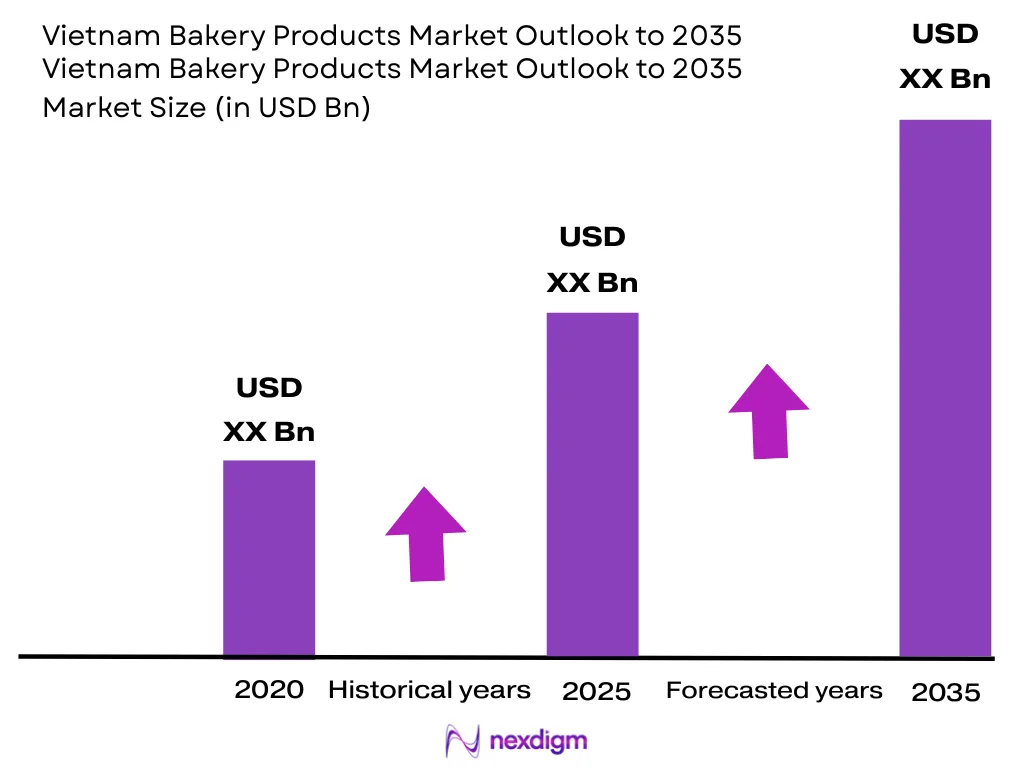
The Vietnam Bakery Products Market is valued at approximately USD ~ billion in 2024, supported by rising urbanization, increasing disposable income, and expanding demand for packaged and convenience foods. According to the General Statistics Office of Vietnam, retail sales of consumer goods exceeded VND 5,100 trillion in 2023 and surpassed VND 6,200 trillion in 2024, reflecting strong consumer spending trends. The bakery sector benefits from increasing consumption of bread, cakes, pastries, cookies, and packaged bakery snacks, supported by modern retail expansion, food delivery platforms, café culture growth, and rising demand for premium bakery products among urban consumers.
Market Segmentation
By Product Type
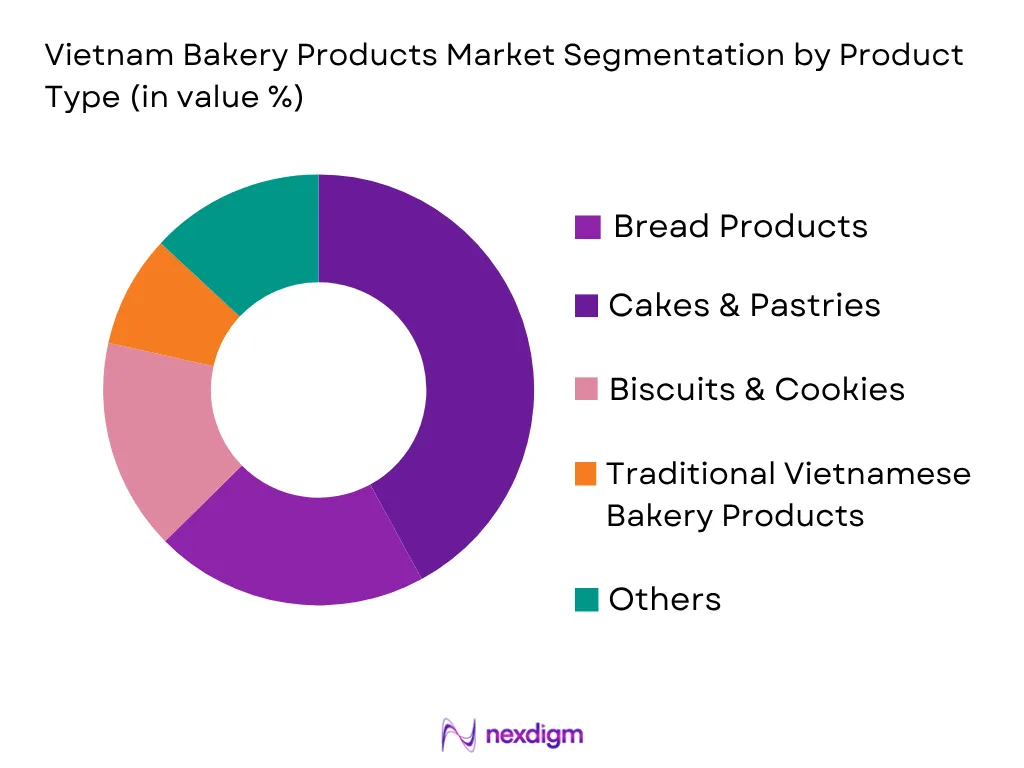
Vietnam Bakery Products Market is segmented into bread products, cakes and pastries, biscuits and cookies, traditional Vietnamese bakery products, sweet bakery snacks, frozen bakery products, artisan bakery products, sandwiches, and pizza bases. Recently, bread products have maintained the dominant market share within this segmentation due to their deep integration into daily eating habits and their affordability across income groups. Bread has become a staple food item in urban and semi-urban Vietnam, supported by the popularity of traditional products such as bánh mì. The segment benefits from widespread availability across supermarkets, convenience stores, bakeries, street vendors, and foodservice outlets. Major bakery operators continue expanding their bread portfolios with healthier, premium, and fortified variants to meet evolving consumer preferences. Additionally, increasing urbanization and busy lifestyles encourage consumers to choose bread products as convenient breakfast and meal solutions. Their broad accessibility, affordability, and cultural significance continue to reinforce their leading position within Vietnam’s bakery products market.
By Distribution Channel
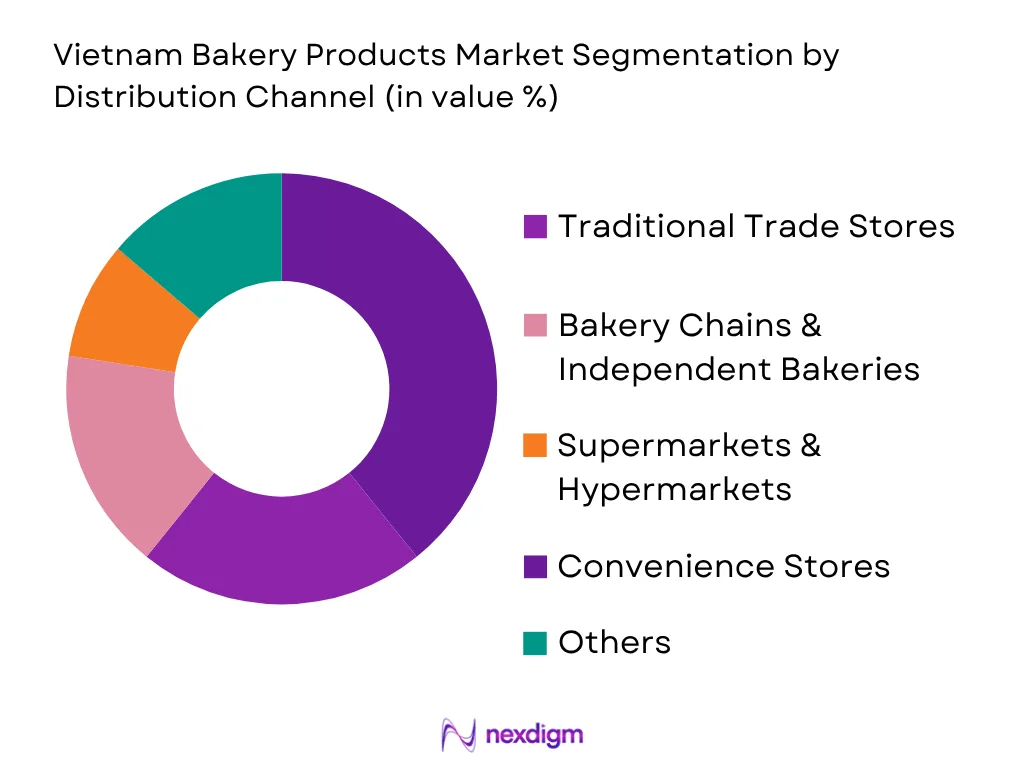
Vietnam Bakery Products Market is segmented into traditional trade stores, bakery chains, independent bakeries, supermarkets and hypermarkets, convenience stores, foodservice channels, online grocery platforms, food delivery applications, and direct-to-consumer channels. Traditional trade stores continue to dominate the market due to their extensive geographic reach and strong consumer familiarity. Small grocery stores, neighborhood retailers, and traditional food outlets remain important points of purchase for packaged bread, biscuits, cakes, and bakery snacks. Consumers frequently purchase bakery products through these channels because of convenience, accessibility, and frequent shopping behavior. Traditional retail networks maintain a particularly strong presence in semi-urban and rural regions where modern retail penetration remains comparatively lower. Furthermore, local bakery brands and regional manufacturers rely heavily on traditional trade for distribution. While convenience stores, supermarkets, and online platforms continue to expand rapidly, traditional trade remains the backbone of bakery product distribution across Vietnam due to its ability to efficiently serve diverse consumer segments throughout the country.
Competitive Landscape
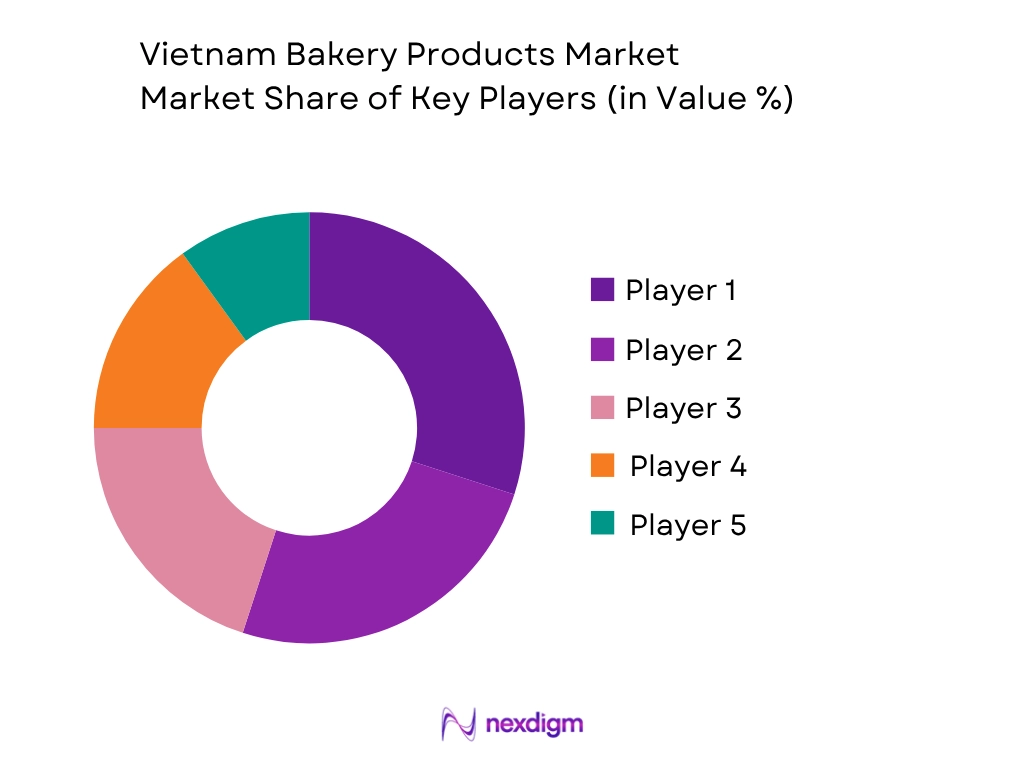
The Vietnam Bakery Products Market is moderately consolidated with a combination of domestic bakery manufacturers, international bakery chains, and packaged food companies competing across multiple product categories. Market participants focus on product innovation, retail expansion, premiumization, and distribution network strengthening to increase market presence. Strong brand recognition, localized product offerings, and extensive retail penetration remain key competitive advantages in the market.
| Company | Establishment Year | Headquarters | Key Brands | Product Portfolio | Distribution Reach | Manufacturing Presence | Retail Penetration | Innovative Focus |
| KIDO Group | 1993 | ~ | ~ | ~ | ~ | ~ | ~ | ~ |
| Mondelez Kinh Do Vietnam | 1993 | ~ | ~ | ~ | ~ | ~ | ~ | ~ |
| ABC Bakery | 1989 | ~ | ~ | ~ | ~ | ~ | ~ | ~ |
| BreadTalk Vietnam | 2007 | ~ | ~ | ~ | ~ | ~ | ~ | ~ |
| Tous les Jours Vietnam | 2007 | ~ | ~ | ~ | ~ | ~ | ~ | ~ |
Vietnam Bakery Products Market Analyis
Growth Drivers
Rising Urbanization and Expansion of Modern Food Consumption
Vietnam’s continued urbanization is significantly supporting the growth of the bakery products market by increasing consumer demand for convenient, ready-to-eat, and packaged food products. According to the General Statistics Office of Vietnam, the country’s population exceeded 101 million people, while the urban population surpassed 41 million, creating a large consumer base concentrated in major cities such as Ho Chi Minh City, Hanoi, Da Nang, and Hai Phong. Vietnam’s GDP exceeded USD 470 billion, reflecting growing economic activity and increasing purchasing power among consumers. Retail sales of goods and consumer services surpassed VND 6,200 trillion, highlighting strong household expenditure and consumption trends. The growth of modern lifestyles, increasing workforce participation, and longer commuting times have accelerated demand for bread products, cakes, pastries, sandwiches, and packaged bakery snacks. Modern retail infrastructure, including supermarkets, convenience stores, bakery chains, and food delivery platforms, continues to expand across urban centers, improving accessibility to bakery products. In addition, the tourism and hospitality sectors generate substantial demand for bakery products through hotels, cafés, restaurants, and quick-service food outlets. These factors collectively strengthen bakery consumption patterns and support the long-term expansion of the Vietnam bakery products market.
Growth of Food Processing Industry and Retail Infrastructure
The expansion of Vietnam’s food processing industry and modern retail ecosystem remains a major growth driver for bakery products. The food processing sector is among the largest manufacturing industries in the country and serves as a critical supplier of flour, dairy ingredients, edible oils, sugar, and food additives used in bakery production. Vietnam’s industrial production index continued to expand alongside GDP growth exceeding USD 470 billion, creating favorable conditions for manufacturing investments and consumer spending. Total merchandise trade exceeded USD 780 billion, demonstrating the country’s integration into global supply chains and facilitating the import of bakery ingredients, machinery, and processing technologies. Furthermore, foreign direct investment disbursement exceeded USD 25 billion, supporting industrial modernization and capacity expansion across food manufacturing sectors. Modern retail channels including supermarkets, hypermarkets, convenience stores, and e-commerce platforms continue expanding nationwide, improving bakery product visibility and distribution efficiency. The increasing presence of international bakery chains and domestic bakery operators has also encouraged product innovation and premiumization. As organized retail penetration increases and foodservice channels continue to expand, bakery manufacturers gain greater access to consumers, creating a strong foundation for future market growth throughout Vietnam.
Market Challenges
Dependence on Imported Wheat and Raw Material Volatility
One of the major challenges facing the Vietnam bakery products market is its heavy dependence on imported wheat and bakery ingredients. Vietnam imports substantial quantities of wheat annually due to limited domestic production, making bakery manufacturers vulnerable to fluctuations in global agricultural markets and international trade conditions. Merchandise imports exceeded USD 380 billion, reflecting the country’s reliance on imported raw materials and industrial inputs. Wheat, dairy ingredients, edible oils, sugar, and specialized bakery additives remain critical components of bakery production and are subject to supply chain disruptions and global commodity volatility. Vietnam’s food processing industry must continuously manage procurement risks associated with international sourcing. Additionally, fluctuations in transportation costs, exchange rate movements, and geopolitical developments can influence ingredient availability and inventory planning. Bakery manufacturers operating in highly competitive product categories such as bread, biscuits, and cakes often face challenges in passing increased input costs directly to consumers. Since many bakery products remain affordable daily-consumption items, maintaining competitive pricing while preserving profitability becomes increasingly difficult. These supply-side pressures continue to create operational challenges for bakery manufacturers throughout Vietnam.
Fragmented Market Structure and Shelf-Life Management Constraints
The fragmented nature of Vietnam’s bakery industry presents operational and distribution challenges for both domestic and international manufacturers. A substantial portion of bakery sales continues to be generated through traditional bakeries, small independent operators, and local food outlets, creating intense competition and varying quality standards across the market. Vietnam’s population exceeds 101 million people and is distributed across numerous urban and rural regions, requiring extensive logistics and distribution capabilities. While modern retail channels continue to expand, traditional trade remains an important sales channel, making nationwide product distribution complex. Bakery products such as fresh bread, cakes, pastries, and sandwiches typically have shorter shelf lives than many packaged food products, increasing inventory management requirements. Manufacturers must maintain product freshness while ensuring efficient distribution across geographically dispersed markets. Vietnam’s road transportation network continues to develop, but logistics efficiency varies across regions, particularly outside major metropolitan centers. Additionally, growing consumer expectations regarding product quality, freshness, and food safety place further pressure on bakery manufacturers. Balancing production efficiency, distribution reach, and product quality remains a significant challenge for companies seeking to expand their market presence across Vietnam.
Market Opportunities
Rising Demand for Premium and Health-Oriented Bakery Products
The growing preference for premium and health-focused food products presents a significant opportunity for the Vietnam bakery products market. Rising disposable incomes and increasing consumer awareness regarding nutrition are encouraging demand for whole grain bread, low-sugar bakery products, high-protein snacks, clean-label products, and premium pastries. Vietnam’s GDP exceeded USD 470 billion, while GDP per capita surpassed USD 4,700, reflecting improving purchasing power among consumers. Retail sales of goods and services exceeded VND 6,200 trillion, demonstrating strong consumption activity and increasing spending on higher-value food products. Urban consumers are increasingly seeking bakery products that offer both convenience and nutritional benefits, creating opportunities for product diversification. International bakery concepts, artisanal bakery chains, and premium café formats are also gaining popularity in major cities. Manufacturers have opportunities to introduce fortified products, functional ingredients, healthier formulations, and premium bakery experiences to meet evolving consumer preferences. As wellness trends continue to influence purchasing decisions, companies that successfully position themselves within health-oriented and premium bakery segments are likely to benefit from stronger demand and higher-value sales opportunities.
Expansion of Food Delivery Platforms and Modern Retail Channels
The rapid development of digital commerce, food delivery services, and modern retail formats creates significant opportunities for bakery manufacturers across Vietnam. Internet penetration exceeds 78 million users, while smartphone adoption continues to expand across both urban and secondary cities. The country’s digital economy continues to grow alongside retail sales exceeding VND 6,200 trillion, creating favorable conditions for online bakery sales and food delivery integration. Consumers increasingly purchase bakery products through mobile applications, e-commerce platforms, and food delivery services because of convenience and faster access to products. The expansion of convenience stores, supermarkets, hypermarkets, and specialty bakery chains further strengthens distribution capabilities. Vietnam also welcomed more than 17 million international visitors, creating additional demand for bakery products through hotels, restaurants, cafés, and tourism-oriented foodservice establishments. Premium bakery chains and artisanal operators are increasingly leveraging digital channels to expand customer reach beyond physical store locations. The combination of growing urban populations, rising digital adoption, expanding retail infrastructure, and increasing foodservice demand provides a strong foundation for future growth opportunities across the Vietnam bakery products market.
Future Outlook
The Vietnam Bakery Products Market is expected to witness robust expansion throughout the forecast period due to continued urbanization, rising disposable income levels, and increasing consumer preference for packaged convenience foods. Demand for premium bakery products, healthier formulations, and ready-to-eat baked goods is expected to strengthen further as consumer lifestyles continue to evolve. Growth in modern retail formats, convenience stores, online grocery platforms, and food delivery applications will continue expanding product accessibility across urban and secondary cities. Manufacturers are likely to increase investments in frozen bakery products, clean-label offerings, and premium bakery innovations. Rising tourism activity and the expansion of café culture are also expected to create additional growth opportunities for artisanal and specialty bakery categories.
Major Players
- KIDO Group
- Mondelez Kinh Do Vietnam
- ABC Bakery
- BreadTalk Vietnam
- Tous les Jours Vietnam
- Paris Baguette Vietnam
- Orion Food Vina
- Huu Nghi Food
- Bibica Corporation
- Richy Group
- Dai Phat Bakery
- Nguyen Son Bakery
- Bao Ngoc Bakery
- Pham Nguyen Confectionery
- Lotte Wellfood Vietnam
Key Target Audience
- Bakery Product Manufacturers
- Bread and Bakery Chain Operators
- Biscuit and Confectionery Manufacturers
- Flour Milling and Ingredient Suppliers
- Foodservice and Quick Service Restaurant Operators
- Modern Retail and E-Commerce Companies
- Investments and Venture Capitalist Firms
- Government and Regulatory Bodies
Research Methodology
Step 1: Identification of Key Variables
The initial phase involves constructing a comprehensive ecosystem map covering bakery manufacturers, ingredient suppliers, flour millers, distributors, retailers, foodservice operators, and consumers. Extensive secondary research is conducted using government publications, trade databases, company reports, industry associations, and retail statistics. The primary objective is to identify critical demand-side and supply-side variables influencing the Vietnam Bakery Products Market.
Step 2: Market Analysis and Construction
In this phase, historical market information related to bakery production, retail sales, consumption patterns, import-export activities, and distribution structures is compiled and analyzed. Market penetration, category demand, retail channel performance, and regional consumption trends are evaluated to construct reliable market estimates and segmentation frameworks.
Step 3: Hypothesis Validation and Expert Consultation
Market assumptions and preliminary findings are validated through structured interviews with bakery manufacturers, ingredient suppliers, distributors, retail executives, foodservice operators, and industry experts. These consultations provide practical insights regarding category growth, competitive dynamics, operational challenges, and evolving consumer preferences, helping refine market estimates and forecasts.
Step 4: Research Synthesis and Final Output
The final phase integrates primary and secondary research findings using data triangulation techniques. Information collected from industry participants is cross-verified with trade statistics, company disclosures, and government publications. This process ensures the preparation of a comprehensive, accurate, and validated assessment of the Vietnam Bakery Products Market.

- Executive Summary
- Research Methodology (Market Definitions and Assumptions, Abbreviations, Market Sizing Approach, Top-Down Analysis, Bottom-Up Analysis, Demand-Side Assessment, Supply-Side Assessment, Organized vs Traditional Bakery Mapping, Retail Audit Analysis, Consumer Spending Assessment, Primary Industry Interviews, Data Triangulation, Forecasting Framework, Limitations and Future Conclusions)

- Definition and Scope
- Market Evolution and Industry Genesis
- Timeline of Major Industry Developments
- Bakery Industry Business Cycle Analysis
- Bakery Value Chain Analysis

- Growth Drivers (Rising Urbanization, Growing Middle-Class Population, Increasing Consumption of Convenience Foods, Expansion of Modern Retail Infrastructure, Rising Disposable Income, Growth of Café Culture, Increasing Tourism Activity, Expansion of Food Delivery Platforms)
- Market Challenges (Dependence on Imported Wheat, Raw Material Price Volatility, Fragmented Traditional Bakery Sector, Shelf-Life Management Constraints, Food Safety Compliance Costs, Supply Chain Inefficiencies, Cold Chain Infrastructure Gaps, Intense Competition from Local Producers)
- Market Opportunities (Premium Bakery Product Expansion, Health-Oriented Bakery Innovation, Frozen Bakery Market Development, Functional Bakery Products, E-Commerce and Food Delivery Growth, Tourism-Driven Bakery Consumption, Sustainable Packaging Adoption, Expansion into Tier-II Cities)
- Market Trends (Premiumization of Bakery Products, European-Style Bread Adoption, Clean Label Ingredients, High-Protein Product Launches, Whole Grain Product Development, Frozen Ready-to-Bake Products, Artisanal Bakery Growth, Health and Wellness Positioning)
- Government Regulations (Food Safety Regulations, Product Labeling Standards, Import Regulations for Bakery Ingredients, Food Additive Compliance Requirements, Packaging Regulations, Quality Certification Standards, Consumer Protection Requirements, Environmental Compliance Standards)
- SWOT Analysis
- Porter’s Five Forces Analysis
- PESTLE Analysis
- Stakeholder Ecosystem
- Competition Ecosystem
- ESG and Sustainability Assessment

- By Market Value (2020-2025)
- By Volume Consumption (2020-2025)
- By Average Selling Price (2020-2025)

- By Product Type (In Value %)
Bread Products
Cakes and Pastries
Biscuits and Cookies
Traditional Vietnamese Bakery Products
Sweet Bakery Snacks
Frozen Bakery Products
Artisan and Premium Bakery Products
Sandwiches and Ready-to-Eat Bakery Products
Pizza Bases and Flatbreads
Morning Goods (Croissants, Muffins, Doughnuts) - By Ingredient Type (In Value %)
Conventional Bakery Products
Whole Grain Bakery Products
Organic Bakery Products
Gluten-Free Bakery Products
High-Protein Bakery Products
Low Sugar Bakery Products
Functional Bakery Products
Clean Label Bakery Products - By Distribution Channel (In Value %)
Traditional Trade Stores
Supermarkets and Hypermarkets
Convenience Stores
Bakery Chains
Independent Bakeries
Online Grocery Platforms
Food Delivery Applications
Foodservice and Institutional Sales - By Region (In Value %)
Northern Vietnam
Southern Vietnam
Central Vietnam
Red River Delta
Southeast Vietnam
Mekong Delta
Hanoi Metropolitan Area
Ho Chi Minh City Metropolitan Area - By Packaging Type (In Value %)
Flexible Plastic Packaging
Paper-Based Packaging
Cartons and Boxes
Single-Serve Packaging
Family Pack Packaging
Sustainable Packaging
Modified Atmosphere Packaging

- Market Share of Major Players (By Value, Volume, Product Category, Distribution Channel, Organized Retail Presence)
- Cross Comparison Parameters (Product Portfolio Breadth, Bakery SKU Count, Production Capacity, Retail Distribution Reach, Bakery Store Network Strength, Traditional Trade Penetration, Health-Oriented Product Portfolio, New Product Launch Frequency)
- SWOT Analysis of Major Players
- Pricing Analysis by SKU and Product Category
- Detailed Profiles of Major Companies
KIDO Group
Mondelez Kinh Do Vietnam
ABC Bakery
BreadTalk Vietnam
Paris Baguette Vietnam
Tous les Jours Vietnam
Orion Food Vina
Huu Nghi Food
Bibica Corporation
Richy Group
Dai Phat Bakery
Nguyen Son Bakery
Bao Ngoc Bakery
Pham Nguyen Confectionery
Lotte Wellfood Vietnam

- Consumption Behavior Assessment
- Demographic Consumption Trends
- Household Bakery Spending Analysis
- Premium vs Mass Market Demand Assessment
- Health and Wellness Influence on Purchasing Decisions
- Consumer Pain Point Analysis
- Product Attribute Preference Analysis
- Brand Loyalty Assessment
- Purchase Decision-Making Process
- Online vs Offline Purchase Behavior
- Food Delivery Platform Purchase Trends
- Traditional vs Modern Retail Consumption Analysis

- By Market Value (2026-2035)
- By Volume Consumption (2026-2035)
- By Average Selling Price (2026-2035)


 Request a Sample
 Ask for Customization
 Get a Quote
 Enquire Now