

 Download PDF
 Download PDF
Market Overview
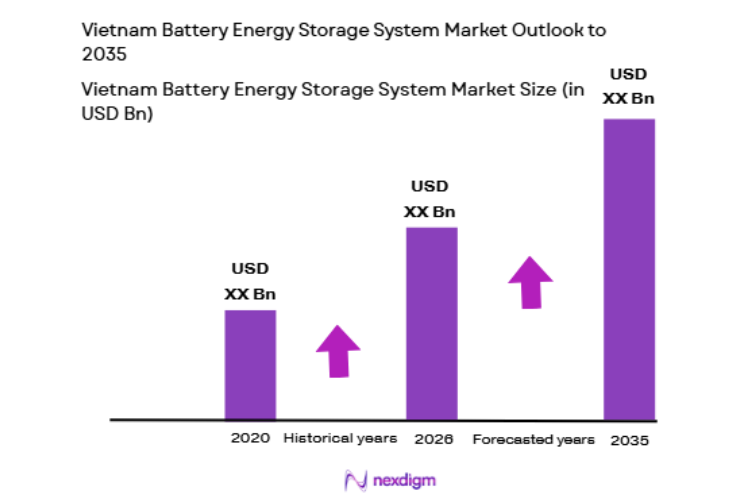
The Vietnam battery energy storage system (BESS) market is driven by the country’s rapid transition toward renewable energy sources and the need for efficient power storage solutions. Based on a recent historical assessment, the market size for BESS is valued at approximately USD ~ billion. The growing demand for energy storage systems is mainly fueled by the increasing investments in solar and wind energy projects, alongside government support for green energy initiatives. The ability of battery storage systems to optimize grid stability and improve energy management further accelerates market growth.
Major cities such as Hanoi and Ho Chi Minh City are at the forefront of Vietnam’s energy transition, where substantial investments in renewable energy projects and grid infrastructure are concentrated. These cities dominate due to their strategic positioning, governmental policies promoting clean energy, and access to key technological infrastructure. The development of renewable energy facilities in these areas has created significant demand for energy storage solutions, thus driving the BESS market’s expansion across the region.
Market Segmentation
By Product Type
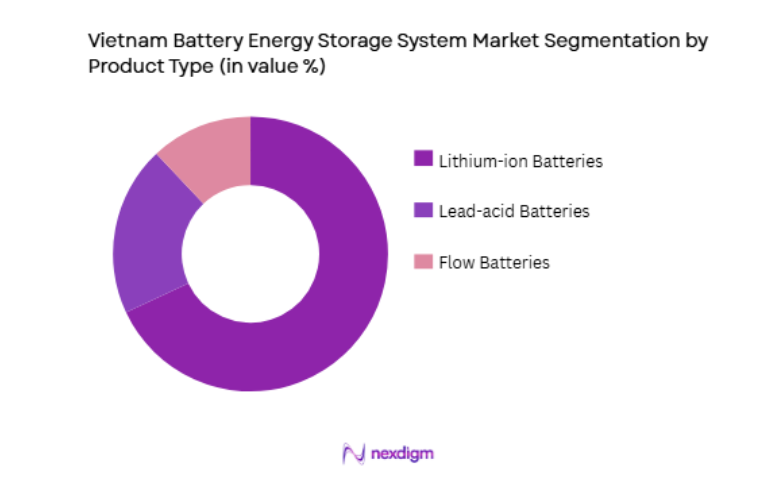
Vietnam BESS market is segmented by product type into lithium-ion, lead-acid, and flow batteries. Recently, lithium-ion batteries have a dominant market share due to their high energy density, longer lifespan, and declining costs. The increasing deployment of solar power systems, coupled with the continuous advancement in battery technologies, has led to lithium-ion batteries becoming the preferred choice for large-scale energy storage solutions. Additionally, government incentives and support for clean energy initiatives further enhance the adoption of lithium-ion-based systems, solidifying their position in the market.
By End-Use Application
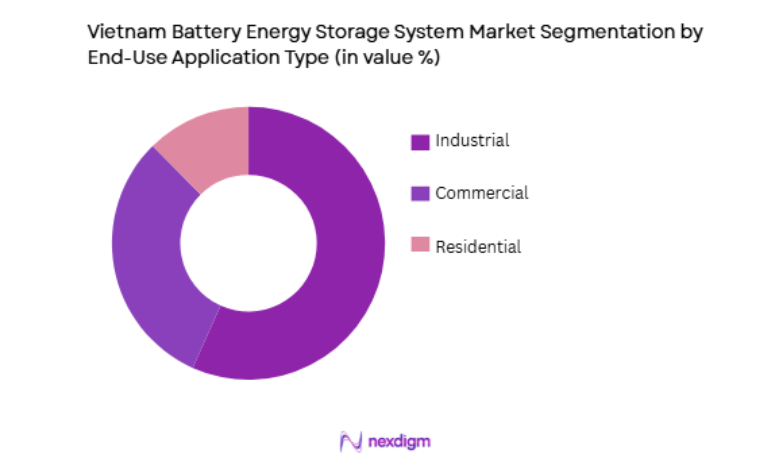
The Vietnam BESS market is segmented by end-use application into residential, commercial, and industrial sectors. The industrial sector holds a dominant market share, driven by the increased need for backup power solutions, load management, and grid stability for large facilities. Additionally, industries in sectors like manufacturing and telecom are increasingly incorporating energy storage systems to optimize their energy consumption, reduce costs, and meet sustainability targets. As industrial energy demands rise, the market for BESS in this sector continues to expand rapidly, offering substantial growth prospects.
Competitive Landscape
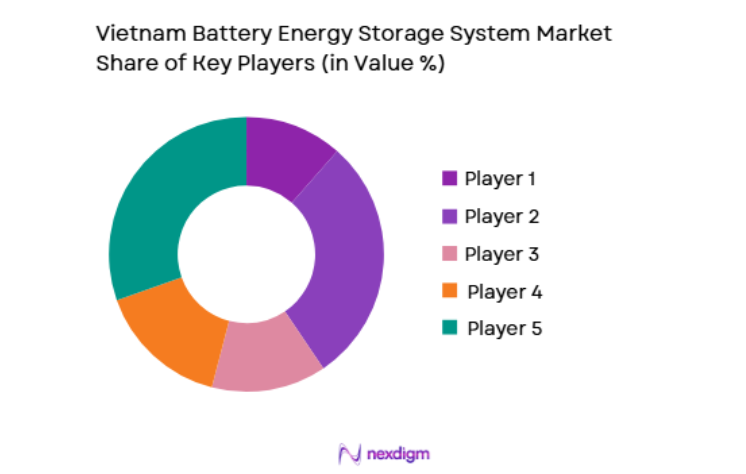
The competitive landscape of the Vietnam BESS market is characterized by a mix of global and local players. These companies are investing in innovative battery technologies, expanding their market reach, and forming strategic alliances to strengthen their position. The increasing government initiatives toward renewable energy and sustainable development has also prompted a rise in collaborations. The dominance of large multinational players such as LG Chem and Tesla is evident, but local firms like VinFast are also gaining ground in the energy storage segment.
| Company Name | Establishment Year | Headquarters | Technology Focus | Market Reach | Key Products | Revenue | Market-Specific Parameter |
| LG Chem | 1947 | Seoul, South Korea | ~ | ~ | ~ | ~ | ~ |
| Tesla | 2003 | Palo Alto, USA | ~ | ~ | ~ | ~ | ~ |
| VinFast | 2017 | Hai Phong, Vietnam | ~ | ~ | ~ | ~ | ~ |
| BYD | 1995 | Shenzhen, China | ~ | ~ | ~ | ~ | ~ |
| Panasonic | 1918 | Osaka, Japan | ~ | ~ | ~ | ~ | ~ |
Vietnam Battery Energy Storage System Market Analysis
Growth Drivers
Government Support for Renewable Energy Integration
Government policies and incentives aimed at fostering the adoption of renewable energy are a key driver of the BESS market in Vietnam. The Vietnamese government is heavily investing in solar, wind, and hydroelectric power, which are intermittent sources of energy, necessitating energy storage solutions. Moreover, Vietnam has set ambitious renewable energy targets in its energy transition plans, further bolstering the need for large-scale battery storage systems. The alignment of BESS with the nation’s long-term energy plans ensures consistent demand growth for energy storage systems, thus contributing to the market’s expansion. As more power plants are integrated into the grid, the role of energy storage becomes increasingly important for managing fluctuating energy supplies, ensuring grid stability, and improving the efficiency of renewable energy usage.
Declining Battery Costs and Technological Advancements
The ongoing technological advancements in battery manufacturing, coupled with the rapid decline in battery costs, are driving the adoption of BESS in Vietnam. Lithium-ion batteries, which dominate the market, have seen significant cost reductions over the past decade due to innovations in material science, manufacturing efficiency, and economies of scale. This price reduction, alongside improvements in battery efficiency, energy density, and lifespan, makes energy storage systems more economically viable for both commercial and residential applications. These advancements enable better integration of renewable energy systems and grid optimization, making BESS an attractive solution for energy users looking to optimize their energy consumption and reduce costs. As battery prices continue to fall and performance improves, the growth trajectory of the BESS market in Vietnam is set to accelerate.
Market Challenges
High Initial Investment Costs
Despite the long-term cost savings associated with battery energy storage systems, the high initial investment remains one of the biggest barriers to widespread adoption. This challenge is especially pronounced for small and medium-sized enterprises (SMEs) and residential users, who may find it difficult to afford the upfront costs of installation, particularly in the absence of financial incentives or subsidies. The financial viability of BESS solutions is heavily dependent on government support and subsidies that help mitigate these initial costs. Without such incentives, market penetration may remain limited, preventing a broader adoption of energy storage systems in Vietnam. Furthermore, even with decreasing costs, the substantial capital required for large-scale industrial installations may deter investors and developers from entering the market. The challenge of financing energy storage solutions remains a critical issue for the sustainable growth of the market.
Battery Recycling and Disposal Issues
As the adoption of battery energy storage systems increases, so does the challenge of managing the lifecycle of batteries, particularly concerning battery recycling and disposal. The environmental impact of discarded batteries, especially lithium-ion batteries, can be significant, requiring safe disposal and recycling practices to prevent contamination of landfills and ecosystems. Moreover, the lack of a well-established recycling infrastructure in Vietnam further complicates the situation. Inadequate battery disposal and recycling infrastructure can not only affect the environment but also create regulatory and compliance challenges for manufacturers and operators in the BESS market. Addressing these concerns is crucial for maintaining the sustainability of the market and ensuring its long-term viability, while also meeting stringent environmental regulations.
Opportunities
Expansion of Distributed Energy Storage Systems
One significant opportunity for the BESS market in Vietnam is the growing demand for distributed energy storage systems (DESS). As more businesses, industries, and residential areas adopt renewable energy technologies like solar panels, there is an increasing need for localized energy storage systems that can store excess energy for later use. This decentralized approach to energy storage enables consumers to become more self-sufficient, reducing their dependence on the grid and enhancing energy security. Furthermore, DESS can help balance supply and demand fluctuations and support grid resilience, offering a promising avenue for BESS companies in Vietnam. With increasing adoption of rooftop solar and mini-grids, the demand for small-scale, efficient, and cost-effective storage systems is expected to rise, presenting a significant growth opportunity in the coming years.
Growth in EV Charging Infrastructure Integration
The rise of electric vehicles (EVs) in Vietnam offers a unique opportunity for BESS integration into the expanding EV charging infrastructure. As more EVs hit the road, there is a growing need for reliable and fast charging stations, many of which can benefit from the incorporation of energy storage systems. BESS can help manage the fluctuations in power demand caused by EV charging, reduce the load on the electrical grid, and provide backup power during peak demand hours. Additionally, the integration of renewable energy sources with EV charging stations, supported by energy storage, can make the entire process more sustainable. This intersection of EVs and energy storage offers substantial market potential for BESS providers, as it not only supports the growing EV sector but also addresses the challenges associated with high energy demand during charging.
Future Outlook
The Vietnam battery energy storage system market is poised for significant growth in the next five years, with expanding demand driven by the increasing adoption of renewable energy sources and the need for energy security. Technological advancements and declining battery costs are expected to drive down the overall cost of energy storage systems, making them more accessible for both commercial and residential applications. Additionally, government regulations promoting green energy and energy storage solutions will continue to create a favorable market environment. As EV adoption grows and distributed energy systems gain traction, the integration of BESS will play a crucial role in shaping the country’s energy future.
Major Players
- LG Chem
- Tesla
- VinFast
- BYD
- Panasonic
- Sunrun
- Samsung SDI
- Schneider Electric
- CATL
- Eaton
- Fluence
- Siemens
- ABB
- Vestas
- NextEra Energy
Key Target Audience
- Investments and venture capitalist firms
- Government and regulatory bodies
- Power utilities
- Renewable energy developers
- Industrial manufacturers
- Energy technology firms
- Electric vehicle companies
- Smart grid technology providers
Research Methodology
Step 1: Identification of Key Variables
The identification of key market variables such as growth drivers, challenges, and market opportunities is conducted through a comprehensive review of industry reports, market analysis, and expert consultations.
Step 2: Market Analysis and Construction
An in-depth analysis of market trends, demand dynamics, and the competitive landscape is carried out, using data from both primary and secondary sources to construct a reliable market model.
Step 3: Hypothesis Validation and Expert Consultation
The formulated hypotheses regarding the market’s growth, challenges, and opportunities are validated through consultations with industry experts and stakeholders.
Step 4: Research Synthesis and Final Output
The final research report is synthesized, incorporating all findings, validated data, and expert insights to present an accurate, comprehensive overview of the Vietnam BESS market.

- Executive Summary
- Research Methodology (Definitions, Scope, Industry Assumptions, Market Sizing Approach, Primary & Secondary Research Framework, Data Collection & Verification Protocol, Analytic Models & Forecast Methodology, Limitations & Research Validity Checks)

- Market Definition and Scope
- Value Chain & Stakeholder Ecosystem
- Regulatory / Certification Landscape
- Sector Dynamics Affecting Demand

- Growth Drivers
Government Incentives & Support for Renewable Energy
Increasing Energy Storage Demand for Grid Stability
Technological Advancements in Battery Storage Systems - Market Challenges
High Capital Investment for Deployment
Technological & Performance Limitations of Existing Storage Systems
Regulatory & Compliance Barriers in Energy Storage Integration - Market Opportunities
Integration of Energy Storage with Renewable Energy Sources
Growth of Electric Vehicle Charging Infrastructure
Advancements in Battery Technology and Energy Efficiency - Trends
Increased Investment in Energy Storage for Renewables Integration
Rising Adoption of Energy Storage in Residential Applications - Government Regulations
Energy Storage System Certification Standards
Incentive Programs for Renewable Energy Integration
Policy Guidelines for Battery Recycling and Disposal - SWOT Analysis
- Porter’s Five Forces

- By Market Value, 2020-2025
- By Installed Units, 2020-2025
- By Average System Price, 2020-2025
- By System Complexity Tier, 2020-2025

- By System Type (In Value%)
Utility-Scale Storage Systems
Commercial & Industrial Storage Systems
Residential Storage Systems
Hybrid Storage Systems
Off-Grid Storage Systems - By Platform Type (In Value%)
Grid-Connected Platforms
Off-Grid Platforms
Microgrid Platforms
Hybrid Platforms
Integrated Platforms - By Fitment Type (In Value%)
On-premise Solutions
Cloud-based Solutions
Hybrid Solutions
Integrated Solutions - By End User Segment (In Value%)
Utilities
Commercial & Industrial Facilities
Residential Sector

- Market Share Analysis
- Cross Comparison Parameters (System Type, Platform Type, End User Segment, Fitment Type, Procurement Channel, Regulatory Compliance, Technological Advancements, Geographic Presence, Market Share, Price Range)
- SWOT Analysis of Key Competitors
- Pricing & Procurement Analysis
- Key Players
Tesla
BYD Company
Samsung SDI
LG Chem
Panasonic
VARTA AG
Sonnen
Fluence Energy
Redflow
Eaton
Enphase Energy
Schneider Electric
Sungrow Power Supply Co.
Saft
AES Energy Storage

- Utilities’ Adoption of Energy Storage for Grid Optimization
- Commercial & Industrial Sectors Utilizing Energy Storage for Cost Reduction
- Residential Sector’s Growing Interest in Energy Storage Solutions
- Government Agencies Driving Energy Storage Initiatives

- Forecast Market Value, 2026-2035
- Forecast Installed Units, 2026-2035
- Price Forecast by System Tier, 2026-2035
- Future Demand by Platform, 2026-2035


 Request a Sample
 Ask for Customization
 Get a Quote
 Enquire Now